What the phrase “best aussie online casino 2026” really points at
 Available in US
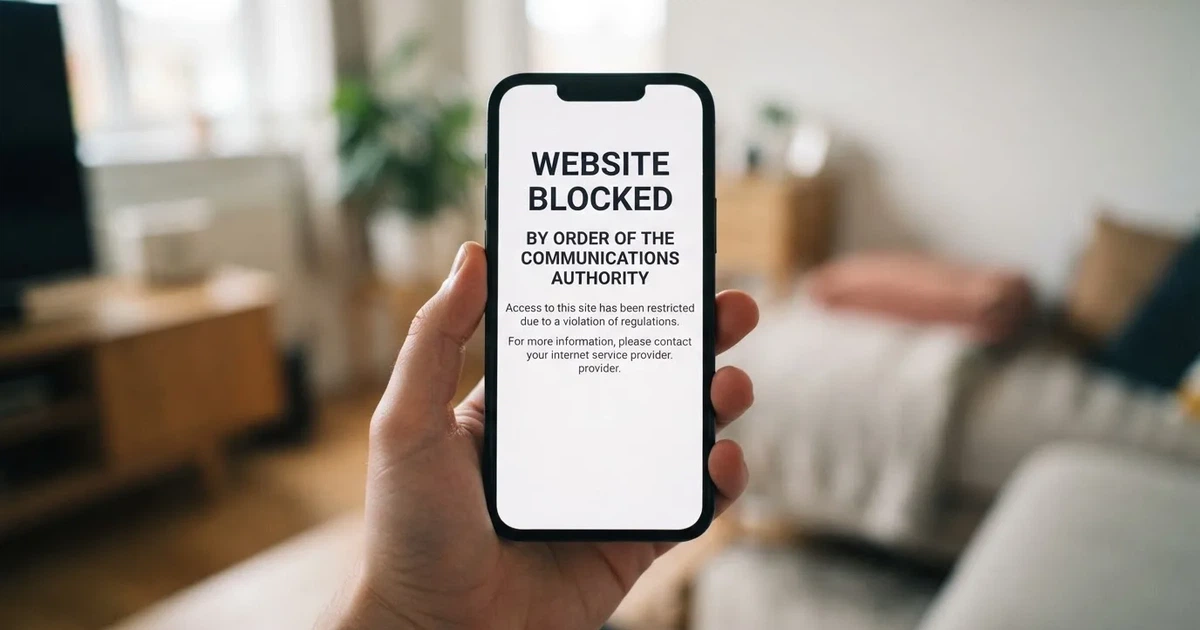
The search is honest about what it wants: a trustworthy, ideally Australian-run online casino to sign up with. The market is not honest back. No online casino is licensed to operate in Australia at all, so the word “best” can only describe offshore, unlicensed operators that the Australian Communications and Media Authority (ACMA) has been actively warning against, blocking and chasing out of the market for years. Anyone who lands on this page looking for a shortlist of safe places to play has already arrived at a wrong turn, and the page below is the editorial job of saying so clearly, in one pass, with the figures to back it up.

Currency stamp: information current as of 23 September 2026, licence claims checked against the ACMA’s register of formal warnings and blocking actions.
- The shortlist the ACMA itself has built
- Summary of ACMA Action by Brand
- The fundamentals of online casino play in Australia
- What the regulator has actually done, and at what pace
- Formal warnings: what they say and what they do
- What “new” really means in this market
- The comparison the reader is actually looking for
- Bonus language and what it costs
- Mobile and the app question
- Payments: how the money side actually works
- Responsible gambling and what the law actually connects to
- The 2026 reform that is law with a start date
- Tax: the part no one asks about
- What the eleven brands look like one by one
- What a careful reader does instead
- Frequently Asked Questions
The shortlist the ACMA itself has built
Eleven offshore casino brands have been formally warned by the ACMA in recent years. They are listed here in the order they were acted against by the regulator, not in any order of merit, because the only honest ranking of an unlicensed offshore casino is the one the regulator keeps. The brands appear below not because they are recommended but because the ACMA issued a formal warning over each one for offering prohibited services to people in Australia.

A note on the source of any “supporting” details: where research draws a detail about a brand from an affiliate marketing page, the page below names the listing source rather than speaking on the brand’s behalf. That distinction matters more than usual here, because most online descriptions of these operators are written to attract deposits, not to describe them.
Summary of ACMA Action by Brand
| Brand | ACMA action and date | Operator named by the ACMA | Subject support |
|---|---|---|---|
| Instant Casino | Formal warning issued February 2025 | EOD Code SRL | Listings describe payment support only |
| Casino Intense | Formal warning issued April 2025 | Sterplay Holding Ltd | Listings describe payment support only |
| Woo Casino | Formal warning issued March 2025 | Dama N.V. | — |
| Spirit Casino | Formal warning issued May 2025 | Dama N.V. | — |
| Ignition Casino | Formal warning issued July 2025 | Bamboo Media | — |
| National Casino | Formal warning issued July 2025 | Consolutetish S.R.L. | Listings describe payment support only |
| Bizzo Casino | Formal warning issued July 2025 (earlier warning 2022 to TechSolutions) | Consolutetish S.R.L. | Listings describe payment support only |
| Sky Crown | Formal warning issued September 2022 | Hollycorn N.V. | — |
| Level Up Casino | Formal warning issued May 2022 | Dama N.V. | Listings describe payment support only |
| RocketPlay | Formal warning issued March 2026 (earlier Dama N.V. warning May 2022) | Pulsup Ltd | Listings describe payment support only |
| Jackbit | Formal warning issued April 2026 | Ryker B.V. | — |
The table tells one story on its own: many of these warnings cluster around repeat operators. Dama N.V. alone has been warned over four of the brands listed — Woo, Spirit, Level Up and RocketPlay at an earlier date — and the same operator name keeps appearing in fresh enforcement rounds, which suggests warnings do not always change the underlying business. The 2025 round against Woo and Spirit, both under Dama N.V., came three years after the original 2022 Dama warning. Whether a “new” Australian-facing brand under the same ownership is materially different from the old one is a question the regulator appears to keep answering in the negative.
Why the regulator’s list is the only list
Every operator on that table describes itself with a licence number drawn from Curaçao, Anjouan, the Kahnawake territory or another offshore jurisdiction. None of those licences authorises the site to take Australian customers. The Interactive Gambling Act 2001 (IGA) targets the provider, not the player, which is why the ACMA’s levers are warnings and ISP-level blocks rather than prosecution of the punter. It is also why an offshore licence tells the reader nothing about whether the brand is safe for an Australian to deposit with: the licence is real for what it covers in its own jurisdiction, and silent on what happens if a withdrawal is refused, a bonus is voided, or the site simply stops replying.
That silence is the practical cost of the offshore route. There is no Australian complaints body that can compel a payout, no Australian regulator that can fine an operator for non-payment, and no Australian court order that will reliably reach an entity registered on the other side of a continent. A balance left on a blocked site is, in practical terms, a balance that has nowhere to go.
The fundamentals of online casino play in Australia
Online casino is prohibited in Australia. That sentence is the whole foundation under everything that follows, and it is worth spending a moment on, because the search results that produced this page all assume the reader has not yet been told.

The Interactive Gambling Act 2001, as tightened by the Interactive Gambling Amendment Act 2017, makes it an offence to provide online casino games, online pokies or in-play betting to a person physically in Australia. No state or territory issues a licence for any of those products. What is licensable is wagering on races and sport placed before the event, lotteries, and keno — products that in practice are licensed in the Northern Territory by the Northern Territory Racing and Wagering Commission. That same commission regulates fifty-two online bookmakers — Sportsbet, Bet365 and Ladbrokes among them — yet runs with no full-time staff and meets once a month in Darwin. The bookmaker side of Australian online gambling is, by international standards, lightly supervised. The casino side is not supervised at all, because it is not permitted to exist.
Two corollaries follow. First, the legal minimum age is 18, and the law applies to the operator — there is no offence created for the player who places a bet with an offshore site, which is why the ACMA’s enforcement tools are warnings, blocking requests to Australian internet service providers, and informal pressure on payment routes, rather than prosecution of individuals. Second, an offshore casino offers no Australian consumer protection: no local complaints body, no local recourse if a withdrawal stalls, no enforceable promise that the advertised bonus terms are the bonus terms actually applied.
The market the searcher is looking for is therefore not the market the regulator has been building. The regulator’s market, after eight years of enforcement, is the regulated wagering and lottery side — Sportsbet, Ladbrokes, the local TAB — and the offshore casino side is, by design, shrinking.
What the regulator has actually done, and at what pace
The numbers are the most useful thing on this page, because they tell the reader how seriously the line is held.
By the middle of 2026, the ACMA had asked Australian internet service providers to block 1,751 illegal gambling and affiliate websites in total, with the first blocking request going out in November 2019. More than 230 unlicensed gambling services had left the Australian market since the regulator strengthened its enforcement tools in 2017. The blocking work has not slowed down: in one round reported in late June 2026, the ACMA asked ISPs to block a further twelve sites in a single batch — 7Signs, ChromaBet, Donbet, Duospin, Freshbet, Slots Gem, Jacks Club, Lucky Start, Pointsbetz, Spinrise, Vinyl Casino and Wildsino — none of which were Australian, none of which held an Australian licence, and all of which had been offering prohibited services to Australian customers.
That June round, taken with the figure for the running total, gives a meaningful rate. The first blocking request was November 2019; by June 2026 the total stands at 1,751 blocked websites. The arithmetic belongs on the page because it answers the only question the regulator’s output can answer: how fast is the floor moving under these brands. Across roughly 79 months from the first blocking request to the June 2026 snapshot, the running total of blocked sites sits at 1,751 — a rate of somewhere between twenty and twenty-five new blocking requests every month. The honest gloss is a band rather than a precise figure, because the requests do not arrive evenly and earlier years were slower. As of mid-2026 the headline reading is that the ACMA has been directing ISPs to block new illegal sites at a sustained double-digit-per-month pace, and has shown no sign of easing off.
A parallel estimate is harder to read but worth taking on. H2 Gambling Capital’s 2025 report puts annual Australian losses to illegal gambling sites at around A$3.9 billion, and finds that the share of gambling going through legal channels has fallen from 74% in 2021 to 64%. Two things are happening at once: more sites are being blocked, and the total spend on illegal sites is still measured in billions. The block list is growing faster than the illegal market is shrinking, which is the honest framing of where enforcement stands.
Formal warnings: what they say and what they do
A formal warning from the ACMA is not the same thing as a block. A block is an instruction to ISPs, and it lands on the reader directly: the site stops loading for an Australian customer whose ISP honours the request. A formal warning is a written notice to the operator, published on the ACMA’s website, naming the company and the brand under which prohibited services were offered to Australians. It is, in the regulator’s own phrasing, the step before a block: a public record of an offence that, if not remedied, is followed by referral to ISPs for blocking.
The list in the table above is built entirely from formal warnings, and it is worth reading the pattern in the names. Dama N.V. is the operator behind Woo Casino (warned March 2025), Spirit Casino (warned May 2025), Level Up Casino (warned May 2022) and RocketPlay (originally warned under Dama in May 2022, re-warned in March 2026 under Pulsup Ltd). Hollycorn N.V. sits behind both Sky Crown and Blue Leo. Consolutetish S.R.L. sits behind both National Casino and Bizzo Casino. TechSolutions Group had already been warned over Bizzo in 2022 before the July 2025 round under a different corporate entity. The repetition of operator names is the clearest pattern in the warnings — the regulator is not just naming sites, it is naming the small number of corporate groups that operate dozens of brands at once.
What “new” really means in this market
The cluster of search terms around new Australian online casinos — “top new aussie online casino”, “new aussie casino sites”, “best new aussie online casino” — all imply that a fresher launch means a safer or more legitimate option. The premise does not survive the warning record.
Several of the brands on the ACMA’s published list have changed corporate owner between warnings without the brand itself disappearing. RocketPlay was first warned under Dama N.V. in 2022 and again under Pulsup Ltd in March 2026. Bizzo Casino was warned under TechSolutions in 2022 and again under Consolutetish S.R.L. in July 2025. The newer entity on the second warning is a corporate reorganisation, not a fresh business, and the regulator’s response has been to warn the new entity in the same terms as the old one. From an Australian customer’s point of view, the only meaningful change between the two warnings is that the licence footer on the website now displays a different company name.
“New” in this market is also a misleading description of legal status. Every offshore casino is, by definition, new in the sense that none of them have ever been licensed to operate in Australia. What “new” tends to mean in marketing is a recently registered domain and a recently incorporated Curaçao entity — both of which are easily produced. They tell the reader nothing about whether the operator has been in this market for a week or for a decade, because the same operator groups frequently launch new brands at a rate of several per year.
The comparison the reader is actually looking for
A fair comparison of online casinos serving Australian customers has to weigh more than the usual affiliate checklist of bonus size, free-spin count and number of pokies. The honest criteria, in roughly the order a reader should apply them, look like this.
The first filter is whether the site is even reachable from Australia, and the answer is increasingly no. A site that the ACMA has asked ISPs to block is unreachable for a substantial share of Australian customers; a site that has been warned once and is on a regulator’s radar is more likely than not to be blocked within the next round. That single filter removes a long list of brands before any other consideration matters, because a casino the reader cannot reach is not a casino the reader can compare.
The second filter is whether the site accepts an Australian-friendly deposit route. Under the 2023 amendments to the IGA, Australian-licensed online wagering services cannot accept payment by credit card or credit-related products; that restriction also constrains gambling use of linked digital wallets like Apple Pay. Offshore casinos are not bound by that rule in law, but the practical effect is that many Australian banks operate their own merchant-level blocks. Westpac’s gambling block works at the card level and refuses authorisation of transactions registered under the merchant category code for betting and casino gambling on eligible personal credit and debit cards. ANZ’s equivalent block, activated in the ANZ app, also blocks gambling transactions made through a digital wallet such as Apple Pay on an eligible card, and ANZ warns that not all gambling transactions will be blocked and some non-gambling transactions might be blocked in error. Commonwealth Bank offers a comparable lock on eligible cards through its app. None of those blocks is comprehensive, but together they shrink the deposit routes that work for an Australian punter on an offshore casino to a narrower set than the same site’s terms page would suggest.
The third filter is the regulatory recourse available if something goes wrong. An offshore casino licensed in Curaçao offers the punter a complaints body in Curaçao, an enforcement chain that runs through the Curaçao Gaming Control Board, and an appeals process that does not involve any Australian authority. An Australian punter with a stuck withdrawal on such a site has, in practical terms, no fast or local remedy. That single comparison usually decides the case between two offshore sites of otherwise similar profile: which one offers a complaints route the punter can actually use.
The fourth filter, and the one that matters most for the punter’s wallet, is what happens when the site stops responding. The ACMA’s blocking tool does not transfer the punter’s balance anywhere; it simply makes the site unreachable. A blocked site with a balance still on it is, in practice, a balance that has been lost. There is no Australian regulator that can compel a payout from a blocked site, and the offshore licence offers no equivalent mechanism with Australian reach.
A reader who has worked through those four filters before reading the bonus terms page will arrive at the bonus terms page with a different reading of what those numbers mean.
Bonus language and what it costs
The cluster of search terms around Australian casino bonuses — bonus, signup bonus, free spins, promo codes, no deposit bonus — describes an industry that exists almost entirely to attract deposits to offshore sites. The offers themselves are not all the same, and the differences matter more than the headline number.
A deposit-gated bonus is the commonest shape: a percentage match on the first deposit, with a wagering multiple attached, a maximum cashout cap on bonus-derived winnings, a list of games on which the wagering clears at 100% and another list of games on which it clears at zero. The reader who sees “100% up to A$500” and reads the wagering multiple in the small print is a different reader from the one who sees the same headline and does not. The cost of the bonus is not the bonus amount, it is the expected loss across the turnover required to clear it, and that cost rises linearly with the wagering multiple and falls linearly with the return-to-player percentage of the games that count.
A free-spins offer, by contrast, is a fixed number of spins at a fixed stake on a fixed game, with winnings paid either as bonus money or as cash. Bonus-money free spins inherit the wagering conditions of the deposit they accompanied; cash free spins are rarer and worth more in expected value because what they pay out is what the punter keeps. The headline “200 free spins” tells the reader the spin count and almost nothing else.
A no-deposit bonus is the most heavily caveated of the three: a small bonus amount credited for registering, usually with a high wagering multiple and a tight maximum cashout, because the operator’s economics on a no-deposit bonus are different. The expected value of a no-deposit bonus to the punter is, after wagering, almost always a fraction of the headline number.
The honest framing of all three is that the headline figure is the start of a calculation, not the end of it, and the calculation ends with the expected loss the punter is committing to in exchange for the bonus.
Mobile and the app question
The cluster of mobile-related terms — mobile casino aussie, aussie mobile casino, aussie casino mobile, aussie casino app — describes a feature, not a market. Most offshore casino sites are mobile-responsive, in the sense that the site renders usefully in a phone browser, and a meaningful share offer a downloadable app for iOS or Android. The technical capability is real; the regulatory standing of the operator behind it is unchanged.
A few specifics matter for the Australian reader. App stores in Australia have removed gambling apps from time to time at the regulator’s request, and an app that was on the App Store last year is not guaranteed to be there this year. A punter who installs a casino app has, in effect, put a piece of offshore software on their phone that can be uninstalled by the next regulatory action but cannot be uninstalled from the regulator’s enforcement record by anything the punter does. Some Australian banks’ merchant-level blocks do not apply to in-app purchases made through a stored payment method in the same way they apply to web transactions, which means the mobile route is sometimes a route around a card-level gambling block the punter has explicitly set up. That is a useful operational fact for the regulator and a useful one for the punter to know about, in both directions.
Payments: how the money side actually works
Australian payments infrastructure is built around instant transfers, and the offshore casino market has adapted to that infrastructure faster than the regulator has been able to block it.
PayID is the addressing layer on top of the New Payments Platform, the real-time settlement system that has been live since February 2018. With PayID, a bank transfer to a phone number, email address or ABN resolves to the recipient’s account name before the transfer is sent; with Osko, the transfer itself completes in under a minute around the clock, including weekends, regardless of whether the address was a BSB and account number or a PayID. More than 25 million PayIDs had been registered by April 2025, across over 100 Australian financial institutions. The platform is owned by Australian Payments Plus, the same entity that runs BPAY — itself a 1997-vintage bill-payment service available at over 140 banks and offered by over 95,000 businesses.
That infrastructure is what makes deposits to offshore casinos so fast and so quiet. The punter sends an Osko transfer to a PayID, the money arrives in under a minute, and the casino credits the account. From the punter’s bank statement the transaction is a transfer to a name, not a payment to a casino. AP+ itself warns on its PayID page that being asked to transfer money to a PayID on an illegal gambling site almost certainly means a scam site — a warning that is accurate and is also, in practice, ignored.
On the way out, the same infrastructure applies in reverse, with two complications. AUSTRAC’s threshold-transaction-report rule applies only to physical cash and not to ordinary electronic bank transfers, so a single large withdrawal is not, by itself, a flagged transaction. The punter’s bank, however, may flag a pattern of gambling-related outbound transfers, particularly through its own merchant-level block on betting and casino transactions. A withdrawal from an offshore casino that arrives via Osko is, on the bank’s side, an outbound transfer to a name, and the bank’s own categorisation rules — not the casino’s — determine whether the bank treats it as gambling.
Credit cards, after the 2023 amendments to the IGA, are not a legal deposit route for Australian-licensed wagering services, and the same restriction constrains gambling use of linked digital wallets such as Apple Pay. Apple itself does not charge the consumer for using Apple Pay — any surcharge is the merchant’s — and Apple states that transaction limits and PIN requirements are set by the card issuer or merchant, not by Apple. The practical picture is that an Australian punter on an offshore casino is most often paying by debit card, by PayID/Osko bank transfer, or by BPAY where the casino lists a biller code, with the bonus of speed and the cost of leaving an Australian bank-level trail.
Responsible gambling and what the law actually connects to
The legal minimum age for any gambling product in Australia is 18. The Interactive Gambling Act 2001 prohibits the provision of interactive gambling services — online casino games, online pokies and in-play betting — to anyone in Australia; the provider is the liable party, not the customer. What that means in practice is that an Australian punter playing on an offshore casino is not personally at risk of prosecution, but is also outside the reach of every Australian player-protection mechanism that exists.
BetStop, the National Self-Exclusion Register, has been live since August 2023 and lets a person exclude themselves from every Australian-licensed online and phone wagering service with a single registration. It binds the operators it covers. An offshore casino is not connected to BetStop, so a self-exclusion registered through BetStop does not prevent the same person from depositing at an offshore casino. The mechanism is real for what it covers and silent on what it does not.
The National Gambling Helpline, 1800 858 858, is free, confidential and available 24 hours a day, with chat support through Gambling Help Online. The helpline covers any gambling harm, including harm arising from offshore play, and is the right place to start if online casino play has started to feel compulsive or stressful. The helpline is also the right place to call even by someone who has not yet reached that point — early conversations are cheaper than late ones.
A note on the line that divides what the law does from what an offshore casino does: the law targets the provider, the helpline supports the player, and the offshore casino offers neither. That asymmetry is the one fact that does not change as the regulator’s blocking rate rises.
The 2026 reform that is law with a start date
The Interactive Gambling Amendment (Gambling Reform) Bill 2026 passed Parliament on 19 August 2026. The advertising and inducement measures it contains commence on 1 January 2026, which is the year after this page is being read. Law with a start date is a phrase worth holding onto: the bill is on the books, but the parts that affect how offshore casinos market to Australians — including the affiliate marketing pages most of the search results point at — are not yet in force. The change in the market from that reform will come from a date certain, not from a regulator’s discretion, and that is the cleanest way to describe it.
Tax: the part no one asks about
Gambling winnings of a recreational player are not assessable income in Australia, and gambling losses are not deductible, unless the person carries on a business of gambling. The relevant provision is section 6-5 of the Income Tax Assessment Act 1997; the practical effect is that almost no Australian punter has any tax reporting obligation on winnings from an offshore casino. Two caveats: the position is the ATO’s settled view for recreational players, and a punter whose activity crosses the line into a business-like pattern of play — frequent, organised, profit-seeking — is in different territory and should check with the ATO directly. For the median Australian punter on an offshore casino, the tax question is small. The legal status question, by contrast, is large.
What the eleven brands look like one by one
What follows is a description, not a recommendation. Each brand is named because the ACMA itself issued a formal warning over it; none of the descriptions below are intended as a place the reader should play.
RocketPlay
The ACMA published a formal warning over RocketPlay against Pulsup Ltd in March 2026. An earlier warning, against Dama N.V. in May 2022, covered the same brand under earlier ownership. The two-warning pattern is the headline: RocketPlay has been on the regulator’s radar across two corporate reorganisations, and the more recent warning is a clear signal that the regulator treats the reorganisation as a continuation, not a clean slate. Listings report standard offshore payment support for the brand; the brand itself describes a Curaçao-style licence footer. The site is a useful example of the broader pattern: the brand name persists across the kind of corporate change an Australian customer might assume resets the regulatory history.
Level Up Casino
Warned by the ACMA in May 2022, with Dama N.V. named as the operator. Level Up is one of four brands on the warning list tied to Dama N.V., and is the oldest Dama warning on the table. The licence footer on the site describes a Curaçao registration. As with all of these brands, the practical reading is the same: a withdrawal dispute has no Australian complaints body to escalate to, and the ACMA’s lever is to block the site, not to mediate with the operator.
Woo Casino
Dama N.V., March 2025. Woo is one of the two Dama brands warned in the 2025 round, alongside Spirit Casino. The 2025 warning came three years after the original 2022 Dama warning, which is the gap the regulator has been working with. The pattern across Dama brands is the same: warning, rebranding or relaunch, fresh warning. The reader looking at Woo today is looking at a brand whose operator has been warned twice within three years.
Spirit Casino
Dama N.V., May 2025. Spirit was the second of the two Dama brands warned in the 2025 round, two months after Woo. Together, the Woo and Spirit warnings are the regulator’s clearest answer to the question of whether the same operator group can launch fresh brands and reset its compliance posture: it cannot, in the regulator’s own practice.
National Casino
Warned in July 2025, with Consolutetish S.R.L. named as the operator. National shares its operator with Bizzo Casino, and the two warnings were issued in the same round. From an Australian reader’s point of view, the two brands are the same operator under two names, and a dispute that goes wrong at National is, in practice, a dispute at a company that is also running Bizzo.
Bizzo Casino
Consolutetish S.R.L. in July 2025, with an earlier 2022 warning against TechSolutions (CY) Group Limited and TechSolutions Group N.V. covering the same brand. Two warnings, two operator names, twelve years or so of operating under different corporate labels. The reader who chooses Bizzo on the assumption that it is a different operator from the 2022 version is choosing an operator that the regulator has explicitly told is the same.
Ignition Casino
Warned in July 2025, with Bamboo Media named as the operator. Ignition is the one brand on the table where the operator name does not recur elsewhere in the warning list, which is also the reason there is no Australian-facing payment support to point at in the public listings. The site describes itself in poker-friendly terms in its marketing, which is a reminder that the product category the ACMA acts against is broader than slots and table games.
Instant Casino
Warned in February 2025, with EOD Code SRL named as the operator. Instant Casino sits near the front of the chronology because the warning came early in the 2025 enforcement year. Public listings describe payment support through standard instant-transfer services; the brand is one of the more frequently advertised Australian-facing casinos on affiliate pages and is therefore a useful illustration of how aggressively the offshore market advertises into a regulatory gap.
Jackbit
Warned in April 2026, with Ryker B.V. named as the operator. Jackbit is one of two brands warned in the April 2026 round, alongside CasinOK. The warning is the freshest on the table as of mid-2026 and the regulator’s own record is the most current source for whether the brand is still being marketed into Australia.
Casino Intense
Warned in April 2025, with Sterplay Holding Ltd named as the operator. Casino Intense is one of the smaller brands by marketing footprint on the warning list; the regulatory status is the same as the larger brands.
Sky Crown
The ACMA published a formal warning against Hollycorn N.V. covering Sky Crown and Blue Leo. The warning predates most of the others on the table and is the only one of the eleven to name two brands in a single notice, which is the cleanest signal that Hollycorn was running the two sites under the same corporate roof.
What a careful reader does instead
The honest alternative to “best Australian online casino 2026” is the licensed Australian wagering and lottery market. Online wagering with Australian-licensed bookmakers — Sportsbet, Ladbrokes, the local TAB products and the rest of the fifty-two operators regulated by the Northern Territory Racing and Wagering Commission — is a regulated market with a complaints body, an enforceable ruleset, and a withdrawal process that runs through an Australian bank. The product mix is narrower: pre-event sports and racing betting, lotteries and keno, not online casino games or pokies. That narrower mix is the legal product, and the existence of the narrower mix is the answer to the question the search was actually trying to ask.
For the reader who wants a casino-style evening, the legal option is a land-based casino in one of the states or territories that licenses them. Crown Melbourne, The Star Sydney, The Star Gold Coast, Crown Perth, Adelaide Casino and the Country Club Casino in Launceston are the licensed venues, and the products they offer are the products the IGA does not prohibit.
Frequently Asked Questions
Is there a licensed online casino based in Australia that Australians can legally join?
No. Under the Interactive Gambling Act 2001, online casino games and online pokies are prohibited interactive gambling services in Australia, and no state or territory issues a licence for them. Online wagering on races and sport placed before the event, lotteries and keno are licensable, but online casino games are not. Every site offering online casino games to Australians is operating outside Australian law.
What does “best” mean when every option being compared is an offshore, unlicensed site?
It can only mean the least-bad option among a set of sites the ACMA has been warning against and blocking for years, which is not a meaningful ranking. The honest comparison ranks on reachability, deposit route, regulatory recourse and recourse after a block — not on bonus size. By those four criteria, the set is small and the differences narrow.
How does the ACMA decide which offshore casino sites to warn about or block?
The ACMA investigates complaints and referrals, issues formal warnings naming the operator and the brand, and asks Australian internet service providers to block sites that have not responded to warnings. The first blocking request went out in November 2019; the running total reached 1,751 blocked sites by mid-2026, with twelve more added in a single June 2026 round.
Can an offshore casino site legally register an Australian-style web address and call itself Aussie?
Domain registration and self-description are not regulated under the IGA, so an offshore operator can register a .com.au-style domain and use Australian imagery in its branding without breaking any Australian rule. The IGA targets the offer of prohibited services, not the marketing wrapper. The warning list includes brands whose domain names include “.com.au” or use Australian words.
What legal, licensed alternative exists for someone wanting a casino night in Australia?
Land-based casinos licensed by their state or territory — Crown Melbourne, The Star Sydney, The Star Gold Coast, Crown Perth, Adelaide Casino and the Country Club Casino Launceston — are the legal venues for casino-style play in Australia. Online, the legal alternative is Australian-licensed wagering on pre-event sport and racing, lotteries and keno.
Does any state or territory issue online casino licences to operators serving Australians?
No. The Northern Territory Racing and Wagering Commission regulates online bookmakers for tax reasons, but its remit is wagering, not online casino games. No Australian regulator issues a licence for online casino games or online pokies; the IGA prohibits them.
Published by the Casino Table Games Info team.