
Casinos outside BetStop, and why the right answer is rarely another casino
 Available in US
This page looks at a question that pulls two different audiences to the same search result. Some readers want to know which casino sites sit outside the BetStop self-exclusion register. Others came to the same page because they want out of a stretch of gambling they did not plan. Both deserve an honest answer, and in this market the two answers are not the same.
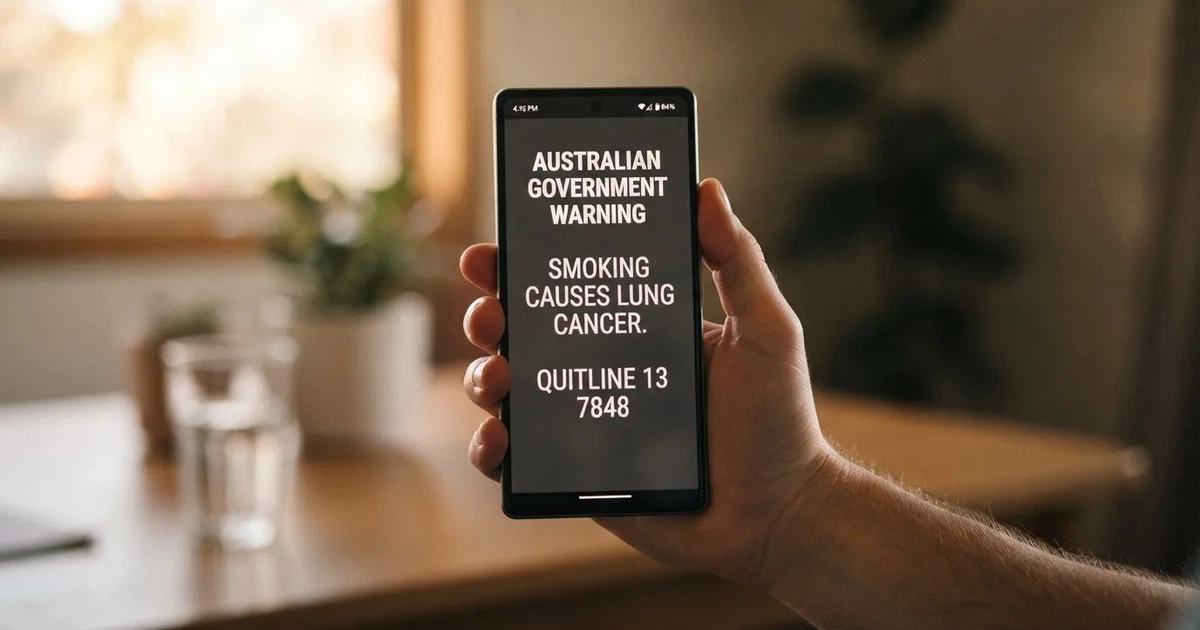
BetStop is the National Self-Exclusion Register. It covers every Australian-licensed online and phone wagering provider. The register is run by the Australian Communications and Media Authority (ACMA) and has been live since 21 August 2023. A person can sign up in about five minutes, block themselves from every licensed bookmaker, and stay blocked for three months, six months, twelve months, or life. So far so clear. What is less clear to a lot of readers is what BetStop does not cover, and the gap between those two ideas is the reason this page exists.
Casino games and online pokies cannot be licensed anywhere in Australia. The Interactive Gambling Act 2001, strengthened by amendments in 2017, makes it an offence to provide online casino games, online pokies, or in-play betting to a person in Australia. No state or territory issues a casino licence. Only wagering on races and sport placed before the event, lotteries, and keno are licensable — in practice, most of that activity is licensed in the Northern Territory. A site that bills itself as an “Australian casino” without an Australian wagering licence is, almost by definition, in the prohibited category.
That is why any “casino not on BetStop” is, by construction, an offshore casino. BetStop binds licensed Australian operators. Offshore sites hold no Australian licence. They are not connected to the register. The ACMA’s enforcement record in 2025 and 2026 shows what that means in practice: roughly twelve fresh formal warnings in the past fourteen months, a steadily growing list of blocked websites, and an estimated A$3.9 billion a year flowing to illegal offshore operators.
The page below reads the same facts through two lenses. First, what every Australian reader needs to know about BetStop itself — the register, who it binds, how long an exclusion runs, and what it does and does not do. Second, what sits on the other side of that line: the offshore sites the ACMA has acted against, what those actions mean for a player, and why the more useful question for many readers is not which offshore casino to pick but where support sits.
Data current as of 23 September 2026. ACMA formal warning register and BetStop register statistics verified against the published record.
- The register Australians use to step back from gambling
- The law behind the prohibition
- Offshore casinos the ACMA has acted against
- What a player gets — and does not get — from an offshore casino
- What support looks like when gambling stops being fun
- Reading the warning record
- The picture for a reader who is choosing
- Frequently asked questions
The register Australians use to step back from gambling
What BetStop does, and what it does not touch
BetStop is a free service. It blocks a person from every licensed Australian online and phone gambling provider. After registering, a person cannot place a bet with a licensed bookmaker, cannot open a new account, and cannot be sent marketing by those operators. The block runs across sports, racing, and any other wagering product a licensed provider carries. A registrant can also nominate someone they know to support them while the exclusion is active.

The same register does almost nothing about online casino games. The reason is structural: licensed Australian operators do not offer online casino games, so the register has no entry to apply to them. The ACMA’s own language describes the register’s reach as “licensed Australian online and phone gambling providers.” An offshore casino — by definition not licensed in Australia — sits outside the scope. There is no checkbox on the BetStop form that brings offshore casino sites into scope.
For a reader weighing an exclusion, the practical takeaway is sharp. BetStop is the strongest self-exclusion tool available to an Australian who wagers with licensed operators. It is not a tool that closes off offshore casino play. If the gambling a person wants to step away from is casino play on offshore sites, BetStop will not catch it. The right question for that reader is not which offshore casino to choose but what support is available — and the page addresses that question directly in the section on support below.
How a BetStop registration works
Registering with BetStop takes about five minutes and can be done at any time through the register’s website. A person nominates the minimum exclusion period they want — three months is the floor — and the block goes live. The four options are three months, six months, twelve months, or lifetime. A registrant can extend an active exclusion but cannot shorten it, and a lifetime exclusion cannot be reversed.

The minimum three-month floor matters in a way that surprises some readers. It stops a person cooling off for a bad weekend and walking back into wagering the following Monday. Anyone who registers for the minimum has already decided to wait at least ninety days. Anyone who wants a permanent block can pick lifetime and forget about it.
The registration figures tell the story of how widely the register has been used. By 31 July 2026, three years after launch, BetStop had received 67,480 registrations, with 41,290 exclusions still active. Of those registrants, 78% are under forty, and 38% have chosen the lifetime option. That is a higher lifetime uptake than most comparable international registers and a clear signal that the people using BetStop have often been thinking about it for some time before they sign up.
Who BetStop binds, and who it leaves alone
The bind runs through licensing. A licensed Australian online and phone wagering provider is required to honour a BetStop exclusion. An offshore operator is not. This is not a policy gap; it is the shape of the law. The Interactive Gambling Act 2001 prohibits Australian licensing of online casino games, so the only casinos an Australian can legally reach are offshore ones, and the only casinos BetStop can speak to are licensed Australian ones that do not offer casino games.
What this means in practice is that an Australian can register with BetStop today and still be able to log in to an offshore casino site this evening. The offshore operator may run its own self-exclusion or cooling-off tools. Some do. None of them are required to, and most that do offer them sit outside any Australian complaints body. The deposit an Australian loses on an offshore site is not covered by any Australian consumer protection regime.
For a reader weighing the gap, the lesson is not subtle. The strongest tool Australians have for stopping gambling is BetStop, but BetStop’s coverage stops at the Australian border. The remainder is support — and support services for problem gambling in Australia are described in the wellbeing section below.
The law behind the prohibition
The Interactive Gambling Act 2001
The Interactive Gambling Act 2001 is the foundation. It was strengthened by the Interactive Gambling Amendment Act 2017, which turned a poorly enforced prohibition into a regulator-backed one with the ACMA as the body that investigates, warns, and asks ISPs to block. The amended Act makes it an offence for a provider to offer online casino games, online pokies, or in-play betting to a person physically in Australia. The law targets the provider, not the individual player. Australians who place bets on offshore sites are not prosecuted; the offshore operator is.
The same law sets the payment rules. Since 11 June 2024, Australian-licensed online wagering services cannot accept credit cards or credit-related products. Penalties of up to A$247,500 apply to operators who break the rule. The credit-card ban catches linked digital wallets such as Apple Pay because the underlying card is still a credit instrument. Legal deposit routes for licensed Australian wagering are debit card, bank transfer, PayID/Osko, and BPAY. An offshore site asking an Australian for a credit card or a crypto deposit is operating outside the Australian rules — that is a useful red flag rather than a friendly feature.
There is also a 2026 reform sitting on the page. The Interactive Gambling Amendment (Gambling Reform) Bill 2026 passed Parliament on 19 August 2026. Its advertising and inducement measures commence on 1 January 2027. It is law with a start date, not yet in force on a 2026 page. The reform does not legalise online casino games; it tightens what licensed wagering operators can advertise and what inducements they can offer. The substantive prohibition on online casino games stands.
The ACMA’s enforcement record
The ACMA’s enforcement record in 2025 and 2026 is the practical shape of that law. As reported in June 2026, a cumulative total of 1,751 illegal gambling and affiliate marketing websites had been blocked since the ACMA made its first blocking request in November 2019, and more than 230 unlicensed gambling services had left the Australian market since enforcement was strengthened in 2017. The June 2026 round alone asked ISPs to block a further twelve sites: 7Signs, ChromaBet, Donbet, Duospin, Freshbet, Slots Gem, Jacks Club, Lucky Start, Pointsbetz, Spinrise, Vinyl Casino and Wildsino.
The pace of formal warnings is what an offshore operator should expect. The ACMA issued warnings to Pulsup Ltd over Rocketplay in March 2026 and to Ryker B.V. over Jackbit and CasinOK in April 2026. Earlier in the timeline, Dama N.V. was warned in May 2022 over six brands — Bambet, Dazard, Level Up, Rocketplay, Wild Tornado and Cobra Casinos — and was warned again in March 2025 over Woo Casino and in May 2025 over Spirit Casino. Bamboo Media was warned in July 2025 over Ignition Casino, and Consolutetish S.R.L. was warned the same month over National Casino and Bizzo Casino. EOD Code SRL received a warning in February 2025 over Instant Casino; Sterplay Holding Ltd in April 2025 over Casino Intense. Hollycorn N.V. was warned over Sky Crown and Blue Leo in 2022.
The pattern across those cases is consistent. The ACMA acts against the operator behind the brand, not just the URL. A brand can be warned once, re-launched under a new operator entity, and warned again. The same brand appearing twice in the ACMA’s record — Bizzo Casino, warned as TechSolutions in 2022 and again as Consolutetish S.R.L. in 2025 — is the rule rather than the exception. Offshore operators are aware that their Australian-facing front doors get blocked and have built replacement logistics.
The market the prohibition is failing to stop
The numbers behind the prohibition show its limits. H2 Gambling Capital’s 2025 report estimates that Australians lose about A$3.9 billion a year to illegal offshore sites, and the share of gambling going through legal Australian channels fell from 74% in 2021 to 64%. The legal wagering market still does the bulk of the work, but the illegal market is not shrinking. It is just sitting outside the licensing perimeter.
A reader who is weighing an offshore casino because the licensed market will not give them what they want — usually because what they want is online casino games, which the licensed market is barred from offering — is reading the prohibition at the same time the market is. The licensed Australian bookmakers cannot legally offer the product the offshore casino is selling. The offshore operator is filling a gap, and the prohibition is the reason that gap exists in the first place. Both halves of that picture are on the page, because they are both true.
Offshore casinos the ACMA has acted against
How to read what follows
What follows is a shortlist of eleven offshore casino brands the ACMA itself has issued a formal warning over. It is not a ranking. It is not a recommendation. The list is built from the ACMA’s own publication of formal warnings, on the date the ACMA records the warning was issued.
The order is not a judgement about which brand is safer, better run, or more likely to pay out. The order reflects the order in which the ACMA’s published warnings fall, with the most recent warnings at the front and earlier ones further down. A reader who already has a brand in mind will find it in the list; a reader looking for a brand to trust should look elsewhere on the page.
Every brand on the list shares the same structural problem: online casino games cannot be licensed anywhere in Australia. Whatever offshore licence the site displays — Curaçao, Anjouan, Kahnawake, the Malta Gaming Authority — none of those licences is an Australian licence. The warnings the ACMA has issued against these brands are warnings to the operator behind the brand, not to the licence. A Curaçao-licensed operator warned by the ACMA does not lose its Curaçao licence, because Curaçao is a different jurisdiction with different priorities.
Brands and the warnings against them
| Brand | ACMA action and date | Operator named by the ACMA | Subject support |
|---|---|---|---|
| RocketPlay | Formal warning, March 2026; earlier warning, May 2022 | Pulsup Ltd (2026); Dama N.V. (2022) | listings-only |
| Level Up Casino | Formal warning, May 2022 | Dama N.V. | listings-only |
| Woo Casino | Formal warning, March 2025 | Dama N.V. | — |
| Spirit Casino | Formal warning, May 2025 | Dama N.V. | — |
| National Casino | Formal warning, July 2025 | Consolutetish S.R.L. | listings-only |
| Bizzo Casino | Formal warning, July 2025; earlier warning, 2022 | Consolutetish S.R.L. (2025); TechSolutions (2022) | listings-only |
| Ignition Casino | Formal warning, July 2025 | Bamboo Media | — |
| Instant Casino | Formal warning, February 2025 | EOD Code SRL | listings-only |
| Jackbit | Formal warning, April 2026 | Ryker B.V. | — |
| Casino Intense | Formal warning, April 2025 | Sterplay Holding Ltd | listings-only |
| Sky Crown | Formal warning, 2022 | Hollycorn N.V. | — |
The “Subject support” column shows where the marketing and listings side of the internet actually carries the brand — affiliate pages, payment-rail pages, regulator-side mentions. Where that column is blank, the brands do not appear in those listings at any meaningful volume, and the ACMA warning is the most prominent record of the brand’s recent Australian-facing activity. Where the column reads “listings-only”, the brand surfaces in affiliate directories and payment-rail pages that are not the operator’s own statement about itself, and what those listings say about features or offers is what they say, not what the brand claims.
The “Subject support” column is not a verdict. It is a description of where the brand shows up. A brand with no listings-only support has not been verified; it has simply not been promoted to Australian affiliate readers in any volume the researcher could find.
What the warnings mean for a player
A formal warning from the ACMA is not a court order and is not a fine. It is a written record that the regulator has found a provider offering a prohibited service to Australians. The next step after a formal warning, if the provider continues, is a blocking request to Australian ISPs. The step after that is civil penalty proceedings under the Interactive Gambling Act. The ACMA’s blocking record — over 1,750 sites since November 2019 — shows that the regulator reaches the blocking step often enough that the warning is rarely the last word.
For a player, the operational risk of those warnings is concrete. If a brand is on the ACMA’s blocking list, Australian ISPs will refuse to resolve its domain for most Australian customers. The site can usually still be reached through a workaround. The workaround does not change the underlying legal status, and a balance sitting on a blocked site is money that an Australian player has no Australian avenue to recover.
A useful red flag, beyond the ACMA action itself, is the operator entity. The brands above are operated by a small number of corporate groups — Dama N.V. alone accounts for six of the eleven — and many of those groups run multiple brands from the same licence and the same back office. A player who has had a problem with one brand in the same group is unlikely to find a sympathetic complaints handler at the sister brand.
Why the licensed wagering market is not the answer
The licensed Australian wagering market is regulated by the Northern Territory Racing and Wagering Commission and similar bodies in other states. The NTRWC regulates fifty-two of Australia’s online bookmakers — including Sportsbet, Bet365 and Ladbrokes — under Northern Territory licences issued for tax reasons. The commission has no full-time staff and meets once a month in Darwin. The picture is regulatory in form and fairly thin in substance.
The licensed wagering market is also not the product offshore casino readers want. The licensed bookmakers offer sports betting and racing. They do not offer online casino games, online pokies, or in-play betting. The Interactive Gambling Act 2001 forbids them from offering those products, and the Australian-licensed bookmakers are not in a position to bend on that. A reader who wants to wager on the Melbourne Cup is well served by the licensed market. A reader who wants to play blackjack on their phone at 11 p.m. is looking at the offshore market, and the offshore market is the only market offering that product to Australians.
That gap — between what the licensed Australian market offers and what offshore operators sell — is the entire economic shape of the prohibition. The prohibition is not stopping the demand. It is shaping who meets it.
What a player gets — and does not get — from an offshore casino
The basic shape of an offshore casino
An offshore casino site, in the Australian context, is a website operated from outside Australia that takes real-money deposits from Australian customers, offers online casino games and online pokies, and pays winnings out through the same offshore rails. The site displays a licence from a non-Australian jurisdiction. It offers customer support, sometimes in Australian English and sometimes not. It carries games from a handful of major studios.
Most offshore casinos also run a deposit bonus. The bonus takes the form of a percentage match on the first deposit — typically one hundred per cent — and is paired with a wagering requirement: the player has to bet the bonus amount a set number of times before any winnings become withdrawable. Wagering requirements on offshore casinos commonly run from thirty-five to fifty times the bonus amount. A A$500 bonus at forty times means A$20,000 in qualifying wagers before the bonus converts to withdrawable cash. The detail of those terms, and the maximum cashout cap that often sits on top, is what an affiliate page will describe in the optimistic voice and what an operator’s own terms page describes in much smaller type.
The consumer protections that are missing
The thing an offshore casino does not give an Australian player is Australian consumer protection. The licensed Australian bookmakers are required to identify customers, to segregate player funds, to honour self-exclusion, to provide a complaints body, and to answer to an Australian regulator. An offshore casino is required to do none of those things for an Australian customer. Its regulator is not the ACMA; it is whatever regulator issued its licence.
When an offshore casino refuses a withdrawal, the only avenues available to an Australian player are the operator’s own complaints handler and the regulator of the licence the site displays. Both routes are slow. The operator’s complaints handler is a customer-service function within the operator’s own company, and its primary loyalty is to the operator. The offshore regulator — Curaçao, Anjouan, the Kahnawake Gaming Commission — does not treat Australian player complaints as a high priority, and many of those regulators’ dispute-resolution mechanisms are not designed for the volume of complaints they receive from Australian players.
The most concrete risk is a blocked site holding a player’s balance. The ACMA’s blocking orders affect Australian ISPs, not the operator. If a brand the ACMA has blocked still holds a player balance, that player has no Australian complaints body to appeal to, and the offshore operator’s own complaints handler is the only avenue. There is no guarantee that avenue goes anywhere.
The payment rails and where the gaps are
The payment rails an offshore casino exposes to Australian customers are a useful diagnostic. The Australian rules bar credit cards and credit-related products for licensed wagering. An offshore site asking an Australian for a credit card is not following the Australian rules, because the offshore site is not bound by the Australian rules. The credit card form is not a sign of compliance; it is a sign that the offshore site is operating in the same space as the Australian-licensed operators but without the Australian constraints.
Debit cards work at offshore casinos because the credit-card ban is an Australian rule, not an international one. Bank transfers work, and PayID-based transfers through the New Payments Platform can settle in under a minute — though the recipient name a PayID shows before a transfer is sent is, according to PayID’s own guidance, almost certainly not the name of a real person when the receiving site is an illegal gambling operator. Crypto deposits are widely accepted at offshore casinos and are not subject to Australian banking rules. The deposit methods an offshore site offers are exactly the methods the Australian-licensed market is barred from taking on credit and largely restricted from accepting on debit. That is the gap the offshore market fills.
How support reaches a player who has had a problem
If a player has had a problem with an offshore casino, the practical options are limited. The operator’s own complaints handler is the first stop. After that, the licence jurisdiction’s dispute process is the second. Australian regulators — the ACMA, the Australian Financial Complaints Authority, state gambling regulators — do not have jurisdiction over an offshore operator. The Australian Transaction Reports and Analysis Centre (AUSTRAC) has an interest in money-laundering concerns and accepts reports, but its interest is in the operator, not in the individual player’s complaint.
The right escalation path for an Australian who is worried about their own gambling — separate from a complaint about a single operator — is described in the wellbeing section below.
What support looks like when gambling stops being fun
The support lines and what they cover
The National Gambling Helpline is 1800 858 858. It is free, available 24/7, and staffed by counsellors who are used to calls about offshore gambling. The companion site is Gambling Help Online, which carries chat and email support and a directory of state-based services. Both are run by qualified counselling organisations and are funded by Australian governments, so a caller is not paying for the call and is not feeding into a commercial service.
The Gambling Help Online directory carries state-based services that work with specific communities — Aboriginal and Torres Strait Islander counselling through some state services, culturally specific programmes for several language groups, and youth-specific services for under-eighteens and young adults. The National Gambling Helpline is the front door; the state services are the longer-term support.
BetStop as part of a support plan
BetStop is the strongest self-exclusion tool an Australian has. For a person whose gambling is mostly with licensed bookmakers — sports, racing — BetStop closes that door. For a person whose gambling is mostly on offshore casinos, BetStop does not close that door, but it does close the licensed half. Used alongside the Gambling Help Online services, BetStop is a meaningful step. The two are complementary rather than competing.
A practical pattern the support services describe is a combination: register with BetStop, schedule a call with the National Gambling Helpline, and tell the bank to enable its gambling transaction block. ANZ’s gambling block, once activated, refuses gambling transactions made through Apple Pay or Google Pay on eligible cards as well as through the physical card. Westpac’s gambling block refuses authorisation of transactions registered under the merchant category code “Betting/Casino Gambling” on eligible personal credit and debit cards. Turning those on while a person is in the first weeks of a BetStop exclusion gives the bank a second line of defence if a slip happens.
Where to read further
The BetStop register’s own site carries the registration form, the exclusion period options, and the list of licensed providers the exclusion binds. The ACMA’s formal warnings register is published on acma.gov.au and is the source for every warning cited on this page. Gambling Help Online, at gamblinghelponline.org.au, is the most direct route to chat and email support. A reader who wants to understand the underlying statute can read the Interactive Gambling Act 2001 on the Federal Register of Legislation, and the Interactive Gambling Amendment (Gambling Reform) Bill 2026 is published on the Parliament of Australia’s site.
Reading the warning record
What an ACMA warning does not say
An ACMA warning does not say an offshore casino is a scam. It says the ACMA has found the operator offering a prohibited service to Australians. Plenty of legitimate operators with valid offshore licences and a real payments operation have received ACMA warnings, because the ACMA warning is about the offering of a prohibited service rather than the integrity of the operator’s payments.
The warning also does not say anything about a player’s individual experience. The ACMA does not adjudicate individual player complaints against offshore operators. Its record is about the operator’s compliance with the Interactive Gambling Act, not about whether a given player was paid.
What the warning does say is that the brand sits on the wrong side of the Australian regulatory line. The operator behind the brand has been told, in writing, that the service it offers Australians is prohibited. A player using the brand is using a service the regulator has already tried to stop.
Why the same brands keep recurring
Several brands on this page have been warned more than once. Rocketplay was warned as Dama N.V. in May 2022 and again as Pulsup Ltd in March 2026. Bizzo Casino was warned as TechSolutions in 2022 and again as Consolutetish S.R.L. in July 2025. The same brand under a different operating entity is the recurring pattern.
The reason is the structure of the offshore industry. A brand can be shut down by an ACMA blocking order without shutting down the operator. The operator can launch a new brand under a new entity and continue to operate, and the cycle starts again. Dama N.V. alone accounts for six of the brands on this page. The lesson is that a warning is a moment in a longer pattern rather than a closing event.
What to take from the timeline
The pattern of formal warnings over the past four years is dense. The ACMA issued warnings to Bamboo Media and Consolutetish S.R.L. in July 2025; to EOD Code SRL in February 2025; to Sterplay Holding Ltd in April 2025; to Dama N.V. in March 2025 and May 2025; and to Pulsup Ltd in March 2026 and to Ryker B.V. in April 2026. The pace has not slowed. The market has not responded to the warnings by withdrawing. A reader looking at this timeline should expect the warnings to continue.
The picture for a reader who is choosing
The honest version of the choice
A reader who came to this page looking for an offshore casino to play on is reading it because the licensed Australian market does not offer what they want. That is not a misreading. The licensed market is barred from offering online casino games and online pokies, and the offshore market is the only market offering them to Australians. The reader’s choice is not between two equally compliant options; it is between the licensed market, which offers what it can, and the offshore market, which offers what the reader wants but at the cost of any Australian consumer protection.
The honest framing is that the choice has a price, and the price is consumer protection. An Australian who plays at an offshore casino has no Australian complaints body, no Australian regulator to appeal to, no guarantee that the brand will not be blocked by the ACMA next month, and no guarantee that a balance sitting on the site at the moment of blocking will be recoverable. The offshore casino is not a worse version of the licensed bookmaker; it is a different kind of product, sitting outside the regulatory perimeter.
The honest version of the other question
A reader who came to this page because they want to step away from gambling, and who came via a search that included the words “casino not on BetStop” because they have already registered with BetStop and found it did not cover their offshore play, is reading a different page than the one above. For that reader, the support section above is the answer. BetStop is the strongest tool; the National Gambling Helpline is 1800 858 858; Gambling Help Online is the chat and email route; ANZ’s and Westpac’s gambling transaction blocks are the bank’s second line of defence.
The page is written to be useful to both readers, because both are real and both deserve the facts. A reader who can use the support section above and who chooses not to is making a decision the page does not make for them. A reader who can read the offshore brand list and the structural risks and who chooses one of those brands is making the same kind of decision, with a different balance of costs.
Frequently asked questions
What is BetStop and how is it different from a casino ban?
BetStop is the National Self-Exclusion Register — a free Australian Government service that blocks a person from every licensed Australian online and phone wagering provider. A person registers, picks an exclusion period of three months, six months, twelve months, or lifetime, and the block goes live across every licensed operator. It is not a casino ban. Online casino games cannot be licensed in Australia, so BetStop has no licensed Australian casino operators to block. An offshore casino — which holds no Australian licence — sits outside the register.
Does BetStop block offshore online casinos as well as licensed wagering sites?
No. The register’s published scope is “licensed Australian online and phone gambling providers.” Offshore casinos hold no Australian licence and are not connected to the register. A person who registers with BetStop today can still reach an offshore casino site this evening. The register covers the licensed market; the offshore market is a separate jurisdiction that BetStop does not speak to.
How long does it take to register with BetStop?
The registration itself takes about five minutes and can be done at any time through the register’s website. The exclusion periods on offer are three months, six months, twelve months, or lifetime, with three months as the minimum. A registrant can extend an active exclusion but cannot shorten it, and a lifetime exclusion cannot be reversed. The minimum period exists to prevent cooling-off for a weekend and re-entering the next week.
Can someone remove themselves from BetStop before the minimum period ends?
No. The register’s terms allow a registrant to extend an active exclusion but not to shorten it. A three-month exclusion cannot be cut short at two months; a twelve-month exclusion cannot be cut short at six. A lifetime exclusion cannot be reversed at all. The restriction is the structural reason the register works: a person in the middle of a difficult stretch cannot undo the block on a whim.
Where can someone get support if they are worried about their gambling instead of searching for casinos outside BetStop?
The National Gambling Helpline is 1800 858 858 — free, 24/7, staffed by qualified counsellors. Gambling Help Online offers chat and email support, with a directory of state-based services for specific communities. ANZ and Westpac both run gambling transaction blocks that can be activated through the bank’s app or website. The combination of BetStop, the helpline, and a bank’s gambling block is the practical first step a support worker would usually recommend.
Is it legal for any online casino to operate in Australia, on or off the BetStop register?
No online casino is legal in Australia. The Interactive Gambling Act 2001, strengthened by the Interactive Gambling Amendment Act 2017, makes it an offence to provide prohibited casino-style games and live betting services to a person in Australia. No state or territory issues a casino licence. A site that displays an Australian-facing brand and offers casino games is, by definition, operating outside the licensing perimeter — regardless of whether it appears on or off BetStop. The Interactive Gambling Amendment (Gambling Reform) Bill 2026, which passed Parliament on 19 August 2026 and commences on 1 January 2027, tightens advertising and inducement rules but does not change that underlying prohibition.
Created by the ”Casino Table Games Info” editorial team.