
NDB casinos and Australia in 2026: the offer, the legal frame, and the rails underneath
No-deposit bonus offers sit at the centre of almost every offshore casino advert aimed at Australian search terms. The same handful of brands promise a free spins bundle, a chip balance, or a slice of bitcoin on sign-up, and the marketing language looks identical from one site to the next. What sits behind that language is more complicated. Australian law does not license online casino games at all, so the offer itself — whatever its headline number — exists in a category of product that no Australian regulator has signed off on. The rest of this page goes through that gap, the operators whose names keep surfacing in ACMA action, the way the payment rails actually behave when an Australian punter tries to move money in or out, and the small number of safeguards an Australian player can still set up on their own side of the transaction. NDB casinos and Australia in 2026 — More on this topic at casino table games .

Data current as of 29 October 2026 and cross-checked against the ACMA register of formal warnings and blocking actions.
- What an NDB actually is when an offshore casino advertises one
- The legal position: what Australia actually licenses
- Responsible gambling: what the Australian system actually binds
- The crypto angle: paying in bitcoin does not change what an Australian is buying
- How the Australian payment rails actually behave
- The operators the ACMA has acted against
- ACMA enforcement at the rate it has been running
- The wider Australian gambling picture this page sits inside
- Comparing the brands side by side
- What an Australian punter can set up on their own side
- Frequently asked questions
What an NDB actually is when an offshore casino advertises one
A no-deposit bonus, in the language the offshore industry uses, is a small credit extended to a new account before any real money has moved in. The forms vary, but the structure is the same: the casino credits something — bonus cash, free spins pegged to a specific pokie, or a token bitcoin amount — and the player is then expected to turn that credit over a stated number of times before any of it can be withdrawn. The wagering requirement is the part that turns the offer from a gift into a workload, and it is the part the marketing copy works hardest to keep out of view.

Three shapes dominate the Australian search terms this page is built around. A free spins bundle typically credits a fixed number of spins — twenty, fifty, sometimes a hundred — at a small stake per spin on a named pokie. A bonus chip credits a flat dollar amount, often in the A$10 to A$50 range, that the player can spread across the games the casino permits. A bitcoin NDB credits a token crypto amount and ties it to a wagering multiple expressed in the same crypto unit. Each of them is paired with a wagering factor that runs from around twenty times the credit up to sixty or seventy, a maximum cash-out cap that limits how much of the cleared bonus a player can actually withdraw, and a list of game-weighting rules that decide how much each spin or hand contributes to clearing that turnover.
The mechanics are uniform across the offshore industry because the affiliate sites that drive traffic to these casinos copy terms from one another. The variations that do exist — a slightly higher spin count, a slightly lower wagering multiple — are the variations the marketing treats as decisive, because they are the variations a player can compare at a glance. They are not what decides whether the offer is worth taking. The wagering multiple, the max cash-out cap, and the weighting on the games the player actually wants to play decide that, and a player who skips those three numbers is reading only the headline.
The legal position: what Australia actually licenses
Online casino games and online pokies cannot be licensed in Australia. The Interactive Gambling Act 2001, tightened by the Interactive Gambling Amendment Act 2017, makes it an offence to provide those products to a person physically in Australia, and no state or territory issues the licences an offshore casino advertises. What is licensable is pre-event wagering on racing and sport, lotteries and keno. The Northern Territory Racing and Wagering Commission regulates the majority of those wagering operators — 52 of Australia’s online bookmakers, including Sportsbet, Bet365 and Ladbrokes — under a Territory licence that exists primarily for tax reasons; the commission has no full-time staff and meets once a month in Darwin. Online casino is not on that list, by design.
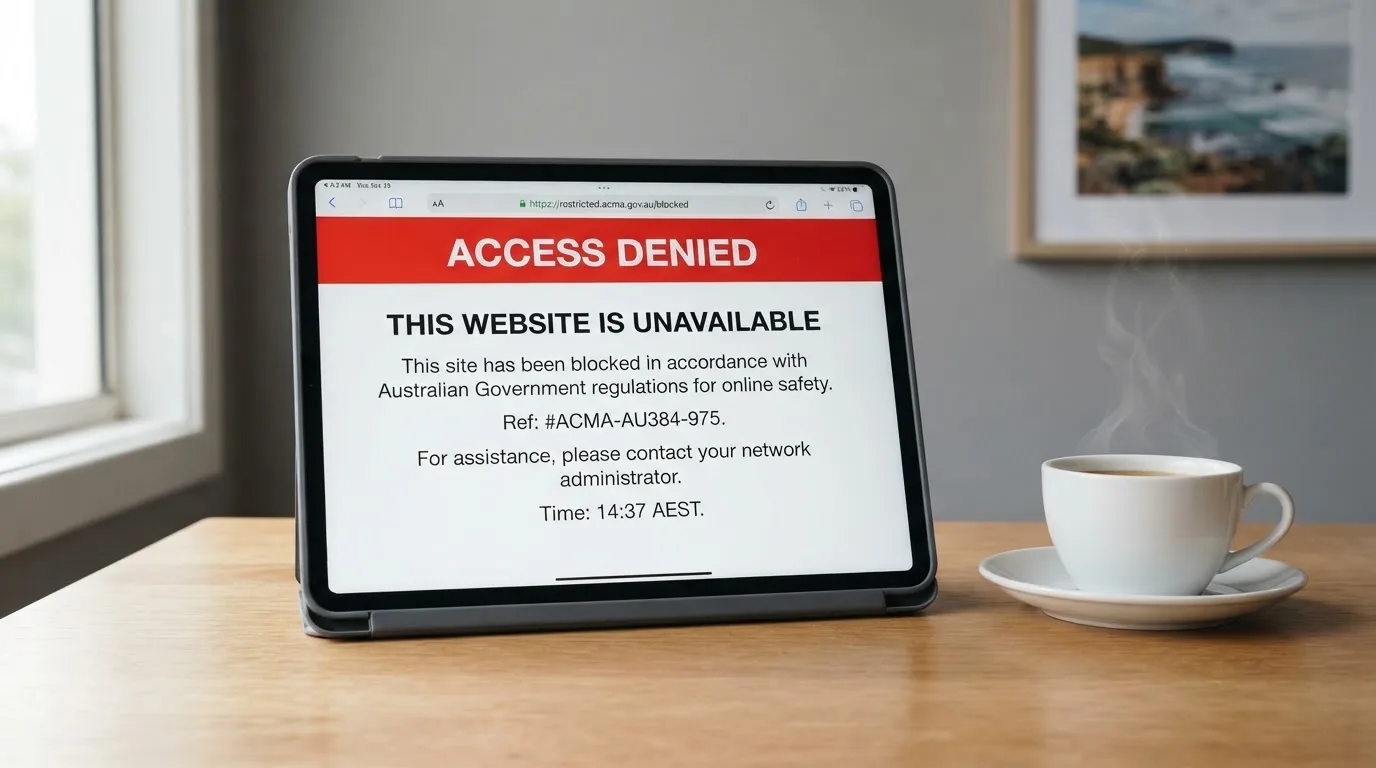
The enforcement body is the Australian Communications and Media Authority. The ACMA investigates complaints, issues formal warnings to named operators, and can direct Australian internet service providers to block illegal services. By June 2026 the ACMA had asked ISPs to block 1,751 illegal gambling and affiliate marketing websites since the first blocking request went out in November 2019, and more than 230 unlicensed gambling services had left the Australian market since enforcement was stepped up in 2017. A round reported on 26 June 2026 added twelve more names to the block list — 7Signs, ChromaBet, Donbet, Duospin, Freshbet, Slots Gem, Jacks Club, Lucky Start, Pointsbetz, Spinrise, Vinyl Casino and Wildsino. None of these is a casino that ever held an Australian licence, because none of them could have.
What the law targets is the provider, not the player. An Australian punter who signs up with an offshore casino is not committing an offence under the Interactive Gambling Act. What they lose is everything the Act was designed to give them: no Australian consumer protection, no local complaints body, no recourse if a withdrawal is refused, and a real risk that the service is blocked with a balance still on it. H2 Gambling Capital’s 2025 estimate puts annual losses to illegal gambling sites at roughly A$3.9 billion, and the share of Australian gambling going through legal channels has fallen from 74% in 2021 to 64%. The legal channels have shrunk because the illegal ones have grown.
Responsible gambling: what the Australian system actually binds
The Australian responsible-gambling framework is built around licensed operators. BetStop, the National Self-Exclusion Register, has been live since August 2023 and lets a person exclude themselves from every Australian-licensed online and phone wagering service in one registration. It does not bind offshore casinos. An offshore site has no obligation to check BetStop, no obligation to honour an exclusion registered through it, and no obligation to provide the cooling-off tools that licensed wagering services run by default. The exclusion the law gives an Australian player stops at the Australian border.
What does work on the player side, regardless of where the money is going, is the card-level gambling block run by the major Australian banks. Westpac’s gambling block refuses authorisation of any transaction registered under the merchant category code for betting and casino gambling on eligible personal credit and debit cards. ANZ’s block, activated in the ANZ app, blocks gambling transactions made through a digital wallet such as Apple Pay on an eligible card, not only the physical card; once the block is on, ANZ imposes a 48-hour wait before it can be removed, and the bank warns plainly that not every gambling transaction will be caught and some non-gambling transactions may be blocked in error. Commonwealth Bank offers a comparable gambling lock in the CommBank app, with the same caveat that no automated filter catches everything. These blocks sit at the card, not at the casino, so they cut across every gambling merchant the card issuer has coded as such, offshore included.
For anyone who feels their gambling is moving outside their control, the National Gambling Helpline on 1800 858 858 is free, runs around the clock, and offers web chat through Gambling Help Online. The helpline is funded to talk to Australians about Australian-licensed services and the offshore ones alongside them, and it does not require the caller to be enrolled with any particular provider.
The crypto angle: paying in bitcoin does not change what an Australian is buying
A bitcoin NDB looks different from an ordinary NDB only on the surface. The casino credits a token amount of bitcoin or another cryptocurrency instead of a chip balance, the wagering multiple is expressed in the same token, and the rails underneath move in blockchain settlement rather than card processing. None of that alters the underlying situation: the casino is still an offshore operator, the player is still physically in Australia, the product is still an unlicensed online casino game, and the offer is still governed by the wagering multiple, the cash-out cap and the game-weighting rules. Crypto is a payment method, not a licence.
The Australian side is stricter than the marketing suggests. Credit cards, credit-related products and digital currency are banned as payment for licensed online wagering in Australia since 11 June 2024, with penalties for licensed operators up to A$247,500. A site that takes bitcoin from an Australian punter is taking it precisely because that punter is not transacting through a licensed Australian wagering service, where the ban would apply. The crypto rail is the workaround, not a regulated route.
What bitcoin does change is the visibility of the transfer. PayID, the instant addressing layer on Australia’s New Payments Platform, displays the registered name of the account holder before an Australian transfer is sent, and the operator of the platform warns plainly that being asked to transfer to a PayID on an illegal gambling site almost certainly means a scam site. A bitcoin transfer does not have an equivalent lookup. Once the funds have left the wallet, the only record is the on-chain transaction, and there is no Australian register the punter can check before pressing send.
How the Australian payment rails actually behave
Three rails matter for an Australian punter weighing the gap between a local bank transfer and a crypto deposit: PayID and Osko, BPAY, and the bank-side gambling blocks. Each behaves differently, and the differences are worth knowing before any of them is used.
PayID sits on top of the New Payments Platform, which went live to the public on 13 February 2018 and is now operated by Australian Payments Plus. The platform is owned by a non-profit company whose thirteen shareholders include the Reserve Bank of Australia and the major banks, and participants are required to keep monthly outages below two minutes. By April 2025 more than 25 million PayID identifiers had been registered, and PayID-based instant transfers are available at over 100 Australian financial institutions. With Osko, a bank transfer between participating banks arrives in under a minute, 24/7 including weekends, whether it is addressed to a BSB and account number or to a PayID. The transfer is real-time, but it is also visible — the recipient name shows on the sender’s confirmation screen before the transfer is sent, which is the feature AP+ leans on when warning about scam PayIDs on offshore gambling sites.
BPAY is the older rail, and it is built for a different job. BPAY has been running in Australia since 1997, is available in the online banking of over 140 banks and financial institutions, and is offered by over 95,000 businesses. It works through a Biller Code and a Customer Reference Number printed on a bill, and the payer enters those in online banking to authorise the payment. It is not designed for transfers to a person, and it is not how an offshore casino would be paid. What it tells an Australian punter is that the local bill-payment system sits on rails that were not built for gambling at all.
The bank-side blocks cut across both rails. ANZ’s block, once activated, applies to gambling transactions made through Apple Pay on an eligible card in addition to the card itself, and the 48-hour cooling-off period before removal is built into the product. Westpac’s block reads the merchant category code, so any transaction coded as betting or casino gambling is refused at the point of authorisation. The blocks do not catch every gambling transaction, and the banks say so themselves — Commonwealth Bank’s gambling lock “cannot guarantee all gambling-related purchases will be stopped” — but they do catch most, and they cost the punter nothing to set up.
On the digital wallet side, by the end of 2025 Apple Pay, Google Pay and Samsung Pay transactions collectively accounted for around 45% of all card payments in Australia by number. Apple Pay does not charge the consumer any fee for use, and any surcharge a casino imposes comes from the merchant’s own card-processing costs rather than from Apple. The transaction limits and PIN requirements on Apple Pay are set by the card issuer or the merchant, not by Apple itself. The ban on credit-funded wagering under the Interactive Gambling Act 2001 as amended in 2023 applies to those wallet payments too, because the underlying funding source is what the Act reads.
AUSTRAC’s threshold-transaction-report rule, which requires reporting of transfers of A$10,000 or more, applies only to physical cash. Ordinary electronic bank transfers are not subject to that per-transaction reporting requirement regardless of amount, so an A$10,000 PayID transfer does not by itself trigger a report. The reporting obligation sits with the sending and receiving institutions under different rules, not with the punter.
The operators the ACMA has acted against
What follows is not a ranking and not a recommendation. Each brand is listed because the ACMA itself has issued a formal warning over it for offering prohibited interactive gambling services to Australians. The bonus terms and welcome packages an affiliate site associates with these names come from marketing pages; they are not the basis for anything on this page. Where research carries a payment-method note for a brand, that note is reproduced here as the listing reports it, not as the operator’s own claim.
RocketPlay
The ACMA issued a formal warning to Pulsup Ltd over RocketPlay in March 2026, on the ground that the site was providing prohibited interactive gambling services to customers in Australia. An earlier warning had already been issued to Dama N.V. in May 2022 covering six casino brands, RocketPlay among them. The site advertises a Curacao-issued licence, which is the licence the offshore industry uses for almost every brand on this list; no Australian state or territory recognises it, because none of them licenses online casino games.
Payment-method coverage, where listings report it, places RocketPlay alongside the broader Dama N.V. group — a Curacao-licensed operator running multiple brands from the same corporate stack. The detail of any welcome package the site advertises is not something this page reproduces.
For an Australian punter, the brand sums to this: an ACMA warning in 2026 on top of a 2022 one, an offshore licence of no standing in Australia, and a marketing presence strong enough that the name keeps surfacing on Australian-facing affiliate pages. The product the site offers is the product the Interactive Gambling Act says no one in Australia should be sold.
Level Up Casino
Dama N.V. received the ACMA’s May 2022 warning covering six brands, and Level Up was on the list. No fresh ACMA action specific to Level Up has been published since, but the parent-company warning still stands and the underlying prohibition on the product has not changed. The site carries the same offshore licence structure as the rest of the Dama N.V. group.
Level Up is the second of those six brands to appear on this page, and the pattern it illustrates is worth naming. Affiliate sites tend to list each Dama N.V. brand separately, because the marketing site for each one is different and the welcome package reads differently. The ACMA’s enforcement treats them as one operator, because at the corporate level they are. An Australian punter reading a Level Up bonus offer on an affiliate site is reading a marketing page for a brand whose parent company has been on the ACMA’s warning list since 2022.
Woo Casino
The ACMA issued a further formal warning to Dama N.V. in March 2025, this time over Woo Casino. Woo is the second post-2022 warning aimed at Dama N.V. specifically, after the broader 2022 notice, and the 2025 round is the more recent statement of the regulator’s view. Woo Casino, like the other Dama N.V. brands, is licensed offshore and offers an unlicensed product to anyone signing up from an Australian IP address.
The relevant comparison for a punter weighing Woo against the older 2022-warning brands is simple. The 2022 warning covered six brands at once. The 2025 warning covered one brand at a time, and Woo was one of them. The regulator’s view of Dama N.V. as a group has hardened into a series of individual notices, and the individual notices are dated.
Spirit Casino
A second Dama N.V. brand received its own formal warning in May 2025, two months after Woo. The pattern is the same: an offshore-licensed casino, an ACMA formal warning, no Australian licence of any kind. Spirit Casino is presented by affiliate marketing as a separate brand, and at the brand level it is. At the regulator level, it sits alongside Woo on the same parent’s 2025 warning run.
For an Australian punter comparing the 2025-warning brands, the timing matters. Two months is not long enough for the operator to have changed its offering in any meaningful way between the Woo warning and the Spirit warning, and the regulator has not signalled that it has. The product is the same product, the licence is the same licence, and the legal status in Australia is unchanged.
National Casino
The ACMA issued a formal warning to Consolutetish S.R.L. in July 2025 over National Casino. National Casino is one of two brands named in that warning — Bizzo Casino is the other. Both operate under offshore licences, both offer unlicensed interactive gambling services to Australian customers, and both have affiliate presences strong enough that they show up in Australian search results for NDB-related terms.
What is worth saying about National Casino specifically is that the ACMA’s listing references the same support services an Australian player would need to know about: BetStop for self-exclusion, AUSTRAC for transaction reporting obligations on the receiving institution side, and the ACMA register itself as the source of the warning. Those services apply to the Australian-licensed system, not to the offshore casino, but they are the services an Australian player has recourse to and an offshore casino does not connect to.
Bizzo Casino
Bizzo Casino received the same July 2025 ACMA warning as National Casino, from the same operator — Consolutetish S.R.L. Bizzo had already been the subject of a 2022 formal warning to TechSolutions (CY) Group Limited and TechSolutions Group N.V., making it one of the few brands on this page to have been warned twice. The 2022 warning came from one operator; the 2025 warning came from another. The brand carried through the change of corporate ownership.
The double warning is the headline for a punter weighing Bizzo against the other brands in this list. Two ACMA actions, three years apart, two different parent companies named in the warnings, and the same brand name still attached to an unlicensed interactive gambling service. The product has not become legal in the interval, and the brand has not become Australian-licensed.
Ignition Casino
The ACMA issued a formal warning to Bamboo Media in July 2025 over Ignition Casino. Ignition sits in a slightly different position from the Dama N.V. and Consolutetish S.R.L. brands because the named operator is a media company rather than the more familiar casino-licence-holder structure. The product on offer is the same unlicensed interactive gambling service the IGA prohibits.
For a punter, the Bamboo Media structure is a reminder that the offshore industry arranges its corporate stack in whatever shape suits the licensing jurisdiction. The Australian regulator’s view cuts through that arrangement and looks at whether a person in Australia is being offered an unlicensed product. Bamboo Media was the corporate entity the ACMA named; Ignition is the brand an Australian searcher sees.
Instant Casino
EOD Code SRL received a formal warning from the ACMA in February 2025 over Instant Casino. Instant Casino is one of the brands that have marketed aggressively into Australian search terms in recent years, and the ACMA action is among the earlier 2025 warnings on this list. The underlying position is the same as every other brand here: an offshore-licensed operator, an unlicensed product in Australia, no consumer protection under Australian law.
Listings for Instant Casino, where they exist, place it alongside payment methods that include some of the more recognisable e-wallet names in the offshore market. The detail of those listings is not something this page reproduces, and the existence of those listings does not change the legal status of the product in Australia.
Jackbit
Ryker B.V. received a formal warning from the ACMA in April 2026 over Jackbit, alongside a separate warning over CasinOK at the same time. Jackbit is one of the more crypto-forward brands on this list, and it is named on affiliate pages covering bitcoin NDB offers. None of that alters the regulator’s view: the product is an unlicensed interactive gambling service, and the warning is dated April 2026.
The 2026 vintage of this warning is the most recent on the page. A punter weighing Jackbit against an older warning brand is weighing a brand whose name was on the ACMA’s formal-warning register three months ago, against brands whose warnings are between one and four years old.
Casino Intense
Sterplay Holding Ltd received a formal warning from the ACMA in April 2025 over Casino Intense. The warning is among the 2025 cluster alongside Woo, Spirit and Instant Casino, and the corporate operator here is different again from the Dama N.V. and Consolutetish S.R.L. names that dominate the 2022 and mid-2025 rounds. The product Casino Intense offers to an Australian punter is the same unlicensed interactive gambling service the IGA prohibits, regardless of which corporate entity sits behind it.
Listings for Casino Intense place it alongside the Australian responsible-gambling support services an Australian player would already know about — BetStop, AUSTRAC, and the ACMA register itself. The brand is offshore; the services an Australian player can use are local.
Sky Crown
The ACMA issued a formal warning to Hollycorn N.V. over Sky Crown, alongside a warning over Blue Leo, in a notice published as a PDF in September 2022. Sky Crown is the oldest warning on this page by publication date, and the brand has been on the ACMA’s register longer than any of the 2025 or 2026 brands above it.
A punter weighing Sky Crown against a 2026-warning brand is weighing a four-year-old ACMA action against a three-month-old one. The age of the warning does not change the legal position — the product was prohibited in 2022 and is prohibited now — but it does change the question of whether the operator has had time to change its offering, relocate, rebrand, or step back from the Australian market. Sky Crown has had that time, and the brand is still surfacing in Australian-facing affiliate material.
ACMA enforcement at the rate it has been running
The arithmetic that sits behind this page is the rate at which the ACMA’s block list has grown since the first blocking request went out in November 2019. The cumulative total reached 1,751 by June 2026, and the date of the first blocking request is fixed at November 2019. From November 2019 to June 2026 is roughly 79 months. Divided across that span, the block list has grown at a rate of somewhere between 21 and 23 sites per month on a simple average, with the rate uneven across individual reporting rounds — the June 2026 round alone added 12, and earlier rounds added more or fewer depending on what the regulator had under active investigation.
That is a band, not a precise figure. The underlying total is exact, the start date is exact, and the months between them are exact. The unevenness of the monthly run — some months with no published round, some months with a dozen or more new blocks — is what makes a single monthly figure misleading. The honest framing is a band somewhere around the low twenties per month, with the explicit caveat that any given month may carry nothing at all or a dozen or more. The 230-odd services that have left the Australian market since 2017 sit on top of that block count, as a separate category: services that withdrew without being formally blocked.
For a reader, the practical reading of that band is that the ACMA’s enforcement is continuous rather than episodic. The regulator is not waiting for a trigger; it is working through the offshore market at a pace that adds to the block list every reporting cycle. A brand an Australian punter sees advertised today may be on next quarter’s block list, and the balance the punter leaves on it is not protected by any Australian consumer law.
The wider Australian gambling picture this page sits inside
The estimate from H2 Gambling Capital’s 2025 report puts annual Australian losses to illegal gambling sites at roughly A$3.9 billion, and the share of gambling going through legal channels has fallen from 74% in 2021 to 64%. The legal channels themselves are dominated by wagering on racing and sport, lotteries and keno, with online casino sitting entirely outside the licensed system. The Northern Territory’s wagering licence is the structure most of the major Australian-facing bookmakers sit under — Sportsbet, Bet365 and Ladbrokes among them — and the Territory commission that oversees them has no full-time staff and meets once a month. The licensed wagering side is a thin layer of regulation over a small set of products; the unlicensed casino side is the bulk of what an offshore site offers.
What changes in 2026 is the legal frame around advertising and inducements. The Interactive Gambling Amendment (Gambling Reform) Bill 2026 passed Parliament on 19 August 2026, with its advertising and inducement measures commencing on 1 January 2027. That is law with a start date, not a measure in force on a 2026 page. The current legal frame remains the Interactive Gambling Act 2001 as amended in 2017 and 2023, and the ban on credit-funded wagering that has applied since 11 June 2024.
On tax, gambling winnings of a recreational player are not assessable income under section 6-5 of the ITAA 1997, and losses are not deductible unless the person carries on a business of gambling. That is the general model, and the only honest framing of it for an Australian punter is to check with the ATO if the situation is unusual. Offshore casino winnings fall under the same model — no tax for the recreational player, no deduction for losses — but the absence of Australian consumer protection on the offshore side is what makes the tax position academic.
Comparing the brands side by side
The table below lines up the eleven brands this page covers on the four points that matter for an Australian punter weighing the ACMA’s enforcement record: which operator the ACMA named, when the formal warning was issued, whether the brand has been warned more than once, and whether the brand carries a payment-method note in the listing material this page has access to. The table does not score the brands or rank them. A formal warning is a regulator’s published action, not a rating.
| Brand | Operator named by the ACMA | ACMA action and date | Repeat warning | Subject support |
|---|---|---|---|---|
| RocketPlay | Pulsup Ltd | Formal warning, March 2026 | Yes — Dama N.V., May 2022 | listings-only |
| Level Up Casino | Dama N.V. | Formal warning, May 2022 | No | listings-only |
| Woo Casino | Dama N.V. | Formal warning, March 2025 | No | — |
| Spirit Casino | Dama N.V. | Formal warning, May 2025 | No | — |
| National Casino | Consolutetish S.R.L. | Formal warning, July 2025 | No | listings-only |
| Bizzo Casino | Consolutetish S.R.L. | Formal warning, July 2025 | Yes — TechSolutions, 2022 | listings-only |
| Ignition Casino | Bamboo Media | Formal warning, July 2025 | No | — |
| Instant Casino | EOD Code SRL | Formal warning, February 2025 | No | listings-only |
| Jackbit | Ryker B.V. | Formal warning, April 2026 | No | — |
| Casino Intense | Sterplay Holding Ltd | Formal warning, April 2025 | No | listings-only |
| Sky Crown | Hollycorn N.V. | Formal warning, September 2022 | No | — |
The pattern in the table is the regulator’s pattern, not the brands’. The ACMA names operators, not brands, and the same operator recurs across multiple brands — Dama N.V. alone covers four entries on this page, and Consolutetish S.R.L. covers two. A punter reading the table as a brand-level checklist is missing the point the regulator is making: the brand may rotate, the corporate stack does not.
What an Australian punter can set up on their own side
Three things work without depending on the offshore casino to cooperate. The first is the card-level gambling block run by Westpac, ANZ and Commonwealth Bank, which catches most transactions coded as betting or casino gambling at the point of authorisation. The second is BetStop, the National Self-Exclusion Register, which binds every Australian-licensed wagering service and stops at the Australian border. The third is the National Gambling Helpline on 1800 858 858, which is free, runs around the clock, and offers web chat through Gambling Help Online.
Each of those works on the Australian side of the transaction. None of them touches the offshore casino’s account, and none of them undoes a withdrawal refusal or a blocked domain with a balance on it. What they do is narrow the surface area an offshore casino has to operate against — the cards decline the deposits, the licensed operators exclude the player on request, and the helpline picks up if the gambling is moving faster than the punter wants it to. The rest of the answer sits in the regulator’s enforcement and in the punter’s own willingness to read the ACMA register before signing up.
Frequently asked questions
What does ‘NDB’ mean when an offshore casino advertises an NDB pokies bonus?
NDB stands for no-deposit bonus, and in offshore casino marketing it refers to a small credit — bonus cash, free spins on a named pokie, or a token crypto amount — extended to a new account before any real money has been deposited. The credit comes with a wagering multiple, often between twenty and seventy times the bonus amount, plus a maximum cash-out cap and a list of game-weighting rules. The product itself is an unlicensed online casino game under Australian law.
Is a no-deposit bitcoin casino offer any different from an ordinary NDB casino offer in Australia?
The rails underneath are different — bitcoin settles on a blockchain, while an ordinary NDB settles through card processing or a bank transfer — but the legal position is identical. Both offers are for unlicensed interactive gambling services, both target a person physically in Australia, and neither carries Australian consumer protection. Crypto is a payment method, not a licence, and the ban on credit-funded wagering under the Interactive Gambling Act does not change just because the funding source is a digital currency.
Why do offshore NDB casino sites keep advertising to Australian search terms if online casino play is banned here?
Because the Australian market is large, the offshore industry can reach it through affiliate marketing, and the cost of being blocked is the loss of one domain among thousands. The ACMA’s block list reached 1,751 sites by June 2026, and over 230 unlicensed services have left the Australian market since 2017. The block rate sits somewhere in the low twenties per month across the lifetime of the regime, with individual rounds varying widely. The advertising continues because the traffic still converts, even at the rate the regulator is working through it.
How fast does a PayID or Osko transfer move compared with the crypto rails an NDB crypto casino relies on?
A PayID or Osko transfer between participating Australian banks arrives in under a minute, 24/7 including weekends, and the registered name of the recipient shows before the transfer is sent. A bitcoin transfer settles on the next block, which is typically ten minutes for bitcoin and varies for other tokens, and there is no Australian register a punter can check before sending. PayID is faster on Australian domestic rails and visible in a way crypto is not.
What should someone check before trusting a site’s claimed NDB casino terms?
Three things, in this order. The wagering multiple that applies to the bonus credit, because that figure sets the turnover the punter has to generate before any withdrawal. The maximum cash-out cap, because that figure limits how much of the cleared bonus can actually be withdrawn regardless of the wagering outcome. The game-weighting rules, because they decide how much of each spin or hand contributes to clearing the turnover. The headline spin count or bonus amount is the least important of the four. See also Newest Online Casinos with No Deposit Bonus Offers for Australian… .
Are ‘ndb casino australia’ and ‘ndb aus casino’ offers from the same operators, or different ones?
They are the same operators. The two search variants draw on the same affiliate-marketing ecosystem, and the brands that surface under each are drawn from the same offshore casino stable — the Dama N.V., Consolutetish S.R.L. and Hollycorn N.V. groups, alongside the Bamboo Media, EOD Code SRL, Ryker B.V. and Sterplay Holding Ltd names. The wording of the search query changes which affiliate page ranks first; it does not change the brand list behind that page.