
The Inclave casinos list for Australian readers in 2026
A single login that works across several offshore casinos sounds efficient on the surface. In Australia it sits inside a different problem entirely: every casino on the network is offering a product that the Interactive Gambling Act 2001 prohibits from being supplied to a person physically in this country. The shared login is a convenience layer on top of an unlawful offer, and the convenience is part of what makes it worth thinking about carefully. This page walks the eleven brands the Australian Communications and Media Authority has acted against through their public warnings, then sets those actions against the legal frame, the payment rails and the practical tools a player has to keep track of spending across linked accounts.
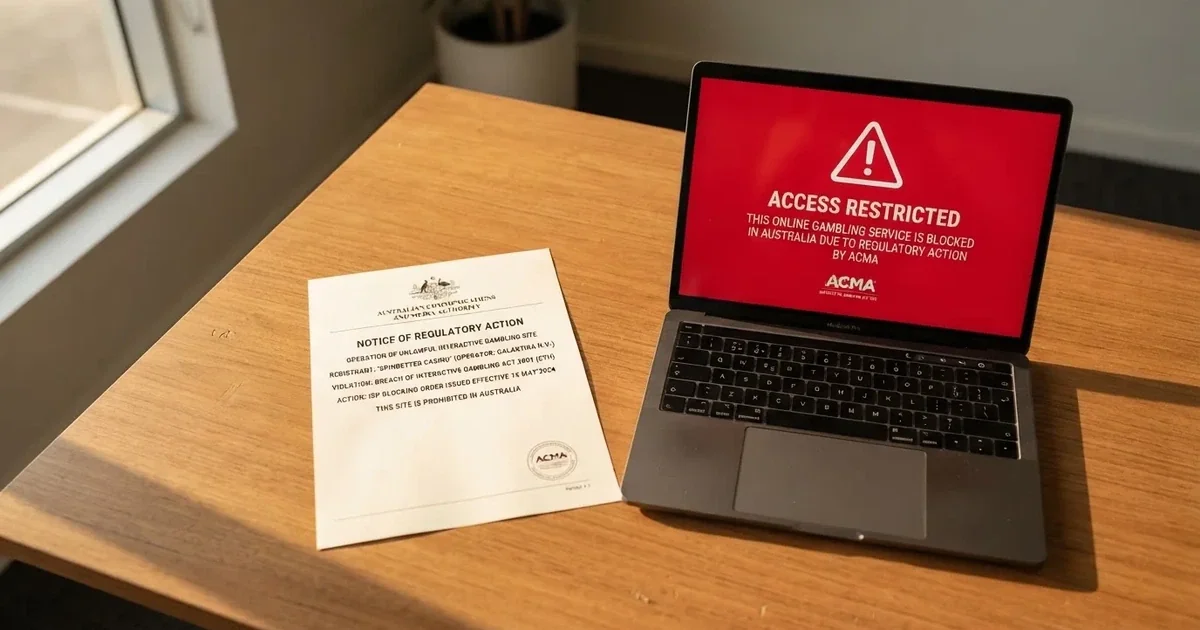
Data current as of 29 October 2026. Licence claims and ACMA enforcement dates checked against the ACMA’s own formal warning publications.
- Playing it safe: what the shared login does to player wellbeing
- The eleven brands on the ACMA’s record in 2026
- What the ACMA’s enforcement record actually shows in 2026
- The Australian frame the network sits inside
- The payment rail question
- The tax line, briefly
- Putting the parts together
- Frequently asked questions
Playing it safe: what the shared login does to player wellbeing
Inclave is a single-sign-on product, the kind of system a person meets at work and on consumer sites every day. Applied to a network of offshore casinos it lets a player register once and reuse the same credentials across the brands that have signed up. The user benefit is real: no separate password per site, no second copy of the same KYC document, one balance view in some implementations. The player-protection problem is also real, and it lives in the same place as the benefit. A wallet that travels with the login is the most natural thing in the world for an Australian punter to overspend across, because the brain still reads it as one account when, in terms of deposit caps, loss tracking and self-exclusion, it is several.
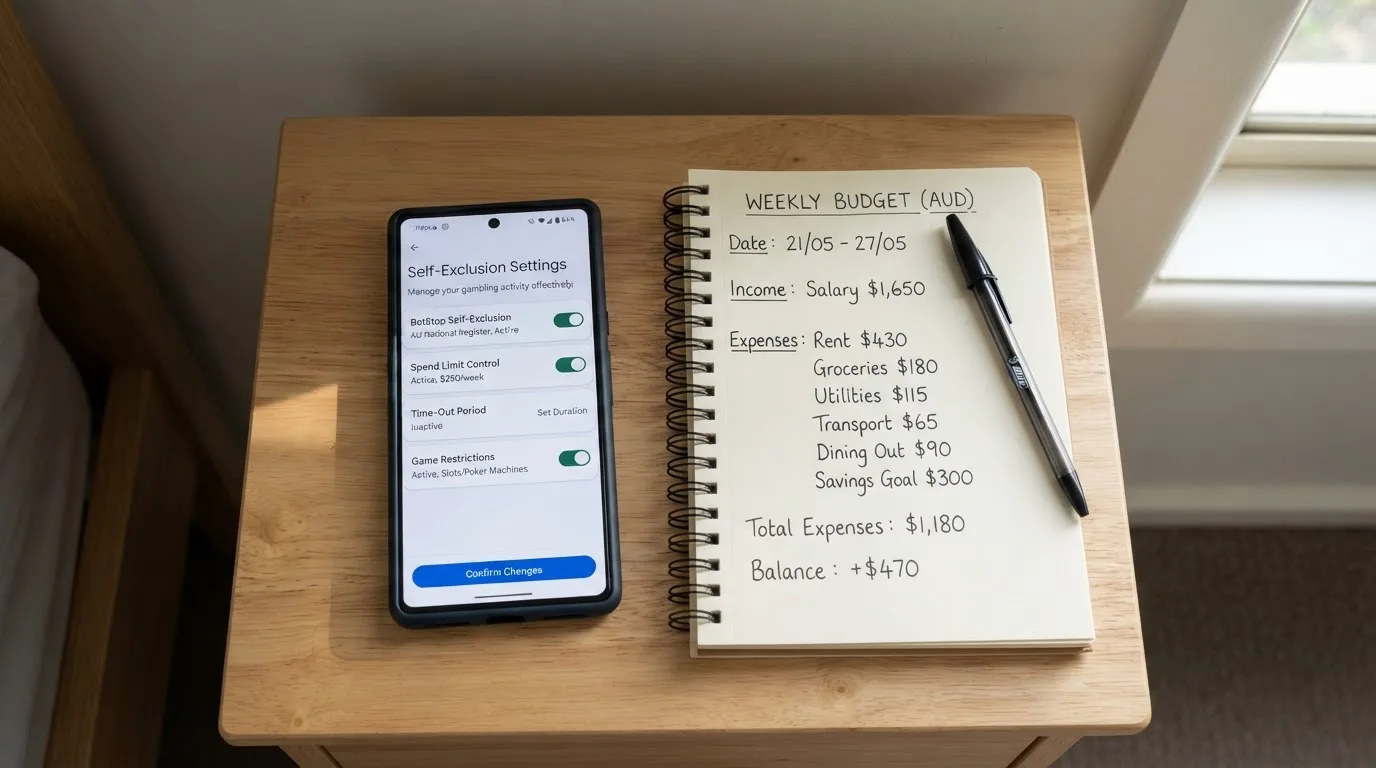
Why one credential across many brands makes harm harder to spot
A person using five casinos through one Inclave login has, in everyday terms, one balance view but five separate deposit histories, five bonus balances and five sets of withdrawal terms. The bank statement still shows five merchants. The casino site itself only knows what that brand did. Cross-brand patterns — money going in across the network faster than it comes out, deposit attempts on the same day from multiple brands, repeated topping up after a losing session — are visible to the player in pieces and to no one else at all.
The harm signal here is not new. It is the standard problem of multiple-account gambling, sharpened by the fact that the accounts are deliberately linked. Australian-licensed wagering and lottery operators are bound to BetStop, the National Self-Exclusion Register, and to consumer-protection rules under the Interactive Gambling Act. An offshore casino on an Inclave list is bound to none of them. BetStop enrolment does not propagate across the network. A self-exclusion applied at one brand has no force at the next.
The Australian safety tools that do and do not reach an offshore network
Three Australian tools are worth knowing here, with the limit each one reaches.

BetStop, the National Self-Exclusion Register, went live in August 2023 and binds every Australian-licensed online and phone wagering service. An Inclave casino is not an Australian licensee. BetStop enrolment still matters — it covers the legal wagering services a person may also use, and it is one of the stronger single actions a person who is worried about their own play can take. It just does not close the offshore sites.
Bank-level gambling blocks are a different layer. Westpac’s gambling block refuses authorisation of transactions registered under the merchant category code for betting and casino gambling on eligible personal credit and debit cards. ANZ’s block, set up in the ANZ app, blocks gambling transactions through a digital wallet such as Apple Pay on an eligible card, not just the physical card; once turned on it carries a 48-hour wait to remove. Commonwealth Bank lets a customer apply a gambling lock to eligible cards through the CommBank app, with the same caveat the other banks publish — not every gambling transaction will be blocked, some non-gambling transactions may be blocked in error. The block sits at the card network level, so it cuts the deposit rail whether the merchant is one brand or several. That is the closest thing to a network-wide kill switch an Australian has, and it reaches an Inclave casino the moment that casino tries to take a deposit.
The National Gambling Helpline on 1800 858 858 is free, 24/7 and offers web chat at Gambling Help Online. It is independent of any operator on the network, and it is the right first call for a person who recognises the warning signs in their own play. The helpline does not solve the legal question, but the legal question is not the only one worth solving.
The eleven brands on the ACMA’s record in 2026
The brands below are not a ranking. Each one is listed because the ACMA itself issued a formal warning over it for supplying prohibited interactive gambling services to Australians, and the ACMA’s own enforcement record is the most neutral source available. The table pulls those warnings into one view so a reader can see at a glance who the regulator has acted against, when and over which brand.
| Brand | ACMA action and date | Operator named by the ACMA | Subject support |
|---|---|---|---|
| RocketPlay | Formal warning, March 2026; earlier warning to Dama N.V., May 2022 | Pulsup Ltd (Rocketplay.com.au) | Listed by gambling industry trackers |
| Level Up Casino | Formal warning, May 2022 | Dama N.V. | Listed by banking block references |
| Woo Casino | Formal warning, March 2025 | Dama N.V. | — |
| Spirit Casino | Formal warning, May 2025 | Dama N.V. | — |
| National Casino | Formal warning, July 2025 | Consolutetish S.R.L. | Listed by ACMA, AUSTRAC and BetStop references |
| Bizzo Casino | Formal warning, July 2025; earlier warning to TechSolutions, 2022 | Consolutetish S.R.L. | Listed by gambling industry trackers |
| Ignition Casino | Formal warning, July 2025 | Bamboo Media | — |
| Instant Casino | Formal warning, February 2025 | EOD Code SRL | Listed by payments-industry references |
| Jackbit | Formal warning, April 2026 | Ryker B.V. | — |
| Casino Intense | Formal warning, April 2025 | Sterplay Holding Ltd | Listed by AUSTRAC, BetStop and gambling industry references |
| Sky Crown | Formal warning, published September 2022 | Hollycorn N.V. | — |
The Subject support column reflects where the brand appeared in the consulted reference set — payments guides, self-exclusion cross-references, gambling-industry trackers — and is not a recommendation. A dash means the consulted set returned no mention of that brand outside the ACMA’s own warning. Several operators appear in the table more than once because the ACMA has had to revisit the same parent company: Dama N.V. has now received warnings over six brands, with a second round covering Woo Casino in March 2025 and Spirit Casino in May 2025; TechSolutions drew a 2022 warning over Bizzo Casino, and Consolutetish S.R.L. drew another one in July 2025 over the same brand. A pattern of repeated warnings to the same corporate parent is, in practice, a signal about how seriously that parent treats the Australian prohibition.
What the ACMA’s enforcement record actually shows in 2026
The regulator’s own record is the source the rest of the page leans on, so it is worth looking at it as a whole before going brand by brand. The ACMA’s blocking regime started with the first blocking request in November 2019. By June 2026 the authority had asked Australian internet service providers to block 1,751 illegal gambling and affiliate marketing websites in total, and more than 230 unlicensed gambling services had left the Australian market since enforcement was strengthened in 2017. The most recent published round, reported on 26 June 2026, named 12 more sites for blocking: 7Signs, ChromaBet, Donbet, Duospin, Freshbet, Slots Gem, Jacks Club, Lucky Start, Pointsbetz.com, Spinrise, Vinyl Casino and Wildsino.
The arithmetic the regulator’s own numbers put in front of an Australian reader is straightforward. 1,751 sites blocked since November 2019 works out, as a band, at roughly 26 blocked domains every week for six and a half years — and that band is conservative, because the count includes affiliate marketing pages as well as gambling sites themselves. The condition on the figure is the ACMA’s own caveat that not every blocking request reaches a live site, and that some sites move domain rather than close. Even with that caveat, the volume is the regulator’s answer to any claim that the prohibition is theoretical.
A walk through the eleven brand-by-brand warnings
Each warning below carries the operator the ACMA named, the date of publication and the year of the earliest action against the same corporate group where one exists. The verdicts at the end of each block answer a different question from the warning itself, which is why they read differently.
RocketPlay
The ACMA’s most recent formal warning over RocketPlay, published in March 2026, named Pulsup Ltd as the operator of Rocketplay.com.au. Dama N.V. had already drawn a warning over the same brand in May 2022, which makes RocketPlay a brand whose operator history has changed hands once and been warned under both owners. The brand is listed by gambling-industry trackers, and the listing is the only third-party signal beyond the ACMA’s own action.
The verdict here is about opacity. Two operators, two warnings, one brand name. A player looking at the RocketPlay site today sees a brand; the ACMA’s record shows that the company behind it has been replaced and the warning has been renewed.
Level Up Casino
Level Up Casino drew an ACMA warning in May 2022 with Dama N.V. named as the operator. Dama N.V. is the same parent that the ACMA has had to warn five other times, including over Woo Casino in March 2025 and Spirit Casino in May 2025. The brand is referenced by Westpac’s gambling-block documentation, which is a curious kind of third-party signal — a major bank treating the merchant as the kind of operator its block is designed to refuse.
The verdict is about repetition. Level Up is one warning among six that the same parent has drawn. The block above the page is for an Australian player to use, and the brand’s place inside that block is settled.
Woo Casino
Woo Casino was the subject of an ACMA formal warning to Dama N.V. in March 2025. No third-party listings exist for the brand outside the regulator’s own records, leaving the warning itself as the primary information source for an Australian reader.
The verdict is the simplest one on the table. A single formal warning, no third-party signal either way, and a parent company that has drawn the same letter five other times. A punter who reached Woo Casino through an Inclave login would be playing at a brand the regulator has named and at a parent the regulator has named repeatedly.
Spirit Casino
Spirit Casino was the subject of an ACMA formal warning to Dama N.V. in May 2025. The brand appears in no third-party records beyond the ACMA’s official warning. It and Woo Casino sit two months apart on the same parent’s enforcement record, and Dama N.V.’s wider pattern is the most reliable signal either of them has.
The verdict is about the parent, not the brand. A new warning over a brand the regulator had not previously named, arriving two months after a warning over a sister brand, is the regulator’s way of saying the parent has not changed course.
National Casino
The ACMA issued a formal warning to Consolutetish S.R.L. over National Casino in July 2025. It appears in several compliance-focused sources relevant to Australians, including the ACMA’s own public warnings, AUSTRAC guidance, and BetStop’s exclusion registers.
The verdict is about reach. The brand shows up in enforcement files and payments-monitoring guidance alike. It is one of the better-mapped sites on this list, and the map is not flattering.
Bizzo Casino
Bizzo Casino drew a formal warning to Consolutetish S.R.L. in July 2025, following an earlier 2022 action against TechSolutions (CY) Group Limited and TechSolutions Group N.V. The brand is also cited by industry trackers.
The verdict is about persistence. A brand that has drawn a regulator’s letter twice under two different operators is, in practical terms, a brand that has carried on offering the prohibited service through a succession of owners. The pattern is the signal.
Ignition Casino
Ignition Casino received a formal warning directed at Bamboo Media in July 2025. This warning is the primary third-party indicator for the brand.
The verdict is about the operator. Bamboo Media is the name on the warning; the brand itself is less well-mapped than its sister on this list. A player comparing the two would lean on the operator record rather than the brand.
Instant Casino
Instant Casino was the subject of a formal warning to EOD Code SRL in February 2025. It appears in payment-industry documentation alongside ecopayz and PayID, which is the type of reference that places the brand in the same context as common Australian payment rails.
The verdict is about how the brand sits in the payments conversation. Instant Casino shows up in payment references, which is information in itself: a brand that turns up in payment-industry material is one whose deposit mechanics are part of its public footprint.
Jackbit
Jackbit was named in an ACMA formal warning to Ryker B.V. in April 2026. The regulator’s own publication is the only confirmed source for this action. The warning is recent and the operator is one the regulator has had to write to twice — once over Jackbit and once over CasinOK — within the same action.
The verdict is about recency. April 2026 is the most recent published warning in this set after RocketPlay. A punter reaching the brand through an Inclave login is reaching a brand whose operator was in the regulator’s correspondence only weeks ago.
Casino Intense
Casino Intense was named in an ACMA formal warning to Sterplay Holding Ltd in April 2025. The brand is referenced by three of the consulted sources that matter for an Australian reader: AUSTRAC’s threshold-transaction-report guidance, BetStop’s exclusion cross-references and gambling-industry trackers. The cross-references are not endorsements, but they place the brand in conversations Australian regulators are actively having.
The verdict is about triangulation. Casino Intense is one of two brands on this list that the ACMA, AUSTRAC and BetStop references all name. The breadth of the regulatory cross-referencing is the signal.
Sky Crown
Sky Crown was named in an ACMA formal warning to Hollycorn N.V., with the formal warning publication dated September 2022. No further third-party listings exist beyond the ACMA’s own publication, and the parent company has drawn further warnings since for related brands.
The verdict is about age. Sky Crown is the oldest warning on this list by publication date, and the parent has kept appearing in regulatory cross-references since. A brand that has been on the regulator’s record this long is a brand that has had years to comply and has not.
The Australian frame the network sits inside
The Interactive Gambling Act 2001 is the central fact of this page. As amended by the Interactive Gambling Amendment Act 2017, it makes it an offence to supply online casino games, online pokies or in-play betting to a person in Australia. No state or territory licenses online casino products; what is licensed is wagering on races and sport placed before the event, lotteries and keno. In practice that licensing sits with the Northern Territory Racing and Wagering Commission, which regulates 52 of Australia’s online bookmakers — including Sportsbet, Bet365 and Ladbrokes — under arrangements that are essentially tax-driven. The commission itself has no full-time staff and meets once a month in Darwin, which is itself a piece of the picture worth holding in mind.
The ACMA is the regulator that translates the prohibition into action. It investigates, issues formal warnings, and directs Australian internet service providers to block illegal sites. The individual player is not the target of the law, which is a point worth stating plainly — the IGA goes after the provider, not the punter. The practical consequence for a player is different. An offshore site gives no Australian consumer protection, no complaints body and no recourse if a withdrawal is refused. A balance held at an offshore casino can be sitting on a domain the ACMA has just blocked.
What changed in 2026
The Interactive Gambling Amendment (Gambling Reform) Bill 2026 passed Parliament on 19 August 2026. Its advertising and inducement measures commence on 1 January 2027. That is the line a 2026 page sits behind: law with a start date, not yet in force. Any claim that an advertising restriction is currently live is wrong until 2027. The provisions that bind 2026 are the 2017 strengthening of the prohibition, the November 2019 start of the blocking regime, the August 2023 launch of BetStop and the 11 June 2024 ban on credit cards and credit-related products at Australian-licensed wagering services.
Where an Australian punter stands if a withdrawal goes wrong
This is the practical question the marketing never answers. With an Australian-licensed wagering service, complaints routes exist through the operator, the state regulator and ultimately the Australian Financial Complaints Authority depending on the channel. With an offshore casino, the routes that exist are the routes the operator has chosen to publish. There is no Australian complaints body the player can compel to look at the case. The ACMA’s enforcement is on the supply side; it does not adjudicate individual disputes. A blocked domain can take a balance with it.
The payment rail question
The payment rail is the part of the picture an Australian player actually controls. Three layers matter.
Australian-licensed online wagering services cannot accept credit cards, credit-related products or digital currency, with penalties for operators up to A$247,500. Legal deposit routes are debit card, bank transfer, PayID/Osko and BPAY. A site asking an Australian for a credit card or for a crypto deposit is operating outside the Australian rules. Credit-card bans are also the reason Apple Pay and Google Pay sit awkwardly in the conversation: the wallets themselves are free to the consumer and Apple does not charge fees for using Apple Pay in stores, online or in apps, but the underlying card is the regulated instrument. If the card is a credit card, the transaction is prohibited at an Australian-licensed wagering service whether the wallet is involved or not.
Bank-level gambling blocks work at the card network level. Westpac’s block refuses authorisation of transactions registered under the merchant category code for betting and casino gambling on eligible personal credit and debit cards. ANZ’s block, set up in the ANZ app, blocks gambling transactions through a digital wallet such as Apple Pay on an eligible card; once turned on, removing it requires a 48-hour wait. Commonwealth Bank lets a customer apply a gambling lock to eligible cards through the CommBank app, with the same caveat the other banks publish — not every gambling transaction will be blocked, and some non-gambling transactions may be blocked in error. By the end of 2025, Apple Pay, Google Pay and Samsung Pay collectively accounted for around 45% of all card payments in Australia by number, which is the scale of the wallet footprint the bank blocks have to cover.
PayID and Osko sit at the other end of the rail. Osko delivers a bank transfer between participating Australian banks in under a minute, 24/7, whether it is addressed to a BSB and account number or to a PayID. Paying to a PayID shows the account-holder name before the transfer is sent, and AP+ warns that being asked to transfer money to a PayID on an illegal gambling site almost certainly means a scam site. PayID-based instant transfers are available at over 100 Australian financial institutions; more than 25 million PayIDs had been registered on the New Payments Platform by April 2025. The New Payments Platform itself went live on 13 February 2018 and is owned by New Payments Platform Australia Ltd, whose shareholders include the Reserve Bank and the major banks.
BPAY is the third rail. It is a bill-payment service in online banking where the payer enters a Biller Code and a Customer Reference Number; it has operated since 18 November 1997 and is available through more than 140 banks and financial institutions, with more than 95,000 businesses offering it. BPAY is owned equally, via Cardlink Services Limited, by ANZ, Commonwealth Bank, NAB and Westpac, and runs under Australian Payments Plus alongside PayID and Osko.
AUSTRAC’s threshold-transaction-report rule requires reporting of transfers of A$10,000 or more, but only for physical cash. Ordinary electronic bank transfers are not subject to that per-transaction reporting requirement regardless of the amount. The rule is sometimes invoked as if it applied to gambling flows, and it does not.
American Express, in brief
American Express is the card scheme that sits slightly outside the rest of the network. It was established in 1850 as a freight-forwarding company and launched its first charge card on 1 October 1958; unlike Visa or Mastercard’s four-party network, Amex traditionally issues cards and processes transactions itself as a three-party scheme. The Reserve Bank of Australia’s July 2025 review proposes removing surcharges only on eftpos, Mastercard and Visa transactions, and explicitly leaves American Express outside the scope of the proposed surcharge ban. The relevance here is the asymmetry: Amex is not folded into the same consumer-protection sweep as the other two, which matters at any merchant whose payment mix is heavy on Amex.
The tax line, briefly
Gambling winnings of a recreational player are not assessable income under section 6-5 of the ITAA 1997, and losses are not deductible unless the person carries on a business of gambling. The “business of gambling” framing is the ATO’s own model and the rule of thumb, and the right reading of it is “check with the ATO” — the kind of caveat that has to be taken at face value because the line between punter and trader is one the ATO draws case by case.
Putting the parts together
A reader who came to this page looking for the eleven brands on an Inclave list that the ACMA has acted against has them. The reason the page reads the way it does is that no list of those brands can be honest without the frame around it. Every one of the eleven is offering a product that is prohibited for supply to a person in Australia. The shared login is a real product feature, but it is a feature that sits on top of an unlawful offer, and the player-protection tools that reach an Australian-licensed wagering service do not reach the network the login connects to. Bank-level gambling blocks do reach it. BetStop does not. The ACMA’s record is the cleanest signal of which brands the regulator has had to write to and how often. 1,751 domains blocked since November 2019, more than 230 services pushed out of the market since 2017 — that is the volume behind the prohibition, and it is the figure the rest of this page sits on.
Frequently asked questions
Is a casino using the Inclave login system legal for an Australian player to use?
No. The Inclave login is a single-sign-on product, not a licence. The casino on the other end of it is offering online casino games or online pokies, and the Interactive Gambling Act 2001 prohibits the supply of those products to a person physically in Australia. The player is not the target of the law, but the offer itself is unlawful, and the player has no Australian consumer protection if a withdrawal is refused.
What does the Inclave system actually connect between different casino sites?
It connects credentials. The same username, password and identity verification carry across the brands on the network that have signed up to the system. Balances, bonuses, deposit histories and self-exclusion status do not carry across by default — each brand keeps its own ledger — which is one of the reasons a single login across many brands makes spending harder to track.
Do new Inclave casinos share the same account balance as older ones on the network?
No. The login is shared; the wallet is not. A new casino joining the network gets the player’s existing credentials but starts a fresh balance and a fresh bonus ledger. The practical effect is that a player who moves between an established brand and a brand new to the list is moving money across separate wallets that the bank statement shows as separate merchants.
Is signing up once through Inclave different from creating a separate account at each site?
In practical terms it saves time at registration and login, and it concentrates KYC in one place. It does not change the legal position of any of the sites, does not pool balances, and does not put the player under any one site’s responsible-gaming controls. The convenience is real and one-sided: it benefits the player at login, and it benefits the operators at the audit and marketing layers.
How can someone track total spend across several sites linked by one Inclave login?
The single most reliable method is the bank statement, because every brand settles to its own merchant. Bank-level gambling blocks — Westpac, ANZ, Commonwealth Bank — sit at the same layer and refuse the transaction before it reaches the merchant. The casino-side view only covers the one brand the player is looking at, so cross-brand totals have to come from outside the network.
What should raise concern about a casino that only recently joined an Inclave list?
Three signals. A regulator’s warning against the operator, which the ACMA publishes on its own site. A short operational history with no third-party listings, which means the brand has not been around long enough for the consulted reference set to pick it up. And a corporate parent that has already drawn a regulator’s letter for a different brand on the network — that pattern is what the ACMA’s record over Dama N.V. and TechSolutions is the clearest example of.