
Bitcoin Cash casinos for Australian players: what the cashier shows, what the ACMA has done
Anyone who has typed “Bitcoin Cash casino Australia” into a search bar has probably noticed something quickly: the pages that come back are remarkably similar to the ones for plain Bitcoin, and the difference at the cashier is mostly a logo swap. That is the whole story of this page. Bitcoin Cash is a payment rail, not a different kind of casino, and the legal situation around an Australian-resident player does not change when the deposit leaves a BCH address instead of a BTC one. What changes is the speed at which a deposit clears, the fee the network charges for it, and the small number of operators that have actually been warned, blocked or otherwise singled out by the Australian regulator. Bitcoin Cash casinos for Australian players — More on this topic at casino table games .
The numbers and dates below are checked against the Australian Communications and Media Authority’s published record and against the Bitcoin Cash project’s own documentation as at 29 October 2026.
- The legal floor under every Bitcoin Cash casino an Australian can reach
- Responsible play when the deposit leaves the ledger in seconds
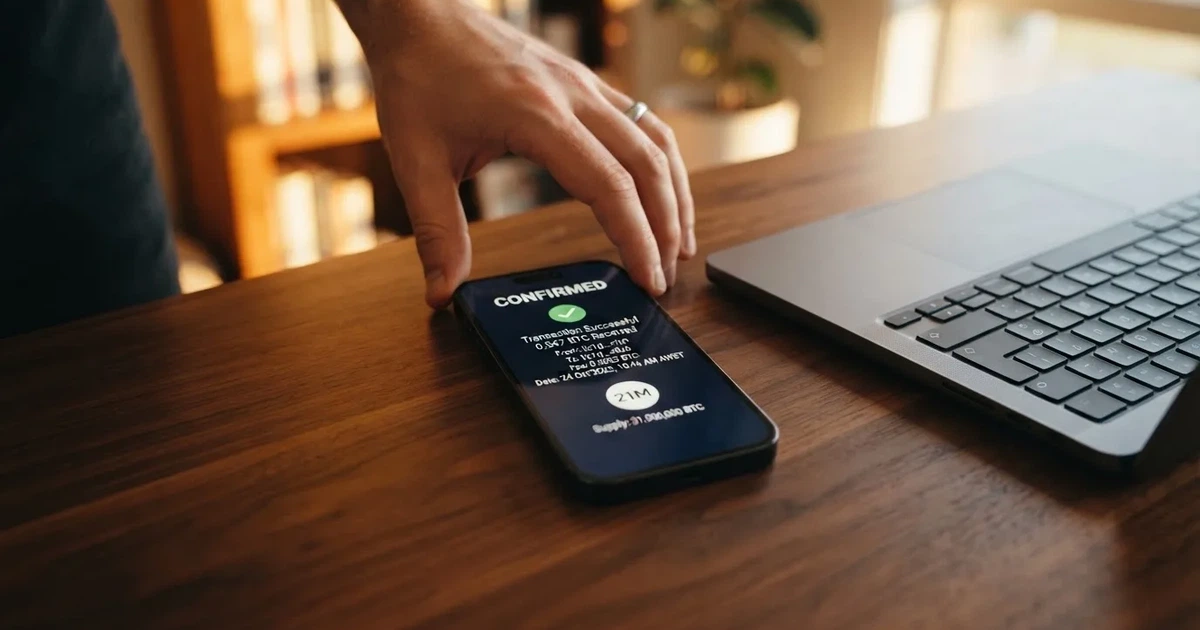
- What a Bitcoin Cash payment actually does at a casino cashier
- The eleven brands the ACMA has acted against, and how fast the wall has grown
- Bitcoin Cash, Bitcoin and the everyday experience of a casino deposit
- How an Australian punter reads this market in 2026
- Frequently asked questions
The legal floor under every Bitcoin Cash casino an Australian can reach
Australian online gambling law does not bend for crypto. The Interactive Gambling Act 2001, tightened by the Interactive Gambling Amendment Act 2017, makes it an offence to supply online casino games, online pokies or in-play betting to a person physically in Australia. No state or territory issues a licence for any of that. The activity itself is the prohibited thing — the Interactive Gambling Act does not list forbidden payment rails, it lists forbidden products. A casino that accepts Bitcoin Cash is therefore in the same legal posture as one that accepts Visa: it is offering a prohibited interactive gambling service, and the coin is incidental.
What a licence does cover, in practice, is wagering on races and sporting events placed before the event, lotteries and keno. Those are run, almost entirely, under Northern Territory licences — the Northern Territory Racing and Wagering Commission regulates 52 of Australia’s online bookmakers, the names most punters would recognise among them. The commission itself is a small body: no full-time staff, monthly meetings in Darwin, a tax-driven licensing model rather than a consumer-protection one. Online casino, online pokies and in-play betting stay outside its remit.
A useful way to think about the asymmetry: the regulator that punts talk about most — the ACMA — is not a gambling regulator at all. It is the communications and media authority, and it does what the IGA lets it do against offshore operators. Those powers include formal warnings, civil penalty proceedings and, since 2019, formal blocking requests to Australian internet service providers. The blocking is the visible thing; the warnings are the document trail.
Enforcement so far, in plain numbers
The headline figure, reported in June 2026: 1,751 illegal gambling and affiliate marketing websites blocked since the first blocking request in November 2019, and more than 230 unlicensed services that left the Australian market altogether since enforcement was strengthened in 2017. The June 2026 round alone asked ISPs to block another twelve — 7Signs, ChromaBet, Donbet, Duospin, Freshbet, Slots Gem, Jacks Club, Lucky Start, Pointsbetz, Spinrise, Vinyl Casino and Wildsino.
The blocking figure is the one to hold on to, because it answers the question this page has to answer: how much pressure is the ACMA actually putting on the offshore market an Australian punter reaches through Bitcoin Cash? The answer is: a great deal, sustained over years, and accelerating.
What an “Australian-licensed” Bitcoin Cash casino looks like
It does not exist, and the wording on a casino’s footer page should not change a reader’s mind about that. A footer that displays a Curaçao or Anjouan sub-licence, a Kahnawake registration or a Philippine offshore licence does not bring the operator under Australian law. The IGA targets provision to a person in Australia, not incorporation; an entity in any of those jurisdictions can still breach the Act by accepting an Australian customer. The footer is a payment-processing credential, not a compliance credential.
What an Australian-licensed site can look like is a wagering service — a sports book, a tote, a lotteries product — running under an NTRWC licence. Those sites do not accept casino games, they do not accept in-play bets and, since 11 June 2024, they do not accept credit cards, credit-related products or digital currency as a deposit method. A Bitcoin Cash deposit on an Australian-licensed site is, by definition, not happening on a site that is Australian-licensed.
The 2026 reform that did pass
The Interactive Gambling Amendment (Gambling Reform) Bill 2026 passed Parliament on 19 August 2026. Its advertising and inducement measures commence on 1 January 2027. The Bill does not legalise online casino games; it tightens what licensed wagering services can advertise and how. On a 2026 page it is law with a future start date — not yet in force, and not yet a fact an offshore operator has to design around. The change a reader feels first is the one the ACMA already has the power to make: another block, another warning, another name off the list of reachable sites.
Responsible play when the deposit leaves the ledger in seconds
Australian consumer protection does not reach an offshore casino. That is the single most important sentence on this page, and it is the one every other paragraph either earns or hedges. BetStop, the National Self-Exclusion Register, has been live since August 2023 and binds Australian-licensed online and phone wagering services; an offshore casino is not connected to it. Self-excluding through BetStop does not stop an offshore site from accepting a deposit, and an offshore site that did try to enforce it has no Australian legal duty to. A player who needs the protection BetStop offers should know it is real, and should know where it does not apply.
A Bitcoin Cash deposit makes the gap more uncomfortable than a card deposit does. A confirmed on-chain payment cannot be recalled: the only thing that moves it back is the receiving party choosing to send a new transaction. A chargeback, the lever a debit-card customer has, does not exist on a public ledger. The practical consequence is that an offshore operator that decides, after a withdrawal request, that it does not want to pay can simply stop answering email, and the funds that arrived as confirmations on the Bitcoin Cash blockchain stay where they were sent. The ACMA can warn, fine and block; it cannot make the operator hand the money back.
Spend tracking has to come from the player, and the figures the ATO and AUSTRAC publish give it a frame. The Australian Taxation Office treats crypto assets — Bitcoin Cash included — as property for capital gains tax purposes, and a CGT event is triggered when a player disposes of one: swapping it for AUD, swapping it for another crypto, or spending it at a casino cashier. Gambling losses on personal-use assets are not deductible; capital losses on personal-use assets are disregarded and cannot offset other gains. The casino win, where the deposit method is a coin that moves on its own ledger, is therefore taxable under CGT rules a casual punter may not have realised apply. The ATO’s own language for this is that “most disposals” of crypto are CGT events, and that a holding of more than 12 months qualifies for a 50% CGT discount until 1 July 2027, when CPI-indexation of the cost base and a 30% minimum rate on net capital gains replace it.
For a player who needs help with gambling, the National Gambling Helpline is 1800 858 858, free and 24/7, with chat at Gambling Help Online. For a player who needs help with the tax treatment of crypto, the ATO website and a registered tax agent are the routes; the page does not give tax advice and the casino cashier will not give it either.
What a Bitcoin Cash payment actually does at a casino cashier
Bitcoin Cash is a separate blockchain from Bitcoin, despite the shared name and the shared early code. It launched on 1 August 2017 as a hard fork of the Bitcoin ledger at block height 478,558, and it carries its own token supply, its own block schedule and its own fee structure. The Bitcoin Cash project’s own description of its economics is that transaction fees run “under a penny” and that confirmations take minutes. Total supply is capped at 21 million coins, the same ceiling as Bitcoin’s; the supply schedule differs in detail but the hard cap does not. Block size is the more visible technical divergence: 8 megabytes at launch, raised to 32 megabytes in 2018, which is the design choice that lets BCH advertise lower fees per transaction in busy periods. The consensus mechanism is the same SHA-256 proof-of-work as Bitcoin, with a 10-minute average block time.
For a casino cashier, those differences translate into three observable things at the moment of payment.
First, deposits credit after a small number of confirmations — the Bitcoin Cash project’s documentation puts this in minutes, the same order of magnitude as a Bitcoin deposit at low congestion but with a fee that tends to be lower. The casino’s published credit policy matters more than the protocol’s nominal block time, because some sites credit after one confirmation and others after three or more; the difference between one and three confirmations at a 10-minute average block time is roughly twenty minutes, which is the difference between “instant” and “go make a coffee”.
Second, the fee the player pays to the network is paid in Bitcoin Cash, not in Australian dollars and not by the casino. Wallets let the player choose a fee rate; a high fee confirms faster, a low fee may sit in the mempool for a while if the network is busy. For a small deposit — the kind of amount a recreational punter tends to send — the fee is rarely the deciding factor, but for a larger deposit it is the one line item the casino does not absorb.
Third, the payment is pseudonymous, not anonymous. Every Bitcoin Cash transaction sits on a public ledger that anyone can read; what a player does not have to give the casino is a card number or a bank account, but the casino (and any chain-analytics firm it hires) can follow the funds. The on-chain address is the receipt, and the address is permanently visible. A “no KYC” claim that an offshore casino makes about Bitcoin Cash deposits has to be read against that. The deposit itself may not require identity documents; the withdrawal almost always does, because the operator wants to be paid in fiat somewhere and a fiat off-ramp is the moment at which AUSTRAC’s digital-currency-exchange registration requirement applies.
Why AUSTRAC sits in a paragraph about casino cashiers
AUSTRAC, the Australian Transaction Reports and Analysis Centre, requires any business providing a digital currency exchange service to Australian customers to register as a digital currency exchange provider; operating unregistered is a criminal offence. From 31 March 2026 the registration requirement expanded beyond crypto-to-fiat exchange to also cover crypto-to-crypto exchange platforms, digital asset transferors, digital asset custody providers, and stablecoin issuers and distributors. The casino’s cashier is downstream of all of that: when a player wins at a Bitcoin Cash casino and wants Australian dollars, somebody in the chain has to convert BCH into AUD, and the entity doing the conversion is in AUSTRAC’s scope. The point for a player is not that AUSTRAC supervises the casino; it is that the rails the player has to use to cash out are supervised, and the moment a withdrawal touches them is the moment an identity check becomes very likely.
Block time, halving and “confirmations” in plain language
A Bitcoin Cash block is added, on average, every 10 minutes — the same interval as Bitcoin. Block discovery is probabilistic: a confirmation can arrive in a few minutes, or it can take noticeably longer, with no guaranteed minimum or maximum delay. The halving cycle cuts the mining reward in half on a fixed schedule until the total issued reaches 21 million coins, expected late in this century. None of that changes anything for a player at a casino cashier; what matters is that a confirmation is the casino’s signal that a deposit is final, and the casino’s policy on how many confirmations it waits for is the line between a fast deposit and a slow one.
The eleven brands the ACMA has acted against, and how fast the wall has grown
Eleven brands make up the ranking this page sits behind, and they are not ranked for quality — they are ranked for recency and specificity of ACMA action. The list is a record of who the regulator has publicly named, in what order, and for what conduct. The newest warning sits at the top, the oldest at the bottom, and the page’s job is to make the wall the ACMA has built visible to the reader. A reader who treats the list as a recommendation has read it wrong; a reader who treats it as a market scan has read it right.
| Brand | ACMA action and date | Operator named by the ACMA | Subject support |
|---|---|---|---|
| RocketPlay | Formal warning, March 2026 | Pulsup Ltd | — |
| Jackbit | Formal warning, April 2026 | Ryker B.V. | — |
| Casino Intense | Formal warning, April 2025 | Sterplay Holding Ltd | — |
| Spirit Casino | Formal warning, May 2025 | Dama N.V. | — |
| Ignition Casino | Formal warning, July 2025 | Bamboo Media | — |
| National Casino | Formal warning, July 2025 | Consolutetish S.R.L. | — |
| Bizzo Casino | Formal warning, July 2025 (and 2022 to TechSolutions) | Consolutetish S.R.L. (2025); TechSolutions (2022) | — |
| Woo Casino | Formal warning, March 2025 | Dama N.V. | listings |
| Instant Casino | Formal warning, February 2025 | EOD Code SRL | — |
| Level Up Casino | Formal warning, May 2022 | Dama N.V. | — |
| Sky Crown | Formal warning, September 2022 | Hollycorn N.V. | — |
The table’s “Subject support” column reads almost entirely as dashes. That is the point. Research into whether these brands specifically accept Bitcoin Cash at the cashier turned up very little of substance. Two listings — Woo Casino and National Casino — appeared in source lists that referenced the brands in the context of cryptocurrency payment support; the page treats those references as listings, not as confirmed payment-rail facts. For every other brand in the table, the page makes no claim one way or the other about Bitcoin Cash specifically. The reader who came looking for “Bitcoin Cash casinos” should not be told, by an article that cannot verify it, that a brand on the ACMA’s warning list accepts the coin in question. The honest sentence is the one that says nothing.
The blocking rate, as a band
Between the first blocking request in November 2019 and the ACMA’s June 2026 update, 1,751 illegal gambling and affiliate marketing websites were added to the blocking list. That works out to an average of roughly 263 sites per year added to the wall, or about 22 sites per month. The rate is not constant. Some years saw dozens added; the June 2026 round alone added twelve. The honest way to read it is as a band rather than a single number: somewhere between one and three new blocking requests per week, on average, over the period the ACMA has been keeping the list.
The condition that puts a brand on the list is the same one the IGA creates: provision of a prohibited interactive gambling service to a person in Australia. The condition that keeps a brand off the list is being lawfully licensed in Australia, which online casino games cannot be. So the wall can only grow, and what a reader is looking at is the visible part of a market that is being pushed, slowly but persistently, off Australian internet connections.
RocketPlay — most recent warning, oldest corporate skin
RocketPlay’s history is the cleanest illustration of why the ACMA’s enforcement matters at the corporate level, not the brand level. The same brand was the subject of a 2022 warning to Dama N.V. — one of six brands named in that round, alongside Bambet, Dazard, Level Up, Wild Tornado and Cobra Casinos — and then of a March 2026 warning to Pulsup Ltd. Different company, same brand surface, same product offered to Australian residents. The ACMA’s response is to name the new operator and publish the warning; the brand continues to operate under a fresh corporate wrapper until the next round.
For a Bitcoin Cash customer, the practical reading is that RocketPlay’s current operator is Pulsup Ltd and that any deposit made through the Bitcoin Cash network sits with that entity. No data on whether RocketPlay accepts Bitcoin Cash is available beyond the brand’s own marketing; the page does not claim it does.
Jackbit — same year, same playbook
Jackbit was the subject of an April 2026 ACMA warning naming Ryker B.V., alongside CasinOK in the same round. The pattern matches RocketPlay’s: a Curacao-incorporated operator, a Bitcoin-friendly cashier, and a warning published by the ACMA for offering prohibited interactive gambling services to Australians. The reader who sees Jackbit at the top of a Bitcoin Cash casino list is looking at a brand the regulator has formally addressed in the current calendar year.
Casino Intense, Spirit Casino, Ignition Casino — three operators, three different parent companies
Casino Intense drew a Sterplay Holding Ltd warning in April 2025; Spirit Casino drew a Dama N.V. warning in May 2025; Ignition Casino drew a Bamboo Media warning in July 2025. Three separate corporate parents, three separate rounds, the same regulatory posture. Spirit Casino is the cleanest case of brand re-use by a corporate parent that has been warned before: Dama N.V. was warned over Rocketplay and five others in 2022, then over Woo Casino in March 2025, then over Spirit Casino in May 2025. A reader who counts Dama N.V. warnings sees a parent company accumulating formal warnings the way a casino accumulates chips, with no apparent change of conduct.
National Casino and Bizzo Casino — overlapping warnings, overlapping operators
National Casino and Bizzo Casino were both named in a July 2025 ACMA warning over Consolutetish S.R.L. Bizzo Casino had already been the subject of a 2022 warning to TechSolutions (CY) Group Limited and TechSolutions Group N.V. Two brands, three warnings, two corporate parents. The pattern is the regulator catching up with the same underlying business under successive corporate wrappers; the Bitcoin Cash question is not answered by the warnings themselves, but the warning record is what an Australian-resident reader needs first.
Woo Casino — listings reference, not a confirmation
Woo Casino drew a Dama N.V. warning in March 2025, in the same wave that would later catch Spirit Casino. Wikipedia’s general Bitcoin Cash article lists Woo Casino among brands mentioned in the context of cryptocurrency payment support. That listing is what the page has, and the page does not turn it into a fact about Bitcoin Cash specifically. A reader who needs to know whether Woo Casino accepts Bitcoin Cash at the cashier today has to check at the cashier today.
Instant Casino — February 2025
Instant Casino was the subject of a February 2025 warning to EOD Code SRL. The brand is one of several that surfaced in the offshore affiliate-marketing pages that populate the search results for “Bitcoin Cash casino”; the ACMA’s record is the verified fact. Anything else about how the brand accepts Bitcoin Cash is the brand’s own claim.
Level Up Casino and Sky Crown — the older end of the table
Level Up Casino was named in the May 2022 Dama N.V. warning; Sky Crown was named in a Hollycorn N.V. warning published by the ACMA in September 2022 (the same round that named Blue Leo). Both are at the older end of the table, both are the kind of brand a casual search still surfaces, and both have years of ACMA paperwork behind them. The page does not say which of them accepts Bitcoin Cash today; the page says what the ACMA has said about them.
What the table does not show
The table does not show a single brand that is lawfully licensed to offer online casino games to Australians, because no such licence exists. It does not show a deposit or a withdrawal time, because no verified figure is carried by the research. It does not show a bonus amount or a wagering multiple, because the page does not print those. What it shows is the regulator’s published record against each brand, the operator name on the warning, and a column that says honestly that Bitcoin Cash acceptance is unverified for almost every entry.
Bitcoin Cash, Bitcoin and the everyday experience of a casino deposit
A punter moving between a Bitcoin cashier and a Bitcoin Cash cashier at two different sites will notice three things. The first is the logo. The second is that the BCH address the casino displays is a different format from a BTC address and the wallet the punter uses has to send the right asset to the right address — sending BTC to a BCH address (or the reverse) loses the funds, in some cases irretrievably. The third is the fee, which on the Bitcoin Cash network tends to be lower than on the Bitcoin network during busy periods, and which the punter sets in their wallet rather than the casino setting.
The blockchain underneath the deposit is otherwise the same kind of object: a public, append-only ledger; a proof-of-work consensus mechanism; a fixed total supply; a probabilistic block interval averaging ten minutes. Bitcoin Cash forked Bitcoin’s code on 1 August 2017 at block height 478,558, and the project has been a separate ledger with its own development path ever since. Bitcoin, by contrast, has been in continuous operation since its genesis block was mined on 3 January 2009; its pseudonymous creator, known only as Satoshi Nakamoto, posted the Bitcoin white paper to a cryptography mailing list on 31 October 2008. None of that history changes the cashier experience for a player in any direct way; it explains why two assets that share a name behave the way they do.
Confirmation policy at the cashier, and what controls the player’s wait
A casino’s deposit screen usually shows the number of confirmations it waits for. One confirmation is the most common on BCH; some operators wait for three. At a 10-minute average block time, the difference between one and three is roughly twenty minutes, and a punter who has just sent a deposit and is waiting for the slot reels to unlock is waiting on that arithmetic. The protocol does not let the punter skip the wait: the casino will credit when the confirmations are observed, not before.
Reversibility, and the absence of a chargeback
A Bitcoin Cash payment, once confirmed, cannot be reversed by the sender. There is no chargeback mechanism on the network, and there is no intermediary the punter can appeal to the way a card-issuer can be appealed to. The only way the funds return to the sender is the recipient sending a new transaction. That is true on Bitcoin as well, and it is one of the features that makes cryptocurrency attractive to operators who do not want to deal with card networks’ dispute procedures. For the player, it is the feature that makes a withdrawal dispute expensive to run and easy for the operator to ignore. The Australian consumer-protection framework is built around the chargeback; the Bitcoin Cash ledger does not have one.
Identity at the deposit versus identity at the withdrawal
A Bitcoin Cash deposit at an offshore casino typically requires no documents — the punter sends coins to an address and the casino credits the account on confirmations. A Bitcoin Cash withdrawal typically does require documents, because the operator needs to pay the punter in fiat somewhere and the fiat off-ramp is where AUSTRAC’s digital-currency-exchange registration requirement catches up with the funds. The page does not claim that any specific brand in the table follows this pattern; the pattern is what the regulatory frame makes likely, and what a punter should plan for.
How an Australian punter reads this market in 2026
The Australian market for online casino games is closed, has been closed since 2001, was tightened in 2017, and is being enforced more visibly in 2026 than it was at any point in the previous decade. The ACMA’s blocking requests have moved from a handful per year to a steady flow; the warning record has named the same operators repeatedly under different corporate wrappers; the June 2026 update put the cumulative blocking total at 1,751 sites. The 2026 reform Bill sits as passed-but-not-yet-commenced on the advertising side, with the substance of the IGA unchanged.
For a punter who has decided to use a Bitcoin Cash casino anyway, the operational reality is short. The deposit will confirm in minutes; the fee will be paid in BCH; the address the casino gives has to receive BCH and not BTC; the withdrawal will be where the operator decides the relationship ends. The punter’s only Australian backstop is the ACMA’s enforcement record — visible, growing, and not a refund mechanism — and the ATO’s tax treatment, which counts a deposit at a casino as a CGT event the same way it counts a swap on an exchange. The legal floor under every brand in the table is the same: offering a prohibited service to a person in Australia. The brand on top of the floor does not change the floor.
Frequently asked questions
Is it legal for a casino site to accept Bitcoin Cash from a player in Australia?
No. The Interactive Gambling Act 2001 prohibits the supply of online casino games and online pokies to a person in Australia, and the prohibition is on the product rather than the payment method. A Bitcoin Cash deposit does not make a casino lawful, and an Australian-licensed operator cannot accept it.
How is Bitcoin Cash different from Bitcoin for making a casino deposit?
Bitcoin Cash runs on its own public ledger after forking from Bitcoin in August 2017, and the practical differences a punter sees are at the cashier: lower network fees during busy periods, a separate address format that must receive BCH rather than BTC, and the same probabilistic confirmation time of around ten minutes per block. The legal posture of an Australian player is unchanged.
Does a Bitcoin Cash withdrawal require the same identity checks as a card withdrawal?
It usually requires more, not fewer. AUSTRAC’s registration regime for digital currency exchanges applies at the point a casino pays a player in fiat, and the operator’s off-ramp is where identity documents are requested. A deposit may be document-free; a withdrawal is the moment the regulatory frame catches up with the funds.
Is there a limit on how much Bitcoin Cash can be deposited at once?
Australian-licensed wagering services are barred from accepting digital currency as a deposit method entirely, since 11 June 2024. An offshore casino is not bound by that limit, and the deposit ceiling is whatever the casino sets in its cashier. There is no protocol-level cap on a Bitcoin Cash transaction. See also Casinos that accept ethereum in australia .
What confirms a Bitcoin Cash deposit before it is credited to a casino account?
A confirmation is a new block added to the Bitcoin Cash blockchain that includes the deposit transaction. The casino credits after the number of confirmations it requires in its policy — commonly one, sometimes three — and the player cannot shorten that wait by sending more coins. Block discovery is probabilistic, so the time between sending and crediting varies.