
Golden Pokies Casino Australia and the Offshore Sites Blocked Around It
Golden Pokies runs from outside Australia and offers no licence to take a real-money bet from an Australian resident. That fact frames everything that follows: the bonus headline, the sign-up offer, the no-deposit code, the mobile app, and the comparison with other offshore sites that look very similar in a marketing email but cost the player exactly the same way — in dollars the player cannot recover if the operator disappears, gets blocked, or simply refuses to pay. The Australian Communications and Media Authority named Golden Pokies in a blocking order in March 2021, and has since issued formal warnings over eleven other offshore brands that share the same basic structure. What the official record says, what each operator’s marketing hides, and what the cash numbers in those offers really amount to once the standard offshore terms apply — that is what the rest of this page works through.
Current as of 29 October 2026 and cross-checked against the Australian Communications and Media Authority’s public register of formal warnings and blocked-site rounds.
- The Australian Offshore Casino Landscape in 2026
- Paytable, Branding and What Golden Pokies Markets
- The Fundamental Prohibition on Online Casino Gambling
- Responsible Gaming and What Offshore Sites Do Not Bind
- Payments and Payout Speed in the Australian Banking Rails
- Bonuses, Free Spins and the Real Cost of an Offshore Welcome Package
- Games, Providers and Live Tables Under an Offshore Wrapper
- Operator Profiles
- Frequently Asked Questions
The Australian Offshore Casino Landscape in 2026
The eleven offshore casinos in the table below have one thing in common: the ACMA has issued a formal warning over each of them under the Interactive Gambling Act 2001 for offering online casino games to a person physically in Australia. That warning is not a marketing dispute; it is the regulator’s response to a product that cannot be licensed anywhere in the country. The pattern in the second column is the one that matters: a brand can be warned, rebrand under a different corporate parent, and be warned again within months.
| Brand | Formal warning | Operator named by the ACMA | Other public listings |
|---|---|---|---|
| RocketPlay | March 2026 | Pulsup Ltd | Gambling Insider |
| Level Up Casino | May 2022 | Dama N.V. | Westpac |
| Woo Casino | March 2025 | Dama N.V. | — |
| Spirit Casino | May 2025 | Dama N.V. | — |
| National Casino | July 2025 | Consolutetish S.R.L. | ACMA, AUSTRAC, BetStop |
| Bizzo Casino | July 2025 (earlier 2022) | Consolutetish S.R.L. (earlier TechSolutions) | Gambling Insider |
| Ignition Casino | July 2025 | Bamboo Media | — |
| Instant Casino | February 2025 | EOD Code SRL | ecoPayz, PayID |
| Jackbit | April 2026 | Ryker B.V. | — |
| Casino Intense | April 2025 | Sterplay Holding Ltd | AUSTRAC, BetStop, Gambling Insider |
| Sky Crown | September 2022 | Hollycorn N.V. | — |
Two patterns jump out of the formal-warning column without further arithmetic. The first is corporate: Dama N.V. has been named by the ACMA in 2022, then in 2025 and again in 2025, over four separate brands — RocketPlay, Woo Casino, Spirit Casino and Level Up Casino between them. Consolutetish S.R.L. has been named in 2025 over National Casino and Bizzo Casino, with Bizzo already the subject of a separate 2022 warning to TechSolutions. A formal warning to a corporate parent is what the regulator reaches for when the people behind the cash register keep changing the sign on the door. The second pattern is date density: eight of the eleven warnings fall in 2025 or 2026 alone, and the regulator’s blocking list crossed 1,751 sites in the round reported on 26 June 2026. H2 Gambling Capital’s 2025 report estimates that Australians lose about A$3.9 billion a year to illegal gambling sites, and that the share of gambling going through legal channels fell from 74% in 2021 to 64%.
The fourth column is what those brands look like once a search engine or a payment processor stops being deceived by the marketing. A brand that shows up on the ACMA’s own page or on BetStop’s national self-exclusion register is sitting on the regulator’s desk, not on a customer’s shortlist. A brand that shows up on a payment processor’s documentation — Westpac, ecoPayz, PayID — is sitting on a payment-rail operator’s desk, which can mean a deposit that fails without warning. A brand that shows up only on an industry-tracker listing is in the trade press, not on a regulator’s register. Five of the eleven operators sit on no separate public list at all, and that absence is itself the question to ask.
That is the comparison the operator profiles below carry: not which offshore casino pays out fastest, because the regulator has already answered that the offer is unlawful, but which brands the regulator has had to remind more than once, and what that repetition tells a player about the people behind the cashier.
Paytable, Branding and What Golden Pokies Markets
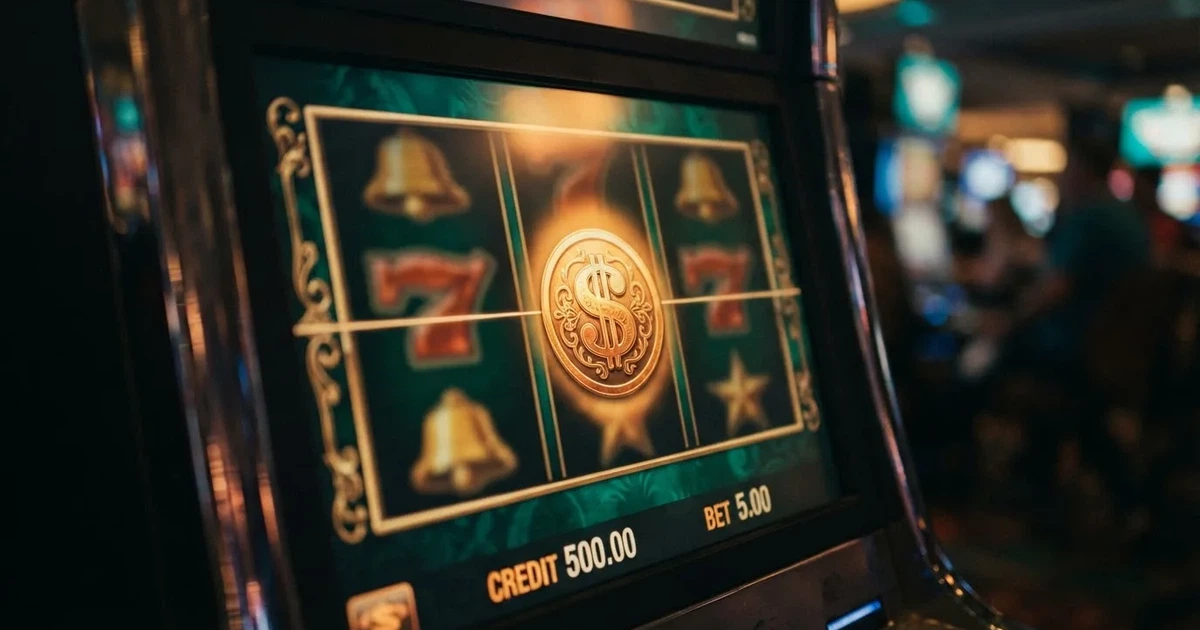
Golden Pokies presents itself as a polished online casino brand with a golden coin motif, a slot reel on the front page, and a sign-up offer pitched at A$2,000 plus free spins. The presentation is built to feel like a normal product page: a navigation bar, a footer with licensing disclaimers, a paytable page describing each game’s return-to-player percentage and volatility band. None of that changes what the product actually is in Australia — an offshore casino the ACMA ordered Australian internet service providers to block in March 2021, in the same round that named Play Croco, Aussie Play, Golden Reels, All Spins Win, Bonza Spins, Pokie Spins, House of Pokies, Pokie Mate and PokieZ. Five years on, the marketing pitch on the landing page is the same marketing every other offshore site uses.
The mobile version of Golden Pokies is built around the same wrapper as the desktop site: a browser-based lobby that loads in a phone browser, plus an installable Android package in some jurisdictions. There is no separately developed app on the Australian Google Play store, and there is no iOS app at all — Apple’s App Store policy has not permitted real-money casino apps in Australia since the category was restricted under the Interactive Gambling Act 2001. What is sold as “the Golden Pokies app” is, in practice, the same web-based lobby rendered for a phone screen, with whatever shortcut or wrapper the operator chooses to install. That pattern is true of nearly every offshore casino on the Australian market: the marketing describes an app, the download is a webview.
The catalogue is presented under the operator’s own branding, but each paytable is drawn from game software that sits on the same shelf across the offshore market. Slots and table games are licensed from a small group of providers — Pragmatic Play, BGaming, Hacksaw and Evolution for live tables — whose games appear under dozens of different casino names without changing their mathematics. A player who moves from Golden Pokies to RocketPlay or to Woo Casino is moving between three front ends over what is functionally the same back-end catalogue.
What the marketing pitch does not lead with is the consumer-protection story. There is no Australian complaints body for an offshore casino, no BetStop registration binding it, no AUSTRAC-mandated account-verification rule that would apply anyway, and no recourse if the cashier refuses the withdrawal. The bonus headline is real money the operator is offering in exchange for play; the cost is real money the player is paying out. That single line is the framing for every section that follows.
The Fundamental Prohibition on Online Casino Gambling
The Interactive Gambling Act 2001, as tightened by the Interactive Gambling Amendment Act 2017, makes it an offence for any person or company to provide an online casino game, an online pokie or in-play betting to a person physically in Australia. No state or territory licensing body issues a licence for online casino games; the product is prohibited, full stop. What can be licensed, in practice under the Northern Territory Racing and Wagering Commission, is wagering on races and sport placed before the event, lotteries and keno. The NTRWC regulates 52 of Australia’s online bookmakers — including Sportsbet, Bet365 and Ladbrokes — licensed in the Territory for tax reasons, and the commission has no full-time staff and meets once a month in Darwin. A Northern Territory bookmaker licence covers sports and race wagering; it does not cover an online casino or an online pokie.
The minimum age to gamble online in Australia is 18, regardless of where the operator is incorporated. From 11 June 2024, as set out in the section on payment rails below, an Australian-licensed online wagering service cannot accept payment by credit card or credit-related product, with penalties of up to A$247,500 per breach. The Interactive Gambling Amendment (Gambling Reform) Bill 2026 passed Parliament on 19 August 2026, but its advertising and inducement measures only commence on 1 January 2027 — law with a start date, not yet in force.
Winnings of a recreational player are not assessable income under section 6-5 of the ITAA 1997, and losses are not deductible, unless the person carries on a business of gambling. The tax position does not change the consumer-protection position: a player at an offshore casino is dealing with a foreign-incorporated company with no Australian tax presence, no Australian dispute resolution, and no obligation to honour a complaint referred to any Australian body.
Prohibition Enforcement: The ACMA Warning and Blocking Record
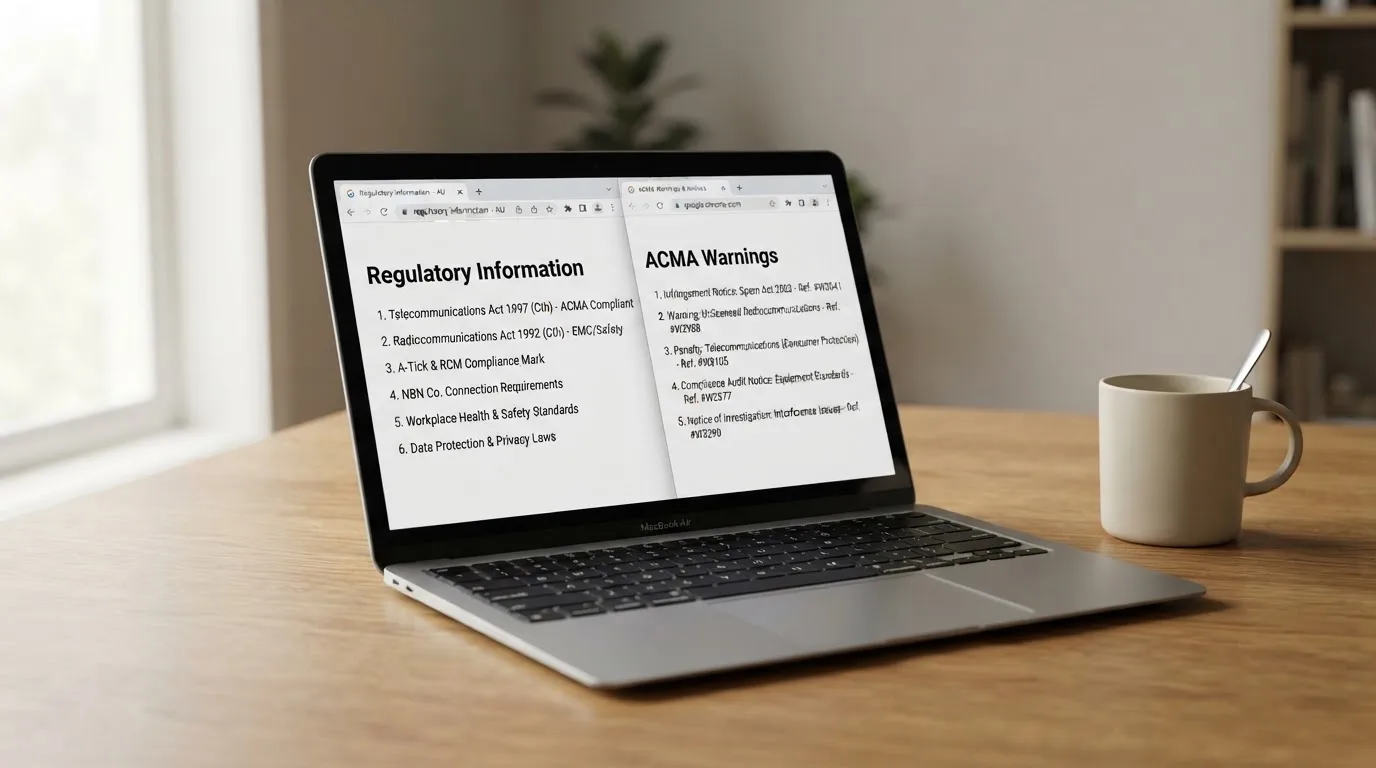
The regulator that does the day-to-day work is the Australian Communications and Media Authority. The ACMA investigates, issues formal warnings and directs Australian internet service providers to block illegal sites. In the round reported on 26 June 2026 the ACMA asked ISPs to block a further twelve websites: 7Signs, ChromaBet, Donbet, Duospin, Freshbet, Slots Gem, Jacks Club, Lucky Start, Pointsbetz, Spinrise, Vinyl Casino and Wildsino. The cumulative number of blocked sites in that round stood at 1,751 since the first blocking request in November 2019, and more than 230 unlicensed gambling services had left the Australian market since enforcement was strengthened in 2017.

Beyond blocking, the ACMA publishes formal warnings against the corporate operators behind the brands, which become a public record. In March 2026 the ACMA warned Pulsup Ltd over RocketPlay. In July 2025 it warned Bamboo Media over Ignition Casino and Consolutetish S.R.L. over National Casino and Bizzo Casino — the second warning tied to Bizzo since 2022, when it sat under TechSolutions. In May 2025 the ACMA warned Dama N.V. over Spirit Casino, having already warned the same parent in March 2025 over Woo Casino and in May 2022 over six brands including Bambet, Dazard, Level Up, Rocketplay, Wild Tornado and Cobra Casinos. In February 2025 the ACMA warned EOD Code SRL over Instant Casino; in April 2025 Sterplay Holding Ltd over Casino Intense; and in April 2026 Ryker B.V. over Jackbit and CasinOK. Hollycorn N.V. was warned in September 2022 over Sky Crown and Blue Leo. The pattern is a regulator repeating itself across corporate owners rather than across consumers.
The 1,751 sites blocked since November 2019, as reported in the round on 26 June 2026, sit at a band of roughly 20 to 22 sites per month on average over the period — a band, not a fixed figure, because the regulator does not publish a uniform monthly cadence and individual rounds cover more or fewer sites. That is the ACMA’s pace for moving offshore casinos off Australian screens, and an Australian player considering one of the brands on this page is betting against a queue that runs at that rate.
Responsible Gaming and What Offshore Sites Do Not Bind
The Australian national self-exclusion register, BetStop, has been live since August 2023. It binds every Australian-licensed online and phone wagering service to honour a player’s request to be excluded from wagering marketing and access. An offshore casino is not on that register, is not connected to it, and has no obligation to honour an exclusion request a player might lodge through BetStop’s website. The same is true of any state-based responsible-gaming code: those codes apply to Australian licensees, and the offshore operator sits outside all of it.
The reality is that the no-deposit bonus and the sign-up spin are designed to get a player through the door quickly. That is exactly when a personal budget matters most: before any account history exists, before any pattern of deposit frequency has been logged, and before the operator has any commercial reason to apply a responsible-gaming check. The ACMA’s published concern in its warnings over these brands is partly this dynamic — inducements aimed at Australian residents to start play, with the offshore operator outside any Australian-registered harm-minimisation regime.
National Gambling Helpline 1800 858 858 is free, 24/7, with web chat at Gambling Help Online. Those services are open to anyone in Australia, whether they have played on a licensed site or an offshore one. BetStop itself can be used to exclude from every Australian-licensed wagering provider at once, even though it cannot reach an offshore site. The relevant information for a player considering one of the eleven brands on this page is that the only consumer protection they will have is the protection they organise themselves.
Payments and Payout Speed in the Australian Banking Rails
The credit-card ban on Australian-licensed online wagering that took effect on 11 June 2024 — under which operators face penalties of up to A$247,500 per breach — does not legally bind an offshore casino. What it does is remove one of the deposit routes a player might be tempted to use, because the same ban effectively constrains credit-funded digital wallets such as Apple Pay when the underlying funding card is a credit product. The deposit routes that remain open to an Australian resident at an offshore casino are debit card, BPAY, PayID and Osko instant bank transfer, with cryptocurrency offered by many sites but carrying its own conversion and chargeback risk.
What an Australian bank does at its end is another layer. Westpac’s gambling block works at card level: it refuses authorisation of transactions registered under the merchant category code “Betting/Casino Gambling” on eligible personal credit and debit cards. ANZ’s gambling transaction block, activated in the ANZ app, also blocks gambling transactions made through a digital wallet such as Apple Pay on an eligible card, not only the physical card. Once a customer turns on ANZ’s gambling block, removing it again requires a 48-hour waiting period, and the bank warns that not all gambling transactions will be blocked and that some non-gambling transactions might be blocked in error. Apple Pay itself does not charge consumer fees in stores, online or in apps; any surcharge comes from the merchant’s card-processing fees, not from Apple. Transaction limits and PIN requirements for Apple Pay are set by the card issuer or merchant, not by Apple.
By the end of 2025 Apple Pay, Google Pay and Samsung Pay collectively accounted for around 45% of all card payments in Australia by number, so a card-level gambling block can be the practical difference between a deposit that clears and one that fails. Apple does not appear in the regulator’s enforcement record, but Visa, Mastercard and American Express do — and the Reserve Bank of Australia’s July 2025 review proposes removing surcharges only on eftpos, Mastercard and Visa card transactions, explicitly leaving American Express outside the scope of the proposed surcharge ban. American Express was established in 1850 as a freight-forwarding company and later became a card issuer, launching its first charge card on 1 October 1958; unlike Visa or Mastercard’s four-party network, Amex traditionally issues cards and processes transactions itself as a three-party scheme.
For an Australian player using an Australian bank account, PayID and Osko are the practical fund path. With Osko, a bank transfer between participating Australian banks arrives in under a minute, 24/7 including weekends, whether addressed to a BSB and account number or to a PayID. PayID-based instant transfers are available at over 100 Australian financial institutions, and more than 25 million PayID identifiers had been registered on Australia’s New Payments Platform as of April 2025. Australia’s New Payments Platform became accessible to the public on 13 February 2018 and is owned by New Payments Platform Australia Ltd, a non-profit company whose 13 shareholders include the Reserve Bank of Australia and the country’s major banks; participants must keep the platform’s monthly outages to no more than two minutes. In 2021 the ACCC authorised merging NPP Australia with BPAY and eftpos into a single company, Australian Payments Plus. PayID shows the name of the account holder before a transfer is sent, and AP+ warns that being asked to transfer money to a PayID on an illegal gambling site almost certainly means a scam site. That warning applies in particular to an offshore casino on the ACMA’s blocking list.
BPAY is a separate rail: a bill-payment service in online banking where the payer enters the Biller Code and Customer Reference Number printed on the bill. BPAY has operated in Australia since 1997, is available in the online banking of over 140 banks and financial institutions, and is offered by over 95,000 businesses; it is run by Australian Payments Plus, the same operator as PayID and Osko, and is owned equally via parent company Cardlink Services Limited by Australia’s four major banks: ANZ, Commonwealth Bank, National Australia Bank and Westpac. An offshore casino that lists BPAY as a deposit method is acting as a biller on a rail intended for utility and merchant payments, which is itself unusual.
AUSTRAC’s threshold-transaction-report rule, which requires reporting of transfers of A$10,000 or more, applies only to physical cash; ordinary electronic bank transfers are not subject to that per-transaction reporting requirement regardless of the amount sent.
| Payment Method | Typical Availability | Best For |
|---|---|---|
| Debit Card | Most casinos | Quick deposits |
| PayID / Osko | Wide | Instant transfers |
| BPAY | Most casinos | Bill payment |
| Cryptocurrency | Selected sites | Direct transfers |
For most players the practical floor is a debit card linked to an Australian bank, with PayID and Osko as fast alternatives, and a gambling block on the card set in the bank’s app before any deposit attempt. A blocked deposit is cheaper than a deposit that goes through and a withdrawal that does not.
Bonuses, Free Spins and the Real Cost of an Offshore Welcome Package
A sign-up bonus, a no-deposit code and a free-spin welcome are the marketing layer that gets an Australian resident through an offshore casino’s door. They look like free money because the first figure on the page is the headline bonus amount — Golden Pokies A$2,000 plus free spins, RocketPlay and the rest each with their own headline. The cost is what the standard offshore terms take back before any of that money becomes withdrawable, and that is where the “free” in “free spins” does most of its work.
The standard pattern in the offshore market runs through three deductions. A wagering requirement makes the bonus amount turn over a multiple of times, often thirty to forty times the bonus, before any withdrawal is permitted. A maximum-cashout cap limits winnings from free spins or no-deposit play to a few hundred Australian dollars, regardless of what the slot actually paid. Game-weighting rules make slots count 100% towards turnover while table games and live casino count 10% or zero, so a player who tries to clear the bonus on blackjack adds weeks to the timeline. None of those numbers is published by the regulator or by the offshore operator’s own terms in a comparable table, which is why the marketing headline is the only figure an Australian player will reliably see.
The no-deposit offer is the sharpest of the three. A no-deposit code unlocks a small free-spin package or free-chip credit, and the headline on the page is “free”. The cost is the same three deductions applied to a smaller starting balance, with a maximum-cashout cap that is often the only meaningful number. The withdrawal the player eventually requests triggers an internal review at the operator, and that review is where the operator’s standard terms take their largest cut. The bonus headline is real money; the offer is real money with a real cost. The only Australian recourse if the review refuses the withdrawal is the regulator’s published warnings, which the operator has already absorbed once.
What “wagering 50x the bonus” actually means in slot play is the step the marketing page skips. The figure sits somewhere between twenty and forty hours of slot play on the bonus alone, before any of the player’s own deposit is touched, and the expected loss over that much play on a typical 96% RTP slot easily exceeds the headline bonus amount. That ratio, not the headline figure, is what the bonus costs the player who clears it. For the specific brands on this page, the marketing material is not published in any comparable form — the only sources for the headline bonuses and the underlying terms are affiliate pages, and an affiliate page is paid by the operator for sending the player through, not by the player for accurate terms.
Games, Providers and Live Tables Under an Offshore Wrapper
The Golden Pokies catalogue is presented under the operator’s own branding, with the games listed as if they were a custom-built library. They are not. Slots and live tables in the offshore market are licensed from a small group of providers whose titles appear under dozens of different casino brands without changing their mathematics. The same Pragmatic Play, BGaming, Hacksaw and Evolution live-dealer titles that sit on RocketPlay, Woo Casino and National Casino also sit on Golden Pokies; what changes between brands is the skin on top and the bonus attached.
For a player comparing two offshore sites, the comparison that matters is rarely the catalogue. A Pragmatic Play slot published at 96.5% RTP is published at 96.5% RTP at every casino that lists it; the operator cannot change the figure without the provider’s notice, and the provider will not change it for an individual operator. Where the operator’s own catalogue differs is in the curation: which providers have been integrated, which titles are surfaced on the homepage, and whether live-dealer tables run on Evolution, Pragmatic Play Live or a smaller studio. The catalogue is closer to a software reseller’s product list than a curated library.
What the operator can change is whether a lower-RTP band of the same slot is loaded. Some providers offer multiple RTP bands of the same title, and a casino can choose the lower band without telling the player which one is loaded. That decision is invisible on the paytable, which is what makes it the operator’s largest hidden margin. A “96% slot” on the homepage can mean the 96.5% band at one operator and the 94% band at another, with no way for the player to see the difference before the spin.
Live tables deserve a separate note because they are the highest-stakes product on the catalogue. A live-dealer blackjack or baccarat table runs in real time, with the stake transmitted as it is placed and the result settled before the next hand. The provider is typically Evolution or Pragmatic Play Live, and the studio is licensed under a separate regulator than the casino brand itself — usually the Malta Gaming Authority or the UK Gambling Commission for the studio software, and a Curaçao sub-licence for the wrapper casino. For an Australian resident, the layered licence structure is itself the answer: a Curaçao wrapper does not gain an Australian licence for the studio game, and a Malta-licensed studio does not export that licence to an Australian player.
The catalogue question for an Australian player is therefore not “which game is on which site” but “which regulator would hear a complaint about this game”. On the offshore sites in this article, the answer is none of the Australian regulators, none of the state regulators, and the foreign regulator whose sub-licence the operator carries. A complaint to BetStop, to the ACMA, or to the National Gambling Helpline is what an Australian player has, and BetStop does not bind an offshore site.
Operator Profiles
RocketPlay: Two Operators, One Brand
The ACMA issued a formal warning over Rocketplay.com.au to Pulsup Ltd in March 2026, naming the brand under a new corporate owner. The same brand sat under Dama N.V. when the ACMA warned that parent in May 2022, alongside five other brands — Bambet, Dazard, Level Up, Wild Tornado and Cobra Casinos. The RocketPlay domain is the clearest example on this page of an operator moving through more than one corporate parent while keeping the customer-facing name. The marketing headline, the bonus page and the catalogue have stayed essentially unchanged across the two warning events.
Beyond the regulator’s record, RocketPlay shows up on Gambling Insider’s industry listings, which is where the brand appears on a trade-publication database rather than a regulator’s register. There is no Australian consumer-protection listing, no Australian complaints body, and no obligation to honour a BetStop exclusion request — the offshore no-local-protection caveat set out in the section above applies in full.
Verdict: a brand the regulator has had to warn twice, and a marketing surface that has stayed the same across both events. The relevant question for an Australian player is what changes at the cashier when the people behind the licence change.
Level Up Casino: Among the Original 2022 Warnings
Level Up Casino was named in the May 2022 Dama N.V. warning alongside RocketPlay, Bambet, Dazard, Wild Tornado and Cobra Casinos. It has not been the subject of a separate ACMA action since, although its parent has been warned again in 2025 over Woo Casino and Spirit Casino. Level Up Casino also appears in Westpac’s documentation of gambling-blocking behaviour, which is the bank’s own list of merchants against which the card-level block applies. That appearance is closer to a payment-rail operator’s desk than a regulator’s register, but it is a public listing the operator has not been able to remove.
Verdict: an early-2022 cohort brand under a parent that has since attracted two further ACMA warnings. The fact that Westpac’s documentation names the brand tells an Australian player that their own bank has a working file on the cashier, separate from the regulator’s record.
Woo Casino: The First Dama N.V. Re-Warning in 2025
Woo Casino drew the regulator’s renewed attention to Dama N.V. in March 2025, four years after the parent company’s first warning in May 2022. The 2025 warning is the point at which the regulator’s “you’ve been told once” became a public record of repetition, and the brand sits on no separate public listing outside the ACMA’s register.
Verdict: the brand that restarted the regulator’s public record on its parent. The comparison that matters is not the Woo Casino site versus a peer site, but a parent that has been told twice and a brand whose marketing still runs the same pitch it ran before the first warning.
Spirit Casino: The Second Dama N.V. Re-Warning in 2025
Spirit Casino was named in the May 2025 ACMA warning to Dama N.V., two months after the same parent had been warned over Woo Casino. Within a single year the regulator put two formal warnings on Dama N.V., and Spirit Casino is the second of those two. The brand has no separate public listing outside the ACMA’s record.
Verdict: the second repetition on the same parent within the same calendar year. A player who landed on Spirit Casino via an affiliate link in 2025 was paying into a cashier whose parent had been warned twice in five months, and that is the full consumer-protection story on the brand.
National Casino: A Partner in a Dual Warning
National Casino was named in the July 2025 ACMA warning to Consolutetish S.R.L., in the same action that named Bizzo Casino. The two brands sit under the same parent and were named together. National Casino is also the most publicly listed brand on this page outside the regulator’s own record: it appears on the ACMA’s site, on AUSTRAC’s public materials, and on BetStop’s national self-exclusion register.
Verdict: the publicly listed partner in a dual warning, with three regulators’ desks holding the brand at once. The layered listings are not a marketing asset; they are the regulator’s own reminder that the offer is unlawful, and they apply whether the player sees them or not.
Bizzo Casino: Warned Twice Under Two Different Owners
Bizzo Casino has the longest formal-warning history on this page. The ACMA warned TechSolutions (CY) Group Limited and TechSolutions Group N.V. over Bizzo in 2022, then warned Consolutetish S.R.L. over Bizzo in July 2025. Two corporate parents, two warnings, one customer-facing brand. Bizzo also appears on Gambling Insider’s industry listings.
Verdict: the only brand on this page whose regulator-facing history spans two corporate parents. A player comparing Bizzo to its peers is comparing a brand the regulator has had to remind twice, and the second reminder sits under a different corporate name than the first.
Ignition Casino: A Single Warning, One Owner
Ignition Casino was named in the July 2025 ACMA warning to Bamboo Media, alongside the other July 2025 actions. It has not been the subject of a separate ACMA action and its parent has not appeared again in the regulator’s record. The brand sits on no separate public listing outside the ACMA’s register.
Verdict: a single-warning, single-owner brand on this page. That is the lowest-density regulator history among the eleven operators, which is not the same as a clean record — the underlying product is still prohibited — but it is the cleanest entry in the table.
Instant Casino: An Early 2025 Warning
Instant Casino was named in the February 2025 ACMA warning to EOD Code SRL, the earliest of the 2025 warnings on this page. It is also one of the most publicly listed: the brand appears on ecoPayz’s documentation and on PayID’s published warning materials, alongside its presence on the ACMA’s own record.
Verdict: a brand whose profile reaches into the payment-rail layer rather than only into the regulator’s register. The combination of an early-2025 warning and a payments-network mention is what an Australian player sees when an industry list, a payment processor and the regulator all name the same brand.
Jackbit: The Most Recent 2026 Warning
Jackbit was named in the April 2026 ACMA warning to Ryker B.V., alongside CasinOK. The brand sits on no separate public listing outside the ACMA’s register and its parent has no prior ACMA history. Of the eleven brands on this page, Jackbit is the most recent to attract a formal warning in 2026.
Verdict: a fresh-warning brand with no other public listings. The recency of the action is itself the comparison with the rest of the table, and a player considering Jackbit is considering the brand at the point the regulator first reached for the file.
Casino Intense: A Mid-2025 Warning
Casino Intense was named in the April 2025 ACMA warning to Sterplay Holding Ltd. The brand has since appeared on AUSTRAC’s public materials, on BetStop’s national self-exclusion register, and on Gambling Insider’s industry listings, which is one of the broader public presences on this page outside the regulator’s record.
Verdict: a brand whose public profile reaches the regulator, the financial-intelligence authority, the self-exclusion register and the trade press at once. That breadth of public presence is not a marketing asset — it is four separate bodies holding the brand on file.
Sky Crown: Co-Warned With Blue Leo
Sky Crown was named in the September 2022 ACMA warning to Hollycorn N.V., alongside Blue Leo. It is the oldest formal warning on this page, and the only 2022 brand not under Dama N.V. or TechSolutions. The brand has not been the subject of a separate ACMA action and its parent has not appeared again in the regulator’s record. The brand is not listed on any separate public register outside the ACMA’s own record.
Verdict: a co-warning brand whose regulatory history is the oldest on this page but whose record has not been refreshed since. The lack of a second warning is the comparison with RocketPlay, Woo Casino, Spirit Casino and Bizzo, which have all been re-warned under new parents or new names within the past two years.
Frequently Asked Questions
Is Golden Pokies legal for someone in Australia to use for real-money play?
No. The Interactive Gambling Act 2001 prohibits supplying online casino games to a person in Australia, and the ACMA ordered Australian ISPs to block Golden Pokies in March 2021. The provider side is what the law targets; the individual player is not prosecuted, but no Australian consumer protection applies if a withdrawal is refused.
What does a Golden Pokies no-deposit bonus code actually unlock?
A small free-spin package or free-chip credit, with the marketing word “free” doing most of the work. Standard offshore terms apply a wagering multiple, a maximum-cashout cap and game-weighting rules before any winnings become withdrawable, and the maximum-cashout cap is usually the only meaningful number that survives an internal review at withdrawal.
What happens to a Golden Pokies balance if the ACMA blocks the site mid-session?
The balance stays inside the operator’s cashier, now unreachable from an Australian IP. The ACMA’s blocking order targets the provider, not individual refunds, and the offshore operator has no obligation to return funds to an Australian account once access has been cut. The relevant Australian protection is a bank-level gambling block set before the deposit.
What kind of slot titles are listed under the Golden Pokies catalogue?
Slots licensed from Pragmatic Play, BGaming, Hacksaw and a handful of other studios, listed under the operator’s own branding. The catalogue looks curated but isn’t: the same titles appear under RocketPlay, Woo Casino and National Casino with identical RTP and volatility bands, and a lower-RTP band of the same slot can be loaded without it showing on the paytable.
How does Golden Pokies compare with other offshore sites offering similar sign-up bonuses?
It compares with eleven other brands the ACMA has formally warned over the same kind of offer, including RocketPlay, Woo Casino and National Casino. The comparison that matters is which corporate parents the regulator has had to repeat itself on: Dama N.V. four times, Consolutetish S.R.L. twice, and TechSolutions once before the 2025 re-warning.