
Pragmatic Play casinos in Australia — what an Australian player can and cannot access in 2026
A casual search for “Pragmatic Play casinos Australia” pulls up dozens of slick offshore sites, all of them offering the same slots and live tables, all of them accepting Australian deposits, and all of them sitting outside Australian law. This page works through what Pragmatic Play actually is, why almost every result that promises it to an Australian punter is doing so unlawfully, and where the regulated alternatives sit. The question the marketing dodges is the one this page opens on: no online casino — Pragmatic Play or otherwise — is licensed in Australia, and the ACMA has been blocking the offshore operators that market one.
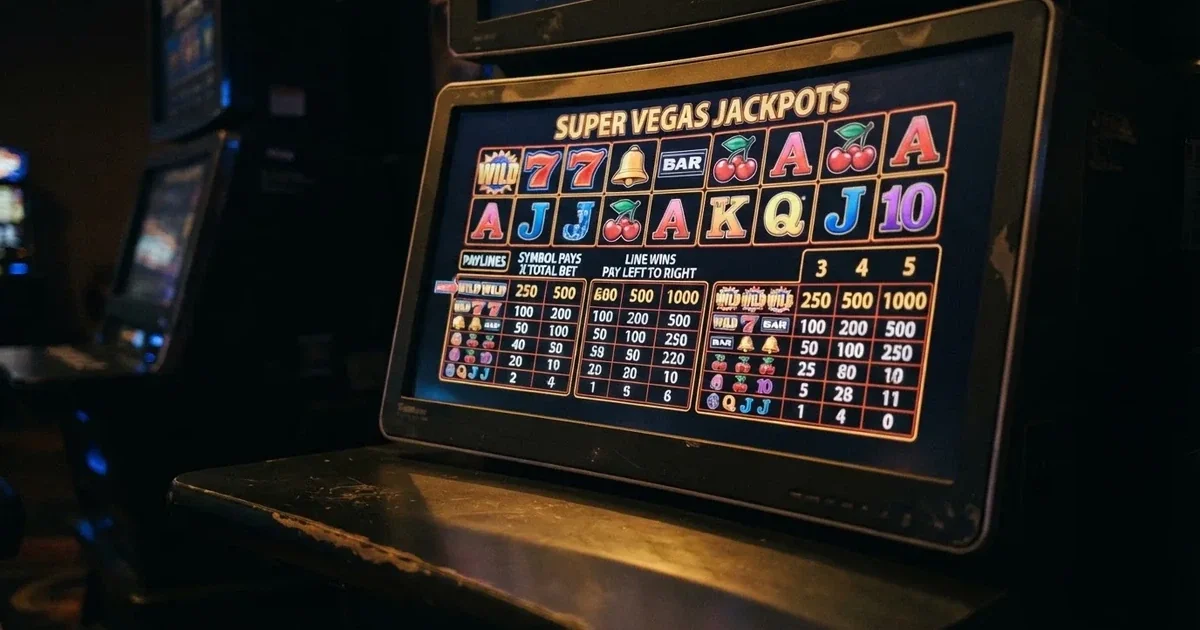
Current as of 29 October 2026. Operator warnings, blocking rounds and licence claims checked against the Australian Communications and Media Authority register.
- Pragmatic Play — the studio, the catalogue and the licence footprint
- The illegal market — how the ACMA acts, and how often it has to
- The eleven brands the ACMA has acted against
- The legal frame — what the Interactive Gambling Act actually says
- The catalogue — Pragmatic Play’s slots and live tables in plain language
- Bonuses and free spins — what the marketing promises and what the terms cost
- Mobile and apps — what runs on a phone and what does not
- Responsible gambling — the tools that exist and the gap the offshore market leaves
- Frequently asked questions
Pragmatic Play — the studio, the catalogue and the licence footprint
Pragmatic Play is a Gibraltar-based slots and live-casino studio founded in 2015 and run by CEO Julian Jarvis, owned by private investors led by Veridian (Gibraltar) Limited. The studio distributes slots, live-dealer tables, virtual sports and bingo through a single API, available in 33 languages and all major currencies, and lists Flutter, Entain, bet365 and LeoVegas among the operators it works with. Two acquisitions shaped the present shape of the catalogue: Extreme Live Gaming, picked up from the Novomatic Group on 26 June 2018 and folded into the live-casino vertical, and VSoftCo, the virtual-sports supplier announced on 28 January 2019 — the second corporate deal in twelve months.
The licence footprint is broad on paper. Pragmatic Play states it is licensed or certified in more than 30 jurisdictions, including regulation by the UK Gambling Commission and a Class II licence from Romania’s Oficiul Național pentru Jocuri de Noroc, with game certification from Gaming Laboratories International, Quinel and Gaming Associates. None of those jurisdictions is Australia. The studio sells its games to operators licensed elsewhere; the operators themselves decide which country they will accept players from, and a Curaçao-licensed operator is not the same thing as a Curaçao-licensed operator that is allowed to take Australian customers. The marketing end of that distinction is what the rest of this page is about.
Where the catalogue actually shows up onshore
Australia does not license online casinos, but it does license gaming machines in clubs, pubs and casinos under state and territory regimes — and the dominant local supplier on those machines is Aristocrat Leisure, founded in 1953 and listed on the ASX in 1996 under the ticker ALL. Aristocrat reports 2025 revenue of A$6.30 billion and normalised net profit after tax and amortisation of A$1.55 billion across 7,400 employees. The company is the largest gambling-machine manufacturer in Australia and the second-largest slot manufacturer in the world, behind International Game Technology.
Aristocrat’s online real-money arm is Aristocrat Interactive, formed in April 2024 by combining the existing Anaxi unit with the NeoGames group it acquired for roughly US$1 billion — a deal announced in 2023 and completed in April 2024. The combined business pulls in Aspire Global, BtoBet and Pariplay. Aristocrat Interactive operates in markets where online casino is licensed; it does not serve Australia, because there is no Australian online casino licence for it to operate under.
That gap is what an offshore site papers over. The games inside the studio’s catalogue look like the games inside a Crown or Star venue; the legal frame around them does not.
The illegal market — how the ACMA acts, and how often it has to
The Interactive Gambling Act 2001, tightened by the Interactive Gambling Amendment Act 2017, makes it an offence to provide online casino games, online pokies or in-play betting to a person in Australia. State and territory authorities do not license online casinos either. The regulator that acts on this is the ACMA — the Australian Communications and Media Authority — which investigates complaints, issues formal warnings and asks Australian internet service providers to block offending websites. The individual player is not prosecuted; the IGA targets the provider. A punter sitting in Sydney who opens an offshore casino account is not the person the regulator chases. The operator is.

The numbers put a scale on the workload. As of the round reported on 26 June 2026, the ACMA had asked ISPs to block 1,751 illegal gambling and affiliate-marketing websites since the first blocking request in November 2019, and more than 230 unlicensed gambling services had left the Australian market since enforcement was strengthened in 2017. The round itself added 7Signs, ChromaBet, Donbet, Duospin, Freshbet, Slots Gem, Jacks Club, Lucky Start, Pointsbetz, Spinrise, Vinyl Casino and Wildsino to the block list. The H2 Gambling Capital 2025 report puts Australian losses to illegal sites at roughly A$3.9 billion a year and records that the share of gambling going through legal channels fell from 74% in 2021 to 64%.
The blocking-rate here is the page’s one piece of arithmetic that earns its keep. A blocking request every few weeks, against a market where 230 services have already pulled out, is the only honest benchmark for what the offshore operators are actually doing in Australia. Worked against the running total of 1,751 blocked sites since November 2019, the rate sits in a band of roughly 250 to 270 blocking actions per year averaged across the full period — lower than that in the early years, higher than that in recent rounds. The rate is not a victory; it is what enforcement looks like when the upstream problem is bigger than the regulator.
Formal warnings — the public paper trail the ACMA leaves behind
A formal warning is the step the ACMA takes before asking ISPs to block a site. The warnings are published, dated and tied to a specific operator and brand. The list below covers every warning the research captured, ordered chronologically:
- May 2022 — Dama N.V., covering six brands: Bambet, Dazard, Level Up, Rocketplay, Wild Tornado and Cobra Casinos.
- September 2022 — Hollycorn N.V., over Sky Crown and Blue Leo.
- February 2025 — EOD Code SRL, over Instant Casino.
- March 2025 — Dama N.V., over Woo Casino.
- April 2025 — Sterplay Holding Ltd, over Casino Intense.
- May 2025 — Dama N.V., over Spirit Casino.
- July 2025 — Bamboo Media, over Ignition Casino, and Consolutetish S.R.L., over National Casino and Bizzo Casino; Bizzo had already been the subject of a 2022 warning to TechSolutions (CY) Group Limited and TechSolutions Group N.V.
- March 2026 — Pulsup Ltd, over Rocketplay.
- April 2026 — Ryker B.V., over Jackbit and CasinOK.
Eleven brands sit on the warning list that the rest of this page works through individually. Three of them — Woo, Spirit and Jackbit — anchor the picture-slot captions on this page. The same handful of operators (Dama N.V., Hollycorn, Bamboo Media, Consolutetish S.R.L.) account for almost every brand the ACMA has named; the warnings follow the holding companies more than they follow the brands.
The eleven brands the ACMA has acted against
The list below is not a ranking and not a recommendation. Each brand is here because the ACMA issued a formal warning over it for offering prohibited online casino games to Australians, and the licence claim the marketing makes does not change that fact. An offshore licence in Curaçao, Anjouan or Costa Rica does not extend to taking Australian customers for online casino play. The “operator named by the ACMA” column below carries the holding company the regulator named when it issued the warning, and the “Subject support” column says what the studio and brand directory listings actually say about whether Pragmatic Play games are present at each brand — not whether playing there is legal in Australia, which it is not.
| Brand | ACMA action and date | Operator named by the ACMA | Subject support |
|---|---|---|---|
| RocketPlay | Formal warning under the Interactive Gambling Act 2001 | Pulsup Ltd, March 2026; earlier Dama N.V., May 2022 | — |
| Level Up Casino | Formal warning under the Interactive Gambling Act 2001 | Dama N.V., May 2022 | Listings-only (Wazdan directory) |
| Woo Casino | Formal warning under the Interactive Gambling Act 2001 | Dama N.V., March 2025 | — |
| Spirit Casino | Formal warning under the Interactive Gambling Act 2001 | Dama N.V., May 2025 | — |
| National Casino | Formal warning under the Interactive Gambling Act 2001 | Consolutetish S.R.L., July 2025 | Listings-only (Betsoft, Wikipedia, Pragmatic Play) |
| Bizzo Casino | Formal warning under the Interactive Gambling Act 2001 | Consolutetish S.R.L., July 2025; earlier TechSolutions, 2022 | — |
| Ignition Casino | Formal warning under the Interactive Gambling Act 2001 | Bamboo Media, July 2025 | — |
| Instant Casino | Formal warning under the Interactive Gambling Act 2001 | EOD Code SRL, February 2025 | — |
| Jackbit | Formal warning under the Interactive Gambling Act 2001 | Ryker B.V., April 2026 | — |
| Casino Intense | Formal warning under the Interactive Gambling Act 2001 | Sterplay Holding Ltd, April 2025 | Listings-only (1spin4win, Wikipedia, UK Gambling Commission) |
| Sky Crown | Formal warning under the Interactive Gambling Act 2001 | Hollycorn N.V., September 2022 | — |
The “Subject support” column is a thin thing on purpose: it shows only what third-party listings report about each brand, not a claim that the operator is licensed for Australians, because no online casino is. A dash means the listings the page’s research could reach had nothing on that brand for the Pragmatic Play catalogue, which is itself information — it tells the reader that even on the directory sites that carry offshore brands the marketing word “Pragmatic Play” is sometimes not worth recording.
RocketPlay — Pulsup Ltd, March 2026
Rocketplay is the only brand in the warning set that uses an Australian country-code domain, and the ACMA named Pulsup Ltd as the operator in March 2026. The same brand had earlier been the subject of a May 2022 warning to Dama N.V. — one of six Dama brands caught in that single round, which tells the reader that the brand did not disappear after the first warning; it changed hands and the marketing carried on. An Australian country-code domain does not change the legal position: the IGA targets the provider, not the URL, and the operator named by the ACMA is an overseas company. Anyone looking at Rocketplay from inside Australia is being asked to play at an unlicensed site, with no local complaints body and no recourse if a withdrawal stalls.
Level Up Casino — Dama N.V., May 2022
Level Up was one of six Dama N.V. brands named in the same May 2022 warning — Bambet, Dazard, Level Up, Rocketplay, Wild Tornado and Cobra Casinos — and the third-party directory Wazdan’s site lists it as carrying Wazdan content alongside its Pragmatic Play catalogue. The fact that a single holding company had to be warned once about six brands at the same time is the kind of detail that should make a reader look twice at the next Dama brand that turns up in a search.
Woo Casino — Dama N.V., March 2025
Woo Casino is the second Dama N.V. brand to make the warning list — the formal warning was issued in March 2025, nearly three years after the original Dama round in May 2022. The intervening period is the part that matters: Dama already knew what the ACMA’s view was, and the ACMA had to issue a second warning to one of the same operator’s other brands anyway. That is what the blocking-rate arithmetic on this page is measuring.
Spirit Casino — Dama N.V., May 2025
Two months after the Woo warning, the ACMA was writing to Dama N.V. again, this time over Spirit Casino. Three warnings to the same holding company across three years — May 2022, March 2025, May 2025 — is the clearest picture on this page of how a single operator absorbs enforcement and keeps marketing to Australian customers between warnings.
National Casino — Consolutetish S.R.L., July 2025
National Casino is one of two Consolutetish S.R.L. brands named in the July 2025 warning, the other being Bizzo Casino. Directory listings on Betsoft’s site, on Wikipedia and on Pragmatic Play’s own catalogue pages record National Casino as carrying Pragmatic Play titles, which is the “Subject support” the table carries — a listings-only fact, not an Australian-licence claim.
Bizzo Casino — Consolutetish S.R.L., July 2025
Bizzo Casino was the subject of a 2022 warning to TechSolutions (CY) Group Limited and TechSolutions Group N.V., and then a 2025 warning to Consolutetish S.R.L. The two operators are different legal names, but the brand carried through; the second warning names a new corporate entity rather than a new site. The reader who sees Bizzo re-marketed after a 2022 warning is looking at what rebranding inside an offshore holding-group structure looks like.
Ignition Casino — Bamboo Media, July 2025
Bamboo Media was named in the same July 2025 warning as Consolutetish S.R.L. — Ignition Casino sat alongside National Casino and Bizzo Casino on a single round, which is the pattern that justifies a single ACMA round rather than three separate letters. The “Subject support” column carries no listing for Ignition Casino on the directories the research reached, which is information in its own right: the brand is in the ACMA’s sights, and the directory sites that track which studio supplies which operator have not recorded it as a Pragmatic Play outlet.
Instant Casino — EOD Code SRL, February 2025
The ACMA wrote to EOD Code SRL over Instant Casino in February 2025. The holding-company name is a Romanian company registration, which sits in the same regulatory neighbourhood as the Class II Romanian licence that Pragmatic Play itself holds — a detail worth pausing on, because the regulatory proximity between studio and operator is no protection for an Australian player.
Jackbit — Ryker B.V., April 2026
The April 2026 warning to Ryker B.V. covered Jackbit and CasinOK, and the ACMA round is the most recent formal-warning action the research captured. Jackbit is marketed as a crypto casino, which puts it on the wrong side of two Australian rules at once: the IGA prohibition on offshore online casinos, and the credit-card and digital-currency ban on licensed Australian wagering that took effect on 11 June 2024.
Casino Intense — Sterplay Holding Ltd, April 2025
Casino Intense was the subject of an April 2025 warning to Sterplay Holding Ltd. Third-party listings on 1spin4win’s site, on Wikipedia and on the UK Gambling Commission’s public register record the brand as a current operator carrying content from those studios — the listings-only support the table records. The UKGC presence on that list is not a licence to take Australian customers; the UKGC licence governs the UK market.
Sky Crown — Hollycorn N.V., September 2022
Sky Crown was one of two Hollycorn N.V. brands named in the September 2022 warning, the other being Blue Leo. Hollycorn is one of the more prolific holding companies in the warning set, with its own portfolio of themed casino brands marketed under sister names. An Australian player landing on any Hollycorn site is looking at the same regulatory problem: an offshore licence, an Australian prohibition, and no BetStop coverage to fall back on.
The legal frame — what the Interactive Gambling Act actually says
The Interactive Gambling Act 2001 is the statute. The Interactive Gambling Amendment Act 2017 is what made the modern prohibition work — the 2017 amendments extended the offence to cover online casino games, online pokies and in-play betting, where earlier the law had narrower reach. No state or territory in Australia licenses online casinos. The licensable products are wagering on races and sport placed before the event, lotteries and keno; in practice, the licensing authority for the largest of those is the Northern Territory Racing and Wagering Commission, which regulates 52 of Australia’s online bookmakers — Sportsbet, Bet365 and Ladbrokes among them — from a commission that has no full-time staff and meets once a month in Darwin. The minimum age is 18.
What is actually enforced is the provider side of the line, not the player side. The ACMA investigates, issues formal warnings and asks ISPs to block illegal sites; the player is not prosecuted. The trade is asymmetric, because the loss falls on the player in a different way: an offshore casino gives no Australian consumer protection, no complaints body and no recourse if a withdrawal is refused, and the site can be blocked while a balance is still on it. That is the cost the marketing does not mention.
Payments — what is and is not allowed at the licensed wagering end
The payment rules apply to the licensed end of the market, not the offshore end — but they matter, because they tell the reader which payment routes are blocked at the licensed operators they can actually use. Credit cards, credit-related products and digital currency have been banned as payment for licensed online wagering since 11 June 2024, with penalties of up to $247,500 for operators. Legal deposit routes for licensed wagering are debit card, bank transfer, PayID/Osko and BPAY. A site asking an Australian for a credit card or a crypto deposit is, by definition, not operating under Australian rules.
The offshore operators work the other side of the same rule. They take credit cards, they take crypto, they run on Curaçao and Anjouan licences, and they pay no Australian tax. The H2 Gambling Capital 2025 figure of A$3.9 billion a year in losses to illegal sites is the measure of how much of that spend has flowed around the licensed system — and the fall in the legal-channel share from 74% to 64% over four years is the trend that has the regulator writing more warnings, not fewer.
Player protection — what BetStop covers, and what it does not
BetStop, the National Self-Exclusion Register, has been live since August 2023. It binds every Australian-licensed online and phone wagering service, which means it covers the licensed bookmakers and lottery operators. It does not cover offshore online casinos, because those operators are not licensed in Australia and are not connected to the register. A punter who has self-excluded through BetStop and then opens an account at an offshore casino has not breached the self-exclusion — the offshore operator is simply not part of the system. The National Gambling Helpline is 1800 858 858, free, 24/7, with chat at Gambling Help Online.
Tax — what an Australian punter owes the ATO
Gambling winnings of a recreational player are not assessable income in Australia — the relevant provision is section 6-5 of the ITAA 1997 — and losses are not deductible. The exception is the person who carries on a business of gambling, and that is a model the ATO tests case by case. The model answer the ATO itself gives is to check with the ATO, and that is also the model answer for a casual reader of this page.
The 2026 reform — what is law and what is not yet in force
The Interactive Gambling Amendment (Gambling Reform) Bill 2026 passed Parliament on 19 August 2026. Its advertising and inducement measures commence on 1 January 2027. The page is written in 2026 and the commencement date is in the future, so the reader should treat the new advertising rules as law with a start date — known and dated, but not yet in force. The current state of play on inducements is the state that has been in force through 2026: the ACMA can already write to operators who target Australians with inducements, and the warning set above is the result.
The catalogue — Pragmatic Play’s slots and live tables in plain language
The slots catalogue runs into the hundreds; the live-casino vertical carries roulette, blackjack, baccarat and game-show formats from a network of studios; virtual sports covers football, horse racing, greyhound racing and motorsport under the VSoftCo umbrella. Every game ships through a single API, which is the technical point the studio makes to operator partners — one integration, all products. The player-facing point is different, and less favourable to the offshore market: the same single-API integration that lets Pragmatic Play’s titles appear on a Curaçao-licensed site in five minutes is also the reason the catalogue on those sites turns over so quickly that the studio’s own marketing has to keep pace.
RTP and volatility — what the published numbers say
Pragmatic Play publishes return-to-player percentages on a per-title basis on its own catalogue pages. The page does not transcribe every figure; it records the structure, which is what a player actually needs. Return-to-player is the long-run theoretical payout ratio, expressed as a percentage of stake; volatility is the variance around that ratio — high volatility means fewer, larger wins on the paytable’s long-tail combinations; low volatility means more, smaller wins. The published RTPs the research captured include Betsoft’s Good Girl Bad Girl 2 at 96.22% with “Very High” volatility and a 15.59% hit rate across 5 reels and 20 paylines — a figure worth carrying because it shows the shape a published spec actually has: RTP, volatility class, hit rate, reel count and paylines all on one row. A title the research did not capture an RTP for should not have one invented on this page.
Live casino — what Pragmatic Play took over from Extreme Live Gaming
The live-casino vertical is the one Pragmatic Play built by acquisition. Extreme Live Gaming ran 10 tables across roulette, blackjack and baccarat from London studios before Pragmatic Play completed the deal on 26 June 2018. The studio is now folded into Pragmatic Play Live; the operating footprint has expanded since — additional studio locations, additional language coverage, the “Mega” wheel and game-show formats that have become a marketing focus. None of the additional capacity moves the legal line for an Australian punter: live-dealer tables on an offshore site are online casino games under the IGA, and the ACMA’s view of them is the same as its view of slots.
Bonuses and free spins — what the marketing promises and what the terms cost
The offshore marketing set around Pragmatic Play titles leans heavily on deposit bonuses, free-spin bundles and “no-deposit” starter offers. The structure is the same across the industry: a headline number — “200% up to A$1,000”, “50 free spins on Gates of Olympus” — followed by terms that the player has to clear before any winnings can be withdrawn. None of those offers is licensable in Australia, because no Australian-licensed online casino exists to attach them to. The same offer placed at a Curaçao-licensed operator carrying Pragmatic Play titles is what the offshore sites sell.
What the wagering multiple actually does
A wagering multiple is the number of times the bonus — and often the deposit — has to be turned over before a withdrawal is allowed. A “35x bonus” requirement on a A$100 bonus means A$3,500 of qualifying wagers before any winnings become withdrawable; the same multiple on a bonus-plus-deposit package turns the figure much higher. The casino’s edge on the underlying slots — typically expressed as 1 minus the RTP — is what gives the wagering its expected cost: turnover × (1 − RTP), in the roughest version of the calculation. A 96% RTP and a 35x turnover on bonus alone implies an expected loss on the bonus itself of roughly A$140 on a A$100 bonus, before any winnings come into the picture. That cost is the baseline for any bonus offer.
Why “no deposit” is the offer to read most carefully
A no-deposit offer — a small bonus credited without a qualifying deposit — carries the same turnover requirement as a deposit bonus, but the bonus amount is smaller. The expected cost to the casino is smaller in proportion; the expected cost to the player, on a per-bonus basis, is smaller too. The clause the player should look for is the maximum-cashout cap: most no-deposit bonuses cap withdrawable winnings at a small multiple of the bonus, which means a long run on a hot slot can still end with most of the winnings forfeited. The clause is the point, not the headline.
Free spins — the offer type and what it usually excludes
Free-spin bundles attached to a deposit bonus are usually locked to a named title (a “Gates of Olympus 50 free spins” offer is a Gates of Olympus offer), and the wagering is typically applied to the winnings rather than to the spin value. The offer that looks like the cheapest one in the marketing often costs more than the headline suggests, because the variance on the named slot sets the variance of the bonus. A high-volatility title applied to a free-spin bundle produces most of its outcomes in the long tail of the paytable, which is precisely the outcome the turnover requirement was built to capture.
Mobile and apps — what runs on a phone and what does not
Pragmatic Play’s catalogue ships in HTML5, which is the format every modern phone browser handles without a dedicated app. The studio’s “single API, all products” line covers the mobile end of the catalogue the same way it covers the desktop end, and the third-party studios that build around Pragmatic Play content — 1spin4win, Betsoft and others — publish in the same format. The mobile experience at a licensed Australian venue is a different product: venue-based machines run on the venue’s network and have no online mobile component at all, because they are not online.
The HTML5 detail that does the work
HTML5 is the reason a single integration serves desktop, tablet and phone without a per-platform build. It is also the reason a 1spin4win title built for low-bandwidth connections works on a 4G phone in regional Australia where a heavier client would not — a 1spin4win portfolio that runs to more than 190 slots, distributed through more than 1,000 partnerships and growing 46% in the first half of 2025 against the first half of 2024, is the same HTML5 build everywhere. The performance characteristic the marketing does not mention is bandwidth: an HTML5 build does not pull the weight of a native client, which is why the studios publish in that format.
App versus browser — what the offshore sites do
The offshore sites that market Pragmatic Play titles to Australian players typically do not publish a dedicated iOS or Android app — Apple’s App Store and Google Play both enforce policies against real-money casino apps in jurisdictions where online casino is not licensed, and an Australian-targeted casino app would not clear those policies. The sites run on the mobile browser, wrapped in a webview that looks like an app icon when added to the home screen. The format is HTML5 underneath; the marketing is “app” on the surface. The legal line does not move because of the icon.
Responsible gambling — the tools that exist and the gap the offshore market leaves
The Australian responsible-gambling framework applies to the Australian-licensed wagering market. BetStop binds every licensed operator; the National Gambling Helpline (1800 858 858) is free, 24/7 and supports chat through Gambling Help Online; the state and territory support services sit underneath that national layer. The offshore operators that the ACMA has warned are not connected to BetStop and are not required to offer any of the equivalent controls — a self-exclusion at one of those sites is a setting on that one site, with no reach into the wider market. The player protection the reader is looking for is the Australian frame, and the Australian frame does not extend offshore.
Spending limits and self-exclusion — what the licensed operators offer
The licensed bookmakers and wagering services offer deposit limits, time-out periods and full self-exclusion through BetStop. A punter who has set a limit at one licensed operator has set a limit that the licensed operator honours; a punter who has set a limit at an offshore casino has set a setting the offshore casino may or may not honour, with no Australian complaints body behind it. The asymmetry is the point. The offshore site does not have to follow the Australian rules; it is the Australian rules that do not reach it.
Where to find help
The National Gambling Helpline is 1800 858 858, free, 24/7, with chat at Gambling Help Online. State and territory services sit underneath that, including the Victorian Responsible Gambling Foundation, Gambling Help NSW, the Queensland Responsible Gambling Network and similar bodies in Western Australia, South Australia, Tasmania, the ACT and the Northern Territory. The Lifeline crisis number (13 11 14) is the right number when the issue has moved past gambling.
Frequently asked questions
Is Pragmatic Play legally available to players in Australia?
Pragmatic Play is a licensed game studio, but its games are not legally offered through any Australian-licensed online casino, because Australia does not license online casinos. The offshore sites that carry the studio’s titles accept Australian deposits and operate outside the Interactive Gambling Act 2001; the ACMA has issued formal warnings to eleven of those brands over the past four years, and the regulator’s blocking requests now total 1,751 sites since November 2019.
What kinds of games does Pragmatic Play make?
Pragmatic Play supplies online slots, live-dealer casino tables (roulette, blackjack, baccarat and game-show formats), virtual sports and bingo through a single API. The studio completed its acquisition of Extreme Live Gaming from the Novomatic Group on 26 June 2018 and acquired VSoftCo in January 2019, which added the virtual-sports vertical to the catalogue it had built as a slots studio.
Are Pragmatic Play games offered at land-based venues in Australia?
Pragmatic Play-branded games do not appear in Australian clubs, pubs or casinos under that name, because the studio’s distribution is online-only and Australian gaming machines are supplied by Aristocrat Leisure, the largest gambling-machine manufacturer in Australia and the second-largest slot manufacturer in the world, behind International Game Technology. Aristocrat’s 2025 revenue was A$6.30 billion.
How can Australians check whether a Pragmatic Play title is fair before ever considering play?
The studio states it is certified by Gaming Laboratories International, Quinel and Gaming Associates, and is licensed or certified in more than 30 jurisdictions, including the UK Gambling Commission. The certification is on the studio and its games, not on the offshore site that happens to carry them. The relevant Australian question is the site’s status under the Interactive Gambling Act 2001, and no offshore online casino has that status.
Why do offshore sites keep advertising Pragmatic Play games to Australian visitors?
The economics are simple. The H2 Gambling Capital 2025 report puts Australian losses to illegal sites at A$3.9 billion a year, and the share of gambling going through legal channels has fallen from 74% to 64% over four years. The marketing reaches a market the size of a small country’s gambling turnover. The ACMA’s enforcement — 1,751 blocking requests since November 2019 and more than 230 services that have left the Australian market since 2017 — runs behind that marketing budget.
What should an Australian do if they see a Pragmatic Play game promoted by an unlicensed site?
The site can be reported to the ACMA through its website, and the ACMA’s formal-warning register is searchable by brand. The licensed wagering services in Australia do not offer online casino games, so the legitimate alternative is to use a licensed bookmaker for the products those bookmakers are licensed to offer — racing, sport and lottery — or to use the National Gambling Helpline (1800 858 858) if the promotion is the prompt to step back from gambling entirely.