
Where to Find Legit Pokies in Tasmania — and Why So Many Online Results Send You the Wrong Way
Anyone typing “best pokies in Tasmania” into a search engine in 2026 is, in practice, looking for one of two things: a real pub, club or casino floor on the island where pokies can be played under a Tasmanian licence, or an online site that promises the same product on a phone. The two are not interchangeable and the law treats them very differently. Tasmania’s land-based pokies trade is licensed, regulated, taxed and tied to a small group of operators. Online casino games — and online pokies along with them — are a prohibited interactive gambling service under the Interactive Gambling Act 2001, which means every offshore site pitching “pokies” to an Australian reader is advertising something the law does not allow them to sell here. The bulk of this page is about the licensed side, because that is what a Tasmanian punter can actually walk into; the offshore side gets a chapter of its own because so much of the search results around this topic points there, and a reader deserves to know what those sites are.
This page is current as of 29 October 2026 and was checked against the Australian Communications and Media Authority register of formal warnings and blocking actions, the Tasmanian Liquor and Gaming Commission public material, and Wikipedia entries on Tasmania’s casino operators.
- The Landscape: What “Pokies” Actually Means in Tasmania
- Legality in Tasmania and Across Australia
- Responsible Gambling in Tasmania: Cashless Cards and Self-Exclusion
- The Licensed Venues: Where to Actually Play
- What “Best Paying” Means on a Tasmanian Pokie
- Payments, Payouts and the Speed Question
- Specific Games, Providers and the Cashless Gaming Experience
- Why Online “Pokies Tasmania” Pages All Lead to the Same List
- The Poker Machine Prohibition — What It Means for the Operator Landscape
- The Reader’s Position: What to Do With This Information
- A Note on the Federal Frame Outside Tasmania
- Final Position on the Question
- Frequently Asked Questions About Pokies in Tasmania
The Landscape: What “Pokies” Actually Means in Tasmania
Tasmania has two casinos and a smaller network of pubs and clubs that hold electronic gaming machine licences of their own. The venues are concentrated in Hobart and Launceston, with smaller clusters in Devonport, Burnie and a few regional centres. Tasmania is not a large gambling market by mainland standards — the island’s population is well under Sydney’s — but the casino floors are substantial, and the post-2017 pub and club licensing regime has produced a layered venue map that a visitor does not always read correctly.

The licensor is the Tasmanian Liquor and Gaming Commission, sitting under the Department of Treasury and Finance. It authorises gaming machines in two streams: the two casino licences (which permit table games and EGMs in dedicated gaming floors) and venue-level machine licences for hotels and clubs (which permit a capped number of EGMs in the venue, generally restricted to a “gaming room” area separated from the bar). The single biggest fact a reader should hold onto: Tasmania does not have hundreds of venues stacked with machines the way New South Wales does. It has a small, licensed estate, and most of the visible gaming product sits in those two casinos.
The phrase “best pokies in Tasmania” is therefore a question about a handful of venues, not a competitive marketplace of brands.
| Venue | Operator | Gaming Features |
|---|---|---|
| Wrest Point | Federal Group | Tables, EGMs |
| Country Club | Federal Group | Tables, EGMs |
The rest of this page works through what those venues offer, who runs them, what the return-to-player settings are, what the cashless card regime does, and which online results pointing the reader elsewhere are pointing at something the law does not authorise.
The two casinos: Wrest Point and the Country Club
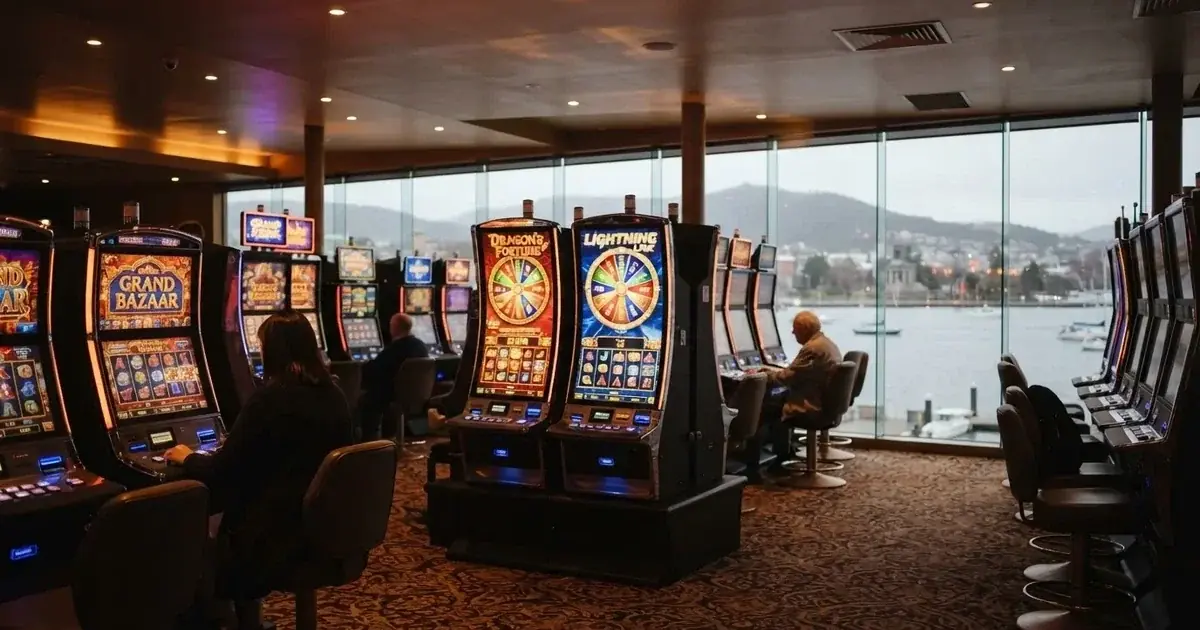
Wrest Point Hotel Casino, on the waterfront at Sandy Bay in Hobart, opened on 10 February 1973 and is the oldest legal casino in Australia. It is run by Federal Group, the Farrell family’s Tasmanian gambling company, and sits inside a hotel complex the same operator runs on the same site. The gaming floor is split between table games and several hundred electronic gaming machines; the EGM count has varied with refurbishments over the decades, but the venue has held the largest single concentration of pokies on the island for the whole of its operating life.
The Country Club Casino and Resort, at Prospect Vale just outside Launceston in the north of the state, opened in 1982 and was deliberately modelled on the stately homes of the American South in a Georgian style Federal Group chose for the rural landscape around the city. It functions as both a resort property and a casino floor, with conference facilities, a golf course and a hotel attached to the gaming area. The Country Club holds the second of the two Tasmanian casino licences.
These two properties are the only places in Tasmania where a punter can sit down at a table game. They are also the only venues in the state with no statutory cap on EGM bets, because casino floors sit outside the hotel and club machine rules. For readers from mainland states used to a higher venue count, the smallness of this map is itself information: a “best pokies” comparison on the island is not a comparison between twenty venues, it is a comparison between two casino floors and the small, licensed estate around them.
The pubs and clubs after 2017
Until August 2017, Federal Group held the exclusive licence to operate electronic gaming machines outside its casinos under the Gaming Control Act 1993. The Farrell family company ran the network through a deal that paid a share of revenue to the state. That monopoly was relinquished in August 2017 when the state allowed individual pubs and clubs to hold their own machine licences, ending the single-operator model and creating the present layered estate. After 2017, hotel and club venues negotiate their own EGM entitlements with the Tasmanian Liquor and Gaming Commission, subject to a cap that the Commission sets, and the machines sit inside a designated gaming room with separate access from the main bar.
The practical effect of the change, for a reader looking for a venue, is that Tasmania’s pub and club EGM map is local and fragmented. A small chain might hold entitlements across two or three venues; a country club might hold six or eight machines in a dedicated room; the bulk of EGMs outside the casinos sit in 30 to 60 venues concentrated in the population centres. There is no public ranking of “best paying” pub pokies in Tasmania by venue, because the machines themselves are leased from manufacturers under arrangements that produce broadly similar return-to-player settings across the licensed estate. A reader looking for a particular machine brand will find it more often at the casino floors than at the pub level, where the choice is narrower.
Legality in Tasmania and Across Australia
The federal frame that governs online play in Australia is the Interactive Gambling Act 2001, tightened by the Interactive Gambling Amendment Act 2017. The IGA makes it an offence to provide online casino games, online pokies and in-play betting to a person physically in Australia. The prohibition sits on the provider, not the player — the individual punter is not prosecuted for logging in — but the offering itself is unlawful, and no state or territory issues licences for online casino products. Lotteries, keno and pre-event wagering on races and sport are licensable, in practice through the Northern Territory Racing and Wagering Commission, which authorises 52 of Australia’s online bookmakers including Sportsbet, Bet365 and Ladbrokes. The NTRWC has no full-time staff and meets once a month in Darwin; the model is lean by design.
Enforcement runs through the Australian Communications and Media Authority. The ACMA investigates complaints, issues formal warnings to operators it finds offering prohibited services to Australians, and can direct Australian internet service providers to block offending sites. As at the round reported on 26 June 2026, the ACMA had asked ISPs to block 1,751 illegal gambling and affiliate marketing websites since the first blocking request in November 2019, and reported that more than 230 unlicensed services had withdrawn from the Australian market since enforcement was strengthened in 2017. The June 2026 round alone covered twelve sites: 7Signs, ChromaBet, Donbet, Duospin, Freshbet, Slots Gem, Jacks Club, Lucky Start, Pointsbetz, Spinrise, Vinyl Casino and Wildsino.
What that legal frame means for someone in Tasmania is straightforward. A Tasmanian punter cannot lawfully play online pokies with a licensed Australian operator, because no such operator exists for casino games. An offshore site pitching pokies to an Australian reader is operating in breach of the IGA, and a reader who opens an account there is dealing with a counterparty the Australian regulator has identified as offering an unlawful service. The site may display an offshore licence — Curaçao, Anjouan, the Philippines — and that licence is what it is, but it does not authorise the site to take Australian play. Consumer protection that an Australian punter would take for granted at a Tasmanian pub — venue-level complaints channels, a regulator to escalate to, a self-exclusion register connected to the venue — does not apply.
A separate reform is also moving through the law. The Interactive Gambling Amendment (Gambling Reform) Bill 2026 passed Parliament on 19 August 2026 and its advertising and inducement measures commence on 1 January 2027. On a 2026 page that is law with a start date, not law in force — it is mentioned here so a reader who has seen the headlines can place it.
Why “pokies” in Tasmania is a land-based phrase
The word “pokies” is the everyday Australian term for an electronic gaming machine, and it predates the online era. It is the phrase on Tasmanian lips at a bar in Hobart, on a Spirit of Tasmania sailing, in a Launceston club. The same phrase is also the word online operators use to describe their slots product, which is where the confusion starts. A site that advertises “Tasmania pokies” is almost always advertising an offshore slots product to an Australian reader — not a Tasmanian pub or casino floor. The legal status of the two uses of the word could not be more different, and that asymmetry is the reason most of this page is about venues rather than sites.
Responsible Gambling in Tasmania: Cashless Cards and Self-Exclusion
The biggest responsible-gambling change to hit Tasmania in years is the cashless gaming card reform that made carded play mandatory at hotel and club poker machines from December 2025. Under the reform, every spin at a pub or club EGM is paid through a player card linked to a registered account, with default loss limits of A$100 per day, A$500 per month and A$5,000 per year. The default limits are not the ceiling — a punter can raise them, but only after a minimum 24-hour cooling-off period, a friction layer the legislature built into the system precisely to slow limit increases. The Tasmanian Liquor and Gaming Commission oversees the system, and a casino rollout date had not been set as of September 2024, which means the state’s two casino properties still operate on cash at the EGM bank while the pub and club estate is fully carded.
This is the single biggest change in how Tasmanians interact with pokies in two decades, and it has practical consequences a reader should know about before walking into a pub.
What the card changes for the punter
The card is not optional. A punter who walks into a Tasmanian pub with a gaming room in December 2025 or after cannot insert a banknote into a machine and play; the machine will read the card or it will not spin. New accounts require a basic registration, which means a form of identification at the venue. The registration ties the card to the individual, which means the loss limit is per person, not per venue — moving between pubs does not reset the daily or monthly ceiling.
The default loss limits are conservative by international comparison and in line with what some other Australian jurisdictions have proposed. The daily ceiling of A$100 is roughly the cost of a moderate day’s play at A$1 per spin; the monthly A$500 ceiling is the limit most punters will hit only on a heavy month; the annual A$5,000 ceiling is a meaningful brake on the small minority of high-spending accounts. Raising any of the limits requires a 24-hour wait, which means the punter cannot make a snap decision to lift a cap during a session.
For visitors from interstate, the card works in Tasmania, and Tasmanian-issued cards are not the only valid form — a punter moving between states will see whether their home jurisdiction has adopted a comparable card scheme and, if so, whether the schemes recognise each other. The practical answer in 2026 is that not all Australian states have introduced cashless gaming cards, and the cross-jurisdictional recognition is patchy. A punter used to a state where cash is still accepted at the EGM should not assume the same at a Tasmanian pub.
Self-exclusion and Gambling Help Online
Tasmania’s venue self-exclusion operates through Gambling Helpline Tasmania on 1800 858 858, run by Anglicare Tasmania’s Gamblers Help Service. The Helpline is free, operates 24 hours a day, and can help arrange a venue-level self-exclusion order at the venues a punter names. In-person counsellors are based in Hobart, Launceston, Devonport and Burnie, which covers the four population centres on the island and most of where the EGMs sit.
The federal BetStop register, the National Self-Exclusion Register, has been live since August 2023 and binds Australian-licensed online and phone wagering services. It does not bind an offshore casino, because the offshore casino is not an Australian-licensed service, and the register cannot reach it. A punter who has put themselves on BetStop and then opens an account at an offshore site has not actually excluded themselves from that site; the site is not on the register, and BetStop cannot see the account.
National Gambling Helpline on 1800 858 858 and the chat service at Gambling Help Online are the two contact points that work across the entire country. Both are free, both run 24 hours a day, and both can route a caller or chatter to their home state service for in-person support.
The Licensed Venues: Where to Actually Play
The practical list of venues a 2026 punter can walk into and play pokies in Tasmania is short, and it breaks into three tiers.
Wrest Point Hotel Casino, Hobart
The waterfront property at Sandy Bay is the largest single gaming floor on the island. It holds the longest-standing Tasmanian casino licence, the highest table-game count, and one of the two largest EGM banks. Wrest Point sits inside a hotel complex the same operator runs; the casino floor is open to walk-in trade as well as hotel guests. The venue has been refurbished multiple times since 1973, and the EGM product has tracked industry-wide changes in machine technology — reel-format machines still exist on the floor alongside video-format games, and a punter used to a NSW or Victorian casino will find the games catalogue familiar rather than exotic. The waterfront location, the hotel rooms above the gaming floor and the conference facilities make Wrest Point the venue most mainland visitors will encounter first.
The Country Club Casino and Resort, Launceston
The Country Club is the second of the two Tasmanian casinos and the only one in the north of the state. Its Georgian-style architecture is the most distinctive venue feature on the island and the reason a number of visitors come specifically to this property rather than the Hobart one. The Country Club’s gaming floor is smaller than Wrest Point’s but offers the same mix of table games and EGMs; the property also functions as a resort, with a golf course and conference facilities attached. For a punter visiting Tasmania who is spending time in Launceston rather than Hobart, the Country Club is the licensed venue.
Hotel and club EGMs across the state
Outside the two casinos, the EGM estate runs through hotels and clubs that hold venue-level machine licences. The map is local. Hobart has the densest concentration; Launceston has a smaller cluster; Devonport, Burnie and a handful of regional towns have a few venues each. The machines sit in dedicated gaming rooms that are typically walled off from the bar and entered through a single point, and the room itself is the venue’s most distinctive feature — it is the space the card reader and the cashless card system sit in. Visitors used to pubs in other states will recognise the layout.
A small number of venues operate round-the-clock gaming rooms. The phrase “24 hour pokies Tasmania” points at this subset; it is real, but small, and the bulk of the licensed estate closes its gaming room with the rest of the pub. A punter looking for late-night play will find the casinos easier to plan around than the pub estate, because both casinos run longer hours than most hotels and clubs.
What “Best Paying” Means on a Tasmanian Pokie
The phrase “best paying pokies in Tasmania” reads as a search query for a venue with higher returns than its neighbours, but in practice it runs into the way Australian EGM regulation works.
The Tasmanian and federal return-to-player frame
Pokies in Australia do not operate under a single federal return-to-player floor. The federal government regulates the IGA, which is the online prohibition regime; the return-to-player and bet-cap settings are set by each state and territory. Tasmania’s settings sit within a broader pattern. South Australia sets a minimum gaming-machine return-to-player rate of 87.5% and a general maximum bet of A$5.00 outside the casino; Adelaide Casino itself has no maximum-bet limit. Tasmania’s settings are different in detail, and Tasmania does not publish a single venue-by-venue RTP table, which is the structural reason a “best paying pokies” comparison for the licensed Tasmanian estate is harder to settle than the search query assumes.
What Tasmania does have, post-2017, is a venue-led estate in which the machines themselves are leased from manufacturers under arrangements that produce broadly similar RTP settings across the licensed pubs and clubs. A punter is unlikely to find one hotel with a 92% RTP setting and the hotel next door at 85%; the range is narrower than that, and the differences between venues are more about the games catalogue than the underlying return rate.
The casino floors are different again. Wrest Point and the Country Club are not bound by the A$5 bet cap that applies outside South Australian casinos; they can host higher-stake machines and a wider bet range. A high-stakes punter will find more product on a casino floor than at a pub; a low-stakes punter who plays for entertainment will find the pub setting, the A$1 per spin default and the cashless card limits very much to their liking.
Why “best paying” is mostly about games, not venues
In practice the most useful answer to “best paying pokies in Tasmania” is that the games catalogue on a casino floor is wider and offers a larger range of RTP settings than the pub estate, because casino floors carry newer and higher-denomination machines. A punter who has found a particular game title they prefer will find it at Wrest Point or the Country Club rather than at the local pub; a punter who plays any machine within the venue and does not track RTP per title is, in effect, taking the venue’s average return. The difference between a high-RTP and a low-RTP title within a single casino floor can be larger than the difference between venues on the same title.
This is not a Tasmanian peculiarity. The same dynamic holds in every Australian state that licenses EGMs, and it is the structural reason the phrase “best paying pokies” is harder to answer on a per-venue basis than the search results around it suggest.
Payments, Payouts and the Speed Question
A punter playing pokies at a Tasmanian pub or casino in 2026 does not interact with a “payments” layer in the way an online punter does. There is no deposit, no withdrawal queue, no payout percentage on a digital ledger. The player hands over cash (or, post-December 2025, the cashless card), plays the machine, and either walks away with what remains in their wallet or, in the case of a substantial EGM win, follows the venue’s prize-claim process.
The cashless card flow at a pub
The post-December 2025 cashless card system links a registered account to a player card. A punter tops up the card at a venue terminal, the card is debited at the machine, and any residual value stays on the card for the next session or can be cashed out at the terminal. There is no processing delay, no third-party payment processor, and no settlement window. The speed question that matters at the pub is not “how long until my withdrawal clears” — it is “how long until I can cash out the residual value on my card”, which is the time it takes to walk to the terminal.
The casino floor
At Wrest Point and the Country Club, the gaming floors still operate largely on cash for EGM play while the pub and club estate is carded. A punter at a casino floor who hits a substantial EGM win that exceeds the machine’s payout limit — typically several thousand dollars — will follow a manual claim process with the casino’s cashier, who validates the win and pays out. The process takes minutes at a live cashier window. The substantive speed question at a casino floor is therefore about how quickly a large win can be claimed and paid, not about how long a digital withdrawal takes, because there is no digital withdrawal in the same sense as an offshore site.
Online “payout percentage” language
The phrase “Tasmania pokies payout percentage” in search queries reflects the language of online casino reviews, where payout percentage is a standard column. It is awkward when applied to a land-based EGM estate, because the relevant RTP figure for a pub is the setting on the machine, not a venue-wide average, and the setting is not published per venue in Tasmania. A punter looking for a high RTP game on a casino floor has a better chance of finding one than a punter trying to compare pub venues on RTP alone, but neither is a clean comparison the way the online column format implies.
The phrase “online pokies Tasmania no deposit bonus” is in the same linguistic family and points in the opposite direction. There is no licensed Australian online casino product to attach a no-deposit bonus to, because online casino is unlawful under the IGA. A reader typing that query is being routed by the search engines toward the offshore operators the ACMA has been warning and blocking for the past several years, which is why the page turns to them next.
Specific Games, Providers and the Cashless Gaming Experience
The major international EGM manufacturers supply both casino floors. The Australian pub and club estate runs a more concentrated catalogue, because the smaller venues do not have the floor space or the machine count to justify a deep variety. The titles that recur across both tiers are the ones readers will recognise from pub and club floors in NSW, Victoria and Queensland.
What a pub gaming room looks like in 2026
A pub gaming room in Tasmania, post the cashless card reform, is a smaller and more contained space than a casino floor. The machines are predominantly video-format titles with the standard button deck; the cashless card reader sits where the note acceptor used to be; the room has its own access point. The catalogue is narrower than a casino floor and the denomination range is typically capped at A$1 or A$2 per spin. The cashless card limits — A$100 per day by default — are a meaningful behavioural constraint that most punters will not run into on a single session, and which the small minority who do run into will feel quickly.
What a casino floor looks like in 2026
Wrest Point and the Country Club run EGM banks with a wider denomination range than the pub estate, including higher-stake machines the casino floor can host because it is not bound by the A$5 cap that applies to pubs in some states. The casino floors also offer a wider variety of game titles — more reel-format machines, more denomination choices, more progressive-jackpot products. A punter visiting Wrest Point for the first time and walking through the EGM bank will see games they recognise from interstate casino floors and a venue-specific mix that reflects the Federal Group’s commercial decisions.
Spirit of Tasmania and cruise-related play
The phrase “pokies on Spirit of Tasmania” is its own small niche. Spirit of Tasmania is the Bass Strait ferry that runs between Geelong in Victoria and Devonport in Tasmania; it carries a small gaming lounge on board, and the gaming product on the vessel is licensed separately from both the Victorian and Tasmanian casino regimes. A punter crossing Bass Strait on a Spirit sailing does not interact with a Tasmanian-licensed EGM and does not interact with a Victorian one either; the gaming room on board sits under a different federal-state arrangement that covers vessels in transit. The cashless card system that applies to Tasmanian pubs does not apply on the ferry, and the responsible-gambling supports available on the Tasmanian mainland do not follow the passenger across Bass Strait. The ferry’s gaming lounge is a small operation compared with either of the two casinos, and a punter looking for an evening’s pokies play is generally better served on the mainland at either Wrest Point or the Country Club.
Why Online “Pokies Tasmania” Pages All Lead to the Same List
A search for “pokies in Tasmania” returns, alongside legitimate results about Wrest Point and the Country Club, a long tail of offshore casino sites offering online slots. They include RocketPlay, Level Up Casino, Woo Casino, Spirit Casino, National Casino, Bizzo Casino, Ignition Casino, Instant Casino, Jackbit, Casino Intense and Sky Crown. The ACMA has issued formal warnings against each of these operators at various points over the last several years, and the warnings are public on the ACMA register. The table below sets out the operator, the formal warning as published, and any indication of where the operator surfaces in ordinary listings.
| Brand | ACMA action and date | Operator named by the ACMA | Subject support |
|---|---|---|---|
| RocketPlay | Formal warning, March 2026 (also earlier Dama N.V., May 2022) | Pulsup Ltd (RocketPlay) | — |
| Level Up Casino | Formal warning, May 2022 | Dama N.V. | listed in Wikipedia and VGCCC material |
| Woo Casino | Formal warning, March 2025 | Dama N.V. | listed in Wikipedia |
| Spirit Casino | Formal warning, May 2025 | Dama N.V. | — |
| National Casino | Formal warning, July 2025 | Consolutetish S.R.L. | listed in ABC News and federal infrastructure material |
| Bizzo Casino | Formal warning, July 2025 (also earlier TechSolutions, 2022) | Consolutetish S.R.L. | — |
| Ignition Casino | Formal warning, July 2025 | Bamboo Media | — |
| Instant Casino | Formal warning, February 2025 | EOD Code SRL | — |
| Jackbit | Formal warning, April 2026 | Ryker B.V. | — |
| Casino Intense | Formal warning, April 2025 | Sterplay Holding Ltd | listed in ABC News, ASGAM and CBS SA material |
| Sky Crown | Formal warning (September 2022) | Hollycorn N.V. | listed in Wikipedia |
The columns on subject support are populated only where listings report it. A dash means research did not find the brand named in independent listings material, and the page therefore makes no claim about how widely the brand surfaces in third-party directories; the ACMA’s formal warning is the only entry the page has on it.
What “ACMA formal warning” means in practice
A formal warning is the ACMA’s first formal step under the IGA before it escalates to blocking or civil penalty proceedings. The regulator’s register lists the operator, the brand under which the service was offered, the section of the IGA breached, and the date. In some cases a single operator attracts warnings for several brands — Dama N.V., for instance, has been warned over Bambet, Dazard, Level Up, Rocketplay, Wild Tornado, Cobra Casinos, Woo Casino and Spirit Casino across multiple years — which is the pattern that emerges when one operator is running a portfolio of offshore casino skins.
What a formal warning does not do is block the site on its own. Blocking follows later, after the operator has been given the opportunity to comply, and the ACMA’s June 2026 figure of 1,751 sites blocked since November 2019 reflects the cumulative effect of the warning-then-block sequence applied across years. A reader who sees a formal warning on the ACMA register should read it as “the regulator has identified this site as offering prohibited services to Australians”, not as “this site has been blocked today”.
The blocking rate, in numbers
The arithmetic the page can stand behind here is the cumulative blocking rate the ACMA has achieved across the years since the first blocking request in November 2019. By 26 June 2026, the cumulative total stood at 1,751 sites blocked across roughly six and a half years of enforcement — an average rate that, stated as a band, runs somewhere between roughly 220 and 320 sites blocked per year depending on which round of months is used as the base. The condition that matters is the variability: the ACMA does not publish a monthly rate, so any per-month figure is a back-of-envelope estimate, and the year-on-year rate reflects both the regulator’s resourcing and the cadence of new offshore brands appearing. A reader who wants a single number has the wrong question; the ACMA’s output is lumpy, and the only honest answer is a band.
That band — somewhere between 220 and 320 sites a year over the lifetime of the blocking regime — sits behind every operator name in the table above. Each of the eleven brands the page lists has either been blocked outright or has been the subject of a formal warning that, if not complied with, will lead to a block. The reader who is researching one of those brands should treat the ACMA’s posture on it as the most informative single fact available.
What the table is not
The table is not a ranking. None of the eleven brands is recommended over another; the order on the page reflects the order in which they appear in the ACMA register’s published material, not a comparison of how “good” each is for a player. The page does not compare bonus terms, payout speed or game catalogues across these operators because the only sources for those comparisons are affiliate marketing pages that have a financial interest in the brand the reader clicks through to. An honest comparison of operators that cannot lawfully offer their product to Australians is a comparison of how illegal each one is, which the ACMA register already publishes; that is the comparison this table carries.
The reader who arrived on this page looking for a recommendation among offshore sites will not find one. The recommendation the page can offer is a different one: play at a Tasmanian venue that holds a Tasmanian licence, or do not play at all.
The Poker Machine Prohibition — What It Means for the Operator Landscape
The phrase in this page that pulls together the legal frame, the ACMA register and the operator table is “prohibited interactive gambling service”, the term of art under the IGA for an offering that cannot be licensed in Australia. Online casino games — including online pokies, online roulette, online blackjack, online baccarat — are prohibited interactive gambling services. No state or territory licence can authorise them, because the federal IGA overrides state licensing for these products. A site that displays a Curaçao or Anjouan licence is licensed by that jurisdiction to offer its product globally, and that licence does not extend to offering the product to an Australian reader; the IGA makes the offering itself, to an Australian reader, the offence.
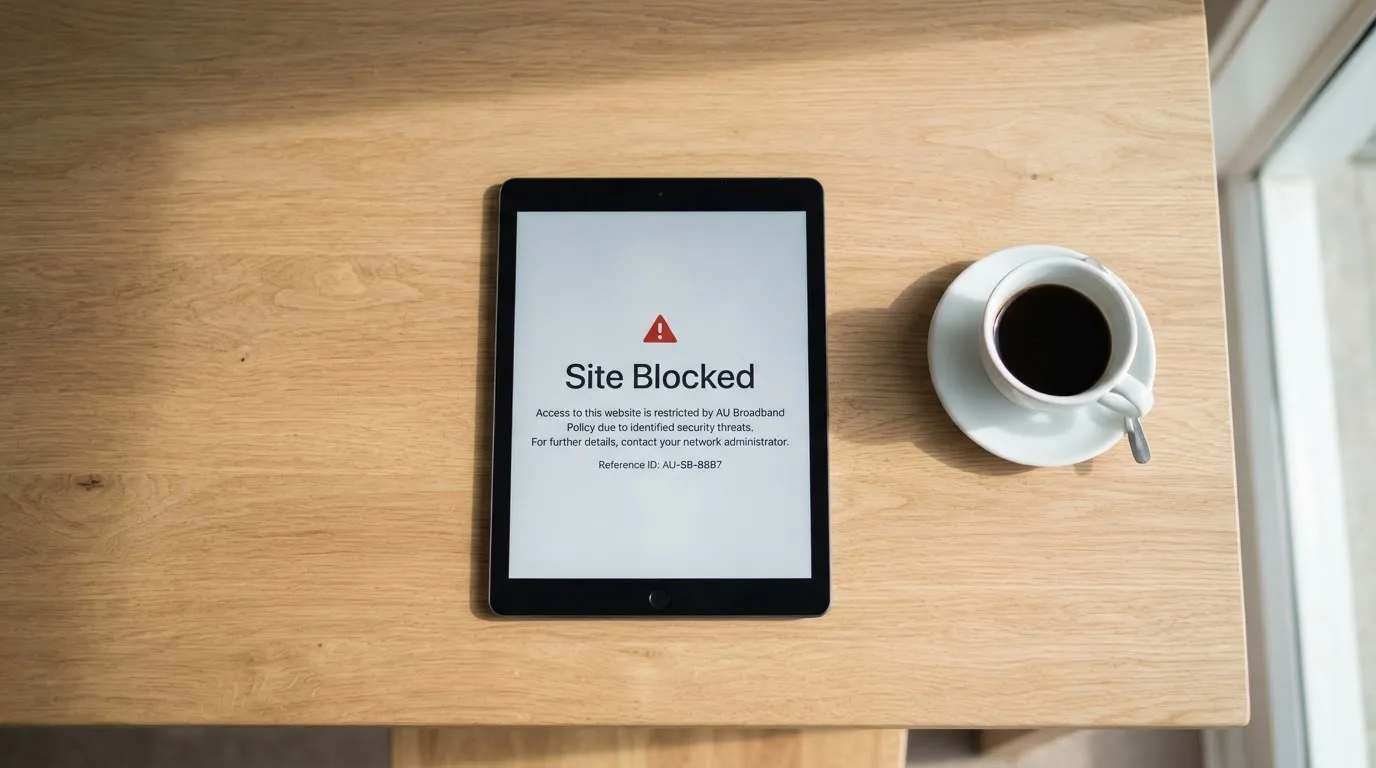
The enforcement frame has tightened in stages. The original IGA, passed in 2001, prohibited the provision of certain interactive gambling services to Australians. The Interactive Gambling Amendment Act 2017 strengthened the regime by giving the ACMA the powers to issue formal warnings, accept enforceable undertakings and direct ISPs to block offending sites, with civil penalty provisions added later. The Interactive Gambling Amendment (Gambling Reform) Bill 2026, passed on 19 August 2026, adds advertising and inducement measures that commence on 1 January 2027 — law with a start date, not law in force on a 2026 page. By the time that commencement date arrives, the ACMA’s enforcement toolkit will cover not just the offer itself but the marketing of it to Australian readers, which is the layer that currently routes Australian search traffic toward the brands the ACMA has already warned.
What the offshore operator cannot give an Australian reader
The structural reason the offshore operator is a poor choice for an Australian punter is not the offer — it is the absence of the consumer-protection layer that the Tasmanian venue provides automatically. A punter at Wrest Point or the Country Club has access to a Tasmanian Liquor and Gaming Commission complaints process, a venue-level self-exclusion, and a state-run responsible-gambling service. The same punter at an offshore site has whatever the offshore site chooses to provide, which is typically a customer support email address and a regulator in a jurisdiction the punter cannot practically complain to. If a withdrawal is refused, if a bonus is voided, if a game outcome is disputed, the punter has no Australian body to escalate to. The ACMA can act against the site, but it cannot compel a refund for an individual player.
The second structural problem is the payment layer. Australian-licensed wagering services cannot accept credit card, credit-related products or digital currency as a deposit, a rule in force since 11 June 2024 with penalties up to A$247,500 for the operator. An offshore casino accepting Australian players is not bound by this rule, which means it will accept credit cards, crypto, and a range of payment methods an Australian punter cannot use at a licensed Australian operator. The convenience the offshore site offers is the convenience of a transaction that is, on the Australian side, unregulated. A punter who deposits via credit card at an offshore site has no chargeback rights through the Australian framework, and a punter who deposits via crypto has no chargeback rights at all.
What the Tasmanian venue gives that the offshore site does not
The list is shorter than the list above, because a venue has been doing the same job for decades and the offer is well-understood.
A licensed venue sits inside the Tasmanian responsible-gambling frame. The cashless card limits apply. The state-level self-exclusion works. The venue’s own exclusions, where they exist, work. The gambling helpline on 1800 858 858 is a local call.
A licensed venue does not need to advertise its way around a regulator. The venue’s name, its licence status and its operating hours are on the Tasmanian Liquor and Gaming Commission’s register; a punter can check whether a venue holds a current EGM licence by contacting the Commission. The Commission can investigate a complaint, can revoke a licence, and can require a venue to make restitution in cases of machine malfunction.
A licensed venue pays Tasmanian taxes. A punter who plays at Wrest Point is contributing to the roughly A$75 million in gaming taxes and licence fees Federal Group paid to the Tasmanian government in 2018; the same punter playing at an offshore site is contributing to a Curaçao or Anjouan treasury, which is a different use of the same stake. The first is, at least, a circulation back into the state that hosts the venue; the second is not.
The Reader’s Position: What to Do With This Information
A reader who arrived on this page looking for a venue list is now in possession of one. Wrest Point in Hobart. The Country Club in Launceston. The pubs and clubs in between, identified by the local map of where the EGM licences sit. The reader who arrived looking for an offshore recommendation has, instead, the ACMA register and a clear statement that none of those operators can lawfully offer their product to Australians.
The honest position the page can take on the underlying question — “where are the best pokies in Tasmania” — is that the answer depends on what the reader means by best. Best for a high-stakes punter who wants the widest games catalogue and the highest denomination range is one of the two casinos. Best for a low-stakes punter who plays for entertainment and wants the cashless card limits to keep their play contained is the local pub. Best for a visitor to Hobart is Wrest Point, for a visitor to Launceston is the Country Club. Best for someone who wants to spend an evening at a property that has more than the gaming floor is one of the two casino resorts; best for someone who wants to combine a drink and a meal with their play is the pub estate. None of those readers will be best served by an offshore site, and none of them needs to be told which offshore site to use, because the law does not let any of those offshore sites offer the product to an Australian reader in the first place.
What a punter should know before walking in
A punter planning a session at a Tasmanian pub in 2026 needs to know three things the cashless card reform has changed. First, the gaming room is carded — bring the card or register on arrival, and bring identification for the registration. Second, the default loss limits apply — A$100 a day, A$500 a month, A$5,000 a year — and raising a limit requires a 24-hour wait, so a punter who thinks they will want a higher limit should raise it the day before, not during a session. Third, the gaming room may close when the pub closes — a punter used to a 24-hour pub in another state should check the venue’s hours before assuming late-night access.
A punter planning a casino session at Wrest Point or the Country Club needs to know the casino floors are not yet carded and still operate on cash for EGM play. A punter used to a casino in another state will find the layout familiar. A punter used to playing online will find the experience fundamentally different, because there is no bonus ladder, no loyalty points scheme equivalent, no spin counter, and no digital payout — the cash is in the wallet and the winnings are in the wallet, and the experience is the experience.
What a punter should know about playing offshore
A punter who has decided to play at an offshore site despite the legal frame has decided to operate outside the Australian rules. The page does not recommend that choice. The page does note that, if the choice is made, the punter has no Australian regulator to escalate to, no Australian consumer protection that applies, no Australian self-exclusion that binds the site, and no Australian chargeback rights on deposits the site accepts. The punter is, in effect, dealing with a counterparty in a jurisdiction the punter cannot practically complain to, on terms the punter cannot enforce in Australia. The punter’s recourse if a withdrawal is refused is whatever the offshore site chooses to provide, which is the practical answer to the question the offshore marketing does not address.
A punter who has decided to play offshore and then finds themselves chasing losses, hiding the play from family, or borrowing to deposit, has the same help available as a punter in the same position at a Tasmanian venue — the National Gambling Helpline on 1800 858 858 and the chat service at Gambling Help Online. Both are free, both run 24 hours a day, both are confidential, and both work regardless of whether the punter has played at a venue or at an offshore site. The help is the same; only the source of the harm is different.
A Note on the Federal Frame Outside Tasmania
The frame above is Tasmanian, but the federal IGA applies across every Australian state and territory. A punter in Tasmania has the same relationship to offshore online pokies as a punter in NSW, Victoria, Queensland, Western Australia, South Australia, the ACT or the Northern Territory: the offering is prohibited, the ACMA enforces, the cumulative block count stands at 1,751 sites as at the round reported on 26 June 2026, and the same eleven operators sit at the centre of the regulator’s published action. The Tasmanian specifics are the venue map, the cashless card regime, and the gambling helpline number; the federal specifics are the IGA, the ACMA’s blocking power and the offshore operators the regulator has been warning and blocking for years.
A reader visiting Tasmania from another state who is used to a cashless card scheme at home should check whether the home state’s card scheme is recognised in Tasmanian venues, and whether the Tasmanian cashless card system at a pub is the same card they have at home. The cross-jurisdictional recognition is patchy in 2026, and a punter used to a card at home may need to register a Tasmanian-specific card on arrival.
The casino comparison elsewhere in Australia
The Tasmanian casino landscape is small because the state itself is small. Other Australian jurisdictions have larger casino estates. Adelaide Casino, known commercially as SkyCity Adelaide, sits in the heritage-listed Adelaide railway station building on North Terrace and has 90 gaming tables and 950 gaming machines; it is the sole licensed casino in South Australia under the Casino Act 1997, regulated by South Australia’s Independent Gambling Authority and Liquor and Gambling Commissioner. The licence was extended to 30 June 2035 in 2013 and allows the casino to expand to up to 200 gaming tables and 1,500 gaming machines subject to redevelopment.
In Queensland, Treasury Casino in Brisbane’s historic Treasury Building operated until 25 August 2024, when it closed to make way for the new Star casino at Queen’s Wharf. The Star Brisbane began a staged opening at the A$3.6 billion Queen’s Wharf precinct on 29 August 2024, with the main casino floor and premium gaming rooms opening first. The opening came amid concerns about the licence position of Star Entertainment Group; in late 2022 the Queensland Government, acting on an independent review by former Court of Appeal judge Robert Gotterson, found Star unsuitable to hold its Queensland casino licences after concluding it had misled regulators and failed its anti-money-laundering duties. Star was fined $100 million on 9 December 2022, with a 90-day suspension of the Treasury Brisbane and Star Gold Coast licences deferred to 1 December 2023 to allow remediation.
The mainland comparisons are useful for two reasons. First, they illustrate the structural difference between Tasmania’s two casinos and the larger casino estates on the mainland; a mainland visitor accustomed to the floor at Star Brisbane or SkyCity Adelaide will find Wrest Point and the Country Club smaller and quieter, which is part of what the visit is. Second, they show that even the larger casino estates on the mainland operate within their own state licensing frames and do not offer online casino products to Australian readers. The Star Brisbane, Adelaide Casino and the Tasmanian two all share the same federal frame: no online casino product, even where the casino itself is large.
Final Position on the Question
The page opened with a question and ends with an answer, because the answer is what a reader is here for.
The “best pokies in Tasmania” question is a question about a small licensed estate — Wrest Point, the Country Club, and the pubs and clubs that hold their own EGM licences — not a question about offshore online operators. The licensed venues are where a Tasmanian punter, or a visitor to Tasmania, can actually play pokies under Australian law. The cashless card regime at the pub estate has changed how the play works in practice, with default loss limits and mandatory carded play; the casino floors still operate on cash for EGM play and offer a wider games catalogue and higher denomination range. Responsible-gambling support is local and accessible — Gambling Helpline Tasmania on 1800 858 858, in-person counsellors in Hobart, Launceston, Devonport and Burnie, and the federal National Gambling Helpline and Gambling Help Online.
The offshore operators that surface in the search results around this topic — RocketPlay, Level Up Casino, Woo Casino, Spirit Casino, National Casino, Bizzo Casino, Ignition Casino, Instant Casino, Jackbit, Casino Intense and Sky Crown — are not options. Each has been the subject of an ACMA formal warning. None can lawfully offer its product to an Australian reader. The ACMA’s blocking regime, in force since November 2019, has resulted in 1,751 sites blocked across roughly six and a half years, a cumulative rate that translates to somewhere between 220 and 320 sites blocked per year on average — a band, not a single figure, because the regulator’s output is lumpy. A punter who chooses one of those sites is choosing to play outside the Australian rules, with no Australian consumer protection, no Australian self-exclusion binding the site, and no Australian chargeback rights on deposits.
The honest position the page can take is the one the law takes. Tasmania has two casinos and a licensed estate around them, and that is where the pokies are. Everything else is something else.
Frequently Asked Questions About Pokies in Tasmania
Which venues in Tasmania are licensed to operate pokies?
Tasmania licenses two casinos — Wrest Point Hotel Casino in Hobart and the Country Club Casino and Resort in Launceston — plus a network of hotels and clubs that hold their own electronic gaming machine licences. The casinos are run by Federal Group, the Farrell family’s Tasmanian gambling company. The pub and club estate emerged after 2017, when the Federal Group’s exclusive licence was relinquished and individual venues were allowed to hold their own machine entitlements under the Gaming Control Act 1993.
Are pokies in Tasmania available around the clock?
Some are. A small number of venues operate round-the-clock gaming rooms, and both Wrest Point and the Country Club run extended hours that go beyond what most pubs offer. The bulk of the licensed pub estate, however, closes its gaming room with the rest of the pub, and a punter used to 24-hour pub gaming in another state should check a specific venue’s hours rather than assume late-night access. The Spirit of Tasmania ferry carries a small gaming lounge on board Bass Strait sailings, but that product sits under a different regulatory frame from the Tasmanian mainland venues.
What identification do venues in Tasmania require before letting someone play pokies?
Since the December 2025 cashless gaming card reform, hotel and club EGMs require a registered player card tied to a basic identification at the venue. The card carries the default loss limits — A$100 per day, A$500 per month and A$5,000 per year — and raising a limit requires a 24-hour cooling-off period. Casino floors have not yet rolled out the card system, and identification requirements on the casino floor remain at the level they were before the reform.
Can visitors to Tasmania use self-exclusion schemes at local pokies venues?
A visitor can call Gambling Helpline Tasmania on 1800 858 858, which is free and operates 24 hours a day, and arrange a venue-level self-exclusion at the venues they name. The federal BetStop register binds Australian-licensed online and phone wagering services but does not bind an offshore casino, because the offshore casino is not an Australian-licensed service. A punter who has put themselves on BetStop and then opens an account at an offshore site has not excluded themselves from that site, and the register cannot see the account.
How does the payout percentage on Tasmania pokies compare with other Australian cities?
Australian EGM return-to-player settings are set state by state rather than at a national level, so a clean comparison across cities requires looking at each state’s settings rather than at a single national figure. South Australia sets a minimum gaming-machine return-to-player rate of 87.5% and a general maximum bet of A$5.00 outside the casino, with Adelaide Casino itself having no maximum-bet limit. Tasmania’s settings are different in detail and Tasmania does not publish a single venue-by-venue RTP table, so a punter looking for a per-venue comparison is looking for data the state does not publish. The state’s casinos offer a wider games catalogue and denomination range than the pub estate, and the differences within a casino floor across titles can be larger than the differences between venues.
Is it legal for an online casino to advertise “pokies” in Tasmania the same way a pub or club does?
No. The Interactive Gambling Act 2001, strengthened by the Interactive Gambling Amendment Act 2017, makes it an offence to provide online casino games — including online pokies — to a person in Australia. The prohibition sits on the provider, not the player, but the offering itself is unlawful. The Australian Communications and Media Authority investigates, issues formal warnings and directs Australian internet service providers to block offending sites, and as at 26 June 2026 the cumulative total stood at 1,751 sites blocked since the first blocking request in November 2019. The Interactive Gambling Amendment (Gambling Reform) Bill 2026, passed on 19 August 2026, adds advertising and inducement measures that commence on 1 January 2027. A site that advertises “pokies” to an Australian reader is offering a prohibited service, regardless of the offshore licence it may display.