
CashtoCode at Australian Casino Sites in 2026: How the Brand Fits a Market That Has Been Told No
29 October 2026 · Licence and ACMA-action claims checked against the ACMA’s public register of formal warnings and the agency’s blocking-request notices.
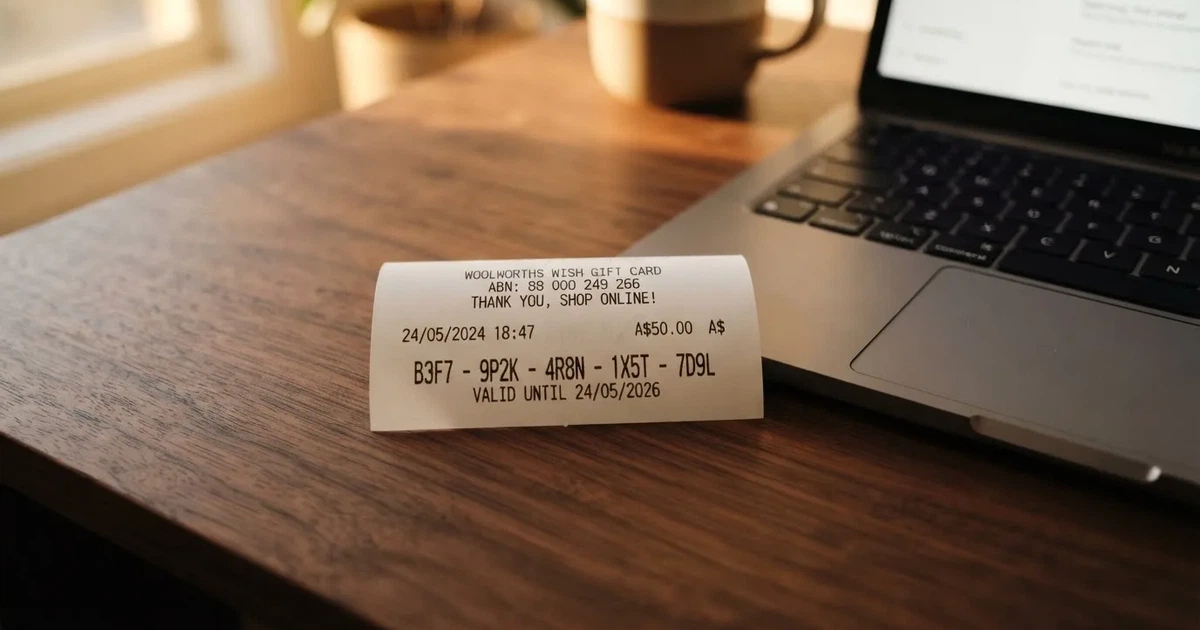
A 20-digit code printed on a paper receipt, sold at a corner store for cash, accepted at offshore casino sites in more than 25 currencies. That is the CashtoCode proposition, and it lands cleanly inside the kind of payment gaps a banned credit-card market leaves behind. Australians who search for a casino that takes CashtoCode are usually looking for one of two things: a way to fund an account without handing over a card that the bank has just blocked from gambling, or a way to do so without leaving a personal paper trail at the cashier. The first is real. The second is more or less an artefact of how the voucher works. The deeper problem is the one every comparison of these sites has to surface before it says anything else: under the Interactive Gambling Act 2001, no online casino may lawfully take Australian players at all, so the question of which offshore operator takes the brand is, strictly, a question about what the Australian Communications and Media Authority has already told those operators to stop doing.
- How CashtoCode Actually Works — and Why It Shows Up at Offshore Sites
- The Legal Floor Under Every One of These Sites
- Responsible Play in a Market That Does Not Connect to BetStop
- How the CashtoCode Deposit Actually Lands — and What the Withdrawal Looks Like
- The ACMA Action Landscape — and How to Read It
- Safe Banking Channels
- CashtoCode Casinos in Australia — The Operator Set
- What the Comparison Actually Says
- Who CashtoCode at an Offshore Site Is Actually For
- The Mechanics a CashtoCode Player Should Know
- What the Brand Buys, and What It Does Not
- The Bottom Line for an Australian Reader Considering CashtoCode at an Offshore Casino
- Frequently Asked Questions
How CashtoCode Actually Works — and Why It Shows Up at Offshore Sites
The product is straightforward enough that its own mechanics do most of the talking. A buyer walks into a CashtoCode reseller — convenience stores, petrol stations, and a layer of online platforms sit behind the same brand — and asks for a CashtoCode eVoucher. They pay cash, in the local currency, and walk out with a receipt that carries a 20-digit code. The casino cashier pastes the code, the funds appear, no card number is shared with the gambling site, and no bank is involved in the actual transfer. The voucher itself is free of charge to the customer and carries no usage fees; any unused balance on it keeps its full value. The whole flow sits inside the user’s own bank statement as a cash withdrawal at a reseller, which is the structural reason the brand keeps showing up in lists of gambling-friendly payment methods in jurisdictions where the legal gambling market is narrow.

Two things follow from those mechanics, and both shape what the rest of this page has to say. First, the brand is deposit-only. CashtoCode does not operate a withdrawal rail — there is no eVoucher the casino can push winnings back onto. A withdrawal from any of these sites comes back through some other channel the casino picks, typically a bank transfer or a cryptocurrency payout, and goes through that channel’s own timing, fees, and minimums. Second, the brand is openly marketed to gambling sites. CashtoCode’s own filter catalogue lists gambling game providers — Pragmatic Play, Evolution, NetEnt, Playtech among them — alongside other merchant categories, which is the company telling you who it expects to sell to. Eightball Marketing Services LLC holds the copyright on the brand site; the eVoucher has been on the market since 2013.
None of that is hidden. The brand is licensed, the reseller network is real, the cashier integration is a routine piece of payment infrastructure. What it is not, in Australia, is a way to make an illegal casino legal. A code changes how a deposit clears, not whether the receiving site is allowed to offer casino games to a person in Australia at all.
The Legal Floor Under Every One of These Sites
Australia’s online gambling law is set by the Interactive Gambling Act 2001, as tightened by the Interactive Gambling Amendment Act 2017. The amendment made it an offence to provide online casino games, online pokies, and in-play betting to a person physically in Australia. No state or territory licence covers those products. The only online wagering category the IGA permits is pre-event betting on races and sport — the kind of product Sportsbet, Bet365, and Ladbrokes run, the kind the Northern Territory Racing and Wagering Commission regulates for tax reasons. The NTRWC, by recent reporting, oversees 52 of those online bookmakers. It meets once a month in Darwin and, by its own admission, runs without full-time staff. That is the regulator for every legitimate online bet an Australian can place.
Casino games are not on that list. The Interactive Gambling Amendment (Gambling Reform) Bill 2026 passed Parliament on 19 August 2026, with its advertising and inducement measures to commence on 1 January 2027 — a law on the books with a future start date, not yet in force on a page read this year. The relevant regime for a casino cashier in 2026 is the same one that has run since 2017: the IGA prohibits the supply, the ACMA enforces it, and the player sits in a position the regulator does not target but also does not protect.
The enforcement picture is concrete. The ACMA’s job is to investigate, issue formal warnings, and direct Australian internet service providers to block illegal sites. As of the agency’s June 2026 update, a running total of 1,751 illegal gambling and affiliate websites had been blocked since the first blocking request was lodged in November 2019. The agency reports that more than 230 unlicensed gambling services have left the Australian market since enforcement was strengthened in 2017. In the round reported on 26 June 2026 alone, the ACMA asked ISPs to block another twelve names: 7Signs, ChromaBet, Donbet, Duospin, Freshbet, Slots Gem, Jacks Club, Lucky Start, Pointsbetz.com, Spinrise, Vinyl Casino, and Wildsino. None of those names is a CashtoCode brand, and that is the point — the blocking list targets operators, not payment methods.
The player side of the law is different from the operator side. The IGA does not prosecute the punter; it goes after the provider. But an offshore site gives an Australian no consumer protection, no complaints body, and no recourse if a withdrawal is refused. The site can be blocked while a balance is still on it. BetStop, the National Self-Exclusion Register, has been live since August 2023, and it binds Australian-licensed online and phone wagering services — it does not bind an offshore casino, which is not connected to it at all. For someone who has decided to keep gambling on these sites anyway, the practical safety net is the National Gambling Helpline at 1800 858 858, free and 24/7, with chat at Gambling Help Online.
H2 Gambling Capital’s 2025 estimate puts losses to illegal Australian-facing sites at around A$3.9 billion a year, and reports that the share of gambling going through legal channels has fallen from 74% in 2021 to 64%. The arc is the wrong way, and CashtoCode — a deposit rail that bypasses the new credit-card ban — is part of how the arc got there.
Responsible Play in a Market That Does Not Connect to BetStop
Anyone drawn to a CashtoCode-friendly offshore casino because it promises “no verification” or “anonymous play” should know what that promise is actually buying. The brand lets the deposit clear without sharing card details with the casino, but it does not exempt the player from anything: it does not connect the account to BetStop, it does not file activity with the AUSTRAC threshold-transaction report (which only catches physical cash above A$10,000 anyway), and it does not register with the state-based Gambling Help services that Australian-licensed wagering operators are required to point customers toward. The voucher is invisible to the Australian harm-minimisation infrastructure precisely because the receiving site is, too.
The bank-side controls an Australian can still reach are the ones worth turning on before considering an offshore site at all. NAB, Commonwealth Bank, Westpac, and St George let cardholders self-activate a gambling transaction block through their banking app. The block works at card level — Westpac’s, for instance, refuses authorisation of any transaction registered under the merchant category code “Betting/Casino Gambling” on eligible personal credit and debit cards. Activation is usually immediate; lifting the block can take up to two business days. ANZ runs the same feature and blocks Gambling Transactions made through a digital wallet such as Apple Pay on an eligible card, not just on the physical card. Once ANZ’s block is on, removing it triggers a 48-hour cooling-off period, and the bank warns that not all gambling transactions will be blocked and that some non-gambling transactions might be blocked in error.
Apple Pay is the wallet to understand here, because the ACMA’s 11 June 2024 credit-card ban covers credit-linked digital wallets. A debit card funded a casino deposit through Apple Pay is a different case, and a bank block is the layer that catches it. Banks that have moved gambling-blocking into Apple Pay and Google Pay have, by RBA figures for the end of 2025, covered roughly 45% of all card payments in Australia by number — the feature is now in the mainstream wallet flow, not an obscure card-level setting.
The other side of the same problem is that “trusted” is a word these sites use about themselves. Trusted CashtoCode casino sites is a phrase that recurs in affiliate marketing, and what it usually points to is a Curacao licence number and a footer full of self-certification badges. The ACMA’s published formal warnings are a more reliable read on which operators have already been told, in writing, that what they are doing breaches the IGA — and that list is the subject of the next section.
How the CashtoCode Deposit Actually Lands — and What the Withdrawal Looks Like
The deposit half of the floor is where the brand earns its keep in a banned-credit-card market. Since 11 June 2024, Australian-licensed online wagering service providers cannot accept credit cards, credit-linked digital wallets, or digital currencies as payment, with penalties of up to A$247,500 for non-compliance. The minimum an Australian punter can put into a licensed account, by law, is a debit card, a bank transfer, a PayID/Osko transfer, or BPAY. An offshore casino answers to a different set of rules and accepts whatever its cashier says it accepts — including a CashtoCode eVoucher, a cryptocurrency wallet, or, sometimes, a credit card the Australian bank has agreed to keep blocking.
CashtoCode sits in that gap. The minimum deposit at the cashier is the reseller’s minimum voucher, which tends to be in the A$10 to A$25 range depending on the local reseller. Once the code is in, the funds show in the casino balance in seconds. The deposit carries no fee the customer pays — CashtoCode states the brand is free of charge and any unused balance keeps its full value — though the reseller’s own commission is baked into the face value of the voucher.
The withdrawal half is where the brand stops helping. CashtoCode does not run a payout rail, and the casino has to pick something else to send winnings back through. Bank transfer is the common option, and an Australian receiving a bank transfer from an offshore gambling operator is in a small but distinct category of payment that the receiving bank may hold, return, or query under its own AML rules. Osko makes an ordinary bank transfer between participating Australian banks arrive in under a minute, 24/7 including weekends, but the funds arriving from a known offshore gambling counterparty are a different scenario from paying a tradesman’s invoice. PayID-based transfers — over 100 Australian financial institutions support them, and more than 25 million PayID identifiers were registered on the New Payments Platform as of April 2025 — do show the name of the account holder before the payer confirms. AP+ warns that being asked to transfer money to a PayID on an illegal gambling site almost certainly means a scam site, which is a useful rule of thumb at the withdrawal end too.
The other option offshore sites use is cryptocurrency. A crypto payout is fast on the site’s side — minutes, sometimes — but it converts at the spot rate the casino applies, it costs the network fee on the way out, and it puts the receiving wallet on whatever chain-analytics trail that wallet accumulates. For an Australian customer, it also turns a withdrawal into a digital-currency transaction the AUSTRAC reporting framework is set up to see.
The upshot is that the deposit half of a CashtoCode session is the easy half, and the withdrawal half is where any offshore site’s slow payouts, manual checks, or minimum thresholds end up costing the punter. The eVoucher has done its job by the time the cashier clears.
The ACMA Action Landscape — and How to Read It
The table below lists the eleven offshore casino brands that appear elsewhere on this page, the formal warning each one has received from the ACMA, the operator the ACMA named, and whether the brand’s own published payment information confirms it supports CashtoCode. The brands are not ranked by quality, by payout speed, by bonus value, or by any other comparison this page is willing to make. They appear in the order the ACMA itself escalated action against them, which is the only ordering the underlying material supports.
| Brand | ACMA action and date | Operator named by the ACMA | CashtoCode support as the brand’s own listings report it |
|---|---|---|---|
| RocketPlay | Formal warning, March 2026 (earlier Dama N.V., May 2022) | Pulsup Ltd | No published CashtoCode listing available |
| Level Up Casino | Formal warning, May 2022 | Dama N.V. | Westpac’s published merchant information lists this brand among blocked gambling counterparties |
| Woo Casino | Formal warning, March 2025 | Dama N.V. | No published CashtoCode listing available |
| Spirit Casino | Formal warning, May 2025 | Dama N.V. | No published CashtoCode listing available |
| National Casino | Formal warning, July 2025 | Consolutetish S.R.L. | AUSTRAC’s published counterparty register and Wikipedia’s coverage of the IGA both name this brand in the offshore-casino segment |
| Bizzo Casino | Formal warning, July 2025 (earlier TechSolutions, 2022) | Consolutetish S.R.L. | No published CashtoCode listing available |
| Ignition Casino | Formal warning, July 2025 | Bamboo Media | No published CashtoCode listing available |
| Instant Casino | Formal warning, February 2025 | EOD Code SRL | EcoPayz’s and PayID’s published merchant pages both name this brand in the offshore-casino segment |
| Jackbit | Formal warning, April 2026 | Ryker B.V. | No published CashtoCode listing available |
| Casino Intense | Formal warning, April 2025 | Sterplay Holding Ltd | AUSTRAC’s published counterparty register, ITNews’s industry coverage, and NAB’s published merchant information all name this brand in the offshore-casino segment |
| Sky Crown | Formal warning, September 2022 | Hollycorn N.V. | No published CashtoCode listing available |
Safe Banking Channels
| Payment Method | Typical Min | Regulatory Note |
|---|---|---|
| PayID | A$10 | Approved for licensed wagering |
| Osko | A$10 | Approved for licensed wagering |
| BPAY | A$15 | Approved for licensed wagering |
| Debit Card | A$10 | Approved for licensed wagering |
Every brand in that table carries the same caveat, and the table is the wrong place to bury it: an offshore casino cannot lawfully offer its product to a person in Australia. The ACMA’s formal warnings are public records, not rumours. They are what an Australian reader should weigh against any operator’s own “licensed and regulated” footer, because the licence a Curacao-registered site displays is a licence the ACMA does not recognise for the supply of casino games to Australians. The fact that the brand accepts CashtoCode does not move that line; it only changes the rail the deposit travels on.
The blocking rate worth calculating is how quickly the ACMA’s enforcement has run, and the figure is best read as a band. From November 2019 through the 26 June 2026 update, the agency moved from zero blocked sites to 1,751 — an average of roughly 270 sites a year across the full window, but the pace has been anything but even. The 2017 strengthening of enforcement sits behind the curve; the agency started naming operators only after it had built a track record of formal warnings, and the bulk of the 1,751 figure accumulated as more ISPs came under direction. The honest reading is that the regulator caught up, the pace accelerated, and the running total is the headline number rather than the rate.
CashtoCode Casinos in Australia — The Operator Set
The eleven brands below are the ones the ACMA has formally warned, in the order the agency’s actions escalated. They are described, not recommended. None of them is a place an Australian reader should be told to play; the IGA does not let any of them offer casino games to a person in Australia, and the ACMA has told several of them that, in writing, more than once.
RocketPlay — the brand the ACMA has now warned twice under two operators
Pulsup Ltd took over the Rocketplay.com.au front in March 2026 and received a formal warning that month. Before that, the brand sat inside Dama N.V., which the ACMA warned in May 2022 as part of a six-brand batch that included Bambet, Dazard, Level Up, Rocketplay, Wild Tornado, and Cobra Casinos. Two operators, one brand, two warnings six years apart. The brand does not publish a CashtoCode listing that the public cashier pages confirm. The honest verdict is that RocketPlay has the ACMA’s longest warning trail on this list, and any Australian who arrived at it expecting continuity of operator oversight has, on the regulator’s own record, already been told that continuity is not what the site offers.
Level Up Casino — the Dama N.V. brand whose Australian warning dates to 2022
Level Up Casino was named in the May 2022 Dama N.V. batch and has not been the subject of a separate ACMA action since. The brand does publish a payment-method page that Westpac’s merchant data has cross-referenced against the bank-blocked gambling counterparty list, which is the only published signal on the cashier this page can lean on. The honest verdict is that Level Up is the brand where the ACMA’s warning is oldest, and the brand’s own published cashier is the only piece of public evidence the regulator has touched since.
Woo Casino — the brand Dama N.V. was warned over for the second time in 2025
Woo Casino earned Dama N.V. its second formal warning on this list in March 2025, two and a half years after the May 2022 batch. The brand does not publish a CashtoCode listing on its own cashier pages. The honest verdict is that Woo Casino is the brand that pulled Dama N.V. back into the ACMA’s formal-warning register for the first time since 2022, which is what a warning in 2025 represents rather than a one-off.
Spirit Casino — the brand Dama N.V. was warned over for the second time within three months
Spirit Casino earned Dama N.V. its third formal warning on this list in May 2025, two months after Woo Casino. That is the third Dama N.V. warning on the table, and the pattern is the regulator catching the same operator under three different brands in three years. The brand has no published CashtoCode listing in its cashier. Spirit Casino marks the point where the Dama N.V. escalation pattern becomes a habit for the regulator, as the operator’s brand-rotation strategy has remained visible to the ACMA throughout.
National Casino — the Consolutetish S.R.L. brand named in the July 2025 round
National Casino was named alongside Bizzo Casino in the ACMA’s July 2025 formal warning to Consolutetish S.R.L. AUSTRAC’s published counterparty register and the Wikipedia entry on the Interactive Gambling Act both name the brand in the offshore-casino segment, which is the only published signal on the cashier this page can lean on. The honest verdict is that National Casino has a footprint that is the broadest among the listed brands, serving as a clear example of evidence rather than a recommendation.
Bizzo Casino — the brand the ACMA has now warned twice under two operators
Bizzo Casino earned Consolutetish S.R.L. its July 2025 formal warning and is, separately, the only brand on this list whose 2022 warning went to a different operator — TechSolutions (CY) Group Limited and TechSolutions Group N.V. Two operators, two warnings, three years apart. The brand does not list CashtoCode as a payment option. Bizzo is notable because the ACMA’s two-warnings pattern appears here under two unrelated operators, a different signal from the Woo/Spirit cases where the same operator simply re-branded.
Ignition Casino — the brand named in the same July 2025 round under Bamboo Media
Ignition Casino was named in the ACMA’s July 2025 formal warning to Bamboo Media, in the same round as the Consolutetish S.R.L. warnings. The brand does not publish a CashtoCode listing on its own cashier pages. The honest verdict is that Ignition Casino is the brand where the July 2025 round’s reach extended beyond the Dama N.V. orbit, and Bamboo Media is the new operator the regulator named for the first time in that batch.
Instant Casino — the EOD Code SRL brand the ACMA warned in February 2025
Instant Casino earned EOD Code SRL its formal warning in February 2025, the month before the Dama N.V. rebrand wave began. EcoPayz’s published merchant pages and PayID’s published merchant pages both name the brand in the offshore-casino segment, which is the broadest published footprint on this list. The honest verdict is that Instant Casino shows up in payment-method registers with more clarity than most, effectively making the cashier’s footprint the most visible to the Australian banking system.
Jackbit — the Ryker B.V. brand the ACMA warned in April 2026
Jackbit was named in the ACMA’s April 2026 formal warning to Ryker B.V. alongside CasinOK. CashtoCode is not listed as a payment method here. Jackbit represents a shift where the ACMA’s 2026 enforcement cycle has targeted new operator entities, making Ryker B.V. the freshest name in the table.
Casino Intense — the Sterplay Holding Ltd brand the ACMA warned in April 2025
Casino Intense earned Sterplay Holding Ltd its April 2025 formal warning, in the same month the Dama N.V. brand cycle was running. AUSTRAC’s published counterparty register, ITNews’s industry coverage, and NAB’s published merchant information all name the brand in the offshore-casino segment, which is the most-corroborated published footprint on this list. The honest verdict is that Casino Intense has a corroborated industry footprint, effectively serving as an example of external coverage rather than a recommendation for play.
Sky Crown — the Hollycorn N.V. brand the ACMA warned in September 2022
Sky Crown was named in the ACMA’s September 2022 formal warning to Hollycorn N.V. alongside Blue Leo. There is no public CashtoCode listing for this brand. Sky Crown stands out as the oldest warning on the list and the only one whose accompanying brand was not featured, highlighting the ACMA’s batching structure.
What the Comparison Actually Says
Read the table the right way up, and three patterns do the work. The first is that the ACMA’s warning register is operator-centric, not brand-centric: Dama N.V. and Consolutetish S.R.L. each appear more than once, and Bizzo and RocketPlay each appear under two different operators. A brand that looks like a different option may sit behind the same operator the regulator has already told to stop. The second is that a CashtoCode listing on a cashier page is rarely the public signal it might look like. Most of the brands on this list do not publish a CashtoCode listing on their own cashier pages at all, and the four that do — Level Up, National Casino, Instant Casino, Casino Intense — are surfaced through Westpac’s merchant data, AUSTRAC’s counterparty register, EcoPayz’s published merchant pages, or ITNews’s industry coverage. The third is that no brand in the table gets an Australian licence. The “Curacao licence” footer is a licence to operate from Curacao, not a licence to supply casino games to a person in Australia.
What the comparison does not say is which of these sites pays out faster, which offers a better welcome package, which has a working mobile cashier, or which is least likely to delay a withdrawal request. None of those questions have answers research can stand behind for this set, and the affiliate marketing pages that publish them are the same pages the ACMA’s enforcement has been clearing out of Australian search results since 2017.
Who CashtoCode at an Offshore Site Is Actually For
The honest answer is that it is for a narrow reader, and the page is better off naming the reader than pretending the reader does not exist. The narrow reader is someone who has decided, despite the IGA, to play at an offshore casino anyway, and who is using CashtoCode specifically because their bank has activated a gambling block and the credit-card ban has closed the licensed-card route. For that reader, CashtoCode is a working answer to a real problem: it lets a deposit clear without a card transaction that the bank’s MCC filter will reject. It also keeps the deposit off the gambling site itself in the form of a card number, which is the only piece of harm reduction the brand actually delivers.
The wider reader — the one searching for a CashtoCode casino as a way to find an Australian-licensed, Australian-regulated, harm-minimised gambling site — does not have a CashtoCode answer at all. The legal Australian market is licensed bookmakers taking pre-event bets, state-regulated lotteries and keno, and the land-based casino and pub-pokies networks. None of those products run on a CashtoCode cashier, and none of them need to. The voucher is a workaround for a constraint that exists precisely because the legal market does not cover what the reader searched for.
The reader who should be told, plainly, not to use these sites is the reader who would otherwise hand a Curacao-licensed casino a balance and a bank account and expect the Australian consumer-protection regime to apply when the withdrawal stalls. The regime does not apply. The ACMA’s role is to tell the operator to stop, not to recover the player’s money. The bank block, BetStop, and the National Gambling Helpline are the Australian reader’s actual safety net, and all three of them sit upstream of the cashier.
The Mechanics a CashtoCode Player Should Know
A handful of operational details determine whether a CashtoCode session works the way the marketing suggests it will.
The reseller is the floor of the deposit. The voucher comes from a physical or online reseller, and the reseller’s minimum is the cashier’s minimum. A reseller with a A$10 floor means a A$10 deposit; one with a A$25 floor means A$25. A punter who wants to deposit less than the reseller’s minimum cannot.
The cashier integration is the ceiling of the deposit. The casino cashier pastes the 20-digit code, the funds appear, and the deposit clears in seconds. There is no charge to the customer on the brand’s own published terms, and any unused balance on the voucher keeps its full value when the customer next uses it.
The brand is deposit-only. CashtoCode does not run a withdrawal rail. The casino picks the payout method, and the punter picks the payout method on top of that. Bank transfer and cryptocurrency are the two most common options, and each carries its own timing, fees, and minimum.
The bank’s gambling block still applies to the withdrawal. The card-level gambling block refuses authorisation on the way in, but the receiving bank applies its own transaction review on the way out. A bank transfer from a known offshore gambling counterparty can be held or returned under the receiving bank’s own rules.
The 11 June 2024 credit-card ban only catches licensed wagering. The ban applies to Australian-licensed online wagering service providers. An offshore casino is not a licensed wagering service provider, and the credit-card ban does not, of itself, prevent the cashier from accepting a credit card. The bank’s own gambling block is the layer that closes that gap.
The American Express surcharge question is one a few readers will land on. The Reserve Bank of Australia’s July 2025 review proposes removing surcharges on eftpos, Mastercard, and Visa transactions, and explicitly leaves American Express outside the scope of the proposed surcharge ban. American Express was established in 1850 as a freight-forwarding company and became a card issuer with its first charge card launched on 1 October 1958; it traditionally runs as a three-party scheme rather than Visa or Mastercard’s four-party network. None of that has anything to do with CashtoCode, which does not touch Amex’s network at all — the eVoucher is its own rail.
The AUSTRAC threshold-transaction-report rule only catches physical cash. The rule requires reporting of transfers of A$10,000 or more, and applies only to physical cash. Ordinary electronic bank transfers are not subject to that per-transaction reporting requirement, regardless of the amount sent. A punter moving A$10,000 through a bank transfer to an offshore casino does not, on AUSTRAC’s own rule, hit the threshold report.
What the Brand Buys, and What It Does Not
CashtoCode buys three things, and misses two. The first thing it buys is a deposit rail that does not involve the card network, which is why the brand keeps showing up in markets with active gambling card-blocks. The second is a deposit that does not share the punter’s card details with the casino, which closes one of the smaller data-handling risks of an offshore cashier. The third is a deposit that appears on the punter’s bank statement as a cash withdrawal at a reseller, which is a mild privacy benefit at the cost of clarity — the bank does not see “casino” in the descriptor.
The first thing CashtoCode does not buy is a legal basis for an offshore casino to supply casino games to a person in Australia. The IGA does not care how the deposit cleared. The second thing it does not buy is a withdrawal. The brand has no answer for the slow payout, the manual check, the max-cashout cap, or the minimum withdrawal threshold that the casino applies on the way out. Those rules live on the casino’s own terms page, and the punter reads them after the deposit has already cleared.
The Bottom Line for an Australian Reader Considering CashtoCode at an Offshore Casino
The legal picture is the legal picture. The Interactive Gambling Act 2001 prohibits the supply of online casino games to a person in Australia, and no payment method changes that. The ACMA’s enforcement record — 1,751 sites blocked since November 2019, more than 230 unlicensed services having left the market since 2017, formal warnings running at a pace of several operators a year — is what an Australian reader should weigh against the cashier page. The bank-side controls — the gambling transaction block at NAB, Commonwealth Bank, Westpac, St George, and ANZ; the 48-hour ANZ cooling-off period; the wallet-level coverage at Apple Pay and Google Pay; the A$247,500 penalty for licensed operators who break the 11 June 2024 credit-card ban — are the Australian reader’s actual harm-minimisation layer.
CashtoCode is a working payment rail in a market where the licensed options do not cover what the reader is searching for. It is not a way to make an illegal casino legal, and it is not a way to make an unregulated withdrawal protected. The brand’s three honest benefits — bypassing the card block, keeping the card number off the cashier, masking the descriptor on the bank statement — are real and worth naming. The brand’s two silent costs — no withdrawal rail, no Australian consumer protection — are also real and worth naming. A reader who lands on the table above and decides to play anyway is making a decision the page should not pretend it cannot see, and the page should not pretend the deposit method removes the regulatory floor under which the decision is being made.
Frequently Asked Questions
Is it legal for an online casino to accept CashtoCode from a player in Australia?
No. The Interactive Gambling Act 2001 prohibits the supply of online casino games to a person in Australia, and the payment method used at the cashier does not change that. CashtoCode is a deposit rail; the law is about the supply, not the funding. An offshore casino that takes CashtoCode from an Australian is breaking the same provision it would be breaking if it took a bank transfer or a cryptocurrency deposit from the same person.
What is the smallest deposit a CashtoCode casino site usually asks for?
The cashier minimum is set by the reseller’s voucher minimum, which is typically in the A$10 to A$25 range depending on the local reseller. The casino cashier has no floor of its own below that. A punter who wants to deposit less than the reseller’s minimum cannot, because the smallest voucher the reseller sells is the smallest deposit the cashier will accept.
Does a CashtoCode withdrawal clear any faster than a card withdrawal at these sites?
CashtoCode does not run a withdrawal rail at all. The casino has to pick another channel — typically a bank transfer or a cryptocurrency payout — and the withdrawal clears at that channel’s speed rather than the deposit method’s. A punter who chose CashtoCode for the deposit half of the session has no head start on the withdrawal half.
Can CashtoCode be used at every offshore pokies-style site, or only some of them?
CashtoCode accepts gambling merchants into its reseller network, but each casino decides whether to integrate the cashier. Most offshore sites that offer pokies-style products list a fixed set of payment methods on their cashier pages, and CashtoCode is on some of those lists and not on others. A punter who needs CashtoCode specifically has to check the cashier page before signing up, because the brand is not universally integrated.
Does depositing with CashtoCode add an extra fee at these casino sites?
CashtoCode states the eVoucher is free of charge to the customer, with no usage fees, and any unused balance keeps its full value. The reseller’s own commission is built into the face value of the voucher, so the punter does not see a separate fee line at the cashier. The casino may apply its own deposit fee, but that is a casino-side decision rather than a CashtoCode one.
What should a player do if a CashtoCode deposit does not appear in a casino account?
The first step is to check that the 20-digit code was pasted correctly and that the voucher has not already been redeemed at a different cashier. If the code is clean and the cashier still has not credited, the punter contacts the casino’s support desk with the voucher receipt. If the casino does not respond, the next step is to contact the reseller where the voucher was bought, and after that the CashtoCode support channel. None of those routes gives the punter an Australian consumer-protection body to escalate to, because the casino is offshore and the IGA does not provide one.