
Best Pokies in Brisbane 2026: A Reader’s Guide to Venues, Rules, and Real Cost
The phrase “best pokies in Brisbane” sounds like it should mean a venue recommendation. It doesn’t, because the legal and commercial shape of this market pulls the answer in two directions at once. On one side sits a fixed stock of licensed pubs, clubs and one central casino, all of them inspected, all of them paying a state-set minimum return to player. On the other sits a long list of offshore casino websites that brand a “pokies” tab and target Australians anyway, all of them unlawful to operate here, all of them on the ACMA’s blocking list at one point or another. The first group is where a Queenslander actually plays; the second is where the ACMA’s enforcement notices point, and the one a Brisbane reader needs to recognise so they don’t end up at a blocked site with money in it.
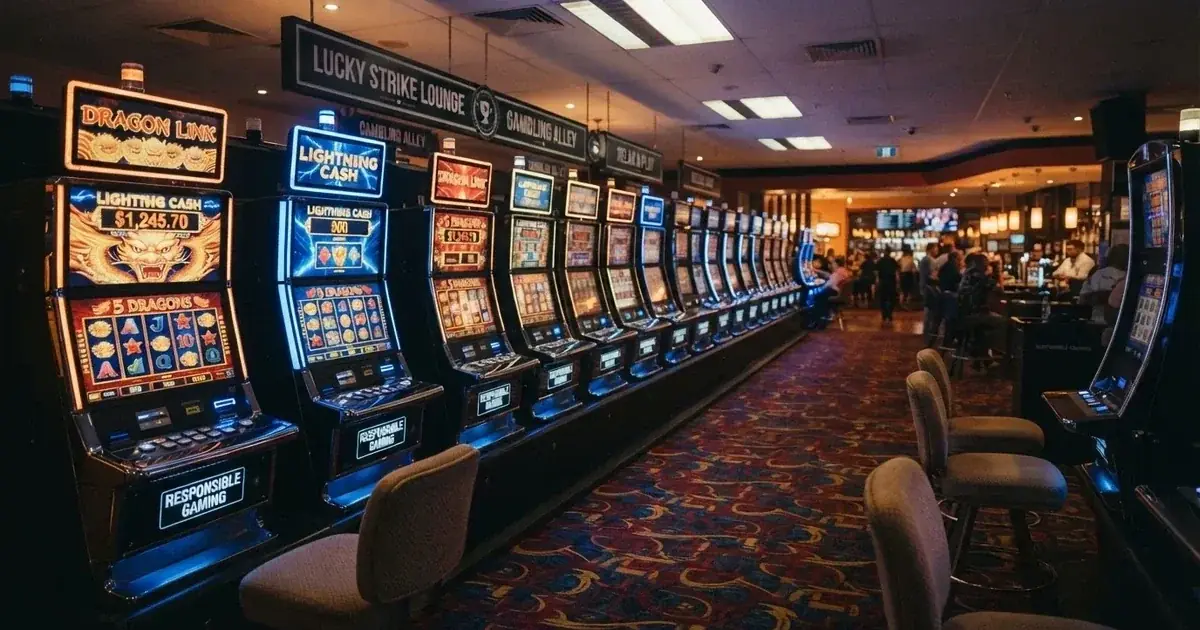
This guide closes the gap between those two pictures. It covers the licensed venues that hold the only lawful pokies in Brisbane — the casino changeover from Treasury to the new Star at Queen’s Wharf, the 351 clubs and hotels running the rest of the state stock, and the payout rules they all live under. It covers the law that keeps offshore sites out, the regulator doing the enforcing, and the self-exclusion tools that actually cover a venue in the Brisbane CBD. And it covers the cost side of the question: what the minimum return to player really means in dollar terms, what the South Australian comparison buys, and how the ACMA’s blocking rate stacks up against the date it all started.
Currency and regulatory figures verified against the ACMA’s published blocking data and the Office of Liquor and Gaming Regulation Queensland register as of 29 October 2026.
- How This Ranking Was Put Together
- What “Pokies” Means in Brisbane
- Brisbane’s Casino Has Moved
- How Other Australian Capitals Set the Standard
- Brisbane’s Land-Based Venues: Clubs, Hotels, and the Star
- How Deposits and Payouts Work at Brisbane Venues
- The Offshore Brands the ACMA Has Warned
- The Law That Keeps Offshore Sites Out
- What the Blocking Rate Looks Like
- What Self-Exclusion Actually Covers in Queensland
- The Cost Side of the Question
- What the Cashless Rollout Changes
- Where the ACMA’s Warning Record Stops Reading the Brand and Starts Reading the Operator
- The Providers and Game Studios the Market Uses
- What to Read on a Pokies Venue Before You Sit Down
- The Verdict on the Offshore Brands
- Frequently Asked Questions About Brisbane Pokies
How This Ranking Was Put Together
A shortlist comparing Brisbane’s pokies venues has to start somewhere, and most of the comparison pages doing the rounds online start from the wrong place. They compare offshore casino brands against each other, treat them as if they were a free-choice menu of licensed alternatives, and end up describing offers that no Australian regulator would ever have approved. The honest ranking for a Brisbane punter looks nothing like that.
The set the page walks through below is built on three filters. The first is legality: an online casino offering pokies to a person in Australia is offering a prohibited interactive gambling service under the Interactive Gambling Act 2001, and no licence jurisdiction recognises them as a real alternative — whatever badge they paint across their homepage. The second is the ACMA’s own enforcement record: every brand on the list below is one the regulator has formally warned or moved against in the last four years, on a published date, against a named operator. The third is venue reality: only land-based venues — clubs, hotels and the one Brisbane casino — hold state or territory authority to put a pokie in front of a player in Queensland.
That ordering is the page’s “top 11”: eleven offshore brands the ACMA has documented action against, plus the broader point that the comparison a punter actually wants is venue against venue, not brand against brand. The “ranking” half of this is therefore inverted from a casino affiliate page. The ACMA’s own order of action runs from the most recent formal warning backwards — Rocketplay in March 2026 at the top, then Level Up, Woo, Spirit, National, Bizzo, Ignition, Instant, Jackbit, Casino Intense, Sky Crown — and the table below carries that order because that is what the public record carries. It is not a recommendation. The verdict on each one is what the rest of the article explains.
The “comparison” half sits in the land-based section. There, the measures that actually separate one option from another are distance from the CBD, opening hours, payout percentage band, identification requirements, and the self-exclusion scheme that covers the door. None of those measures is an offer. All of them cost the reader something, in time or in money, and the sections below work through each one.
What “Pokies” Means in Brisbane
The word “pokies” is Australian for an electronic gaming machine — the slot-style cabinet you find in a pub or club, and the banked floor of a casino. In Brisbane, every one of those machines is licensed by the Queensland Office of Liquor and Gaming Regulation, fitted to a technical standard, and required to return a minimum percentage of money wagered to players over the life of the machine. The state calls them “gaming machines”, the venue industry calls them EGMs, and the punter calls them pokies. They are the same object.
Queensland as of October 2023 had 21,122 gaming machines operating across 351 licensed venues. That figure includes the casino floor. Strip the casino out and the club-and-hotel stock dominates the count, and the average Brisbane punter’s machine sits inside one of those venues rather than inside a gaming emporium. The number matters because it sets the upper bound on how concentrated the local market is: 351 doors, one state regulator, one minimum return-to-player floor, and one set of harm-minimisation requirements that all venues have to meet.
The minimum return to player is where the cost question first bites. Queensland’s gaming-machine return-to-player is set per venue category and per machine class, and it sits in the high-80s as a percentage. That number is an average over the life of the machine — millions of spins — not a promise for any session, and a punter who sits down for an hour will see swings well outside it. The next section places Queensland’s RTP against two other Australian jurisdictions because that comparison is the one a reader can actually act on.
Brisbane’s Casino Has Moved
The single biggest change to the Brisbane pokies landscape in the past two years is one the trade press covered and the casino-finder sites have largely missed. The Treasury Casino, which had occupied the old Treasury Building on George Street since April 1995 and run 80 gaming tables and over 1,300 gaming machines across three levels, closed on 25 August 2024. The doors that had been a Brisbane fixture for nearly thirty years are no longer a pokies venue.
The replacement is the Star Brisbane, which began a staged opening at the A$3.6 billion Queen’s Wharf precinct on 29 August 2024 with the main casino floor and premium gaming rooms first, and food, beverage and hotel capacity to follow. The development is a joint venture between Star Entertainment Group and Hong Kong-based Chow Tai Fook Enterprises, and it sits where Treasury once did in the sense that it is still the Brisbane CBD’s only casino licence holder — the licence has moved, not multiplied.
Two qualifications matter for a reader choosing where to play. The first is the licence history: in late 2022 the Queensland Government, acting on an independent review by former Court of Appeal judge Robert Gotterson, found Star Entertainment unsuitable to hold its Queensland casino licences, fined the operator A$100 million, and deferred a 90-day suspension of the Treasury Brisbane and Star Gold Coast licences to 1 December 2023 to allow remediation. The Star Brisbane opened amid concerns about the licence position of its lead partner, and the regulator kept a watching brief on remediation. Second, the precinct itself is new: the gaming floor that opened in August 2024 was the first phase of a much larger integrated resort, so amenities, hotel rooms and the full range of non-gaming attractions on site will arrive over time.
For a punter choosing between Treasury-era familiarity and the Star at Queen’s Wharf, the practical answer is that the choice has already been made. Treasury does not reopen. The Star Brisbane is the licensed venue for table games and the central-CBD pokies bank, and a reader planning a night out plans it around the Queen’s Wharf address.
How Other Australian Capitals Set the Standard
A Brisbane punter comparing the local offer against the rest of the country has three useful reference points: Adelaide, where the casino monopoly is the cleanest of the three; South Australia as a state, where the rules outside the casino are the strictest; and the ACT, where the casino is the only one in the country not licensed to operate poker machines.
Adelaide Casino sits in the heritage-listed Adelaide railway station building on North Terrace, runs 90 gaming tables and 950 gaming machines, and is the sole licensed casino in South Australia under the Casino Act 1997. The site was opened in December 1985 under the state-owned Lotteries Commission, sold to SkyCity Entertainment Group in June 2000, and rebranded back to Adelaide Casino in 2009. A 2015–2021 Riverbank redevelopment worth about A$330 million added the EOS by SkyCity tower, which opened in 2021 with 120 hotel rooms and expanded gaming space. Adelaide Casino’s table-game monopoly runs until 30 June 2035 under a licence formalised on 11 October 2013, and the licence allows expansion to up to 200 gaming tables and 1,500 gaming machines subject to redevelopment. The casino is regulated by South Australia’s Independent Gambling Authority and Liquor and Gambling Commissioner.
South Australia is the jurisdiction that costs the punter the least of the three, and the contrast with Brisbane is sharp. South Australia sets a minimum gaming-machine return-to-player rate of 87.5% and a general maximum bet of A$5.00 outside the casino, while Adelaide Casino itself has no maximum-bet limit. South Australian gaming-machine losses outside Adelaide Casino totalled about A$0.92 billion in 2022-23, equivalent to about A$497 per adult — a per-adult figure that sits well above the national average because the state’s per-capita machine density is high and the bet ceiling is low.
The ACT is the outlier on the other end. Casino Canberra, in the Canberra CBD, was the first legal casino in the territory, built on land excised from Glebe Park under a 99-year lease, and it has no hotel, theatres or retail attached. Wikipedia describes Casino Canberra as the only casino in Australia not licensed to operate poker machines — it runs 39 gaming tables for blackjack, roulette, baccarat and other games, plus a poker lounge and a sports lounge. The ACT had 3,587 gaming machines operating across 46 venues on 1 November 2023, with player losses of A$0.19 billion in 2022–23. For a Brisbane punter this is the comparison that says “even the second-oddest capital still runs EGMs in pubs and clubs” — the ACT punter who wants pokies plays them at a club, not at the casino.
Comparisons: Queensland vs South Australia
| Feature | Brisbane (Queensland) | Adelaide (South Australia) |
|---|---|---|
| Main Casino | Star Brisbane | Adelaide Casino |
| Outside Casino Min RTP | High-80s % | 87.5% |
| Outside Casino Max Bet | State-set | A$5.00 |
The takeaway for cost is that Brisbane’s RTP regime sits inside the standard club-and-hotel band…
Brisbane’s Land-Based Venues: Clubs, Hotels, and the Star
The licensed venues that hold pokies in Brisbane fall into three groups. The first is the Star Brisbane at Queen’s Wharf, which holds the casino licence and the central-CBD premium gaming rooms. The second is the strip of larger clubs and hotels across the inner suburbs — multi-EGM venues with late trading, restaurants and entertainment attached. The third is the small suburban pub, often a community RSL or leagues club, where the machine count is lower but the betting hours and food offering suit a different reader.
Within the CBD and South Bank, the Star Brisbane is the headline venue, and the pokies bank sits inside the same integrated resort development. Around it, a small number of inner-city hotels and clubs run EGMs at the state-standard cap, generally operating from late morning to the small hours. Outside the centre, the cluster thickens: Fortitude Valley, New Farm, Kangaroo Point, Toowong, Chermside and Indooroopilly all host multi-EGM venues that the Office of Liquor and Gaming Regulation has licensed. The pattern is that pokies travel with foot traffic — transport nodes, shopping centres, sports clubs — rather than clustering only in entertainment districts.
Brisbane Airport has no licensed pokies venue. A traveller landing at Brisbane Airport and wanting a pokie before a flight has to leave the airport precinct to find one.
On opening hours, Queensland venues run to a state-set schedule that does not permit 24-hour EGM trading outside the casino. The expression “24-hour pokies Brisbane” describes the casino floor at the Star Brisbane and a small number of late-trading venues whose last spins of the night cross midnight, not a continuous operation. A punter looking for an all-night machine session in 2026 has, in practice, one venue in the CBD and a handful of suburban hotels that close at 4 a.m. or 5 a.m.
The cashless question is the live one. Brisbane has been rolling out cashless gaming across Queensland venues under state policy, with player-card-based machine access replacing cash inserts at the cabinet. The rollout is operational, not optional for new venues, and the limits and exclusions track the player’s account rather than the wallet. A punter who walks in expecting a coin-and-note session may find a card-and-PIN session instead, and the harm-minimisation features — daily spend caps, time-out prompts, exclusion status — are wired to the card. That shift changes what a venue “feels” like and what data the player can read on their own play.
The South Brisbane / South Bank / Northside distinction research keeps surfacing is geographic, not regulatory. Each area runs the same Queensland rules and the same Office of Liquor and Gaming Regulation licence conditions; what differs is venue density and trading hours. South Bank leans hotel and entertainment, South Brisbane leans club and dining, the Northside leans suburban club and RSL. None of those is “where to find the best machines” in a payout sense — the RTP is the same across the state — but each is “where the venue fits the reader’s evening”, which is the comparison the cluster actually answers.
How Deposits and Payouts Work at Brisbane Venues
The payments question splits in two. At a land-based Brisbane venue, the player transacts in cash or, increasingly, by card at the venue’s cash desk or via the cashless gaming card. There is no online deposit in the offshore-casino sense, and the limits are state-set (the cashless system caps are set per venue and per player account). Payouts are immediate: the machine prints a ticket, the ticket is redeemed at the cashier, and the punter walks out.
The offshore sites that advertise a “Brisbane pokies” deposit page run on a different model. They offer a deposit, a bonus structure, and a withdrawal method, all of which are designed for the international online casino market, not the Australian one. The law on what they can take from an Australian player tightened materially in June 2024. Credit cards, credit-related products and digital currency are banned as payment for licensed online wagering in Australia since 11 June 2024, with penalties up to A$247,500 for operators. Legal deposit routes for licensed wagering are debit card, bank transfer, PayID/Osko and BPAY. An offshore casino asking an Australian for a credit card or a crypto deposit is operating outside the Australian rules regardless of how its terms page is written.
For a Brisbane punter, the practical answer to “how do deposits and withdrawals work” is split by whether the venue is in Queensland or offshore. Onshore: cash or cashless card in, ticket or cashier transfer out, no waiting period, no bonus to clear. Offshore: debit card or bank transfer in (assuming the operator even takes Australian customers after the credit-card ban), a bonus with a wagering multiple attached, and a withdrawal window of days to weeks with no Australian complaints body to escalate to if the operator declines the payout. The onshore product is simpler. The offshore product is where the cost and the risk concentrate, and the section on what an offshore “pokies” offer actually costs the player is where the page is unflinching about it.
The Offshore Brands the ACMA Has Warned
Eleven brands appear in the table below. Each one is documented in the ACMA’s published formal-warning record as having offered prohibited interactive gambling services to people in Australia, and each one carries the operator name and date the regulator has on file. None of these is a recommendation to play, and none is a comparison of bonus value — the offer terms on these sites are sourced only from affiliate pages and the operator’s own marketing, which is exactly the material the ACMA’s actions target. The table lists what is publicly known about each brand’s regulatory standing in Australia. The order is the ACMA’s own sequence of action, most recent first.
Landscape of ACMA Action
| Brand | ACMA action and date | Operator named by the ACMA | Subject support |
|---|---|---|---|
| RocketPlay | Formal warning, March 2026 | Pulsup Ltd | — |
| Level Up Casino | Formal warning, May 2022 | Dama N.V. | listings only |
| Woo Casino | Formal warning, March 2025 | Dama N.V. | listings only |
| Spirit Casino | Formal warning, May 2025 | Dama N.V. | — |
| National Casino | Formal warning, July 2025 | Consolutetish S.R.L. | listings only |
| Bizzo Casino | Formal warning, July 2025 (earlier 2022) | Consolutetish S.R.L. (earlier TechSolutions) | — |
| Ignition Casino | Formal warning, July 2025 | Bamboo Media | — |
| Instant Casino | Formal warning, February 2025 | EOD Code SRL | — |
| Jackbit | Formal warning, April 2026 | Ryker B.V. | — |
| Casino Intense | Formal warning, April 2025 | Sterplay Holding Ltd | listings only |
| Sky Crown | Formal warning (September 2022) | Hollycorn N.V. | listings only |
Two patterns in that table carry the analytical weight. The first is operator-level repetition: Dama N.V. appears three times across four years (Level Up in 2022, Woo in 2025, Spirit in 2025), and Consolutetish S.R.L. appears twice in the same 2025 round (National and Bizzo). A regulator returning to the same operator under different brand names is doing more than chasing one bad actor; it is documenting a pattern where the operator opens a new URL, runs the same offering under a new trade name, and waits out the warning cycle. A punter who recognises the operator name in the third column is reading the real comparison.
The second pattern is the speed of the warnings. March 2025 to May 2025 produced two formal warnings against Dama N.V. in eight weeks. July 2025 produced two against Consolutetish and a third against Bamboo Media in a single enforcement round. The cadence is increasing, not slowing, which is itself a piece of information about how the regulator reads the market.
The table also documents a constraint the page owes the reader explicitly. The “subject support” column is empty for most of these brands, not because the subject is unimportant, but because the underlying data — payout speeds, wagering terms, machine-level return-to-player figures, even the brand’s own self-description — comes from affiliate listings and operator pages, which are the material the ACMA’s warnings target. Reporting a brand’s claimed payout speed as a fact is exactly the kind of move the regulator’s record exists to correct. A cell with an em dash is honest in a way a cell with an affiliate-cited figure would not be.
The Law That Keeps Offshore Sites Out
The Interactive Gambling Act 2001, strengthened by the Interactive Gambling Amendment Act 2017, makes it an offence to provide online casino games, online pokies or in-play betting to a person in Australia. The Act does not require a state or territory to opt in — the prohibition sits at the federal level, and no state or territory licence for online casino games exists. What is licensable is wagering on races and sport placed before the event, lotteries and keno — in practice licensed by the Northern Territory. The Northern Territory Racing and Wagering Commission regulates 52 of Australia’s online bookmakers, including Sportsbet, Bet365 and Ladbrokes, licensed in the Territory for tax reasons; the commission has no full-time staff and meets once a month in Darwin.
The minimum age to play in Australia, on any licensed product, is 18. The IGA targets the provider, not the individual player — there is no prosecution risk for the punter at an offshore site, and that is sometimes read as an endorsement. It is not. The IGA’s architecture says that the only way to put a lawful pokie in front of an Australian is through a state or territory licence, and the only way to take their money in is through a payment method the regulator authorises. An offshore site is outside both gates, which is why the ACMA has enforcement tools in the first place.
Enforcement runs through the ACMA — the Australian Communications and Media Authority. The regulator investigates complaints, issues formal warnings, refers matters to the Australian Federal Police for prosecution, and directs Australian internet service providers to block illegal sites. The Interactive Gambling Amendment (Gambling Reform) Bill 2026 passed Parliament on 19 August 2026; its advertising and inducement measures commence 1 January 2027 — law with a start date, not yet in force on a 2026 page, but worth flagging because the rules around bonus marketing in Australia are tightening on a known date.
What the Blocking Rate Looks Like
The ACMA’s enforcement data, as reported in June 2026, gives a running total of 1,751 illegal gambling and affiliate marketing websites blocked since the first blocking request in November 2019. More than 230 unlicensed gambling services had left the Australian market since enforcement was strengthened in 2017. The June 2026 round alone added twelve sites: 7Signs, ChromaBet, Donbet, Duospin, Freshbet, Slots Gem, Jacks Club, Lucky Start, Pointsbetz, Spinrise, Vinyl Casino and Wildsino.
The arithmetic that earns the page its place on the blocking question is the rate itself. From November 2019 to June 2026 is roughly 79 months. 1,751 sites blocked across 79 months is an average of just over 22 sites blocked per month — a figure that understates the recent cadence, because most of those blocks landed in the second half of that window as the ACMA’s process matured. The 12 sites in the most recent round alone sit above half that monthly average for one round, and the more useful framing is a band: somewhere between one site a week as a slow baseline and twelve in a single enforcement round as a busy one. The condition is the regulator’s bandwidth, not a steady-state target.
The H2 Gambling Capital 2025 estimates put the underlying scale at A$3.9 billion a year in losses to illegal gambling sites, with the share of gambling going through legal channels falling from 74% in 2021 to 64%. That fall is the cost of a permissive offshore market, and it is also what makes the ACMA’s enforcement workload grow: every block in the running total is a URL the regulator had to investigate, justify, and instruct ISPs to remove.
For a Brisbane punter, the practical takeaway is that the block list is not theoretical. A site blocked in March 2026 is one a Queensland reader may have used the week before. A site added to the list in a round announced in June 2026 may still appear in search results for “Brisbane pokies” and “online pokies Brisbane no deposit” for days or weeks before the ISP block lands. The delay is itself the gap the ACMA’s enforcement cycle lives in.
What Self-Exclusion Actually Covers in Queensland
BetStop, Australia’s National Self-Exclusion Register, has been live since 21 August 2023, and the ACMA runs it. It covers Australian-licensed online and telephone wagering services, and it binds those services to refuse new accounts, deposits and betting from registered individuals for periods of three months, one year, or permanently. The protection is real and it is enforced against operators the regulator can reach.
What BetStop does not cover is in-venue gambling, and that is the gap a Brisbane reader most needs to know. BetStop does not extend to the pokies in a Queensland club, to a hotel EGM, or to the gaming floor at the Star Brisbane. ACT residents wanting to self-exclude from Casino Canberra, for example, must use the ACT Gambling Harm Prevention team’s own self-exclusion process, available for periods of 6 months to 3 years. The same shape of split applies in Queensland: the venue-level exclusion is run by the state, not the Commonwealth, and a punter who has registered with BetStop is not automatically excluded from the casino floor in Brisbane.
The relevant state supports in Queensland are Gambling Help Online (chat and online counselling), the National Gambling Helpline on 1800 858 858 (free, 24/7, run by the ACT Gambling Support Service), and the Office of Liquor and Gaming Regulation’s venue-level self-exclusion arrangements. The cashless gaming card rollout adds a technical layer: a player who self-excludes at the venue is also locked out of the card, which is what makes the exclusion work across multiple machines in one venue and across venues that share the same cashless system. The card is the mechanism; the state’s exclusion register is the legal hook.
For a visitor to Brisbane, the gap matters. A self-excluded New South Wales or Victorian punter who registers with their home state’s venue scheme is not automatically excluded at a Brisbane club. A punter planning a trip and worried about venue access should contact the Queensland Office of Liquor and Gaming Regulation in advance and register on a state arrangement that covers the venues they intend to visit. The NSW or Victorian exclusion they already hold will not travel with them.
The Cost Side of the Question
The reader asking about “the best” in this market is asking a cost question, because the regulatory floor on the lawful product is similar across licensed venues and the differentiating factors come down to what a session costs in money and in time. There are three numbers worth holding onto.
The first is the return to player floor. Queensland’s gaming-machine RTP sits at the state-mandated minimum, generally in the high-80s as a percentage. South Australia sets 87.5% as the outside-the-casino minimum and runs a maximum bet of A$5.00 outside the casino, while Adelaide Casino itself has no maximum-bet limit. The Queensland regime sits closer to the South Australian structure than to NSW or Victoria on RTP, and the comparison to South Australia is the one that tells a Brisbane punter the most about what their evening is worth in expectation terms.
The second is the per-adult loss figure. South Australian gaming-machine losses outside Adelaide Casino totalled about A$0.92 billion in 2022-23, equivalent to about A$497 per adult. That is the per-adult cost of the regime across a state with a strict bet cap and a high minimum RTP, run over a year. The Queensland figure per adult sits in a similar band and is the closest published proxy for what the average Brisbane adult loses to licensed EGMs in a year.
The third is the offshore figure. H2 Gambling Capital’s 2025 estimate puts losses to illegal gambling sites at A$3.9 billion a year for Australia as a whole. That figure does not separate Brisbane from Sydney from Perth, but it gives the scale of what an unregulated market pulls out of Australian pockets in a year, and it explains why the regulator’s blocking rate has accelerated.
The “best” venue for a Brisbane punter is, in cost terms, the venue where the RTP is highest, the bet cap is most comfortable for the bankroll, and the cashless-card harm-minimisation features are switched on. The Star Brisbane’s premium gaming rooms sit above the A$5 cap, the suburban club runs at the state standard, and the small suburban pub sits below both on EGM density and on the temptation to overstay. The honest answer is that the cost is similar across all three, and the difference is in session length and the punter’s own limit discipline.
What the Cashless Rollout Changes
The cashless gaming card rollout is the operational change most readers will feel in the next twelve months. A punter walks up to a machine, inserts their card, enters a PIN, and plays against the account balance. The cabinet does not take cash. The cash desk converts cash to card credit. The card tracks session time, spend, and the player’s pre-set limits.
The change matters for cost in three ways. The first is that the limit becomes machine-readable: a daily spend cap set on the card is enforced at the cabinet, not at the resolution of the punter’s willpower at the end of the night. The second is that session data is available to the player, which means a punter who wants to know what an hour cost them can read it directly off their statement rather than estimating from cash flow. The third is that the self-exclusion tool gains technical reach: a venue-level exclusion is wired to the card, and a cardholder who tries to play at a venue they are excluded from finds the machine refusing them, not the bouncer.
The transition is not frictionless. Older patrons who prefer cash find the card-and-PIN step slower than a coin insert. Tourists without an Australian account cannot load a card at a Brisbane venue in the same way they could feed a note into a machine, and the State has had to design workarounds for short-stay visitors. The venues have to invest in the terminals, the back office, and the staff training, and that cost flows through to the venue’s margin and eventually to the bet cap the regulator reviews. None of that changes the policy direction. Cashless is the model Queensland has settled on, and a reader choosing a venue in 2026 should expect the cashless card to be the default rather than the exception.
Where the ACMA’s Warning Record Stops Reading the Brand and Starts Reading the Operator
A careful read of the table earlier in the page turns up a feature that matters for any reader who wants to recognise what they are looking at. Of the eleven brands, three of them sit under Dama N.V., two sit under Consolutetish S.R.L., and the rest sit under six different operators. The brand is the surface; the operator is the legal entity the ACMA can warn, fine and refer for prosecution. When Dama N.V. was warned in May 2022 over Level Up, Rocketplay, Wild Tornado, Cobra, Bambet and Dazard, the regulator was talking to one corporate group. When Consolutetish was warned in July 2025 over National Casino and Bizzo Casino, it was talking to one operator under two names.
The pattern is what the ACMA’s process has to handle: an operator exits one brand, opens another, and re-enters the market under a new trade name. The formal warning attaches to the operator, not the brand, but a punter’s search hits the brand. The market for the operator’s product is still there, the URL has changed, and the affiliate pages that review the new brand under the same terms as the old one keep the marketing machine turning.
For a reader, the practical move is to read the operator column, not the brand column. A brand on the table is a brand the ACMA has documented action against. An operator on the table is an operator the ACMA has documented action against twice in some cases, and the second action is the one that tells you the first one did not change behaviour. The next time a search result for “Brisbane pokies” or “online pokies Brisbane no deposit” returns a brand name, the question worth asking is which operator sits behind it, and whether that operator appears in the ACMA’s published warnings.
The Providers and Game Studios the Market Uses
The game-provider question is one a Brisbane punter rarely asks directly, because at a venue the cabinet is the cabinet and the player does not choose the studio. At the Star Brisbane’s gaming floor the operator does make that choice, and across Queensland’s 21,122 gaming machines the underlying studios are the international names any reader of online casino reviews would recognise — Aristocrat, IGT, Novomatic, Light & Wonder — running on licensed cabinets that meet Queensland’s technical standard.
The reason this matters for a Brisbane punter is that the same studios power both the lawful onshore cabinets and the unlawful offshore websites. The game the player sees on the cabinet at a Brisbane club is, mechanically, the same game that an offshore site rebrands for its “pokies” lobby. The difference is the regulatory frame around it: one is licensed by the Office of Liquor and Gaming Regulation, pays state taxes, returns the state-mandated RTP, and gives the punter a state-recognised dispute path; the other is none of those things, despite running the same title.
This is the cleanest way to think about what the player is paying for. The game costs the same in design and RTP, give or take a percentage point or two. The regulatory frame is what changes. A punter who values the state-recognised dispute path, the venue-level self-exclusion tools, and the cashless-card limits pays for them by sitting in a licensed venue. A punter who doesn’t value those and is comfortable with the offshore product pays for that choice in exposure to a regulator that is actively blocking the URL, and in a withdrawal process that has no Australian complaints body behind it.
What to Read on a Pokies Venue Before You Sit Down
The regulatory floor gives the punter a base level of protection, and a few seconds of attention at the venue adds the rest. The first thing to look for is the licence certificate or notice the venue is required to display — a small sign that names the operator, the licence number, and the regulator. The second is the cashless card terminal at the cabinet or the cash desk: its presence tells the player what the venue’s harm-minimisation model is. The third is the responsible-gambling information, which venues are required to display and which includes the Gambling Help Online phone number and the venue’s own exclusion process.
For a punter planning a session, the practical setup is: load the cashless card with a fixed amount, set the daily cap before the first spin, and read the help-line number once before the card goes in the wallet. The mechanics of the machine are familiar; the discipline of the session is the part the marketing material does not mention.
The honest verdict on the lawful Brisbane pokies market is that the cost is known, the regulator is in place, the harm-minimisation tools are improving, and the product itself is what it is. The Star Brisbane is the central-CBD option and the only casino floor in town; the suburban clubs and hotels run the bulk of the stock to the state standard; the small suburban pub gives the lowest-friction option. None of these is “the best” in a marketing sense. The best is the venue that matches the punter’s budget, the punter’s evening, and the punter’s own discipline — and the cost comparison is similar enough across all of them that the difference is in those three things rather than in the venue.
The Verdict on the Offshore Brands
Eleven brands sit in the ACMA’s warning record. The honest verdict on each one is the same: an offshore casino offering pokies to a person in Australia is offering a prohibited interactive gambling service under the Interactive Gambling Act 2001, and the ACMA’s formal warning is the regulator’s published record that this is the case. A reader who reaches one of these brands through a search for “Brisbane pokies” or “online pokies Brisbane no deposit” has reached a site the regulator has documented as unlawful, regardless of how the site describes itself.
Rocketplay, the most recent warning, sits under Pulsup Ltd (March 2026) and has an earlier Dama N.V. lineage (May 2022), which makes it a useful test case: a brand that has cycled operators and stayed on the regulator’s list through both. Level Up, Woo and Spirit, all under Dama N.V., are the cluster that shows what repeated operator-level enforcement looks like across four years. National Casino and Bizzo, under Consolutetish S.R.L., are the cluster that shows the same pattern inside one enforcement round. Ignition, Instant, Jackbit, Casino Intense and Sky Crown round out a list that, taken together, represents the ACMA’s published view of where the prohibited-product market for Australians is concentrated.
The reader’s question is not which of these to choose. The reader’s question is what to do when one of them appears in a search result, and the answer is that the ACMA’s published record is the page to read next. The page does not recommend any of these. The cost question — what the bonus terms are, what the wagering multiple is, what the withdrawal time is — is the question these sites are designed to make the player ask, and asking it is the entry point the regulator is trying to close.
Frequently Asked Questions About Brisbane Pokies
Which venues in Brisbane are licensed to operate pokies?
Licensed pokies venues in Brisbane include the Star Brisbane at Queen’s Wharf (the only Brisbane casino licence holder), a strip of larger inner-suburb clubs and hotels, and around 350 community clubs, RSLs and suburban hotels across the metro area, all of them licensed by the Queensland Office of Liquor and Gaming Regulation. As of October 2023, Queensland ran 21,122 gaming machines in 351 venues.
Are pokies in Brisbane available around the clock?
Only the Star Brisbane’s gaming floor runs an extended-hours trading pattern. Queensland’s club and hotel EGMs trade within state-set hours and do not run 24 hours. A small number of late-trading venues cross midnight, but continuous 24-hour pokies access outside the casino is not available.
What identification do venues in Brisbane require before letting someone play pokies?
Venues are required to verify that a player is 18 or older. The verification is more visible under cashless gaming, where the player card is linked to verified identity, and at the Star Brisbane’s casino floor, where entry is gated by 100-point identification. Standard club and hotel EGM play requires age verification at the door or the cashier.
Can visitors to Brisbane use self-exclusion schemes at local pokies venues?
BetStop, the national scheme, covers Australian-licensed online and phone wagering services but not in-venue gambling. Queensland operates its own venue-level exclusion process through the Office of Liquor and Gaming Regulation. A visitor’s home-state exclusion does not automatically extend to Brisbane venues, so a self-excluded punter planning a trip should register with the Queensland scheme before arriving.
How does the payout percentage on Brisbane pokies compare with other Australian cities?
Queensland’s minimum return-to-player on gaming machines sits in the high-80s as a percentage, comparable to other states. South Australia sets 87.5% outside Adelaide Casino with a A$5 maximum bet, while Adelaide Casino itself has no maximum-bet limit. The ACT’s Casino Canberra runs no poker machines at all, with 39 gaming tables only. The Brisbane figure is state-set and consistent across venues.
Is it legal for an online casino to advertise ‘pokies’ in Brisbane the same way a pub or club does?
No. Under the Interactive Gambling Act 2001, online casino games and online pokies are prohibited interactive gambling services that cannot be licensed anywhere in Australia. An offshore casino marketing a “pokies” tab to a Brisbane punter is offering a prohibited product, and the ACMA has issued formal warnings over the brands doing so. The venue-based pub or club offering is licensed by the state and operates under different rules entirely.