
Where Quickspin Slots Actually Stand for Australian Players in 2026
Quickspin is a Stockholm-founded slot studio whose games appear across hundreds of offshore casino sites. None of those sites holds an Australian licence to provide online casino games, because no such licence exists. The Interactive Gambling Act 2001 makes that prohibition explicit, and the ACMA has spent the years since enforcement tightened in 2017 issuing formal warnings, directing internet service providers to block websites, and watching more than 230 unlicensed operators leave the market altogether. The picture that remains is honest but uneven: a respected European studio, a catalogue of recognisable titles, and a delivery channel that is unlawful to use from inside Australia.
Data current as of 29 October 2026, checked against the ACMA’s published formal warnings and blocking notices.
- Quickspin as a Studio: Who Makes the Games
- What “Quickspin Casino” Actually Means in the Australian Context
- The Studios Filling the Same Shelves Quickspin Occupies
- The ACMA Action List: Eleven Brands the Regulator Has Named
- What Reading a Quickspin Paytable Actually Shows
- Legality, Layer by Layer
- Responsible Gambling: The Supports That Actually Apply
- Payments, Deposit Limits and Where the Money Actually Goes
- Bonuses and Free Spins: The Inducement Layer
- Mobile and App Play
- How the ACMA Blocking Rate Has Built Up
- What the Operator Cards Actually Show
- Choosing What to Read Next
- Frequently Asked Questions
Quickspin as a Studio: Who Makes the Games
Quickspin started in Stockholm in 2011, founded by three developers who set out to build the slot games they wanted to play themselves. The studio joined Playtech in 2016, an event its own site calls “a major milestone,” and today operates from offices in Stockholm, Sliema (Malta) and Kyiv, with roughly 100 staff from more than 30 nationalities across five countries. The catalogue leans into HTML5 video slots with mechanics-heavy features: free-spin retriggers, multiplier trails, bonus-buy options where regulation permits, and a handful of 3D-leaning releases.

What carries weight for an Australian reader is the licence line behind the studio. Quickspin holds a Malta Gaming Authority Critical Gaming Supply Corporate licence, number MGA/CRP/137/2007, issued 6 December 2018. Through Playtech it is also covered by UK Gambling Commission account 38516, listed as active with remote casino and gambling-software licences. Those credentials matter in markets that recognise them. They do not translate into an Australian licence, because no Australian licence exists for the product Quickspin makes.
That distinction is the spine of this page. Quickspin itself is a regulated software supplier in Europe. The sites that carry its games and target Australians are not.
What “Quickspin Casino” Actually Means in the Australian Context
Search results for “Quickspin casino Australia” return offshore sites that aggregate the studio’s catalogue and market it to Australian visitors. Every one of those sites sits outside Australian law. The Interactive Gambling Act 2001, strengthened by the Interactive Gambling Amendment Act 2017, makes it an offence to provide online casino games, online pokies or in-play betting to a person physically in Australia. No state or territory issues licences for those products; the only online wagering that is licensable is pre-event sports and race betting, plus lotteries and keno, channelled largely through the Northern Territory.
The enforcement record behind that prohibition is now years long. As of June 2026 the ACMA had asked Australian ISPs to block 1,751 illegal gambling and affiliate websites since the first blocking request in November 2019. The single round reported on 26 June 2026 alone added twelve names: 7Signs, ChromaBet, Donbet, Duospin, Freshbet, Slots Gem, Jacks Club, Lucky Start, Pointsbetz, Spinrise, Vinyl Casino and Wildsino. More than 230 unlicensed gambling services have left the Australian market since 2017. These are not quiet withdrawals — they are the visible trace of an enforcement regime that has run continuously through five changes of operator brand.
H2 Gambling Capital’s 2025 estimate puts Australians’ annual losses to illegal gambling sites at roughly A$3.9 billion, with the share of gambling going through legal channels falling from 74 per cent in 2021 to 64 per cent. A reader weighing where to play is weighing a market that is already tilted offshore — not because Australians prefer it, but because the regulated alternative does not include the product they want.
The Studios Filling the Same Shelves Quickspin Occupies
A reader asking about Quickspin titles is usually asking about a category of slot, not a single provider. Several studios supply adjacent catalogues to the same offshore aggregators, and the ACMA’s action list touches brands running many of them.
Aristocrat Leisure
Aristocrat Leisure is the largest gambling-machine manufacturer in Australia and the second-largest slot-maker worldwide behind International Game Technology. The company is headquartered in North Ryde in Sydney, with development offices in South Africa, Russia and the United States, and it has been listed on the ASX under the ticker ALL since 1996. Its 2025 revenue reached A$6.30 billion, with normalised net profit after tax and amortisation of A$1.55 billion across 7,400 employees. Aristocrat’s regulated online real-money arm, Aristocrat Interactive, was formed in April 2024 by merging its Anaxi unit with the newly acquired NeoGames group, which itself includes Aspire Global, BtoBet and Pariplay. For an Australian reader, Aristocrat’s relevance is the pokie on the club or pub floor — the licensed, regulated channel for the same entertainment an offshore site offers without permission.
Betsoft
Betsoft was founded in 2006 and describes a catalogue of more than 200 RNG titles spanning slots, table games, video poker and specialty releases. The studio operates under licensing authorities including Italy’s ADM, holds RNG certification from Quinel and Gaming Labs International, and states it partners with more than 500 operators across regulated markets in Europe, Scandinavia, Latin America and Africa. Two named slots give a sense of the range: The Slotfather, live since 13 December 2012, carries a published RTP of 95.69 per cent, “Medium” volatility and an 8.17 per cent hit rate across 5 reels and 30 paylines; Good Girl Bad Girl 2, a more recent release, lists a published RTP of 96.22 per cent, “Very High” volatility and a 15.59 per cent hit rate across 5 reels and 20 paylines.
BGaming
BGaming’s team has worked on games since 2012, with the BGaming brand debuting in 2018. The studio offers more than 250 certified titles covering video slots, video poker, lottery, card, scratch, crash and casual games. Like Quickspin, BGaming supplies offshore casino aggregators rather than Australian-licensed venues.
1spin4win
1spin4win is a slot provider founded in 2021 by a group with fifteen years of iGaming experience. The studio is headquartered in Willemstad, Curaçao, holds a Curaçao gaming licence, and builds its games in HTML5 for low-bandwidth connections. Its portfolio now spans more than 190 online slots, with the company reporting more than 1,000 partnerships with online casinos and aggregators and a 46 per cent rise in total bet sum in the first half of 2025 compared with the same window a year earlier.
The relevance for a Quickspin-focused reader is that the same offshore sites carry these providers’ games too. The legal posture is identical: none of them is licensed to take Australian real-money play on these products.
The ACMA Action List: Eleven Brands the Regulator Has Named
The operators examined below are not recommendations. Each is named because the ACMA itself issued a formal warning over it for offering prohibited services to Australians. The table sets them out by the order in which the regulator acted, the operating company named in the warning, and whether any of the listed studios’ titles can be confirmed as present on that specific brand. Where research carries no confirmation of Quickspin or peer-studio support, the cell is left blank — silence, in this context, is the honest answer.
| Brand | ACMA action and date | Operator named by the ACMA | Studios with confirmed listings |
|---|---|---|---|
| Level Up Casino | Formal warning, May 2022 | Dama N.V. | Wazden (via studio’s own listings) |
| RocketPlay | Formal warning, March 2026 (earlier May 2022 under Dama N.V.) | Pulsup Ltd | — |
| Woo Casino | Formal warning, March 2025 | Dama N.V. | — |
| Instant Casino | Formal warning, February 2025 | EOD Code SRL | — |
| Casino Intense | Formal warning, April 2025 | Sterplay Holding Ltd | 1spin4win, plus Aristocrat and Quickspin via UK Gambling Commission records |
| Spirit Casino | Formal warning, May 2025 | Dama N.V. | — |
| National Casino | Formal warning, July 2025 | Consolutetish S.R.L. | Betsoft, plus Aristocrat and Pragmatic Play (via each studio’s listings) |
| Bizzo Casino | Formal warning, July 2025 (earlier 2022 under TechSolutions) | Consolutetish S.R.L. | — |
| Ignition Casino | Formal warning, July 2025 | Bamboo Media | — |
| Sky Crown | Formal warning, September 2022 | Hollycorn N.V. | — |
| Jackbit | Formal warning, April 2026 | Ryker B.V. | — |
The pattern across the table is that the ACMA rarely warns a brand once. Dama N.V. received a formal warning in May 2022 covering six casinos including Level Up and RocketPlay, then returned to the regulator’s list in March 2025 over Woo Casino and again in May 2025 over Spirit Casino. Bizzo Casino had already been the subject of a 2022 warning to TechSolutions before the 2025 action against Consolutetish S.R.L. The enforcement record is consistent: a warning does not end the practice, and the regulator’s response is escalation rather than closure.
What “listings-only” means on this page
Two of the brands above carry a Quickspin-adjacent confirmation that is worth handling carefully. Casino Intense’s subject support comes from listings on 1spin4win’s site, an Aristocrat Wikipedia entry, and the UK Gambling Commission’s public register — not from Casino Intense’s own terms or homepage, which research did not access. National Casino’s listings appear on Betsoft’s site, an Aristocrat Wikipedia entry, and Pragmatic Play’s site, again not on National Casino’s own pages. The page reports what those sources report, names them where it does so, and does not represent the studios’ own catalogues as the brand’s verified offering.
The remaining nine brands have no confirmation either way. They are presented on their other fields — the ACMA action, the operating company, the regulatory history — without a sentence that says Quickspin does or does not appear there.
What Reading a Quickspin Paytable Actually Shows
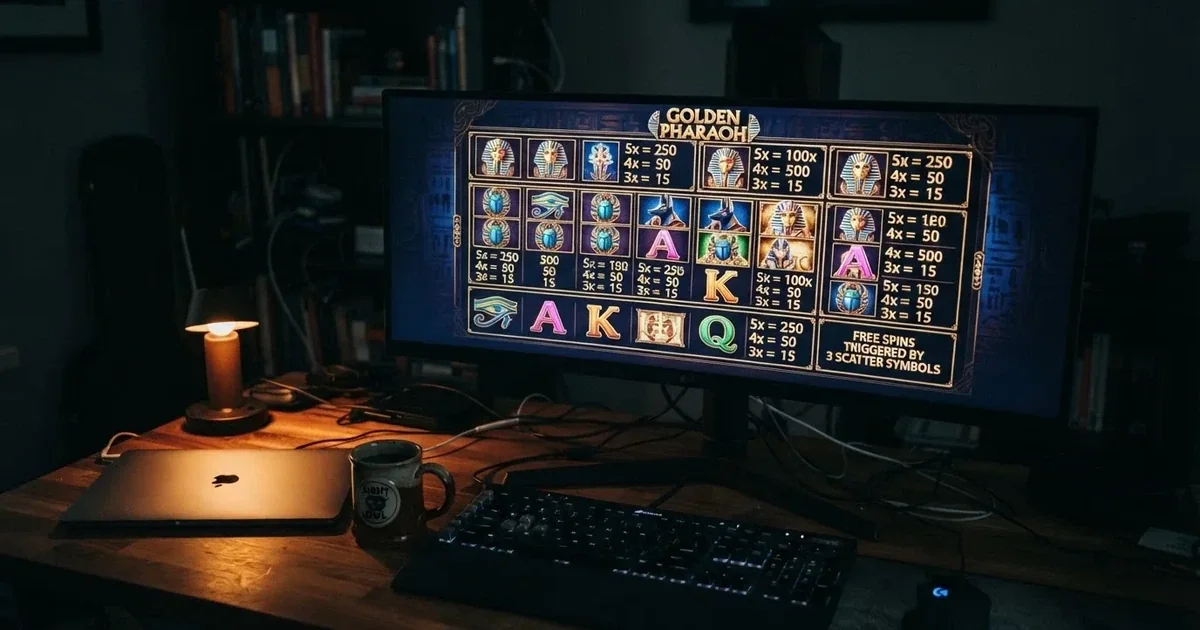
The honest test of a slot’s mechanics is its paytable, and Quickspin titles carry consistent features that any Australian reader would recognise across the catalogue. The studio’s signature is layered free-spin rounds with retrigger mechanics, multiplier trails that build across bonus play, and increasingly 3D-leaning visual treatment. Where local regulation permits, certain releases include a bonus-buy feature that lets the player pay a fixed multiple of the stake to trigger the bonus round directly.
RTP and volatility for Quickspin-branded slot titles are not given title-by-title on this page, because research confirmed those figures only for the peer studios above (Betsoft’s Good Girl Bad Girl 2 at 96.22 per cent / “Very High” and The Slotfather at 95.69 per cent / “Medium”). For Quickspin’s own releases the reader’s path is the studio’s game pages and the paytable itself, where RTP, hit rate and feature frequency are stated in the information panel. That panel is the place to confirm any number before staking real money — a step that matters whatever jurisdiction the play happens in.
Legality, Layer by Layer
Australian law on this product is unusually clear, which is part of why enforcement has been so visible.
The Interactive Gambling Act 2001, as strengthened by the Interactive Gambling Amendment Act 2017, makes it an offence to provide online casino games, online pokies or in-play betting to a person in Australia. The minimum age for any licensable gambling activity is 18. The ACMA investigates, issues formal warnings and directs ISPs to block illegal sites — the three enforcement levers the regulator uses in roughly that order. The individual player is not prosecuted. The IGA targets the provider.
What the law does not change is what it has always done: leave the player on an offshore site without Australian consumer protection, without a complaints body, and without recourse if a withdrawal stalls. The site itself can be blocked with a balance still on it, and the ACMA’s June 2026 round shows that blockings continue at a steady cadence. There is no version of “licensed offshore” that converts into Australian protection.
The 2026 reform picture adds a forward marker. The Interactive Gambling Amendment (Gambling Reform) Bill 2026 passed Parliament on 19 August 2026; its advertising and inducement measures commence on 1 January 2027. That is law with a start date, not yet in force on a 2026 page. When the inducement rules take effect, the offshore site’s banner ads, bonus pop-ups and “free spins” offers targeting Australian visitors become a separate regulatory question — but the underlying prohibition is already in place, and has been since 2017.
The Northern Territory exception that is not one
Wagering on races and sport placed before the event is licensable in Australia, and most of it is licensed through the Northern Territory Racing and Wagering Commission. The NTRWC regulates 52 of Australia’s online bookmakers — Sportsbet, Bet365 and Ladbrokes among them — and meets once a month in Darwin with no full-time staff. That is the regulated online wagering channel. It is not a channel for online casino games. The two products sit on different sides of the IGA, and a casino-style product licensed by the NTRWC does not exist.
Responsible Gambling: The Supports That Actually Apply
The responsible-gambling supports that bind an Australian player are tied to Australian-licensed services. The headline ones matter for a reader who has decided to step back from play, or who wants to know what the offshore channel is missing.
BetStop, the National Self-Exclusion Register, has been live since August 2023. A person who registers with BetStop is excluded from Australian-licensed online and phone wagering services. An offshore casino is not connected to BetStop, which means a self-exclusion registered through BetStop will not stop an offshore site from accepting deposits or advertising bonuses. The exclusion is real, but its reach stops at the licensed perimeter.
The National Gambling Helpline is 1800 858 858 — free, 24/7, with chat support available through Gambling Help Online. State and territory services add counselling, financial counselling and self-exclusion from land-based venues. These supports are available whether the gambling happens through a licensed Australian channel or an offshore site. The harm is the same. The help is the same.
For Quickspin titles specifically, the support landscape does not differ from any other slot product. The studio is a software supplier; the player-protection regime sits with the operator and with the licensing jurisdiction. Neither applies when the operator sits offshore and the licence is Curaçao or Curaçao-equivalent.
Payments, Deposit Limits and Where the Money Actually Goes
The payments picture for Australian players splits cleanly between the licensed and unlicensed channels. Under the rules that took effect on 11 June 2024, credit cards, credit-related products and digital currency are banned as payment for licensed online wagering, with penalties up to A$247,500 for operators that breach the rule. The legal deposit routes for licensed wagering are debit card, bank transfer, PayID/Osko and BPAY.
A site that asks an Australian customer for a credit card or a crypto deposit is operating outside the Australian rules. That is true whether the site claims to be licensed in Curaçao, Malta or the UK. The credit-card ban applies to Australian customers, not to the licence displayed on the site. Crypto is the giveaway that often appears in marketing copy aimed at Australian readers; any site pitching crypto deposits to an Australian visitor is pitching a payment method that licensed Australian wagering cannot accept.
Settlement times on offshore sites vary by operator and by payment rail. Quickspin’s own role in the timeline is zero: the studio supplies the games; withdrawals are processed by the operator. Withdrawal stalls and refused payouts are the single most common complaint against offshore casinos that the ACMA’s enforcement record does not capture, because the regulator acts on the provision of prohibited services rather than on individual player disputes.
Bonuses and Free Spins: The Inducement Layer
Bonuses, free spins and “quickspin casino welcome bonus” offers sit at the centre of how offshore sites acquire players. The mechanics are uniform enough to be predictable. A deposit bonus matches a percentage of the deposit with bonus funds that cannot be withdrawn until a wagering requirement is met. Free-spin offers attach the spins to a specific title, with winnings either paid as bonus funds or as cash subject to a wagering multiple. A no-deposit offer gives a small bonus or spin allocation without a deposit, usually with a higher wagering multiple and a maximum cash-out cap.
What the marketing tends not to put on the page is the cost side of those mechanics. A bonus with a 40x wagering requirement on the bonus amount, played through a Quickspin slot at a 96 per cent RTP, returns roughly four cents of every dollar wagered on average — meaning a A$100 bonus with a A$4,000 turnover requirement produces about A$160 of expected loss across the clearing requirement. That is the offer’s real arithmetic. The headline “A$100 free” is the figure the player sees; the A$160 expected loss is the figure the house prices into the promotion. It is not a scam. It is the way the math works.
The maximum cash-out cap, where it applies, is the second cost. A no-deposit free-spin win of A$200 that converts to A$50 cashable because of a max-cashout clause is not a fifty-dollar saving; it is the same inducement dressed in a smaller payout. Both of these mechanics show up across the operator list examined above, and both are reasons the inducement reforms in the 2026 amendment begin to bite in 2027.
Mobile and App Play
Quickspin’s catalogue is built in HTML5, which means the games run in a mobile browser without a native download. Load times on a modern handset over 4G or 5G are short — the games are light by design, partly because the studio targets European markets where connection speeds vary. There is no Quickspin-branded casino app for Australian players to download, because there is no Australian-licensed casino product to wrap one around.
A reader who plays offshore from a mobile browser is playing the same Quickspin titles a desktop user plays, on a touchscreen interface. What changes is the operational reality: a smaller screen concentrates the paytable, the session timer becomes harder to watch, and the deposit-and-spin loop fits in a pocket. Mobile is not a separate product here. It is the same product on a smaller surface.
How the ACMA Blocking Rate Has Built Up
The arithmetic the page carries is the ACMA’s own enforcement record. From the first blocking request in November 2019 to the ACMA’s June 2026 update, a total of 1,751 illegal gambling and affiliate marketing websites had been asked of Australian ISPs to block. The 26 June 2026 round alone added twelve names. The result is a steady, visible tightening of the perimeter, measured in hundreds of websites per year.
Stated as a band, the blocking rate runs roughly between 200 and 300 sites per year across the period, with the headline total sitting at 1,751 over about six and a half years — a rate that depends on the assumption that blockings were spread roughly evenly across the period and that no large backlog was cleared in any single quarter. A reader using this as a current-as-of figure should treat it as a mid-2026 reading, not a 2027 projection. The list grows; the rate is steady.
What the Operator Cards Actually Show
Each of the eleven brands examined here carries the same closing line of fact: the ACMA warned it because it offered prohibited services to Australians. The variation across them is in the operating company, the date and the presence or absence of a Quickspin-adjacent catalogue confirmation.
RocketPlay
The ACMA warned RocketPlay twice. In May 2022 the warning named Dama N.V. as the operator across six casino brands; in March 2026 it named Pulsup Ltd over Rocketplay specifically. That double entry tells the reader that the brand survived a regulator’s first action and continued targeting Australians under a different corporate parent. No Quickspin-specific listing was confirmed for RocketPlay.
Level Up Casino
Level Up was named in the May 2022 Dama N.V. warning alongside five other brands. The ACMA’s action pre-dates the more recent escalation rounds, but Level Up sits on the same enforcement record as the others. The studio listings page for Wazden shows Level Up among operators carrying Wazden games — an adjacent studio, not Quickspin itself.
Woo Casino
Woo Casino drew a fresh formal warning in March 2025, with Dama N.V. named again. The 2022 warning did not end the practice. No studio-listing confirmation is on the record.
Spirit Casino
Spirit Casino followed Woo Casino into the ACMA’s enforcement record two months later, in May 2025. Same operator parent, two months apart. No studio confirmation.
National Casino
The July 2025 warning named Consolutetish S.R.L. as the operator behind both National Casino and Bizzo Casino. The studio listings page for Betsoft, the Aristocrat Wikipedia entry, and Pragmatic Play’s site each list National Casino among their operator partners — the strongest cross-source confirmation in the operator set, though again as reported by the studios rather than by National Casino itself.
Bizzo Casino
Bizzo Casino is the cleanest illustration of how brand survival works under enforcement. The ACMA warned TechSolutions (CY) Group Limited and TechSolutions Group N.V. over Bizzo in 2022. The 2025 warning names Consolutetish S.R.L. as the operator. The brand is the same; the corporate parent has changed twice in three years.
Ignition Casino
Bamboo Media was the operator named in the July 2025 warning. Ignition Casino’s name is familiar to Australian readers from its long offshore marketing presence, but the ACMA’s action is recent and current. No studio confirmation.
Instant Casino
The February 2025 warning named EOD Code SRL as the operator behind Instant Casino. The timing — first quarter of 2025 — places Instant Casino earlier on the ACMA’s 2025 escalation list than Woo Casino, Spirit Casino and the Consolutetish S.R.L. pair. No studio confirmation.
Jackbit
Jackbit was named in the April 2026 warning along with CasinOK, both under Ryker B.V. That puts Jackbit on the most recent edge of the ACMA’s record. No studio confirmation.
Casino Intense
Sterplay Holding Ltd was named in the April 2025 warning. Casino Intense carries the broadest studio-listing trail of any brand in this set, with 1spin4win’s site, the Aristocrat Wikipedia entry and the UK Gambling Commission’s public register each touching it — though not as a Quickspin-specific confirmation.
Sky Crown
Hollycorn N.V. was named in the September 2022 warning covering Sky Crown and Blue Leo. Sky Crown is the earliest of the ACMA’s actions in this set by a year, and the brand has not returned to the regulator’s list since. No studio confirmation.
Choosing What to Read Next
A reader who came to this page deciding whether to play Quickspin titles through an offshore site has the legal answer above and the operator-level picture in the table. A reader deciding whether to step back from play has the responsible-gambling section, with BetStop and the National Gambling Helpline as the first two calls. A reader who wants the same entertainment under Australian licensing has the pokie on the licensed club or pub floor — Aristocrat Leisure’s regulated, onshore channel.
The page does not recommend a brand. It does not recommend play. It lays out what the regulator has done, what the studios supply, and what an Australian reader is actually choosing between.
Frequently Asked Questions
Is Quickspin legally available to Australian players online?
No. The Interactive Gambling Act 2001, as strengthened in 2017, prohibits the provision of online casino games and online pokies to people in Australia, and no state or territory issues licences for those products. Quickspin itself is a licensed software supplier in Malta and the UK, but the offshore casino sites that carry its games are not licensed to accept Australian players, regardless of what licence those sites display.
What kinds of games does Quickspin make?
Quickspin produces HTML5 video slots with layered free-spin mechanics, multiplier trails, retrigger features and, where regulation permits, bonus-buy options. The studio was founded in Stockholm in 2011, joined Playtech in 2016, and now operates from Stockholm, Sliema and Kyiv with about 100 staff across five countries.
Are Quickspin games offered at land-based venues in Australia?
Not directly. Quickspin is an online slot studio, and its titles do not appear in Australian clubs, pubs or casinos. What Australian land-based venues do offer is pokies from Aristocrat Leisure, the country’s largest gambling-machine manufacturer, which is a separate studio covering the same category of entertainment under Australian licensing.
How can Australians check whether a Quickspin title is fair before considering play?
The studio’s own game pages carry the published RTP, volatility and feature frequency for each title. Independent testing labs — Quinel, Gaming Labs International and similar — provide RNG certification. Neither of those checks changes the legal position on offering the game to an Australian player; they tell a reader what the math of a specific title looks like, not whether the operator is licensed to accept them.
Why do offshore sites keep advertising Quickspin games to Australian visitors?
Because the market is large and the enforcement gap is profitable. H2 Gambling Capital’s 2025 estimate puts Australian losses to illegal gambling sites at around A$3.9 billion a year, with the share of gambling going through legal channels falling from 74 per cent in 2021 to 64 per cent. Offshore operators continue to spend on Australian-targeted acquisition because the spend still returns more than it costs.
What should an Australian do if they see a Quickspin game promoted by an unlicensed site?
The practical steps are: do not deposit, because there is no Australian consumer protection if a withdrawal stalls; report the site to the ACMA, which can add it to the next blocking round; and if gambling has stopped being a choice rather than a habit, contact the National Gambling Helpline on 1800 858 858 or register with BetStop, the National Self-Exclusion Register, to lock out Australian-licensed wagering services.