
Best pokies in New South Wales NSW in 2026: where the machines actually sit, and what the ACMA keeps blocking
A punter typing “best pokies in New South Wales” into a search bar is looking for a venue, not a website. The state holds more electronic gaming machines outside its casinos than any other jurisdiction in Australia — 87,298 of them, spread across 2,195 pubs, clubs and hotels in June 2023 — so the licensed options are not hard to find. They are hard, however, to confuse with what the offshore casino industry calls “pokies,” because the latter is a marketing label for a product the Interactive Gambling Act 2001 prohibits regardless of how the page is dressed up.
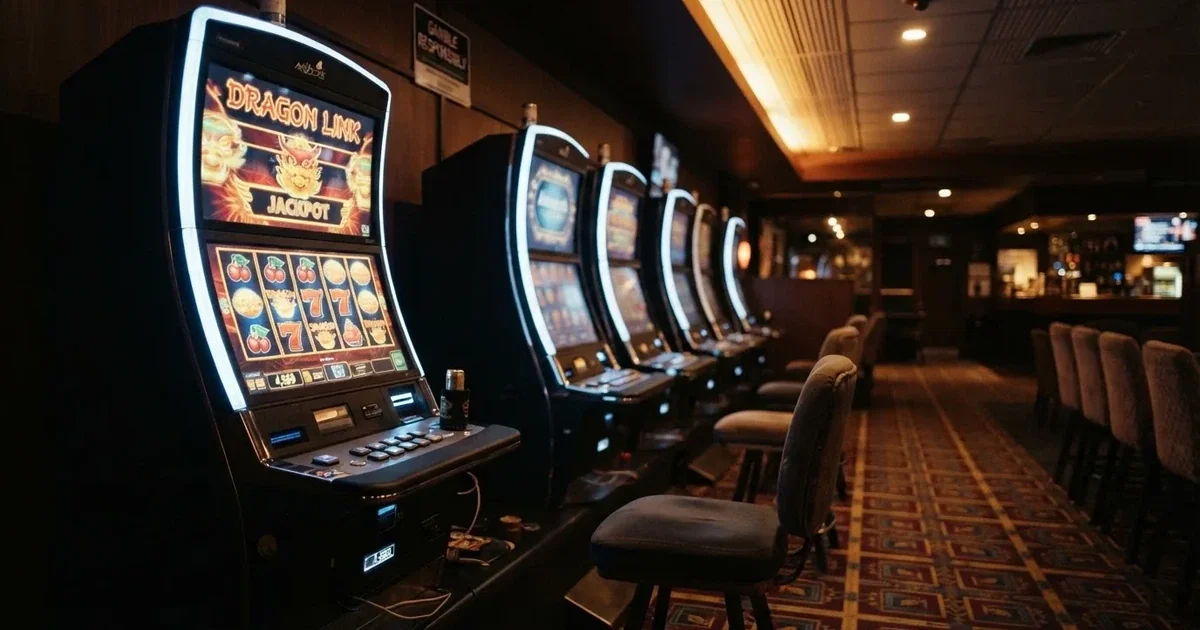
The short version: in NSW a “pokie” is an electronic gaming machine (EGM) on the floor of a licensed pub, club, hotel or casino. Online casino games — slot machines, table games, live dealer — cannot be lawfully supplied to anyone in Australia, regardless of the offshore licence the operator cites. The Australian Communications and Media Authority (ACMA) has issued formal warnings, asked ISPs to block domains, and watched more than 230 unlicensed services leave the country since 2017.
What follows is a guide to the licensed options inside NSW, the payout and bet limits that shape a session, and the offshore sites the ACMA has named in formal warnings — included so a reader can recognise them and not so anyone can sign up.
Data current as of 29 October 2026 and verified against the ACMA’s published list of formal warnings and the NSW Independent Casino Commission’s media releases.
- How pokies work in New South Wales, and what “best” actually means here
- The legal frame: what the Interactive Gambling Act actually says
- What the ACMA has actually done: a blocking-rate snapshot
- Responsible-gambling supports that actually reach a NSW punter
- Payments at NSW venues: what changes when the machine is cashless
- Payout percentages and bet limits across Australian states
- Offshore “pokies” sites the ACMA has formally warned Australians away from
- How to read the licensed market behind the offshore noise
- Frequently asked questions about pokies in New South Wales
How pokies work in New South Wales, and what “best” actually means here
A pokie in NSW is an EGM authorised under the state’s gaming-machine framework. There are two broad buckets. The first is the 87,298 machines that sit outside casinos — in registered clubs, hotels with gaming-machine entitlements, and the small number of venues the state has designated. The second is the casino floor: The Star Sydney and Crown Sydney at Barangaroo, both regulated by the NSW Independent Casino Commission (NICC).

The popular shorthand “best pokies” usually means one of three things: highest return-to-player rate, biggest progressive jackpot, or simply the closest venue that is open when the punter wants to play. Each pulls in a different direction. A venue with a 90% RTP gives more back per dollar than one at 87.5%, but the difference shows up over thousands of spins, not one. A machine with a multi-million-dollar progressive jackpot gives worse long-run odds than one without, because a slice of every wager feeds the jackpot meter. And “open at 3 a.m.” narrows the field to a handful of 24-hour casinos, not the local RSL.
NSW does not publish a single statewide RTP figure the way some jurisdictions do. What it does publish is the volume: NSW players lost A$8.18 billion on EGMs outside casinos in 2022–23, roughly A$986 per adult, on a turnover of A$85.72 billion in 2020–21 (about A$13,559 per adult). The first figure is the take; the second is the handle. Both belong on the same page, because the gap between them is the margin the house works with.
The casinos tell a different story. Crown Sydney opened in December 2020 and was fined A$1.75 million by the NICC on 19 August 2026 for letting a minor onto the gaming floor. The Star Sydney received an enforceable undertaking and A$10 million in fines announced on 2 June 2026 over governance failures, then a further A$500,000 fine in the same August 19 action. Both venues are licensed; both carry conditions the regulator has chosen to enforce in writing.
The legal frame: what the Interactive Gambling Act actually says
The Interactive Gambling Act 2001 (IGA), strengthened by the Interactive Gambling Amendment Act 2017, makes it a criminal offence — strict liability, with penalties in the millions — to supply “prohibited interactive gambling services” to a person physically in Australia. The list of prohibited products covers online casino games, online pokies and in-play betting. It does not cover pre-event sports and race wagering, lotteries and keno, which state and territory regimes do licence (in practice, the Northern Territory Racing and Wagering Commission regulates 52 online bookmakers — Sportsbet, Bet365, Ladbrokes — even though the commission has no full-time staff and meets once a month in Darwin).
What the IGA targets is the provider, not the player. An Australian who opens an offshore account commits no offence under the Act. The trouble sits on the operator side: the offshore site has no Australian licence, no Australian complaints body, no obligation to honour a withdrawal, and no protection if it disappears with the balance. The ACMA’s enforcement tools are formal warnings, civil penalty proceedings and — since 2019 — orders to Australian internet service providers to block domains at the network level.
The 2026 reform picture is worth flagging even though it is not yet in force. The Interactive Gambling Amendment (Gambling Reform) Bill 2026 passed Parliament on 19 August 2026 and its advertising and inducement measures commence on 1 January 2027. That is a law with a start date, not a current prohibition — and a punter reading this in late 2026 is still under the 2017 regime, where the prohibition on supply is the operative rule.
What the ACMA has actually done: a blocking-rate snapshot
The ACMA’s blocking regime is the most concrete measure of how much prohibited supply is being aimed at Australians. Two numbers set the scale. By June 2026, the authority had asked ISPs to block 1,751 illegal gambling and affiliate marketing websites since the first blocking request in November 2019 — a span of roughly eighty months — and more than 230 unlicensed services had left the Australian market entirely since enforcement was strengthened in 2017. H2 Gambling Capital’s 2025 report estimates Australians lose about A$3.9 billion a year to illegal sites, with the share of gambling going through legal channels dropping from 74% in 2021 to 64%.
The blocking rate works out to a steady drumbeat rather than a one-off sweep. Across the eighty-month window from November 2019 to June 2026, 1,751 domains blocked is an average of about 22 per month, or roughly one new domain ordered offline every 33 hours. That band widens when a major operator rebrands — Dama N.V. alone has prompted separate actions over six brands, then two more — and narrows in quiet stretches. The cadence is the story: the ACMA is not catching up once; it is running a maintenance loop, and the new domains arrive faster than the old ones can be catalogued.
The most recent round reported on 26 June 2026 named twelve new domains: 7Signs, ChromaBet, Donbet, Duospin, Freshbet, Slots Gem, Jacks Club, Lucky Start, Pointsbetz, Spinrise, Vinyl Casino and Wildsino. The pace, the names and the repeat operators all point at a market that treats domain rotation as a cost of doing business.
Responsible-gambling supports that actually reach a NSW punter
The offshore casino advertises “responsible gambling” tools because the regulator it does have requires them. None of them reaches a NSW player. The supports that do are Australian, and they are split across two regimes that do not overlap.
The first is BetStop, the National Self-Exclusion Register, live since August 2023. A person who registers with BetStop is excluded from every Australian-licensed online and phone wagering service for a chosen period of between three months and a lifetime. The catch is the word “licensed”: offshore casinos are not connected to the register, so a BetStop registration does not stop someone with an account at an offshore site. It only stops them from opening a new licensed account and from being able to transact with the Australian bookmakers BetStop covers. That is still worth doing, but it is not the catch-all marketing copy makes it sound.
The second is the in-venue support that the NSW framework itself requires of every pub, club, hotel and casino with EGMs: signage, self-exclusion at the venue level, access to the National Gambling Helpline on 1800 858 858 (free, 24/7, with chat via Gambling Help Online), and the cashless card technology the state is rolling out across the high-loss machine estate. Self-exclusion at a NSW pub is a different instrument from BetStop, and it covers the floor in front of you, not the website you would otherwise visit.
The cashless card, formally the Player Account System, is the lever most likely to change behaviour at the machine itself. From a player’s point of view it converts cash into a venue-issued account, attaches daily and per-transaction limits by default, and removes the anonymity of feeding notes into a machine. The state’s stated aim is to reduce money-laundering risk and tighten harm-minimisation at the venue. For a punter used to anonymous play, the practical effect is that the budget is set before the session and the venue enforces it.
Payments at NSW venues: what changes when the machine is cashless
The mechanics of putting money into a NSW pokie in 2026 are different from how they were five years ago. Cash remains legal and accepted everywhere EGMs are licensed, but the state’s cashless gaming reform is rolling out across the high-loss machine estate and changes what a session looks like from the player’s end.
Three things to know. First, the cashless card is not a credit card and not a debit card in the everyday sense — it is a venue-issued account, top-up-only, tied to the player’s verified identity, and the venue holds the balance. Second, the deposit and bet limits are set on the card, not at the machine: a daily default cap, adjustable on request within the venue’s licensing conditions, and a per-transaction limit that the venue must enforce. Third, the payout works in reverse — winnings return to the card account, and the player cashes out at the venue desk, with the venue’s own identification check at the point of withdrawal over a threshold the venue sets.
The contrast with the offshore “pokies” site is sharper than the marketing suggests. An offshore site takes a credit card, a crypto deposit, or an e-wallet — all of which are either banned or unregulated under the Australian regime for licensed wagering. Credit cards and credit-related products have been banned as payment for licensed online wagering since 11 June 2024, with penalties up to A$247,500 for operators that breach the rule. Digital currency is also off the menu. Legal deposit routes for Australian-licensed wagering are debit card, bank transfer, PayID/Osko and BPAY. A site asking an Australian for a credit card or a Bitcoin deposit is operating outside the Australian rules — a fact that does not, on its own, prove anything about the offshore site’s payout behaviour, but does tell a reader which set of consumer protections applies.
Tax is the part of payments the marketing copy never mentions. Gambling winnings of a recreational player are not assessable income under section 6-5 of the ITAA 1997, and losses are not deductible, unless the person carries on a business of gambling — and that “business gambler” category is a thin slice of the population. For a venue-based session the tax question is mostly a non-event; for a player chasing a multi-thousand-dollar progressive jackpot it is worth a five-minute check with the ATO before the win lands.
Payout percentages and bet limits across Australian states
The single number a venue-based player can usually find is the minimum return-to-player rate the state requires. NSW does not publish a single statewide EGM RTP the way some other states do, but it does publish machine-level RTP information and the volume numbers, and the variation between venues sits inside a narrow band driven by machine category rather than venue licence class.
South Australia publishes the most concrete figures. The state sets a minimum gaming-machine return-to-player rate of 87.5% and a general maximum bet of A$5.00 outside the casino, while Adelaide Casino itself has no maximum-bet limit. SA had 11,672 gaming machines outside Adelaide Casino in 471 venues in September 2023, with EGM losses outside the casino of about A$0.92 billion in 2022-23, equivalent to roughly A$497 per adult — about half NSW’s per-adult figure outside casinos.
Queensland, the third leg of the comparison, had 21,122 gaming machines in 351 venues in October 2023. The headline venue is the new Star Brisbane at Queen’s Wharf, which opened on 29 August 2024 after the closure of Treasury Casino on 25 August 2024; Treasury had been operated by Star Entertainment Group, which the Queensland Government found unsuitable to hold its casino licences after the independent Gotterson review in late 2022, fined A$100 million on 9 December 2022, with a 90-day licence suspension deferred to 1 December 2023 to allow remediation.
The single ACT venue, Casino Canberra in the Canberra CBD, sits on land excised from Glebe Park under a 99-year lease. It was the first legal casino in the territory and remains a smaller operation than any of the state-based casinos — no hotel, no theatres, no retail attached.
The interstate comparison matters because the “best pokies” question rarely stays inside one state. A NSW punter moving between Sydney, Adelaide and Brisbane will see different bet limits, different jackpot structures and different harm-minimisation regimes at each venue, even where the same manufacturer has placed the same game on the floor. The headline figures — minimum RTPs, maximum bets, per-adult losses — are the ones a comparison can rest on without overstating what the data can do.
Offshore “pokies” sites the ACMA has formally warned Australians away from
The brand list below is the inverse of a recommended list. Every name on it has been the subject of a formal ACMA warning under the Interactive Gambling Act 2001 for offering prohibited services to people in Australia. None of them holds an Australian licence; the offshore licence some of them display does not change the fact that online casino games cannot be lawfully supplied to an Australian, regardless of what the licence says.
The columns below are: the brand, the ACMA action and its date, the operator the ACMA named, and whether the subject support — the licence or registration position the brand holds — is confirmed or merely carries what third-party listings say about it.
| Brand | ACMA action and date | Operator named by the ACMA | Subject support |
|---|---|---|---|
| RocketPlay | Formal warning, March 2026 | Pulsup Ltd (Rocketplay); earlier Dama N.V., May 2022 | — |
| Level Up Casino | Formal warning, May 2022 | Dama N.V. | Listings only (third-party directories) |
| Woo Casino | Formal warning, March 2025 | Dama N.V. | Listings only (third-party directories) |
| Spirit Casino | Formal warning, May 2025 | Dama N.V. | — |
| National Casino | Formal warning, July 2025 | Consolutetish S.R.L. | Listings only (third-party directories) |
| Bizzo Casino | Formal warning, July 2025 | Consolutetish S.R.L.; earlier TechSolutions, 2022 | — |
| Ignition Casino | Formal warning, July 2025 | Bamboo Media | — |
| Instant Casino | Formal warning, February 2025 | EOD Code SRL | — |
| Jackbit | Formal warning, April 2026 | Ryker B.V. | — |
| Casino Intense | Formal warning, April 2025 | Sterplay Holding Ltd | Listings only (third-party directories) |
| Sky Crown | Formal warning, September 2022 | Hollycorn N.V. | Listings only (third-party directories) |
The shape of the table tells the underlying story. The same operator name recurs — Dama N.V. appears against RocketPlay, Level Up Casino, Woo Casino and Spirit Casino; Consolutetish S.R.L. appears against both National Casino and Bizzo Casino — which is the domain-rotation tactic the ACMA’s blocking rate is built to keep up with. Re-warning a renamed site is cheaper than chasing a fresh operator each time, and the regulator has settled into that pattern.
RocketPlay
The most recent action against RocketPlay is the March 2026 formal warning to Pulsup Ltd over RocketPlay, but the brand itself has been on the ACMA’s list since the May 2022 warning to Dama N.V., which named RocketPlay alongside five other Dama brands. The current operator named by the ACMA is Pulsup Ltd; the platform has cycled hands at least twice on the regulator’s record. For an Australian reader, the significance is not which corporate entity is currently behind the site — the legal position does not change with the corporate vehicle — but that the brand has been the subject of repeated, named enforcement action over a four-year window.
Level Up Casino
Level Up Casino sits in the May 2022 Dama N.V. warning, one of six brands named on the same notice. The “Level Up” label has been picked up by third-party directories as a recognisable name in offshore casino listings, which is what the listings-only marker in the table records. That a brand is listed does not make it lawful in Australia, and the absence of a confirmation line is itself the position: no Australian authority has confirmed the brand’s standing because no Australian authority has any jurisdiction over it.
Woo Casino
Woo Casino triggered a fresh formal warning in March 2025, again to Dama N.V., two and a half years after the same operator was warned over six brands in May 2022. The pattern of a renamed site returning to the ACMA’s list is the most concrete evidence of why a blocking rate matters: a single enforcement action against one brand often coincides with the launch of another on the same backend, and the regulator follows the trail.
Spirit Casino
Spirit Casino is the second 2025 Dama N.V. warning alongside Woo Casino, issued in May 2025. No earlier action attaches to the Spirit Casino name specifically, which is part of the pattern of fresh labels appearing on the same operator infrastructure. A punter who has been told by the ACMA to avoid one Dama brand is not protected from the next Dama brand by that warning.
National Casino
National Casino was named in the July 2025 warning to Consolutetish S.R.L., alongside Bizzo Casino in the same notice. Third-party directories list the brand, which is what the listings-only marker records; the ACMA’s enforcement file is what puts it on this page. The pairing with Bizzo on the same warning is the relevant fact — it suggests the two share a backend, which is consistent with the pattern across the rest of the table.
Bizzo Casino
Bizzo Casino has the longest ACMA trail of any brand in the list. Consolutetish S.R.L. was warned in July 2025; an earlier 2022 warning covered Bizzo under TechSolutions (CY) Group Limited and TechSolutions Group N.V. Two warnings, two different corporate vehicles, the same product. For an Australian reader the relevant fact is not which entity currently sits behind the brand but the consistency of the regulator’s attention.
Ignition Casino
Ignition Casino was named in the July 2025 warning to Bamboo Media — the only action on this list that traces to a media-company operator rather than a casino-platform operator. The corporate structure does not change the legal position: online casino games cannot be lawfully supplied to a person in Australia regardless of who runs the marketing arm. The no-data line on subject support is the absence itself.
Instant Casino
Instant Casino triggered the February 2025 warning to EOD Code SRL. The brand carries a “casino” label that mimics the licensed venues Australians can walk into, but the legal position is the inverse of what the name implies. An offshore site using a venue-style name changes nothing about the IGA’s prohibition.
Jackbit
Jackbit was the subject of the April 2026 warning to Ryker B.V., alongside CasinOK in the same notice. Jackbit is one of the more recent additions to the ACMA’s published list and sits close to the right edge of the eighty-month blocking window covered earlier. The same Ryker B.V. warning naming both Jackbit and CasinOK in a single notice is the cleanest available signal that the ACMA treats the two brands as the same operator under different labels.
Casino Intense
Casino Intense was named in the April 2025 warning to Sterplay Holding Ltd. Third-party listings carry the brand — which is what the listings-only line records — but the ACMA file is the only Australian record of the brand’s standing, and the standing is that the regulator has chosen to warn the operator in writing.
Sky Crown
Sky Crown is the oldest entry on the table. Hollycorn N.V. was the subject of a formal warning over its Sky Crown and Blue Leo casino services, with the ACMA’s published PDF dated September 2022. Hollycorn’s name has appeared in third-party listings since. The 2022 date puts Sky Crown at the back of the eighty-month blocking window and at the front of the brand-rotation cycle the ACMA has been running since.
How to read the licensed market behind the offshore noise
Three things come out of the data once the offshore column is taken off the page. The licensed NSW market is large, concentrated, and increasingly cashless; the offshore market is fragmented, fast-turning, and ACMA-warned; and the gap between the two is the A$3.9 billion a year H2 estimates Australians lose to illegal sites.
The “best pokies” question is, on the licensed side, a question about which venue fits which punter — and the answer varies by budget, time of day, and tolerance for the cashless card. On the offshore side, the question answers itself: there is no licensed path to a real-money online pokie in NSW, and the brands named above are the ones the regulator has gone to the trouble of warning about. The blocking rate is the maintenance loop that keeps the warning list current, and the cadence — one new domain ordered offline roughly every 33 hours across the eighty months to June 2026 — is what that maintenance looks like over time.
The practical order a reader goes through is straightforward. Decide whether the session is land-based or online. If land-based, the local RSL or the casino floor is the only legal path, and the cashless card, the venue’s own bet limits and the 87.5%-style minimum RTPs are the levers that shape the session. If online, the prohibition applies, and the ACMA’s warning list is the closest thing Australia has to a register of what to avoid. Either way, the responsible-gambling supports that actually reach a NSW punter — the helpline, BetStop, the venue-level self-exclusion, the cashless card’s default limits — are Australian, and they stop at the border of the offshore site.
Frequently asked questions about pokies in New South Wales
Which venues in New South Wales are licensed to operate pokies?
Pokies are licensed across registered clubs, hotels with gaming-machine entitlements, and the two NSW casinos — The Star Sydney and Crown Sydney at Barangaroo. In June 2023 the state had 87,298 gaming machines outside casinos spread across 2,195 venues, the largest such estate in Australia. The venue must hold a current entitlement under the state’s gaming-machine framework, and the floor is regulated by Liquor & Gaming NSW with the casino floors overseen by the NSW Independent Casino Commission.
Are pokies in New South Wales available around the clock?
The state’s two casinos are open 24 hours. Pub and club EGMs are bound by each venue’s liquor-licence hours, which generally run from mid-morning to late night, with trading hours varying by precinct and local council conditions. A reader looking for 24-hour access is looking at the casino floors, not the local pub; a reader looking for late-night access without casino hours is looking at the registered clubs in their local government area.
What identification do venues in New South Wales require before letting someone play pokies?
A NSW venue must verify that a player is 18 or older before allowing access to the gaming floor and, with the rollout of the state’s cashless gaming reform, attaches the player’s verified identity to the venue-issued card. Minors are barred from the gaming floor and the August 2026 coordinated NICC fines against Crown Sydney and The Star Sydney for letting a minor enter each venue are the regulator’s recent record on enforcement of that rule.
Can visitors to New South Wales use self-exclusion schemes at local pokies venues?
Visitors can use venue-level self-exclusion in NSW, which bans the excluded individual from that specific venue’s gaming floor for a chosen period. BetStop, the National Self-Exclusion Register, is the cross-venue scheme — but BetStop binds only Australian-licensed online and phone wagering services, not pub and club gaming floors, and does not bind offshore casinos at all. A NSW visitor who has self-excluded in another state or territory under a comparable scheme should ask the venue directly about cross-jurisdictional recognition before relying on it.
How does the payout percentage on New South Wales pokies compare with other Australian cities?
NSW does not publish a single statewide EGM RTP the way South Australia does, where the statutory minimum is 87.5% outside Adelaide Casino. NSW publishes machine-level RTP information and the volume figures — A$8.18 billion lost outside casinos in 2022-23, or A$986 per adult — but the per-machine percentage varies by machine category, not by state licence class. Adelaide Casino itself has no maximum-bet limit, a meaningful difference from the A$5.00 ceiling that applies elsewhere in South Australia.
Is it legal for an online casino to advertise ‘pokies’ in New South Wales the same way a pub or club does?
No. The Interactive Gambling Act 2001 makes it an offence to supply online casino games to a person in Australia, and the ACMA has issued formal warnings, ordered ISPs to block domains and watched services leave the Australian market since 2017. The 2026 reform legislation tightens advertising and inducement rules from 1 January 2027, but the underlying prohibition on supply is already in force. An offshore site using a “pokies” label is using a marketing term for a product the IGA prohibits, regardless of which offshore licence it carries.