
High Volatility Slots for Australians: The Honest Map of What Is and Isn’t Possible
Anyone searching for high volatility slots from inside Australia hits a wall almost immediately. The Interactive Gambling Act 2001 prohibits offering online casino games to anyone in Australia, no state or territory issues a licence for it, and the regulator that polices the boundary — the ACMA — publishes a near-monthly list of offshore brands it has warned or blocked. The honest answer to “best high volatility slots Australia” is that no such shortlist can be handed over without breaking the very law that gives Australian players any protection at all. The useful answer sits one step back from that: what high volatility slots are, why they draw a particular kind of bankroll, and where the legal alternatives in Australia actually live — from the licensed pokies venues of NSW and Victoria to the BetStop register that lets a player exclude themselves across every licensed wagering service at once.
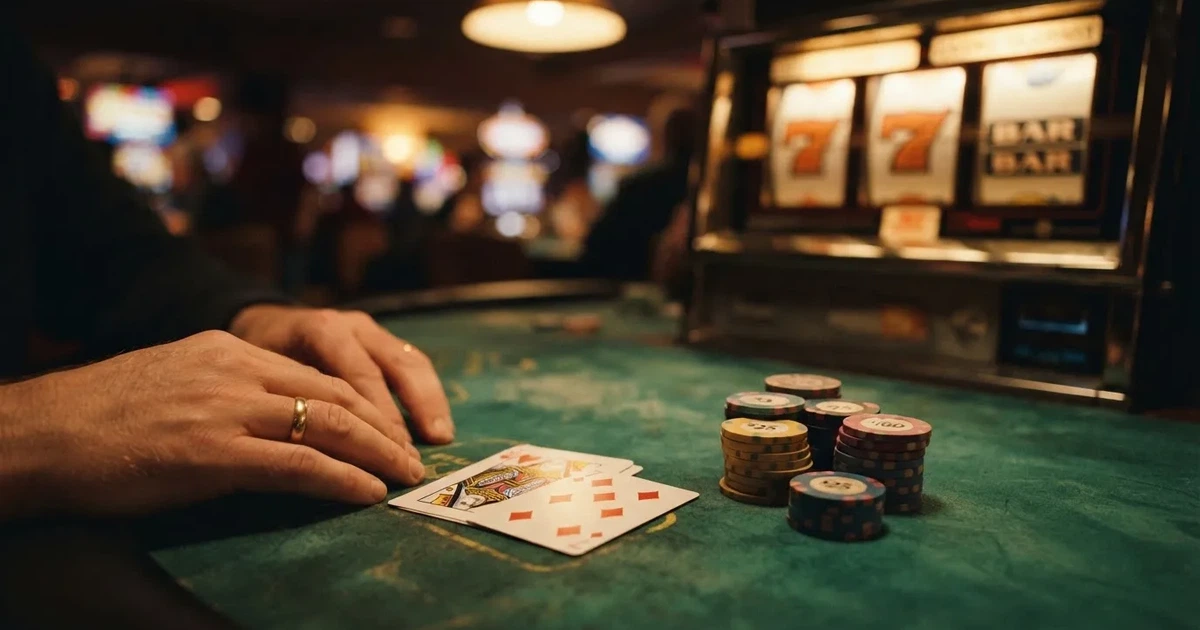
Data current as of 29 October 2026 against ACMA public warnings and operator records.
- The legal frame: why no online shortlist exists for Australians
- How the ACMA enforces the prohibition
- The NTRWC and the licensing asymmetry
- Responsible play: the tools that actually apply in Australia
- The mechanics behind high volatility slots
- Where Australian high volatility play actually happens
- The offshore brands the ACMA has named
- What the offshore catalogue actually offers, where it is named
- A note on the gambling reform bill 2026
- Tax and the recreational player
- How a reader should weigh the options
- Reading the warnings without legal training
- What changes when an operator is blocked
- Where the offshore market is heading
- The honest closing for an Australian reader
- What high volatility slots actually cost the player
- A short note on Australian slang and spelling
- Final verdict for the page
- Frequently asked questions
The legal frame: why no online shortlist exists for Australians
Australia’s gambling law carves a sharp line between two products. Wagering on racing and sport — placed before the event, with licensed operators like Sportsbet, Bet365 and Ladbrokes — is licensable, mostly through the Northern Territory. Online casino games, online pokies and in-play betting are not licensable anywhere in Australia, and offering them to a person physically in the country is an offence under the Interactive Gambling Act 2001. The 2017 amendments strengthened the regime; the Interactive Gambling Amendment (Gambling Reform) Bill 2026 passed Parliament on 19 August 2026 and brings further advertising and inducement measures into force from 1 January 2027, which is law with a start date rather than law already operating.

The rule targets the provider, not the player. Individual Australians who deposit on an offshore site are not prosecuted, but they accept the consequences of being outside the Australian system: no local complaints body, no local dispute resolution, no guarantee a withdrawal will be honoured, and a real chance the site is blocked while a balance sits on it. The credit-card and digital-currency ban that took effect on 11 June 2024 applies to Australian-licensed wagering, with penalties up to $234,750 — a site asking an Australian for a credit card or a crypto deposit is operating outside the Australian rules, and that fact alone tells the reader what kind of licence the site is sitting behind.
How the ACMA enforces the prohibition
The Australian Communications and Media Authority does three things under the Interactive Gambling Act: it investigates complaints, it issues formal warnings to operators, and it asks Australian internet service providers to block illegal sites. As reported in June 2026, the ACMA had asked ISPs to block 1,751 illegal gambling and affiliate marketing websites since the first blocking request in November 2019, and more than 230 unlicensed gambling services had left the Australian market since enforcement was strengthened in 2017. The most recent round reported on 26 June 2026 named 12 more domains — 7Signs, ChromaBet, Donbet, Duospin, Freshbet, Slots Gem, Jacks Club, Lucky Start, Pointsbetz, Spinrise, Vinyl Casino and Wildsino — bringing the running total to that 1,751 figure.
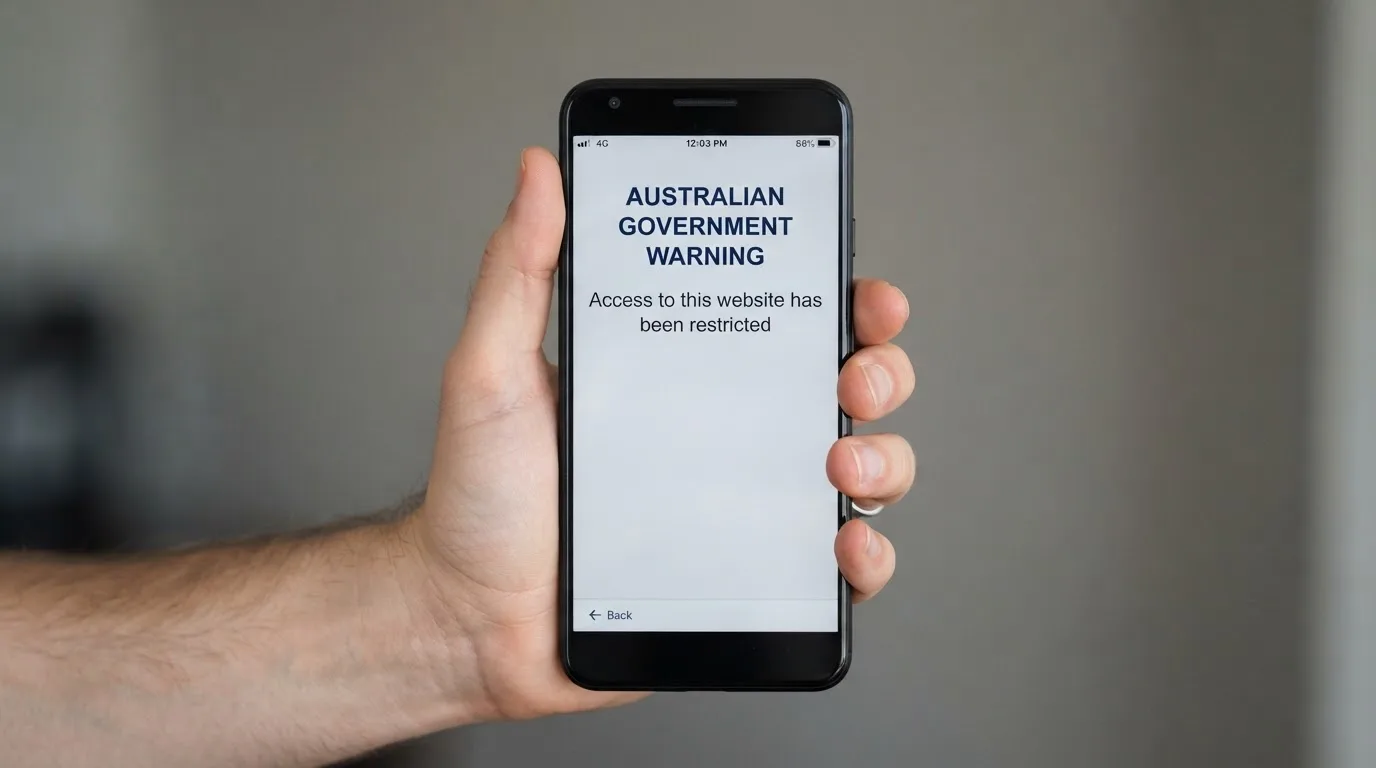
The blocking-rate arithmetic, then, is straightforward. Between November 2019 and the June 2026 round the ACMA moved from zero blocked sites to 1,751, a span of roughly 79 months. That works out to an average of about 22 blocked domains per month, or roughly 265 per year, though the rate has clearly climbed over time as the regulator’s blocking infrastructure matured and the number of available offshore brands multiplied. Read as a band rather than a single number: somewhere between one and three blocking actions every working week, sustained over six and a half years, against a market that keeps substituting new domains for blocked ones.
The H2 Gambling Capital 2025 estimate puts Australian losses to illegal gambling sites at around A$3.9 billion a year, with the share of gambling going through legal channels falling from 74% in 2021 to 64%. That 10-point drop is the practical measure of how the prohibition leaks: players keep finding offshore sites, the ACMA keeps catching them, and the dollar flow does not yet reflect the enforcement record.
The NTRWC and the licensing asymmetry
A common confusion in Australian gambling coverage is the role of the Northern Territory Racing and Wagering Commission. The NTRWC regulates 52 of Australia’s online bookmakers — including Sportsbet, Bet365 and Ladbrokes — which are licensed in the Territory for tax reasons. The commission has no full-time staff and meets once a month in Darwin, and the licences it issues cover wagering on racing and sport, not casino games. A Curaçao or Kahnawake number displayed in an offshore casino’s footer is a foreign licence for a foreign market; it has no bearing on what an Australian player can legally be offered, and no bearing on whether the ACMA will eventually warn the operator over Australian traffic.
Responsible play: the tools that actually apply in Australia
The Australian player protection layer is built around two specific instruments, and neither of them covers offshore casino sites.
BetStop — the National Self-Exclusion Register — has been live since August 2023. Registration is free and binds every Australian-licensed online and phone wagering service at once, with exclusion periods from three months up to a permanent ban. The catch for anyone reading this page is direct: BetStop binds Australian-licensed operators. An offshore casino offering high volatility slots to Australians is not connected to the register, which is precisely the reason the register cannot be relied on as a safeguard against offshore play.
The National Gambling Helpline at 1800 858 858 is free, operates 24/7, and connects to Gambling Help Online for chat and counselling. Financial Counselling Australia and the state-based problem-gambling services handle the broader picture — debt, family impact, recovery — and the same 1800 number is the route in.
The credit-card and digital-currency ban that came into force on 11 June 2024 closes off a specific set of deposit routes for licensed wagering: debit card, bank transfer, PayID/Osko and BPAY are the legal methods. A punter who finds themselves unable to deposit through any of those four channels on a casino-style site is not looking at an Australian-licensed operator.
The mechanics behind high volatility slots
A high volatility slot is, mechanically, a slot machine with a flatter payout curve. Most spins return less than the stake; a small share of spins return multiples of the stake; the rare top combination pays the figure that funds the marketing. Modern video slot machines can run five or more reels with 50 or more symbols per reel, producing odds as high as 300 million to one against the top combination — compared with a classic mechanical three-reel machine with about 10 symbols per reel offering roughly 1,000 possible combinations. Charles Fey of San Francisco developed the first automatic slot mechanism in the late 19th century: a three-reel machine with five symbols (horseshoes, diamonds, spades, hearts and the Liberty Bell), where three bells in a row paid the top prize of ten nickels. Bally’s “Money Honey” in 1963 added a bottomless hopper and automatic payout of up to 500 coins without an attendant, and the first video slot machine was developed in 1976 by Fortune Coin Co. in Kearny Mesa, California. The shape of today’s high volatility games — flat base play, occasional bursts, a ceiling that pays for the player’s patience — comes out of that half-century trajectory.
The American regulatory floor offers a useful comparison. State regulation sets minimum payout percentages that vary sharply: Nevada requires at least 75%, Mississippi at least 80%, New Jersey at least 83%. Australian state regulation operates differently, through the approvals regime for gaming machines and through venue-level caps rather than a uniform RTP floor.
Baccarat and blackjack sit next door on most casino floors and offer a useful counter-example. Baccarat’s house edge is 1.06% on the Banker bet, 1.24% on the Player bet and 14.36% on the Tie — the Tie bet is the “high volatility” outcome on the baccarat table, paying eight-to-one against a roughly fourteen-percent house take. Blackjack with optimal strategy runs about 0.28% under liberal Las Vegas Strip rules (dealer stands on soft 17, double on any two cards, double after split, resplit aces, late surrender) and about 0.43% under Atlantic City rules. A player comparing those two games to a high volatility slot is comparing a slow grind to a lottery-ticket distribution, and that comparison is what makes volatility a deliberate choice rather than a marketing label.
Where Australian high volatility play actually happens
The legal Australian market is overwhelmingly a venue market. Pokies-style slot machines outside casinos numbered 87,298 in New South Wales as of June 2023, 26,380 in Victoria across 2021–22, 21,122 in Queensland in October 2023, 11,672 in South Australia in September 2023, and 3,587 in the ACT in November 2023. New South Wales alone had over 87,000 pokies-style machines outside casinos as of mid-2023 — more than three times Victoria’s total, more than four times Queensland’s. By 2010 Australia operated an estimated 97,103 gaming machines outside casinos, a per-capita rate about five times that of the United States.
NSW legalised slot machines in 1956, which is the historical reason for the state’s outsized footprint today. Victoria’s 26,380 reflects both a smaller population and a tighter venue cap, and the ACT figure of 3,587 reflects a jurisdiction that has historically run the lowest density of any state or territory. The Tasmanian and Northern Territory figures are smaller still, and Western Australia operates a casino-only model without pub-and-club poker machines outside the one Burswood complex.
A punter who wants high volatility pokies-style play in Australia walks into one of those venues. Crown Melbourne runs three baccarat variants approved by the Victorian Gambling and Casino Control Commission — Traditional Baccarat, Crown Baccarat and 2 to 1 Baccarat — and the same regulator’s public log shows the kind of fine-tuning a real, supervised market allows: Crown’s “Perfect Pairs” blackjack side bet was renamed to “Crown Pairs” on 23 December 2024, and a “Free Bet” option with a new “Pot of Gold” side bet was introduced on 25 March 2024. Under section 66 of the NSW Casino Control Act 1992, a casino operator must not permit a game such as baccarat to be played unless the game and its rules are approved by the regulator, and the operator must make a copy of the approved rules available to patrons on request. The Victorian equivalent sits in the Casino Control Act 1991, with the VGCCC approving any rules for table games before they are introduced at the Melbourne casino. That is what licensed, supervised play looks like in Australia: named venues, named regulators, public rule logs.
The offshore brands the ACMA has named
The list below is not a recommendation and not a ranking. Every brand here has been the subject of a formal warning from the ACMA under the Interactive Gambling Act 2001, for offering online casino games to Australians.
| Brand | ACMA action and date | Operator named by the ACMA | Subject support |
|---|---|---|---|
| RocketPlay | Formal warning, March 2026 (also covered under a wider Dama N.V. action in May 2022) | Pulsup Ltd; previously Dama N.V. | — |
| Level Up Casino | Formal warning, May 2022 | Dama N.V. | Listed by game provider BGaming |
| Woo Casino | Formal warning, March 2025 | Dama N.V. | — |
| Spirit Casino | Formal warning, May 2025 | Dama N.V. | — |
| National Casino | Formal warning, July 2025 | Consolutetish S.R.L. | Listed in published catalogues |
| Bizzo Casino | Formal warning, July 2025 (also warned over TechSolutions in 2022) | Consolutetish S.R.L.; previously TechSolutions | — |
| Ignition Casino | Formal warning, July 2025 | Bamboo Media | — |
| Instant Casino | Formal warning, February 2025 | EOD Code SRL | — |
| Jackbit | Formal warning, April 2026 | Ryker B.V. | — |
| Casino Intense | Formal warning, April 2025 | Sterplay Holding Ltd | Referenced in ABC and ACMA coverage |
| Sky Crown | Formal warning under the Interactive Gambling Act 2001 | Hollycorn N.V. | — |
Every brand on this list has one feature in common with the others: none of them is licensed to offer the product they are selling to Australians, and the ACMA has, on the date shown, formally told the operator so. The Dama N.V. cluster — RocketPlay, Level Up, Woo, Spirit — is a single operator being warned repeatedly over different brands, which is itself a measure of how the offshore market reorganises around the regulator’s reach. Consolutetish S.R.L. picks up two of the eleven (National and Bizzo), and a third of the named operators appear more than once across the ACMA’s 2022–2026 record.
What the offshore catalogue actually offers, where it is named
The “high volatility” label on an offshore site is mostly a marketing claim, but a small number of providers and reference sources do publish the volatility class of the titles they carry. Where the research pool could confirm a title or a catalogue as a high-volatility offering, it appears in the table above under “Subject support”; where it could not, the cell is left blank rather than filled with a guess. Level Up Casino is the clearest case — BGaming’s own listings page identifies it as a destination for BGaming’s high-volatility catalogue. National Casino and Casino Intense appear in published reference articles on high-volatility online slots, although the operator’s own promotional language uses the term more loosely than the reference sources do.
What this column does not show is more important than what it does. No offshore site has an Australian licence, no offshore site is connected to BetStop, and no offshore site’s “high volatility” claim is audited by an Australian regulator. The Australian player who follows the column to a brand is following an unregulated claim about a product that is itself unlawful to offer inside Australia.
A note on the gambling reform bill 2026
The Interactive Gambling Amendment (Gambling Reform) Bill 2026 passed Parliament on 19 August 2026. Its headline provisions — around advertising and inducements — commence on 1 January 2027. The bill does not legalise online casino games for Australians; it tightens the prohibition. The reading is straightforward: an Australian player in the second half of 2026 should expect the rules to tighten further, not to relax, and an offshore operator’s “welcome to Australian players” message should be read against that trajectory.
Tax and the recreational player
For the player who ends up at a licensed venue or a licensed wagering operator, the tax position is straightforward. Gambling winnings of a recreational player are not assessable income under section 6-5 of the ITAA 1997, and losses are not deductible, unless the person carries on a business of gambling. The ATO treats a professional gambler as running a business, in which case the income and deductions are assessable like any other. The default position for a recreational punter is: no tax on winnings, no deduction for losses, and a separate record-keeping burden if the ATO ever asks. This page is not a substitute for the ATO’s own guidance.
How a reader should weigh the options
The Australian player asking about high volatility slots has three real paths, and only three. The first is the licensed pokies venue — the 87,298 machines in NSW pubs and clubs, the 26,380 in Victorian venues, and so on down the state list — where the product is supervised, the rules are public, and a self-imposed venue exclusion or a BetStop registration actually means something. The second is the licensed online wagering operator — Sportsbet, Bet365, Ladbrokes and the rest of the 52 NTRWC-licensed brands — where the product is racing and sports betting rather than casino games, but the consumer protection layer is intact. The third is the offshore site, where the product on offer is unlawful to sell to Australians, the consumer protection layer is absent, and the ACMA has, on average, somewhere between one and three times a week over the past six and a half years, formally told the operator so.
Each path serves a different player. The path that delivers high volatility slot play under Australian supervision is the first one — and the path that delivers it online is, for an Australian player, not a path at all.
Reading the warnings without legal training
A formal warning from the ACMA under the Interactive Gambling Act is a regulatory step, not a criminal charge. It tells the operator the regulator believes the Interactive Gambling Act has been breached, and it puts the operator on notice that further action — including blocking, civil penalty proceedings under the Act, or referral to other agencies — is available. For the player, the warning is a stronger signal than a marketing claim and a weaker signal than a conviction. The pattern of repeated warnings over the same operator group (the Dama N.V. cluster, the Consolutetish S.R.L. cluster) is itself the most useful reading: it tells the player which operators have not adjusted their conduct despite being told to.
What changes when an operator is blocked
When an ACMA blocking order is in force, Australian internet service providers are required to prevent their customers from resolving the blocked domain. The blocking is imperfect — DNS blocking fails for some users, mirror domains appear, virtual private networks route around it — but it is the practical reason the running total of 1,751 blocked sites represents real friction rather than a paper exercise. The most common casualty is the player’s balance: an offshore site that is blocked while a player holds an unsettled withdrawal has no obligation to an Australian regulator, no local complaints body to escalate to, and no incentive to pay out the player who can no longer reach the cashier through a normal browser.
Where the offshore market is heading
The ACMA’s record shows an accelerating substitution pattern. New domains appear faster than they can be blocked, the same operating companies reappear under different brand names, and the consumer-protection gap remains. The 2026 reform bill’s inducement measures are aimed at the advertising side of that pipeline — the affiliate marketing sites that drive Australian traffic to offshore brands — rather than at the offshore brands themselves. The reading for 2026 and into 2027 is that the boundary stays where it is, and the work of policing it stays with the ACMA.
The honest closing for an Australian reader
A shortlist of high volatility slots a reader can actually play, on a site a regulator in this country will stand behind, does not exist. The legal Australian market for casino-style play runs through pubs, clubs and the two main casino complexes, not through offshore websites. The legal Australian market for online wagering runs through the 52 NTRWC-licensed bookmakers, and not through sites offering casino games. The offshore brands the ACMA has named are the negative space of the page: they exist to mark the boundary, and a player who treats the boundary as marketing noise is treating the only protection the Australian system offers as marketing noise.
The path that suits a player with a bigger bankroll and a taste for high volatility is the licensed pokies venue, played inside a personal budget the player has decided on before the session starts, and registered with BetStop if the player wants a single keystroke to lock out the Australian-licensed side of the market for as long as the registration runs. The path that suits a player who wants to play from a phone, from home, on a casino-style product, is the path that the Australian regulator has spent the last six and a half years telling operators to close.
What high volatility slots actually cost the player
The arithmetic a serious reader should run on a high volatility slot is not the marketing arithmetic. The expected loss on a session is calculated from the total amount wagered and the house edge of the game — and on a high volatility game, the variance means most sessions end below the starting balance, with the rare positive session paying enough to fund the marketing around the title. The honest framing is that the entertainment value of a session is bought at the cost of the expected loss, and the budget for a session should be set at the cost the player is willing to pay for the entertainment, rather than at the level the player would need to chase the rare win.
The flatness of the base game is the cost. The ceiling of the top combination is the marketing. The two numbers a reader should keep separate are the cost per spin (set by the stake) and the expected loss over a session (set by the stake, the number of spins and the house edge). On a high volatility slot, those two numbers sit on different scales, and the gap between them is the space the marketing lives in.
A short note on Australian slang and spelling
The Australian English conventions for this page follow the market’s own usage. “Licence” is the noun and “license” the verb; “-ise” endings keep their s; “pokies” is the standard term for slot machines outside casinos; “punter” is the standard term for a gambling customer; and currency is written A$ before the number. The 1800 858 858 helpline and BetStop are named as the regulator and operator publish them.
Final verdict for the page
For an Australian reader who arrived here looking for a ranked shortlist of high volatility slot sites, the honest verdict is that no such shortlist can be made available without crossing the very line the Interactive Gambling Act 2001 draws. The lawful alternatives — the 87,298 NSW pokies-style machines, the licensed venues in every other state, the 52 NTRWC-licensed online bookmakers for sports and racing, the BetStop register that actually binds Australian-licensed services, the 1800 858 858 helpline for problem gambling support — are the page’s real content. The 11 offshore brands the ACMA has named are the negative space: the record of what the regulator has caught, the reason the shortlist cannot be built, and the answer to the question behind the search.
Frequently asked questions
What does high volatility mean for a slot machine?
A high volatility slot pays out less often than a low or medium volatility game of the same RTP, and when it does pay, the payouts are larger relative to the stake. Most spins return less than the bet; a small share returns multiples of the bet; the rare top combination funds the marketing around the title.
How big are the swings between wins on a high volatility slot compared with a steadier one?
A high volatility game can run long stretches of base-game returns without a feature hit, then drop a payout that is several times the stake. A low volatility game delivers more frequent wins, each of which is closer to the stake. The shape of the payout curve is the difference, not the long-term return.
Is it legal to play high volatility slots at an online casino from Australia?
No. The Interactive Gambling Act 2001 prohibits offering online casino games to anyone in Australia. No state or territory licences online casino play, and the ACMA’s blocking record — 1,751 sites blocked as of June 2026 since the first blocking request in November 2019 — is the regulator’s answer to the operators that do.
Are high volatility pokies-style machines common in Australian pubs and clubs?
Yes. NSW alone had 87,298 pokies-style machines outside casinos as of June 2023, Victoria 26,380 across 2021–22, Queensland 21,122 in October 2023, South Australia 11,672 in September 2023, and the ACT 3,587 in November 2023. The Australian per-capita rate is about five times that of the United States.
Why might a high volatility slot suit a player with a bigger bankroll?
A bigger bankroll absorbs the long stretches between feature hits that a high volatility game produces. A small bankroll on the same game runs out before the rare payout arrives. The volatility label is therefore a budget label as much as a payout-shape label, and the two readings meet at the session-cost arithmetic.