
Adelaide’s one legal casino, and the eleven offshore brands Australians keep being warned about
 Available in US
The search for the “best casino in Adelaide” has a single honest answer, and a long warning list behind it. Adelaide Casino on North Terrace is the only venue licensed under the Casino Act 1997 to run table games in South Australia, and SkyCity Entertainment Group operates it through a monopoly that runs until 30 June 2035. Everything pitched to an Australian reader as an “online casino” sits on the wrong side of the Interactive Gambling Act 2001, and the Australian Communications and Media Authority has spent the last seven years issuing formal warnings and asking Australian internet service providers to block them. For a reader weighing the choice in 2026, the legal venue and the warned-against offshore brands sit on opposite sides of the same regulator’s record.

Data current as of 23 September 2026, verified against the ACMA’s published enforcement record, the South Australian Casino Act 1997 and the Consumer and Business Services register.
- The fundamentals of choosing a casino in Adelaide
- The prohibition that closes the offshore door
- Player wellbeing: age, exclusion and where to get help
- Adelaide Casino on North Terrace — the licensed venue
- What sits on the floor: tables, machines and live play
- Eleven offshore brands the ACMA has formally warned
- What the blocking record looks like as a rate
- Frequently asked questions
The fundamentals of choosing a casino in Adelaide
“Best” in this market is a smaller word than it looks. There is exactly one South Australian casino licence, and the holder — SkyCity Entertainment Group through its Adelaide Casino brand — has run the venue inside the heritage-listed Adelaide railway station on North Terrace since June 2000. The casino was opened on 12 December 1985 by the state-owned Lotteries Commission, sold to SkyCity in 2000, briefly renamed SkyCity Adelaide in April 2001 and then put back to the Adelaide Casino name in 2009. The heritage façade and the platform-level train shed are still the building most people walk into; the gaming floor sits behind them.
The choice an Adelaide reader actually faces is between two things that don’t sit on the same spectrum. The first is a venue that holds a state casino licence, runs under the supervision of South Australia’s Independent Gambling Authority and the state’s Liquor and Gambling Commissioner, and pays taxes and charges into state revenue — A$41 million in the 2007-08 financial year, which is the most recent figure the published record carries. The second is an offshore site that the ACMA has formally warned, that displays a foreign licence from Curaçao or Cyprus or wherever its operator happens to have filed, and that the ACMA can block at the network level with a balance still on the player’s account.
The rest of this page works through both. It sets out what the law actually prohibits, what safeguards sit around the legal venue, what’s inside the building on North Terrace, and which eleven offshore brands the ACMA has named as offering prohibited services to Australians in the last four years. The page closes with a calculation that puts the regulator’s blocking record into a rate a reader can hold in their head, and answers the questions an Adelaide visitor or a curious player is most likely to ask.
The wider Australian frame is worth holding even on a page about Adelaide. Treasury Casino in Brisbane, run by Star Entertainment Group from the historic Treasury Building, opened refurbished in April 1995 and ran three gaming levels with 80 tables and over 1,300 machines before it closed on 25 August 2024 to make way for the Star Brisbane at Queen’s Wharf. The new venue opened at the A$3.6 billion Queen’s Wharf precinct on 29 August 2024, developed jointly with Hong Kong-based Chow Tai Fook Enterprises. Casino Canberra sits in the Canberra CBD on land excised from Glebe Park under a 99-year lease; it is the only Australian casino not licensed to operate poker machines, runs 39 tables for blackjack, roulette, baccarat and other games, and has no hotel, theatre or retail attached. Each operates under its own state’s casino control act and each is a state-level monopoly in its own jurisdiction.
The South Australian state context sits beneath the casino. South Australia had 11,672 gaming machines outside Adelaide Casino in 471 venues as of September 2023; Adelaide Casino’s 950 machines are roughly eight per cent of the state total, in a single building. The pub and club machines outside the casino carry a 87.5 per cent minimum return-to-player and a A$5.00 general maximum bet; Adelaide Casino’s machines carry the same minimum return-to-player but no maximum-bet ceiling. South Australian gaming-machine losses outside the casino totalled about A$0.92 billion in 2022-23, equivalent to about A$497 per adult. Those numbers set the scale of what the legal venue sits inside.
The building itself matters because the licence sits inside it. The heritage railway station is on the South Australian Heritage Register, and the gaming floor sits inside the modified platform area beneath the EOS tower. The architectural argument has been ongoing since the 1985 opening — that a casino inside a working railway station is an awkward fit — but the venue’s revenue has settled the question in the operator’s favour. The 2015–2021 redevelopment was the largest single piece of work the building has had since it was originally constructed in the 1850s, and the A$330 million figure is roughly the same scale as the original station rebuild.
The prohibition that closes the offshore door
The Interactive Gambling Act 2001, tightened by the Interactive Gambling Amendment Act 2017, makes it an offence to offer online casino games, online pokies or in-play betting to a person physically in Australia. The offence is the provider’s, not the player’s — the IGA does not criminalise the punter who opens an offshore account. What it does is give the Australian Communications and Media Authority three real tools: a civil penalty regime, the power to issue formal warnings that go on the regulator’s published record, and the power to direct Australian internet service providers to block illegal sites at the network level.
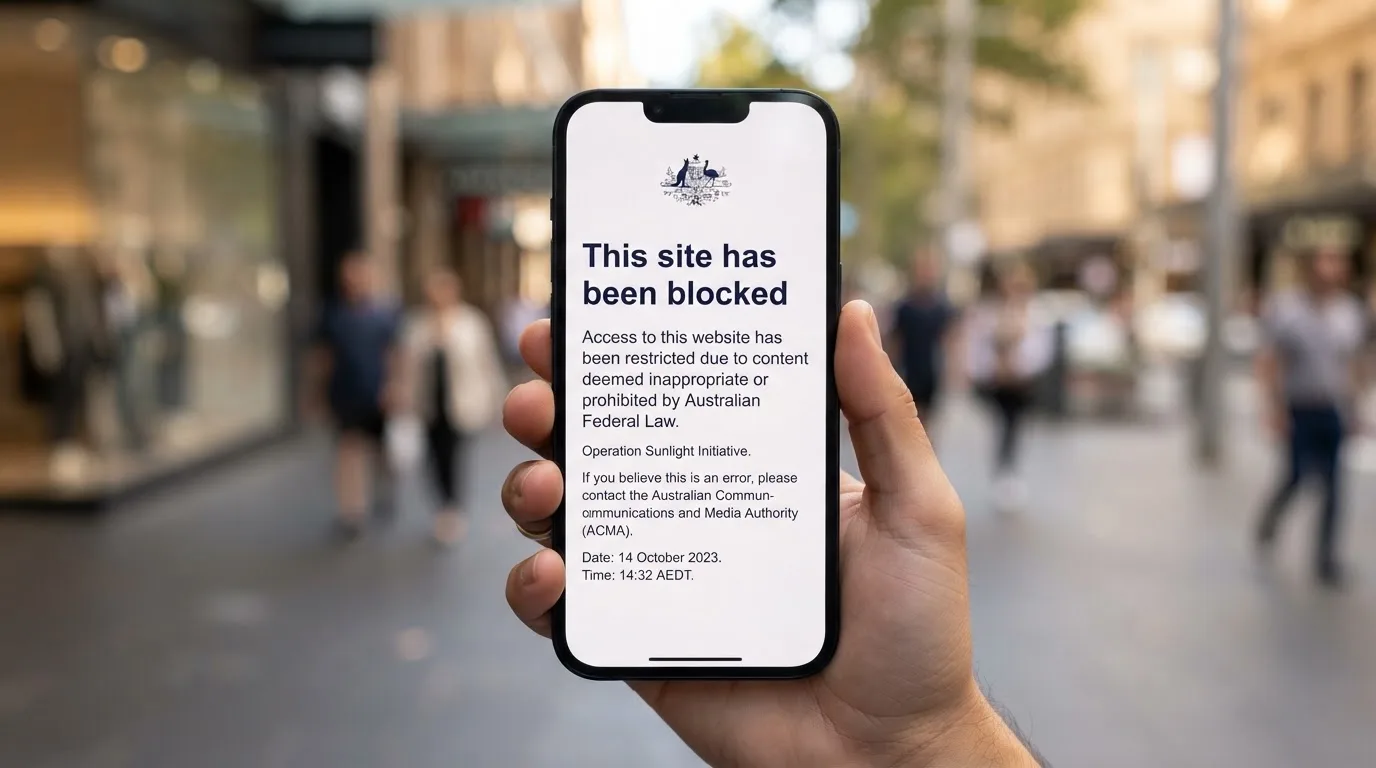
The IGA was passed in 2001 and amended in 2017 to close the loopholes the regulator had run into over the previous fifteen years. The 2017 amendments broadened what counted as a “prohibited interactive gambling service” to include in-play online betting, and extended the regulator’s reach into offshore operators that had previously slipped through by routing their traffic through Australian-facing domains. The 2026 reform bill sits in the same legislative family — it does not legalise anything, but it extends what the regulator can reach on the advertising side. The bill’s commencement date of 1 January 2027 puts it on the horizon rather than on the page; what is in force today is the 2001 Act as amended in 2017.
The numbers behind those tools are large enough to be worth holding. As of the ACMA’s June 2026 update, 1,751 illegal gambling and affiliate-marketing websites had been blocked since the first blocking request was issued in November 2019 — a seven-year enforcement arc. More than 230 unlicensed services have left the Australian market entirely since 2017, when the IGA was last amended to broaden what the regulator could reach. H2 Gambling Capital’s 2025 estimate puts annual Australian losses to illegal gambling sites at around A$3.9 billion, and tracks the share of gambling going through legal channels falling from 74 per cent in 2021 to 64 per cent.
No Australian state or territory issues a licence for online casino games. What is licensable — wagering on racing and on sport before the event, lotteries, keno — sits under different statutes, and in practice the Northern Territory Racing and Wagering Commission (NTRWC) holds most of the online bookmaker licences in its own name for tax reasons. The NTRWC is a part-time regulator: it has no full-time staff and meets once a month in Darwin. It regulates 52 of Australia’s online bookmakers, including Sportsbet, Bet365 and Ladbrokes, none of which can offer an Australian player a casino game.
The IGA targets the provider, not the player, and that detail is the one most often missed. An offshore casino is not committing a crime against the Australian punter who opens an account; the operator is the one the ACMA can reach, through a warning, a civil penalty or a blocking request to the player’s internet service provider. The player who signs up and deposits has, in practical terms, no Australian complaints body to call if a withdrawal is refused, no requirement that the operator hold player funds in segregated accounts, and no guarantee that the site will still be reachable next week. The blocking can land before the withdrawal lands.
The June 2026 blocking round added twelve sites: 7Signs, ChromaBet, Donbet, Duospin, Freshbet, Slots Gem, Jacks Club, Lucky Start, Pointsbetz.com, Spinrise, Vinyl Casino and Wildsino. Each sits behind an offshore operator that the ACMA has identified as offering prohibited services to Australians; none held an Australian licence. They join 1,739 other domains the regulator has blocked since November 2019, and they are the latest data point in a record that keeps growing because new sites keep appearing under new operators as fast as the old ones are blocked.
The pattern across the published warnings is operator-led. The ACMA names the operator, not just the brand: Pulsup Ltd in March 2026 over Rocketplay.com.au; Ryker B.V. in April 2026 over Jackbit and CasinOK; Dama N.V. in May 2022 over six brands at once and again in March 2025 and May 2025 over Woo Casino and Spirit Casino respectively; Hollycorn N.V. in September 2022 over Sky Crown and Blue Leo; Bamboo Media in July 2025 over Ignition Casino; Consolutetish S.R.L. in July 2025 over National Casino and Bizzo Casino; EOD Code SRL in February 2025 over Instant Casino; Sterplay Holding Ltd in April 2025 over Casino Intense. The eleven brands the page covers are all of them, and the operator trail above them is the regulator’s case for what is actually happening offshore.
Player wellbeing: age, exclusion and where to get help
Eighteen is the minimum age for entry to Adelaide Casino and to every other Australian gambling venue. Identification is checked on entry, and South Australia’s Independent Gambling Authority and the state’s Liquor and Gambling Commissioner regulate the operator’s compliance with that rule. The age limit is also the IGA’s floor for any account opened with an Australian-licensed wagering service, and the ACMA enforces it on the provider side.

Self-exclusion in Australia sits across two systems that do not fully overlap. BetStop, the National Self-Exclusion Register, went live on 21 August 2023 under ACMA administration. It binds every Australian-licensed online and telephone wagering service — the same licensed bookmakers regulated by the NTRWC — but it does not cover in-venue gambling such as a casino floor. A South Australian who wants to self-exclude from Adelaide Casino uses the state scheme instead, which runs periods of six months to three years. The two registers are not interchangeable, and an exclusion under one does not automatically transfer to the other.
Help lines are national, free and round the clock. The National Gambling Helpline runs on 1800 858 858, twenty-four hours a day, with telephone, online chat and face-to-face counselling funded through the ACT Gambling Harm Prevention and Mitigation Fund and through parallel state arrangements. Gambling Help Online is the chat and web arm of the same network, run by a different service in each state but coordinated nationally. The service is confidential, and the call does not show up on the player’s phone bill.
For an offshore player, the protections look thinner. BetStop cannot reach an offshore casino because BetStop binds Australian-licensed services, and an offshore site is not on the register. The helpline still works — anyone in Australia can call 1800 858 858 — but the recourse it can offer stops at advice. The account freeze, the segregated balance, the complaints body: none of those exist in any jurisdiction an offshore operator answers to in a way an Australian player can compel.
The detail that often surprises readers is the one about payments. Credit cards, credit-related products and digital currency have been banned as a means of paying for licensed online wagering since 11 June 2024, with penalties of up to A$247,500 for operators that take them. Legal deposit routes for a licensed Australian wagering account are debit card, bank transfer, PayID/Osko and BPAY. An offshore site that asks an Australian player for a credit card or a crypto deposit is operating outside the Australian rules, and the deposit method itself is a flag that what is on offer is not what the marketing suggests.
The 2026 reform that the legislation is currently sitting with is the Interactive Gambling Amendment (Gambling Reform) Bill 2026, which passed Parliament on 19 August 2026. Its advertising and inducement measures commence on 1 January 2027 — law with a start date, not yet in force. The change is incremental rather than foundational: it does not legalise online casino games, and it does not change what an offshore operator can offer to an Australian reader. It changes what an Australian-licensed operator can advertise.
Tax is the quietest line on the subject, but it carries a practical edge. Gambling winnings of a recreational player are not assessable income under section 6-5 of the ITAA 1997, and losses are not deductible. The line between recreational and business is the line the Australian Taxation Office draws, and the model is “check with the ATO” for anyone whose gambling has crossed it.
Adelaide Casino on North Terrace — the licensed venue
Adelaide Casino sits inside the heritage-listed Adelaide railway station on North Terrace, on the northern edge of the Riverbank precinct that links it to the Adelaide Convention Centre, the Festival Centre and the river itself. The address places it on the same axis as the South Australian Museum and the University of Adelaide’s main campus, and the train shed that forms the casino’s interior is still a working part of the public rail network — the platforms run beneath the building, and the casino sits above them.
The current footprint is the product of a 2015–2021 redevelopment worth around A$330 million, which added the EOS by SkyCity tower that opened in 2021 with 120 hotel rooms and expanded gaming space. Inside, the venue runs 90 gaming tables and 950 gaming machines, which puts it on the smaller side of Australia’s state casinos but well ahead of any pub or club in South Australia. The state had 11,672 gaming machines outside Adelaide Casino in 471 venues as of September 2023; Adelaide Casino’s 950 machines are roughly eight per cent of the state total, in a single building.
The licence SkyCity holds was formalised on 11 October 2013 under the Casino Act 1997. It extends Adelaide Casino’s table-game monopoly in South Australia to 30 June 2035 and allows the operator, subject to redevelopment conditions, to expand to up to 200 gaming tables and 1,500 gaming machines. That ceiling sits roughly twice where the venue runs today, and the Riverbank precinct redevelopment was the first step toward reaching it. The state government’s gain sits on the revenue side: in the 2007-08 financial year the casino paid more than A$41 million in taxes and charges to South Australia, the most recent figure the published record carries.
The casino’s regulatory ceiling differs from the rest of the state in one practical way. South Australia sets a minimum gaming-machine return-to-player rate of 87.5 per cent and a general maximum bet of A$5.00 outside the casino; Adelaide Casino itself has no maximum-bet limit on its machines. The 87.5 per cent RTP floor applies to the venue’s machines as a regulatory minimum — Australian pokies return more than that on average because the law requires it, not because the operator chooses to. The betting ceiling is the more visible difference on a single visit: a venue-bound player is capped at A$5.00 per spin at the local pub, and uncapped on the casino floor.
The Riverbank precinct that wraps Adelaide Casino has been the largest piece of urban regeneration Adelaide has run since the 1990s. The Festival Centre anchors one end of the precinct; the Convention Centre sits at the other; the casino and the EOS by SkyCity hotel tower sit between them. The river footbridge links the precinct to the Adelaide Oval across the Torrens, and the walk from the casino to the Oval is roughly fifteen minutes on foot along the riverside path. A visitor who arrives at the railway station can reach the casino without crossing a road.
For an Adelaide reader thinking about visiting rather than signing up offshore, three practical notes are worth keeping. The first is the address: North Terrace, Adelaide, inside the railway station, with the casino’s main entrance on the station’s western side. The second is the overnight option: the EOS by SkyCity sits above the gaming floor, so a player who runs late can step from the tables into a hotel room without leaving the building. The third is the surrounding walk: the Festival Centre, the river footbridge and the Convention Centre are all on the same block, which is what makes the precinct a single evening out rather than a destination on its own.
The rooftop bar sits on top of the EOS by SkyCity tower, and is the practical answer to “where to drink with a view” — the casino’s restaurant and bar offerings sit inside the venue, but the rooftop bar is open to non-players and sits above the gaming floor. The bar is the part of the building most visitors photograph, and it is the closest match for a search reader who is after an evening out rather than a gambling session.
What sits on the floor: tables, machines and live play
Adelaide Casino’s 90 tables cover the standard Australian casino mix: blackjack, roulette, baccarat, craps and a small number of poker derivatives. Punto banco is the baccarat variant on every Australian casino floor; chemin de fer and baccarat banque do not appear in Australian casinos. The Adelaide baccarat room runs the standard eight-deck shoe, with the player and banker bets paying even money minus the 5 per cent commission on a banker win; tie bets pay 8-to-1, and the house edge on the tie bet is high enough that no experienced player takes it.
Blackjack runs the standard rules with the dealer standing on all 17s, and the roulette wheels are the standard single-zero European layout — Australian casinos do not run double-zero American wheels, and the published house edge on roulette sits at 2.7 per cent rather than the 5.26 per cent an American layout would carry. Craps uses the standard pass-line and don’t-pass bets, with odds bets carrying no house edge and proposition bets carrying the worst edge on the floor. The roulette wheels are European layout only.
The 950 gaming machines cover everything else. They run on the same random-number-generator architecture as every other Australian pokie, return at least 87.5 per cent to the player as a regulatory floor, and pay out in the same progressive and fixed-jackpot structure as machines in the state’s pubs and clubs. The difference is in the bet ceiling: Adelaide Casino’s machines have no maximum-bet limit, while the same machines in a pub or club cap at A$5.00 per spin. The denomination mix inside the casino runs from one-cent lines up to five-dollar lines, with the bulk of the floor sitting in the five-cent and ten-cent range.
Live play is what most readers picture when they picture a casino, and it is what Adelaide Casino runs alongside the machines. The table-game floor is staffed by croupiers and supervisors under the venue’s own training programme, and the gaming floor sits under continuous CCTV monitoring as a condition of the licence. The South Australian Independent Gambling Authority audits the operator’s compliance, and Liquor and Gambling Commissioner oversight covers the conduct of the games themselves. None of that is unique to Adelaide — every Australian state casino runs under the same kind of supervision — but it is the practical answer to “is the game on the floor the game it says it is,” and it is the thing an offshore site cannot offer at any price.
The wider catalogue question is the one to settle. Online pokies pitched by an offshore brand to an Australian reader are not the same product as the machines on the Adelaide Casino floor. The offshore game may use the same maths engine and the same theme; what it cannot offer is the licence to offer it to an Australian player, the Australian complaints body if it goes wrong, or the regulatory floor on what the machine returns. The theme may be familiar; the regulatory wrapper is not, and that wrapper is what determines what happens when a withdrawal is refused.
The practical timing question is the one visitors ask most. The casino floor sits inside a working railway station and runs from late morning through the early hours; restaurants and bars set their own hours, and the EOS by SkyCity hotel tower runs as a 24-hour check-in. None of that is research-sourced and is offered here only as the kind of thing a visitor checks on the operator’s own page before travelling. What research does confirm is the venue’s table count, machine count and licence ceiling, and what the regulator’s published record carries is the audit frequency, the tax contribution and the licence term.
Eleven offshore brands the ACMA has formally warned
The table below lists the eleven offshore brands the ACMA has named in formal warnings issued for offering prohibited interactive gambling services to Australians. It is not a ranking and not a recommendation. The ACMA’s record is what it is, and a reader who lands here from a search for the “best casino in Adelaide” should leave understanding that none of the eleven below is a legal option for an Australian player, regardless of any foreign licence they display.
| Brand | ACMA action and date | Operator named by the ACMA | Subject support |
|---|---|---|---|
| RocketPlay | Formal warning under the IGA 2001 | Pulsup Ltd, March 2026; earlier Dama N.V., May 2022 | — |
| Level Up Casino | Formal warning under the IGA 2001 | Dama N.V., May 2022 | Listings only: Wikipedia, VGCCC |
| Woo Casino | Formal warning under the IGA 2001 | Dama N.V., March 2025 | Listings only: Wikipedia |
| Spirit Casino | Formal warning under the IGA 2001 | Dama N.V., May 2025 | — |
| National Casino | Formal warning under the IGA 2001 | Consolutetish S.R.L., July 2025 | Listings only: ABC News Australia, the federal Department of Infrastructure |
| Bizzo Casino | Formal warning under the IGA 2001 | Consolutetish S.R.L., July 2025; earlier TechSolutions, 2022 | — |
| Ignition Casino | Formal warning under the IGA 2001 | Bamboo Media, July 2025 | — |
| Instant Casino | Formal warning under the IGA 2001 | EOD Code SRL, February 2025 | — |
| Jackbit | Formal warning under the IGA 2001 | Ryker B.V., April 2026 | — |
| Casino Intense | Formal warning under the IGA 2001 | Sterplay Holding Ltd, April 2025 | Listings only: ABC News Australia, ASGAM, the SA Consumer and Business Services register |
| Sky Crown | Formal warning under the IGA 2001 | Hollycorn N.V., September 2022 | Listings only: Wikipedia |
The fourth column is what research confirms about the brand beyond the ACMA’s own warning. Brands with an em dash sit in no other listing research consulted; brands with a “Listings only” note appear in passing references — Wikipedia entries, a state regulator’s incidental mention, an infrastructure department page — that do not amount to a licence or a substantiated record. No brand in this table is licensed to offer casino games to Australians. The “subject support” column tells the reader what the rest of the record holds, and the answer in most rows is: nothing more than the ACMA’s own warning.
The pattern across the eleven is worth holding. Three of the eleven — RocketPlay, Level Up Casino and Bizzo Casino — were caught under earlier operators in 2022, before being warned again under new operators in 2025 and 2026. Five of the eleven are operated by Dama N.V. or its successors under different brand names. Two — National Casino and Bizzo Casino — were named in the same July 2025 warning because they sit under the same operator, Consolutetish S.R.L. The ACMA’s enforcement is operator-led, which means a brand name change costs little: the corporate shell behind it changes, and the regulator starts again.
The eleven brands are treated individually below. Each section carries the ACMA action, what research confirms about the brand beyond the regulator’s warning, and a verdict that sets out what the entry adds to the picture.
RocketPlay — caught twice, under two different operators
RocketPlay has appeared on the ACMA’s published list twice, and that recurrence is the whole story. The first warning was issued in May 2022 to Dama N.V., alongside five other brands — Bambet, Dazard, Level Up, Wild Tornado and Cobra Casinos — in a single enforcement round against one Curaçao-licensed operator. The second was issued in March 2026 to a different operator, Pulsup Ltd, over the Australian-facing domain Rocketplay.com.au. The brand name carried across, but the corporate shell behind it changed.
That pattern is the one the ACMA’s record shows repeatedly, and RocketPlay is the cleanest example of it in the eleven. A brand name costs nothing to register; a corporate shell can be wound down and replaced in a different jurisdiction; the ACMA’s enforcement is operator-led, so a new operator means a new warning rather than an escalation of the existing one. The Australian player’s experience does not change: they see a familiar logo and a “best casino” pitch, deposit through a payment method that may itself be outside Australian rules, and the regulator catches up only after the ACMA has named the new operator.
The corporate trail is the cleanest in the eleven. A 2022 warning to Dama N.V. over six brands; a 2026 warning to Pulsup Ltd over one. Two operator names, one brand name, four years apart.
Level Up Casino — named in the May 2022 Dama sweep
Level Up Casino was one of six brands the ACMA named in a single May 2022 warning to Dama N.V., the Curaçao-licensed operator that has appeared more often in the ACMA’s published record than any other. The other five — Bambet, Dazard, RocketPlay, Wild Tornado and Cobra Casinos — sit in the same warning, all on the same regulatory action, all on the same Dama corporate shell.
Wikipedia lists Level Up Casino as an entry; the Victorian Commission for Gambling and Casino Liquor Regulation has an incidental reference to the brand in records unrelated to its Australian availability. The Wikipedia entry describes the brand; the Victorian Commission’s mention is incidental to a different case. Neither listing is the operator’s own statement of Australian availability, and the ACMA’s 2022 warning remains the only published regulatory action against the brand in Australia.
Level Up sits inside the largest single enforcement round the ACMA has run against one operator, and the operator’s footprint in the regulator’s record has only grown since.
Woo Casino — Dama N.V.’s 2025 escalation
Woo Casino sits on the ACMA’s record with a single March 2025 formal warning to Dama N.V., the same operator that was warned in May 2022 over six other brands. The 2025 warning is the regulator coming back to the same operator after three years and naming another brand from the same portfolio — the ACMA’s published record treats Dama N.V. as a single enforcement target, with new brand names added as they surface.
Wikipedia lists Woo Casino as a single entry. The entry describes the brand. It is not the operator’s own statement of Australian availability, and the ACMA’s March 2025 warning remains the only published regulatory action.
The escalation the warning represents is the story. Dama N.V. was warned once in 2022, came back under five other brand names, and the ACMA’s response in March 2025 was a fresh warning over a fresh brand. The regulator is signalling it will keep coming back; the operator’s response is to keep coming back with new names.
Spirit Casino — Dama N.V.’s quieter 2025 warning
Spirit Casino sits on the ACMA’s record with a single May 2025 formal warning to Dama N.V., issued two months after the Woo Casino warning in the same year. It is the third Dama brand the ACMA has named in 2025 alone, after Woo Casino in March and before any later additions.
The verdict is the quietest on the page. Spirit Casino sits in the gap between Woo Casino’s March 2025 warning and any later additions, with no signal beyond the operator’s name being the same across two months.
National Casino — named with Bizzo in July 2025
National Casino was named in a single July 2025 formal warning to Consolutetish S.R.L., the same operator the ACMA warned in the same round over Bizzo Casino. The two-brand warning is a paired enforcement action against one operator, and it is the regulator’s first published action against Consolutetish S.R.L.
ABC News Australia lists National Casino in incidental reporting; the federal Department of Infrastructure has a passing reference on one of its pages. Neither is the operator’s own statement of Australian availability. The ACMA’s July 2025 warning is the only published regulatory action.
National Casino sits inside a paired enforcement action against one operator, with no Australian licence to point to.
Bizzo Casino — warned twice across three years
Bizzo Casino has appeared on the ACMA’s published list twice, and the gap between the two warnings is the story. The first was issued in 2022 to TechSolutions (CY) Group Limited and TechSolutions Group N.V. The second was issued in July 2025 to Consolutetish S.R.L., under the same paired warning as National Casino. The brand carried across three years; the operator behind it changed.
The 2022 warning named TechSolutions; the 2025 warning named Consolutetish S.R.L. Two operators, one brand, three years apart. The ACMA’s operator-led enforcement means a new shell resets the warning count rather than escalating it — and the Australian player’s experience does not change.
Ignition Casino — a poker-led brand on the ACMA list
Ignition Casino was named in a single July 2025 formal warning to Bamboo Media, one of two operators the ACMA acted against in the same round. Ignition’s positioning is poker-led — its public pitch has been the poker room and the tournament schedule — and the ACMA’s warning sits against its offering of casino-style games to Australians, which is what the IGA prohibits regardless of what the rest of the site carries.
The verdict is a narrow one. Ignition is the only brand in the eleven whose pitch leads with poker rather than casino games, and the ACMA’s warning sits against the casino offering rather than the poker room. The IGA covers both, but the regulator’s published record here names one and not the other.
Instant Casino — EOD Code SRL’s first warning
Instant Casino was named in a single February 2025 formal warning to EOD Code SRL, the first action the ACMA has taken against that operator in the published record. The warning was issued against Instant Casino’s offering of casino games to Australians.
The verdict is the cleanest on the page. Instant Casino is the only brand in the eleven whose operator — EOD Code SRL — has appeared once in the ACMA’s published record. Every other operator named in the eleven has either collected multiple brand-name warnings or has had a previous operator’s shell caught under a successor.
Jackbit — paired with CasinOK in April 2026
Jackbit was named in a single April 2026 formal warning to Ryker B.V., alongside CasinOK in the same enforcement round. The two-brand warning is the regulator’s first published action against Ryker B.V., and it pairs Jackbit with CasinOK under one operator.
The verdict sits alongside Instant Casino’s. Jackbit is paired with CasinOK in a single April 2026 round, and Ryker B.V. is a new operator in the ACMA’s published record. The brand-name change matters because the regulator’s enforcement is operator-led; the same operator under a different name is a different warning rather than an escalation.
Casino Intense — three listings, no Australian licence
Casino Intense was named in a single April 2025 formal warning to Sterplay Holding Ltd, in the regulator’s only published action against that operator. The warning sits against Casino Intense’s offering of casino games to Australians.
Casino Intense is the most-listed brand in the eleven without being a substantiated Australian brand. ABC News Australia lists the brand in incidental reporting; ASGAM industry coverage references it; the South Australian Consumer and Business Services register carries an entry. None of the three is the operator’s own statement of Australian availability.
The verdict is the inverse of Instant Casino’s. Casino Intense sits in three listings without an Australian licence, while Instant Casino sits in none. Neither carries a substantiated presence in Australia; one of them at least leaves a paper trail the reader can check.
Sky Crown — Hollycorn’s Australian-facing casino
Sky Crown was named in a single formal warning to Hollycorn N.V., alongside Blue Leo in the same warning. The September 2022 warning is the earliest in the ACMA’s published record among the eleven, and it sits against both Hollycorn brands at once. The Sky Crown pitch is casino-led; the Blue Leo pitch runs alongside it under the same operator.
Wikipedia lists Sky Crown as a single entry, alongside Blue Leo. The entry describes both brands. It is not the operator’s own statement of Australian availability.
The verdict is the operator’s. Hollycorn ran two Australian-facing brands under one corporate shell, and the ACMA named both in a single warning. The pattern matches Dama N.V.’s on a smaller scale; the response, both from the regulator and from the operator, has been the same.
What the blocking record looks like as a rate
A total of 1,751 illegal gambling and affiliate-marketing websites were on the ACMA’s blocked-sites list as of the regulator’s June 2026 update, with the first blocking request issued in November 2019. The arithmetic question is the one a reader with a calculator asks: how fast does the list grow?
Between November 2019 and June 2026 is roughly 79 months — six years and seven months. Spread evenly across that window, the 1,751 domains work out at an average of around 22 sites per month, or roughly 265 sites per year. That is a band, not a precise figure, because the ACMA’s blocking requests come in discrete enforcement rounds rather than at a steady monthly rate: the June 2026 round alone added twelve sites in a single decision, and earlier rounds added more in one go. The 22-sites-a-month figure is the smoothed average; the realistic spread sits between roughly 18 and 26 sites per month, depending on whether the reader is looking at a low-activity month or one of the larger rounds.
What the rate shows is not that the regulator is winning or losing. The blocking rate and the appearance rate of new sites have to grow together for the list to keep lengthening the way it does; if new sites stopped appearing, the ACMA’s enforcement record would plateau. The list keeps growing because new sites keep appearing under new operators, and a new operator means a new warning rather than an escalation of the existing one. The arithmetic is the symptom of the same operator-led enforcement the eleven brands above show.
For a reader weighing whether the choice is Adelaide Casino on North Terrace or one of the eleven offshore brands, the rate carries a practical edge. The site an Australian signs up with today may not be reachable in six months, regardless of any marketing the operator has done in the meantime. The deposit the player makes tomorrow may not be withdrawable the day the ACMA’s blocking request lands. The rate at which the regulator’s list has grown over seven years is the rate at which the marketing site an offshore operator is currently promoting is likely to disappear.
The number the rate does not address is the dollar cost of the lost ground. H2 Gambling Capital’s 2025 estimate put annual Australian losses to illegal gambling sites at around A$3.9 billion — and that figure covers only what flows through identifiable offshore sites, not what flows through affiliate marketing pages or through operators the regulator has not yet named. The blocking rate is the regulator’s symptom of the problem; the dollar figure is the problem itself.
Frequently asked questions
Which casino in Adelaide is the legal one?
Adelaide Casino, run commercially as SkyCity Adelaide, is the only casino licensed in South Australia under the Casino Act 1997. It sits inside the heritage railway station on North Terrace and is operated by SkyCity Entertainment Group. The licence extends the table-game monopoly to 30 June 2035.
Where on North Terrace is Adelaide Casino?
The casino sits inside the heritage-listed Adelaide railway station at the western end of North Terrace, next to the Riverbank precinct and the Adelaide Convention Centre. The address is on North Terrace, Adelaide, and the EOS by SkyCity hotel tower sits above the gaming floor.
How old do you have to be to enter Adelaide Casino?
Eighteen is the minimum age for entry to Adelaide Casino, as it is for any Australian gambling venue. Identification is checked on entry, and South Australia’s Independent Gambling Authority and Liquor and Gambling Commissioner regulate the operator’s compliance. Anyone under eighteen will be turned away.
Does Adelaide Casino run blackjack, baccarat and roulette?
Yes. Adelaide Casino runs ninety gaming tables across its floor, covering blackjack, baccarat, roulette, craps and other games. It also operates nine hundred and fifty gaming machines. The table-game mix is broader than any other venue in the state, including the pub and club venues that host the rest of South Australia’s pokies.
Can an Australian play at an offshore online casino instead?
No. The Interactive Gambling Act 2001 prohibits offering online casino games to anyone in Australia, and no state or territory licenses them. Offshore sites that accept Australian players are breaking the IGA, even where they hold a foreign licence, and the ACMA has formally warned eleven of them.
Created by the ”Casino Table Games Info” editorial team.