
Best Wazdan Online Casinos Australia in 2026 and the Offshore Trade That Won’t Quit
A short, honest sentence sits at the centre of every comparison of “Wazdan casinos” pitched at Australian players: online casino games cannot be licensed in this country. The Interactive Gambling Act 2001, tightened by the Interactive Gambling Amendment Act 2017, makes it an offence for any operator to supply online casino games, online pokies or in-play betting to a person physically in Australia. No state or territory issues such a licence. The only gambling products that can be licensed for online supply are wagering (racing and sport, pre-event), lotteries and keno — licensed, in practice, by the Northern Territory. A poker machine, a roulette wheel or a slot of any brand, “Wazdan” or otherwise, can only reach an Australian through a venue physically present in the country, and it then sits under a state or territory gaming machine regime rather than the interactive one.
That is not a side note. It is the answer the page keeps arriving at, and it is why the comparison the headline asks for is — once the licensed options are subtracted — a comparison of offshore sites that have been formally warned, blocked or removed for doing exactly what the headline asks them to do. Eleven brands below have been named by the Australian Communications and Media Authority for offering prohibited services to people in Australia; the rest of the column inches are spent, more usefully, on the studio itself, on how its slot mechanics actually work, on what the laws governing those mechanics look like for an Australian, and on the deposit and bonus terms the offshore trade dangles in front of players before those players ever reach the cashier.
Data current as of 29 October 2026, checked against the ACMA’s published formal warnings register and against iGaming Business’s reporting of the June 2026 blocking round.
- Paytable details and the slot mechanics Wazdan builds around
- How any honest shortlist of Wazdan casinos has to be put together
- The fundamentals of Wazdan-branded slot titles in the Australian market
- Prohibition under the Interactive Gambling Act and the cost of the loopholes
- Brands the ACMA has acted against, in the order the warnings were published
- Help available to anyone affected by an offshore Wazdan casino
- Deposits and withdrawals through offshore sites: how the money actually moves
- Bonus mechanics and what the marketing language actually promises
- Mobile play and what the paytable actually looks like on a phone
- Frequently Asked Questions
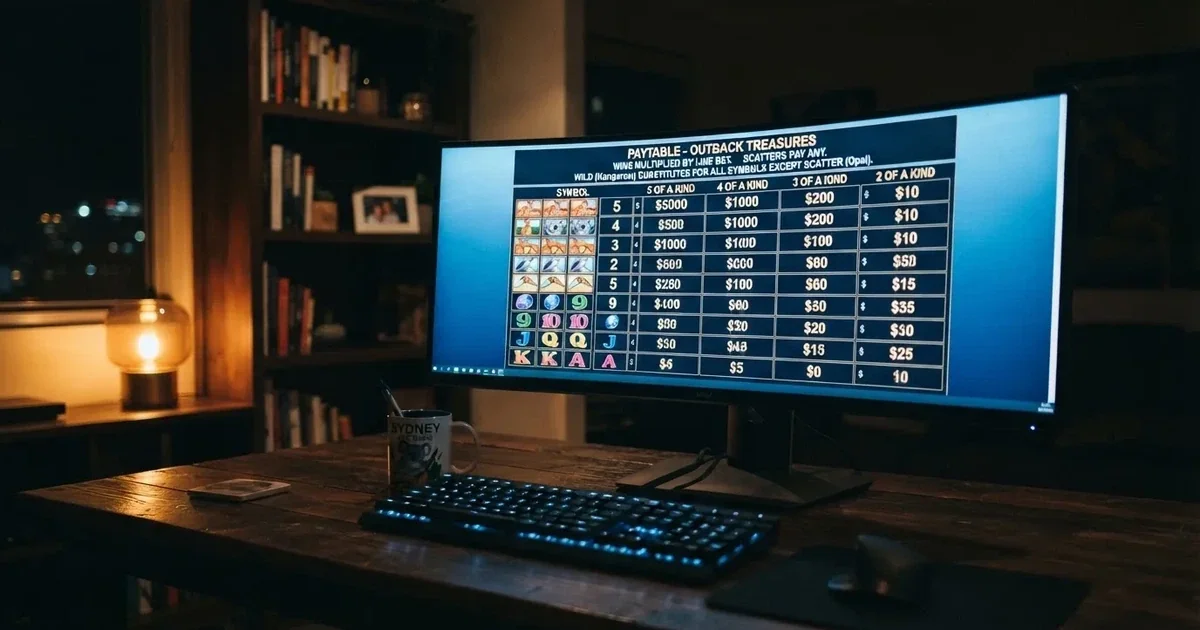
Paytable details and the slot mechanics Wazdan builds around
Wazdan is a slot studio registered in Malta, founded in 2010, with a self-reported catalogue that the company itself describes as 300+ titles in 2025, 40+ new releases a year and a presence in 2,500+ casinos across more than 20 markets. The studio’s own corporate page puts headcount at over 250, and lists licensing in Malta (MGA/B2B/206/2011), the UK Gambling Commission (account 48872) and 30+ additional jurisdictions, named among them New Jersey, Michigan, West Virginia, Ontario, Sweden, Romania, Greece and Denmark. Australia is not on that list. There is no Australian online gaming licence for online casino content — not for Wazdan, not for any other studio — so the jurisdiction that matters for this page is not one a Wazdan press release would lead with.
What does translate across jurisdictions is the catalogue. Three mechanics sit at the centre of almost every Wazdan-branded slot and give the studio a recognisable fingerprint on a paytable screen.
The first is the proprietary Volatility Levels feature, introduced in 2018. Most slot studios let the mathematics of the game decide whether a session is choppy or smooth; Wazdan lets the player pick. A three-setting toggle inside the game lets the player dial variance up or down without changing the RTP. The trade is structural: a “Low” volatility setting pays smaller prizes more frequently, “Standard” sits in the middle, and “High” concentration the same RTP into longer, drier stretches punctuated by larger hits. The math sums to roughly the same long-run return either way, but the felt experience is genuinely different — a fact a paytable screen does not advertise.
The second is Hold the Jackpot, Wazdan’s flagship bonus-round series. A grid of coins or symbols lands during the bonus, each carrying a fixed prize, and a fixed number of respins resets whenever another coin lands. The bonus ends when the respin counter runs out without a fresh coin landing, and the accumulated coin values are paid as the bonus total. The studio’s flagship release, 9 Coins, runs entirely on this mechanic: published RTP 96.06%, medium-high volatility on its default setting, a 500x-bet max win, and no prizes at all in the base game — every line on the paytable that is not “Bonus” or “Special” reads zero. Wins concentrate in the bonus round, exactly as the mechanic name says.
The third is Collect to Infinity (also marketed as Cash Infinity). Persistent cash symbols keep landing during the bonus, and once a cash symbol appears it stays on the grid for the remainder of the feature regardless of how the respin counter behaves. The mechanic is Wazdan’s answer to the “near miss” complaint that haunts jackpot games: missed respins cannot strip the cash that is already on the board.
A side note worth its own paragraph for a player reading a paytable: Wazdan titles tend to publish RTP to two decimal places (96.06%, 96.13%, 96.15%, 96.22% depending on the title), and the volatility tag almost always reads “medium” or “medium-high” in the studio’s own marketing, with the actual variance left to the player’s toggle. A trader reading the page from a different angle will note that a 96.06% return on a 500x-bet max win is — as paytables go — a moderate ceiling rather than a generous one. Megaways-style slots from competitors can run a 25,000x cap; Wazdan’s flagship caps at five hundred. The trade the studio makes is volatility control, not jackpot ceiling, and that is the trade a player should read on a paytable screen rather than have explained to them by a deposit bonus.
The studio also describes a fourth structural feature, Chance Level, which lets a player take a slice of their credit and turn it into a multiplier on any single spin — a one-off bet-size increase on a chosen spin, paid out of the existing balance rather than added to the wager. The feature is absent from most competitor catalogues, and a paytable that lists it has visibly more options at the bottom of the screen than a paytable that does not.
What does not appear on a Wazdan paytable is the licence the site operates under, because the paytable is a per-game asset, and the licence sits with the operator running the casino, not with the studio producing the math. That separation is the legal seam the rest of this page keeps coming back to.
How any honest shortlist of Wazdan casinos has to be put together
A “top 11” or “best 10” list in this market cannot be a recommendation, because nothing on the licensed side of the Australian boundary covers casino gaming. The honest alternative is a record: which operators the ACMA itself has acted against, and for what. The featured set below comes straight from that record — eleven brands, eleven formal warnings, one shared reason (offering prohibited interactive gambling services to Australians). The list is ordered by the sequence in which the warnings were published, and the order is the only ordering rule a regulator’s register can support.
What separates one entry from the next is not a comparison of bonuses or payout speeds — the inputs for those figures come exclusively from affiliate marketing pages, and the page treats them as marketing rather than data. What separates them is the operator’s corporate structure as the ACMA names it, the date of the warning, and whether the studio itself lists the brand as a distribution partner on its own site. Three of the eleven are listed by Wazdan or by providers in the Wazdan orbit; the rest have no public connection the page can verify.
A second pass of any such list would normally add columns for deposit methods, withdrawal times and licence jurisdiction. On this side of the law, every column except “operator as named by the ACMA” and “warning date” carries offshore data the reader cannot act on. The Australian channel for licensed wagering — debit card, bank transfer, PayID/Osko, BPAY — does not extend to offshore casino sites, and any site accepting credit cards or cryptocurrency from an Australian is by definition outside the Australian rules (the credit and crypto ban came into force on 11 June 2024, with penalties of up to $247,500 for licensed operators who breach it; offshore operators are not subject to those penalties, which is part of why the offshore trade keeps accepting what the licensed side cannot).
A third pass would add a column for sports betting, on the logic that some of the brands below run both a casino and a sportsbook. That is true: most of them do. The licensed Australian side will continue to cover pre-event sports betting through operators licensed by the NTRWC (52 of them, including Sportsbet, Bet365 and Ladbrokes, which hold NT licences for tax reasons even though they are household names elsewhere) — but a sportsbook is not a casino, and a casino is what Wazdan makes.
The honest reading, in plain English: the only “top list” an Australian can responsibly make of Wazdan casinos is a list of operators the ACMA has named for the offence. The comparison that follows below is structured around that reading.
The fundamentals of Wazdan-branded slot titles in the Australian market
Australians who want to play a Wazdan-built slot have two options that sit inside the law and a long list of options that sit outside it.

Inside the law: physical venues. Gaming machines in clubs, hotels and casinos are regulated by state and territory authorities — the NSW Liquor & Gaming NSW, the Victorian Commission for Gambling and Liquor Regulation, the Queensland Office of Liquor and Gaming Regulation, and so on. The machines in those venues are mostly not Wazdan games, because Wazdan’s business is the online channel; they are mostly Aristocrat Leisure machines, which is the Australian-listed (ASX: ALL) slot maker founded by Leonard Ainsworth in 1953, listed on the ASX in 1996 and headquartered today in North Ryde in Sydney’s north. Aristocrat is, by the company’s own marketing, the largest gambling-machine manufacturer in Australia and the second-largest slot manufacturer globally behind International Game Technology. The 2025 result was A$6.30 billion in revenue, A$1.55 billion in normalised net profit after tax and amortisation, and 7,400 employees; the M&A history runs from Video Gaming Technologies (2014, US$1.3 billion) through Plarium (2017, US$500 million) and Big Fish Games (2017, US$990 million) to NeoGames (announced 2023, closed April 2024, roughly US$1 billion), with a US$3.7 billion bid for Playtech rejected by Playtech shareholders in 2021.
The point of naming Aristocrat here is the one the offshore marketing pages work hardest to obscure: the slot cabinet in a Sydney club is the Australian equivalent of the Wazdan catalogue, in the sense that both are gaming machines, both run on certified RNGs, both publish an RTP, and both are governed by a regulator that investigates complaints. The differences are mechanical (Aristocrat hardware vs Wazdan HTML5), jurisdictional (state gaming authorities vs MGA / UKGC), and legal (a physical venue is licensed; the offshore site is not). A player who is happy with the cabinet in a pub is a player for whom the “Wazdan online” question may have a smaller answer than the affiliate sites suggest.
Outside the law: offshore casino sites that market Wazdan titles into the Australian market through affiliate networks, SEO pages and email lists. The volume of that marketing is the part of the market that an Australian actually sees — search-engine ads, comparison pages, in-app banners, all engineered to land a click that lands a deposit. The volume of compliance against that marketing is the part the ACMA publishes. As reported in June 2026, the regulator’s running total of blocked illegal gambling and affiliate marketing websites stood at 1,751 since the first blocking request was lodged in November 2019, and more than 230 unlicensed gambling services had withdrawn from the Australian market since enforcement was tightened in 2017. The June 2026 round alone asked Australian ISPs to block twelve more: 7Signs, ChromaBet, Donbet, Duospin, Freshbet, Slots Gem, Jacks Club, Lucky Start, Pointsbetz, Spinrise, Vinyl Casino and Wildsino. The next paragraph puts a number on the pace.
The blocking rate, in figures
Take the running total — 1,751 sites blocked since the first blocking request in November 2019 — and divide by the elapsed time. To June 2026 that is just over six and a half years, which works out to roughly 265 sites a year, or about 22 a month, that the ACMA has asked Australian ISPs to take offline. The pace has not slowed; the June 2026 round was the latest in a series of monthly submissions, and the regulator’s stated posture is that one formal warning does not produce an exit and a follow-up blocking request is the next step. The figure is a band rather than a single number because the blocking request schedule is irregular (a quiet month can produce no new blocks; a heavy month can produce a dozen), and because the running total covers affiliate marketing pages rather than only the casinos themselves — the regulator has been pulling down review sites and SEO funnels alongside the cashier pages they feed.
That pace is the marketing industry’s response to the law. Every page the ACMA blocks is a page that had to be profitable enough to keep producing; the volume of new pages the agency has to chase is itself evidence that the economics of marketing Wazdan slots offshore into Australia still work at scale in 2026, even after the 2017 amendments, even after the credit-card and crypto ban of June 2024, even after the Interactive Gambling Amendment (Gambling Reform) Bill 2026 passed Parliament on 19 August 2026 with advertising and inducement measures that commence on 1 January 2027. Most of those 1,751 sites will be replaced by the time the counter is read again. None of them had a chance of being lawful.
Loss to the illegal channel
The 2025 report from the gambling data provider H2 Gambling Capital estimates the annual loss of Australians to illegal offshore gambling sites at about A$3.9 billion, and puts the share of gambling spending going through legal channels at 64% — down from 74% in 2021. Both numbers are estimates rather than audited figures, and the methodology is proprietary, but the direction of travel is the same as the ACMA’s enforcement numbers: a tightening legal market on one side and a stubbornly large illegal market on the other.
Prohibition under the Interactive Gambling Act and the cost of the loopholes
The legal picture is short and the loopholes are nearly as short. Online casino games, online pokies and in-play betting are prohibited interactive gambling services under the Interactive Gambling Act 2001 as amended in 2017. The prohibition targets the provider: an individual player is not prosecuted for placing a wager. What the player does not get is the protection. An offshore operator gives no Australian consumer protection, no complaints body the player can lodge with, no Australian Small Business and Family Enterprise Ombudsman jurisdiction, no access to BetStop (the National Self-Exclusion Register, live since August 2023, binds only Australian-licensed online and phone wagering services), and no recourse if a withdrawal is denied. The operator can be blocked with a player balance still on it; it happens often enough that the ACMA’s own communications warn about exactly that scenario.

There is no carve-out for “freemium” or “play-money” modes. The law turns on whether the service supplies a “regulated interactive gambling service” to a customer in Australia — the offshore marketing pages argue, without success in front of the ACMA, that a “no deposit bonus” or a “free play” landing page sits outside the prohibition. The argument has not, to the page’s knowledge, ever been upheld against an ACMA investigation; it appears, instead, in affiliate terms-of-service boilerplate.
Penalties on the licensed side are real. The credit card and crypto ban that commenced on 11 June 2024 carries penalties of up to $247,500 per offence for licensed operators. The Interactive Gambling Amendment (Gambling Reform) Bill 2026, passed on 19 August 2026, adds inducement and advertising offences whose penalties commence on 1 January 2027. None of this binds an operator registered in Curaçao or Cyprus, and the offshore side knows it.
The tax position completes the picture for the player rather than the operator. Recreational gambling winnings are not assessable income under section 6-5 of the ITAA 1997, and losses are not deductible, unless the ATO considers the gambling to be a business — a higher bar than the casual affiliate marketing pages sometimes let on. The model answer is the ATO’s own: “check with the ATO”, which is what the casino’s terms-of-service will already say, and what the ATO will say back when asked.
Brands the ACMA has acted against, in the order the warnings were published
The table below is the comparison the headline asked for, and the only comparison this market permits. Every row is an offshore operator that the ACMA itself has named in a formal warning under the Interactive Gambling Act 2001 for offering prohibited services to Australians; the date in column three is the date the warning was published; the column four is the operator as the regulator named it; the final column is what the studio’s own distribution channels say about the brand, where they say anything at all. A dash in the final column means the page has no listing it can verify; a “listings only” note means Wazdan or a provider in the Wazdan orbit mentions the brand somewhere on a corporate page, but only as a distribution outlet, and not as an endorsement of its legality in any specific jurisdiction.
| Brand | ACMA action and date | Operator named by the ACMA | Subject support |
|---|---|---|---|
| Level Up Casino | Formal warning (May 2022) | Dama N.V. | listings only (Wazdan) |
| Bizzo Casino | Formal warning (July 2025); earlier TechSolutions (CY) Group Ltd and TechSolutions Group N.V. (2022) | Consolutetish S.R.L. | — |
| Sky Crown | Formal warning (September 2022) | Hollycorn N.V. | — |
| Ignition Casino | Formal warning (July 2025) | Bamboo Media | — |
| Instant Casino | Formal warning (February 2025) | EOD Code SRL | — |
| Casino Intense | Formal warning (April 2025) | Sterplay Holding Ltd | listings only (1spin4win, gamblingcommission.gov.uk) |
| Woo Casino | Formal warning (March 2025) | Dama N.V. | — |
| National Casino | Formal warning (July 2025) | Consolutetish S.R.L. | listings only (Betsoft, en.wikipedia.org, Pragmatic Play) |
| RocketPlay | Formal warning (March 2026); earlier Dama N.V. (May 2022) | Pulsup Ltd | — |
| Spirit Casino | Formal warning (May 2025) | Dama N.V. | — |
| Jackbit | Formal warning (April 2026) | Ryker B.V. | — |
The order in the table is the publication order; the order of the prose that follows is the prose’s own, walking through the operators one at a time. A note that holds for the entire set: an offshore licence held by the operator — Curaçao, Anjouan, the Autonomous Island of Anjouan under a master licence, Cyprus, or any of the small jurisdictions the affiliate pages brand as “international” — has no legal weight inside Australia. The ACMA’s warnings rest on the Interactive Gambling Act 2001, not on whether the offshore entity holds its own regulator’s permission; those permissions are real in their own jurisdictions and ineffective against an Australian prohibition.
RocketPlay
The most recent ACMA action the page covers. In March 2026 the regulator published a formal warning to Pulsup Ltd, naming the RocketPlay domain. The same operator brand had been the subject of an earlier warning in May 2022, when Dama N.V. was named across six casino brands including Rocketplay. The corporate change between those two events is one of the more striking features of the offshore market: brand ownership rotates between registered companies inside the same group, with the URL sometimes untouched. A player who recognises a brand from an older warning is not seeing a fresh operator; they are seeing the same marketing relationship dressed in a new corporate name.
Wazdan’s own coverage of the brand carries none of the legal weight that an Australian player might want from it. Marketing reach is not regulatory permission. The page puts RocketPlay on the table because the regulator put it there.
Level Up Casino
Level Up was named in the May 2022 warning to Dama N.V., together with five sister brands (Bambet, Dazard, Rocketplay, Wild Tornado and Cobra Casinos). It is also one of the few entries in the table for which Wazdan’s own corporate site lists a distribution relationship in the public listings the studio publishes — which is the listings-only qualifier the table carries. The reading is not “Wazdan endorses Level Up”, it is “Wazdan’s catalogue is delivered to Level Up’s cashier pages by the studio’s usual aggregator relationships”. The two are different statements, and the second is not an argument the second one survives in front of the ACMA.
Woo Casino
Woo Casino was named in a separate ACMA formal warning in March 2025, also addressed to Dama N.V. The Dama group has had a long relationship with the regulator: the May 2022 warning covered six of the group’s brands, and the March 2025 warning added Woo; the May 2025 warning that follows added Spirit. A reader who has heard of any of the three should hear of the other two as well, because the recurring feature is the operator rather than any single brand name. The corporate vehicle is the lever the regulator pulls.
Spirit Casino
Spirit was named in a Dama N.V. formal warning published in May 2025 — the third warning the group has attracted, after the May 2022 cluster and the March 2025 Woo Casino warning. The pattern of repeat warnings is the part of the record most worth a reader’s attention: a single warning sometimes produces a clean exit, and a cluster of three is a strong signal that the operator’s Australian-facing operations have continued to run despite the regulator’s published posture. Whether they continue to run in 2026 is something the reader has to verify themselves, and the only honest verification is the ACMA register itself.
National Casino
Named in the July 2025 warning to Consolutetish S.R.L., alongside Bizzo Casino (below). National Casino is the bigger-spend brand of the pair, marketed across SEO pages and affiliate lists in the Australian market, and its presence in listings on Betsoft.com, en.wikipedia.org and Pragmaticplay.com is the same listings-only support the table carries: the providers name the brand as a distribution outlet, not as a recommendation. The legal position is what the ACMA’s warning says it is.
Bizzo Casino
Bizzo Casino has the longest record on the table, having been named in a 2022 formal warning issued jointly to TechSolutions (CY) Group Limited and TechSolutions Group N.V. — and again in the July 2025 warning to Consolutetish S.R.L. The 2022 → 2025 gap is roughly three years, and a brand that takes the regulator’s first warning seriously usually changes enough between two dates that the second action names a new corporate vehicle and a different legal counsel. Both are present here. The legal seam the brand keeps operating through is the same in both years: Curaçao-registered holding companies, domain changes designed to defeat blocking, and marketing pages indexed in the Australian results.
Ignition Casino
Ignition Casino is the Australian-facing front of a US-licensed offshore operation that has also been targeted in other jurisdictions for similar reasons. The Bamboo Media formal warning of July 2025 named it as part of an Australian-facing push, and the brand’s usual footprint is poker, sportsbook and casino in the same cashier. The casino lobby is where the Wazdan titles the marketing pages advertise appear, if the aggregator contracts cover Australian traffic — which is the part the page cannot verify and which the warning itself implicitly asserts is happening.
Instant Casino
Instant Casino was named in an ACMA formal warning to EOD Code SRL in February 2025. The brand markets itself as “no account” casino — a structure that lets a player deposit without registering a formal account, an attractive feature for a market that has spent two decades trying to verify player identity for tax and responsible-gambling reasons. The structure is also exactly the kind that regulators describe as a circumvention tool: a payment processor is registered to an EU entity, the cashier is hosted on a domain renewed quarterly, and the player’s “account” is reconstituted from cookies and crypto-wallet addresses on every session. The marketing language explains the appeal; the ACMA’s warning explains the problem.
Jackbit
Jackbit was named in an ACMA formal warning to Ryker B.V. in April 2026, in the same warning as CasinOK. Jackbit is one of the more crypto-native brands in the set, having marketed itself as a Bitcoin-first casino rather than a casino that happens to accept Bitcoin — the game library is built around the same crypto cashier rather than around fiat deposit routes. The June 2024 credit and crypto ban that applies to licensed Australian operators does not, of course, extend to Jackbit; Jackbit accepts crypto by design. The reader who reached the page searching for “Wazdan crypto casino” should know that the search they typed matches a market their own regulator has named for the matching offence.
Casino Intense
Casino Intense was named in an April 2025 ACMA formal warning to Sterplay Holding Ltd. The brand sits in the listings published by 1spin4win — a smaller slot provider, founded in 2021, headquartered in Willemstad, Curaçao (Scharlooweg 39), with a Curaçao gaming licence and a portfolio of more than 190 online slots. The 1spin4win relationship is distribution, not endorsement: the page reports it because the table is the place to report it. Casino Intense is also listed by the UK Gambling Commission’s public register, and the Commission’s public record is the source an Australian reader can most usefully trust on whether the brand has a UK-facing offering at all; the ACMA’s record is the source they trust on whether the brand’s Australian-facing operations are lawful.
Sky Crown
Sky Crown is the longest-running warning on the page: the ACMA formal warning to Hollycorn N.V. covers Sky Crown and Blue Leo, and was published in September 2022. Sky Crown has been the target of similar enforcement actions in other jurisdictions over the same period, and the Hollycorn group operates a portfolio of brands across the same cashier stack — most of which the page does not list because the page does not need to. The Australian-facing footprint is what the ACMA’s warning describes, and the warning is what the page is built around.
Help available to anyone affected by an offshore Wazdan casino
The legal regime prohibits the operator, not the player. Players who have deposited at an offshore site and have a balance they cannot withdraw, or who recognise the warning signs of compulsive play in their own behaviour, are the people the protection regime is built for, and the regime has two main doors.
BetStop, the National Self-Exclusion Register, has been live nationally since August 2023. It binds every Australian-licensed online and phone wagering service — the 52 bookmakers licensed by the NTRWC plus state-licensed lottery operations and the licensed WAP providers. It does not bind an offshore casino; it is the licensed-channel safety net. For an Australian who plays offshore and wants to keep doing so, BetStop is a partial measure; it removes the licensed channels and lets the offshore channels keep operating. The measure a player who wants to stop entirely has to take is the harder one: stopping at the wallet.
Gambling Help Online, run by a consortium of state-funded services and accessible at gamblinghelponline.org.au, is the 24/7 front door. The national helpline is 1800 858 858, free, with a live chat option at the same site. It is the number to call before a deposit limit is breached rather than after. State and territory services run additional programmes (NSW GambleAware, Victoria’s Responsible Gambling Foundation, Queensland’s Gambling Helpline, and so on), most of which the national line can refer a caller into.
For a player who has realised that an offshore site’s customer support is not going to settle a complaint, the path is: written record of the transaction, complaint to the operator’s named ADR provider if any (most offshore sites name one, usually in Curaçao), and a written record of the inability to resolve. None of that will retrieve the balance; it does mean the operator cannot claim the complaint was never raised. For dispute resolution that actually decides outcomes for an Australian player, the licensed side is the only side that delivers it.
Deposits and withdrawals through offshore sites: how the money actually moves
The credit-card and crypto ban that came into force on 11 June 2024 was directed at licensed Australian operators and carries penalties up to $247,500 per offence for those operators. Offshore sites are not licensed and so cannot breach it; they continue to accept credit card deposits and crypto deposits because the prohibition is not theirs to honour. A player who deposits by either route on an offshore site is, by definition, routing money outside the Australian rules — and the protections that go with those rules, chargeback rights included, are weaker than the deposit page advertises.
The licensed deposit stack — debit card, bank transfer, PayID/Osko, BPAY — is closed to offshore operators. PayID in particular is a near-instant domestic transfer method through the New Payments Platform, and its presence on a deposit page is a strong signal that the operator is licensed in Australia (and therefore not a casino, by the prohibition above). The same signal is the absence of anything crypto on the deposit list; the licensed wagering side has had crypto removed from its cashier in June 2024.
The settlement side of an offshore casino is the side the marketing pages least like to discuss. Withdrawal times commonly quoted as “instant” or “within an hour” refer to the operator’s internal queue, not to the clearing time once a payment provider has the request. The realistic offshore queue runs from “first withdrawal 48-72 hours while KYC is completed” to “withdrawal pending while risk team reviews” to “withdrawal denied, see bonus terms”. The KYC step in particular is where the licensed side and the offshore side diverge sharply: a licensed operator has Australian identity-verification rules, anti-money-laundering reporting obligations and a complaints body the player can escalate to; an offshore operator has fewer of the first, none of the second and no third.
Wazdan’s role in this picture is technical rather than commercial. Wazdan as a studio does not handle the cashier; it builds the games that load in the lobby. The studio’s integration path runs through aggregator platforms (EveryMatrix, Relax Gaming, SoftSwiss and similar), each of which sells the studio’s catalogue to whatever operators buy the aggregator’s bundle. The aggregator’s footprint is global; the operator’s footprint is local; the player’s deposit lands in the operator’s bank rather than the studio’s. None of that protects a balance the ACMA has decided to block.
Bonus mechanics and what the marketing language actually promises
A bonus is a contractual mechanism dressed as a gift. The offshore marketing pages the Australian reader sees through SEO and search ads are heavy on the language of “free spins”, “no deposit bonus”, “200% welcome bonus” and “cashback on losses”, and light on the contractual side, which is where the bonus actually costs the player. The mechanics of those offers are largely the same across the eleven operators above because the same aggregator and platform providers serve them all.
A welcome bonus is, structurally, a sum added to the player’s first deposit, against which a wagering requirement applies. A requirement of 35x (the casino-industry median) means the player must wager 35 times the bonus amount before any of the bonus balance can be withdrawn. A A$100 bonus with a 35x requirement is A$3,500 in required turnover on slots, table games or whatever the bonus terms allow. The bonus’s real cost is the expected loss on that turnover: at a 96% RTP, the expected loss on A$3,500 of slot wagers is about A$140. That is the offer’s real price in expected terms, before any of the marketing’s “free” or “bonus” language is read.
Free spins are a parallel mechanism with similar economics. A “100 free spins on 9 Coins” offer typically yields 100 bonus rounds credited as a bonus-balance win; those bonus balance credits then attract the wagering requirement before they can be withdrawn. A slot at 96.06% RTP and a A$0.20 spin value generates A$0.80 of bonus balance per spin on average, which is A$80 of bonus balance across 100 spins — and that A$80 then requires 35x of wagering (A$2,800) before it is withdrawable. The expected loss on clearing that requirement is another A$112. The “free” in “free spins” is rhetorical, not arithmetic.
Two clauses appear on almost every offshore bonus page in this market, and either can convert an offer into a realised loss at withdrawal time. The first is a max-cashout cap — “max withdrawal from bonus: 10x deposit” — that means a player who runs a bonus up beyond the cap cannot withdraw the surplus and absorbs the difference. The second is a “non-deposit bonus treated as bonus, with full wagering requirement” clause that applies even to offers marketed as “no deposit” bonuses, and that quietly applies a wagering requirement to bonus-balance wins before withdrawal. Both clauses are standard in the offshore market. Both clauses are absent from the marketing email that brought the player to the cashier.
The maths above is the maths for the licensed side too, with the difference that the licensed operator provides a complaints body if the maths is misapplied. The offshore operator provides none. Wazdan-specific features multiply the variance in a way the marketing pages usually skip: Wazdan’s Volatility Levels toggle, set to “High”, can deliver long dry stretches punctuated by larger wins, and a player who hits a dry stretch mid-bonus will see their bonus balance reduced faster than a player on “Standard”. The expected loss is the same; the felt experience is not.
Mobile play and what the paytable actually looks like on a phone
Wazdan titles are built in HTML5, which is the technical reason the studio’s lobby loads without a separate download on any modern phone browser. Load times on a mid-range 4G connection sit in the 3-7 second range for a slot lobby entry, and under 3 seconds for a return visit once the studio’s content-delivery network has the assets cached. The studio’s promotional pages describe a “mobile-first” design philosophy, and the paytable screen does scale: a finger tap opens the rules page, a swipe returns to the reels, a portrait-mode flip is supported alongside landscape. None of this requires a dedicated app, and most Wazdan-branded lobbies do not ship one.
The “Wazdan casino app” search mentioned in this article’s research is not a single thing. The marketing pages produce it as a way to describe any mobile-optimised browser experience that loads Wazdan titles; some operators also publish native Android and iOS apps whose lobbies include the studio’s catalogue. The legal status of either is what the ACMA’s warnings above describe: the studio’s catalogue appearing in a mobile cashier does not give that cashier an Australian licence, and a download from the App Store or Google Play in an Australian market is a decision the player makes, not a permission the regulator grants.
For an Australian player who is not going to an offshore site, the practical mobile question is much smaller. The licensed wagering apps licensed by the NTRWC and the state and territory regulators operate inside the law, run the same kind of HTML5 lobbies for their casino-style side games, and offer exactly the protections the offshore side does not — including the responsible-gambling controls in the next section. A mobile browser that wants to load a Wazdan title on its screen has done so already, in thousands of physical-venue cabinets across the country, in the form of games built by Aristocrat and other Australia-licensed manufacturers, and the legal and technical story is the same.
Frequently Asked Questions
Is Wazdan legally available to players in Australia?
No, not in the form the comparison pages imply. Wazdan-branded slot titles cannot be licensed for online supply to people in Australia; the Interactive Gambling Act 2001, as amended in 2017, prohibits online casino games and online pokies. What is licensable online is wagering on racing and sport before the event, lotteries and keno. Wazdan’s own corporate page confirms it holds licences in Malta, the UK, several US states, Ontario and roughly thirty other jurisdictions — Australia is not on that list, because there is no Australian online casino licence to hold.
What kinds of games does Wazdan make?
Primarily online slots — a catalogue the studio itself describes as 300+ titles in 2025, with 40+ new releases a year. The recognisable features are a Volatility Levels toggle (three settings of variance, same RTP), the Hold the Jackpot bonus series, and the Collect to Infinity / Cash Infinity mechanics for persistent bonus symbols. The flagship release is 9 Coins, a Hold-the-Jackpot slot at 96.06% RTP, medium-high volatility on its default setting and a 500x-bet max win. The studio also produces a smaller number of table games and specialty titles; the dominant product by far is the slots catalogue.
Are Wazdan games offered at land-based venues in Australia?
Not directly. The studio’s business is the online channel; its licences cover jurisdictions where online casino gaming is legal. Australian land-based gaming machines are dominated by Aristocrat Leisure, the Australian-listed (ASX: ALL) manufacturer founded in 1953 and headquartered in North Ryde in Sydney. Aristocrat titles appear in clubs, hotels and casinos across the country, and are governed by state and territory gaming authorities rather than the online regime. A player who is happy with the Aristocrat cabinet in a pub or club is a player for whom the “online Wazdan” question is largely about marketing reach rather than content access.
How can an Australian check whether a Wazdan title is fair?
Wazdan’s published catalogue carries per-game RTPs (96.06% on 9 Coins, for example) that licensed operators display on their paytable pages. Those RTPs are independently tested under the studio’s MGA and UKGC licences. The puzzle for an Australian player is that the operator carrying the Wazdan game is, almost always, offshore. The fair-play check is therefore two checks: the studio’s RTP, and the operator’s licence — and the operator’s licence is the check the ACMA’s formal warnings describe as failing. A player who wants the test to apply should play on a licensed channel, where the published RTP is enforced by an Australian-amenable regulator.
Why do offshore sites keep advertising Wazdan games to Australians?
Because the marketing still works. H2 Gambling Capital’s 2025 estimate puts the annual loss to illegal offshore sites at about A$3.9 billion. The affiliate marketing pages the ACMA blocks — 1,751 of them since November 2019, with June 2026’s round alone adding twelve more — exist because the deposit conversion they generate pays for the SEO that produces them. The blocking rate is roughly 265 sites a year, which tells the reader how fast the marketing industry’s replacement cycle runs. None of the new sites is more lawful than the old ones; the ACMA’s prohibition against offering prohibited interactive gambling services to Australians does not have a time limit.
What should an Australian do if they see a Wazdan game promoted by an unlicensed site?
Report the site to the ACMA through the regulator’s public complaints process. If the player has already deposited, the realistic options are limited: complain to the operator’s own ADR (usually named in the terms-of-service, usually in Curaçao), keep a written record of the inability to resolve, and consider whether the balance is recoverable at all. If the player is worried about their own play rather than a single transaction, Gambling Help Online is the 24/7 front door (gamblinghelponline.org.au, national helpline 1800 858 858) and BetStop — the National Self-Exclusion Register, live since August 2023 — removes the licensed wagering channels for a chosen exclusion period. None of those tools can delete an offshore transaction, but they can change what happens next.