
What an Australian player faces when an offshore site advertises Playson
Current as of 29 October 2026 and cross-checked against the ACMA’s published formal warnings and blocking requests.
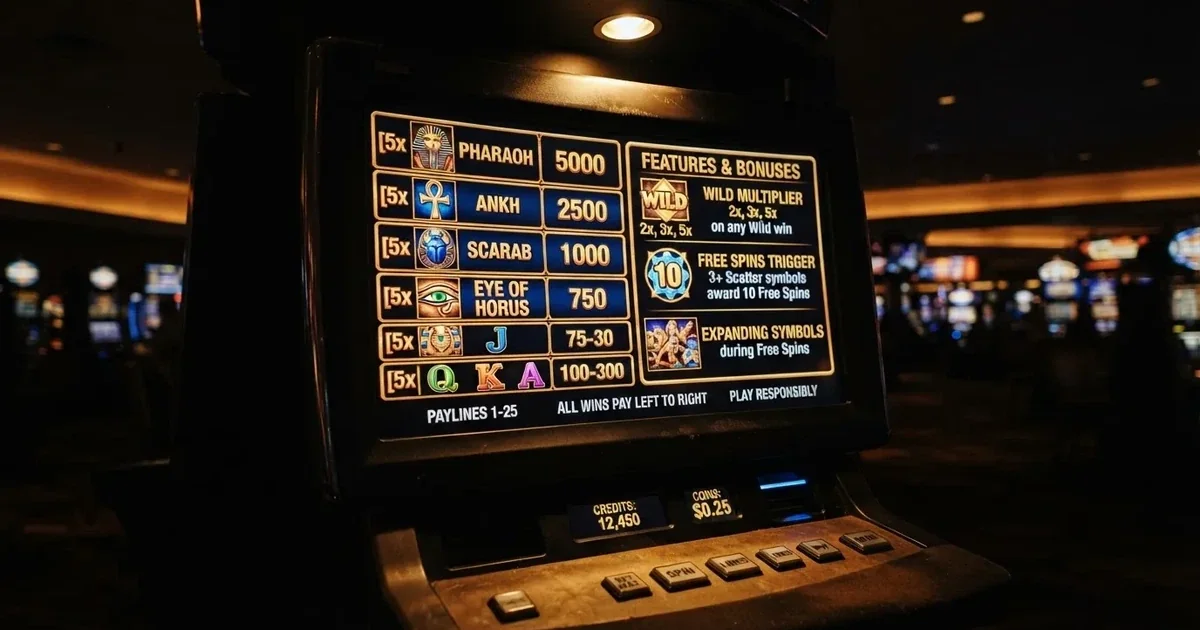
A punter searching for “Playson online casino Australia” gets a familiar result page: offshore brands promising Playson-branded slots, Bitcoin deposits, and a welcome package bolted on top. The pitch is engineered to look routine. The legal frame is the opposite. Playson itself is a real slot studio with a UK Gambling Commission licence and a long roster of regulated partners, but no Australian state or territory will license an online casino, and the Interactive Gambling Act 2001 makes offering one to a person in Australia an offence. The search results are not a marketplace; they are the exact thing the regulator has spent seven years trying to choke off.
This page works through what that means in practice: the studio, the law, the brands the ACMA has formally warned, the cost of the inducement on offer, and the responsible-gambling supports that apply. Playson is the headline, but the same prohibition covers every other studio that appears in those lobbies. Players who want to play Playson-built mechanics in a regulated setting have a short, well-defined set of options; players who use the offshore brands are betting on an unregulated product that may be blocked mid-session, with no Australian complaint route and no guarantee a withdrawal will be honoured.
- Playson the studio, and why the offshore pitch around it is misleading
- The legal frame: what the Interactive Gambling Act actually prohibits
- The cost of playing: inducements, payment friction, and what the regulator is doing about it
- Responsible gambling supports that apply — and the ones that do not
- The eleven brands the ACMA has formally warned over prohibited Playson-bearing services
- Why the marketing works — and why the structure makes the marketing inevitable
- The mobile picture — what changes on a phone
- The arithmetic the page is built around
- What an Australian reader actually does with this
- Frequently asked questions
Playson the studio, and why the offshore pitch around it is misleading
Playson Limited is a slot developer incorporated in Malta and licensed by the UK Gambling Commission as both a remote casino operator (since 14 April 2016) and a remote gambling software supplier (since 1 July 2015). That is the company’s actual footprint. It supplies games to operators that hold their own licences in regulated markets; it does not run a consumer-facing casino, and it is not licensed to take bets from Australians. When an offshore site advertises “Playson games”, what is on offer is a hosting arrangement: the site has integrated Playson’s catalogue and is rebranding it under its own banner, without any Australian authorisation.

That distinction matters because the marketing copy at offshore brands treats “Playson” the way a department store treats a brand label — as a quality mark. The studio’s compliance record in the UK is real, but it does not transfer. A Playson slot hosted on a Curaçao-licensed site accepting Australian deposits is governed by that site’s terms, its dispute process, and whatever regulator the site has nominated. The studio’s UK file changes nothing about where the player’s money sits.
Australia’s regulatory model makes the point concrete. The Northern Territory Racing and Wagering Commission (NTRWC) regulates 52 of Australia’s online bookmakers, including Sportsbet, Bet365 and Ladbrokes, because wagering on racing and sport placed before the event is the only online gambling the IGA permits. That commission meets once a month in Darwin and has no full-time staff. Online casino games and online pokies — the entire Playson online product — are not in its remit, because they are not licensable. No state or territory will issue a licence for an online casino. The architecture is the prohibition, not the missing permission.
The practical upshot is that every brand named further down this page is on it because the ACMA has formally warned its operator for offering prohibited services to Australians. That is the regulatory ledger, and it is the only one that applies.
The legal frame: what the Interactive Gambling Act actually prohibits
The Interactive Gambling Act 2001, tightened by the Interactive Gambling Amendment Act 2017, makes it an offence to provide online casino games, online pokies or in-play betting to a person physically in Australia. The prohibition is on the provider, not the player, so individual Australians are not prosecuted for placing a bet on an offshore site. The site, its operator and any affiliate that markets it to an Australian customer are the targets of enforcement.
The ACMA investigates, issues formal warnings, and asks Australian internet service providers to block offending domains. By June 2026 the authority had asked ISPs to block 1,751 illegal gambling and affiliate marketing websites since the first blocking request in November 2019, and more than 230 unlicensed gambling services had left the Australian market entirely since enforcement was strengthened in 2017. The June 2026 round alone added 12 more sites: 7Signs, ChromaBet, Donbet, Duospin, Freshbet, Slots Gem, Jacks Club, Lucky Start, Pointsbetz, Spinrise, Vinyl Casino and Wildsino. The blocking request is administrative rather than judicial; once the ISP complies, the site simply stops loading for Australian connections. A balance sitting on the site at that point is, in most cases, unrecoverable.
The Interactive Gambling Amendment (Gambling Reform) Bill 2026 passed Parliament on 19 August 2026 and brings new advertising and inducement rules into force from 1 January 2027. On this page, the bill is law with a commencement date, not yet operational. The inducement measures that matter to the offshore brands — restrictions on bonus offers, sign-up credits, and “free spin” giveaways marketed to Australians — will tighten the squeeze on the brands named below, but only from the new year.
A further restriction that bites from 11 June 2024: credit cards, credit-related products and digital currency are banned as a payment method for any Australian-licensed online wagering service. The lawful deposit routes for a licensed bookmaker are debit card, bank transfer, PayID/Osko and BPAY. An operator that asks an Australian for a credit card number or a Bitcoin address is operating outside the IGA’s payment regime as well as its content regime, and the breach carries penalties up to A$247,500 for the operator.
The minimum age for any Australian-licensed wagering is 18. Offshore sites that accept Australian customers have no Australian age-verification requirement and no obligation to check. A reader using one is on a site whose own terms govern, not Australian consumer law.
The cost of playing: inducements, payment friction, and what the regulator is doing about it
H2 Gambling Capital’s 2025 report estimates that Australians lose about A$3.9 billion a year to illegal gambling sites, and that the share of gambling spend going through legal channels fell from 74% in 2021 to 64%. That gap is the inducement budget at work: offshore brands spend heavily on welcome packages, free-spin drops, and reload bonuses, and that spend is precisely the feature the regulator is trying to curtail. The Australian player’s bill for those offers is the loss rate on the games, plus the value of any winnings that never arrive because the operator refused a withdrawal.
The arithmetic is unsentimental. A welcome package typically credits bonus funds equal to one or two deposits, attaches a wagering multiple of 35× to 50× the bonus, and caps cashout at some small multiple of the deposit. None of that appears on the front page of the offer. Players who take the bonus and try to withdraw before clearing the wagering have the winnings voided; players who clear it find the cap kicks in long before the headline balance does. The “free” spin drop is similar: small stake, winnings paid as bonus funds, same clearing requirement. The offers are not free, and they are not designed to be cleared cheaply.
On payment friction, the offshore pitch around Playson leans heavily on Bitcoin and other cryptocurrencies: instant deposits, “no bank blocks”, anonymity. The IGA’s 2024 payment ban applies to Australian-licensed operators, not to offshore ones, so an offshore site is free to ask for crypto. The trade-off is that crypto deposits are not protected by Australian chargeback rules and are not covered by any Australian dispute body. If the operator refuses to release a withdrawal, the player’s only recourse is the site’s own complaints procedure, sitting in whatever jurisdiction the licence names — typically Curaçao, where enforcement against a non-paying operator is slow and uneven.
The speed pitch is the third leg of the marketing. Offshore sites routinely advertise “withdrawals in 24 hours” or “instant payouts”. That figure describes the processing time at the casino, not the time to the player’s bank. Crypto withdrawals can be fast; AUD withdrawals to an Australian bank typically bounce through an intermediate currency and a foreign bank, which is where the delay sits. A blocked site can refuse to release a withdrawal for any reason the site’s terms allow; a site whose Australian-facing domain has just been added to an ISP block list has every incentive to keep the balance on its side.
The blocking rate, with the date that anchors it
The arithmetic the page is built around: from the first ACMA blocking request in November 2019 to the June 2026 round, the authority has asked ISPs to block 1,751 illegal sites. Spread over the roughly 79 months between those two dates, that works out to an average of about 22 blocks per month, or roughly one Australian-facing gambling site blocked every 33 hours. The condition is the one that holds across the entire run: any given month’s number depends on how many investigations the ACMA closes, how many ISPs comply, and whether the regulator publishes a consolidated round or a series of individual blocks. June 2026 alone added 12. Some months add none.
The figure is a band rather than a single number because the blocking rate is not constant. Earlier years were slower as the ACMA built its enforcement pipeline; more recent years have been faster as the regime matured. The honest reading is “roughly 20 to 25 blocks per month across the life of the regime, with a single round occasionally accounting for a week’s worth”, which captures the central tendency without pretending the regulator runs to a metronome. The headline number — 1,751 sites blocked since November 2019 — is the figure that matters most, because it is the one the ACMA itself publishes and the one a player can verify against the regulator’s register.
Responsible gambling supports that apply — and the ones that do not
Australian-licensed wagering operators are connected to BetStop, the National Self-Exclusion Register, which has been live since August 2023. A player who registers with BetStop is excluded from every Australian-licensed online and phone wagering service for the period they nominate, and the operator is required to close the account and refund any balance. The register works because every licensed operator is bound by it. Offshore brands that accept Australian deposits are not connected to BetStop, do not honour its exclusions, and have no obligation to check whether a player has self-excluded. A player who registers with BetStop and then opens an offshore account has not excluded themselves from that offshore account at all.
The other support that does apply is the National Gambling Helpline on 1800 858 858, which is free, available 24/7, and reachable by chat through Gambling Help Online. The helpline is funded by the Australian government and operates independently of any operator. It is the right first call for a player who is concerned about their own gambling or someone else’s.
For Playson-specific titles, the licensed path is narrow. Playson supplies online casinos and aggregators in regulated markets, and its UK licence is current, but its games are not hosted by any Australian-licensed wagering operator. Land-based pubs and clubs in Australia run their own electronic gaming machines through state regulators — the New South Wales Liquor & Gaming Authority, the Victorian Commission for Gambling and Liquor Regulation, the Queensland Office of Liquor and Gaming Regulation and their equivalents in other jurisdictions. Those machines are not Playson products. A punter who wants to play a Playson-designed title in a regulated Australian setting has, in practice, no option; the closest equivalents are Aristocrat-built pokies in pubs and clubs, which Aristocrat designs under its own Australian licence and which sit under each state’s machine framework.
State-based self-exclusion schemes — the one run by the NSW Liquor & Gaming Authority, the Victorian exclusion scheme, and equivalents in other states — apply to the venue or the gaming area they cover, and they apply regardless of which manufacturer built the machine. They do not extend to offshore online play. A punter who has self-excluded from a NSW club can still, in the strict legal sense, sit at a laptop and play a Playson slot hosted on a Curaçao-licensed site. The legal right is there; the protection the player is most likely to need is not.
The eleven brands the ACMA has formally warned over prohibited Playson-bearing services
Each brand below is on the page because the ACMA itself has issued a formal warning to the operator under the Interactive Gambling Act 2001. No bonus terms are attached: the only sources for those terms were affiliate marketing pages, and no Australian reader should treat them as anything else. The licence displayed by each site is its offshore licence, and none of them changes the IGA’s prohibition. Where research had a specific source tying Playson (or its direct comparators) to the brand, that note is included; where the page has no verified data, the row simply does not include it.
| Brand | ACMA action and date | Operator named by the ACMA | Subject support |
|---|---|---|---|
| RocketPlay | March 2026; earlier May 2022 | Pulsup Ltd; earlier Dama N.V. | — |
| Level Up Casino | May 2022 | Dama N.V. | Listings (Wazdan catalogue references the brand) |
| Woo Casino | March 2025 | Dama N.V. | — |
| Spirit Casino | May 2025 | Dama N.V. | — |
| National Casino | July 2025 | Consolutetish S.R.L. | Listings (Betsoft, Pragmatic Play catalogue references) |
| Bizzo Casino | July 2025; earlier 2022 | Consolutetish S.R.L.; earlier TechSolutions Group | — |
| Ignition Casino | July 2025 | Bamboo Media | — |
| Instant Casino | February 2025 | EOD Code SRL | — |
| Jackbit | April 2026 | Ryker B.V. | — |
| Casino Intense | April 2025 | Sterplay Holding Ltd | Listings (1spin4win, Playson UK register, Wikipedia) |
| Sky Crown | September 2022 | Hollycorn N.V. | — |
The pattern across the table is that operators recur under different brand names. Dama N.V. accounts for three of the eleven rows — Level Up Casino, Woo Casino and Spirit Casino — and was first warned over its portfolio back in May 2022, with two further rounds in 2025. Consolutetish S.R.L. accounts for two — National Casino and Bizzo Casino — and Bizzo had already been warned under its earlier TechSolutions ownership in 2022. The same operator reorganising its brands is the most common shape in this register, and a player looking at one of these domains is typically looking at the same back office as several others on the list.
A separate, smaller point: where the table records “Listings” in the subject support column, that means third-party developer pages mention the brand alongside Playson in the same catalogue — not that the brand is Playson-owned or Playson-licensed, and not that Playson has any endorsement relationship with it. Level Up’s listing sits in Wazdan’s published partner roster; National Casino appears in Betsoft and Pragmatic Play partner pages; Casino Intense is mentioned across 1spin4win’s, Playson’s UK Gambling Commission file (as an integration partner) and the broader Wikipedia coverage of the casino industry. None of that converts to a Playson endorsement, and none of it converts to an Australian licence.
RocketPlay
The ACMA formally warned Pulsup Ltd over RocketPlay in March 2026; the same brand had already been named in the May 2022 warning to Dama N.V. that covered six brands. Rocketplay advertises Playson-built slots and accepts deposits through channels the IGA’s 2024 payment ban would forbid on an Australian-licensed site. The relevant fact for an Australian reader is the one in the table: the operator has been warned under the IGA for offering prohibited services, and the warning is dated within the last few months. There is no verified data tying Playson specifically to the RocketPlay site beyond its appearance in the Playson catalogue, and the brand should be read as one of a number of brands the ACMA has repeatedly had to address.
For an Australian reader, the question is not whether RocketPlay offers Playson games — it does — but whether the regulator has accepted that offering as lawful. It has not, and the most recent action is from this year. The risk profile for a player who opens an account here is the standard offshore one: Australian consumer law does not apply, BetStop does not apply, and the next blocking round may add the domain to an ISP block list with no notice to the player.
Level Up Casino
Dama N.V. was warned in May 2022 over a portfolio that included Level Up alongside Bambet, Dazard, Wild Tornado, Cobra Casino and Rocketplay. That was the round that named the operator group rather than a single brand; subsequent Dama N.V. rounds (Woo Casino in March 2025, Spirit Casino in May 2025) suggest the operator continued to add brands after the first warning. Level Up appears in Wazdan’s published partner listings, which is the verified subject-support note research carries; there is no separate Playson-specific endorsement on file.
The Level Up verdict, in terms a player can use, is that the brand sits on the original 2022 Dama N.V. warning and has not been re-warned in its own right since. That does not make it safer — the prohibition on offering online casino games to Australians has not been lifted — but it explains why a reader searching for it sees the older date rather than a recent one.
Woo Casino
Woo Casino triggered a fresh Dama N.V. round in March 2025, three years after the original 2022 warning. The gap is the most useful piece of context: the ACMA warned the operator group, the operator added Woo Casino to its portfolio, and the regulator came back specifically to name the new brand. There is no verified Playson-specific data for Woo Casino; the brand is on this page because the regulator has acted against it for offering prohibited services to Australians in the last 18 months.
For a reader, the Woo Casino picture is the one the 2025 warning describes: an offshore operator that the ACMA has had to address a second time, running the same kind of offering that triggered the first warning. The pattern is the test, and the pattern here is the ACMA coming back.
Spirit Casino
The May 2025 Dama N.V. round covered Spirit Casino in the same breath as Woo Casino, six months earlier. The two warnings sit together because the operator opened them in the same window and the regulator processed them in the same round. Spirit has no verified Playson-specific data on file beyond what the brand’s own marketing claims; the verified fact is the warning.
The Spirit Casino read is the same as the Woo Casino read, with the date shifted six months later. A reader who treats both as part of the same Dama N.V. portfolio is reading the regulator’s file correctly; the ACMA clearly does too.
National Casino
National Casino was named in the July 2025 warning to Consolutetish S.R.L., which also covered Bizzo Casino. The verified subject-support notes — Betsoft and Pragmatic Play catalogue references, plus a general Wikipedia mention — are third-party developer pages that list National Casino as a partner; they are not Playson endorsements. What National Casino carries on its own pages is the standard offshore pitch around Playson-built slots.
A reader weighing National Casino should treat the Consolutetish S.R.L. ownership as the relevant fact, because it is the operator the ACMA named in 2025 and the entity that any complaint would have to reach. National Casino’s own licence, displayed at the footer, sits in a non-Australian jurisdiction and changes none of the prohibitions above.
Bizzo Casino
Bizzo Casino has been warned twice. The earlier round, in 2022, was against TechSolutions (CY) Group Limited and TechSolutions Group N.V.; the July 2025 round was against Consolutetish S.R.L. — the operator that took over the brand in the interim. The 2022 warning was the more prominent of the two at the time, and Bizzo’s name still surfaces in the older ACMA files; the 2025 round is the one that names the current operator. There is no verified subject-support data on file for Bizzo specifically; the brand’s appearance on the page is regulator-driven, not provider-driven.
A reader’s verdict on Bizzo is the same shape as the National Casino verdict, with an extra data point: the brand has been warned under two different operators in three years. The brand has moved; the conduct has not changed; the ACMA has followed it across the transfer.
Ignition Casino
Ignition Casino triggered a July 2025 warning to Bamboo Media. Bamboo Media is the operator the ACMA named; Ignition is the consumer-facing brand that runs on its licence. There is no verified Playson-specific data for Ignition, and the brand is on the page because the regulator has acted against it for offering prohibited services to Australians this year.
The read for an Australian reader is straightforward: a fresh warning under a single-operator brand, with no verified provider-level endorsement tying it to Playson beyond what the site’s own marketing carries. The risk profile is the same as every other row in this table.
Instant Casino
The ACMA formally warned EOD Code SRL over Instant Casino in February 2025. Instant Casino’s pitch around Playson-branded slots is the standard offshore one; the verified fact is the regulator’s action. There is no third-party Playson endorsement on file for Instant Casino.
A reader’s verdict on Instant Casino is the same as the RocketPlay verdict, with the date shifted to early 2025 and the operator changed from Pulsup Ltd to EOD Code SRL. The shape of the offering — Playson catalogue, crypto deposits, welcome package — is the shape the regulator has been warning against.
Jackbit
The ACMA formally warned Ryker B.V. over Jackbit (and the CasinOK brand) in April 2026. Ryker B.V. is the operator; Jackbit is the consumer-facing brand that ran on its licence. There is no verified Playson-specific data on file for Jackbit. The brand is on this page because the regulator has acted against it for offering prohibited services to Australians within the last few months.
Jackbit’s verdict, in terms a reader can use, is the most recent one in the table: a fresh warning under a current operator, dated 2026. The offering has not changed since the warning was issued; the ACMA’s file on it has.
Casino Intense
Sterplay Holding Ltd was warned over Casino Intense in April 2025. Casino Intense carries more verified subject-support than most of the table — 1spin4win’s partner pages, the UK Gambling Commission’s Playson file (Casino Intense appears as an integration partner in the broader UK coverage of the casino industry) and Wikipedia all mention the brand alongside Playson. None of those references convert to a Playson endorsement; they are third-party catalogue entries. The verified regulator action is the April 2025 warning.
A reader’s read on Casino Intense is that it has more third-party mentions of Playson in its vicinity than most of the brands on this list, but the same regulator file. The mentions are not endorsements and the warning is the one that counts.
Sky Crown
Hollycorn N.V. was warned over Sky Crown (and the Blue Leo brand) in September 2022. The 2022 date is the oldest on the table, which means Sky Crown has sat on the ACMA’s file for longer than any other brand on this page. There is no verified Playson-specific data for Sky Crown beyond its appearance in the Playson catalogue. The relevant fact is the regulator’s action; the brand has not been re-warned in its own right since, which is the one piece of context the date provides.
A reader’s verdict on Sky Crown is that the regulator has not re-warned the brand since 2022, but the original warning has not been withdrawn either. The IGA’s prohibition is still in force, and the operator has not been authorised in the interim. The brand is older on this register than the others, and that is the only fact the date adds.
Why the marketing works — and why the structure makes the marketing inevitable
The brands above share four features that make the pitch look like a routine consumer choice. They display a Curaçao (or similarly offshore) licence at the footer, which a casual reader scans as a quality mark. They host the same catalogue of slot studios — Playson, Betsoft, Pragmatic Play, BGaming, Wazdan, 1spin4win — that a regulated European casino would host, which makes the lobby feel familiar. They take crypto deposits, which removes the bank-block friction that an Australian punter might encounter on a licensed bookmaker. They run a continuous welcome-and-reload bonus programme, which is the inducement the regulator’s 2026 reform bill will eventually restrict from January 2027.
Each of those features is designed to push the IGA’s prohibition out of the reader’s mind. The offshore licence is not equivalent to an Australian one; the catalogue is hosted, not endorsed; the crypto deposit route sits outside the IGA’s payment regime; and the bonus programme is the inducement the new bill is targeting. The page reads as ordinary because the marketing has been engineered to feel ordinary, and the engineering is the most consistent feature of the register above.
What the marketing does not surface, because the marketing has no reason to surface it, is what happens when a player tries to withdraw. The site’s terms typically require identity documents before a first withdrawal — passport, utility bill, sometimes a selfie. The verification is the operator’s protection against bonus abuse; it is also the operator’s protection against a chargeback. A player who has deposited in Bitcoin, won a balance, and now wants to withdraw to a bank account will, in many cases, find the verification wall is where the process stalls. The site’s complaints procedure is internal. The licence jurisdiction is somewhere offshore. The IGA’s prohibitions do not give the player any extra Australian leverage, because the prohibition is on the operator, not on the player’s recourse.
The mobile picture — what changes on a phone
Playson builds its games in HTML5, which is the standard that lets a slot run on a phone browser without a separate download. The mobile pitch at offshore brands is therefore the same as the desktop pitch, with a smaller screen: the lobby loads, the game opens full screen, the spin button lands under the thumb. Where a licensed Australian bookmaker offers a native app, an offshore Playson casino typically does not, because apps that route Australians to prohibited services are themselves prohibited under the IGA’s hosting and supply rules. The site lives in the mobile browser.
The practical consequence is that “best mobile Playson casino” is a phrase that compares like with unlike: the Playson HTML5 build is the same on every host, so the difference between mobile brands is the host’s wrapper, not the games. The host’s wrapper is the part that takes deposits, processes withdrawals, and runs the welcome package — and that part is what the ACMA’s enforcement targets. A punter choosing between mobile offshore Playson sites is choosing between different warning histories, not different games.
The arithmetic the page is built around
The headline calculation on this page is the blocking rate, run over the life of the ACMA’s blocking regime. The inputs are the published totals — 1,751 sites blocked since November 2019, the most recent consolidated round dated 26 June 2026 — and the date that anchors the start of the series. The result, as a band, is “roughly 20 to 25 blocks per month across the life of the regime, with a single round occasionally accounting for a week’s worth”. The condition is the one that holds across the entire run: any given month’s number depends on how many investigations the ACMA closes, how many ISPs comply, and whether the regulator publishes a consolidated round or a series of individual blocks. June 2026 alone added 12.
The calculation is a statistical estimate, not a forecast. The ACMA does not publish a schedule, and the band is read off the historical series rather than modelled forward. What the band does is set the pace: an Australian-facing gambling site is taken offline by the regulator roughly once a day and a half, on average, over the seven-year life of the regime. That is the pace at which the offshore pitch ages out.
What an Australian reader actually does with this
The shortest version of the page is the one the regulator has been publishing since 2017: online casino games and online pokies cannot be licensed in Australia, and any site offering them to a person in Australia is offering a prohibited service. The offshore pitch around Playson-built slots does not change that. The studio is real, the UK licence is current, and the catalogue is well-regarded in regulated markets; none of that authorises an Australian player to deposit with one of the brands above, and none of it gives the player any Australian protection if the deposit disappears.
For a reader who wants to play Playson-built mechanics in a regulated setting, there is no Australian option online. The licensed alternatives are land-based pokies in pubs and clubs, run under each state’s gaming authority, and wagering on racing and sport placed before the event through an Australian-licensed bookmaker. Those products are not Playson products. The closest analogue for a Playson slot on a regulated Australian platform does not exist.
For a reader who is concerned about their own gambling, the right first call is the National Gambling Helpline on 1800 858 858, free and 24/7, with chat at Gambling Help Online. For a reader who wants to exclude themselves from Australian-licensed online and phone wagering, BetStop is the register that applies, and it does not extend to offshore brands. For a reader who has an account at one of the brands above and wants to think about what the regulator’s enforcement means for them, the relevant fact is the one in the table: the operator has been warned under the Interactive Gambling Act 2001 for offering prohibited services, the warning is a matter of public record, and any further balance on the site is exposed to the next blocking round.
Frequently asked questions
Is Playson legally available to players in Australia?
No. Playson is a licensed slot studio in the UK, but Australian law prohibits the provision of online casino games and online pokies to people in Australia, so no Australian-licensed operator hosts Playson titles. Sites that advertise Playson slots to Australian visitors are doing so without Australian authorisation.
What kinds of games does Playson make?
Playson is a slot studio: its catalogue is video slots, primarily built in HTML5 for cross-device play. The company also holds a remote casino licence from the UK Gambling Commission, which covers the operational side of hosting its games on regulated partner sites.
Are Playson games offered at land-based venues in Australia?
Not under the Playson brand. Australian pubs and clubs run electronic gaming machines under state and territory regulators, and the manufacturers on those floors are different companies — Aristocrat is the most prominent Australian-owned one. A punter looking for a Playson-built title at a licensed Australian venue will not find one.
How can Australians check whether a Playson title is fair before ever considering play?
The relevant check is whether the host site itself is licensed to offer the game to an Australian player, because the fairness certification travels with the operator, not the studio. For any Australian-licensed wagering service, the licence number is on the operator’s Australian footer and is verifiable against the relevant state or territory register. For an offshore Playson casino, there is no Australian register to check against, and the offshore licence the site displays does not authorise Australian play.
Why do offshore sites keep advertising Playson games to Australian visitors?
Because the offer is profitable. Offshore operators accept deposits Australian banks block, run welcome packages the IGA’s 2024 payment and 2027 inducement rules forbid on Australian-licensed sites, and operate in jurisdictions where enforcement against a non-paying operator is slow. The Playson catalogue is the product; the inducement is the conversion tool. The ACMA’s enforcement — formal warnings, ISP blocks, exit from the Australian market — is the regulator’s answer to the same economics.
What should an Australian do if they see a Playson game promoted by an unlicensed site?
Treat the promotion as evidence of an offence under the Interactive Gambling Act 2001 and report it to the ACMA, which investigates and can direct ISPs to block the offending domain. Do not deposit on the basis of the offer. If the reader has an existing account with a balance they cannot withdraw, the only available complaint route is the site’s own procedure, sitting in whatever jurisdiction the site’s licence names; Australian consumer law does not apply.