
best offshore casinos for australian players in 2026: the law, the ACMA record, and the paths that actually exist
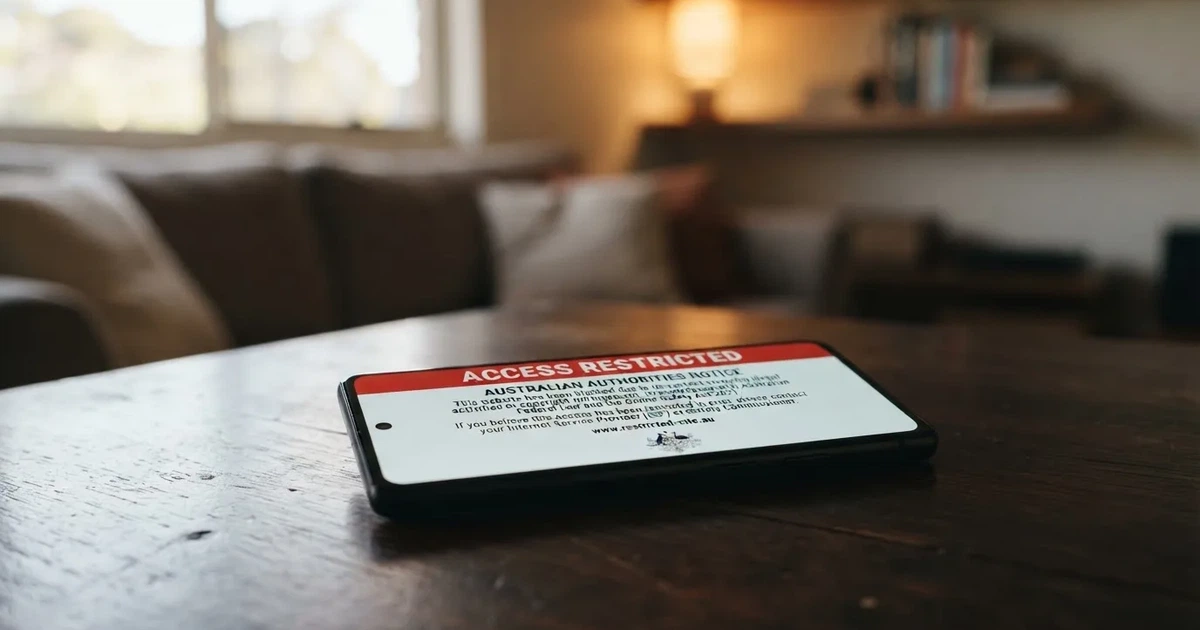
The Interactive Gambling Act 2001 prohibits online casino games for anyone in Australia. No state or territory licenses them, and no offshore site advertising a Curaçao or Anjouan number escapes that fact for a reader sitting in Sydney. The shortlist a person searches for does not exist as a lawful list — but the record of the ACMA’s enforcement against the brands people actually see does, and so does the rest of what an Australian can do. This page walks through that gap, the brands named in formal warnings, the player-protection tools that do and don’t reach offshore sites, and the path the law leaves open.
Current as of 29 October 2026 against the ACMA register and AUSTRAC and BetStop records.
- Player wellbeing: what an Australian can actually lean on
- A shortlist drawn from the ACMA’s own enforcement record
- What the IGA prohibits and how the ACMA enforces it
- Where an Australian reader can actually play
- The path the law leaves open when something goes wrong
- what offshore casinos for australian players means, in practice
- Frequently asked questions
Player wellbeing: what an Australian can actually lean on
The first thing to settle is what protection an Australian player has when something goes wrong, because the gap between offshore and Australian-licensed is widest here, and because it is the gap the rest of this page keeps returning to.

BetStop, the National Self-Exclusion Register, has been live since August 2023. It binds every Australian-licensed online and phone wagering service — the sportsbooks and the racing operators — and a person who registers is excluded from all of them at once, for a chosen period from three months up to a lifetime. The register’s reach is precise, and the boundary matters: an offshore casino is not connected to it. BetStop does not see an account at a Curaçao-licensed brand, and registering does nothing to stop one. The mechanism is jurisdictional: BetStop is enforced at the Australian-licensed operator end, and an offshore operator sits outside that perimeter.
The 1800 858 858 helpline is the part of the safety net that does reach everyone. It is the National Gambling Helpline — free, 24/7 — and runs alongside Gambling Help Online, which offers web chat and counselling. Neither line asks whether the caller’s account is licensed in Australia; the call is the same. Financial Counselling Australia and the state-based problem-gambling services sit beside it. These services treat the offshore-account problem on its own terms, including the harder questions — a withdrawal that never arrives, a balance locked behind a closed site, a dispute no Australian regulator has power over.
Bank-side tools reach further than BetStop into offshore territory, and they do it by sitting at the payment rail rather than the operator. Westpac’s gambling block works at card level: it refuses authorisation of transactions carrying the merchant category code ‘Betting/Casino Gambling’ on eligible personal credit and debit cards. ANZ’s gambling block, activated in the ANZ app, blocks gambling transactions made through a digital wallet such as Apple Pay on an eligible card, not just the physical card — though ANZ warns that not all gambling transactions will be blocked and some non-gambling transactions might be blocked in error. Commonwealth Bank offers a similar gambling lock on eligible cards through the CommBank app. Removing ANZ’s block requires a 48-hour cooling-off period.
These are not perfect instruments. The merchant category code is set by the merchant’s acquiring bank, not by the gambling site, and miscategorisation is real — some transactions slip through and some legitimate ones get refused. The point of the tools is the direction they push the player: closer to friction, further from the next deposit. They reach further than BetStop precisely because they do not depend on the operator’s cooperation.
The Information about where an Australian actually plays lawfully, when online casino is off the table, follows from these tools rather than from any offshore brand. A licensed pokies venue, a land-based casino, a licensed wagering service for racing and sport placed before the event — these are the lawful paths. Anything else is the territory this page is about.
A shortlist drawn from the ACMA’s own enforcement record
What follows is not a ranking. It is the ACMA’s own list, set out the way the regulator published it: eleven brands, each named in a formal warning under the Interactive Gambling Act 2001 for offering prohibited online casino games to people in Australia. The brands themselves are real, the dates are the ACMA’s, and the only ranking present is the one the regulator’s enforcement record already imposes — earlier warnings first, recent warnings after, repeat offenders marked by both. What no entry offers is a recommendation to play: every brand below has been told by the Australian regulator to stop offering these services to Australians, and a brand with an Australian warning does not become safe because a Curaçao or Anjouan licence number sits at the bottom of its homepage.

The pattern across the list is structural rather than incidental. Three of the eleven brands belong to Dama N.V., and the ACMA’s file on that operator runs from May 2022 through to May 2025 — a multi-brand, multi-year pattern. Two belong to a TechSolutions/Consolutetish sequence that started in 2022 and was still drawing warnings in July 2025. The rest are individual operators, each the subject of one warning, but the small number of holding companies accounts for a disproportionate share of the action.
| Brand | ACMA action and date | Operator named by the ACMA | Payment or exclusion signal the ACMA file carries |
|---|---|---|---|
| RocketPlay | Formal warning, March 2026 | Pulsup Ltd (RocketPlay); earlier Dama N.V., May 2022 | Industry listings note PayID and Osko acceptance, neither of which an Australian-licensed operator can offer for online casino games |
| Level Up Casino | Formal warning, May 2022 | Dama N.V. | Westpac’s gambling block applies to transactions registered under the casino MCC at card level |
| Woo Casino | Formal warning, March 2025 | Dama N.V. | — |
| Spirit Casino | Formal warning, May 2025 | Dama N.V. | — |
| National Casino | Formal warning, July 2025 | Consolutetish S.R.L. | Industry listings link National Casino to PayID and Osko rails; BetStop does not reach it |
| Bizzo Casino | Formal warning, July 2025; earlier TechSolutions, 2022 | Consolutetish S.R.L.; earlier TechSolutions (CY) Group Ltd and TechSolutions Group N.V. | Industry listings note PayID and Osko acceptance; BetStop does not reach it |
| Ignition Casino | Formal warning, July 2025 | Bamboo Media | — |
| Instant Casino | Formal warning, February 2025 | EOD Code SRL | Industry listings link the brand to ecoPayz and PayID rails; BetStop does not reach it |
| Jackbit | Formal warning, April 2026 | Ryker B.V. | — |
| Casino Intense | Formal warning, April 2025 | Sterplay Holding Ltd | Industry listings link the brand to AUSTRAC, BetStop and similar Australian safety references |
| Sky Crown | Formal warning, September 2022 | Hollycorn N.V. (Sky Crown and Blue Leo) | — |
Several brands appear in industry listings as accepting PayID and Osko — instant Australian bank-transfer rails. That is a marketing fact, not a licence fact. PayID shows the account-holder’s name before a transfer is sent, and Australian Payments Plus warns that being asked to transfer to a PayID on an illegal gambling site almost certainly means a scam site. The rails are Australian; the licence is not. The mismatch is the entry point for a reader who is being asked to send Australian dollars from an Australian bank to an entity the ACMA has told to stop.
The ACMA does not list every brand a reader will encounter. The eleven above are the ones the regulator has published formal warnings over during the period the file covers. A brand missing from the table is not necessarily lawful — only that the ACMA has not published a formal warning against it in this window. The published record is the regulator’s working list, not the universe of prohibited sites.
The spread of payment and exclusion signals in the right-hand column is the practical picture. Where an entry shows a dash, the ACMA file and the Australian listings the regulator’s record draws on carry no published signal on that subject for that brand; the gap is the regulator’s silence, not a clearance.
RocketPlay
RocketPlay was the subject of a formal warning in March 2026 — the most recent on this page, naming Pulsup Ltd as the operator of RocketPlay. Dama N.V. had already drawn a warning over the same brand in May 2022, the regulator’s file recording the brand under two operators across a four-year gap. Industry listings note that the brand accepts PayID and Osko, the Australian instant-transfer rails — a fact that places the operator inside the Australian payments system while sitting outside the Australian licence system. The gap between those two things is the entry point. The verdict for an Australian reader is plain: this is the most recently warned brand on the page, and the regulator’s record on it is not ambiguous.
Level Up Casino
Level Up Casino drew an ACMA warning in May 2022, naming Dama N.V. as the operator. The brand sits at the older end of the Dama N.V. cluster — six brands on the regulator’s file in that single round. Westpac’s gambling block, which refuses authorisation at the merchant category code for casinos on eligible cards, applies in principle to a Level Up transaction, and an Australian cardholder can switch it on. The brand is not BetStop-covered. The verdict: a four-year-old warning, no clearance from the regulator since, and the same answer as the table above — the operator’s licence is not Australian and the warning has not been withdrawn.
Woo Casino
Woo Casino drew a formal warning in March 2025, again naming Dama N.V. as the operator. The warning came as part of a second round against Dama N.V. after the May 2022 cluster. The published file carries no additional Australian payment or exclusion signal for the brand; the ACMA warning itself is the signal. This recent warning, tied to the same operator as the 2022 enforcement, confirms the regulator’s stance has not shifted.
Spirit Casino
Spirit Casino drew a formal warning in May 2025, naming Dama N.V. for a third time in this page’s window. The pattern is what carries weight: a single operator drawing warnings in 2022, March 2025 and May 2025 across six brands shows a regulatory file that has not closed. The verdict: the same reading as the other Dama N.V. brands, with the additional fact that this is the most recent of the operator’s warnings on this page.
National Casino
National Casino drew a formal warning in July 2025, naming Consolutetish S.R.L. as the operator. Industry listings note that the brand accepts PayID and Osko — Australian instant rails that resolve to a named account holder before the transfer is sent. Australian Payments Plus explicitly warns that a PayID transfer to an illegal gambling site almost certainly indicates a scam site; the brand accepts the same rail. The brand is not BetStop-covered. With this recent warning linked to local payment rails, the regulator’s assessment remains firmly in place.
Bizzo Casino
Bizzo Casino drew a formal warning in July 2025, naming Consolutetish S.R.L. as the operator. The brand was already the subject of a 2022 warning to TechSolutions (CY) Group Limited and TechSolutions Group N.V., so the regulator’s file on Bizzo runs across two operators and four years. The verdict: a repeated brand, two operator names, and the same answer — no Australian licence, no withdrawal of the warning.
Ignition Casino
Ignition Casino drew a formal warning in July 2025, naming Bamboo Media as the operator. The published file does not carry additional Australian payment or exclusion signal for the brand on this page’s sources. The verdict: a single, recent warning, no published clearance, the same reading as the other brands on the regulator’s list.
Instant Casino
Instant Casino drew a formal warning in February 2025, naming EOD Code SRL as the operator. Industry listings link the brand to ecoPayz and PayID rails — the latter being the Australian instant-transfer system that shows the receiving account holder’s name before the transfer is sent. AP+ warns that this combination, on an illegal gambling site, almost certainly indicates a scam. The verdict: the warning is the regulator’s view; the rail is the entry point.
Jackbit
Jackbit drew a formal warning in April 2026, naming Ryker B.V. as the operator. The published file carries no further Australian payment or exclusion signal for the brand. The verdict: the most recent warning on the page alongside RocketPlay, and the same reading — Australian-licensed online casino games do not exist, and the regulator’s view of this brand is on the record.
Casino Intense
Casino Intense drew a formal warning in April 2025, naming Sterplay Holding Ltd as the operator. Industry listings link the brand to AUSTRAC, BetStop and similar Australian safety references — signals that say nothing about a licence, but mark the brand as one the Australian safety system has noted. This recent warning places the brand formally alongside other prohibited services, confirming the regulator’s position.
Sky Crown
Sky Crown drew a formal warning in September 2022, naming Hollycorn N.V. as the operator across Sky Crown and Blue Leo. It is the oldest formal warning on the page — three and a half years old at this writing — and the published file carries no clearance or follow-up action. The verdict: the regulator has not withdrawn the warning, and the same reading applies. That the warning is older than the others does not weaken it; the IGA has not changed, and the ACMA’s position on Hollycorn N.V. has not been published as reversed.
What the IGA prohibits and how the ACMA enforces it
The Interactive Gambling Act 2001, strengthened by the Interactive Gambling Amendment Act 2017, makes it an offence to provide online casino games, online pokies or in-play betting to a person physically in Australia. No state or territory licenses them. What is licensed is wagering on races and sport placed before the event, lotteries and keno — in practice by the Northern Territory Racing and Wagering Commission, which regulates 52 of Australia’s online bookmakers including Sportsbet, Bet365 and Ladbrokes, and which runs without full-time staff and meets once a month in Darwin. The commission exists for tax reasons, not as a casino regulator; it does not license online casino games.
Enforcement runs through the ACMA. The ACMA investigates, issues formal warnings, and directs Australian internet service providers to block illegal sites at the network level. The individual player is not prosecuted — the IGA targets the provider — but the consequences for an offshore site flow in two directions. First, the site can be blocked with a balance still on it, and the Australian customer has no Australian complaints body and no recourse if a withdrawal is refused. Second, the ACMA’s blocking record is the working measurement of how the prohibition is applied.
The numbers are the clearest measure of how that prohibition lands. According to the ACMA as reported in June 2026, a total of 1,751 illegal gambling and affiliate marketing websites had been blocked since the first blocking request in November 2019, and more than 230 unlicensed gambling services had left the Australian market since enforcement was strengthened in 2017. In the round reported on 26 June 2026, the ACMA asked Australian ISPs to block 12 more illegal gambling websites: 7Signs, ChromaBet, Donbet, Duospin, Freshbet, Slots Gem, Jacks Club, Lucky Start, Pointsbetz, Spinrise, Vinyl Casino and Wildsino. The pace has not slowed — and the regulator publishes a fresh batch every few months, with each batch containing both new entrants and brands reappearing under different names.
A first blocking request was issued in November 2019. By June 2026, 1,751 sites had been blocked. Over the 79 months between those two points, that is an average of roughly 22 sites blocked per month. The arithmetic is not a precise prediction — individual months carry far more or far fewer blocks, and a single round can touch ten or twelve sites in one direction while the regulator’s working list continues to grow on the other. The figure belongs to the regulator’s own publication, and the band it sits in is the rate at which the ACMA has been asking Australian ISPs to block illegal gambling websites over the period it has been publishing them.
The other side of the gap is the financial one. H2 Gambling Capital’s 2025 report estimates that Australians lose about A$3.9 billion a year to illegal gambling sites, and that the share of gambling going through legal channels fell from 74% in 2021 to 64%. The legal share is shrinking as the illegal total grows. The regulator is blocking sites, and Australians are still sending money to the sites the regulator is blocking.
Why no Australian licence rescues the picture
A Curaçao or Anjouan licence number on an offshore casino’s footer does not change the Australian position. The IGA is enforced by the ACMA on the Australian end — at the network, the payment rail and the operator’s offer to Australian residents — not at the licensing end. A brand whose licence is held in Willemstad has not, by holding that licence, become lawful to offer online casino games to a person sitting in Melbourne. The Australian warning runs against the brand, not against the licence.
The warning list above shows what that looks like in practice. Dama N.V. holds a Curaçao licence. The ACMA has named the company in formal warnings in 2022, March 2025 and May 2025. Consolutetish S.R.L. holds an offshore licence. The ACMA named it in 2025 over brands that had already drawn warnings to a different operator in 2022. The licence is a fact about the operator; the warning is a fact about the offer to Australians. They are not in tension — the operator is licensed where it is licensed, and the offer to Australia is prohibited wherever it is licensed.
Credit, crypto and the payment rule for licensed wagering
The payment rule for Australian-licensed online wagering is its own line. Since 11 June 2024, the Interactive Gambling Act as amended in 2023 has banned credit cards and credit-related products for use with Australian-licensed online wagering services. Penalties reach A$247,500 for operators. The ban constrains linked digital wallets as well — Apple Pay or Google Pay funded by a credit card inherit the same prohibition, because the underlying credit is the regulated instrument.
Legal deposit routes for licensed wagering are debit card, bank transfer, PayID/Osko and BPAY. PayID is available at over 100 Australian financial institutions; Osko transfers between participating banks arrive in under a minute, 24/7 including weekends, whether addressed to a BSB and account number or to a PayID. PayID shows the name of the account holder before the transfer is sent. BPAY, the bill-payment service in online banking, has operated in Australia since 1997 and is available in over 150 banks and financial institutions, with the payer entering the Biller Code and the Customer Reference Number from the bill.
The payment rule applies to Australian-licensed wagering. An offshore site is not bound by it, and a brand accepting credit cards or crypto deposits is operating outside the Australian rules without being illegal by that fact alone — the IGA’s prohibition is on offering online casino games, not on the payment instrument. The point of the rule, for a reader weighing options, is what it tells them about the operator’s position: an Australian-licensed operator cannot accept credit; an offshore operator can and does. The payment rail is a signal, not the prohibition itself.
What the 2026 reform changes, and when
The Interactive Gambling Amendment (Gambling Reform) Bill 2026 passed Parliament on 19 August 2026. Its advertising and inducement measures commence on 1 January 2027. The bill is law with a commencement date — not yet in force on this page, and a 2026 reader cannot rely on its inducement provisions yet. What it promises is a tighter rule on the marketing that reaches Australians from offshore, with penalties for inducements aimed at Australian residents. The provisions on offer, however, do not change the underlying prohibition: the IGA’s offence of providing online casino games to a person in Australia stands.
Where an Australian reader can actually play
The lawful paths are the part of the answer that does not depend on offshore brand choice. They are the section a reader leaning toward a different conclusion needs first.
Licensed pokies venues are the in-person equivalent of online pokies, and they are licensed in every state and territory. A reader who wants the pokies experience can find it at a licensed club or hotel, with the consumer protections that come with an Australian licence and the staff who can act on a problem-gambling question in person. Land-based casinos operate in every state and territory, with the major ones in Sydney, Melbourne, Perth, Brisbane, Adelaide, Hobart, Darwin and Canberra. Each carries the relevant state or territory licence.
Licensed wagering — racing and sport before the event — is online through the 52 Northern Territory-licensed operators and the equivalent licences in other jurisdictions. The minimum age is 18 across Australia, both for land-based and online play. The licensed wagering market is the largest legitimate online gambling channel in Australia, and it is the part of the market that BetStop does reach: a person registered with BetStop is excluded from every Australian-licensed wagering service at once.
What the lawful market does not offer, anywhere, is online casino games. The closest in-person analogue is a land-based casino’s table games, and the online analogue of in-play sport betting is prohibited. The Australian licensed market has no lawful online casino product. A reader who has decided they want online casino games has decided to operate outside the licence system, and the rest of this page is the regulator’s record of how that decision tends to land.
The path the law leaves open when something goes wrong
A person who has played at an offshore site and had a withdrawal refused, an account closed with a balance still on it, or a dispute the operator will not answer has a narrower set of options than a person who stayed inside the Australian system. The dispute body the operator’s footer names — usually Curaçao or Anjouan — is not a complaints body in the Australian sense and has no enforcement power over a balance held in fiat currency outside its jurisdiction. ATO records may help establish what was sent and received, but they do not get the money back.
The first call is the National Gambling Helpline on 1800 858 858 — free, 24/7 — and the parallel Gambling Help Online chat service. The helpline treats the offshore-account case on its own terms, and the counsellors are familiar with the patterns the regulator’s enforcement record produces: blocked sites, balances lost in transitions, and the next-brand search that follows. Financial Counselling Australia is the next rung, with advisers who handle the financial aftermath — debt arrangements, banking relationships, the practical consequences of a closed offshore account on an Australian credit file.
BetStop is the right step for an Australian who wants the Australian-licensed wagering market closed to them, and registration is the right next move for someone whose problem has been offshore casino games rather than wagering. The bank-side gambling blocks at Westpac, ANZ and Commonwealth Bank are independent instruments that work whether or not the offshore brand cooperates, and they reach further than BetStop precisely because they sit at the payment rail. ANZ’s block, in particular, extends to transactions made through a digital wallet such as Apple Pay on an eligible card, and removal requires a 48-hour cooling-off period by design.
The pattern the regulator’s record shows is the one the helpline sees in practice: a reader who has had a bad experience at one offshore brand starts looking for the next one. The list above is what that search looks like when the regulator has caught up with it. The path the law leaves open is the licensed Australian market, BetStop, the bank-side blocks, the helpline, and a financial counsellor if the money side of it has gone wrong.
what offshore casinos for australian players means, in practice
The phrase a reader typed in describes a market the IGA prohibits and the ACMA is actively blocking. The “offshore” is real — the brands are licensed in Curaçao, Anjouan and similar jurisdictions — but the offshore-ness is the very fact that places them on the wrong side of the prohibition for an Australian reader. The “best” the search asks for is a ranking that no Australian-side review can honestly produce, because the regulator’s view of every brand on the regulator’s published list is that they have been told to stop.
What an Australian reader comparing options actually has is the regulator’s own record, set out the way the regulator publishes it, and the rest of the safety net that does reach offshore territory: the bank-side blocks, the helpline, BetStop for the licensed market, and the licensed pokies venues, land-based casinos and pre-event wagering operators that the Australian system does offer. The choice a reader is making is not between two offshore brands. It is between the offshore path and the licensed Australian one, and the licensed one carries the consumer protections the offshore one does not.
A reader who has already played offshore and wants the next step that is not the next brand has the helpline, the financial counsellor, BetStop and the bank blocks. Each of them is described in the section above.
Frequently asked questions
What makes a casino offshore rather than Australian-licensed?
An offshore casino is licensed outside Australia — typically Curaçao, Anjouan or a similar jurisdiction — and offers online casino games to people in Australia. An Australian-licensed operator is licensed in a state or territory (or, for wagering, the Northern Territory), and the IGA prohibits offshore operators from offering online casino games to anyone in Australia. The location of the licence is the dividing line, not the design of the website.
Does the ACMA block offshore casino websites for Australian users?
Yes. According to the ACMA as reported in June 2026, 1,751 illegal gambling and affiliate marketing websites had been blocked since the first blocking request in November 2019, and the regulator publishes fresh blocking rounds every few months. The 26 June 2026 round covered 12 sites in one direction. Blocking is the ACMA’s standing enforcement tool.
Is it legal for an offshore online casino to accept Australian players?
No. The Interactive Gambling Act 2001, as strengthened in 2017, makes it an offence to provide online casino games to a person in Australia, regardless of where the operator is licensed. The prohibition sits with the provider, not the player. The player is not prosecuted, but the site can be blocked and the consumer protections do not apply.
What enforcement action has the ACMA taken against offshore casino operators?
The ACMA has issued formal warnings to Dama N.V. (2022, March 2025, May 2025), Hollycorn N.V. (September 2022), EOD Code SRL (February 2025), Sterplay Holding Ltd (April 2025), Bamboo Media and Consolutetish S.R.L. (July 2025), Pulsup Ltd (March 2026), and Ryker B.V. (April 2026), among others. The warnings are published on the ACMA’s site. Blocking requests to ISPs are the parallel enforcement channel.
Why doesn’t BetStop cover offshore online casino sites?
BetStop is the National Self-Exclusion Register, binding Australian-licensed online and phone wagering services. It is enforced at the licensed operator end. An offshore casino is not Australian-licensed, sits outside the register’s perimeter, and is therefore not bound by an Australian’s BetStop registration. The bank-side gambling blocks reach further because they sit at the payment rail rather than the operator.
What should someone do instead of chasing a new offshore casino after a bad experience?
The next step is the National Gambling Helpline on 1800 858 858, free and 24/7, alongside Gambling Help Online’s chat service. BetStop closes the Australian-licensed wagering market if that is the relevant part. The bank-side gambling blocks at Westpac, ANZ and Commonwealth Bank reach further than BetStop because they sit at the payment rail. Financial Counselling Australia handles the financial aftermath. The licensed Australian market — pokies venues, land-based casinos, pre-event wagering — is the lawful path.