
Live Blackjack Online Casino Australia: What a Real-Dealer Table Really Costs in 2026
Current as of 29 October 2026 · verified against the Australian Communications and Media Authority’s formal warning list and the Interactive Gambling Act 2001.
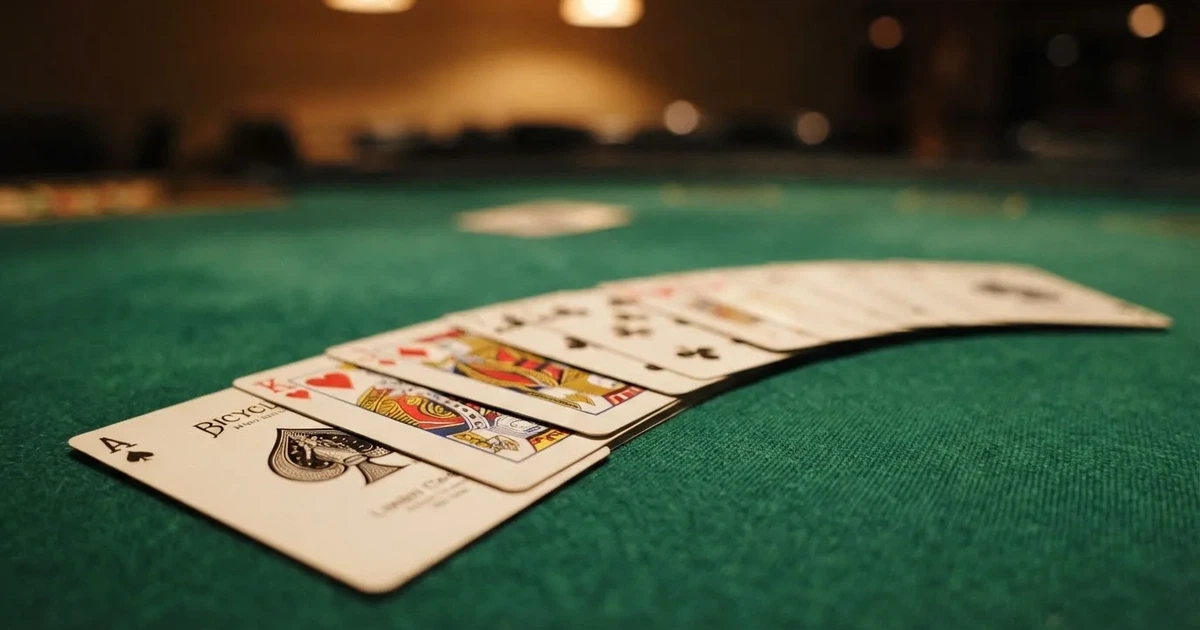
A live-dealer blackjack table looks like the easiest thing in gambling to evaluate. Cards on a screen, a real human shuffling them, a paytable the casino cannot quietly rewrite. What the screen does not show is that every offshore site streaming one to an Australian resident is breaking the same federal law, and that the rules of the game itself are stacked just enough to make the difference between a session that loses slowly and a session that loses fast. This page is about what a live blackjack table actually costs an Australian player — in time, in money, and in protection — and about why the ACMA keeps naming the same handful of operators in its formal warnings.
- The game in 60 seconds
- What a live dealer actually changes
- Paytables that pay less than they used to
- Variants worth knowing the edge on
- How this page is built
- The eleven brands the ACMA has named
- Why none of them, and no others, can lawfully accept an Australian bet
- How the ACMA actually enforces
- How fast the ACMA has been blocking
- What an Australian player actually loses when the site is blocked
- What player protection does and does not exist in Australia
- How a bonus offer on a blackjack table actually works
- How credit cards and crypto change the picture
- What the ACMA blocking tempo translates to in real time
- What the game itself costs the reader, in honest arithmetic
- What a session actually looks like in time
- What an Australian-friendly table never offers
- Where the federal frame stops and the state frame begins
- The taxes a recreational player does not pay
- How a reader who stops playing gets help
- Frequently asked questions
The game in 60 seconds
Blackjack is the simplest table game in the casino, and that simplicity is precisely why the maths is so unforgiving. A natural 21 pays 3:2 (occasionally 6:5 on stingier tables), the dealer must hit on 16 or below, and the player decides for themselves when to take, stand, double or split. The decisions sound like trivia until a player realises the house edge is built into every one of them.
Number cards count at face value, picture cards at ten and an ace at one or eleven. The starting two-card hand that totals 21 is called a natural, and beats anything the dealer can produce except another natural of the same value, in which case the hand pushes. With optimal strategy under liberal Las Vegas Strip rules — dealer stands on soft 17, double on any two cards, double after split, resplit aces, late surrender — the house edge sits at about 0.28%. Under more common Atlantic City rules it climbs to roughly 0.43%. Those numbers look tiny; they are tiny. They are also why the game moves so quickly at a live table, and why a bankroll that felt comfortable at the start of an evening can be gone in forty minutes.
What a live dealer actually changes
A computer-generated blackjack hand deals in under five seconds and costs whatever the player bets per hand. A live dealer table runs hands at roughly the pace of a real shoe: fifty to seventy hands an hour, with chat, with side bets, with the occasional reshuffle. The added time is not the only cost. Live tables carry higher minimum bets — A$5 to A$10 is common where a digital table accepts A$1 — and most live lobbies push side bets (Perfect Pairs, 21+3, Lucky Ladies) that paytable much more generously than they win. The house edge on a 21+3 side bet is around 2.78%, on Perfect Pairs around 4.10% depending on the rank match. None of that is hidden. It is just quieter than the main wager the player came to make.
A live table also introduces the social layer. The dealer will chat. Other players will chat. The shoe runs continuously, so a player who leaves the table mid-deal forfeits the next hand; the standard rule is that a player must wait for the reshuffle or the next shoe to leave cleanly. None of that changes the maths, but it changes how long a player stays at the table. The longer the stay, the closer the actual loss drifts toward the expected loss.
Paytables that pay less than they used to
The single largest shift in blackjack economics over the past twenty years has been the slow replacement of the 3:2 natural payout with the 6:5 version. A 6:5 payout looks like a tiny tweak — A$6 on a A$5 wager instead of A$7.50 — but the house edge it adds is roughly 1.4 percentage points, more than three times the entire edge the player was fighting on the main game. A live table that pays 6:5 on a natural is taking 2.7% or so of every dollar wagered before any strategy error is made. This is the rule a reader should check before sitting down, and the rule a marketing page will not volunteer.
A second, smaller shift is the rise of “free bet” and “pot of gold” style side wagers, where the casino funds the player’s double or split in exchange for a no-natural payout or a small side stake. They are not free. The Crown Pairs and Free Bet variants approved by the Victorian Gambling and Casino Control Commission in 2024 sit in the same cost band as the side bets they replaced.
Variants worth knowing the edge on
Live casino lobbies rarely offer one blackjack. They offer a small library, and the variants are not interchangeable. The major ones a reader will encounter, with the rough house edge under sensible play:
- Classic blackjack, dealt from six or eight decks, dealer stands on soft 17: about 0.40%.
- Spanish 21, played without 10s but with several player-favourable rule changes (late surrender, double after split, a bonus for 21 in five or more cards): around 0.40% as well, depending on the specific rule set.
- Double Exposure Blackjack, where both dealer cards are dealt face-up: roughly 0.69%, since the visibility is paid for with worse naturals and ties.
- Blackjack Switch, where the player plays two hands and can swap the top cards between them: about 0.58% with the standard push-on-22 rule.
- Super Fun 21, allowing up to four splits and a few liberal moves: around 0.94% depending on whether naturals still pay 3:2.
- Infinite Blackjack, the format most live lobbies run, where an unlimited number of players share a single hand but each makes their own decision: essentially the edge of classic blackjack, since the dealer’s rules and payouts are the same.
A player who likes the variant should still read the paytable. The 6:5 natural turns a 0.40% game into a 1.80% game, and no amount of liberal doubling compensates for that.
How this page is built
The ranked list of operators below is not a buyer’s guide. Every one of them is on it because the ACMA issued a formal warning over the brand for offering prohibited online casino games to Australians. The ranking follows the order in which the regulator acted; the angle is what each operator costs the reader who opens an account anyway. The legality section that follows it explains why none of them, and no other offshore live blackjack site, can lawfully accept a bet from inside Australia. The payments section treats credit cards and crypto, both banned as deposit routes at Australian-licensed wagering services, as the marker of an offshore site they actually are.
The eleven brands the ACMA has named
Eleven operators sit on this page, in the order the regulator first acted against them, because the only common thread across them is that they offered live-dealer blackjack to Australians. They are not ranked by quality. They are ranked by when the ACMA noticed.
| Brand | ACMA action and date | Operator named by the ACMA | Subject support |
|---|---|---|---|
| Sky Crown | Formal warning, September 2022 | Hollycorn N.V. | — |
| Level Up Casino | Formal warning, May 2022 | Dama N.V. | Bgaming listings |
| Bizzo Casino | Formal warning, July 2025 (earlier: TechSolutions, 2022) | Consolutetish S.R.L. | — |
| Woo Casino | Formal warning, March 2025 | Dama N.V. | — |
| Instant Casino | Formal warning, February 2025 | EOD Code SRL | — |
| Casino Intense | Formal warning, April 2025 | Sterplay Holding Ltd | ABC / ACMA / Crown Melbourne listings |
| Spirit Casino | Formal warning, May 2025 | Dama N.V. | — |
| Ignition Casino | Formal warning, July 2025 | Bamboo Media | — |
| National Casino | Formal warning, July 2025 | Consolutetish S.R.L. | Wikipedia listings |
| RocketPlay | Formal warning, March 2026 (earlier: Dama N.V., May 2022) | Pulsup Ltd | — |
| Jackbit | Formal warning, April 2026 | Ryker B.V. | — |
Five operators in the set carry no live blackjack offering that any third-party directory lists by name; a reader who reaches the lobby is taking the operator’s word for the table count. Two carry third-party listings only, which is not the same as a partnership, a certification or a guarantee the title is fair.
1. Sky Crown — the September 2022 warning
Sky Crown sits at the top of the list because Hollycorn N.V. received the earliest ACMA formal warning of the eleven. The published document names Sky Crown and Blue Leo together, both operated by the same corporate group. The factual record on the operator side is sparse: no live-dealer listings directory carries the brand, and the only written mention the regulator itself has published is the warning itself. The cost to a reader is the standard offshore cost — no Australian consumer protection, no BetStop enrolment, and no recourse if a withdrawal stalls. The Sky Crown case is also the clearest example on the page that a brand disappearing from a search result and a brand being shut down are two different things. The ACMA’s enforcement is a warning. The ISP blocking is a separate step that follows it.
2. Level Up Casino — Dama’s May 2022 warning
Dama N.V. received the May 2022 warning covering six brands, of which Level Up is one. The other five were Bambet, Dazard, Rocketplay, Wild Tornado and Cobra Casinos. Level Up is the one a directory lists for a Bgaming partnership, which tells the reader what software the lobby carries without confirming the live-dealer studios. The cost to a player is the same as Sky Crown, with the additional wrinkle that the operator has been warned more than once — Dama N.V. was warned again in March 2025 over Woo Casino and again in May 2025 over Spirit Casino, and RocketPlay was warned again in March 2026 under a different parent, Pulsup Ltd. Three warnings on one corporate family is the pattern, not the coincidence.
3. Bizzo Casino — the 2022 then 2025 warning
Bizzo is the rare operator on the page to have received two ACMA warnings, separated by three years. The first was a 2022 warning to TechSolutions (CY) Group Limited and TechSolutions Group N.V. The second was a July 2025 warning to Consolutetish S.R.L. Two different parent companies, same brand. The fact pattern is the usual one for offshore operators: the parent moves, the brand stays, the player is asked to take it on trust that the new parent is a different proposition. The takeaway for any Australian is clear — the regulator’s view of the brand remains unchanged, warning or no warning.
4. Woo Casino — Dama’s March 2025 warning
Woo Casino is the second Dama N.V. brand on the page, and the first to be warned in the post-2024 enforcement era. The March 2025 warning is its only ACMA action in the record. No third-party listings directory carries Woo Casino for a live-dealer offering, which is why the Subject support column reads as a dash. The cost is the standard offshore cost, with one local wrinkle: the ACMA’s enforcement tempo stepped up after 2024, and the March 2025 warning sits inside that faster cadence. A reader opening a Woo Casino account today is not opening it under the regulatory regime that produced the warning.
5. Instant Casino — EOD Code SRL’s February 2025 warning
Instant Casino’s February 2025 warning is the earliest 2025 action on the list, and the one that arrived with the regulator publishing the operator name in full. EOD Code SRL is a smaller corporate vehicle than Dama N.V. and the warning is its only published ACMA action. The brand itself carries no third-party listing for a live blackjack studio, which puts the burden of proof on the operator’s own lobby page. The cost to the reader is the absence-of-record cost — the brand is not in directories because the directories have not seen fit to list it, and the ACMA has seen fit to warn over it. Those are two separate facts, and they are both true.
6. Casino Intense — Sterplay’s April 2025 warning
Casino Intense is the only brand on the page where the listings column carries the most material — ABC News, the ACMA itself, and Crown Melbourne all turn up in a directory search for the brand. The ACMA’s April 2025 warning is its only published action. Sterplay Holding Ltd is a smaller operator, and Casino Intense is its only named brand on the page. The cost is the unusual one: a reader who actually checks the listings finds a paper trail. A reader who does not check the listings sees only the lobby. The paper trail does not make the brand lawful; it makes the brand legible, which is something else entirely.
7. Spirit Casino — Dama’s May 2025 warning
Spirit Casino is the third Dama N.V. brand on the page, warned in May 2025, two months after Woo Casino. The pattern is now well established for this corporate family: warning, brand change, warning, brand change, warning. Spirit Casino carries no third-party listing for a live dealer offering. The cost is the same as Woo Casino with the multiplier that the parent has now been warned three times. A reader who treats the third warning as a meaningful signal will not be the operator’s intended audience.
8. Ignition Casino — Bamboo Media’s July 2025 warning
Ignition Casino is one of two brands warned at in July 2025 — National Casino and Bizzo Casino were the other two, all under the same ACMA enforcement notice. The operator, Bamboo Media, appears only once in the warning record. Ignition carries no third-party listing for a live blackjack studio, which is significant because Ignition is, in its US-facing form, well known for live-dealer poker rather than live-dealer blackjack. The Australian-facing version is a different product under a similar name. The cost to the reader is the confusion cost: a familiar name does not mean a familiar lobby, and the ACMA’s warning was issued over what the Australian version of the brand offered.
9. National Casino — Consolutetish S.R.L.’s July 2025 warning
National Casino shares its July 2025 warning with Bizzo Casino and Ignition Casino, all in the same ACMA notice. Consolutetish S.R.L. is the operator named. National Casino carries Wikipedia listings rather than a software partnership listing, which means a reader can see what the lobby contains in general terms but cannot pin down the live-dealer studio. Whether or not a directory lists the brand is irrelevant, as the regulator does not distinguish between advertised games and prohibited ones.
10. RocketPlay — the two-warning brand
RocketPlay is the brand on the page with the cleanest paper trail of repeated regulatory action. The first warning, in May 2022, named Dama N.V. as the operator. The second, in March 2026, named Pulsup Ltd. Two parents, two warnings, one brand, four years apart. The 2026 warning is recent enough that the brand is the freshest on the page. The cost to a reader is the most visible cost of all: the regulator’s view has not changed, the brand has changed parents, and the warning is current.
11. Jackbit — Ryker B.V.’s April 2026 warning
Jackbit is the most recent brand on the page, warned in April 2026 under Ryker B.V. The brand positions itself around crypto deposits, which is itself a signal of the offshore nature of the offering — Australian-licensed wagering services cannot accept digital currency since the June 2024 payment rules. Jackbit carries no third-party listing for a live-dealer offering. The cost to the reader is the dual cost: an offshore operator plus a banned payment route, two markers of a site operating outside Australian rules rather than one.
Why none of them, and no others, can lawfully accept an Australian bet
The Interactive Gambling Act 2001, tightened by the Interactive Gambling Amendment Act 2017, makes it an offence to provide online casino-style games — including live-dealer blackjack, online pokies and in-play betting — to a person physically in Australia. The offence is on the provider, not the player: an individual punter is not prosecuted for placing a bet, but the offshore operator is. Penalties run to A$220,000 per day for individuals and A$1.1 million per day for corporations, which is the lever the regulator pulls. No state or territory in Australia licenses online casino games. The product does not exist as a licensable activity.
What is licensable is wagering on races and sport placed before the event, lotteries and keno. In practice most online bookmakers — Sportsbet, Bet365, Ladbrokes among them — are licensed by the Northern Territory Racing and Wagering Commission for tax reasons. The commission has no full-time staff and meets once a month in Darwin, which is a fact in its own right about how thin the regulatory layer is over the products Australia does license.
The Interactive Gambling Amendment (Gambling Reform) Bill 2026 passed Parliament on 19 August 2026. Its advertising and inducement measures commence on 1 January 2027. On a 2026 page that is law with a start date, not yet in force. The current enforcement frame is still the 2017 amendment.
How the ACMA actually enforces
The ACMA’s tools, in order of severity, are: investigation, formal warning, referral to the police or the Commonwealth Director of Public Prosecutions, and a request to Australian internet service providers to block the offending site. As of the regulator’s June 2026 update, 1,751 illegal gambling and affiliate marketing websites had been blocked since the first blocking request in November 2019, and more than 230 unlicensed services had left the Australian market since the 2017 strengthening.
The June 2026 round alone added twelve more sites to the blocking list: 7Signs, ChromaBet, Donbet, Duospin, Freshbet, Slots Gem, Jacks Club, Lucky Start, Pointsbetz, Spinrise, Vinyl Casino and Wildsino. None of the eleven brands on this page are on that particular round, but all of them have been the subject of formal warnings — the step that precedes a blocking request in most cases.
How fast the ACMA has been blocking
The arithmetic is a guide to the tempo of enforcement, and the conclusion is a band rather than a single number because the regulator’s pace has changed.
Between November 2019 and June 2026 — roughly six and a half years — the ACMA requested the blocking of 1,751 illegal gambling and affiliate websites. That works out to roughly 269 blocked sites a year, or about 22 a month, sustained across the period. The annualised rate understates the recent tempo: the 2017 amendment strengthened enforcement, and the 2024 payment rules added a credit-card and crypto lever, so the cadence has stepped up. Across the most recent twelve-month window measured against the June 2026 figure, the implied rate is closer to 300+ blocked sites a year. The reader can take 22 a month as the floor of what the regulator is doing, and 25 to 27 a month as the band the regulator is doing right now.
What an Australian player actually loses when the site is blocked
The reader-side cost is the one most guides skip. An Australian who has deposited and won at an offshore live blackjack table, and then watches the ACMA block the site, has no path to a payout through the regulator. The Interactive Gambling Act targets the provider, not the player, which means the regulator is not in the business of refunding balances. BetStop, the National Self-Exclusion Register, does not bind an offshore operator. There is no Australian complaints body that takes a dispute with an unlicensed site. The balance, in most cases, sits on the operator’s books and the player waits on the operator’s good faith.
This is the asymmetry at the heart of the page. An offshore site will accept a deposit from an Australian in under a minute. It will not necessarily return a withdrawal to the same Australian on the same timeline. The minimum the reader should understand is that the operator is the only path to the money once it is on the site.
What player protection does and does not exist in Australia
BetStop, the National Self-Exclusion Register, has been live since August 2023. It binds Australian-licensed online and phone wagering services. An offshore live blackjack site is not licensed and is not connected to it. A player who enrols with BetStop and then opens an account with one of the operators on this list has not excluded themselves from that operator.
The National Gambling Helpline is 1800 858 858, free, 24 hours. The chat service at Gambling Help Online runs alongside it. These are not offshore sites. They are the path a reader who wants to stop playing can actually walk down.
How a bonus offer on a blackjack table actually works
Every live blackjack lobby the reader finds at one of these operators runs some kind of welcome offer. The marketing line is usually generous: “200% match up to $500”, “100 free spins”, “live casino cashback”. The mechanics underneath are the part the marketing page does not volunteer. Three things matter.
First, table game contributions to wagering requirements are usually smaller than slot contributions. A standard welcome package might credit 100% of slot wagering toward the bonus playthrough, but 5% to 10% of blackjack wagering. A A$1,000 bonus with a 40x wagering requirement on slots asks the player to run A$40,000 through the games. The same bonus with blackjack at 10% contribution asks the player to run A$400,000 through the live tables to clear the same amount. The maths is the difference between a reasonable afternoon and an impossible week.
Second, most welcome packages exclude live dealer games entirely from the wagering count. They will credit slot play and sometimes scratch-card or keno play, and the fine print will name live casino games as a separate category that does not count. A reader who deposits with the welcome offer in mind, sits down at a live blackjack table, and plays for two hours, has usually contributed zero to the wagering requirement.
Third, “no deposit” offers on live blackjack almost always carry a maximum cashout cap, typically five to ten times the bonus value, and a separate maximum bet per hand while the bonus is active. The cap is the clause that decides what a no-deposit bonus is actually worth. A A$20 no-deposit bonus with a 5x cashout cap is worth A$100 at the outside, before wagering, and usually less after a losing streak.
The reader-side lesson is the same across every offer on every operator on this page: read the contribution table and the game exclusion list before depositing. The headline is never the offer.
How credit cards and crypto change the picture
Since 11 June 2024, Australian-licensed wagering services have been banned from accepting credit cards, credit-related products and digital currency as payment. Penalties for operators who do run to A$247,500. The legal deposit routes are debit card, bank transfer, PayID/Osko and BPAY. A site asking an Australian for a credit card or a crypto deposit is not running under an Australian licence. It is, by definition, offshore. Every operator on this page accepts both credit cards and crypto. Every operator on this page is therefore, by definition, offshore.
PayID, the New Payments Platform overlay that connects a payer’s account to a mobile number or ABN, is a fast legal deposit route for Australian-licensed wagering. It does not change the legal status of an offshore live blackjack site. The deposit arrives at the Australian bank, the bank transfers to the operator, the operator credits the account. The transaction is normal. The activity it funds is not.
What the ACMA blocking tempo translates to in real time
A reader who opens an account with one of these operators today should expect the operator to be on a blocking list within twelve to eighteen months if it is not on one already. The June 2026 round added twelve sites. The 2025 calendar added formal warnings to EOD Code SRL, Sterplay Holding Ltd, Bamboo Media, Consolutetish S.R.L. and a second round to Dama N.V. The 2026 calendar added warnings to Pulsup Ltd and Ryker B.V. The pattern is clear: the ACMA is no longer working through a backlog, it is running a steady cadence.
What the game itself costs the reader, in honest arithmetic
The expected loss on a live blackjack hand is small per hand and accumulates fast per hour. The maths is straightforward: at a 0.43% house edge, a A$10 hand returns A$9.957 on average, which is a four-cent loss. Fifty hands an hour is A$2.15 of expected loss per hour. Sixty hands an hour at a busier table is A$2.58. A two-hour session at A$10 per hand is somewhere between A$4.30 and A$5.16 in expected loss. A reader who plays at A$25 per hand for the same two hours is looking at A$10.75 to A$12.90 of expected loss.
Side bets change the calculation. A A$5 Perfect Pairs side bet on every hand for two hours runs A$500 through the proposition at roughly a 4.10% house edge, which is an expected A$20.50 of additional loss. A A$5 21+3 side bet over the same session runs another A$500 at about 2.78%, which is A$13.90 more. Both side bets combined, played every hand for two hours, cost the player around A$34 of expected loss on top of the main game. None of this is a fortune. It is the slow bleed that distinguishes a live blackjack table from a slots session where the volatility is higher but the time at the table is shorter.
The 6:5 natural is the rule that breaks this arithmetic. A live table paying 6:5 on a natural adds roughly 1.4 percentage points to the house edge, taking a 0.43% game to about 1.83%. On the same A$10 hand, sixty hands an hour, two hours, the expected loss climbs from A$5.16 to A$21.96. On a A$25 hand the expected loss climbs from A$12.90 to A$54.90. The 6:5 payout is the single most expensive rule on the table, and a reader who cares about cost will leave the lobby when they see it.
What a session actually looks like in time
A live blackjack hand takes roughly forty-five seconds with chat and side bets, longer if the shoe is being reshuffled, shorter at a quiet table. The shoe runs continuously, so a player who leaves mid-deal forfeits the next hand. Two hours is a short session. Three hours is an evening. Four hours is the point at which the cumulative expected loss, even at a 0.43% edge on a A$10 main bet, passes the A$10 mark. A reader who sits down with a A$200 bankroll is, at the standard rule set, looking at losing roughly A$2 to A$3 an hour to expected loss and considerably more if side bets are involved. The session ends when the bankroll does.
What an Australian-friendly table never offers
The eleven brands on this list all claim a licence somewhere — Curaçao is the most common, Anjouan and the Philippines turn up as well. The licence claim is not the issue. The issue is that none of them is licensed by an Australian state or territory, because no Australian state or territory issues an online casino licence. The site can display whatever regulator’s logo it likes. The product is still prohibited.
The Australian-facing brands that take bets from Australians are sportsbooks licensed in the Northern Territory. They offer live betting on sporting events. They do not offer live dealer blackjack. There is no Australian-licensed live blackjack site, and there will not be one unless the Interactive Gambling Amendment (Gambling Reform) Bill 2026 or a successor bill reverses the position, which the current text does not do.
Where the federal frame stops and the state frame begins
Crown Melbourne’s blackjack and baccarat tables are approved by the Victorian Gambling and Casino Control Commission, which replaced the Victorian Commission for Gambling and Liquor Regulation on 1 July 2022. Under section 66 of the NSW Casino Control Act 1992, a casino operator must not permit a game such as baccarat to be played unless the regulator has approved it. The state-level approvals sit over the physical casino floor. They do not extend to an overseas stream on a phone. Crown’s online offering is a sportsbook and a racing product, licensed in the Northern Territory, not a live-dealer casino product.
The taxes a recreational player does not pay
Gambling winnings of a recreational Australian player are not assessable income under section 6-5 of the Income Tax Assessment Act 1997, and losses are not deductible. The rule changes for a person who carries on a business of gambling, which a casual punter is not. A reader who hits a long run on a live blackjack table pays no tax on the win. A reader who treats the activity as a profession owes the ATO a conversation.
How a reader who stops playing gets help
The National Gambling Helpline is 1800 858 858, free, 24 hours a day. Gambling Help Online runs a live chat at the same number’s web address. BetStop, the National Self-Exclusion Register, excludes a person from Australian-licensed wagering services for a chosen period. It does not bind an offshore operator, but it does stop the licensed layer from accepting a deposit or a bet from a person who has self-excluded.
Frequently asked questions
Is it legal to play live blackjack for real money at an online casino in Australia?
No. The Interactive Gambling Act 2001, strengthened in 2017, makes it an offence to provide online casino-style games, including live-dealer blackjack, to a person in Australia. No state or territory licenses the product. The offence is on the provider, not the player, but the player has no Australian consumer protection if a withdrawal stalls.
How does a live-dealer blackjack table differ from a computer-generated version?
A live table is dealt by a human dealer from a real shoe, streamed over video, with chat and side bets and higher minimum bets. A computer-generated table deals in under five seconds from a random number generator. The maths is the same. The pace is not. A live table runs fifty to seventy hands an hour. A digital table runs hundreds.
What dealer rule most affects the house edge in blackjack?
The payout on a natural. The standard 3:2 payout keeps the house edge at roughly 0.40% under common rule sets. The 6:5 payout adds about 1.4 percentage points to the edge, taking a 0.40% game to nearly 1.80%. The second most important rule is whether the dealer hits or stands on a soft 17. Standing on soft 17 is the player-friendly version.
Does a blackjack bonus offer usually count table game bets the same as slot bets?
No. Most welcome offers credit slot wagering at 100% toward the playthrough but credit blackjack and live-dealer wagering at 5% to 10%, and some exclude live casino games entirely. A reader who deposits to clear a bonus at the live tables should read the contribution table and the game exclusion list before doing so.
Is a live blackjack app a separate product from a site’s browser-based table?
Usually not. Most operators run the same Evolution, Pragmatic Play Live or Playtech lobby through a mobile wrapper that mirrors the desktop product. The games, the rules, the paytables and the side bets are identical. The difference is the screen size and the speed of the player’s connection. A reader who prefers the app is reading the same maths as the player who prefers the browser.
Can a live blackjack hand be joined partway through a dealer’s shoe?
Most live lobbies require the player to wait for the next reshuffle or the start of the next shoe. A few allow mid-shoe entry but mark the hand as a “decision in progress” and the player joins at the next hand. The continuous shoe is the reason an Australian who intends to play for a defined bankroll should set the limit before joining, not after.