
Best online casino payment methods for Aussies in 2026
 Available in US
Data current as of 23 September 2026 and checked against the ACMA’s published formal warnings register.
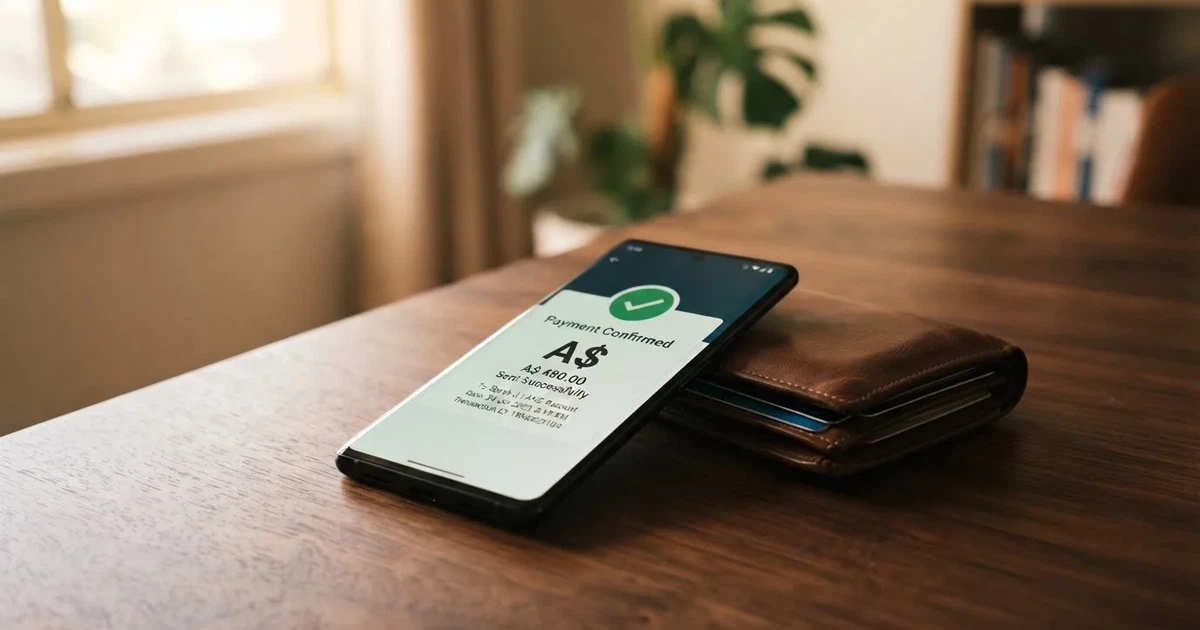
The phrase “best online casino payment methods” sits in a strange spot in Australia. The product it points at — online casino games, online pokies, the spinning reels and the dealer tables — is not a thing Australians can be lawfully sold. The Interactive Gambling Act 2001 says so, the Australian Communications and Media Authority enforces it, and no state or territory issues a licence for it. So the question “which deposit method is fastest?” is asked inside a market that the regulator has spent seven years actively shrinking. The right way to read the page below is: what payment rails move money into and out of Australian bank accounts today, how each rail behaves when gambling is the merchant, and what changes once a merchant is an offshore casino the ACMA has already named.
The honest list of payment methods is short and well-known — debit cards, PayID and Osko instant transfers, BPAY, Apple Pay and Google Pay on top of an eligible debit card, and on the offshore side, a handful of cryptocurrency deposits that no Australian bank will be on the other end of. What the list is missing is more interesting than what it contains. There is no Australian-licensed online casino to deposit into. Every brand a reader can find through a search engine is offshore, and every offshore brand the ACMA has bothered to write a formal warning about is named below, in the order the regulator itself named them.
- How Australian online casino payments actually work
- What the Interactive Gambling Act 2001 actually prohibits
- Responsible gambling tools that actually reach a player
- Cryptocurrency deposits and the anonymity question
- Speed, settlement and the practical differences between rails
- The blocking rate: how fast the ACMA is shrinking the visible market
- Eleven brands the ACMA has formally warned
- What an Australian punter is actually choosing between
- Frequently asked questions
How Australian online casino payments actually work
Online casino payments for an Australian-based punter run through three layers, and they behave differently at each one.

The first layer is the bank. The Reserve Bank’s payments rails in Australia — eftpos, the New Payments Platform with Osko and PayID, BPAY, plus Visa and Mastercard debit — move money between accounts held at Australian banks. These rails work the way they work for everyone else, but two of the four majors now attach a gambling block at card or wallet level. ANZ lets a customer turn on a gambling block in the ANZ app, and the block also stops gambling transactions made through Apple Pay or Google Pay on an eligible ANZ card. Westpac runs a similar block that refuses authorisation on transactions tagged with the merchant category code for betting and casino gambling. Commonwealth Bank offers a gambling lock on eligible cards through the CommBank app, with the same caveat — most gambling transactions are blocked, not all. None of these blocks are aimed at legal wagering on sport or races through a licensed Australian bookmaker, which sits outside the scope of the merchant code the blocks key off.
The second layer is the wallet or scheme sitting on top of the bank. Apple Pay, Google Pay and Samsung Pay are not themselves bank accounts. They tokenise an underlying card, and a transaction settles through the card network underneath. By the end of 2025, those three wallets together accounted for around 45% of all card payments in Australia by number. Apple does not charge consumers anything for using Apple Pay, and Apple Pay does not add a fee on top of what the merchant pays its acquirer — any surcharge is the merchant’s own decision. Transaction limits and PIN behaviour are set by the issuing bank and by the merchant, not by Apple.
The third layer is the offshore casino. This is where the picture breaks. An Australian depositing with an offshore brand is sending money from an Australian bank account, through a normal Australian rail, into an account the offshore brand controls. The deposit will go through; what is less certain is whether it will come back. There is no Australian complaints body an aggrieved punter can write to. There is no local regulator to compel a withdrawal. The bank block on the way in can refuse a deposit cleanly, but a balance already on the site can be stranded the day the ACMA asks the ISPs to block the domain. The payment method the punter picked has very little to do with that risk — the brand does.
A note on credit. Since 11 June 2024, Australian-licensed online wagering services cannot accept payment by credit card or any other credit-related product, and the restriction extends to digital wallets linked to a credit account. The ban was made under amendments to the Interactive Gambling Act that took effect on that date, with penalties for operators up to A$247,500. An offshore casino advertising that it takes “Visa and Mastercard” is asking for a credit card deposit that a licensed Australian bookmaker is forbidden to take. That is one of the cleaner tells for whether the brand sits inside or outside the Australian rules.
What the Interactive Gambling Act 2001 actually prohibits
The starting point is short. The Interactive Gambling Act 2001, as tightened by the Interactive Gambling Amendment Act 2017, makes it an offence to provide online casino games, online pokies or in-play betting to a person physically in Australia. The prohibited interactive gambling service is defined narrowly: it covers the games of chance a casino would offer — slots, table games, live dealer — and in-play sports betting, which is a wager on an event after it has started. What is licensable is wagering on a sporting event or a race placed before the event, lotteries and keno. In practice, online wagering on sport and racing is licensed by the Northern Territory Racing and Wagering Commission, which regulates 52 of Australia’s online bookmakers including Sportsbet, Bet365 and Ladbrokes. The commission has no full-time staff and meets once a month in Darwin, a fact that recurs in ABC reporting on the body.

The Act targets the provider, not the punter. Australians who play at an offshore casino are not prosecuted; the operator is the one the ACMA writes to. The Act does, however, give the ACMA three enforcement tools that bite: formal warnings, civil penalty proceedings, and the power to ask Australian internet service providers to block illegal sites at the DNS level. As of June 2026, the ACMA reports that 1,751 illegal gambling and affiliate marketing websites have been blocked since the first blocking request in November 2019, and that more than 230 unlicensed services have left the Australian market since 2017. In a single round reported that month, the regulator asked ISPs to block 12 more sites: 7Signs, ChromaBet, Donbet, Duospin, Freshbet, Slots Gem, Jacks Club, Lucky Start, Pointsbetz.com, Spinrise, Vinyl Casino and Wildsino.
The cost side is documented as well. H2 Gambling Capital’s 2025 report puts Australian losses to illegal gambling sites at around A$3.9 billion a year, and reports that the share of gambling going through legal channels fell from 74% in 2021 to 64%. The channel shift is what the regulator’s enforcement is meant to reverse, although the IGA’s own advertising and inducement reforms — passed by Parliament on 19 August 2026 and slated to commence on 1 January 2027 — are a separate lever aimed at licensed wagering and are not yet in force on a page read this year.
Responsible gambling tools that actually reach a player
The most important number on the responsible gambling shelf is the date 11 June 2024, when the credit-card ban on licensed wagering came in. It tells a reader exactly how far the Australian rules reach — and where they stop. They reach licensed wagering services. They do not reach an offshore casino.
BetStop, the National Self-Exclusion Register, has been live since August 2023. A punter who registers with BetStop is excluded from every Australian-licensed online and phone wagering service for a chosen period. An offshore casino is not connected to the register, because it is not licensed in Australia and has no obligation to consult it. That gap is the structural reason the responsible-gambling shelf is short here: the safeguards that bind a licensed Australian bookmaker do not bind the brands an Australian actually plays with.
The other line worth keeping is the National Gambling Helpline, 1800 858 858, free and answered 24/7, with web chat at Gambling Help Online. Both services exist for any Australian whose gambling has become a problem, including those playing offshore. Bank-level gambling blocks at ANZ, Westpac and Commonwealth Bank are a third lever, sitting closer to the payment method and easier to switch on than the national register. ANZ’s block requires a 48-hour cooling-off period to remove, and ANZ explicitly warns that not every gambling transaction will be blocked and some non-gambling transactions may be blocked in error. Commonwealth Bank uses the same language: most gambling transactions are stopped, not all of them. The bank’s own block does what it says, and what it says is partial coverage.
Cryptocurrency deposits and the anonymity question
Cryptocurrency is the only deposit method that lets an Australian punter bypass the bank rails entirely. A Bitcoin or USDT transfer moves value on a public ledger without going through an Australian bank, an eftpos terminal or a card scheme. That is also what makes it the deposit method that is least compatible with Australian rules.
Under the 2023 amendments to the Interactive Gambling Act, digital currency is banned as a payment method for Australian-licensed online wagering. The ban took effect together with the credit-card prohibition on 11 June 2024. A licensed Australian bookmaker cannot legally accept a Bitcoin deposit. An offshore casino can and frequently does — and the cryptocurrency deposit is the offer the offshore brand leads with when its card acceptance is patchy. The hard question is whether crypto is harder to trace than a bank transfer. The answer is that a bank transfer between Australian banks is not anonymous at all: it is addressed to a BSB and account number, or to a PayID that shows the recipient’s name before the transfer is sent. A cryptocurrency transfer is pseudonymous, not anonymous — the ledger is public and the addresses are visible, but the wallet owner is not named. The path from a wallet to a person runs through exchange on- and off-ramps, where Australian-registered exchanges are required to identify their customers under AUSTRAC’s anti-money-laundering rules.
AUSTRAC’s threshold-transaction-report rule, which requires the reporting of transfers of A$10,000 or more, applies only to physical cash. Ordinary electronic bank transfers, regardless of the amount, are not subject to that per-transaction reporting requirement. Crypto sits in a different reporting frame and is governed by the digital currency exchange registration regime rather than the cash threshold. The honest summary is that a crypto deposit is harder for a bank to see, easier for an exchange to see, and as illegal for a licensed Australian bookmaker to accept as a credit card. Whether it is “more anonymous” depends on which side of the ledger the reader cares about.
Speed, settlement and the practical differences between rails
The fastest rail in Australia is the New Payments Platform. A bank transfer between participating banks, addressed to a BSB and account number or to a PayID, lands in under a minute through Osko, 24/7, including weekends and public holidays. Osko is the consumer brand of the New Payments Platform, the public-facing part of which went live on 13 February 2018. The platform is owned by New Payments Platform Australia Ltd, a non-profit whose 13 shareholders include the Reserve Bank of Australia and the four major banks; in 2021 the ACCC authorised the merger of NPP Australia with BPAY and eftpos under a single holding company, Australian Payments Plus, which now operates PayID, Osko and BPAY as one stack. Participants in the platform are required to keep monthly outages to no more than two minutes.
PayID is the addressing layer on top of Osko. A PayID resolves a phone number, email address or ABN to a BSB and account number at the receiving bank; paying to a PayID shows the name of the account holder before the transfer is sent, which Australian Payments Plus itself flags as a check against being scammed into sending money to an illegal gambling site. The system is broad — PayID-based instant transfers are available at over 100 Australian financial institutions, and more than 25 million PayID identifiers had been registered as of April 2025. A PayID transfer is fast because it is Osko, and the name-check is the additional layer that a raw BSB and account number does not give.
BPAY is older and slower. It is a bill-payment service in online banking, where the payer enters a Biller Code and a Customer Reference Number printed on the bill. BPAY has operated in Australia since 18 November 1997 — almost 30 years at this point — and is available in the online banking of over 140 banks and financial institutions, offered by more than 95,000 businesses. BPAY is owned equally, through parent company Cardlink Services Limited, by the four major banks. For gambling, BPAY is on the wrong side of the speed curve: it settles on the next business day rather than in seconds, and the brand offering it as a deposit method usually has a bill-pay flow rather than a real-time one.
Card payments sit in the middle. A debit card transaction on Visa or Mastercard settles into the merchant’s account on the next business day for online purchases, and the customer sees the authorisation in seconds. Apple Pay, Google Pay and Samsung Pay sit on top of an underlying debit card, so they settle through the same network and inherit the same settlement speed. The cost to the consumer is zero on the Apple side: Apple does not charge a fee for using Apple Pay in stores, online or in apps, and any surcharge the merchant applies is the merchant’s own decision. What the consumer pays indirectly is whatever interchange the merchant’s acquirer charges, which the Reserve Bank’s July 2025 review proposes to reform by removing surcharges only on eftpos, Mastercard and Visa transactions — American Express sits explicitly outside the proposed ban, which keeps its three-party scheme on a different commercial footing to Visa and Mastercard’s four-party model.
The practical answer to “what is the fastest deposit method?” is therefore PayID or Osko on top of an Australian bank account, with Apple Pay and Google Pay close behind if the underlying card is debit and the merchant accepts it. The practical answer to “what is the fastest withdrawal method?” is the same rail in reverse — the offshore brand pays into an Australian account through PayID or Osko, and the punter sees the funds in under a minute. Whether the brand chooses to use that rail is its own decision.
The blocking rate: how fast the ACMA is shrinking the visible market
The arithmetic on this shelf belongs to the page. As of June 2026, the ACMA reports that 1,751 illegal gambling and affiliate marketing websites have been blocked since the first blocking request in November 2019. Over the 79 months between November 2019 and June 2026, that is an average of roughly 22 blocked sites per month across the full enforcement window. The pace has not been steady. The first round of blocks under the 2017 amendments was a small number of named sites; later rounds ran into double digits; in the June 2026 round alone the regulator asked ISPs to block 12 sites. At the long-run average, an Australian search for an offshore casino brand that the ACMA has not yet named has, on past form, a working life of months rather than years. Stated as a band, the rate of blocking sits between roughly 15 and 30 sites a month over the past three years, with the lower end of that band dominated by quieter months and the upper end by the larger enforcement rounds.
The condition that band rests on is straightforward: it assumes the ACMA continues to act on the same number of formal warnings it has acted on since 2017, and that Australian ISPs continue to comply with the blocking requests the regulator issues. Both assumptions have held for the seven years the regime has been running. The number also includes affiliate marketing sites, not only the casino brands themselves — the ACMA treats the sites that point players at the illegal operators as part of the same enforcement effort, which is why the running total sits well above the number of casino brands an individual punter could ever have heard of.
| Brand | ACMA action and date | Operator named by the ACMA | Subject support |
|---|---|---|---|
| RocketPlay | Formal warning, March 2026; earlier warning to Dama N.V., May 2022 | Pulsup Ltd; Dama N.V. | Listed by affiliate sources only |
| Level Up Casino | Formal warning, May 2022 | Dama N.V. | Listed by affiliate sources only |
| Woo Casino | Formal warning, March 2025 | Dama N.V. | — |
| Spirit Casino | Formal warning, May 2025 | Dama N.V. | — |
| National Casino | Formal warning, July 2025 | Consolutetish S.R.L. | Listed by Australian consumer-facing sources |
| Bizzo Casino | Formal warning, July 2025; earlier warning, 2022 | Consolutetish S.R.L.; TechSolutions | Listed by affiliate sources only |
| Ignition Casino | Formal warning, July 2025 | Bamboo Media | — |
| Instant Casino | Formal warning, February 2025 | EOD Code SRL | Listed by payment-method sources |
| Jackbit | Formal warning, April 2026 | Ryker B.V. | — |
| Casino Intense | Formal warning, April 2025 | Sterplay Holding Ltd | Listed by Australian consumer-facing sources |
| Sky Crown | Formal warning | Hollycorn N.V. | — |
Eleven brands the ACMA has formally warned
Every brand below sits outside the Australian regulatory frame. Online casino games cannot be licensed in Australia, whatever licence a brand displays on its footer. The list is not a ranking and not a recommendation. It is the regulator’s own ledger.
RocketPlay — Pulsup Ltd, March 2026
The most recent formal warning the ACMA has published over RocketPlay is to Pulsup Ltd, dated March 2026, covering the Australian-facing domain Rocketplay.com.au. An earlier warning to Dama N.V. in May 2022 named the same brand among six Dama-operated casino properties. RocketPlay’s own site presents a Curaçao eGaming licence, which is the regulator’s usual paperwork; it is not an Australian licence, and the ACMA’s action is precisely because the brand has been offering prohibited interactive gambling services to Australians. Subject support is reported only by affiliate listings, with no Australian consumer-facing source covering it. The verdict is that RocketPlay is one of the better-known names on the ACMA’s current ledger and is on the wrong side of every Australian protection a punter might otherwise rely on.
Level Up Casino — Dama N.V., May 2022
Dama N.V. is one of the most prolific operators the ACMA has named. The May 2022 warning covered six of its brands in a single notice — Bambet, Dazard, Level Up, Rocketplay, Wild Tornado and Cobra Casinos — and Level Up Casino was on that list. Dama continues to operate and rebrand under new domains, which is why the ACMA’s enforcement has had to recur. Subject support is again reported only by affiliate listings. The verdict is that Level Up Casino is the kind of brand that shows up in a search, has a polished payments page, and offers none of the protections an Australian would associate with a regulated product.
Woo Casino — Dama N.V., March 2025
Woo Casino is the second Dama N.V. brand the ACMA acted on, two and a half years after the original 2022 warning. The pattern — a first warning, a quiet period, and a second warning once the brand re-emerges on a new domain — is the regulator’s standard escalation path. No Australian consumer-facing source covers Woo Casino’s payment methods, which is consistent with a brand whose Australian-facing presence is offshore-only. The verdict is that Woo Casino is a useful illustration of how the Dama N.V. portfolio recurs on the ACMA’s ledger, with each appearance adding to the running total of sites the regulator has had to ask ISPs to block.
Spirit Casino — Dama N.V., May 2025
Spirit Casino is the third Dama N.V. brand the ACMA acted on in 2025, two months after Woo Casino. The Dama portfolio is large enough that the ACMA’s warnings keep coming on a rolling basis rather than as a one-off sweep. No Australian consumer-facing source covers the brand’s payment methods either. The verdict is that Spirit Casino is the more recent face of an old pattern: a brand surfaces, is warned, drops an Australian-facing domain, and resurfaces under a new name within the same operator group.
National Casino — Consolutetish S.R.L., July 2025
National Casino is one of two brands the ACMA warned Consolutetish S.R.L. over in a single July 2025 round — the other being Bizzo Casino. National Casino is the more established of the two on the Australian-facing side of the search results. Subject support is reported by Australian consumer-facing sources, which is the kind of coverage that signals the brand has a real Australian audience rather than only an international one. The verdict is that National Casino is a brand that an Australian search will return on its own, and it sits in exactly the position the ACMA’s enforcement is built to address.
Bizzo Casino — Consolutetish S.R.L., July 2025; TechSolutions, 2022
Bizzo Casino is the brand with the longest ACMA paper trail on this page. Consolutetish S.R.L. took the July 2025 warning; TechSolutions (CY) Group Limited and TechSolutions Group N.V. took the original warning back in 2022. The fact that the same brand has been the subject of two formal warnings under two different operating companies is the clearest illustration on this page of how offshore operators restructure. Subject support is reported by affiliate listings. The verdict is that Bizzo Casino is the brand to point to when explaining that a “new operator” on an offshore licence may well be a continuation of a brand the regulator has already named.
Ignition Casino — Bamboo Media, July 2025
Ignition Casino is the brand the ACMA warned Bamboo Media over in July 2025. Bamboo Media is a smaller operating name on the regulator’s ledger than Dama N.V. or Consolutetish S.R.L., and the brand has a more limited Australian-facing footprint. No Australian consumer-facing source covers its payment methods. The verdict is that Ignition Casino is on the smaller end of the brands the ACMA has named in 2025, and the protections an Australian would associate with a regulated product are absent for the same reason they are absent for every other brand on this list.
Instant Casino — EOD Code SRL, February 2025
Instant Casino is the brand the ACMA warned EOD Code SRL over in February 2025, and the second-earliest 2025 warning on this list. Subject support is reported by payment-method sources — a meaningful signal because it indicates the brand markets itself on the deposit-method end of the offer, rather than on the game catalogue or the bonus. The verdict is that Instant Casino is the brand to keep in mind when a payment-method review seems too willing to hand out a deposit rail without acknowledging which merchant is on the other end.
Jackbit — Ryker B.V., April 2026
Jackbit is the brand the ACMA warned Ryker B.V. over in April 2026, jointly with CasinOK. Jackbit is a crypto-leaning brand — Bitcoin, Ethereum and a handful of altcoins are the headline deposit methods — and the absence of any Australian consumer-facing source covering its payment methods is consistent with its positioning. The verdict is that Jackbit is the brand an Australian who prefers crypto deposits is most likely to find through a search, and it is on the regulator’s current ledger for offering prohibited services to Australians.
Casino Intense — Sterplay Holding Ltd, April 2025
Casino Intense is the brand the ACMA warned Sterplay Holding Ltd over in April 2025. Subject support is reported by Australian consumer-facing sources, which again indicates an Australian-facing audience beyond the affiliate tier. The verdict is that Casino Intense is the kind of brand that shows up in an Australian search as a real choice — a real cashier, real payment methods — and the regulatory position is identical to every other brand on this list.
Sky Crown — Hollycorn N.V.
Sky Crown is the brand the ACMA warned Hollycorn N.V. over, alongside its sister property Blue Leo. The warning is published as a formal warning PDF dated September 2022. Sky Crown has continued to operate since, which is consistent with the offshore pattern: a formal warning does not by itself take a brand offline, but it does enter the regulator’s record and provides the basis for a later blocking request. No Australian consumer-facing source covers the brand’s payment methods. The verdict is that Sky Crown is the older entry on the ACMA’s ledger, and it illustrates that the regulator’s paper trail on a brand can be older than the brand’s current Australian-facing marketing would suggest.
What an Australian punter is actually choosing between
The choice on this page is not “which offshore casino is best”. It is “what payment rails exist, which of them still works when gambling is the merchant, and which of them the regulator will reach next”. Three honest comparisons carry most of the weight.
PayID and Osko versus card. PayID and Osko settle in under a minute, 24/7, with no merchant surcharge and a name check before the transfer is sent. A debit card on Visa or Mastercard settles in seconds at the point of sale but takes a business day to clear the merchant’s side, and a gambling block at ANZ, Westpac or Commonwealth Bank can refuse authorisation at the merchant-code level. For deposits, PayID wins on speed and on the name check; for withdrawals, PayID wins on speed in both directions. Cards win on universal acceptance, lose on the gambling block.
Apple Pay and Google Pay versus the underlying card. Apple Pay and Google Pay do not change the underlying rail. They tokenise a debit or credit card, and they settle through the card network underneath. By the end of 2025, they accounted for around 45% of all card payments in Australia by number. ANZ’s gambling block extends to Apple Pay transactions on an eligible ANZ card; the same logic applies to Westpac and Commonwealth Bank. Apple Pay is convenient, free to the consumer, and inherits the same block or acceptance the underlying card carries. For gambling, that means Apple Pay on a debit card is faster at the terminal and equally blocked at the merchant-code level.
Crypto versus a bank transfer. A Bitcoin or USDT transfer moves value on a public ledger without going through an Australian bank. A bank transfer between Australian banks is fully identified: the sender knows the recipient’s name through PayID, and the receiving bank holds the account. A crypto deposit is harder for a bank to see and easier for an exchange to trace. It is also the deposit method no Australian-licensed bookmaker is allowed to accept under the 2023 amendments. For a punter at an offshore brand, crypto is the deposit that no Australian bank block can refuse — because it never reaches an Australian bank until it is sold back into one.
The choice an Australian punter faces, if a punter there must be, is between rails the regulator has blocked (credit cards on licensed wagering, crypto on licensed wagering), rails the regulator is indifferent to (debit cards, PayID, Osko, BPAY — all of which work for legal wagering on sport and racing, none of which work for a licensed online casino because no such licence exists), and rails the regulator’s enforcement is shrinking (the offshore brands themselves). There is no “best” deposit method in this market in the sense a reader of a payments comparison in another industry would mean it. There is only the method that moves money fastest to a brand that the ACMA has named, and the awareness that the speed of the deposit has nothing to do with the speed at which the regulator will ask ISPs to block the domain the deposit went to.
Frequently asked questions
What payment methods are commonly advertised by online casinos targeting Australians?
The deposit methods that recur on offshore casino sites targeting Australians are debit cards on Visa and Mastercard, a handful of e-wallets (ecoPayz, MuchBetter and a few smaller names), bank transfer on PayID or Osko where the brand is willing to disclose an Australian bank account, and crypto in Bitcoin, Ethereum and USDT. Apple Pay and Google Pay appear on the marketing pages but settle on top of an underlying debit or credit card, which means the bank’s gambling block applies in the same way it applies to the card itself. Credit cards and other credit-related products are banned as a deposit method on Australian-licensed wagering since 11 June 2024, so any offshore brand advertising credit-card acceptance is asking for a payment method a licensed Australian bookmaker is forbidden to take.
How does an Osko transfer compare with a card payment for speed?
Osko settles in under a minute between participating Australian banks, 24/7 including weekends and public holidays, whether the payment is addressed to a BSB and account number or to a PayID. A card payment on Visa or Mastercard debit is authorised in seconds and the merchant sees the funds the next business day. On the punter’s side of the transaction, the difference is small — both feel instant — but on the receiving side, Osko is the rail that delivers real-time settlement into an Australian bank account, which is the practical reason offshore brands list PayID as a withdrawal method rather than as a deposit method.
Is it legal for an online casino to process payments from players in Australia?
It is an offence under the Interactive Gambling Act 2001 for an operator to provide a prohibited interactive gambling service — online casino games, online pokies, in-play betting — to a person in Australia. The Act targets the operator, not the player, and the ACMA enforces it through formal warnings, civil penalty proceedings and the blocking of illegal sites at the DNS level. As of June 2026, the ACMA reports 1,751 illegal gambling and affiliate marketing websites blocked since November 2019. The IGA does not prevent an Australian bank from holding or moving the funds; it prevents the offshore operator from lawfully offering the games.
Are cryptocurrency payments harder to trace than a bank transfer?
A bank transfer between Australian banks is fully identified. The sender’s bank holds the account, the recipient’s name shows up on a PayID payment before the transfer is sent, and AUSTRAC’s reporting regime tracks the flow through normal banking channels. A crypto transfer moves on a public ledger where the addresses are visible but the wallet owners are not, and the path from a wallet to a person runs through exchange on- and off-ramps where Australian-registered exchanges are required to identify their customers. The honest answer is that a crypto deposit is harder for a bank to see and easier for an exchange to see — different visibility, not different anonymity — and that digital currency is banned as a deposit method for Australian-licensed online wagering since 11 June 2024.
What makes a casino payment method secure rather than just fast?
Speed is a property of the rail; security is a property of who is on the other end of it. A PayID payment to an Australian-licensed bookmaker is secured by the Australian consumer protection regime, by BetStop for self-exclusion, by the bank’s gambling block if it is on, and by the regulator’s recourse if the operator fails to pay out. The same PayID payment to an offshore casino has none of that — no Australian regulator to complain to, no complaints body, no compulsion to pay, and a real chance the ACMA will ask ISPs to block the domain while a balance is still on it. The fastest deposit rail is the same rail in both cases. The security is in the receiving end.
Does PayID offer any extra protection compared with a BSB and account number?
PayID resolves a phone number, email address or ABN to a BSB and account number at the receiving bank, and paying to a PayID shows the name of the account holder before the transfer is sent. Australian Payments Plus, the operator of PayID and Osko, flags this name check explicitly as protection against being scammed into sending money to an illegal gambling site. A raw BSB and account number gives no name visibility on the punter’s side of the transfer. Both rails are Osko and both settle in under a minute, but PayID adds the name check that BSB and account number cannot.
Published by the Casino Table Games Info team.