International casinos for Australian players: the gap between the search and the law
 Available in US
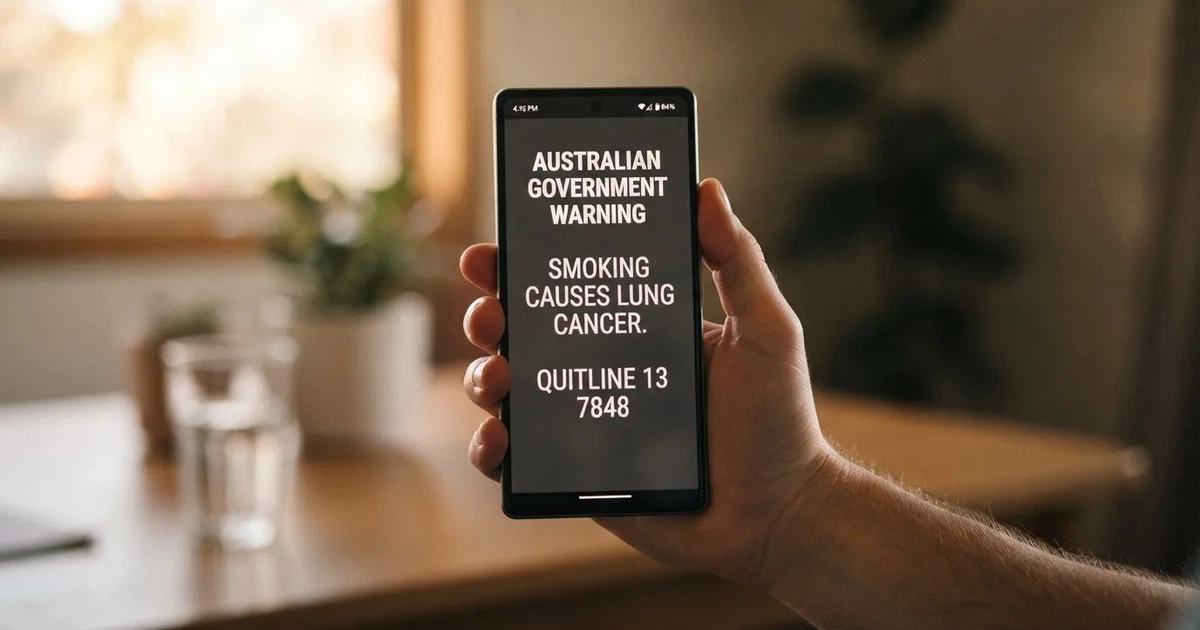
Someone typing “international casino” into a search engine from Australia is asking for a working shortlist of online casinos they can actually use. The honest answer is that no such list exists in the form the search implies. Online casino games — slots, table games, live dealer rooms — cannot be lawfully offered to anyone in Australia. The Interactive Gambling Act 2001 prohibits the supply, and no Australian jurisdiction issues a licence for it. What the search returns is a parade of offshore brands marketed as “international”, all of them sitting precisely where the law has decided they should sit: outside it.
This page is not that shortlist. It is a plain account of what an Australian reader is actually choosing between when the search results come up, what the Australian Communications and Media Authority has done about those offshore brands, and what lawful paths are available for anyone whose gambling budget sits inside Australia.
The data is current as of 23 September 2026 and the operator records were checked against the ACMA’s published formal-warning register.
- Responsible play before anything else
- Where the eleven brands stand
- What the ACMA record shows in the round
- What Australian law actually says
- What protection an offshore site does and does not give
- What payment routes an Australian reader actually has
- The legal Australian alternatives
- Where the offshore offer sits against the lawful one
- What the IGA 2001 does and does not target
- What to read next
- Frequently asked questions
Responsible play before anything else
The first thing worth saying is the dullest, and it sits at the top on purpose: if gambling is causing friction with money, sleep, work or relationships, the Australian help lines are free, confidential and available right now. The National Gambling Helpline on 1800 858 858 runs around the clock. Gambling Help Online carries the same service in a chat window for anyone who would rather type. BetStop, the National Self-Exclusion Register, has been live since August 2023 and lets a person exclude themselves from every Australian-licensed wagering service in one registration. None of this is theoretical, and none of it is in the marketing a player sees on the way in.

BetStop has a structural limit worth naming up front: it binds Australian-licensed online and phone wagering services only. An offshore casino site is not connected to it. A person who has registered with BetStop and then opens an account at an offshore brand has not excluded themselves from that brand — the registration simply does not reach it. The Australian banks run their own version of the same idea. ANZ, Commonwealth Bank and Westpac each let a customer switch on a gambling block at card level, and ANZ’s block also stops gambling transactions made through a linked digital wallet. ANZ’s block, once turned on, takes 48 hours to remove. None of the three banks says the block catches every gambling transaction, and ANZ is explicit that some non-gambling purchases may be blocked in error. The blocks are a brake, not a perimeter.
Two further cautions sit beside the help lines. The first is that the minimum age for any gambling activity in Australia is 18, and offshore sites are not in a position to enforce it reliably. The second is that winnings of a recreational player are not assessable income and losses are not deductible; the tax treatment is straightforward but anyone carrying on a business of gambling should check with the ATO directly.
Where the eleven brands stand
The brands below are not a ranking and they are not recommendations. Each one has been the subject of a formal warning from the ACMA for offering prohibited interactive gambling services to people in Australia, and the warnings are published on the ACMA’s own site. The list is in research, in §6, in the order research gives; the only thing this page does with it is describe what is in the record and what is not.

The table below sets out the operator named by the ACMA, the date of the formal warning and what the ACMA published at the time. Subject support here means what sources research actually carries for each brand — for most of these brands, the only sources research found are affiliate listings and the ACMA’s own pages, so the column is marked accordingly. The market the reader is searching does not run on independent review; it runs on the affiliate marketing that the ACMA has been blocking at the same pace as the casino sites themselves.
| Brand | ACMA action and date | Operator named by the ACMA | Subject support |
|---|---|---|---|
| RocketPlay | Formal warning, March 2026 | Pulsup Ltd (RocketPlay); earlier Dama N.V., May 2022 | Listings only |
| Level Up Casino | Formal warning, May 2022 | Dama N.V. | Listings only |
| Woo Casino | Formal warning, March 2025 | Dama N.V. | No supporting source beyond ACMA |
| Spirit Casino | Formal warning, May 2025 | Dama N.V. | No supporting source beyond ACMA |
| National Casino | Formal warning, July 2025 | Consolutetish S.R.L. | Listings only |
| Bizzo Casino | Formal warning, July 2025; earlier 2022 warning to TechSolutions | Consolutetish S.R.L. | Listings only |
| Ignition Casino | Formal warning, July 2025 | Bamboo Media | No supporting source beyond ACMA |
| Instant Casino | Formal warning, February 2025 | EOD Code SRL | Listings only |
| Jackbit | Formal warning, April 2026 | Ryker B.V. | No supporting source beyond ACMA |
| Casino Intense | Formal warning, April 2025 | Sterplay Holding Ltd | Listings only |
| Sky Crown | Formal warning, September 2022 | Hollycorn N.V. | No supporting source beyond ACMA |
What the table shows, beneath its row-by-row reading, is the breadth of the corporate pattern. Six of the eleven warnings name the same parent company — Dama N.V., operating from Curaçao — across brands that sit separately on the affiliate lists but trace back to one operator. Hollycorn N.V. covers Sky Crown and Blue Leo in a single warning. The pattern matters because a brand disappearing or rebranding does not change the parent company’s record with the regulator, and the ACMA’s enforcement is operating-company-level, not URL-level. A reader comparing two of these brands on the basis of name alone is comparing two marketing skins over what is, in several cases, the same back office.
RocketPlay
Pulsup Ltd received the most recent ACMA warning over RocketPlay in March 2026; the brand had earlier been the subject of a 2022 warning to Dama N.V. alongside five other casino brands. Research carries only listings sources for the brand beyond the ACMA’s own publication, which means the picture of what it offers to a player comes from the affiliate pages that the ACMA has been blocking in parallel with the casino sites themselves. The relevant fact is the one the ACMA’s publication makes plain: the operator has now been warned twice, across two corporate forms, for the same conduct.
Level Up Casino
Level Up was named in Dama N.V.’s May 2022 warning alongside five sister brands. The warning covered the full Dama N.V. cluster at the time, and the ACMA treated the group as one operator for the purpose of the formal-warning notice. No Australian licence displays against this brand, and no independent review source appears in research; what research records is the ACMA notice and the listings.
Woo Casino
Woo Casino drew a further ACMA warning to Dama N.V. in March 2025, three years after the operator’s first warning. The pattern of repeat warnings to the same operator is the point: the ACMA’s formal warning is a documented step before a blocking request, and a second warning to the same corporate entity reflects that earlier step did not change the conduct. Beyond the ACMA publication, research carries no further source for the brand.
Spirit Casino
Spirit Casino drew the same Dama N.V. warning in May 2025. Two of the eleven brands in this list trace their ACMA contact to the same operator notice in the same month; the corporate-level reading applies as much here as it does to Woo Casino.
National Casino
National Casino was named in a July 2025 warning to Consolutetish S.R.L. alongside Bizzo Casino. Research carries the ACMA publication plus a small set of listings — including the AUSTRAC site and BetStop — which is a wider source footprint than most of the brands in this list, but the additional sources are regulatory and protective in character rather than review.
Bizzo Casino
Bizzo Casino was named in the same July 2025 warning to Consolutetish S.R.L., and had already drawn a 2022 formal warning to TechSolutions (CY) Group Limited and TechSolutions Group N.V. Two separate corporate forms, two separate warnings, same brand. The ACMA’s record is unusually clear on this one: a brand whose operating company has rotated has not rotated out of the regulator’s view.
Ignition Casino
Ignition Casino was named in a July 2025 warning to Bamboo Media. The brand is pitched at Australian readers in some of its marketing; the ACMA publication is the documented response.
Instant Casino
EOD Code SRL drew an ACMA warning in February 2025 over Instant Casino. Research carries a small set of payment-infrastructure listings — ecopayz, PayID — alongside the ACMA publication, but the brand itself is presented in those listings rather than independently reviewed.
Jackbit
Ryker B.V. drew an ACMA warning in April 2026 over Jackbit and CasinOK together. The most recent warning in this list sits here, and it covers two brands in a single notice. No supporting source beyond the ACMA publication appears in research.
Casino Intense
Sterplay Holding Ltd drew an ACMA warning in April 2025 over Casino Intense. Research carries the ACMA publication plus AUSTRAC, BetStop and Gambling Insider listings — the broadest source footprint of any brand in this list, though the additional sources are regulatory bodies and trade listings rather than player-facing reviews.
Sky Crown
The Hollycorn N.V. warning covered Sky Crown and Blue Leo together. The notice is from September 2022, the oldest in the table. A brand with an older ACMA notice is not necessarily a smaller presence in the market — Hollycorn has continued to operate other brands — but the regulator’s record on the operator is the longest in this set.
What the ACMA record shows in the round
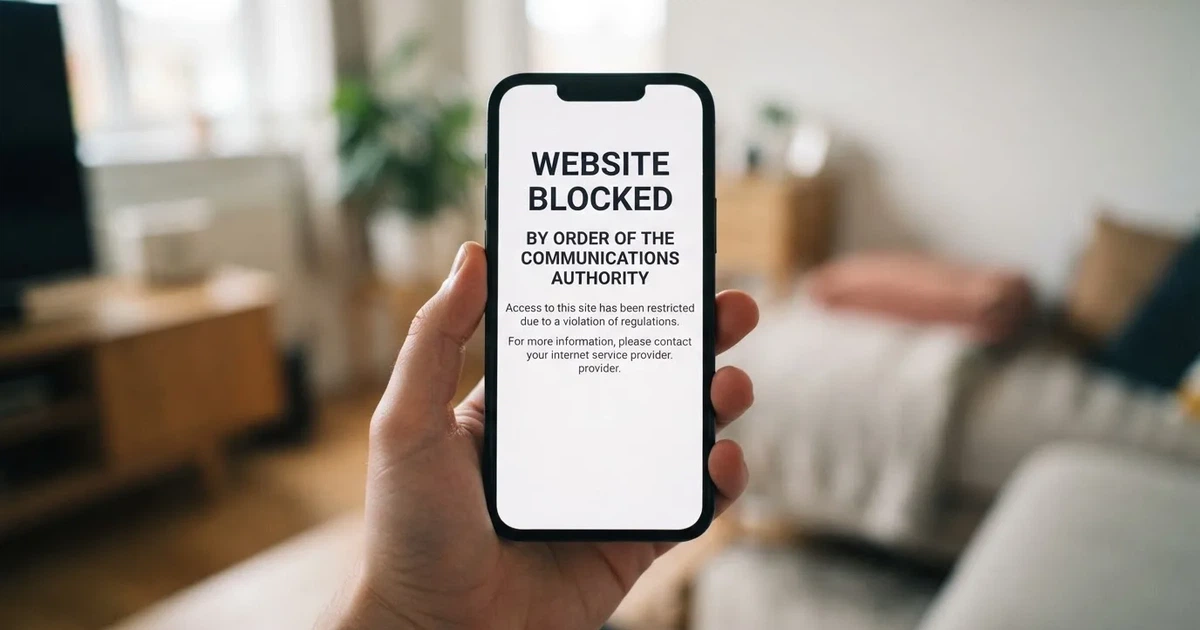
Pulled together, the eleven warnings describe the way the prohibition actually works. The ACMA does not start with a block. A formal warning is a documented step, published on the regulator’s site, naming the operator and the conduct. A blocking request follows when the warning does not produce a change; the blocking request goes to Australian internet service providers, who then make the site unreachable for customers on Australian networks. The blocking is asymmetric: it removes Australian access but leaves the site live everywhere else, and a player using a virtual private network or an overseas connection can still reach it. The block also does not seize any balance held with the operator. A player who has deposited with an offshore brand and then sees it blocked has lost access to the funds the brand holds, and the ACMA’s blocking round does not include a refund mechanism.
The arithmetic the regulator has put on the table is heavy. By June 2026, a total of 1,751 illegal gambling and affiliate marketing websites had been blocked since the first blocking request in November 2019, and more than 230 unlicensed services had left the Australian market since enforcement was strengthened in 2017. The June 2026 blocking round alone added twelve more sites: 7Signs, ChromaBet, Donbet, Duospin, Freshbet, Slots Gem, Jacks Club, Lucky Start, Pointsbetz, Spinrise, Vinyl Casino and Wildsino. The rate of blocking is the point: at 1,751 sites blocked across roughly six-and-a-half years, the ACMA has been blocking illegal gambling and affiliate sites at an average pace in the low hundreds per year, with the affiliate marketing pages blocked at the same rate as the casino sites themselves — the marketing that drives traffic is treated as part of the prohibited service, not as separate advertising.
The blocking rate, as a band, looks like this: assuming the ACMA’s 1,751-site total through June 2026 is read against a start point of November 2019, the regulator has been blocking somewhere in the order of 250 to 280 sites per year over the period, with a noticeable acceleration after 2017. The exact figure for any given year depends on how the partial-year tails are treated, and the ACMA does not publish a year-by-year breakdown in the form that would let a reader pin a single number to a calendar year. The band is the honest shape of the figure, and the trend is clear in it: enforcement has been continuous, not episodic, and the affiliate marketing pages have been caught in the same net as the casino sites.
The financial picture is the regulator’s only published estimate. H2 Gambling Capital’s 2025 report, as carried by trade press, puts Australian losses to illegal gambling sites at about A$3.9 billion a year, with the share of gambling going through legal channels falling from 74 per cent in 2021 to 64 per cent. The legal-channel share moving from 74 to 64 per cent across four years is a movement of ten percentage points, and it is the single most consequential figure on this page: the lawful Australian gambling market is losing share to offshore sites that the ACMA cannot licence and that the reader cannot effectively complain to when something goes wrong.
What Australian law actually says
The Interactive Gambling Act 2001, strengthened by the Interactive Gambling Amendment Act 2017, makes it an offence to provide online casino games, online pokies or in-play betting to a person physically in Australia. The 2023 amendments tightened the regime further. The 2017 amendments added the civil penalty regime that the ACMA now uses for formal warnings and blocking requests. The penalty for an operator can reach A$247,500 per offence in some categories, which is the figure the regulator quotes for the credit-card prohibition that came into force on 11 June 2024.
What is licensable is wagering on races and sporting events placed before the event, lotteries and keno. In practice the bulk of Australia’s online bookmakers — Sportsbet, Bet365, Ladbrokes and forty-nine others — are licensed by the Northern Territory Racing and Wagering Commission, which regulates 52 wagering providers from Darwin and has no full-time staff of its own, meeting once a month. The Northern Territory licence exists for tax reasons rather than for consumer-protection reasons; the wagering providers on it are Australian companies paying Australian tax, but the regulator is not a consumer-facing body and the consumer protection sits with the operator’s own licence conditions and with the industry’s dispute resolution pathways.
Lotteries and keno are licensed state by state, and the relevant regulator for a lottery product is the state or territory authority that issued the licence. Land-based casino gambling sits under state and territory casino control acts, and each casino operates under the licence of its own jurisdiction. The Crown complexes in Melbourne, Perth and Sydney are licensed under their respective state casino control regimes; the smaller casinos — Brisbane’s Treasury, the Adelaide Casino, the casino floor at the Country Club in Launceston — sit under their own state legislation.
The reform that is currently before the system is the Interactive Gambling Amendment (Gambling Reform) Bill 2026, which passed Parliament on 19 August 2026. Its advertising and inducement measures commence on 1 January 2027. On a page being read in 2026, the law has been passed but the advertising measures are not yet in force. A reader comparing the present against the coming year should hold the two apart: the Bill is law with a start date, not law in operation.
What protection an offshore site does and does not give
The structural point about an offshore site is the absence of any Australian consumer protection. A complaint to the ACMA about a refused withdrawal from an offshore site will not produce a refund; the ACMA’s role is enforcement against the operator, not dispute resolution between the operator and the player. A complaint to the operator’s own licensing jurisdiction — typically Curaçao, occasionally Malta, occasionally the Kahnawake territory in Canada — will be processed under that jurisdiction’s own rules, which do not give an Australian consumer the standing an Australian regulator would.
A useful test for any “international casino” brand is to ask what recourse is described on its own site. Brands that publish a Curaçao or Kahnawake licence number, an arbitration body and a complaints procedure are operating at the level of the bare minimum of what offshore licensing requires. Brands that publish none of those, or publish a licence number that does not resolve to a current entry on the regulator’s register, are operating below that minimum. The ACMA’s enforcement record on the eleven brands in this list is a guide to which end of that spectrum a brand sits on: every one of them has been formally warned for offering prohibited services, which is the ACMA’s documented finding that the conduct occurred, and none of them carries an Australian licence against which a complaint could be made.
A second test is the payment method. The credit-card prohibition that came into force on 11 June 2024 applies to Australian-licensed wagering services, but it has a practical spillover: most Australian banks will refuse a credit-card transaction coded to the gambling merchant category, and ANZ, Commonwealth Bank and Westpac each run a card-level gambling block on top. A site that accepts credit cards from Australian cardholders is, in practice, operating outside what an Australian bank will let a customer do. A site that asks for cryptocurrency is operating outside what an Australian-licensed service is allowed to accept at all.
What payment routes an Australian reader actually has
The lawful deposit routes for Australian-licensed wagering are debit card, bank transfer, PayID/Osko and BPAY. The four are different products and they behave differently.
A debit card transaction is processed the same way a credit card transaction is, except the funds come from the cardholder’s own account rather than a line of credit. The merchant category code the gambling block operates on is the same; a card-level gambling block on a debit card will stop a gambling transaction the same way it stops a credit-card one. The Commonwealth Bank’s gambling lock runs in the CommBank app on eligible cards; Westpac’s block refuses authorisation on the merchant code ‘Betting/Casino Gambling’ for eligible personal credit and debit cards; ANZ’s block stops gambling transactions made through a linked digital wallet too, not only on the physical card.
PayID is the address system that sits on top of Australia’s New Payments Platform. A PayID is registered against a bank account — a mobile number, an email address or an ABN — and any transfer to that PayID shows the account-holder’s name before the payment is sent. The New Payments Platform went live on 13 February 2018 and is owned by a non-profit company whose shareholders include the Reserve Bank of Australia and the major banks; more than 25 million PayIDs had been registered by April 2025, and PayID is available at over 100 Australian financial institutions. The warning that comes with PayID — and it is the regulator-adjacent point worth keeping — is that being asked to send money to a PayID on an illegal gambling site almost certainly indicates a scam site. The PayID is a legitimate payments product, and the same product is being abused by operators outside the law.
Osko is the instant-transfer service that runs on the same platform, and a transfer between participating banks arrives in under a minute, 24 hours a day, seven days a week, addressed to either a BSB and account number or a PayID. The combined digital-wallet share — Apple Pay, Google Pay and Samsung Pay together — was around 45 per cent of all card payments in Australia by number by the end of 2025. The credit-card prohibition constrains gambling use of those wallets in the same way it constrains a credit card, because the wallet is a front end for the underlying card. The banks’ gambling blocks, where they cover digital-wallet transactions on an eligible card, sit on the same logic.
BPAY is the bill-payment service that runs inside Australian online banking, and has run there since 18 November 1997. The payer enters a Biller Code and a Customer Reference Number printed on the bill; over 140 banks and financial institutions make it available; over 95,000 businesses offer it as a payment method. BPAY is run by Australian Payments Plus, the same operator that runs PayID and Osko, and was brought under that holding company by an ACCC authorisation in September 2021. BPAY’s role in gambling is narrow: it is a bill-payment product, not a person-to-person transfer, and a gambling deposit is not a bill in the sense BPAY was designed for. Its appearance here is as a contrast: the lawful deposit routes for Australian wagering are everyday payments products with consumer protection on them, and the offshore deposit route is whichever product the offshore operator is willing to accept.
The threshold-transaction-report rule is sometimes raised as a caution around gambling payments. AUSTRAC’s rule requires reporting of transfers of A$10,000 or more, and the rule applies to physical cash only. Ordinary electronic bank transfers, including PayID and Osko, are not subject to the per-transaction reporting requirement regardless of the amount sent. The caution that does apply is the bank’s own transaction-monitoring regime, which operates independently of the AUSTRAC threshold and which a customer of any of the major Australian banks is subject to without opting in.
The legal Australian alternatives
For an Australian reader whose gambling is recreational and inside the law, the choices that exist are licensed. Online, the wagering providers licensed by the Northern Territory cover racing and sport — pre-event wagering only, with in-play betting prohibited under the same legislation that prohibits online casino games. The state and territory lottery operators run keno and draw lotteries online through their own platforms. Land-based, every state and territory has at least one licensed casino venue; the larger operations are the Crown complexes in Melbourne, Perth and Sydney, with significant regional venues in Brisbane, Adelaide, the Gold Coast, Cairns, Canberra, Hobart and Launceston.
The Crown complexes are not interchangeable. Crown Melbourne operates under the Victorian Casino Control Act; Crown Perth under the Western Australian Casino Control Act; Crown Sydney under the Casino Control Act 1992 of New South Wales. The regulatory regimes differ — responsible-gambling requirements, surveillance requirements, dispute resolution pathways — and a reader who lives near one Crown venue and plays at another is operating under a different set of rules. The smaller venues — Treasury Brisbane, the Adelaide Casino, the Star Gold Coast, the Star Sydney — sit under their own state or territory casino legislation.
Pubs and clubs across Australia operate poker machines under state and territory gaming-machine legislation. The number of machines, the maximum stake and the maximum prize are set state by state. New South Wales operates the ClubGRN self-exclusion scheme across its registered clubs; Victoria operates the YourPlay pre-commitment system; Western Australia does not permit poker machines outside the Burswood casino. A reader who plays poker machines has, in most states, a state-level self-exclusion option that binds the venues in that state; it does not bind an offshore site, for the same reason BetStop does not.
The four most useful landmarks for a reader who wants the lawful paths written down are: the Australian Communications and Media Authority’s register of formal warnings and blocking requests; BetStop, the National Self-Exclusion Register, for anyone who wants a single registration to bind Australian-licensed wagering services; the state and territory casino control authorities, for venue-level complaints and venue-level self-exclusion; and the National Gambling Helpline on 1800 858 858, for the help line itself. The four do not overlap. Each covers a different part of the lawful landscape, and a reader who knows which part of the landscape they are on knows which of the four to use.
Where the offshore offer sits against the lawful one
The marketing that surrounds an offshore brand promises bonuses, ongoing promotions and a wider game library than the lawful Australian offer can present. The lawful Australian offer has no online casino games at all; the offshore offer has whatever the offshore operator chooses to put online. The comparison is not a fair one in either direction. The lawful Australian offer has consumer protection the offshore offer does not; the offshore offer has a game library the lawful Australian offer does not. A reader who values one over the other is making the choice the regulator has decided they should make, and the regulator’s reasoning is the second clause of that sentence.
The H2 Gambling Capital estimate of A$3.9 billion a year in Australian losses to illegal sites is the scale of the choice. The 74-to-64 per cent movement in the legal-channel share is the direction of it. The ACMA’s 1,751 blocked sites is the regulator’s response to it. None of those three figures is itself a recommendation. They are the data a reader needs in order to make the choice with eyes open, and the data is what this page carries.
The eleven brands in the table above are not a path the page recommends. They are the path the ACMA has documented, and the page’s role is to set them beside the law they sit outside. A reader comparing the two should hold three things apart: the game library on offer, the consumer protection that comes with it, and the regulator’s record on the operator offering it. The three are not the same trade-off, and a page that ran them together would be the page the affiliate marketing pages already run.
What the IGA 2001 does and does not target
A useful clarification at the end of this section: the Interactive Gambling Act 2001 targets the provider, not the individual player. An Australian who plays at an offshore site is not committing an offence under the Act. The Act’s enforcement is against the operator that offers prohibited services to people in Australia, and the ACMA’s blocking and warning activity is enforcement against operators. The offshore site itself is the entity the regulator reaches. A player using the site faces a different set of consequences — a balance held by an offshore operator that the ACMA cannot reach, a withdrawal refused by an operator that no Australian complaints body can compel, a site that goes offline or is blocked mid-session — but those are consumer-protection consequences rather than criminal ones.
The clarification matters because the reader’s situation is, structurally, a consumer-protection situation dressed up as a gambling one. The reader is choosing whether to deposit money with an operator that no Australian regulator oversees, against a marketing proposition that no Australian consumer law backs. The choice is the reader’s. The information about the choice should be honest, and the ACMA’s record is the most honest information available.
What to read next
A reader who has decided to play within Australian law has the National Gambling Helpline (1800 858 858), Gambling Help Online, BetStop and the state-level self-exclusion schemes as the practical next steps. A reader who has decided to use an offshore site despite the ACMA’s record has the bank-level gambling block as the practical next step, because the offshore site will not enforce any of the limits a player might want. A reader who is unsure should call the helpline before they decide, because the helpline is the one service that does not depend on which way the decision goes.
The two paths run in opposite directions, and the only honest thing this page can do is set them out. The ACMA has done its part of the work in the record; the bank has done its part with the card block; the offshore operator has done its part by being the operator the ACMA has warned. What remains is the reader’s choice, made with the record in front of them.
Frequently asked questions
What does “international casino” mean as distinct from an Australian-licensed one?
An “international casino” is an offshore brand licensed by a regulator outside Australia — typically Curaçao, occasionally Malta or Kahnawake — and offering online casino games to players in multiple countries. No Australian jurisdiction licenses online casino games; the Interactive Gambling Act 2001 prohibits the supply, and what is licensed in Australia is wagering on races and sport, lotteries and keno.
Can an international online casino legally accept players located in Australia?
No. The Interactive Gambling Act 2001 prohibits offering online casino games to anyone in Australia. An offshore site that accepts Australian players is operating against the Act, and the Australian Communications and Media Authority has been issuing formal warnings and blocking requests against offshore operators since 2017. The individual player is not prosecuted; the Act targets the provider.
Does an overseas gambling licence carry any weight for an Australian player?
The overseas licence authorises the operator in its own jurisdiction; it does not give the operator any standing in Australia, and an Australian consumer has no Australian recourse against an offshore operator. A complaint must be made to the operator’s home regulator under that regulator’s rules, and the home regulator’s processes do not give an Australian consumer the standing an Australian regulator would. The ACMA’s role is enforcement, not dispute resolution.
What protections, if any, apply to an Australian using an international casino site?
None from the Australian side beyond the ACMA’s enforcement against the operator. The Australian banks’ card-level gambling blocks (ANZ, Commonwealth Bank, Westpac) can stop some Australian transactions from reaching an offshore site, but the bank blocks are consumer-protection tools rather than gambling regulation. BetStop does not bind offshore sites. The National Gambling Helpline (1800 858 858) and Gambling Help Online are available regardless of where a person plays.
Are international land-based casino resorts different from the international online sites people search for?
Yes, structurally. An international land-based casino resort is a venue licensed by its own jurisdiction and physically located in that jurisdiction; an Australian visiting one plays under the rules of the host country’s licence. The international online sites that come up in searches from Australia are offshore operators offering prohibited services under the Interactive Gambling Act 2001. The two share a word; they do not share a regulatory status.
Who can an Australian contact if an international casino site will not pay out?
The operator’s home regulator, through the regulator’s own complaints process. In practice that process will be in Curaçao, Malta or wherever the operator is licensed, and the process will not have an Australian consumer’s standing built into it. The ACMA does not mediate withdrawals; its role is enforcement against the operator. The bank that issued the card used for the deposit may be able to reverse the transaction in some circumstances, and the bank’s fraud and disputes team is the practical first contact for a refused withdrawal.
Written by the editors at Casino Table Games Info.