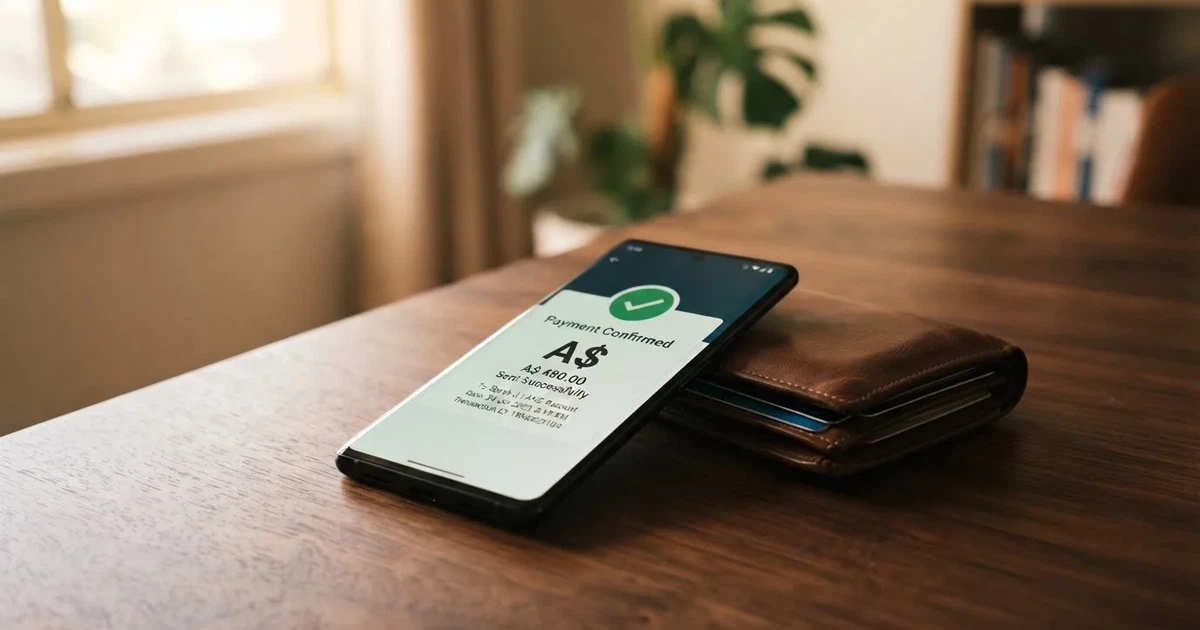
A $10 PayID No-Deposit Casino Bonus in Australia: How the Search Lands and What It Costs
 Available in US
The premise of a $10 PayID no-deposit casino bonus carries two assumptions that both fall apart on contact with Australian law. PayID is genuine, Australian, and near-universal — but the casino offering to credit a player $10 the moment they hand over a PayID is, by construction, an offshore operator the ACMA has already acted against. There is no licensed Australian online casino to attach a PayID deposit to, which is the central fact of this page, and the one that decides every choice that follows.

What follows is a working through of that gap. It sets out the legal frame that makes the offer what it is, the way PayID actually moves money, what a no-deposit bonus typically asks of the punter in wagering terms, and the eleven brands the ACMA has warned or asked to be blocked since 2017. The point is not to steer a reader toward one of those sites. The point is to make clear why the search lands where it does, and what someone who types it in actually ends up holding.
Data current as of 23 September 2026 and cross-checked against the ACMA’s register of formal warnings and the igamingbusiness.com record of blocking rounds.
- The Settlement Picture: Why a $10 PayID Bonus Points Offshore
- What the Interactive Gambling Act Actually Forbids
- Responsible Play in a Market That Mostly Isn’t Australian
- How a PayID Transfer Actually Moves Money
- What a $10 No-Deposit Bonus Actually Requires
- What a Real Comparison Would Weigh
- The Blocking Rate Since November 2019
- The Eleven Brands and What the Warning Means for Each
- Where the Reader Ends Up
- Frequently Asked Questions
The Settlement Picture: Why a $10 PayID Bonus Points Offshore
PayID sits at the centre of this search because the people typing it in are usually looking for one thing: proof the casino is Australian. A PayID looks Australian. The identifier is a mobile number, an email, an ABN or an Organisation Identifier, and it is run inside the online banking of more than 100 Australian financial institutions. By April 2025, more than 25 million PayIDs were registered in Australia. The system itself is operated by Australian Payments Plus and rides on the Reserve Bank’s New Payments Platform, which has been moving money near-instantly, 24/7, since its launch in February 2018.

That last sentence is the trap. PayID is Australian. What it pays into is not. No state or territory in Australia issues a licence for online casino games or online pokies, so any operator running a $10 no-deposit credit game and accepting a PayID is doing so from outside the country. The ACMA has issued formal warnings to eleven of those operators — RocketPlay, Level Up Casino, Woo Casino, Spirit Casino, National Casino, Bizzo Casino, Ignition Casino, Instant Casino, Jackbit, Casino Intense and Sky Crown — between February 2025 and March 2026 alone. The PayID in the offer is the lure, not the licence.
That is also why AP+ itself warns about this exact pattern. The payments provider states plainly: “If you are asked to transfer funds to a PayID on an illegal gambling site, it is almost certainly a scambling website.” Scambling, in the operator’s own coinage, is the slang for illegal online gambling platforms advertised on social media and messaging apps that trick people into playing on a scam site. The warning is not aimed at PayID users who happen to also play the pokies. It is aimed at exactly the offer this page is about.
What the Interactive Gambling Act Actually Forbids
The frame is the Interactive Gambling Act 2001, strengthened by the Interactive Gambling Amendment Act 2017. The IGA makes it an offence to provide online casino games, online pokies or in-play betting to a person physically in Australia. The prohibition is not a preference or a policy debate. It is a criminal offence attaching to the provider, and it is the reason no Australian-licensed casino can legally offer a $10 no-deposit credit at all, whatever its marketing looks like. What can be licensed is wagering on races and sport placed before the event, lotteries and keno, in practice licensed by the Northern Territory Racing and Wagering Commission, which regulates 52 of Australia’s online bookmakers including Sportsbet, Bet365 and Ladbrokes.

The enforcement side is the ACMA. The regulator investigates, issues formal warnings, and directs Australian internet service providers to block offending sites. As of a round reported on 26 June 2026, a total of 1,751 illegal gambling and affiliate marketing websites had been blocked since the first blocking request in November 2019, and more than 230 unlicensed gambling services had left the Australian market since enforcement was strengthened in 2017. The 26 June 2026 round alone asked ISPs to block 12 more sites — 7Signs, ChromaBet, Donbet, Duospin, Freshbet, Slots Gem, Jacks Club, Lucky Start, Pointsbetz.com, Spinrise, Vinyl Casino and Wildsino.
The individual punter is not prosecuted. The IGA targets the provider, not the player. What the punter loses is consumer protection: no local complaints body, no recourse if a withdrawal is refused, and a real chance the site is blocked with a balance still on it. H2 Gambling Capital’s 2025 estimate is that Australians lose about A$3.9 billion a year to illegal gambling sites, and that the share of gambling going through legal channels fell from 74% in 2021 to 64%. The reason those numbers move is precisely the gap this page is mapping.
A piece of context that often gets folded in: credit cards, credit-related products and digital currency are banned as payment for Australian-licensed online wagering since 11 June 2024, with penalties up to $247,500 for operators. Legal deposit routes for licensed wagering are debit card, bank transfer, PayID/Osko and BPAY. An offshore site asking for a credit card or a crypto deposit is operating outside the Australian rules; one that asks for a PayID is operating outside them too, since no Australian licence covers casino games.
The next reform is already on the books. The Interactive Gambling Amendment (Gambling Reform) Bill 2026 passed Parliament on 19 August 2026; its advertising and inducement measures commence 1 January 2027. On a page read in 2026 that is law with a future start date, not yet in force.
Responsible Play in a Market That Mostly Isn’t Australian
A $10 no-deposit bonus is a small amount in dollar terms, which is exactly why it is a useful hook for offshore operators and exactly why it warrants the same protections a larger offer does. The signs that a search has tipped into something more than research are not about the dollar figure. They are about compulsion — opening the offer again because the first one did not pay, raising a stake to “recover” a credit loss, treating the bonus as something the punter has to chase.
The two Australian resources designed for that moment are free, confidential and available around the clock. Gambling Help Online runs chat support and connects to counselling anywhere in the country. The National Gambling Helpline is 1800 858 858. BetStop, the National Self-Exclusion Register, has been live since August 2023 and binds Australian-licensed online and phone wagering services — that is, licensed bookmakers and the like, not the offshore casinos this page is about. BetStop is the right tool for a punter who wants out of legal wagering. It does not, and cannot, block an offshore casino site, which is one of the cleaner illustrations of what “licensed” means in this market and what its absence costs.
The minimum age for any gambling product in Australia is 18. Tax-side, gambling winnings of a recreational player are not assessable income under section 6-5 of the ITAA 1997 and losses are not deductible, unless the person carries on a business of gambling — a model only, and worth checking with the ATO for anyone whose gambling looks more like a business than a hobby.
How a PayID Transfer Actually Moves Money
PayID runs on the New Payments Platform, the Reserve Bank’s real-time settlement infrastructure that has been live since February 2018 and processes payments 24/7, including weekends and public holidays. With Osko, the brand most Australian banks use on top of NPP, a transfer between participating banks arrives in under a minute whether it is addressed to a BSB and account number or to a PayID. The Reserve Bank oversees the platform and owns and operates the Fast Settlement Service that settles NPP transactions individually in close to real time.
The mechanic that matters for this page is the name-check. When paying to a PayID, the payer is shown the name linked to it before the transfer is sent — the check that protects against scams and mistaken payments. It is also the check that decides whether a $10 PayID “no-deposit bonus” is what it claims to be. If the name that comes up is the punter’s own bank account, the transfer is going out, not coming in. If the name that comes up is an unfamiliar business, the punter is being asked to send money to an offshore operator to unlock the credit, which is the “scambling” pattern AP+ has put on its scam page. PayID itself will never contact a customer directly, and any email or text claiming to be from PayID is a scam; PayID never asks anyone to send money in order to receive money or to “upgrade” an account.
Banks have built their own protections on top. Westpac’s gambling block works at card level, refusing authorisation of transactions registered under the merchant category code “Betting/Casino Gambling” on eligible personal credit and debit cards. ANZ’s block, activated in the ANZ app, blocks gambling transactions made through a digital wallet such as Apple Pay on an eligible card, not just the physical card. Once turned on, removing ANZ’s block again requires a 48-hour waiting period, and the bank warns that not all gambling transactions will be blocked and some non-gambling transactions might be blocked in error. These are controls on legal Australian-licensed products. They do not, in most cases, stop an Osko transfer to an arbitrary PayID.
What digital wallets add to the picture is small for this offer and worth stating once. By the end of 2025, Apple Pay, Google Pay and Samsung Pay collectively accounted for around 45% of all card payments in Australia by number. Apple does not charge fees to consumers for Apple Pay; any surcharge comes from the merchant’s card-processing fees, not from Apple. Transaction limits and PIN requirements for Apple Pay are set by the card issuer or merchant. None of that changes the offshore status of a casino offering a PayID credit game, and the credit-card ban on Australian-licensed wagering services constrains gambling use of linked digital wallets anyway.
What a $10 No-Deposit Bonus Actually Requires
The dollar figure is the marketing; the wagering is the product. A $10 no-deposit bonus that “only” needs a PayID is, in operator terms, an entry point into a wagering requirement attached to money the operator has handed the punter. The shape this typically takes in the offshore market that targets Australians: a 30x to 50x turnover requirement on the bonus, a maximum cashout cap far below what the bonus could theoretically win, a list of excluded games that shifts the playable contribution, and a withdrawal channel — which is where the PayID or its equivalent enters.
That last part is where the punter usually loses. A wagering requirement is the operator’s way of converting bonus money into cash the operator is willing to pay out. A 40x turnover on a $10 bonus is $400 of qualifying wagers before any withdrawal is possible. At penny slots, $400 is roughly 4,000 spins; at a five-second spin interval, that is about 5.6 hours of play on the bonus alone, against an expected loss the punter absorbs in that window. Even if a win comes in, a maximum cashout cap — A$50 to A$100 on no-deposit offers is ordinary — clips anything larger. Excluded games and weighted contributions change what counts toward the wagering requirement, sometimes down to 0% on the high-RTP titles the punter might prefer.
The promise the marketing makes is that the punter does not have to deposit to play. The cost is paid in the wagering window and in the cashout cap, not at the deposit stage. A punter who reads only the headline has read the cheapest sentence on the page. The catch is mechanical, the same way it is mechanical on every offshore offer of this shape, and reading it before claiming is the difference between playing the bonus the operator sold and walking into the wagering requirement the operator actually wrote.
This is also why no bonus terms are quoted for any of the brands in the ranking below. The only sources for those terms, for this market, were affiliate marketing pages, and the numbers on those pages move. What the ACMA has done is the part that does not move, and what the comparison below carries.
What a Real Comparison Would Weigh
A comparison of “the best $10 PayID no-deposit casinos in Australia” is a comparison that the market cannot actually hold, for the reason set out in the section on the IGA: there is no Australian-licensed operator in the cohort, and the search term itself is a marketing construct for an offshore product. What a fair comparison of the eleven brands the ACMA has acted against can weigh is narrower and sturdier. It can weigh the date and operator behind each formal warning, the ACMA’s stated ground, and whether the same operator had been warned before. It cannot weigh payout speed, RTP or bonus terms, because research carries no figures for those and the affiliate pages they would otherwise be lifted from are not a usable source.
The table that follows is the comparison the market actually supports. It is not a ranking and not a recommendation. Each row is a brand the ACMA itself has put on its register of formal warnings, and the only judgement it makes possible is which operators have been warned most recently, and which the same corporate group has put back in front of the regulator after a previous warning.
The Brands the ACMA Has Warned
| Brand | ACMA action and date | Operator named by the ACMA | PayID support |
|---|---|---|---|
| RocketPlay | Formal warning March 2026; earlier warning May 2022 | Pulsup Ltd (March 2026); Dama N.V. (May 2022) | — |
| Level Up Casino | Formal warning May 2022 | Dama N.V. | Westpac listing references |
| Woo Casino | Formal warning March 2025 | Dama N.V. | — |
| Spirit Casino | Formal warning May 2025 | Dama N.V. | — |
| National Casino | Formal warning July 2025 | Consolutetish S.R.L. | AUSTRAC and public-record references |
| Bizzo Casino | Formal warning July 2025; earlier warning 2022 | Consolutetish S.R.L. (July 2025); TechSolutions (2022) | — |
| Ignition Casino | Formal warning July 2025 | Bamboo Media | — |
| Instant Casino | Formal warning February 2025 | EOD Code SRL | EcoPayz and PayID listings reference |
| Jackbit | Formal warning April 2026 | Ryker B.V. | — |
| Casino Intense | Formal warning April 2025 | Sterplay Holding Ltd | AUSTRAC and Australian banking references |
The single fact that jumps out of that table is corporate. Dama N.V. — the operator behind Level Up, Woo and Spirit — has been the subject of formal warnings three times in four years. Consolutetish S.R.L. has been named twice in the same month. Bizzo had been warned in 2022 under TechSolutions and again in July 2025 under a different corporate vehicle, which is the clearest indicator on the page that rebranding does not move a brand outside the regulator’s reach.
The PayID column is the one research could only partly fill, and the gaps are information rather than noise. For eight of the eleven brands, research carries no reference to PayID support in either direction; those rows carry the no-data marker. Where listings exist — EcoPayz and PayID pages naming Instant Casino, public-record references for National Casino and Casino Intense — they are reported as listings, not as the operator’s own statement. The honest reading of an empty cell in that column is that the brand has not been confirmed by research as PayID-supporting, and a punter who treats an unconfirmed claim as a fact has done the operator’s marketing work for it.
A punter who is comparing these brands is, in practice, comparing eleven brands the ACMA has told not to offer their product to Australians. That is not the comparison the search term asks for, and it is the only comparison the legal frame makes possible.
The Blocking Rate Since November 2019
The arithmetic the page can actually do is on the enforcement side, not the offer side. The ACMA’s blocking request regime started in November 2019; by a round reported on 26 June 2026, a cumulative total of 1,751 illegal gambling and affiliate marketing websites had been blocked since that first request. That is roughly 263 sites a year, or about 22 a month, averaged across the period. The rate is uneven — the 26 June 2026 round alone added 12 sites in one batch — but the order of magnitude is the point.
The band that follows the calculation: between the launch of the blocking regime in November 2019 and the cumulative figure reported in June 2026, the ACMA moved from zero blocked sites to 1,751, an average blocking rate of roughly 260 sites a year across the period, with individual rounds varying from a handful of sites to a dozen or more in a single batch.
For the punter this means the offer they are about to click may not be reachable by the time they finish reading this paragraph. For the regulator it means a continuously running project, not a one-off crackdown. For the operator it means an entirely different calculation about which markets to keep paying for, and that calculation is why “more than 230 unlicensed gambling services had left the Australian market since enforcement was strengthened in 2017” reads as the real measure of what blocking has done — a market exit, not a static block list.
The Eleven Brands and What the Warning Means for Each
RocketPlay
The most recent formal warning was issued to Pulsup Ltd over Rocketplay.com.au in March 2026; the brand had already been the subject of a formal warning to Dama N.V. in May 2022. Two warnings under two operators in four years is the kind of corporate history that says more about the brand than any bonus copy on its affiliate page. PayID support is not confirmed by research. The verdict for the punter is the same as it is for any brand on this list — the offer is offshore, the protection is none — but RocketPlay is the clearest case in the cohort of a brand the regulator has had to come back to.
Level Up Casino
The May 2022 formal warning over Level Up was issued to Dama N.V. alongside five other Dama brands — Bambet, Dazard, Rocketplay, Wild Tornado and Cobra Casinos. PayID support is referenced in Westpac’s gambling-block page, which is a listings reference rather than a statement by the operator. The same warning cycle that covered Level Up is the one that reappears three rows down at Woo Casino and Spirit Casino, since Dama N.V. owned all three. The verdict on Level Up is that the brand has been on the regulator’s register for four years and the corporate context is the warning, not a single product.
Woo Casino
Dama N.V. was warned again over Woo Casino in March 2025. The earlier Dama warning in May 2022 covered a different six-brand set and did not include Woo, which means the March 2025 action is a fresh warning to the same operator over a different product, not a re-issue. PayID support is not confirmed by research. The verdict on Woo is that the brand sits in the corporate group the ACMA has warned three separate times across four years, and a punter reading the table is reading the regulator’s repeated view of the operator, not a single round.
Spirit Casino
Dama N.V. was warned again over Spirit Casino in May 2025, two months after Woo. The pattern — same operator, different brand, close together — is what makes the Dama row of the table worth more than any single brand name in it. PayID support is not confirmed by research. The verdict on Spirit is the verdict on the corporate group: a fresh formal warning, two months after the last, on a new brand.
National Casino
Consolutetish S.R.L. was warned over National Casino in July 2025, in the same batch as Bizzo. PayID support is referenced in AUSTRAC and Wikipedia listings, both listings-only and neither a statement by the operator. The verdict on National is the same shape as the verdict on every brand on this side of the table: a corporate warning under the IGA, no Australian-licensed casino product behind it, whatever the affiliate page claims.
Bizzo Casino
Consolutetish S.R.L. was warned over Bizzo Casino in July 2025, and TechSolutions (CY) Group Limited and TechSolutions Group N.V. had been warned over Bizzo in 2022. Two warnings, two operators, three years apart. Regarding PayID support, research offers no confirmation. The verdict on Bizzo is that rebranding across corporate vehicles did not move the brand outside the regulator’s reach, which is the single clearest lesson on the page about what “operator” means in the ACMA’s register.
Ignition Casino
Bamboo Media was warned over Ignition Casino in July 2025, in the same batch as National Casino and Bizzo. Regarding PayID support, research offers no confirmation. The verdict on Ignition is that the brand shares a regulator round with two of the other brands on this list and an Australian licence would still have been impossible for any of them.
Instant Casino
EOD Code SRL was warned over Instant Casino in February 2025. PayID support is referenced on EcoPayz and PayID listings pages, both listings-only. The early-2025 date makes Instant the brand whose warning sits furthest from the others, and the only one in the cohort where research carries even listings references for the payment method this page is built around. The verdict on Instant is that the listings exist; they do not amount to a PayID-acceptance confirmation from the operator, and the underlying regulator status does not change.
Jackbit
Ryker B.V. was warned over Jackbit in April 2026, in the same round as CasinOK. Regarding PayID support, research offers no confirmation. The verdict on Jackbit is that it sits at the recent end of the ACMA’s actions, and the same month, same operator pattern that runs through the table is the comparison the page actually supports.
Casino Intense
Sterplay Holding Ltd was warned over Casino Intense in April 2025. PayID support is referenced on AUSTRAC, ITNews and NAB listings pages, all listings-only. The verdict on Casino Intense is the same as the verdict on the column: listings references are not operator confirmations, and the regulator status is unchanged either way.
Sky Crown
Hollycorn N.V. was warned over Sky Crown and Blue Leo in September 2022, the earliest formal warning on the table. No PayID data is confirmed by our research. The verdict on Sky Crown is that the brand has been on the register for the longest of any in the cohort, and the absence of any new action since 2022 is not the same as a clearance — formal warnings do not expire on the regulator’s register.
Where the Reader Ends Up
The reading the page leaves behind is not a verdict on a brand. It is a verdict on the offer the search term names. A $10 PayID no-deposit casino bonus in Australia does not exist as a licensable product, has never existed as one, and cannot exist as one until the Interactive Gambling Act changes. The brands that offer it are offshore, the PayID is a lure, and the ACMA’s register is the public record of how often the regulator has had to say so.
The arithmetic is on the operator side too. Between November 2019 and the figure reported in June 2026, the ACMA moved the cumulative count of blocked illegal gambling and affiliate marketing websites from zero to 1,751, at an average blocking rate of roughly 260 sites a year. For a punter who has found a brand that is not yet on the register, that figure is the time horizon to expect, not a guarantee the brand will be added. For a punter who has found a brand that is already on the register, the register is the answer.
A punter who wants out of the offer, full stop, has two clean options. Gambling Help Online runs chat and connects to counselling anywhere in the country. The National Gambling Helpline is 1800 858 858. BetStop, the National Self-Exclusion Register, is the right tool for licensed wagering, and will not reach the offshore casino in the offer, which is itself the cleanest illustration of what an Australian licence means and what its absence costs.
Frequently Asked Questions
Can a casino actually credit $10 to my account the moment I share a PayID?
No Australian-licensed casino can offer a $10 no-deposit credit, because no Australian licence exists for online casino games or online pokies under the Interactive Gambling Act 2001. An operator offering this is offshore, the PayID is a payment address rather than a credit, and the regulator’s record of formal warnings over exactly this offer runs from 2022 to 2026.
Is PayID itself a legitimate, regulated Australian payment service?
Yes. PayID is operated by Australian Payments Plus and runs on the Reserve Bank’s New Payments Platform, with transfers settling near-instantly 24/7 through participating Australian financial institutions. The system is genuine; what pays into a PayID on this offer is not.
Why would an offshore site ask for a PayID before paying out a $10 bonus?
The PayID is the withdrawal route. A no-deposit bonus that “only needs a PayID” is, in operator terms, an entry into a wagering requirement with a withdrawal channel attached, and the channel is what the punter has handed over. Australian Payments Plus warns about exactly this pattern, calling it “scambling” — illegal online gambling platforms advertised on social media and messaging apps.
What’s the catch with a $10 no-deposit bonus that only needs a PayID?
The catch is the wagering requirement, the cashout cap and the game weighting. A 40x turnover on a $10 bonus is roughly $400 of qualifying wagers, the maximum cashout on no-deposit offers is typically far below what the bonus could win, and high-RTP titles are usually excluded or weighted down. The $10 is real; the path to withdrawing any win from it is the part the marketing does not show.
Does using PayID with an offshore casino count as banking with an Australian institution?
No. PayID is Australian, but the operator on the receiving end is offshore. PayID and Osko move money between Australian banks in under a minute, but they do not bring an offshore casino inside Australian consumer protection, the ACMA’s jurisdiction, or BetStop’s coverage. The transfer is Australian; the protection around it is not.
Written by the editors at Casino Table Games Info.