
Instant PayID withdrawal of real money in Australia in 2026
PayID has reshaped what “fast” means inside Australian online banking. A transfer addressed to a mobile number, email or ABN now clears in seconds, 24 hours a day, even on a Sunday morning. That same plumbing is what an offshore casino cash desk advertises as “instant PayID withdrawal”, and the marketing sits on a fault line the marketing copy rarely mentions. Real money cannot leave an Australian online casino the same way it leaves a poker tournament on a licensed app, because the legal status of the two products is not the same. A licensed Australian wagering operator can run a PayID cash-out. An offshore online casino cannot lawfully offer one to a person in Australia at all.
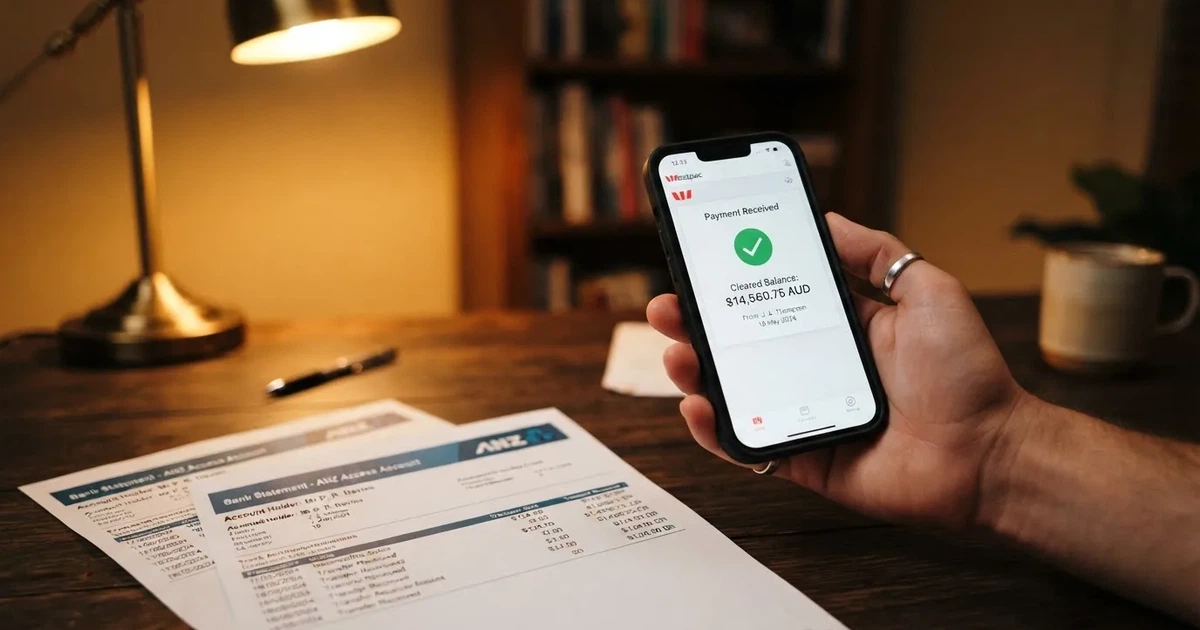
The mechanism — PayID, Osko, the New Payments Platform — is Australian infrastructure and works as advertised. The choice is about the site that sits in front of it, and every site that returns for this topic has, at some point, attracted a formal ACMA warning. The trade-off is the article’s subject, and the rest of the article is the trade-off spelled out.
Last verified 29 October 2026 against the Australian Communications and Media Authority’s published register of formal warnings and blocking actions.
- Why an offshore casino cannot legally pay Australian winnings through PayID
- What an Australian-licensed wagering operator can actually offer
- Responsible play and the budget discipline a fast cash-out does not change
- PayID, Osko and the New Payments Platform: how the transfer works
- Wallets, surcharges and the credit-card-shaped hole
- What a real-money PayID withdrawal looks like when it is allowed
- Featured operators and the ACMA register
- What a player in Australia is actually choosing between
- Closing notes for a reader comparing options
- Frequently asked questions
Why an offshore casino cannot legally pay Australian winnings through PayID
The Interactive Gambling Act 2001, tightened by the Interactive Gambling Amendment Act 2017, makes it an offence to provide an online casino game, an online pokie or in-play betting to a person physically in Australia. No state or territory issues a licence for online casino games. The licence some of these sites display — Curaçao, Anjouan, the Marshall Islands — authorises the operator to run an offshore business; it does not authorise that business to take a real-money bet from a player sitting in Sydney at 9 p.m. The law is aimed at the provider, not the individual punter. That distinction is not a loophole. It is the reason a player is not personally prosecuted, and it is also the reason a player has no Australian consumer protection when the offshore site decides not to pay out.

The Australian Communications and Media Authority enforces the regime. It investigates complaints, issues formal warnings to operators and can direct Australian internet service providers to block illegal services. By the round reported on 26 June 2026, a cumulative 1,751 illegal gambling and affiliate marketing websites had been blocked since the first blocking request in November 2019, and more than 230 unlicensed gambling services had left the Australian market since enforcement was strengthened in 2017. The pace has not slowed: the same June 2026 round added another twelve domains — 7Signs, ChromaBet, Donbet, Duospin, Freshbet, Slots Gem, Jacks Club, Lucky Start, Pointsbetz, Spinrise, Vinyl Casino and Wildsino — to the blocking list in a single notice.
That number is not a count of “bad sites” so much as a measure of how much of the offshore market has touched Australia at one point or another. The slot machines and live-dealer lobbies on offer at these addresses are not illegal products in themselves; they are illegal because they are sold to a person in Australia. Switching to PayID for the cash-out does not move the product into a legal category. The PayID transfer still originates from, or lands into, an Australian account held at an Australian bank, and the bank has a contemporaneous record of the activity.
H2 Gambling Capital’s 2025 estimate puts annual losses to illegal Australian-facing gambling sites at roughly A$3.9 billion, with the share of gambling going through legal channels sliding from 74% in 2021 to 64%. The leakage is what the ACMA’s blocking notices are trying to claw back, and the legal-channel share is what is left on the table when an Australian player is redirected offshore.
What an Australian-licensed wagering operator can actually offer
Online wagering on racing and on pre-match sport is licensed in Australia, and most retail bookmakers running an Australian product are licensed through the Northern Territory Racing and Wagering Commission — 52 of them, including Sportsbet, Bet365 and Ladbrokes, the ABC reported in April 2026. The Commission has no full-time staff and meets once a month in Darwin; the licensing relationship is, in practice, a tax relationship, because the operator’s Australian activity is reported through the Territory. The product is legal. The cash-out through PayID, into a customer’s own bank account, is legal. The same plumbing an offshore casino advertises is, for this narrower product, exactly what the page is really asking about.

The licensed wagering side carries its own constraints. Under amendments that came into force on 11 June 2024, no Australian-licensed wagering service may accept a credit card or any other credit-related product as payment, with penalties of up to A$247,500 per breach for operators. The legal deposit routes for licensed wagering are debit card, bank transfer, PayID/Osko and BPAY. PayID is on the legal list because the customer is paying from a positive-balance bank account, not a credit line. A PayID cash-out on a licensed wagering account is, in other words, the clean case: same-day settlement, no surcharge, no overseas intermediary, and a real complaints pathway inside Australia if the bookmaker goes quiet.
The distinction is the page’s working point. A licensed Australian wagering operator is the only destination where an instant PayID withdrawal of real money is both legal and properly protected. Everything else that advertises the same speed is operating outside the regime.
Responsible play and the budget discipline a fast cash-out does not change
A real-money PayID withdrawal solves a cash-flow problem. It does not solve a budget problem. The two are easy to confuse when a withdrawal is fast enough to feel like another deposit: money in, money out, no friction either way, and a balance that re-appears in a transaction feed the moment it clears. A no-deposit bonus round that finishes with a PayID cash-out can feel like a free lunch, and the next move — re-deposit, chase the next bonus, repeat — is the pattern that gets players into trouble faster than the games themselves do.
BetStop, the National Self-Exclusion Register, has been live since August 2023 and binds every Australian-licensed online and phone wagering service. A punter who has registered with BetStop cannot open a new account with a licensed Australian bookmaker, and existing accounts are suspended. An offshore casino is not connected to BetStop, which means self-exclusion does not reach it, which is part of why offshore play is a known escalation route for people trying to manage their gambling. The 1800 858 858 helpline is free, runs 24/7 and has a chat option through Gambling Help Online. These are the standard tools, and they apply whatever the cash-out method is.
A practical discipline scales with the speed. Set a session budget before the first deposit, in money, not in spins. Decide, before the session, what portion of any winnings will be withdrawn rather than re-wagered, and treat that decision as binding. Use the gambling transaction blocks the major banks now offer, where the bank refuses authorisation on the merchant category code “Betting/Casino Gambling” — Westpac at card level, ANZ at the card level with the same block extending to a digital wallet such as Apple Pay on the same card. ANZ adds a 48-hour cooling-off when the block is removed, on the explicit ground that impulsive reversals defeat the point of the block. The block is imperfect — ANZ warns that not every gambling transaction will be blocked, and that some non-gambling transactions can be blocked in error — but it works for what it is: a circuit-breaker that operates at the bank, not at the casino.
PayID, Osko and the New Payments Platform: how the transfer works
PayID is operated by Australian Payments Plus, the domestic payments body, and works because the underlying New Payments Platform launched in February 2018 to let households, businesses and government agencies make near-real-time payments around the clock. PayID is the address layer on top of NPP. A PayID can be a mobile number, an email address, an ABN or an Organisation Identifier, and it points at a real BSB-and-account-number held by an Australian bank. The Reserve Bank of Australia regulates and oversees NPP, and it owns and operates the Fast Settlement Service that settles each NPP transaction individually in close to real time.
Two practical points follow. First, an Osko transfer between participating Australian banks arrives in under a minute, including weekends, whether the address is a BSB and account number or a PayID. Second, the payer sees the name of the account holder before sending — the check that protects against scams and mistaken payments. As of April 2025, more than 25 million PayIDs were registered in Australia, and over 100 Australian financial institutions now offer PayID inside their online banking. The infrastructure is mature, domestic and fast. The question the page is really answering is not how fast PayID is; PayID is fast enough. The question is whether the merchant at the other end is allowed to receive it for the product on offer.
Australian Payments Plus is unusually direct about gambling. The PayID page warns: “If you are asked to transfer funds to a PayID on an illegal gambling site, it is almost certainly a scambling website.” “Scambling” is AP+’s own term for illegal online gambling platforms advertised on social media and messaging apps that trick people into gambling on a scam website. PayID itself never contacts a customer directly. Any email or text claiming to be from PayID is a scam. PayID never asks anyone to send money in order to receive money, or to “upgrade” an account. A request to “verify by sending a small PayID transfer” is, by AP+’s own framing, a red flag.
Wallets, surcharges and the credit-card-shaped hole
Apple Pay, Google Pay and Samsung Pay together accounted for around 45% of all card payments in Australia by number by the end of 2025, which is the number to keep in mind when a casino cashier claims that a wallet “works” the way a card does. It does, on the underlying debit card, but it sits inside two constraints that matter. Apple does not charge a consumer fee for Apple Pay in stores, online or in apps; any surcharge is the merchant’s own card-processing fee, not Apple’s. Apple also states that transaction limits and PIN requirements are set by the card issuer or the merchant, not by Apple itself. The wallet inherits the rules of the card and the rules of the merchant, and the merchant rules, for any Australian-licensed operator, include the credit-card ban.
The Reserve Bank’s July 2025 review proposes removing surcharges only on eftpos, Mastercard and Visa card transactions, and explicitly leaves American Express outside the proposed ban. Amex runs a different network — it issues and processes its own transactions in a three-party scheme, rather than the four-party structure Visa and Mastercard use — and the RBA’s proposal reflects that the economics are not interchangeable. The point for a punter is that surcharge rules differ by network, and the casino cashier rarely explains the difference at the point of payment.
The credit-card ban is the sharper constraint. From 11 June 2024, no Australian-licensed online wagering service may accept credit cards or any other credit-related product, and the same amendment extends the practical prohibition to digital wallets whose funding card is a credit card. A punter who wants to fund a wagering account through Apple Pay needs the underlying card to be a debit card, and the merchant to be a licensed Australian wagering service. An offshore online casino is not subject to the credit-card ban because it is not an Australian-licensed service, but that absence of constraint is itself the reason the ACMA treats it as illegal.
What a real-money PayID withdrawal looks like when it is allowed
The mechanics, when the destination is legal, are simple. The customer has a verified account with an Australian-licensed wagering operator. The customer requests a withdrawal, chooses PayID or Osko, and the operator pushes the funds to the PayID — usually a mobile number or an email — registered against the operator’s account. The transfer arrives at the customer’s bank in under a minute, because the operator is sending through NPP, and NPP settles individually through the Reserve Bank’s Fast Settlement Service. The customer sees the deposit on their own bank’s app within seconds. The bank’s transaction feed carries the operator’s name as the originator, and AP+’s name-check means the customer can verify that name before the operator’s withdrawal system releases the funds.
The same speed is what an offshore casino advertises, and the same plumbing can technically be used — the operator’s merchant bank is an Australian bank, or has a PayID-linked account, and the cash-out is a fast transfer. What the offshore casino does not have is an Australian wagering licence, and what the customer does not have is recourse through Australian consumer law if the cash-out is held or refused. The transfer itself is the same. The legal wrapper is not.
A first withdrawal usually requires identity verification: a driver’s licence or passport, sometimes a recent utility bill or bank statement, and proof that the bank account receiving the PayID belongs to the account holder. Verification is not a barrier unique to offshore sites; licensed Australian wagering services run Know Your Customer checks under Anti-Money Laundering and Counter-Terrorism Financing rules, and the verification step is a regulatory requirement, not a marketing tactic. The difference is that on a licensed site, the verification protects a customer whose dispute can be escalated to an Australian complaints body. On an offshore site, verification is a gate the site can close unilaterally.
The blocking-rate calculation
The June 2026 ACMA round reported 1,751 blocked sites since the first blocking request in November 2019. That is roughly 80 months of enforcement. The blocking cadence is uneven — early years were lighter, 2024 onward has been heavier — but read over the whole window, the rate is on the order of 22 sites blocked per month. State the result as a band, because every month sits somewhere on the curve: somewhere between 18 and 25 sites blocked per month, on average, since the regime began. The figure is a useful one to keep beside any “new offshore casino” announcement, because the gap between a new domain appearing and that domain being added to a blocking request is short enough that the marketing copy should be read as a snapshot, not a permanence.
Featured operators and the ACMA register
Every brand below is listed because the ACMA itself issued a formal warning over it for offering prohibited services to Australians. This is not a ranking and not a recommendation. No bonus terms are included. The table below summarises the ACMA’s actions — what the regulator did, when, and against which operator, and whether publicly available listings confirm the brand’s presence in the market.
| Brand | ACMA action and date | Operator named by the ACMA | Subject support |
|---|---|---|---|
| RocketPlay | Formal warning, March 2026; earlier Dama N.V., May 2022 | Pulsup Ltd | — |
| Level Up Casino | Formal warning, May 2022 | Dama N.V. | Westpac lists the operator among gambling-block MCC matches |
| Woo Casino | Formal warning, March 2025 | Dama N.V. | — |
| Spirit Casino | Formal warning, May 2025 | Dama N.V. | — |
| National Casino | Formal warning, July 2025 | Consolutetish S.R.L. | AUSTRAC and Wikipedia listings refer to the operator |
| Bizzo Casino | Formal warning, July 2025; earlier TechSolutions, 2022 | Consolutetish S.R.L. | — |
| Ignition Casino | Formal warning, July 2025 | Bamboo Media | — |
| Instant Casino | Formal warning, February 2025 | EOD Code SRL | EcoPayz and PayID directory listings refer to the brand |
| Jackbit | Formal warning, April 2026 | Ryker B.V. | — |
| Casino Intense | Formal warning, April 2025 | Sterplay Holding Ltd | AUSTRAC, ITNews and NAB listings refer to the operator |
| Sky Crown | Formal warning, September 2022 | Hollycorn N.V. | — |
The single fact the table does not need to spell out, and which is the reason none of these can be a destination for an Australian-licensed real-money PayID withdrawal, is in the column on the right of every row. None of these operators holds an Australian wagering licence. Several of them have attracted multiple ACMA actions over multiple years. Three of them — RocketPlay, Level Up Casino and Bizzo Casino — have been warned more than once by the ACMA across different operating-company names, which is a pattern of re-entry, not a pattern of compliance.
What the warnings look like up close
The ACMA’s actions have not been confined to one or two operators. The Dama N.V. cluster alone generated two separate formal warnings across three years: the May 2022 warning covered Bambet, Dazard, Level Up, Rocketplay, Wild Tornado and Cobra Casinos, and the March 2025 warning was over Woo Casino, with the May 2025 warning over Spirit Casino following shortly after. The ACMA’s March 2026 formal warning to Pulsup Ltd over Rocketplay sits inside the same pattern: an operator that was warned under one corporate name re-appears under another. The July 2025 batch was unusually broad, covering Ignition Casino through Bamboo Media and National Casino and Bizzo Casino through Consolutetish S.R.L., with Bizzo Casino’s history already including a 2022 formal warning to TechSolutions (CY) Group Limited and TechSolutions Group N.V.
The February 2025 warning to EOD Code SRL over Instant Casino was a single-brand action, but the brand’s name was already on the EcoPayz and PayID directory listings before the warning was issued; a brand lists itself on payments directories to build trust, takes Australian deposits for some months, attracts an ACMA complaint, and is then warned. The April 2026 warning to Ryker B.V. over Jackbit and CasinOK is the freshest in the table and the most recent reminder that the warnings continue. The September 2022 warning to Hollycorn N.V. over Sky Crown and Blue Leo is the oldest formal warning on the table, and the fact that the brand still appears in search results for this subject a year on is itself the reason the warnings have not ended.
A close reading of the ACMA’s logic
A formal warning under the Interactive Gambling Act 2001 is a step on a documented escalation. The first move is an investigation; the second is a formal warning to the operator; the third, where the operator does not stop, is a request to Australian internet service providers to block the relevant domains. The blocking numbers cited earlier — 1,751 sites blocked, 230 services withdrawn from the market — sit at the end of that escalation, not the beginning. The warnings in the table above are the middle of the curve. Several of the brands in the table have already moved past the middle: a brand that has been warned under one corporate name and re-appears under another is being treated, in practice, as a continuing supply, which is what the ACMA’s blocking regime is for.
The other reading worth keeping is the silence in the table. An empty cell in the right-hand column means the page’s research did not find the brand in any independent Australian listings directory that would let a reader confirm or deny the operator’s presence in the local market. That is not the same as saying the operator has no presence. It is a marker that the publicly available listings carry no such reference for this subject, and the brand should be read with that caveat in mind.
What the blocking regime actually delivers
The June 2026 round’s twelve new domains — 7Signs, ChromaBet, Donbet, Duospin, Freshbet, Slots Gem, Jacks Club, Lucky Start, Pointsbetz, Spinrise, Vinyl Casino and Wildsino — sit alongside the formal warnings in the table above as a picture of how the ACMA’s two tools work together. The warnings are aimed at the operator behind the brand. The blocking actions are aimed at the domain itself, which can be re-registered but cannot be re-licensed. A reader who sees a brand on a search results page should know which of the two regimes has touched it: the warning is on the operator, the block is on the domain, and a re-launched brand under a new name is a common path past the block.
What a player in Australia is actually choosing between
The trade-off, plainly stated, is between speed and standing. PayID is fast in any case; the question is who is on the other end of the transfer. A licensed Australian wagering operator sits inside the Australian consumer protection framework, runs the credit-card ban, has PayID as one of its approved deposit routes, and clears a withdrawal in under a minute to the customer’s own bank. An offshore online casino is faster in marketing copy, slower in legal standing, and gives the customer no Australian recourse if the operator decides to hold the withdrawal. Both can technically clear a PayID transfer in under a minute. Only one is allowed to take the bet that produced the winnings.
A punter who wants the speed and the protection should restrict play to licensed Australian wagering operators and treat any “instant PayID withdrawal real money” pitch from an offshore casino as a signal to read the ACMA register before doing anything else. A punter who already has an offshore account and is weighing a withdrawal can do so — the page is not in the business of telling readers what to do with their money — but should know that the protection regime that would apply to a domestic dispute does not extend across the border, that the ACMA has warned the operator at least once, and that the next blocking round may already cover the domain they are on. PayID itself will not refuse the transfer. Australian Payments Plus is clear, though, that the request to transfer funds to a PayID on an illegal gambling site is, in its own words, almost certainly a scam.
The blocking-rate figure above — somewhere between 18 and 25 sites per month, on average, since November 2019 — is the pace at which the ACMA is moving through the offshore market. It is not a forecast. It is a current rate of enforcement, and the rate is what a player should weigh against any “new casino, fast PayID withdrawals” pitch, because the gap between a new brand appearing and that brand being added to a blocking request is measured in months, not years.
Closing notes for a reader comparing options
Three points are worth carrying past the article. The first is that the speed of PayID is settled: the technology is mature, domestic, and fast enough for any legal wagering cash-out. The second is that the legality of the product on offer is what varies, and the ACMA’s register is the source of record on that variation. The third is that the protection regime — BetStop, the gambling blocks the banks offer, the Australian complaints bodies — only applies to Australian-licensed wagering operators. An offshore casino is a separate product, with separate risks, and the page’s job has been to name the distinction without softening it.
The audit behind the page sits on a regulatory register, a payments register and a public list of formal warnings. Where those sources carry a fact, the page carries the fact. Where they do not, the page says so plainly. The brand table above is the working example: every cell carries an ACMA-published action with a date and an operator, and the empty cells on the right of the table are empty because the publicly available listings carry no Australian reference, not because the brand is unknown. Read the table that way and the trade-off is already answered.
Frequently asked questions
Is it legal for an online casino to pay out real money through PayID to a player in Australia?
No, not for an online casino game or an online pokie. The Interactive Gambling Act 2001 makes it an offence to provide those products to a person in Australia, and the ACMA has warned offshore operators over and over. Online wagering on racing and pre-match sport is licensed, and a PayID cash-out from a licensed Australian wagering account is legal.
What is the difference between withdrawing bonus credit and withdrawing real money through PayID?
Bonus credit is promotional money that becomes withdrawable only after the operator’s wagering conditions are met, and is usually capped at a maximum cash-out figure. Real money is the player’s own deposited funds, plus any winnings from playing with that money, and is withdrawable under the site’s standard terms. A PayID cash-out that finishes in under a minute is the same speed for both — the difference is in what the cash-out is actually moving.
Does a no-deposit bonus balance need to be converted before a real-money PayID withdrawal is possible?
Yes. A no-deposit bonus is granted as bonus credit, has wagering requirements attached, and only converts to a real-money balance once those requirements are met. Until the conversion happens, the bonus balance cannot be withdrawn through PayID or any other method, and the maximum amount that can be cashed out from a no-deposit bonus is usually capped well below the bonus’s headline figure.
What identity documents are usually required before a first real-money PayID withdrawal?
A driver’s licence or passport for identity, sometimes a recent utility bill or bank statement for address, and proof that the bank account the PayID points at is held by the account holder. The checks are a regulatory requirement, not a marketing tactic, and they apply equally to licensed Australian wagering operators and to offshore sites. The difference is what happens next if a dispute arises.
Is there a minimum real-money balance needed before a PayID withdrawal can be requested?
Yes, almost always. The minimum is set by the operator, can vary by payment method, and is usually stated in the cashier section of the site. PayID-specific minimums are sometimes lower than bank-transfer minimums because the transfer itself is cheap, but the figure is operator-specific and should be checked on the site before the withdrawal is requested.
Why might a real-money PayID withdrawal take longer than an earlier bonus-funded one?
A first real-money withdrawal is almost always the slowest, because the operator runs its full Know Your Customer and source-of-funds checks on that occasion and may request additional documents. Subsequent withdrawals, where the customer and the receiving PayID are already on file, usually clear in under a minute. The advertised “instant” speed applies to the second withdrawal onwards, not the first, and that distinction is worth checking before the customer makes a deposit on the strength of the marketing claim.