
Best RTP Slots in Australia for 2026: How the Number Is Set, Where It Is Published, and Why the Offshore Sites Carrying It Are Blocked
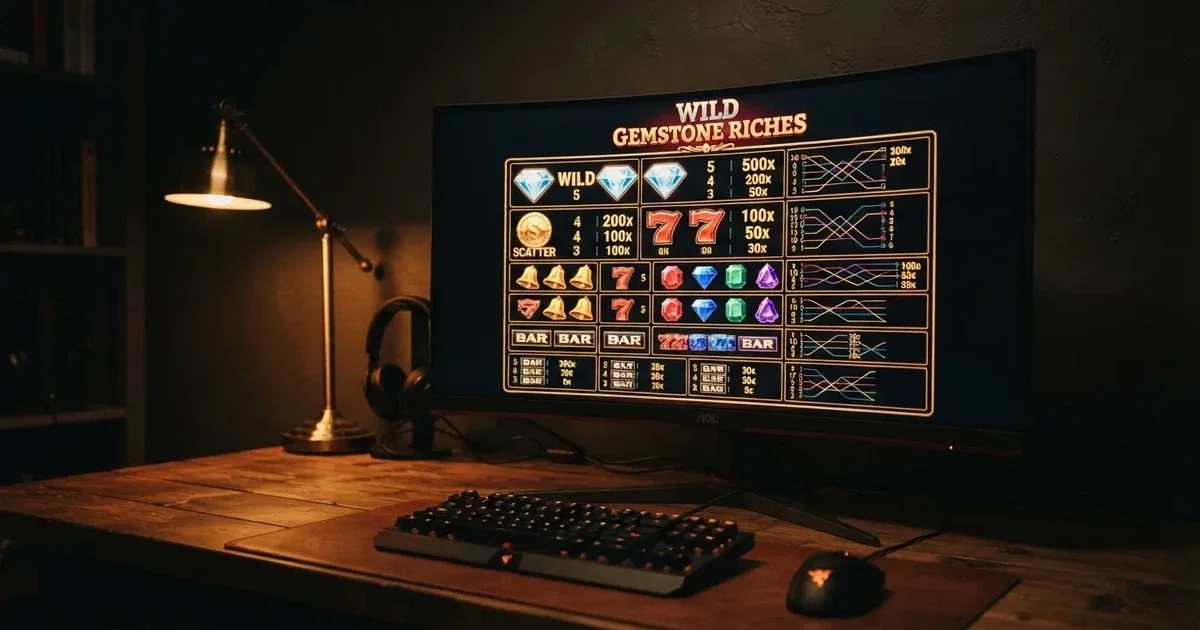
A return-to-player figure on a slot tells a player what share of every dollar wagered the game is designed to return over a very large number of spins. The figure is not a guarantee. It is the mathematical centre the game is built to settle around, the kind of average that becomes reliable only across millions of outcomes. Anyone comparing “best RTP slots” in Australia in 2026 is really asking three questions: how is the percentage calculated, who has checked it, and on what kind of site will a player actually find it published — because the answer to that last question determines whether the rest of it is worth anything. This page works through each, names the operators the regulator has warned, and puts the offer of a “high RTP” alongside the Australian legal position on the sites that publish it.
Data current as of 29 October 2026 and cross-checked against the Australian Communications and Media Authority’s formal-warning register and blocking-request notices.
- The Legal Position on Online Slots in Australia
- Responsible Play: Where the Help Actually Sits
- How a Slot’s RTP Figure Is Calculated, Tested and Published
- The Slots Catalogue This Page Compares
- What the ACMA’s Blocking Record Actually Shows
- Where the High-RTP Slot Numbers Actually Live — Legally
- Reading “Best RTP” Claims on Offshore Sites
- The Choice a Reader Is Actually Making
- Frequently Asked Questions
The Legal Position on Online Slots in Australia
Australia does not license online casino games. The Interactive Gambling Act 2001, tightened by the Interactive Gambling Amendment Act 2017, makes it an offence to provide online casino games, online pokies or in-play betting to a person physically in Australia. No state or territory issues such a licence. Wagering on races and sporting events before the event, lotteries and keno are licensable, and most online bookmakers operating to Australians are licensed in the Northern Territory for tax reasons — 52 of them through the Northern Territory Racing and Wagering Commission, including Sportsbet, Bet365 and Ladbrokes. The commission has no full-time staff and meets once a month in Darwin, which is the practical reality behind a regime that regulates the wagering side while keeping the casino side shut.
The slot games this page is about — pokies-style reels with multiple paylines, free-spin features and bonus rounds — fall on the prohibited side. The minimum age is 18, and the individual player is not prosecuted. The Act targets the provider, not the punter sitting on the other side of it. What that means in practice: an offshore site with a Curaçao licence number at the bottom of its homepage has no Australian consumer protection, no complaints body, no Australian regulator to escalate a refused withdrawal to, and no guarantee that a balance still on the account will be reachable if the regulator orders the site blocked. That is the price of an offshore “best RTP” page: the figure is published, the channel is not licensed, and the rules under which a payout is processed are not the rules the player would have at Crown Melbourne.

Enforcement sits with the Australian Communications and Media Authority. As of a round reported in June 2026, the ACMA has asked Australian internet service providers to block 1,751 illegal gambling and affiliate marketing websites since the first blocking request in November 2019. More than 230 unlicensed services have left the Australian market since enforcement was strengthened in 2017. A blocking round in June 2026 alone added 12 sites: 7Signs, ChromaBet, Donbet, Duospin, Freshbet, Slots Gem, Jacks Club, Lucky Start, Pointsbetz, Spinrise, Vinyl Casino and Wildsino. None of the 12 carried an Australian licence; none of them could have.
The economic picture behind that record is the other half of the file. H2 Gambling Capital’s 2025 report estimates that Australians lose about A$3.9 billion a year to illegal gambling sites, and that the share of gambling going through legal channels fell from 74% in 2021 to 64%. The legal channels have grown; the illegal channels have grown faster. A player choosing an offshore site for its published RTP is choosing the larger of those two channels.
The Credit-Card and Crypto Ban That Tightens It Further
Since 11 June 2024 licensed Australian wagering operators cannot accept credit cards, credit-related products or digital currency as a deposit method; penalties reach A$247,500 for operators that take them. A debit card, bank transfer, PayID/Osko and BPAY are the legal routes. A site asking an Australian player for a credit card or a Bitcoin deposit is, by that one signal alone, running outside the Australian regime. The point matters here because every operator listed later on this page is offshore, and the deposit method is one of the quickest ways to confirm what a licence line at the bottom of a homepage actually means.
The Interactive Gambling Amendment (Gambling Reform) Bill 2026
Parliament passed the Interactive Gambling Amendment (Gambling Reform) Bill 2026 on 19 August 2026. Its advertising and inducement measures commence on 1 January 2027. The provisions are now law but are not yet in force; a 2026 page cannot describe them as live, only as enacted and scheduled. What the new measures target is the way offshore operators market to Australians — bonus offers, affiliate inducements, “high RTP” claims attached to specific deposit terms — rather than the prohibition itself, which remains in place and unchanged.
Responsible Play: Where the Help Actually Sits
The legal frame carries with it a parallel structure for the player who needs to step back. BetStop, the National Self-Exclusion Register, went live in August 2023 and binds every Australian-licensed online and phone wagering service. A player who registers with BetStop is locked out of those licensed services for the period they nominate. The limitation matters here: an offshore casino is not connected to BetStop. A self-exclusion through BetStop does not extend to the sites the ACMA has warned, blocked or asked ISPs to take down. The register is meaningful for the licensed wagering side of the Australian market and silent on the prohibited casino side.
The other end of the support structure is the National Gambling Helpline, 1800 858 858 — free, 24/7 — with web chat at Gambling Help Online. State-level counselling services run alongside it. Each Australian state also operates its own self-exclusion register for the licensed venue side, including the pokies in clubs and hotels outside casinos. The two layers — federal register for licensed wagering, state registers for licensed venues — cover the legal gambling market. They do not, and were never designed to, reach into the offshore sites that publish the “best RTP” lists a reader is comparing.
The H2 Gambling Capital estimate of A$3.9 billion flowing to illegal sites each year is the scale of what those supports are up against. A useful way to read the figure is as the cost of the legal gap, not as a measure of how much a player should expect to lose at any one of the named operators. The per-account figure is not recoverable from the published numbers; the aggregate is.
How a Slot’s RTP Figure Is Calculated, Tested and Published
The Mechanics of the Number
A modern video slot uses five or more reels with 50 or more symbols per reel. The number of distinct combinations on a single line is the product of those symbol counts, which is why a five-reel machine with 50 symbols per reel can offer odds against a top combination as high as 300 million to one. A classic mechanical three-reel machine, by contrast, has around 10 symbols per reel and produces roughly 1,000 possible combinations. The mechanical lineage runs back to Charles Fey’s late-19th-century three-reel machine — horseshoes, diamonds, spades, hearts and the Liberty Bell, with three bells in a row paying the top prize of ten nickels. Bally’s “Money Honey” in 1963 was the first machine with a bottomless hopper and automatic payout of up to 500 coins without an attendant, and the first video slot was developed by Fortune Coin Co. in 1976 in Kearny Mesa, California. None of those steps changed the underlying arithmetic: each machine is built around a payout table that maps symbol combinations to coin returns, and the percentage of every dollar wagered that the table returns across every combination is the return-to-player figure.
That figure is the long-run average. It assumes an effectively infinite number of spins and treats each outcome as independent of the one before it. In any single session, a player can be up or down by an amount that dwarfs the percentage; the RTP is what the game converges to, not what it pays out tonight.
Independent Testing Before Release
A slot’s published RTP is normally accompanied by a certification from an independent testing house — eQube, GLI, BM TestLabs and BMM Testlabs being among the better-known names. The certification covers the random-number generator, the symbol distribution on each virtual reel and the payout table, and it confirms that the published percentage is what the math of the game produces. The certification is not a guarantee that the player will see that return; it is a guarantee that the game is not lying about the underlying math. What the testing does not cover is the version of the game the player is sitting at: a slot is sometimes released in multiple RTP configurations (commonly 96%, 94% and 92%, for instance), and the operator chooses which configuration to host. The “96%” advertised by one site may be the same game the next site hosts at 94%, with the same name and the same theme.
Why Two Slots with the Same Theme Carry Different Figures
Operators commission multiple RTP tiers for the same title because different tiers suit different markets. A jurisdiction with a low statutory minimum — Nevada’s 75%, Mississippi’s 80%, New Jersey’s 83% — can host a low-tier configuration and still comply; a market with tighter expected returns can take the higher tier. The result, on a “best RTP” page, is that two games with the same name and the same art can show different percentages across sites, and a comparison that compares only the headline figure can mislead. The figure on the paytable is the figure for that build of the game on that site, not a property of the title itself.
Disclosing the Figure to the Player
In a licensed Australian venue the relevant figure for a pokies machine is the theoretical return to player, which is set by the state regulator and disclosed at the machine or in venue information material. A player can request the figure from venue staff. The disclosure rules that apply to electronic gaming machines in Australian clubs, hotels and casinos do not extend to the offshore online sites publishing RTP figures for the same kind of game; the offshore sites disclose voluntarily, and the figure they show is the one they have chosen to host, not the one a regulator has required. The distinction is the working difference between an Australian-licensed pokie and an offshore “best RTP” slot, even where the game artwork is identical.
The Slots Catalogue This Page Compares
The 11 brands below are not a ranking of recommended casinos to play at. They are the operators the ACMA itself has issued formal warnings to, in the order the warnings appear on the regulator’s record, for offering prohibited interactive gambling services to people in Australia. Every one of them is offshore, every one of them offers online pokies-style slot games, and every one of them has been the subject of an ACMA finding that those services breach the Interactive Gambling Act. Reading them as anything else is reading past the legal frame the regulator has set.
| Brand | ACMA action and date | Operator named by the ACMA | Subject support |
|---|---|---|---|
| RocketPlay | Formal warning, March 2026 (Pulsup Ltd); earlier Dama N.V., May 2022 | Pulsup Ltd | — |
| Level Up Casino | Formal warning, May 2022 | Dama N.V. | Listed by BGaming as a host site |
| Woo Casino | Formal warning, March 2025 | Dama N.V. | — |
| Spirit Casino | Formal warning, May 2025 | Dama N.V. | — |
| National Casino | Formal warning, July 2025 | Consolutetish S.R.L. | Referenced on Wikipedia’s gambling-industry entries |
| Bizzo Casino | Formal warning, July 2025 (Consolutetish S.R.L.); earlier TechSolutions, 2022 | Consolutetish S.R.L. | — |
| Ignition Casino | Formal warning, July 2025 | Bamboo Media | — |
| Instant Casino | Formal warning, February 2025 | EOD Code SRL | — |
| Jackbit | Formal warning, April 2026 | Ryker B.V. | — |
| Casino Intense | Formal warning, April 2025 | Sterplay Holding Ltd | Referenced in coverage on ABC News, the ACMA’s own notices, and Crown Melbourne’s reporting |
| Sky Crown | Formal warning, September 2022 | Hollycorn N.V. | — |
The dates and operators above are reproduced from the ACMA’s formal-warning register as cited by the regulator. The “subject support” column reflects what the research process could independently confirm about each brand’s slot catalogue — BGaming listing the site as a host, Wikipedia entries naming it in coverage, or news outlets referencing it. Where the column is empty, the research did not turn up an independent listing of the brand’s games outside the marketing material the brand itself publishes; that is not a finding that the games are absent, only that no third-party source was identified during the look-up.
Two of the operators recur across more than one entry. Dama N.V. has been the subject of formal warnings for Bambet, Dazard, Level Up, Rocketplay, Wild Tornado and Cobra Casinos in May 2022, and further warnings for Woo Casino in March 2025 and Spirit Casino in May 2025. TechSolutions Group was warned over Bizzo Casino in 2022; Consolutetish S.R.L. was warned over National Casino and Bizzo Casino in July 2025. The pattern is the wider one: the operator behind a brand changes as licences are bought, sold or restructured, and a warning to one corporate entity does not always mean the player-facing site has changed hands.
RocketPlay
The ACMA issued a formal warning to Pulsup Ltd over Rocketplay in March 2026. A separate warning over Rocketplay went to Dama N.V. in May 2022, which makes the brand a useful illustration of the operator-rotation problem above: the player-facing name held steady while the corporate entity behind it changed at least once. The site’s slot catalogue is typical of the offshore category — multiple providers, multiple RTP configurations per title, no published tie to an Australian-licensed game. The research process did not identify an independent listing of RocketPlay’s catalogue outside the brand’s own marketing, so what is on offer has to be taken from the site’s own pages. Under the IGA, the service itself remains prohibited in Australia. The site can be added to an ACMA blocking request; a balance on it when it is blocked is, in practical terms, frozen.
Level Up Casino
The May 2022 warning to Dama N.V. named Level Up among six brands — Bambet, Dazard, Level Up, Rocketplay, Wild Tornado and Cobra Casinos. Level Up is referenced by BGaming, the slot provider, as one of its host sites, which is the kind of independent confirmation of a slot catalogue that the no-data entries lack. The reference is to the BGaming catalogue being available on the site; it does not confirm a particular RTP figure for any individual title. The legal position is the same as the other entries: Level Up cannot be licensed for Australian players, the ACMA has already acted against it, and any “best RTP” figure on the site is published under the operator’s own disclosure rather than under an Australian rule.
Woo Casino
Dama N.V. was warned over Woo Casino in March 2025. The site carries the usual multi-provider catalogue and the usual multiple-RTP-configuration issue: a single title may run at a different percentage on Woo than on another site, with the configuration set by the operator. No third-party listing of Woo Casino’s slot catalogue was identified in the research process. The site’s presence in the ACMA’s register is the controlling fact for an Australian player; the slot figures on it are the operator’s own claim, not a regulatorily verified one.
Spirit Casino
A further Dama N.V. warning, in May 2025, covered Spirit Casino. The pattern across the Dama N.V. warnings is itself worth noting: one corporate entity has been warned over at least eight separate brands since 2022. A player reading “best RTP slots” lists that include Spirit Casino is reading a brand whose operator has already been told by Australia’s regulator that the service it is offering to Australians is prohibited. The site’s own RTP figures are not independently audited at the configuration level by an Australian body; the underlying RNG and payout-table certification, where it exists, comes from an offshore testing house and is for the build of the game the operator has chosen to host.
National Casino
The July 2025 warning went to Consolutetish S.R.L. over National Casino and Bizzo Casino. National Casino is referenced in Wikipedia’s gambling-industry entries as one of the brands in the offshore segment. The reference is to its presence in the industry, not to a specific slot title or a specific RTP figure. The legal position is unchanged: the service is prohibited under the IGA, the regulator has acted, and the site’s slot catalogue — however many BGaming, Pragmatic Play or NetEnt titles it carries — sits on the prohibited side of the Australian line.
Bizzo Casino
Bizzo Casino was warned twice: first to TechSolutions (CY) Group Limited and TechSolutions Group N.V. in 2022, then to Consolutetish S.R.L. in July 2025. Two warnings across two corporate entities for the same player-facing brand is a fair summary of how offshore operators move between licence regimes while the site keeps its name. The research process did not identify an independent third-party listing of Bizzo’s slot catalogue. For a player comparing “best RTP” claims, what is relevant is the operator behind the brand — Consolutetish S.R.L. as of the most recent warning — and the fact that the Australian regulator has found the service prohibited twice.
Ignition Casino
The July 2025 warning to Bamboo Media named Ignition Casino. Ignition has been part of the offshore segment for the better part of two decades; its name appears across a range of offshore and Australia-facing affiliate listings. None of that affects its legal status in Australia, which is unchanged. The site’s slot catalogue, like the others on this list, is published under the operator’s own disclosure. The research process did not turn up an independent listing of Ignition’s games outside the brand’s own marketing.
Instant Casino
EOD Code SRL received a formal warning over Instant Casino in February 2025. Instant Casino is the kind of brand that surfaces in “best RTP” comparison lists pitched at Australian players; the warning that has been issued against it is the fact that an Australian player needs to know before reading the rest of the comparison. The site’s RTP figures are the operator’s own publication. No independent third-party listing of its slot catalogue was identified in the research.
Jackbit
Ryker B.V. was warned over Jackbit and CasinOK in April 2026. Jackbit sits in the newer end of the offshore segment, with a cryptocurrency-friendly deposit set and the multi-provider catalogue that the segment has standardised around. The site’s slot offerings are published under the operator’s own disclosure; no independent listing of its catalogue was identified in the research process. The legal position is the same as the other entries: prohibited in Australia, the subject of an ACMA finding, and therefore subject to a future blocking request.
Casino Intense
Sterplay Holding Ltd was warned over Casino Intense in April 2025. Casino Intense is one of the more frequently named brands in Australian-facing affiliate material, which is itself a useful illustration of why this page is structured as a regulator’s record rather than a comparison of offers. ABC News, the ACMA’s own publications and Crown Melbourne’s reporting all reference Casino Intense in passing; none of those references confer an Australian licence on the brand. The slot catalogue on the site is published under the operator’s own disclosure.
Sky Crown
Hollycorn N.V. received a formal warning over Sky Crown and Blue Leo in September 2022. Hollycorn has been the subject of further attention since; the ACMA’s enforcement record against operators carrying multiple brands continues to accumulate. Sky Crown’s slot catalogue, like the other entries in this list, is published under the operator’s own disclosure. No independent third-party listing was identified in the research process.
What the ACMA’s Blocking Record Actually Shows
The arithmetic on the blocking record is straightforward. As of the round reported in June 2026, the ACMA had asked Australian ISPs to block 1,751 illegal gambling and affiliate marketing sites since the first blocking request in November 2019. The time elapsed is roughly six and a half years, which gives a long-run average of around 270 blocking requests a year across the period — though the rate is not constant, and the 2024 and 2025 rounds in particular ran at well above that average as the ACMA moved to large lists. The round reported on 26 June 2026 added 12 sites in a single update; earlier rounds added more. The cumulative total reflects both the number of new sites coming online and the ACMA’s increased willingness to ask ISPs to act on them.
The 11 operators on the previous list are not blocked by name in the same way the 12 sites in the June 2026 round are — most of the formal warnings predate the blocking request for the brand, or run alongside it. What the table shows, working from the published totals, is the rate at which the ACMA is willing to put a site behind a blocking request once a warning has been issued. The trend across 2019 to 2026 is one of acceleration: the agency moved from single-site blocking requests in its early years to round-based blocking of lists of a dozen sites at a time by the mid-2020s. The implication for a player is that a warning is not a soft outcome. A warning is the step before the site disappears behind an ISP block.
Where the High-RTP Slot Numbers Actually Live — Legally
The honest answer to “best RTP slots in Australia” is that the strongest RTP figures available in the Australian market sit on the licensed-electronic-gaming-machine side, in clubs and hotels, rather than on the offshore sites that publish “best RTP” comparison lists. New South Wales had 87,298 pokies-style slot machines outside casinos as of June 2023; Victoria, 26,380 across 2021–22; Queensland, 21,122 as of October 2023; South Australia, 11,672 as of September 2023; and the ACT, 3,587 as of November 2023. New South Wales legalised slot machines in 1956; by 2010 Australia operated an estimated 97,103 gaming machines outside casinos — a per-capita rate about five times that of the United States.
Each of those machines runs at a theoretical return-to-player figure set by the state regulator. New South Wales venues, for instance, disclose the figure on the machine or in venue information material, and a player can ask venue staff for the precise percentage. The percentage applies to the build of the game on that machine; the regulator’s approval process for the game is the closest Australian equivalent to the independent testing done by an offshore lab for an online slot. The setting is licensed, the figure is regulatorily set, and the venue is subject to state-level consumer-protection and harm-minimisation rules. None of that translates to the offshore sites publishing “best RTP” claims to Australians under the IGA.
The US comparison is instructive in a different way. State regulation in the US sets minimum slot payout percentages by jurisdiction — Nevada at 75%, Mississippi at 80%, New Jersey at 83%. Those are floors, not targets; the actual returns on US machines run well above the minimum. Australian state regulators set returns on electronic gaming machines through their own approval processes, and the figures are not directly comparable across jurisdictions — but the structural similarity is that the figure is regulatorily defined and disclosed, rather than chosen by the operator and presented to the player.
Reading “Best RTP” Claims on Offshore Sites
Three practical points carry across every site on the list above, and across the wider offshore segment the page is built around. They are worth setting out because the comparison the page is built to inform is mostly a comparison of marketing language.
The figure is the operator’s choice. A single title can be hosted at any of several RTP tiers, and the operator decides which tier to run. A “96%” on one site can be a “92%” on another, for the same game with the same theme. The published number on the paytable is the figure for that build of the game on that site. A reader comparing titles needs to compare configurations, not titles.
The certification covers the math, not the configuration. Independent testing houses confirm that the random-number generator, the symbol distribution and the payout table produce the published return. They do not certify that the player is sitting at the configuration that the certification was done on. The certification is necessary; it is not the same as a guarantee.
A long-run average is not a session result. The 96% that the math converges to over millions of spins is the right way to read the percentage; the 0% or 200% that the next hundred spins can return is the wrong one. A player whose session finishes above the figure has not “beaten” the RTP; a player whose session finishes below it has not been cheated. Both are consistent with the same underlying percentage.
The Choice a Reader Is Actually Making
The angle this page takes is the choice the search term implies, not the choice the marketing language frames. Someone typing “best RTP slots Australia 2026” into a search engine is making a choice between two paths: the licensed Australian pokie, with a regulatorily set return, disclosed at the venue, and subject to state-level consumer protection; or an offshore online slot, with a published RTP figure chosen by the operator, an offshore testing-house certification, and no Australian recourse if a withdrawal stalls or a bonus term is read against the player. Both paths cost the player money over time — the house always has an edge, and no slot, online or venue-based, returns more than it takes in aggregate.
What changes between the two paths is what the percentage is anchored to, who has checked it, and what the player can do if the result is not what the marketing suggested. The licensed path answers those three questions with a regulator and a venue staff; the offshore path answers them with the operator’s own pages and an ACMA finding that the service is prohibited in Australia. The page is built to lay out both paths honestly. The decision between them is the reader’s.
Frequently Asked Questions
How is a slot’s RTP percentage calculated over the long run?
The figure is the sum of every payout in the game’s paytable multiplied by the probability of that combination occurring, divided by the total amount wagered across every possible spin. With a five-reel machine running 50 symbols per reel, the number of possible combinations on a line is the product of those symbol counts, which is why odds against the top combination can run to 300 million to one. The percentage converges to its published value only across an effectively infinite number of spins.
Does a slot’s RTP figure guarantee any result over a single session?
No. The figure is a long-run average across millions of outcomes. A single session of a few hundred or a few thousand spins can return almost anything — well above the figure, well below it, or close to it. The percentage is what the math of the game is designed to settle around, not what the next session will pay out.
Are RTP figures independently tested before a slot is released?
Yes. Testing houses such as eQube, GLI and BMM Testlabs certify the random-number generator, the symbol distribution and the payout table of a slot before it goes live, and confirm that the published return is what the math of the game produces. The certification covers the build of the game it was done on; it does not extend to a different RTP configuration the operator may choose to host later.
How many licensed gaming machines operate outside casinos in Queensland compared with New South Wales?
New South Wales had 87,298 pokies-style gaming machines outside casinos as of June 2023. Queensland had 21,122 as of October 2023. New South Wales operates roughly four times as many non-casino machines as Queensland, reflecting earlier legalisation — NSW legalised slot machines in 1956 — and a more permissive venue regime.
Why do two slots with the same theme sometimes carry different RTP figures?
Operators commission multiple RTP tiers for the same title to suit different markets. A jurisdiction with a low statutory minimum — Nevada’s 75%, Mississippi’s 80%, New Jersey’s 83% — can host a low-tier configuration and still comply; other markets take the higher tier. Two sites hosting the same game with the same name and art can therefore run different RTP configurations, and a “best RTP” comparison needs to compare configurations, not titles.
Can a player request the RTP figure for a specific licensed pokies machine in Australia?
Yes. State regulators require that the theoretical return to player for a licensed electronic gaming machine be disclosed on the machine or in venue information material, and venue staff can provide the figure on request. The same disclosure rule does not apply to offshore online sites; the figure they publish is the operator’s own choice rather than a regulatorily required one.