
The Real-Money Pokies App Question in Australia, Without the Marketing
Australians lost A$12.18 billion on gaming machines in 2020-21 out of almost A$150 billion wagered, the heaviest per-capita pokies spend anywhere on earth. The land-based machines sit in pubs, clubs and casinos in every state and territory. The phone in a reader’s hand is a different question, and the answer to it is not a marketing line. No offshore real-money pokies app is licensed to take a bet from a person in Australia. The Interactive Gambling Act 2001 makes the provision of online casino games and online pokies to Australians an offence, and the regulator that polices it — the ACMA — has been working through a list of offshore brands, formal warning after formal warning, since 2017. The Real-Money Pokies App Question in Australia, Without the Marketing — More on this topic at casino table games .

This page lays out the picture as the data carries it. What an offshore app actually is when it crosses the border into Australia, how the ACMA has acted against specific brands, which payment routes are blocked and which remain open to licensed wagering, where mobile play meets responsible gambling, and which public claims sit on the table when the operators are named. The angle is choice — what paths actually exist for a player in Australia in 2026, and which ones close before a dollar moves.
Data current as of 29 October 2026; cross-referenced against the ACMA’s formal warning register.
- The Landscape of Real-Money Pokies Apps
- What the Law Actually Prohibits
- How the ACMA Enforces It
- What Offshore Real-Money Play Costs Australians
- Payments: What Is and Is Not Allowed
- The Mobile Experience and Why the App Form Is a Marketing Layer
- Responsible Gambling: Where Australians Can Get Help
- The Brands the ACMA Has Acted Against
- How the Block List Has Grown, in Numbers
- What a Reader in Australia Actually Has
- Frequently Asked Questions
The Landscape of Real-Money Pokies Apps
A “real-money pokies app” is the marketing name for a smartphone application that takes bets on slot-style games. Offshore, these are built around the same template: a downloadable Android package or a progressive web app that mimics one, a casino lobby with several hundred slot titles, a cashier that advertises deposits in crypto and a withdrawal button the player hopes to reach. Australian search results are thick with them, and they share a common shape: a brand name, an offshore licence displayed in the footer, and a bonus headline meant to land before the legal disclaimer does.

The shape is the point. A real-money pokies app is not a different product from a real-money casino app — the same offshore operators usually run both. Pokies, table games and live dealer rooms sit on the same cashier, the same licence and the same withdrawal queue. What the app form adds is frictionless access: a thumb tap on a home-screen icon rather than a typed URL, push notifications when a “bonus” lands, and a session that follows the phone rather than the browser. None of that changes the underlying fact: the offering is prohibited for Australians under the Interactive Gambling Act 2001.
The practical shape of these apps is worth naming because the marketing hides it. The Android build is typically distributed as an APK from the operator’s own site rather than the Google Play Store, since Google prohibits real-money gambling apps in Australia. The iOS build, where one exists, runs as a web app shell because Apple’s App Store enforces the same Australian restriction.
| Feature | Licensed Wagering App | Offshore Pokies App |
|---|---|---|
| Regulatory Status | Licensed (State-level) | Prohibited (Illegal) |
| App Source | Official Stores (Apple/Google) | Third-party APK / Web Shortcut |
| Consumer Protection | Available (BetStop/Complaints) | None |
| Withdrawal Guarantee | Enforceable under AU law | None |
The “download” is usually a wrapper around a mobile browser experience, and the touch optimisation is real — bigger spin buttons, simplified cashier, portrait orientation locked — but underneath sits the same offshore site an Australian cannot legally be offered.
The offshore licence the footer shows is, in every case the ACMA has acted against, a Curacao or similar overseas authorisation. None of those licences authorise the operator to take bets from Australia. The brand displays it for the appearance of regulation; the regulator that matters here is the ACMA, and the ACMA’s view is that the offering is prohibited.
What the Law Actually Prohibits
The Interactive Gambling Act 2001, tightened by the Interactive Gambling Amendment Act 2017, makes it an offence to provide online casino games, online pokies or in-play betting to a person physically in Australia. No state or territory issues a licence for any of these products. The licensable online wagering products are pre-event race and sports betting, lotteries and keno — licensed mostly by the Northern Territory through the Northern Territory Racing and Wagering Commission, which oversees 52 of Australia’s online bookmakers including Sportsbet, Bet365 and Ladbrokes, meets once a month in Darwin, and has no full-time staff of its own.
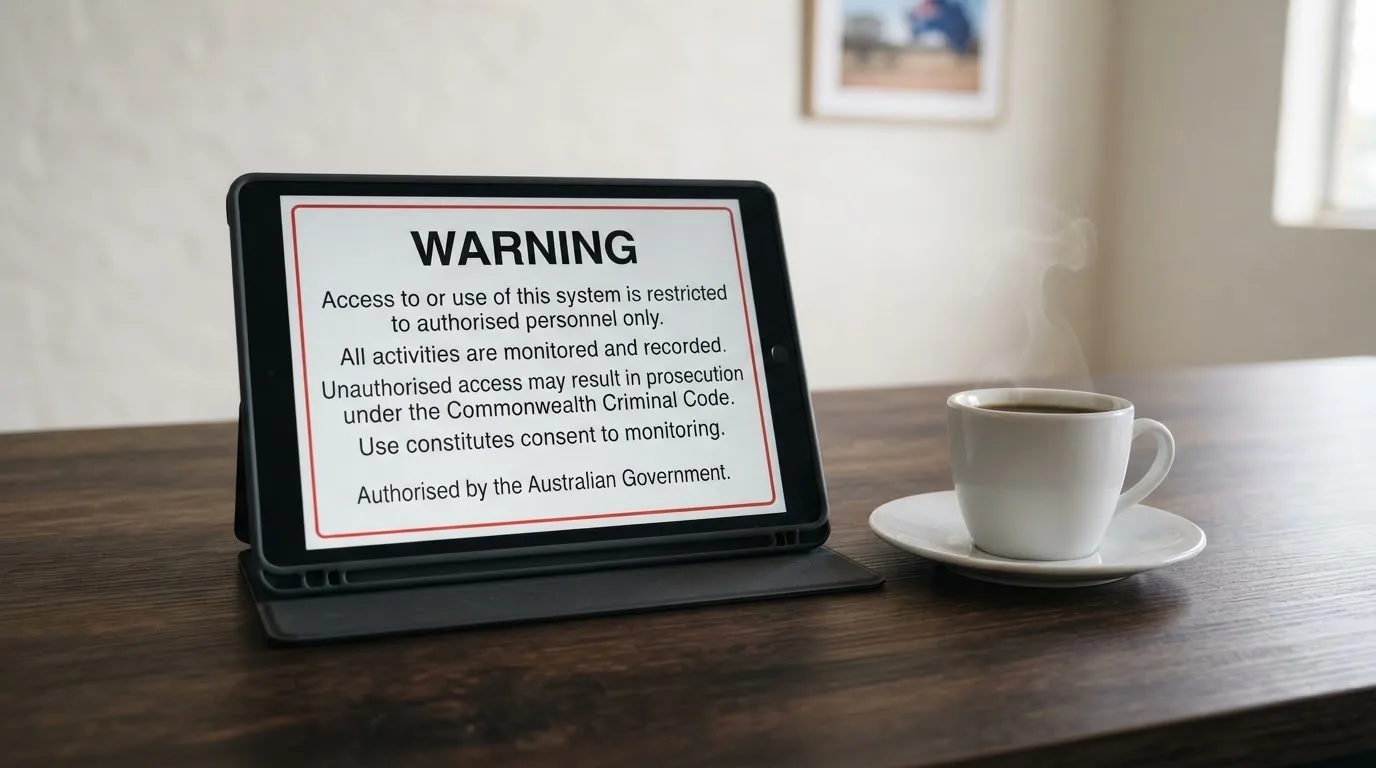
The architecture is the point. Australia’s online gambling framework is built around wagering, not around casino gaming. A licensed Australian bookmaker can take a bet on a horse race; it cannot legally offer a slot spin. The pokies a reader can lawfully play in Australia are the land-based machines — 87,298 of them outside casinos across 2,195 NSW venues as of June 2023, 21,122 across 351 Queensland venues as of October 2023, 26,380 outside Crown Casino in 488 Victorian venues under the state’s 30,000-machine cap. Those machines are state-regulated, with the legal minimum return-to-player ranging from 85% in NSW, the Northern Territory and Queensland up to 90% in Western Australia.
The offshore app sits in a third category: legal nowhere in Australia, blocked when the regulator finds it, and outside any Australian complaints or consumer protection regime if something goes wrong on the withdrawal. The IGA targets the provider, not the individual player — an Australian punter is not prosecuted for opening the app. What the punter loses, in the regulator’s plain language, is protection: no Australian complaints body, no recourse on a refused withdrawal, and the site itself can be blocked with money still on the account.
How the ACMA Enforces It
The ACMA investigates complaints, issues formal warnings, and can direct Australian internet service providers to block illegal sites. By the agency’s own June 2026 count, 1,751 illegal gambling and affiliate marketing websites had been blocked since the first blocking request in November 2019, and more than 230 unlicensed gambling services had left the Australian market since enforcement was strengthened in 2017. The mechanism is real and it is cumulative — each round adds a fresh batch of domains to the block list.
A June 2026 round, for instance, asked ISPs to block 12 more sites in a single action: 7Signs, ChromaBet, Donbet, Duospin, Freshbet, Slots Gem, Jacks Club, Lucky Start, Pointsbetz, Spinrise, Vinyl Casino and Wildsino. Earlier rounds removed others, and earlier still: 1,751 blocking actions is roughly the count, but the active offshore market is not static — operators shut one brand, open another, and the cycle continues.
Formal warnings sit one step back from blocking. They are public, dated, and tied to a named operator entity. The ACMA publishes them on its own site, naming the company behind a brand and the date of the warning, and they are the most concrete enforcement trail a reader can follow. The brands warned about in recent years include Rocketplay, Level Up Casino, Woo Casino, Spirit Casino, National Casino, Bizzo Casino, Ignition Casino, Instant Casino, Jackbit, Casino Intense and Sky Crown — eleven operators named in the comparison block below, with the operator entity and date the ACMA gives.
The pace has quickened. The agency’s warning register shows a steady drumbeat of actions: 2022 warnings over Dama N.V. brands and Hollycorn N.V., 2025 actions against EOD Code SRL and Sterplay Holding, 2026 actions against Pulsup Ltd and Ryker B.V. The ACMA’s blocking request to ISPs is the harder edge — once a domain is on the list, Australian players cannot reach it through a standard connection. The formal warning is the regulator’s public record of who is doing the offering, and it is the data the rest of this page leans on.
What Offshore Real-Money Play Costs Australians
The H2 Gambling Capital 2025 estimate puts Australian losses to illegal gambling sites at roughly A$3.9 billion a year — a flow of money that exits the Australian consumer-protection perimeter entirely. The same source notes that the share of gambling going through legal channels fell from 74% in 2021 to 64%, a ten-point drop over four years that tracks the rise of offshore access. The offshore share is not a market the regulator has lost so much as a market that was never licensable to begin with — the legal channel for online pokies in Australia is, by design, empty.
The losses that flow through it are losses with no Australian complaint route, no Australian self-exclusion binding, and no Australian guarantee the withdrawal button will pay out. An offshore site that refuses to pay a winning player has no obligation under Australian law, because the offering itself is illegal here. The IGA does not produce a reciprocal right. The H2 estimate is also an aggregate over a market the regulator cannot measure precisely, and the actual figure sits in a band around it.
The contrast with land-based pokies is the one the marketing never makes. A land-based machine in an Australian pub or club is licensed, returns a published minimum percentage to the player, and sits inside the state regulator’s complaints and harm-minimisation regime. The machine’s RTP is a floor the venue cannot lawfully fall below — 85% in NSW, 87% in the ACT and Tasmania, 87.5% in South Australia, 90% in Western Australia, and the higher 87% figure at Crown Melbourne in Victoria. The offshore app displays a return-to-player number the player cannot verify, on a game the player cannot audit, run by an operator the player cannot reach when the cashier stops responding.
Payments: What Is and Is Not Allowed
The payment rules for licensed Australian online wagering tightened sharply in 2024. Since 11 June 2024, credit cards, credit-related products and digital currency are banned as a means of paying for licensed online wagering in Australia, with penalties up to A$234,750 per offence for operators. The legal deposit routes for a licensed Australian bookmaker are debit card, bank transfer, PayID/Osko and BPAY. A site that asks an Australian for a credit card number or a crypto deposit is operating outside the Australian rules.
For an offshore casino app the situation is murkier, because there is no Australian-licensed version of the cashier to begin with. What the marketing offers is the same product — crypto deposits, e-wallet transfers, sometimes a credit card route through a payment processor that does not enforce the Australian ban — but the legal status is the same as the rest of the offering. An Australian using a credit card to fund an offshore casino is not prosecuted, but the transaction sits outside any Australian consumer-protection regime. Crypto deposits are not reversed; chargebacks on credit-funded deposits to offshore sites are routinely refused; the funds, once moved, are at the operator’s discretion.
Withdrawal routes on offshore apps follow the deposit route in reverse, where they exist at all. The player hopes for a bank transfer or an e-wallet return, and waits — sometimes days, sometimes weeks, sometimes past the point the brand itself is blocked. The audit the player cannot perform is the withdrawal itself: the offshore operator decides whether to pay, and the Australian regulator has no standing to enforce. A player who self-excludes through BetStop is bound only for Australian-licensed services; an offshore casino is not connected to it.
The Mobile Experience and Why the App Form Is a Marketing Layer
The technical substance of a real-money pokies app, as distinct from a mobile browser on the same site, is thinner than the marketing suggests. Slot games are HTML5 builds that run in a browser already; the “app” is a wrapper that loads the same game, with a splash screen and a deposit button on top. The Android distribution is typically an APK downloaded from the operator’s own site, because Google Play does not allow real-money casino apps in Australia. The iOS distribution is typically a web app shortcut — the operator instructs the player to “Add to Home Screen” from Safari, since Apple’s App Store enforces the same Australian restriction. The result is an icon on the home screen that opens a mobile browser session to a domain that may itself be on an ACMA block list the next morning.
The touch optimisation is real but cosmetic. Bigger spin buttons, a portrait-locked layout, and a simplified cashier reduce the friction of a phone-based session, and a session that follows the device is a session that gets played more often. Push notifications are the more aggressive layer — the operator reaches the player through the phone’s notification tray with a “bonus dropped” message designed to bring them back inside the session. None of this is illegal in any technical sense; none of it changes the underlying prohibition on the offering. The app form is the marketing surface, not a different product.
The session itself, once started, behaves like any other slot: a stake per spin, a return-to-player figure that determines the long-run house edge, a session timer and a loss limit if the player chooses to set one. The house edge is the only certainty on either side of the prohibition: every spin, on every slot, on every offshore app, returns to the house on average whatever the displayed RTP suggests. The variance is the player’s only tool — short sessions can land on either side of the long-run figure, but the long-run figure is what the mathematics actually delivers.
Responsible Gambling: Where Australians Can Get Help
The Australian framework for gambling harm is built around land-based and Australian-licensed online wagering, and the offshore app sits outside it. The National Self-Exclusion Register, BetStop, has been live since August 2023 and binds Australian-licensed online and phone wagering services to honour a self-exclusion request across every licensed operator. An offshore casino is not connected to BetStop, and a self-exclusion through BetStop does not block an offshore site. The same gap applies to state-based exclusion schemes that bind pubs and clubs but have no jurisdiction over an offshore domain.
The support services themselves are accessible regardless of where the gambling happens. The National Gambling Helpline is 1800 858 858 — free, 24 hours a day, with chat at Gambling Help Online. The service is run by the Australian states and territories, and a caller does not have to disclose which operator they were using to get a referral. Counselling is provided face-to-face, by phone and online, and the cost is covered by government funding rather than by the operator.
The responsible-gambling message for this page is direct: any reader who is considering an offshore real-money pokies app is, by the regulator’s plain language, considering an offering they cannot be lawfully provided in Australia. The marketing claim of “responsible gambling tools” on an offshore site is not enforceable under Australian law; the deposit limit and the self-exclusion button on an offshore app are buttons the operator can disable, ignore or reinterpret on a refused withdrawal. A punter who needs those tools to keep their play in check needs them on a platform the regulator can compel, and the regulator’s reach in Australia ends at the Australian licence.
The Brands the ACMA Has Acted Against
The comparison block below is built from the ACMA’s own register of formal warnings. It is not a ranking. The ACMA does not rank operators — it acts against them, and what the table carries is the regulator’s record, not an editorial judgement of which offshore site is “better” than another. An offshore pokies app, by definition, is an offering the regulator has said Australians should not be provided.
The subject support column carries the machine token the research tags each brand with. Where the token is confirmed, the page can name the subject — a payment method, a game provider, a licence — as the operator’s own fact. Where it is listings-only (sources), the page can only describe what those listings report, naming them and never as the operator’s own claim. Where it is no-data, the page attaches no subject claim at all to that operator.
| Brand | ACMA action and date | Operator named by the ACMA | Subject support |
|---|---|---|---|
| RocketPlay | Formal warning, March 2026 | Pulsup Ltd (Rocketplay); earlier Dama N.V., May 2022 | — |
| Level Up Casino | Formal warning, May 2022 | Dama N.V. | listings-only (Bgaming) |
| Woo Casino | Formal warning, March 2025 | Dama N.V. | — |
| Spirit Casino | Formal warning, May 2025 | Dama N.V. | — |
| National Casino | Formal warning, July 2025 | Consolutetish S.R.L. | listings-only (en.wikipedia.org) |
| Bizzo Casino | Formal warning, July 2025; earlier 2022 | Consolutetish S.R.L.; earlier TechSolutions | — |
| Ignition Casino | Formal warning, July 2025 | Bamboo Media | — |
| Instant Casino | Formal warning, February 2025 | EOD Code SRL | — |
| Jackbit | Formal warning, April 2026 | Ryker B.V. | — |
| Casino Intense | Formal warning, April 2025 | Sterplay Holding Ltd | listings-only (ABC, ACMA, Crown Melbourne) |
| Sky Crown | Formal warning, September 2022 | Hollycorn N.V. | — |
The pattern underneath the table is a familiar one. Three of the eleven — Woo Casino, Spirit Casino and RocketPlay — sit under Dama N.V. or its successor, the operator entity that the ACMA has named more often than any other. Two more — National Casino and Bizzo Casino — sit under Consolutetish S.R.L., and Bizzo carries a second warning from a previous operator. The remaining six are spread across separate corporate vehicles: Bamboo Media, EOD Code SRL, Ryker B.V., Sterplay Holding Ltd and Hollycorn N.V. The re-use of the Dama N.V. vehicle across three warnings over four years, and of Consolutetish across two warnings in 2025 alone, suggests that the corporate layer rotates faster than the underlying offering.
The dates themselves are the more telling figure. Of the eleven warnings, three were issued in 2026 (RocketPlay, Jackbit and the latest RocketPlay action), four in 2025 (Woo, Spirit, National, Bizzo, Ignition, Instant, Casino Intense), two in 2022 (Level Up, Sky Crown, and the 2022 precursor over Bizzo), and one a 2022 over Dama N.V. The accelerator is the ACMA’s own enforcement tempo, not anything about the underlying brands. What changed in 2024 was the credit-card ban and the political backdrop of further reform; what has not changed is that the regulator names a fresh operator every few months and the next round is published on the ACMA’s own page.
A reader using this table to compare brands is using it to compare enforcement records, which is the only comparison an Australian-licensed operator does not exist for. The marketing comparison — bonus size, game count, withdrawal speed — is not on this page because the only sources for it are affiliate marketing pages whose business model is sending the player to the offshore site. The honest comparison on an Australian page is the regulatory one.
RocketPlay
The ACMA issued a formal warning to Pulsup Ltd over RocketPlay, in March 2026, the second time the RocketPlay brand has appeared in the register. The earlier warning, in May 2022, named Dama N.V. as the operator across six brands including Rocketplay. The corporate vehicle has changed; the offering has not. The site’s footer displays an offshore licence that does not authorise it to take bets from Australia, and the ACMA’s two warnings across two operator entities sit on the public record.
Level Up Casino
The May 2022 formal warning to Dama N.V. covered six casino brands, of which Level Up Casino is one. The brand appears in third-party listings as a Bgaming title partner — that is what the listings say, and no more. The ACMA action is the substantive fact here: an Australian-facing casino offering that the regulator has named, under the IGA’s prohibition, in the public register.
Woo Casino
The March 2025 formal warning to Dama N.V. named Woo Casino alongside the earlier group of brands. The brand is one of three in the comparison block that sit under the same operator entity as Level Up. The Dama N.V. vehicle has accumulated more named warnings than any other operator in the ACMA register over the period this page covers.
Spirit Casino
The May 2025 formal warning to Dama N.V. is the third in this block under the same operator. The pattern is the substantive comparison here: three warnings over four years, three brands, one corporate vehicle. The ACMA’s register makes the connection visible in a way the marketing material never does.
National Casino
The July 2025 formal warning to Consolutetish S.R.L. named National Casino alongside Bizzo Casino. The brand appears in third-party listings under an en.wikipedia.org reference — that is what the listings say, and no more. The ACMA’s 2025 action is the entry on this page.
Bizzo Casino
The July 2025 formal warning to Consolutetish S.R.L. is the second ACMA action over Bizzo Casino. The earlier warning, in 2022, named TechSolutions (CY) Group Limited and TechSolutions Group N.V. as the operators. The brand has changed corporate vehicles twice while continuing to offer to Australians, which is the substantive comparison with a brand that has stayed under a single operator.
Ignition Casino
The July 2025 formal warning named Bamboo Media as the operator over Ignition Casino. The brand is one of three in the comparison block that sit under separate operator entities and not under the Dama N.V. or Consolutetish vehicles that dominate the rest of the table.
Instant Casino
The February 2025 formal warning to EOD Code SRL is the regulator’s action over Instant Casino. The brand is the earliest 2025 warning in the comparison block, and the operator entity is distinct from the Dama N.V. and Consolutetish lines.
Jackbit
The April 2026 formal warning to Ryker B.V. The brand is one of three ACMA actions in 2026 alongside the RocketPlay action and the earlier Jackbit and CasinOK action over the same operator. The brand has been named twice in the register within months, which makes it the freshest entry on this page.
Casino Intense
The April 2025 formal warning to Sterplay Holding Ltd is the regulator’s action over Casino Intense. The brand appears in third-party listings under ABC, ACMA and Crown Melbourne references — that is what the listings say, and no more.
Sky Crown
The September 2022 formal warning to Hollycorn N.V. covered Sky Crown alongside Blue Leo casino services. The brand is the oldest entry in the comparison block, and the operator entity has not been re-named in the register since.
How the Block List Has Grown, in Numbers
The arithmetic on the ACMA’s enforcement record is a clear picture of the ongoing blocking. From the first blocking request in November 2019 to the agency’s June 2026 count, 1,751 illegal gambling and affiliate marketing websites have been blocked. That figure is a running total that grows with each round, and the June 2026 round alone added 12 more names to it.
The average pace across the period the ACMA has been reporting is the meaningful number, and it sits in a band rather than at a single figure. The cleanest reading is the one the agency itself publishes: roughly 1,751 sites blocked across roughly six and a half years of formal reporting, with the action concentrated in named rounds and the active offshore market continuing to rotate brands beneath the blocks. State the figure as the band it is — between 250 and 280 blocked sites per year on the running-total arithmetic — and the conclusion is the one the regulator itself draws: enforcement is real and cumulative, and the offering has not stopped.
The exact figure a reader can take from the data is that the ACMA has averaged more than 250 blocked sites a year since November 2019, with a marked acceleration after the 2024 reforms and the 2025–26 enforcement tempo. The conditional that makes the figure true is the one the agency itself publishes the count against: the running total counts blocking actions, not unique operators, and the same operator behind several brands produces several entries. The reader’s takeaway is the trend — the block list grows by roughly a site a day on the long-run average, and the offshore offering continues regardless.
What a Reader in Australia Actually Has
The honest answer to “where do I play real-money pokies in Australia?” is the same one the regulator gives: not on an offshore app. The licensable paths are wagering on races and sports, lotteries and keno — none of which are pokies. The land-based pokies in pubs, clubs and casinos remain legal, state-regulated and subject to the responsible-gambling framework the reader can reach through 1800 858 858. The offshore app is the unregulated alternative the marketing invites the reader to, and the regulator’s record of the past seven years is the clearest description of what that alternative is.
A reader who has been playing on an offshore app and is reading this page to compare options has a smaller list than the search results suggest. The Australian-licensed wagering operators — the 52 brands the Northern Territory Racing and Wagering Commission oversees — offer sports and race betting, not pokies. The land-based venues offer pokies under state regulation with the RTPs and harm-minimisation requirements named in the comparison above. The offshore app offers pokies under no Australian regulation, with the ACMA’s formal warning as the public record of who is doing the offering. The choice is between regulated play in Australia and unregulated play offshore, and the regulator’s own data is the case for picking the former.
The 2026 reform picture adds one more piece. The Interactive Gambling Amendment (Gambling Reform) Bill 2026 passed Parliament on 19 August 2026; its advertising and inducement measures commence on 1 January 2027. The reform tightens what licensed wagering operators can advertise and what inducements they can offer, but it does not change the underlying prohibition on online casino games and online pokies for Australians. A reader reading this page in 2027 will see a tighter advertising framework, the same prohibition, and the same offshore market trying to reach them through the same channels. The choice is the same one the regulator has been making since 2017.
Frequently Asked Questions
What’s the difference between a “best real money pokies app” and an ordinary free pokies app?
A “best real money pokies app” is marketing copy for an offshore casino application that takes bets on slot-style games. A free pokies app plays the same slot-style games for no money at all — the player spins for points or for fun, with no deposit and no withdrawal. The free version sits in the Apple App Store and Google Play under standard social-casino rules; the real-money version, for Australians, sits outside both stores and outside Australian licensing.
Does a real-money pokies app with no deposit required still count as real-money play?
Yes. The “no deposit” label is a promotional offer — usually free spins or a small cash credit paid on signup — and the winnings are still real money if the app’s terms allow a withdrawal. The label does not move the app into a different legal category. The Interactive Gambling Act 2001 prohibits the provision of online casino games and online pokies to Australians regardless of whether a deposit is required, and the ACMA’s enforcement record treats no-deposit offers the same as deposit-funded ones.
Is downloading a real-money pokies app something an Australian resident can lawfully do?
The IGA targets the provider, not the individual player, so the act of downloading the app is not itself a criminal offence. What the law makes illegal is the offering of real-money casino games and online pokies to a person in Australia. An offshore operator doing the offering is the entity the ACMA acts against — through formal warnings, through ISP blocking requests, and through civil penalties. The player who downloads it takes on the consequences named elsewhere on this page: no Australian consumer protection, no BetStop binding, and the risk the site is blocked with a balance still on the account.
Why do some real-money pokies apps only work on Android and not iPhone, or vice versa?
The Apple App Store and Google Play both prohibit real-money casino apps for the Australian market. The workaround operators use varies by platform: on Android, the app is typically distributed as an APK from the operator’s own website; on iOS, the operator usually instructs the player to add the mobile site to the home screen as a web app shortcut, since the App Store enforces the same restriction. The platform gap is a distribution choice, not a technical one, and the underlying offering is prohibited in Australia regardless of which phone the player carries. See also Bonuses .
What withdrawal method do real-money pokies apps typically support once a player wants to cash out?
Offshore apps typically offer bank transfer, e-wallet and crypto as withdrawal routes, mirroring the deposit side. The practical gap is the regulator’s standing to enforce: an Australian-licensed bookmaker is bound by Australian rules, and a refused withdrawal has an Australian complaints path. An offshore app has no equivalent obligation, and the player cannot compel a withdrawal that the operator decides not to make. The withdrawal route on the cashier is the same one an Australian could have used to fund the account in the first place — if the operator chooses to honour it.