
judging an online casino’s safety in australia — what the public record shows in 2026
Current as of 29 October 2026 against the ACMA’s published warnings and the Interactive Gambling Act 2001.
Every brand marketing itself as a “safe online casino” to Australians runs into the same problem on the first page of the public record: online casino games and online pokies cannot be licensed anywhere in Australia. The Interactive Gambling Act 2001 makes supplying them to a person physically in Australia a strict-liability offence, and the Australian Communications and Media Authority has been acting on that for years. The page that follows works through what “safe” actually means in this country — what the ACMA has warned, what player safeguards exist on the regulated side, and why the offshore industry’s safety claims do not translate into Australian protection.

- responsible gambling comes before the welcome bonus
- the comparison — eleven brands the ACMA has acted against
- how to read the warnings
- the legality shelf — what the interactive gambling act actually says
- the practical checks a player can run
- a second pass on the brands, and what each one tells a player
- reading the table as a market, not as a ranking
- where this leaves the reader
- frequently asked questions
responsible gambling comes before the welcome bonus
A page on casino safety has to start where the player does: with the safeguards that matter most when gambling stops being entertainment and starts being a problem. For Australians, that means knowing what the regulated side has built, and recognising the gap that opens up the moment a player steps onto an offshore site.
the national self-exclusion register and the helpline
BetStop — the National Self-Exclusion Register — has been live since August 2023. A person who registers gives themselves the choice of three, six or twelve months, or a permanent minimum five-year exclusion, and every Australian-licensed online and phone wagering operator is bound to refuse their bets for the duration. The register closes a known gap in Australia: before it existed, a self-excluded punter could simply open another account at the next licensed brand. It does not, however, reach an offshore casino. An operator sitting on a Curaçao or Anjouan licence is not connected to BetStop and is under no obligation to honour an Australian’s exclusion. Anyone who has registered and is still being marketed to by an offshore site is being marketed to by an operator outside the local system.

Gambling Help Online and the National Gambling Helpline (1800 858 858) sit beside BetStop and work without it. The helpline is free, runs around the clock, and the online service offers webchat and email counselling. Both are funded by the Commonwealth and delivered through state-based provider networks. They are usable by anyone worried about their own play, regardless of where that play is happening — including offshore — and they sit outside the gambling industry’s own structures on purpose, so a call is not a marketing event.
deposit limits, time-outs and bank-level blocks
Australian-licensed wagering operators are required to offer deposit limits, time-outs and reality checks, and the rules are spelled out by each state and territory regulator rather than by a single national standard. A player can usually set a daily, weekly or monthly deposit ceiling in the cashier, take a cooling-off break measured in hours or days, and force a session to display a pop-up at fixed intervals. Westpac, ANZ and Commonwealth Bank go further with card-level gambling blocks that stop transactions at the merchant category code reserved for betting and casino gambling, even before they reach the operator.
These three banks do not work the same way. Westpac’s gambling block refuses authorisation of transactions registered under the merchant category code ‘Betting/Casino Gambling’ on eligible personal credit and debit cards. ANZ’s equivalent, switched on inside the ANZ app, also blocks gambling transactions made through a digital wallet such as Apple Pay on an eligible card — not just the plastic — and once it is on, removing it again needs a 48-hour waiting period. Commonwealth Bank’s CommBank gambling lock works through the app on eligible cards and stops most gambling transactions automatically, while flagging that it cannot guarantee every gambling-related purchase will be blocked. None of these blocks reach an offshore casino that uses a different merchant code or a payment route that does not run through a regulated bank. They are most useful for the player who has decided to keep their gambling inside the licensed market.
what “safe” cannot mean in australia
The hardest message on this page is the simplest one: no site offering online casino games to a person in Australia is licensed to do so, and a logo in a footer does not change that. The Australian-licensed alternatives are wagering — racing and sport, with bets placed before the event — and lotteries and keno run by state operators. Everything else is offshore by definition. A “responsible gambling” page on an offshore site, even a thorough one, is a corporate policy rather than an enforceable Australian obligation. That distinction is what makes the rest of this page worth writing.
the comparison — eleven brands the ACMA has acted against
The table below is not a ranking. Eleven brands are listed because the ACMA itself issued a formal warning over each of them for offering prohibited services to Australians, with the operator named in the warning and the date it was published. Two of the eleven — Bizzo Casino and RocketPlay — were warned twice, in different corporate hands. The “Subject support” column records what third-party listings report for that brand; an em dash where nothing is on file. None of these brands is recommended as a place to play.
| Brand | ACMA action and date | Operator named by the ACMA | Subject support |
|---|---|---|---|
| RocketPlay | Formal warning, March 2026; earlier Dama N.V. warning, May 2022 | Pulsup Ltd | Listings report payment-method coverage (Gambling Insider) |
| Level Up Casino | Formal warning, May 2022 | Dama N.V. | — |
| Woo Casino | Formal warning, March 2025 | Dama N.V. | — |
| Spirit Casino | Formal warning, May 2025 | Dama N.V. | — |
| National Casino | Formal warning, July 2025 | Consolutetish S.R.L. | Listings note BetStop and AUSTRAC references |
| Bizzo Casino | Formal warning, July 2025; earlier TechSolutions warning, 2022 | Consolutetish S.R.L. | Listings report payment-method coverage (Gambling Insider) |
| Ignition Casino | Formal warning, July 2025 | Bamboo Media | — |
| Instant Casino | Formal warning, February 2025 | EOD Code SRL | Listings note PayID and ecoPayz references |
| Jackbit | Formal warning, April 2026 | Ryker B.V. | — |
| Casino Intense | Formal warning, April 2025 | Sterplay Holding Ltd | Listings note BetStop and AUSTRAC references |
| Sky Crown | Formal warning, September 2022 | Hollycorn N.V. | — |
The pattern that jumps out of the table is not the brands but the operators behind them. Dama N.V. alone carries four of the eleven warnings — Level Up, Woo Casino, Spirit Casino, and the May 2022 warning that overlapped with RocketPlay. Consolutetish S.R.L. appears twice in a single July 2025 round, and both names belong to a small set of Curaçao-registered holding companies that have cycled through dozens of casino brands over the last several years. A player who recognises a brand name on this page has not recognised an operator; the same corporate group routinely warns the ACMA, rebrands the front-of-house site, and continues to take Australian customers.
how to read the warnings
The ACMA’s formal warning is the lightest enforcement tool the regulator has, sitting ahead of in-depth investigations, civil penalty proceedings and the blocking rounds that ask Australian internet service providers to make a site unreachable. Once a warning is published, the operator has a set period to demonstrate that it has stopped offering prohibited services to Australians; if it does not, the regulator moves to the next step. The fact that a brand is sitting on a warning rather than on a block list is therefore a matter of timing, not of innocence.
what changes between a warning and a block
By mid-2026 the ACMA had asked Australian ISPs to block 1,751 illegal gambling and affiliate marketing websites since the first blocking request in November 2019, and more than 230 unlicensed services had left the Australian market since enforcement was strengthened in 2017. The June 2026 round alone added twelve names — 7Signs, ChromaBet, Donbet, Duospin, Freshbet, Slots Gem, Jacks Club, Lucky Start, Pointsbetz, Spinrise, Vinyl Casino and Wildsino — to the blocked list. Those are the operators who did not stop when warned. Brands in the table above have stayed one step ahead of the block list, at least as of the warnings published in research, which is why they are still accepting Australian customers rather than sitting on a denied page.
blocking rate as a measure of pressure
The arithmetic that matters here is the pace of blocks, not the cumulative number. The first blocking request went out in November 2019; by the end of June 2026, 1,751 sites had been blocked across roughly 80 months of enforcement. That works out to a running rate of around twenty-two sites blocked every month, or just over one blocked site every working day. The rate is uneven in practice — the June 2026 round alone moved twelve names at once — but the band is the right way to read it: somewhere between twenty and thirty blocked sites a month, every month, for six and a half years. Offshore operators know the pipeline. A brand that has just been warned is looking at a finite window before the next blocking round.
The same data reads differently if it is expressed over a longer arc. H2 Gambling Capital’s 2025 estimate put Australian losses to illegal gambling sites at about A$3.9 billion a year, with the share of gambling going through legal channels falling from 74 per cent in 2021 to 64 per cent. That is not a slowdown in enforcement; it is a slowdown in compliance. The regulator has been moving at pace, the public record shows it, and the industry has kept finding new brands to fill the ones that go down.
the legality shelf — what the interactive gambling act actually says
A short shelf, because the relevant law is short and has been stable since 2017.
the prohibition and who it targets
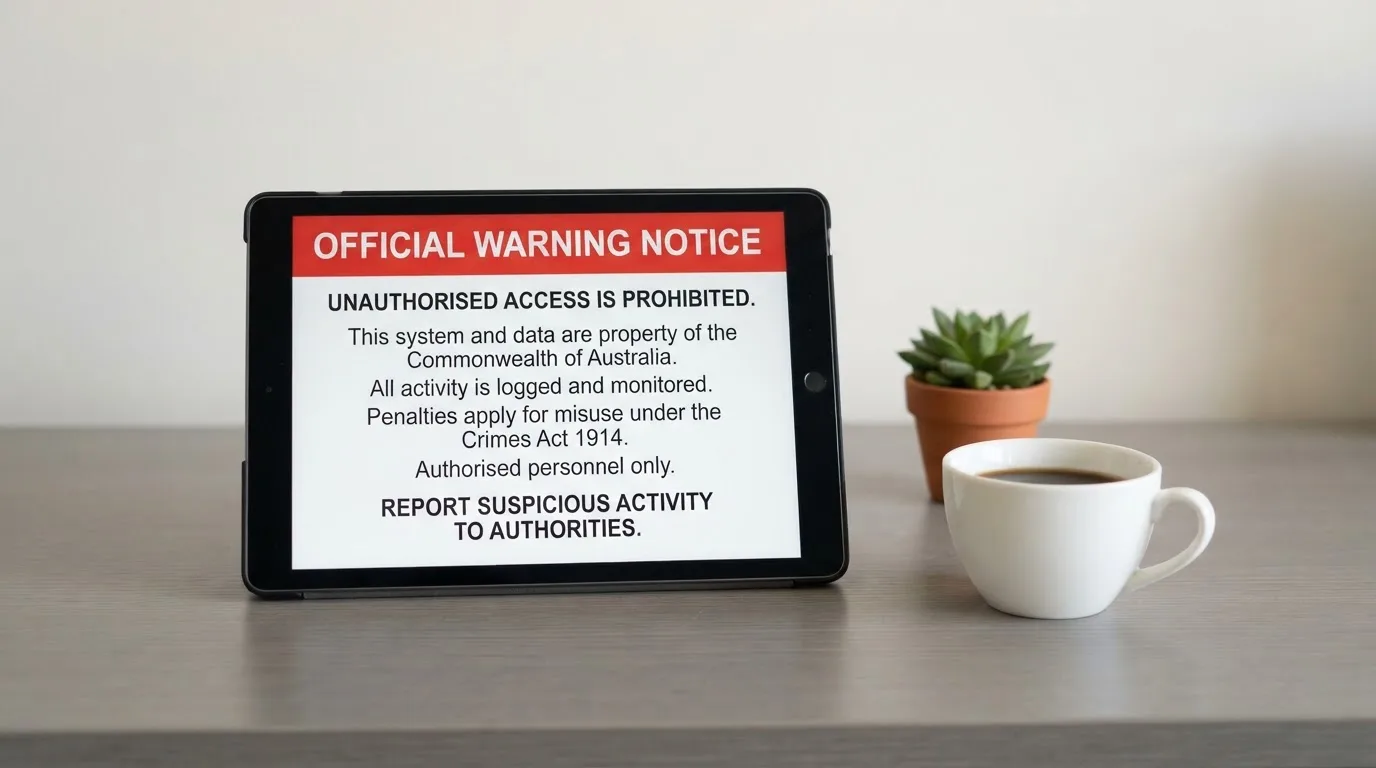
The Interactive Gambling Act 2001, as tightened by the Interactive Gambling Amendment Act 2017, makes it an offence to provide a prohibited interactive gambling service — online casino games, online pokies, in-play betting — to a person who is physically in Australia. The offence sits with the provider, not the customer: an Australian who places a bet on an offshore site is not prosecuted. What the customer does lose, the moment they sit outside the licensed system, is the entire layer of Australian consumer protection. There is no local complaints body, no Australian recourse if a withdrawal is refused, and no guarantee that the regulator can reach the funds on the other side. A site can be blocked mid-week with a balance still attached to it, and the player has no Australian avenue to recover it.
what is licensed in australia
The licensed Australian offering is narrower than the marketing suggests. Online wagering on racing and sport is licensed, with bets placed before the event; lotteries and keno are run by state operators; online casino games and online pokies are not. Most of the 52 Australian-licensed online bookmakers — Sportsbet, Bet365 and Ladbrokes among them — are licensed by the Northern Territory Racing and Wagering Commission, largely for tax reasons. The commission has no full-time staff and meets once a month in Darwin. That sounds casual, and it has drawn parliamentary scrutiny — the ABC reported in April 2026 on a Northern Territory bill aimed at reforming the regulator — but it is the body that holds the licences for most of the country’s licensed betting operators, and it is the regulator that a player is dealing with when they open an account with one of them.
payments as a tell
Payment routes are a clean tell of which side of the law a site sits on. Under the Interactive Gambling Act 2001 as amended in 2023, Australian-licensed online wagering services cannot accept payment by credit card or other credit-related products, a restriction that also constrains gambling use of linked digital wallets such as Apple Pay. Legal deposit routes for a licensed operator are debit card, bank transfer, PayID and Osko, and BPAY. A site asking an Australian for a credit card or a cryptocurrency deposit is operating outside the rules on payment alone, before the question of what it is selling is even asked. The ban on credit cards took effect across the licensed industry from 11 June 2024, with penalties of up to A$247,500 for non-compliant operators.
The 2026 reform sits on the same shelf but does not yet bite. The Interactive Gambling Amendment (Gambling Reform) Bill 2026 passed Parliament on 19 August 2026; its advertising and inducement measures commence on 1 January 2027, and that is a law with a start date rather than a law in force on a 2026 page. The bans on inducements — bonus offers, sign-up credits and the like — are where the comparison on the first half of this page has been pointing.
tax is its own question
Gambling winnings of a recreational Australian player are not assessable income under section 6-5 of the ITAA 1997, and losses are not deductible, unless the person is carrying on a business of gambling. The exception matters: a professional punter — someone whose livelihood depends on betting, with the ATO’s tests applied — is taxed differently, and a player sitting on offshore casino winnings has the same not-assessable position as a player sitting on licensed winnings. The ATO is the right port of call for anyone whose situation looks like it could cross that line.
the practical checks a player can run
The shelf below covers the checks a player can actually carry out, without specialist tools and without taking the operator’s word for anything.
look up the brand on the ACMA’s register
The ACMA publishes its formal warnings on its own website, with the operator named, the date of the warning and the prohibited service that triggered it. A search of the brand name and any corporate names behind it takes a minute and produces a result in two flavours: a warning, or the absence of one. Absence is not a clean endorsement, because the regulator acts after a brand has been operating, but a current warning is a definite reason to close the tab.
check whether the licence is real and whether it covers australians
Most offshore casinos hold a Curaçao or Anjouan licence, which is a real business licence but not an Australian one. The footer of a casino site usually carries the licence number; that number can be checked against the issuing authority’s public register. A Curaçao licence does not authorise the operator to take Australian customers for online casino games, and the licence display is not a defence under the IGA. The footer is informative, not protective.
test the payment rails before depositing
A licensed Australian wagering operator takes debit card, bank transfer, PayID/Osko and BPAY. An offshore casino typically lists a different set: credit cards through three-party networks such as American Express, which the Reserve Bank of Australia’s July 2025 surcharge review explicitly leaves outside the proposed surcharge ban, and cryptocurrency. Both credit cards and crypto are barred as deposits for licensed wagering in Australia, so a site that lists either is signalling which market it is built for.
PayID deserves a separate note. Paying to a PayID shows the name of the account holder before the transfer is sent, and Australian Payments Plus, the platform operator, warns that being asked to transfer money to a PayID on an illegal gambling site almost certainly means a scam site. The mechanism is built for a reason: a player who sees a PayID match a casino name rather than a regulated operator is being shown a red flag in real time. PayID is available at over 100 Australian financial institutions, and more than 25 million PayID identifiers had been registered on Australia’s New Payments Platform as of April 2025. The check is cheap, the warning is built into the rail, and it is one of the few safeguards a player can act on before clicking deposit.
read what the responsible gambling page actually commits to
An offshore site’s responsible gambling page is corporate policy. It says what the operator will do if a player asks for a deposit limit or a self-exclusion, and it is enforceable only at the operator’s discretion. The Australian-licensed equivalent is enforced by the regulator, and a complaint can be escalated to an external body. The two pages look similar. The difference is whether there is anyone outside the company who can force the company to act on what it has promised.
recognise the marketing words for what they are
“Curacao-licensed”, “independently audited”, “responsible gambling tools available” — these phrases appear on offshore casino sites by the dozen, and they describe what a site is willing to put in a footer, not what a regulator has confirmed. A genuinely regulated gambling operator’s safety record sits on a public register, with a named regulator, a licence number and a complaints body. The marketing page of an offshore site has none of those. A reader who reads the marketing at face value is reading corporate copy; a reader who reads the regulator’s register is reading the public record.
a second pass on the brands, and what each one tells a player
The table above lists eleven brands. The shelf below reads each one with the block of public information behind it, in the order the ACMA has worked through them.
rocketplay
Two warnings, two operators. The first came in May 2022 against Dama N.V., covering six brands; the second came in March 2026 against Pulsup Ltd, naming Rocketplay specifically. Rocketplay is the only brand in the table with a 2026 warning that is not paired with a 2025 or earlier one from the same operator. The fact that the corporate name has changed — Dama N.V. to Pulsup Ltd — and the brand name has stayed the same is the operational pattern of the offshore industry: the front-of-house site is durable, the corporate entity behind it is not. A player who looked at Rocketplay in 2022 and is looking at it in 2026 is dealing with a different company under the same banner.
level up casino
The May 2022 Dama N.V. warning covers six brands at once — Bambet, Dazard, Level Up, Rocketplay, Wild Tornado and Cobra Casinos. Level Up is one of the six. No further warning has been published against Level Up specifically since the 2022 round, which is consistent with either compliance or a quiet rebranding: the brand still operates, the operator behind it is the same, and the ACMA’s register has not added it to a later round. The block on the table reads “Dama N.V., May 2022” because that is what the public record shows, and the absence of a second warning is not an endorsement.
woo casino
Woo Casino sits on the second Dama N.V. warning, dated March 2025. The brand has not appeared in any of the older Dama N.V. warnings, so the ACMA treated it as a separate compliance failure from the 2022 batch. That tells a player that the operator group — Dama N.V. — has been told twice over four years to stop offering prohibited services to Australians, and has continued. A warning two years after a first warning is the regulator indicating that the first warning did not change behaviour.
spirit casino
Spirit Casino carries the third Dama N.V. warning, dated May 2025, two months after Woo Casino. The pattern of consecutive monthly warnings against the same operator is what gives the table its shape: Dama N.V. keeps running new brands, the ACMA keeps warning it, and the warnings stop short of the blocking round. A reader of the ACMA’s register sees this as one corporate group outlasting three separate enforcement actions.
national casino
National Casino carries a July 2025 warning against Consolutetish S.R.L. The brand has not been the subject of an earlier ACMA warning, which makes it a new name on the operator’s portfolio rather than a repeat offender. The fact that the warning names Consolutetish S.R.L. and not a longer-established corporate group suggests a relatively recent corporate vehicle, and the fact that the same round also warned over Bizzo Casino under the same operator name means a player looking at either brand is looking at the same company.
bizzo casino
Two warnings, two operators. The first came in 2022 against TechSolutions (CY) Group Limited and TechSolutions Group N.V.; the second came in July 2025 against Consolutetish S.R.L. The corporate migration from TechSolutions to Consolutetish is the same shape as Rocketplay’s migration from Dama N.V. to Pulsup Ltd — a brand outlasting an operator. The two-year gap between warnings is shorter than the four-year gap on Rocketplay, which is a sign of either a faster enforcement pipeline or a faster rebranding cycle. The public record shows only what the ACMA has published, and it shows that Bizzo Casino has been warned twice.
ignition casino
Ignition Casino carries a July 2025 warning against Bamboo Media. Bamboo Media does not appear in the earlier ACMA warning rounds in the public record, and Ignition Casino is not on the 2022 list. The brand is therefore a new name paired with a new operator, and the warning is the first time the regulator has named either one. A player who has never heard of Bamboo Media before July 2025 has not heard of them because the operator was not on the register, and that does not mean the operator was not operating.
instant casino
Instant Casino carries a February 2025 warning against EOD Code SRL. The brand sits earlier in the year than most of the table, and the operator is a different one again from Dama N.V., Consolutetish S.R.L. and Bamboo Media. The variety of corporate names — Dama N.V., Consolutetish S.R.L., Bamboo Media, EOD Code SRL — is the point: offshore casino groups cycle through corporate vehicles faster than the regulator can publish warnings against them.
jackbit
Jackbit carries an April 2026 warning against Ryker B.V., one of the most recent entries on the table. The brand is a casino-and-sportsbook hybrid, which is a common shape for the offshore market; the operator is another new name on the ACMA’s register. A player who has used Jackbit before April 2026 has used a brand that the regulator has now named; a player who has not, and is being marketed to by Jackbit now, is being marketed to by an operator whose name is on the public record.
casino intense
Casino Intense carries an April 2025 warning against Sterplay Holding Ltd. The brand is not a household name in the offshore market, and Sterplay Holding Ltd is not on the earlier ACMA rounds. The warning is the first and only public entry for either name, which is the same shape as the Ignition Casino entry: a new operator, a new brand, and a single published warning.
sky crown
Sky Crown carries the September 2022 Hollycorn N.V. warning, the earliest entry on the table. Hollycorn N.V. was also warned over Blue Leo in the same round. Sky Crown has not appeared in a later ACMA warning, which is either a sign of compliance or of a rebranding into a brand the regulator has not yet caught. The warning sits four years old on this page, and the regulator’s record does not show what the operator has done in the meantime.
reading the table as a market, not as a ranking
Eleven brands, eleven warnings, and a handful of operators behind them. The shape of the market is what the table shows, not the order of the brands within it.
how the warnings cluster
Six of the eleven warnings sit on Dama N.V. or Consolutetish S.R.L. — three on Dama, two on Consolutetish, and one on the same month against Bizzo Casino from the same operator. Two warnings sit on operators that have only one entry each: Bamboo Media and Sterplay Holding Ltd. The remaining four sit on Pulsup Ltd, EOD Code SRL, Ryker B.V. and Hollycorn N.V., each with a single brand. The picture is a small number of operators carrying a large number of brand names, with the ACMA’s warnings targeting the operators and the brands sitting underneath them.
what “subject support” means in this context
The “Subject support” column reflects what third-party listings report for each brand. An em dash means the listings checked did not return anything usable. Where a listing is named — Gambling Insider for payment-method coverage, the ACMA and AUSTRAC websites for regulatory context, BetStop for self-exclusion context, Payid.com.au and ecoPayz for payment-method context — that is what the listing says, and that is the limit of the claim. A listing mention is not an Australian licence, an Australian endorsement or an Australian protection; it is a third-party data point, and the third party is named because that is what the research carries.
what a player should do with the table
The honest reading is that every brand on the table sits on the wrong side of the Interactive Gambling Act 2001, by the regulator’s own description, and the differences between them are differences in the corporate history of the warning, not differences in legal standing. A player who is choosing between brands on the table is choosing between operators the ACMA has named, and the safer move is to stop looking at the table. The licensed alternatives sit with the Northern Territory Racing and Wagering Commission, with state lotteries, and with BetStop’s bound operators.
where this leaves the reader
The page has walked through the safeguards on the regulated side, the ACMA’s enforcement record against the offshore side, and the eleven named warnings on the brands in this comparison. The conclusion does not need a final flourish: every brand that markets itself as a safe online casino to Australians is doing so in violation of the Interactive Gambling Act 2001, the regulator’s register says so in detail, and the safeguards that make any gambling experience genuinely safer — BetStop, deposit limits, bank-level blocks, the helpline on 1800 858 858 — sit on the licensed side of that line. A player who reads this page and still lands on an offshore casino is choosing the version of “safe” that the corporate policy of an offshore operator defines, not the version the Australian regulatory system enforces.
frequently asked questions
what are the clearest signs an online casino claiming to be safe is not actually licensed anywhere reputable?
The first sign is the offer itself: online casino games and online pokies cannot be licensed anywhere in Australia, so a site offering them to Australians is, by definition, unlicensed for that product. The second is the licence in the footer — a Curaçao or Anjouan licence is a real business licence but does not authorise the operator to take Australian customers for casino games. The third is the payment rail: a licensed Australian operator takes debit card, bank transfer, PayID/Osko and BPAY; a site asking for credit cards or cryptocurrency is operating outside the local rules. The clearest single check is a search of the brand name on the ACMA’s register of formal warnings.
is a payid deposit any safer than a card deposit at an offshore online casino?
PayID shows the name of the account holder before the transfer is sent, and Australian Payments Plus warns that a request to pay a PayID on an illegal gambling site almost certainly means a scam site. That is a real safety layer — a player who sees a PayID match a casino name rather than a regulated operator is being shown a red flag in real time. But PayID does not change the legal standing of the recipient. An offshore casino reached through PayID is still an offshore casino, still on the wrong side of the Interactive Gambling Act 2001, and still outside BetStop.
is it legal for an australian to use an offshore online casino even if the site markets itself as safe?
The IGA targets the provider, not the customer. An Australian who places a bet on an offshore site is not prosecuted. What the customer loses is the entire layer of Australian consumer protection: no local complaints body, no Australian recourse if a withdrawal is refused, and no guarantee that funds can be recovered if the regulator blocks the site mid-session. “Legal to use” and “safe to use” are different questions, and the answer to the second is no, even where the answer to the first is technically yes.
what should someone do if they realise they have been playing at an offshore casino and want to stop?
The first step is registering with BetStop, the National Self-Exclusion Register, which binds every Australian-licensed online and phone wagering operator from taking the registered person’s bets for the chosen period. BetStop does not reach offshore casinos, but it does close the licensed side. The second step is calling the National Gambling Helpline on 1800 858 858, free and 24/7, or using the webchat at Gambling Help Online. The third is using the bank’s gambling block — Westpac, ANZ and Commonwealth Bank all offer card-level blocks that stop transactions at the merchant code for betting and casino gambling. None of these steps touches the offshore balance; that is its own problem and needs its own resolution with the operator.
how does a genuinely regulated gambling operator’s safety record differ from an offshore casino’s own marketing claims?
A regulated operator’s safety record sits on a public register, with a named regulator, a licence number and an external complaints body. The Northern Territory Racing and Wagering Commission, for example, is the regulator for 52 of Australia’s online bookmakers. An offshore casino’s marketing claims sit on a corporate responsible-gambling page that is enforceable only at the operator’s discretion. The two look similar; the difference is whether there is anyone outside the company who can force the company to act on what it has promised.
what free support services exist in australia for someone concerned about their own online casino use?
The National Gambling Helpline on 1800 858 858 is free, runs around the clock, and connects callers to state-based counselling providers. Gambling Help Online offers webchat and email counselling. Both are Commonwealth-funded and sit outside the gambling industry on purpose. BetStop, the National Self-Exclusion Register, is the operational tool for stopping bets at Australian-licensed operators. None of these services is contingent on where a person has been playing — they are usable by anyone concerned about their own gambling, whether the gambling has happened at a licensed operator, an offshore site, or a mix.