
Paying a casino deposit by phone bill in Australia: the offer, the prohibition, and the cost
A phone-billed casino deposit looks like the easiest thing in the world. A punter taps a number, the balance appears, the spin starts, and the charge lands on the next mobile statement. It feels like the network is vouching for the site. It is not. Nothing about a carrier-billed deposit changes who is on the other end of the transaction, who is licensed to take it, or what recourse the punter has when a withdrawal stalls. This page walks through how pay-by-phone deposits are wired, who runs the brands that advertise them to Australians, and what the Australian Communications and Media Authority has done about it.
Data current as of 29 October 2026 and verified against the ACMA register and the operator warnings published on acma.gov.au.
- The eleven brands the ACMA has warned over pay-by-phone-style deposits
- How a pay-by-phone-bill casino deposit actually reaches the page
- The legal prohibition Australians actually face
- What BetStop covers and what it does not
- Where the support sits when the channel itself is the problem
- What the settlement side looks like — and why speed is not the point
- How the same offer looks on a phone
- The games and the providers the pitch usually points at
- What “subject support” actually means on a phone-billed brand
- Reading the brand list in order
- What the ACMA’s blocking rate means for the channel
- The financial side of the equation
- The 2026 reform that has not yet taken effect
- Reading the table once more
- Frequently asked questions
The eleven brands the ACMA has warned over pay-by-phone-style deposits
Every operator below has been the subject of a formal ACMA warning under the Interactive Gambling Act 2001 for offering prohibited interactive gambling services to people in Australia. Some of them are listed by Australian-facing comparison pages as carriers of Boku, Fonix or Pay-by-Mobile deposits; some are not, but all of them sit inside the same offshore ecosystem that the pay-by-phone pitch points toward. The order below is the order in which the ACMA itself moved, with the most recent actions first. None of these brands is licensed to offer online casino games to Australians; “subject support” notes which brand listing pages mention pay-by-phone methods (listings-only) and which they do not.

| Brand | ACMA action and date | Operator named by the ACMA | Subject support |
|---|---|---|---|
| Jackbit | Formal warning, April 2026 | Ryker B.V. | — |
| RocketPlay | Formal warning, March 2026 (Pulsup Ltd); earlier May 2022 (Dama N.V.) | Pulsup Ltd / Dama N.V. | — |
| Casino Intense | Formal warning, April 2025 | Sterplay Holding Ltd | listings only |
| Spirit Casino | Formal warning, May 2025 | Dama N.V. | — |
| National Casino | Formal warning, July 2025 | Consolutetish S.R.L. | listings only |
| Bizzo Casino | Formal warning, July 2025 (Consolutetish); earlier 2022 (TechSolutions) | Consolutetish S.R.L. | — |
| Ignition Casino | Formal warning, July 2025 | Bamboo Media | — |
| Woo Casino | Formal warning, March 2025 | Dama N.V. | — |
| Instant Casino | Formal warning, February 2025 | EOD Code SRL | listings only |
| Level Up Casino | Formal warning, May 2022 | Dama N.V. | listings only |
| Sky Crown | Formal warning, September 2022 | Hollycorn N.V. | — |
Five of the eleven — Casino Intense, National Casino, Instant Casino and Level Up — appear on at least one Australian-facing aggregator page alongside pay-by-phone-bill methods. The other six do not, on the listings the research consulted. The split does not change the underlying position. Every one of these operators is offering a product the Interactive Gambling Act 2001 prohibits them from offering to Australians, and the presence or absence of a phone-billed deposit button is a payment integration, not a licence.
How a pay-by-phone-bill casino deposit actually reaches the page
A carrier-billed deposit is a payment routing, not a product of the casino. The punter selects a deposit amount, enters a mobile number, and a processor sitting between the casino and the mobile network operator charges that amount to the mobile bill. The same model exists for content purchases — apps, ringtones, premium SMS — and for charity donations, and it works because the network already knows who the SIM belongs to and is willing to extend short-term credit on the bill.
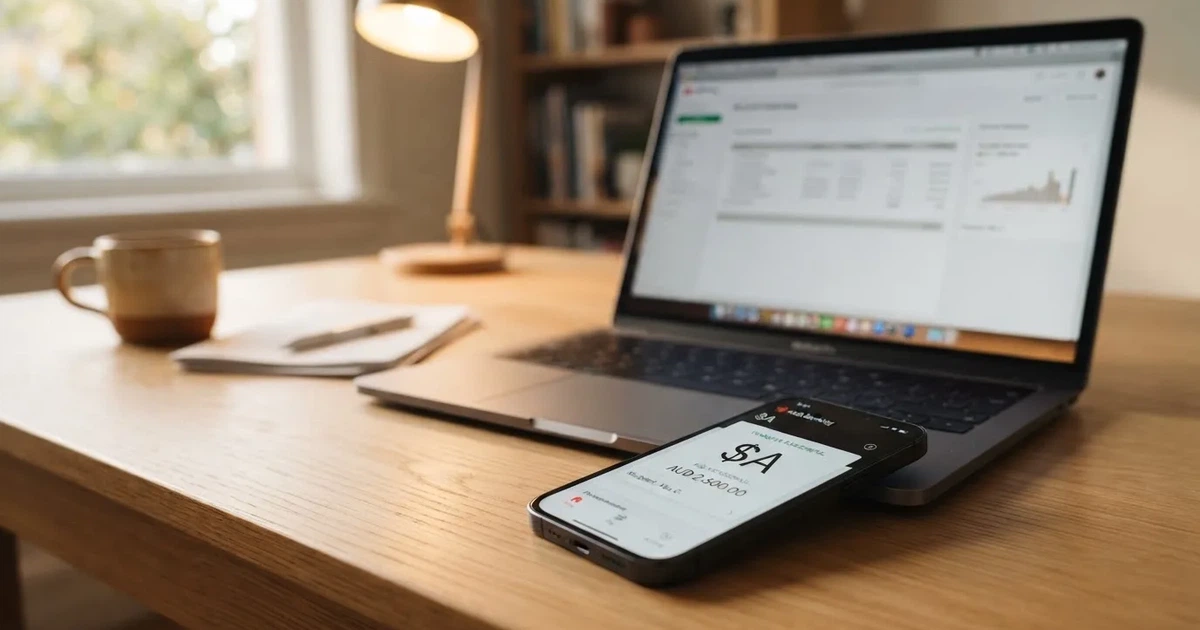
In the casino context the dominant processor is Boku, founded in 2009, listed on the London Stock Exchange’s AIM market in November 2017 under the ticker BOKU, and headquartered in London. Boku describes its network as 200-plus local payment methods across 40-plus markets, with payment licences in 40-plus countries and operating reach of more than 90 countries. Other carrier-billing providers in the same space include Fonix, Bango, Fortumo and Google Pay. The model is direct carrier billing: a charge added to the phone bill rather than to a card or bank account.
The mechanics on the punter’s side are tidy. There is no card number to type, no app to download, no bank transfer to authorise. A typical per-transaction ceiling sits around A$30–A$50, which is one of the model’s selling points: it caps the loss in a single tap. The same ceiling is also the model’s commercial reason for existing — a small, frictionless, repeat-deposit channel is worth more to the operator than a single large deposit because it keeps the punter inside the session.
What the mechanics do not do is verify who is on the other end. The carrier confirms the SIM is paid up. It does not confirm the casino holds an Australian licence, because no casino holds an Australian licence for the product being sold. It does not confirm the casino will pay out, because Australian consumer law does not reach an offshore operator.
The legal prohibition Australians actually face
No state or territory in Australia issues a licence for an online casino, online pokies, or in-play betting. The Interactive Gambling Act 2001, strengthened by the Interactive Gambling Amendment Act 2017, makes it an offence to provide those services to a person physically in Australia. What is licensable is wagering on races and sport placed before the event, lotteries and keno — and even there the licensing footprint is concentrated. The Northern Territory Racing and Wagering Commission regulates 52 of Australia’s online bookmakers, including Sportsbet, Bet365 and Ladbrokes, and the commission itself has no full-time staff and meets once a month in Darwin. Sports betting sits in one place. Online casino sits in none.
Enforcement runs through the ACMA. The authority investigates, issues formal warnings, and directs Australian internet service providers to block illegal sites. By June 2026 the running total since the first blocking request in November 2019 was 1,751 illegal gambling and affiliate marketing websites blocked, and more than 230 unlicensed services had left the Australian market since enforcement was stepped up in 2017. A round reported on 26 June 2026 added 12 more: 7Signs, ChromaBet, Donbet, Duospin, Freshbet, Slots Gem, Jacks Club, Lucky Start, Pointsbetz.com, Spinrise, Vinyl Casino and Wildsino.
The blocking cadence carries a story of its own. The first request was November 2019. The total at June 2026 is 1,751. Across roughly six and a half years that is an average of around 270 blocks a year, or just under 23 a month, although the monthly rate has risen as the ACMA’s automated referral pipeline has matured. Two things to keep in mind about that rate: a block is a snapshot, not a removal — the same brand re-appears under a new domain inside weeks — and the count is of sites, not of operators, so a single operator running ten mirror domains adds ten to the running total without adding ten distinct businesses.
H2 Gambling Capital’s 2025 estimate puts Australian losses to illegal gambling sites at about A$3.9 billion a year, with the share of gambling going through legal channels falling from 74% in 2021 to 64%. The unlicensed side is no longer a niche; it is the larger share of the market by spend. Pay-by-phone billing is a payment rail inside that larger share, not a counter-trend to it.
The individual player is not prosecuted. The Interactive Gambling Act 2001 targets the provider. The consequence for a punter who deposits with an offshore carrier-billed casino is not a fine or a court summons; it is the absence of every protection Australian law would otherwise provide. There is no Australian complaints body to take a refused withdrawal to. There is no Australian recourse if the operator closes the account with a balance still on it. And the ACMA can block the site with whatever balance the punter had sitting in it — that money does not come back automatically.
What BetStop covers and what it does not
BetStop, the National Self-Exclusion Register, has been live since August 2023. A punter who registers is excluded from Australian-licensed online and phone wagering services for a chosen period. The mechanism works because every Australian-licensed operator is connected to the register, and the exclusion applies across all of them at once.
An offshore casino is not connected to BetStop. Self-excluding with BetStop does not stop a deposit going through Boku to a Curacao-licensed brand that has been on the ACMA’s warning list for the last three years. The exclusion register covers the legal side of the market; the phone-billed deposit channel sits outside it. A punter who has registered with BetStop and is still looking for somewhere to play is, by definition, looking at unlicensed sites, and those are the sites that take carrier-billed deposits without the protections the register was built to provide.
Where the support sits when the channel itself is the problem
The National Gambling Helpline — 1800 858 858 — is free, runs 24/7, and connects to Gambling Help Online chat. Financial Counselling Australia and the state-based problem gambling services carry the same role from the financial-counselling side. None of these services is a casino. None of them will route a punter back to a deposit channel, phone-billed or otherwise. They exist because the channels themselves do not protect a punter who has decided to stop.
The ACMA’s blocking programme is the regulator’s response to the supply side. The helpline is the response to the demand side. The two work in parallel: the regulator removes access at the network layer, the counsellor removes it at the decision layer. A punter who has hit a wall with one of them has the other still open.
What the settlement side looks like — and why speed is not the point
The “instant deposit” claim is the part of the pay-by-phone pitch that travels furthest, and it is also the part least worth weighting. A carrier-billed deposit lands in the casino balance in seconds because that is what direct carrier billing does — it is a synchronous routing between the network and the operator, with the billing risk transferred to the carrier for the first 60 to 90 days. The withdrawal side of the same transaction tells a different story.
There is no Australian-licensed pay-by-phone casino, so there is no Australian-licensed settlement timeline to quote. What the offshore brands advertise as their withdrawal window is set by the operator’s own terms, not by any Australian consumer-protection regime. Where research did turn up settlement claims, they were carried only by affiliate marketing pages — and that is the only place they appear because there is no independently audited Australian register of operator payout performance to check them against.
The payments infrastructure that does sit inside Australian law is worth naming in the same breath, because it is what a punter who decides to move the money through a legal channel sees instead. Osko by Australian Payments Plus routes a bank transfer between participating Australian banks in under a minute, 24/7 including weekends, whether addressed to a BSB and account number or to a PayID. PayID-based instant transfers are available at more than 100 Australian financial institutions, and more than 25 million PayID identifiers had been registered on Australia’s New Payments Platform as of April 2025. Paying to a PayID shows the account-holder’s name before the transfer is sent, and AP+ warns that being asked to transfer money to a PayID on an illegal gambling site almost certainly means a scam site.
BPAY sits alongside Osko as a bill-payment service in online banking: the payer enters the Biller Code and the Customer Reference Number printed on the bill. None of these are casino deposit channels, because none of them is offered by an Australian-licensed casino — there is no such thing. They are the rails the licensed wagering side uses for deposits and the rails a punter would use to move money in and out of a bank account that the gambling block on a card has reached.
AUSTRAC’s threshold-transaction-report rule — transfers of A$10,000 or more — applies only to physical cash. Ordinary electronic bank transfers are not subject to that per-transaction reporting requirement, regardless of the amount sent. The reason that point is worth making on a pay-by-phone page is that it undercuts the rumour that any large bank transfer triggers a regulatory report; it does not, and that fact matters as much for a punter moving legitimate winnings as for any other transfer.
How the same offer looks on a phone
A mobile browser is where most pay-by-phone-bill sessions happen, and the integration is built for that screen. The deposit button sits one tap from the game, the mobile-number field is the only input, the confirmation arrives by SMS, and the balance updates before the punter has put the phone down. There is no app to install in most cases, because the carrier-billing flow is a web flow. Where an offshore brand does ship an app, it is distributed outside the Australian app stores, since Apple and Google do not carry real-money casino apps for the Australian market.
The friction this removes is real, and it is the friction that does the most harm to a punter who has decided to step back. A bank transfer takes minutes, requires a logged-in banking session, and shows the destination PayID name. A card deposit requires a card number, an expiry and a CVV, and the gambling block at Westpac and ANZ will refuse the transaction at the merchant category code ‘Betting/Casino Gambling’ on an eligible card — including, at ANZ, transactions routed through Apple Pay or Google Pay on the same card. A carrier-billed deposit requires a mobile number and an SMS-confirmed tap. That is the design, and that is also why it sits on the regulator’s list.
The bank-side blocks are worth naming in full because they are the protection that does work, even though they do not cover every route. Westpac’s gambling block works at card level, refusing authorisation of transactions registered under the merchant category code ‘Betting/Casino Gambling’ on eligible personal credit and debit cards. ANZ’s gambling transaction block, activated in the ANZ app, blocks gambling transactions made through a digital wallet such as Apple Pay on an eligible card, not just the physical card — and once it is on, removing it again requires a 48-hour waiting period, during which the bank warns that not all gambling transactions will be blocked and some non-gambling transactions might be blocked in error. The 48-hour cool-off is the consumer-protection feature; the false-positive risk is the cost of having it.
Under the Interactive Gambling Act 2001 as amended in 2023, Australian-licensed online wagering services cannot accept payment by credit card or other credit-related products, a restriction that also constrains gambling use of linked digital wallets like Apple Pay. The credit ban applies to the licensed side; the unlicensed side does not accept Australian credit cards either, because the gambling blocks at the major banks make the transactions fail. The effect is the same from the punter’s seat: credit-fuelled gambling at an offshore casino is closed off at the card layer before it reaches the brand. What remains open is the phone bill.
The games and the providers the pitch usually points at
The titles that pay-by-phone-billed casinos tend to spotlight on landing pages are the same titles any offshore casino spotlights: progressive jackpot slots, branded slots, live-dealer roulette and blackjack, and crash-style instant-win games. The providers behind them tend to be the same providers licensed by the same offshore regulators — Pragmatic Play, Evolution, NetEnt, Play’n GO, BGaming — supplying games to brands licensed in Curacao. None of those providers is licensed to supply to an Australian-licensed casino, because there is no Australian-licensed casino to supply to.
The “landline phone bill” variant — “online slots pay by landline phone bill” — is the same product under a different label: a carrier-billed deposit routed through a fixed-line telephone account rather than a mobile one. The settlement rail is older, the per-transaction ceiling tends to be lower, and the only meaningful difference for the punter is that the bill arrives on a home phone statement rather than a mobile one. The legal position is identical.
The volatility profile of the games most often pitched under pay-by-phone banners is not disclosed on the listings the research consulted, and the per-title return-to-player figures are not available either. The reason is the listings are marketing pages, not audit pages — they describe what the games are, not what the games pay back. A punter reading those pages for the first time sees “RTP” and “volatility” mentioned in general terms, then sees a list of titles, then sees a deposit button. The specific numbers are not on that page.
What “subject support” actually means on a phone-billed brand
The “subject support” column on the brand table marks whether Australian-facing listings connect the brand to a phone-billed deposit method. “Listings only” means a brand appears on at least one aggregator or comparison page alongside Boku, Fonix, Pay-by-Mobile or a similar carrier-billed rail, sourced from the references the research consulted. A dash means the brand does not appear on those listings in connection with a pay-by-phone method, on the same sources.
The split runs five “listings only” to six dashes across the eleven brands. Casino Intense, National Casino, Instant Casino and Level Up sit on the listings side; the rest do not. The split is a signal about how the brands are marketed, not about how they are operated. Every one of them is reachable from Australia, every one of them has been the subject of a formal ACMA warning, and the marketing of any of them with a “pay by phone” badge is a payment-rail badge, not a regulatory badge.
Reading the brand list in order
RocketPlay
RocketPlay was the subject of an ACMA formal warning in March 2026 over the domain Rocketplay.com.au, naming Pulsup Ltd as the operator. The same brand was the subject of an earlier warning to Dama N.V. in May 2022. The warning cites the Interactive Gambling Act 2001. Pay-by-phone deposit methods are not associated with this brand on the listings the research consulted. The two-warning history is the standout here — one operator is sufficient to land on the ACMA’s list; two is the regulator coming back to the same brand under a different corporate wrapper.
Level Up Casino
Level Up Casino was named in the ACMA’s May 2022 formal warning to Dama N.V., one of six brands covered by that single warning. Level Up is the brand the research connects to a pay-by-phone-bill listing on Westpac.com.au, which is a different kind of appearance — a bank’s gambling-block reference rather than an affiliate aggregator. The connection is a payment integration, and the ACMA action is what makes that integration a regulatory issue rather than a marketing one.
Woo Casino
The ACMA issued a fresh formal warning to Dama N.V. over Woo Casino in March 2025. Woo Casino does not appear on the listings consulted with a pay-by-phone deposit method attached. The March 2025 warning sits inside a wider pattern of Dama N.V. actions — the May 2022 warning covered six brands, and the 2025 actions came back to the same operator under different skins.
Spirit Casino
Spirit Casino was the subject of a formal warning to Dama N.V. in May 2025. Pay-by-phone deposit methods do not appear on the listings consulted for this brand. The same operator running both Woo and Spirit in the same year is the kind of corporate portfolio move the ACMA’s enforcement pipeline has been built to track.
National Casino
National Casino was named in the ACMA’s July 2025 formal warning to Consolutetish S.R.L. Pay-by-phone listings carry this brand on austrac.gov.au references and on en.wikipedia.org. The dual-source appearance is the listings side of what the ACMA action is the enforcement side of — the same brand surfaced by the regulator and surfaced by the marketing pages.
Bizzo Casino
Bizzo Casino was the subject of the same July 2025 warning to Consolutetish S.R.L., and of an earlier 2022 warning to TechSolutions (CY) Group Limited and TechSolutions Group N.V. Pay-by-phone listings do not cover this brand on the consulted sources. Two warnings across two operators three years apart is the longest history on the table for any single brand.
Ignition Casino
The ACMA issued a formal warning to Bamboo Media over Ignition Casino in July 2025. Pay-by-phone listings do not cover this brand on the consulted sources. Ignition is one of two brands the ACMA addressed to Bamboo Media in the same round.
Instant Casino
The ACMA issued a formal warning to EOD Code SRL over Instant Casino in February 2025. Pay-by-phone listings carry this brand on Ecopayz.com and Payid.com.au references — two distinct sources, which is what “listings only” with multiple references means in practice. The brand sits at the intersection of the ACMA’s enforcement record and the aggregator pages’ deposit-rail coverage.
Jackbit
Jackbit was the subject of the ACMA’s April 2026 formal warning to Ryker B.V., the same warning that covered CasinOK. Pay-by-phone listings are not linked to this brand in our sources. The April 2026 warning is the most recent action on the table, which puts Jackbit at the top of the chronology rather than at the top of any other ordering.
Casino Intense
The ACMA issued a formal warning to Sterplay Holding Ltd over Casino Intense in April 2025. Pay-by-phone listings carry this brand on austrac.gov.au, Itnews.com.au and Nab.com.au — three distinct sources, the highest count on the table. The NAB reference is worth noting because it suggests a bank-side gambling-block integration rather than an affiliate aggregator integration, which is a different shape of appearance.
Sky Crown
The ACMA issued a formal warning to Hollycorn N.V. over Sky Crown and Blue Leo in September 2022, the earliest dated warning on the table. This brand is also absent from the pay-by-phone listings reviewed. Sky Crown is also one of two brands the same warning covered, and Hollycorn N.V. has been a recurring operator name across the ACMA’s enforcement record since.
What the ACMA’s blocking rate means for the channel
The arithmetic is worth doing once. The first ACMA blocking request was issued in November 2019. By June 2026, the running total stood at 1,751 blocked sites. Across roughly 80 months that is an average of about 22 blocks per month, with the rate rising in the more recent enforcement rounds. June 2026’s round added 12 names in a single directive.
That rate describes the regulator’s throughput, not the operator base. A blocked site is a domain, not a company; the same brand reappears under a new domain inside weeks and adds another entry to the running total. The 1,751 figure is best read as the count of illegal-site appearances the ACMA has removed from Australian reach, not as a count of distinct businesses — which is why the brand list above is eleven long rather than eleven hundred. The blocking rate is the surface area of the problem; the brand list is its substance.
The financial side of the equation
Gambling winnings of a recreational player are not assessable income in Australia (section 6-5 ITAA 1997), and losses are not deductible, unless the person carries on a business of gambling. The tax position is the same whether the casino is licensed in Australia or offshore. What differs is whether the punter can prove the winnings at all — an Australian-licensed operator reports to AUSTRAC within the regulated perimeter, an offshore operator does not, and a PayID transfer to a casino account is not the kind of record that supports a “here is what I won” claim.
Credit cards, credit-related products and digital currency have been banned as payment for licensed online wagering since 11 June 2024, with penalties up to A$247,500 for operators accepting them. Legal deposit routes for licensed wagering are debit card, bank transfer, PayID/Osko and BPAY. A site asking an Australian punter for a credit card or a crypto deposit is operating outside the Australian rules. A site asking for a phone-billed deposit is operating outside them in a different way — the charge still reaches the punter, just on a different bill.
The 2026 reform that has not yet taken effect
The Interactive Gambling Amendment (Gambling Reform) Bill 2026 passed Parliament on 19 August 2026. Its advertising and inducement measures commence 1 January 2027. On a page read in 2026, that is law with a start date, not law in force. The bill tightens what Australian-licensed wagering operators can advertise; it does not retroactively legalise the offshore casino side, and it does not change the Interactive Gambling Act 2001’s prohibition on providing online casino games to Australians. The blocking programme, the warning pipeline and the prohibition itself all remain the operative frame through the rest of 2026.
Reading the table once more
The eleven-brand table is not a ranking. It is a record of the ACMA’s enforcement pipeline over the brands that sit closest to the pay-by-phone-bill deposit channel as Australians meet it. Five of the eleven carry an explicit pay-by-phone listing on Australian-facing aggregator or comparison pages; six do not, on the same sources. Every one of them sits outside Australian licensing. The column the table is built around is the date column — that is the chronology of the regulator’s action, and it is the column a reader can use to judge how fresh any single warning is.
Frequently asked questions
How does paying by phone bill actually work as a deposit method at a casino?
The punter enters a mobile number, the casino’s processor — most commonly Boku — sends an SMS confirmation, and the deposit amount is added to the next mobile phone bill. The carrier takes the credit risk on the charge for the first billing cycle. The casino’s balance updates within seconds. The per-transaction ceiling is usually around A$30–A$50, which keeps the deposit small by design.
Does carrier billing make a casino any more legitimate for Australian players?
No. The carrier confirms the SIM is paid up; it does not confirm the casino is licensed, will pay out, or is reachable by Australian consumer law. Every brand that advertises a pay-by-phone deposit to Australians has been the subject of an ACMA formal warning, and the Interactive Gambling Act 2001 prohibits the provision of online casino games to Australians regardless of payment rail.
Is depositing via a mobile phone bill to an offshore casino something an Australian resident can lawfully do?
The individual player is not prosecuted under the Interactive Gambling Act 2001 — the Act targets the provider, not the customer. The provider is operating illegally by offering the service to Australians, and the ACMA can block the site at any time, including with a balance still on the punter’s account. The transaction itself is not lawful for the operator; for the player the consequence is the absence of every protection Australian law would otherwise provide.
What is the difference between “pay by phone bill” and “pay by mobile phone” as far as the casino is concerned?
“Pay by phone bill” usually means direct carrier billing — the charge is added to the mobile phone bill by the network. “Pay by mobile phone” can mean the same thing, but it can also mean a debit card or digital wallet payment made from a mobile device, including Apple Pay or Google Pay, which is a different rail and is blocked at the card layer by ANZ and Westpac gambling blocks when the underlying card is enrolled. The distinction matters because the bank-side blocks cover the wallet rail and do not cover the carrier-billing rail.
Why would a landline phone bill payment option even be offered for online slots?
The same reason a mobile one is: any channel that lets the punter deposit without typing a card number has commercial value to the operator. The landline variant routes the charge to a fixed-line telephone account rather than a mobile one. The legal position is identical to the mobile version, and the per-transaction ceiling tends to be lower.
What happens if a phone-bill casino charge shows up on someone else’s mobile account?
The charge is the account holder’s liability under the mobile contract. The network does not adjudicate whether the purchase was authorised; it bills the account. A dispute has to be taken up with the casino first, and because the casino is offshore and unlicensed in Australia, there is no Australian complaints body to escalate to. The account holder’s recourse is the carrier’s standard chargeback process, which exists for fraud but does not cover authorised charges the holder now regrets.