
High cashback casino offers for Australian readers: what the bonus is worth, and what the law permits
Cashback bonuses are pitched as the player’s friend: a percentage of net losses returned, usually on a weekly or monthly cycle, often with light wagering attached. For an Australian punter scanning the market, that pitch lands on a market that does not, by law, exist. Offering online casino games — pokies, roulette, blackjack, live dealer — to anyone physically in Australia is an offence under the Interactive Gambling Act 2001, and no state or territory issues a licence for it. The pages that advertise “high cashback” Australian casinos, with their tiered percentages and weekly rebate ladders, are all offshore sites that the Australian Communications and Media Authority has spent the last decade moving against. High cashback casino offers for Australian readers — More on this topic at casino table games .

Current as of 29 October 2026, checked against the ACMA’s published enforcement list and the Interactive Gambling Act 2001 as amended.
- The cashback offer, stripped of marketing
- What an Australian reader is actually being offered
- The legal framework, in one read
- The enforcement record: what has actually happened
- Responsible gambling: what works, and what does not apply
- Crypto and the cashback question
- Bonuses, free spins, and the turnover question
- The brands on the ACMA’s record
- What a cashback offer looks like when the small print sits beside it
- What lawful options exist for an Australian reader
- Payment routes, and the warning that comes with each
- Tax, briefly
- A reader’s checklist, in seven points
- FAQ
The cashback offer, stripped of marketing
A cashback bonus is a return of a slice of what the player lost over a defined window — most often a week — calculated on net losses (total wagers minus total wins, sometimes minus bonuses already credited). The headline figure, often 10–25%, looks like generosity until the small print sits beside it.

Three variables move the value of a cashback offer more than the percentage itself. The first is the calculation base: a rebate calculated on net losses after bonus credits is worth materially less than one calculated on losses before them, because bonus wins already trim the loss number. The second is the wagering requirement attached to the returned funds. Cashback paid as real, withdrawable cash with no rollover is the most useful kind. Cashback paid as bonus funds that need to be turned over thirty or forty times before withdrawal is, in practice, a marketing number. The third is the maximum payout ceiling. A 20% rebate sounds generous until a cap of two or three times the original deposit turns it into a fixed rebate with a marketing number attached.
These three variables are why two cashback offers with the same percentage can be worth wildly different amounts to the same player. The headline is the least informative part.
What an Australian reader is actually being offered
The offer that reaches an Australian reader is, by definition, from an offshore operator. None of the brands reviewed further down this page are licensed to provide online casino games in Australia. The Curaçao or Anjouan sub-licence a brand displays in its footer is a registration in a jurisdiction with limited oversight, not an Australian licence, and it gives no consumer protection under Australian law.
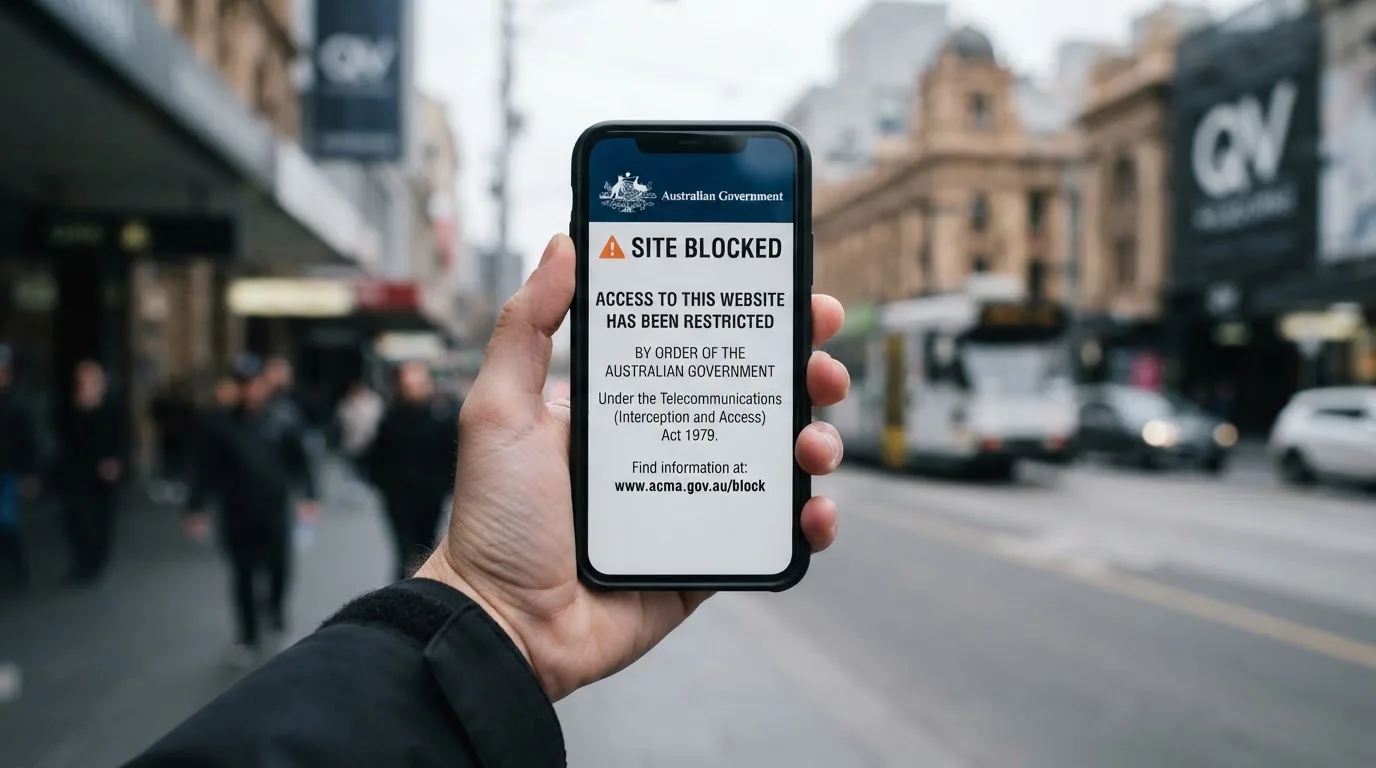
That distinction matters because the protections an Australian punter expects from a regulated market simply do not attach to these sites. The same offshore licence that lets the brand advertise to an Australian reader is the reason there is no local complaints body, no local dispute resolution, and no requirement for funds to be segregated from operating cash. If a withdrawal stalls, the recourse is whatever the brand’s own complaints process produces — a process the player agreed to in terms that usually require arbitration in the operator’s home jurisdiction.
The product itself is also prohibited. The Interactive Gambling Act 2001, as amended in 2017 and tightened further since, makes it an offence for a provider to offer online casino games or in-play betting to a person in Australia. The penalty sits with the provider, not the player, but the consequences for the player are practical: the site can be blocked, balances can become unreachable, and the offer that brought the player in can be withdrawn at any time without notice. A blocked site is a site that no longer exists as a destination, whatever the brand’s email reply says.
The legal framework, in one read
The Interactive Gambling Act 2001 prohibits the supply of “prohibited interactive gambling services” to customers in Australia. Online casino games, online pokies, and in-play sports betting fall inside that prohibition. Wagering on races and sporting events placed before the event is licensable, and the Northern Territory Racing and Wagering Commission regulates 52 of Australia’s online bookmakers — Sportsbet, Bet365 and Ladbrokes among them — for tax reasons; the commission has no full-time staff and meets once a month in Darwin. Lotteries and keno are licensable in their own state and territory regimes.
The 2017 amendments strengthened enforcement. The 2023 amendments extended the prohibition on credit-card payments to licensed online wagering services, a change that took effect on 11 June 2024 and carries penalties up to A$247,500 for the operator. The Interactive Gambling Amendment (Gambling Reform) Bill 2026 passed Parliament on 19 August 2026; its advertising and inducement measures commence on 1 January 2027, so on this page they are law with a start date, not yet in force.
The minimum age for any gambling activity in Australia is 18. The Australian Communications and Media Authority is the enforcement body for online gambling prohibitions; it investigates, issues formal warnings, and can direct Australian internet service providers to block offending sites. As of June 2026, a total of 1,751 illegal gambling and affiliate marketing websites had been blocked since the first blocking request in November 2019, and more than 230 unlicensed gambling services had left the Australian market since enforcement was strengthened in 2017.
The enforcement record: what has actually happened
The ACMA’s blocking and warning record is the single most useful source an Australian reader has on which brands are currently being pursued. The pattern is consistent: a formal warning is issued to the operator entity named on the site, the operator has a window to comply, and if the service continues, the site is added to the next blocking round.
In May 2022 the ACMA issued a formal warning to Dama N.V. covering six casino brands: Bambet, Dazard, Level Up, Rocketplay, Wild Tornado and Cobra Casinos. The ACMA issued further formal warnings to Dama N.V. over Woo Casino in March 2025 and over Spirit Casino in May 2025. In July 2025 the ACMA warned Bamboo Media over Ignition Casino and Consolutetish S.R.L. over National Casino and Bizzo Casino, the latter first warned back in 2022. In February 2025 the ACMA issued a formal warning to EOD Code SRL over Instant Casino.
A more recent round continues the pattern. In March 2026 the ACMA issued a formal warning to Pulsup Ltd over Rocketplay.com.au. In April 2026 the ACMA issued a formal warning to Ryker B.V. over Jackbit and CasinOK. The earlier record also runs back through Sterplay Holding Ltd over Casino Intense in April 2025, and a formal warning to Hollycorn N.V. over Sky Crown and Blue Leo recorded in September 2022.
A blocking round reported on 26 June 2026 added twelve more sites to the blocked list: 7Signs, ChromaBet, Donbet, Duospin, Freshbet, Slots Gem, Jacks Club, Lucky Start, Pointsbetz.com, Spinrise, Vinyl Casino and Wildsino. The same round brought the cumulative blocked total to 1,751.
What the blocking rate looks like in practice
The blocking total of 1,751 websites has accumulated since November 2019, roughly six and a half years. At a steady rate that is around 270 sites blocked per year, or one roughly every 32 hours. The rate is not even — rounds cluster when the ACMA consolidates investigations, and quiet periods follow — but the cumulative figure is the right one to remember. Almost every offshore casino brand an Australian reader sees advertised has either been warned, blocked, or is the next round’s queue.
The market loss figure sits beside this enforcement record. H2 Gambling Capital’s 2025 report estimates that Australians lose about A$3.9 billion a year to illegal gambling sites, and that the share of gambling going through legal channels fell from 74% in 2021 to 64%. The fall is not because Australians are gambling less; it is because more of what they gamble on sits outside the regulated perimeter.
Responsible gambling: what works, and what does not apply
The Australian responsible-gambling framework was built for licensed wagering and land-based gambling. Two pieces of it apply directly to an Australian reader.
BetStop, the National Self-Exclusion Register, has been live since August 2023. A player who registers is barred from every Australian-licensed online and phone wagering service for a chosen period, with the option to extend. For the offshore casino market BetStop does not apply: those brands are not connected to the register, and a self-exclusion through BetStop will not stop an offshore site from accepting wagers from the same person.
The National Gambling Helpline is 1800 858 858, free, available 24 hours a day, with web chat at Gambling Help Online. It is the right first call for anyone whose gambling has moved from a budget to a problem, regardless of whether the gambling takes place on a licensed Australian service or on an offshore site. The helpline is funded for Australian residents and treats the offshore case as part of its remit.
Two further safeguards sit at the bank level. Westpac’s gambling block works at card level: it refuses authorisation of transactions registered under the merchant category code for betting and casino gambling on eligible personal credit and debit cards. ANZ’s gambling transaction block, activated through the ANZ app, also blocks gambling transactions made through a digital wallet such as Apple Pay on an eligible card, not just the physical card. Commonwealth Bank offers a comparable gambling lock on eligible cards via the CommBank app, with the same caveat the other two banks carry: not all gambling transactions will be blocked, and some non-gambling transactions might be blocked in error. Once a customer turns on ANZ’s gambling block, removing it requires a 48-hour waiting period.
The credit-card ban for licensed online wagering, in force from 11 June 2024, sits with the operator: an Australian-licensed service cannot accept a credit card or credit-related product. For an offshore casino, that prohibition does not bind the operator in the same way, which is why credit cards and crypto deposits are still seen on offshore sites — they are not, in practice, constrained by the Australian prohibition.
Crypto and the cashback question
A reader asking about a crypto cashback offer is asking, in most cases, about an offshore casino that takes Bitcoin, Ethereum, or a stablecoin and pays its cashback in the same coin. Three things shift when the cashback is denominated in crypto rather than fiat.
The first is speed. A Bitcoin cashback credit usually arrives after the calculation window closes, and the player can withdraw immediately because there is no Australian bank leg to the transaction. That is faster than a bank-transfer cashback from a fiat-only site, and it is also faster than what a regulated Australian wagering service offers at all.
The second is the absence of consumer protection. A fiat cashback from an Australian-licensed wagering service comes with dispute rights under Australian financial services law. A crypto cashback from an offshore site comes with the operator’s own terms and whatever recourse the operator’s home jurisdiction offers. Once the funds have left the casino’s wallet to the player’s wallet, no Australian authority can reverse them.
The third is the credit-card adjacency. Crypto deposits to offshore casinos are not subject to the credit-card ban that took effect for licensed Australian wagering on 11 June 2024, but AUSTRAC’s threshold-transaction-report rule, which requires reporting of transfers of A$10,000 or more, applies only to physical cash — ordinary electronic bank transfers are not subject to that per-transaction reporting requirement, regardless of the amount sent. A player using a crypto exchange to fund an offshore casino wallet is governed by the exchange’s own AML rules and by the Australian reporting regime that applies to the exchange.
The crypto question for an Australian reader is, ultimately, a question about which set of rules the player wants to be operating under. The licensed Australian wagering route excludes credit and crypto by design; the offshore route includes them because it operates outside the Australian perimeter. The cashback offer is identical in structure across both — percentage of net losses over a window — but the surrounding protections are not.
Bonuses, free spins, and the turnover question
Cashback is one of several inducement structures an offshore casino uses to attract Australian readers. The others, common in the same pitch, are deposit-match bonuses, free spins, and reload bonuses. Each has its own small-print shape, and each carries the same underlying question: how much of the headline value reaches the player as withdrawable cash.
A deposit-match bonus credits a percentage of the player’s deposit as bonus funds, usually with a wagering requirement of thirty to fifty times the bonus amount. A A$100 deposit matched at 100% with a 40x wagering requirement means the player must turn over A$4,000 in eligible games before any of the bonus funds (and often the deposit too) become withdrawable. The wagering requirement is the dominant variable, not the match percentage.
Free spins are pitched at face value — 100 free spins at A$0.10 each is A$10 of slot play — but the value that reaches the player is whatever those spins win, subject to the same kind of wagering requirement and often a maximum-cashout cap. A free-spin offer that pays wins as withdrawable cash is the rare case; most free-spin wins are bonus funds with their own turnover.
Cashback is mechanically simpler than either. The percentage is the headline, the calculation window is fixed, and the turnover on the returned funds is usually lower than on a deposit match — sometimes none at all. That is why the marketing leans on it. It is also why a 20% weekly cashback with a 10x wager on the rebate can still be worth less than a 10% weekly cashback paid as cash. The smaller number paid clean beats the larger number paid dirty, every time.
The wagering load, in plain numbers
A A$200 net loss with a 20% cashback gives a A$40 rebate. If the rebate is paid as cash with no wagering, the player has A$40 of clean value. If the rebate carries a 10x wagering requirement, the player must turn over A$400 in eligible games before the A$40 becomes withdrawable. At a typical slot RTP of around 96%, the expected loss on A$400 of turnover is A$16, leaving a net expected value of A$24 from the rebate — still positive, but materially less than the A$40 the headline suggests.
The same A$200 net loss with a 10% cashback paid as cash gives A$20 of clean value with no expected loss attached. The reader comparing the two offers has to weigh a clean A$20 against a headline A$40 that costs A$16 in expected play. The arithmetic does the work the marketing does not.
The brands on the ACMA’s record
The eleven brands below are not a ranking and not a shortlist. Each is included because the ACMA itself issued a formal warning over it for offering prohibited interactive gambling services to Australians. The table records what the ACMA published, not what the brands claim about themselves.
| Brand | ACMA action and date | Operator named by the ACMA | Subject support |
|---|---|---|---|
| RocketPlay | Formal warning, March 2026 | Pulsup Ltd | listings-only |
| Level Up Casino | Formal warning, May 2022 | Dama N.V. | listings-only |
| Woo Casino | Formal warning, March 2025 | Dama N.V. | — |
| Spirit Casino | Formal warning, May 2025 | Dama N.V. | — |
| National Casino | Formal warning, July 2025 | Consolutetish S.R.L. | listings-only |
| Bizzo Casino | Formal warning, July 2025; earlier 2022 | Consolutetish S.R.L. | listings-only |
| Ignition Casino | Formal warning, July 2025 | Bamboo Media | — |
| Instant Casino | Formal warning, February 2025 | EOD Code SRL | listings-only |
| Jackbit | Formal warning, April 2026 | Ryker B.V. | — |
| Casino Intense | Formal warning, April 2025 | Sterplay Holding Ltd | listings-only |
| Sky Crown | Formal warning, September 2022 | Hollycorn N.V. | — |
The list is illustrative, not exhaustive. The ACMA has acted against more than 230 unlicensed gambling services since 2017. Several of the brands above have appeared under more than one operating entity — Dama N.V. alone accounts for a substantial share of the table — which is itself a useful signal: where the operator changes shell, the consumer has even less recourse.
RocketPlay
Pulsup Ltd received a formal warning from the ACMA in March 2026 over Rocketplay.com.au. The brand had already been the subject of a 2022 warning to a different operator entity, Dama N.V., which is the same operator group that covers Level Up, Woo Casino, Spirit Casino and others in this table. Where the operating entity shifts between a formal warning and the present offering, the question for a reader is whether the brand is a fresh operation or a relabelled continuation of an earlier one. For an Australian reader the underlying issue is unchanged: online casino games cannot be licensed anywhere in Australia, whatever licence the footer displays, and the ACMA has now chased this brand twice under two different operator names.
Level Up Casino
Dama N.V. received a formal warning in May 2022 covering six casino brands, including Level Up. The brand has continued to operate under the same group structure for several years and has not been the subject of a separately published ACMA warning in the more recent rounds, though the underlying prohibition applies regardless of warning history. The reader looking at Level Up specifically is reading a brand whose operator has been told, in writing, that what it is offering Australians is prohibited.
Woo Casino
The ACMA issued a formal warning to Dama N.V. over Woo Casino in March 2025. Woo Casino is one of the most heavily advertised brands in the Australian-facing affiliate ecosystem, which is itself worth noting: the ACMA’s enforcement tends to follow the most visible brands. A reader who arrived at Woo Casino through an affiliate link is looking at an operator the regulator flagged in early 2025.
Spirit Casino
A formal warning to Dama N.V. over Spirit Casino followed in May 2025, two months after the Woo Casino warning. The closeness of the two dates suggests a coordinated enforcement action against the Dama N.V. portfolio rather than a brand-by-brand chase. The reader who sees both Woo Casino and Spirit Casino advertised in the same campaign is reading two faces of the same operator entity.
National Casino
Consolutetish S.R.L. received a formal warning in July 2025 over National Casino. The brand is among the more recent entries on the ACMA’s published warning list, and the operator entity is a relatively fresh one in the warning record. The same warning round also covered Bizzo Casino under the same operator name, which is a useful signal about how the regulator groups its actions — by operator, not by brand.
Bizzo Casino
Consolutetish S.R.L. received a formal warning over Bizzo Casino in July 2025. Bizzo Casino had already been the subject of a 2022 formal warning, this time to TechSolutions (CY) Group Limited and TechSolutions Group N.V., which is a different operator entity. The fact that the brand has now been warned under two separate operator names in three years is, for a reader, the clearest possible illustration of the shell-rotation problem. The brand persists; the operator entity does not.
Ignition Casino
Bamboo Media received a formal warning in July 2025 over Ignition Casino. Ignition is one of the better-known brands in the Australian-facing affiliate ecosystem, particularly for poker and table games. The reader who recognises the name from earlier affiliate promotions is looking at a service the regulator has officially listed as unlicensed.
Instant Casino
EOD Code SRL received a formal warning in February 2025 over Instant Casino. Instant Casino is among the more recent entrants to the Australian-facing market, which makes the early warning a useful signal about how quickly the ACMA moves against new entrants. The reader who saw Instant Casino advertised in 2024 or early 2025 is reading a brand the regulator had already acted against within months of its appearance.
Jackbit
Ryker B.V. received a formal warning in April 2026 over Jackbit and CasinOK. Jackbit is pitched heavily toward the crypto segment, which makes it the brand most likely to be on the radar of a reader specifically asking about crypto cashback. The April 2026 warning is recent enough that the brand is unlikely to have been blocked in the June 2026 round, but it is on the published warning record.
Casino Intense
Sterplay Holding Ltd received a formal warning in April 2025 over Casino Intense. Casino Intense is a smaller brand by Australian-facing traffic, and the operator name is a relatively unfamiliar one in the warning record. The reader who arrived at Casino Intense through a niche affiliate channel is reading a brand the regulator has nonetheless named.
Sky Crown
Hollycorn N.V. received a formal warning in September 2022 over Sky Crown and Blue Leo. The 2022 warning makes Sky Crown one of the older entries on this list, and the brand has continued to operate in the Australian-facing market since. A reader considering Sky Crown today is looking at a service warned four years ago that continues to accept Australian players despite the regulator’s stance.
What the table shows
The single most useful pattern in the table is the recurrence of operator names. Dama N.V. appears four times (Level Up, Woo Casino, Spirit Casino, and the 2022 RocketPlay warning). Consolutetish S.R.L. appears twice (National Casino and Bizzo Casino). Bizzo Casino itself appears twice under two different operator names. The implication for a reader is direct: the brands rotate, the operators rotate, and the underlying prohibition does not.
What a cashback offer looks like when the small print sits beside it
Reading a cashback offer well means reading the four lines that matter, in order: the calculation base, the percentage, the wagering requirement, and the maximum payout.
The calculation base is whether the rebate is calculated on net losses before or after bonus credits, on slots only or on all games, and on real-money wagers only or on bonus wagers too. A rebate calculated on slots only, before bonus credits, at 20% weekly is a different offer from one calculated on all games, after bonus credits, at 20% weekly. The first is roughly twice the value of the second in most player histories.
The percentage is the headline and is the least informative figure. A 10% rebate paid as cash is worth more than a 25% rebate paid as bonus funds with 20x wagering, because the expected loss on the wagering requirement eats most of the headline.
The wagering requirement on the rebate is the variable that decides whether the cashback is a real return or a marketing figure. Zero wagering means the rebate arrives as cash. Anything above zero means the rebate arrives as bonus funds and the player pays expected loss to clear it.
The maximum payout ceiling is the cap that turns a percentage into a fixed number. A 25% weekly rebate capped at A$500 is, for most players, a 25% rebate. A 25% weekly rebate capped at A$50 is, for a player with a A$200 weekly loss, a 25% rebate that pays A$50. The cap is rarely advertised in the headline.
What lawful options exist for an Australian reader
For an Australian reader who wants to gamble, the lawful options sit in three places. Licensed wagering on races and sporting events, placed before the event, through an Australian-licensed bookmaker — Sportsbet, Bet365, Ladbrokes and the rest of the Northern Territory-regulated cohort. Lotteries and keno, through the state and territory lotteries bodies, with the proceeds funding public purposes in most jurisdictions. And land-based gambling — pubs and clubs with pokies, the state casinos, Crown Melbourne and Crown Perth.
None of these offers a “cashback bonus” in the offshore-casino sense. What they offer instead is a regulated product with dispute rights, with a credit-card prohibition in place, with self-exclusion binding to BetStop, and with the gambling-block tools available at the major banks applying at the card level. The trade-off for an Australian reader is between the inducement-heavy offshore market and the regulated local market, and the trade-off runs in one direction: the offshore market pays more in headline bonus, the local market pays more in protection.
A reader who has decided to play offshore anyway — and the reader is not prosecuted under the IGA, only the operator is — should know four things before clicking. That the site can be blocked at any time, with a balance still on it. That there is no Australian complaints body if a withdrawal is refused. That the licence the site displays is not an Australian licence and gives no Australian protection. And that bank-side gambling blocks, where available, will stop some transactions but not all, and that the same block will sometimes stop non-gambling transactions in error.
Payment routes, and the warning that comes with each
Australian readers using licensed wagering services work with a constrained payment set: debit card, bank transfer, PayID via Osko, and BPAY. PayID is registered to over 25 million identifiers on the New Payments Platform, and Osko transfers between participating Australian banks arrive in under a minute, 24/7 including weekends. Paying to a PayID shows the account holder’s name before the transfer is sent; AP+ warns that being asked to transfer money to a PayID on an illegal gambling site almost certainly means a scam site. BPAY has operated in Australia since 1997 and is available at the online banking of over 140 banks and financial institutions.
The credit-card ban that took effect on 11 June 2024 covers credit cards and credit-related products for licensed online wagering. It also constrains the use of linked digital wallets such as Apple Pay on a credit-funded source, though the prohibition sits with the operator rather than the wallet. Apple does not charge consumer fees for Apple Pay in stores, online or in apps; any surcharge is the merchant’s own. Apple states that transaction limits and PIN requirements for Apple Pay purchases are set by the card issuer or merchant. By the end of 2025, Apple Pay, Google Pay and Samsung Pay transactions collectively accounted for around 45% of all card payments in Australia by number.
The Reserve Bank of Australia’s July 2025 review proposes removing surcharges only on eftpos, Mastercard and Visa card transactions, explicitly leaving American Express outside the scope of the proposed surcharge ban. American Express operates a three-party scheme rather than the four-party structure of Visa or Mastercard; it issues cards and processes transactions itself.
For an offshore casino, the payment set is wider — credit cards are still accepted because the operator sits outside the Australian perimeter, crypto deposits are routine, and a range of e-wallets service the gap. The wider payment set is, in practice, also a thinner protection set: the credit-card chargeback rights that apply to licensed Australian merchants do not apply in the same way to an offshore operator, and the dispute path for a crypto deposit runs through the operator rather than through the player’s bank.
Tax, briefly
Gambling winnings of a recreational player are not assessable income in Australia, and gambling losses are not deductible. The carve-out is for a person who carries on a business of gambling — a professional punter — which is a high threshold and a model rather than the default. For a recreational player, the tax position is: keep records, do not deduct losses against other income, and check with the ATO if the gambling moves from recreational to professional.
A reader’s checklist, in seven points
A short summary of what an Australian reader is sitting on, in the order the decisions arrive.
The product is prohibited. Online casino games cannot be licensed in Australia. The brands reviewed above are all offshore, and the ACMA has warned or blocked most of them. The protection set is empty. No Australian complaints body, no BetStop binding for offshore sites, no bank-side dispute rights that work the same way as they do for a licensed Australian merchant. The bonus is a marketing figure. The cashback headline is the least informative part of the offer; the calculation base, the wagering requirement, and the cap decide the value. The bank can help. Westpac, ANZ and Commonwealth Bank all offer card-level gambling blocks that will stop some transactions, with the caveats each bank publishes. The law targets the provider, not the player. An Australian reader using an offshore site is not committing an offence; the operator is. That does not change the practical consequences if the site is blocked mid-session. The local market is the regulated option. Licensed wagering, lotteries, and land-based venues are the three lawful routes, and none of them offers the offshore inducement structure. The helpline is the right first call. 1800 858 858, free, 24/7, with web chat at Gambling Help Online.
FAQ
What is the difference between a cashback bonus and a deposit-match bonus?
A cashback bonus returns a percentage of net losses over a defined window, usually weekly, while a deposit-match bonus credits a percentage of a fresh deposit as bonus funds. The cashback is calculated on what the player has already lost; the deposit match is calculated on what the player has just paid in. The two structures also differ on timing: cashback arrives after the loss window closes, deposit matches arrive at the moment of deposit.
Is cashback usually paid as real money or as bonus funds?
Both structures exist, and the distinction is the single most important part of the offer. Cashback paid as real, withdrawable cash with no wagering requirement is the most useful form. Cashback paid as bonus funds that must be turned over before withdrawal is, in practice, a marketing number, because the expected loss on the wagering requirement eats most of the headline value.
Is it legal for an online casino to offer cashback to players in Australia?
No. The Interactive Gambling Act 2001 prohibits the supply of online casino games to anyone in Australia, and a cashback offer attached to those games sits inside the prohibition. The penalty is on the provider, not the player, but the practical consequences for the player include blocked sites, no Australian complaints body, and no Australian consumer protection if a withdrawal is refused.
Can a crypto casino offer cashback in the same way as a fiat casino?
Mechanically, yes — the calculation of a percentage of net losses over a window is identical. The differences are in the surrounding protections. A fiat cashback from a licensed Australian wagering service comes with Australian dispute rights; a crypto cashback from an offshore site comes with the operator’s own terms and the protections of the operator’s home jurisdiction. Crypto deposits are not subject to the credit-card ban that took effect for licensed Australian wagering on 11 June 2024.
What terms usually cap how much cashback a player can earn?
Three. The calculation base, which decides whether the percentage is applied to net losses before or after bonus credits and on which games. The wagering requirement on the returned funds, which can be zero (cash) or any positive multiple (bonus funds). And the maximum payout ceiling, which turns the percentage into a fixed number for high-volume players. A 25% weekly cashback capped at A$50 is, for a player with a A$200 weekly loss, a 25% cashback that pays A$50. See also Best welcome bonus online casino Australia 2026 .
Does a high cashback percentage make up for unfavourable terms elsewhere?
Usually not. A 20% cashback paid as bonus funds with a 20x wagering requirement carries an expected loss that eats most of the headline value, and a maximum-payout cap can reduce the effective rate further. The right comparison is between offers with similar terms, not between percentages on their own. A smaller percentage paid clean beats a larger percentage paid dirty, every time, on the same player history.