
Solana casinos in Australia: what the comparison is actually comparing
Players who reach for Solana rather than Bitcoin or Ethereum are usually after one thing: a faster, cheaper deposit rail. Both of those hold up technically. Neither one changes the central fact this page keeps coming back to — no offshore casino taking SOL is licensed for Australians, and the ACMA has moved against several of them by name. Solana casinos in Australia — More on this topic at casino table games .
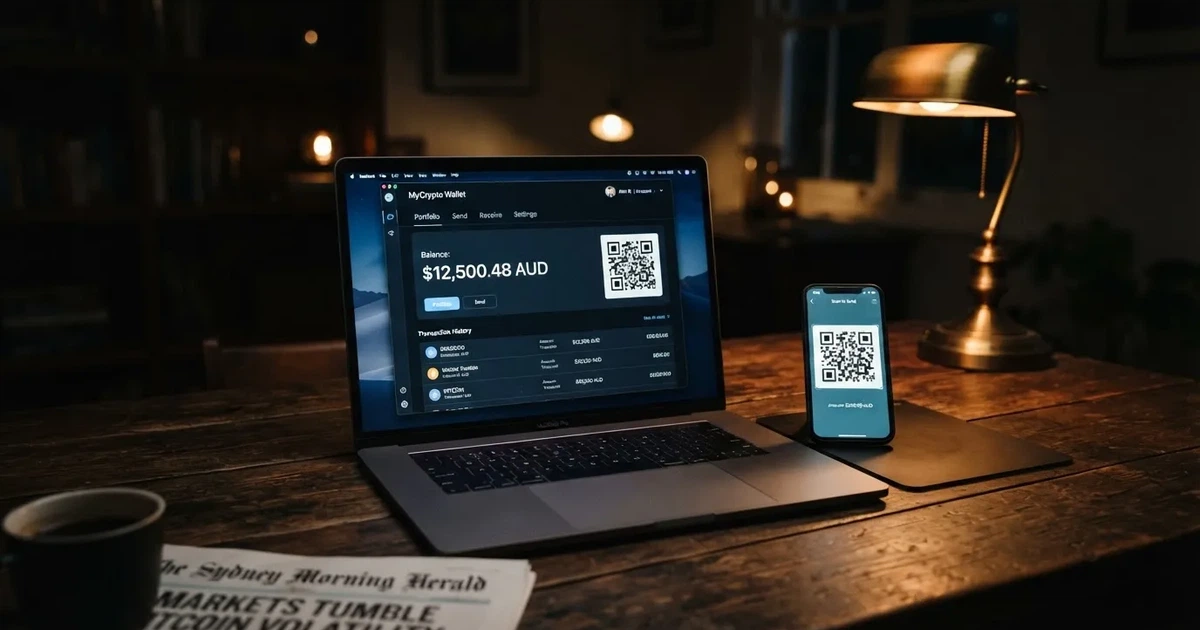
This article compares eleven brands the ACMA itself has issued formal warnings over for offering prohibited interactive gambling services to people in Australia. Each entry is followed by the ACMA action that put it on the list, with nothing added on top. The comparison is descriptive. A reader weighing their options gets the picture; nobody is steered toward any one of them.
Currency and licence data current as of 29 October 2026, checked against the ACMA register and AUSTRAC’s Digital Currency Exchange provider list.
- The legal floor under every comparison on this page
- Responsible gambling: who actually answers the phone
- What a Solana deposit actually changes at the technical level
- The eleven brands the ACMA has acted against
- The blocking rate, as a band
- Comparing the comparison itself
- What an Australian reader takes away
- Frequently asked questions
The legal floor under every comparison on this page
Australia’s Interactive Gambling Act 2001, tightened by the 2017 amendments, makes it an offence to provide online casino games, online pokies or in-play betting to a person physically in Australia. No state or territory licences any of these products. What is licensable is wagering on racing and sport placed before the event, lotteries and keno — products the Northern Territory Racing and Wagering Commission handles, in practice, for 52 online bookmakers including Sportsbet, Bet365 and Ladbrokes, though the commission itself has no full-time staff and meets once a month in Darwin.

The player is not the one the IGA targets — enforcement runs against the provider. That does not soften the practical consequences for anyone who deposits. An offshore casino gives no Australian consumer protection, no complaints body and no recourse if a withdrawal is refused. The site can also be blocked at ISP level while a balance is still on it. H2 Gambling Capital’s 2025 estimate puts annual losses to illegal gambling sites at roughly A$3.9 billion, with the share of gambling routed through legal channels falling from 74% in 2021 to 64%.
How the ACMA actually enforces
The Australian Communications and Media Authority investigates complaints, issues formal warnings, and can direct Australian internet service providers to block sites. By the agency’s own June 2026 count, 1,751 illegal gambling and affiliate marketing websites had been blocked since the first blocking request in November 2019, and more than 230 unlicensed services had left the Australian market since 2017. The June 2026 round alone added twelve: 7Signs, ChromaBet, Donbet, Duospin, Freshbet, Slots Gem, Jacks Club, Lucky Start, Pointsbetz, Spinrise, Vinyl Casino and Wildsino.
A formal warning is the first step in that sequence. The brand names that turn up further down this page are there because the ACMA named them, in writing, in its public register.
Why a crypto deposit does not move the legal picture
Credit cards, credit-related products and digital currency are banned as payment for any Australian-licensed online wagering service. That ban took effect on 11 June 2024, with penalties up to A$247,500 for operators who breach it. A licensed Australian bookmaker cannot legally accept a SOL deposit today. An offshore casino that does is operating outside the Australian rules in two ways at once: the product it offers is prohibited, and the payment method it accepts is prohibited for any licensed Australian operator. The SOL token, in this context, is just one more rail for an already-prohibited transaction.
Responsible gambling: who actually answers the phone
BetStop, Australia’s National Self-Exclusion Register, has been live since August 2023. It binds only Australian-licensed online and phone wagering services. An offshore Solana casino is not connected to it. Self-excluding through BetStop does not stop an offshore account, and signing up with an offshore operator does not place that player on any register an Australian regulator can see.
The National Gambling Helpline is 1800 858 858, free and staffed around the clock, with online chat at Gambling Help Online. These are the channels that work whatever the brand on the deposit slip. Anyone reading this page because they are trying to control their own play, or someone else’s, will be better served by those numbers than by anything in the comparison below.
What a Solana deposit actually changes at the technical level
Solana was founded in 2018 by Anatoly Yakovenko and Raj Gokal, after Yakovenko published a whitepaper introducing a timestamping technique he called Proof of History. The mainnet beta launched in March 2020, with the first block created on 16 March 2020. The protocol combines Proof of History with a proof-of-stake consensus layer, and Solana’s own documentation describes an optimised block time of around 800 milliseconds — orders of magnitude faster than Bitcoin’s roughly ten-minute average.
The August 2026 roundup published on solana.com reports record transaction numbers, around $4 billion in tokenised real-world assets on the network and growing stablecoin payment volumes. Solana also markets payment channels able to handle one million payments per second, by authorising an agent to spend once on behalf of a user. For someone moving a few dollars’ worth of SOL into a casino wallet, the practical effect is that the deposit usually arrives in seconds and the on-chain fee is a fraction of a cent.
Fees versus the bank-versus-crypto comparison
A standard Australian bank transfer via the New Payments Platform, or via PayID and Osko, is free for the sender and typically settles within seconds during business hours. Outside those hours the transfer can take longer or arrive only when both banks process it. A SOL transfer is not bound by banking hours, and the network fee is set by recent demand for block space rather than by the user’s bank.
The contrast matters less than the marketing suggests. A PayID transfer from an Australian bank account into a licensed Australian operator is the same kind of transfer a person uses to pay a plumber. A SOL transfer into an offshore casino runs through a network the ATO treats as property, not as money — disposing of, exchanging or spending the asset is a capital gains tax event, and gains on assets held at least twelve months may qualify for the CGT discount. The 1 July 2027 change replaces that flat 50% discount with CPI indexation of the cost base plus a 30% minimum rate on net capital gains. The price of speed, in other words, is the tax paperwork.
AUSTRAC and the exchange on the other side
Any business providing digital currency exchange services to people in Australia — crypto-to-fiat, and from 31 March 2026 also crypto-to-crypto — must register with AUSTRAC as a Digital Currency Exchange provider. Operating unregistered is a criminal offence under the Anti-Money Laundering and Counter-Terrorism Financing Act 2006. From 31 March 2026 the registration requirement extends further to digital asset transferors, custody providers and stablecoin issuers and distributors. A casino asking for SOL is usually pointing a player at an exchange step on the way in. Whether that exchange is registered with AUSTRAC is something the player can check before sending any funds.
Why a comparison singles out Solana rather than covering all cryptocurrencies
Bitcoin secures its ledger through proof-of-work mining, with a difficulty target that readjusts roughly every two weeks to keep the average block interval near ten minutes; confirmation times are probabilistic and can arrive sooner or later than that average. Bitcoin Cash launched on 1 August 2017 as a hard fork of Bitcoin at block height 478,558, with the same SHA-256 proof-of-work and the same ten-minute target, but a block size limit first set at eight megabytes and raised to thirty-two megabytes in 2018, and transaction fees that the project’s own materials describe as “under a penny” with confirmations in minutes.
Solana sits at a different point on that spectrum. It is faster than Bitcoin, cheaper than Bitcoin Cash for very small transfers, and its token has no maximum supply cap — initial annual inflation starts at 8% and disinflates by 15% per year until it stabilises at a long-term rate of 1.5%. A player who holds SOL rather than BTC is exposed to a different issuance schedule and a different tax lot. A comparison that flattens all cryptocurrencies into one rail loses that.
The eleven brands the ACMA has acted against
The table below lists every brand covered in the comparison below, alongside the ACMA action that named it. The order matches the sequence in which the ACMA entries appear in this article, and the subject-support column reflects only what public listings report about each brand’s relationship with Solana — where the listings do not mention it, the cell stays empty.
| Brand | ACMA action and date | Operator named by the ACMA | Subject support |
|---|---|---|---|
| RocketPlay | March 2026 warning | Pulsup Ltd | — |
| Level Up Casino | May 2022 warning | Dama N.V. | — |
| Woo Casino | March 2025 warning | Dama N.V. | Listings report no SOL |
| Spirit Casino | May 2025 warning | Dama N.V. | — |
| National Casino | July 2025 warning | Consolutetish S.R.L. | Listings report no SOL |
| Bizzo Casino | July 2025 warning (plus earlier 2022 warning to TechSolutions) | Consolutetish S.R.L. | — |
| Ignition Casino | July 2025 warning | Bamboo Media | — |
| Instant Casino | February 2025 warning | EOD Code SRL | — |
| Jackbit | April 2026 warning | Ryker B.V. | — |
| Casino Intense | April 2025 warning | Sterplay Holding Ltd | — |
| Sky Crown | ACMA warning (no fresh date) | Hollycorn N.V. | — |
Eleven brands, eleven ACMA entries, eleven names Australian players keep encountering. The next sections work through them one by one.
RocketPlay
Pulsup Ltd received a formal warning under the Interactive Gambling Act 2001 in March 2026 over Rocketplay. Dama N.V. had already been warned over the same brand in May 2022, alongside five other Dama brands. The brand’s listings do not document a Solana integration one way or the other. The thing the ACMA record establishes — that the operator offers a prohibited interactive gambling service to Australians — is what carries the weight here.
Level Up Casino
Dama N.V. was warned in May 2022 over six casino brands at once: Bambet, Dazard, Level Up, Rocketplay, Wild Tornado and Cobra Casinos. Level Up is one of the six, and the warning puts the brand on the same legal footing as the others — a prohibited service offered to people in Australia, with no Australian licence covering it. The brand’s listings say nothing about SOL support. Any player who sees Level Up in a “best Solana casino” list should understand that the list was assembled without consulting the ACMA register.
Woo Casino
Dama N.V. picked up a fresh ACMA warning in March 2025 specifically over Woo Casino, on top of the May 2022 batch. Public listings mention Woo Casino without referring to Solana as a supported token. That is a listings-only finding, not a confirmation: the brand may have added SOL since the listing was last updated, or it may have never added it. Either way, the ACMA position is unchanged.
Spirit Casino
Dama N.V. received another formal warning in May 2025, this time over Spirit Casino. The pattern is the same — the ACMA has identified a prohibited interactive gambling service directed at Australians, the operator behind the brand has been named, and the brand’s own materials offer no documentation of a Solana integration. The warning does not name a payment method. It does not need to.
National Casino
Consolutetish S.R.L. was warned in July 2025 over National Casino. Public listings report no SOL support for the brand. The warning covers the product, not the payment rail. National Casino could add Solana tomorrow and the ACMA position would be no different: providing online casino games to people in Australia remains the offence.
Bizzo Casino
Consolutetish S.R.L. was warned over Bizzo Casino in the same July 2025 round. Bizzo had already been the subject of a 2022 formal warning to TechSolutions (CY) Group Limited and TechSolutions Group N.V. — a two-step trail that is unusual even in a market where operators rebrand. No public listing documents a SOL integration. The repeated warnings suggest the brand has been operating across the Australian prohibition for years without rectification, which is itself a fact a reader weighing the brand should weigh.
Ignition Casino
Bamboo Media received a formal warning in July 2025 over Ignition Casino. Ignition is a long-running offshore brand aimed at Australian and US audiences, and its listings do not document Solana support. The product category — prohibited casino games to people in Australia — is the only thing on the page that matters from an Australian legal standpoint.
Instant Casino
EOD Code SRL was warned in February 2025 over Instant Casino. No public listing documents a SOL integration. A reader who lands on Instant Casino via a search result needs to know only one thing before reading the rest of the page: the ACMA has, by name, identified this brand as offering a prohibited service to Australians.
Jackbit
Ryker B.V. was warned in April 2026 over Jackbit and CasinOK. No public listing documents a SOL integration. Ryker B.V. is a Curaçao-incorporated operator that runs several offshore brands; the warning covers Jackbit as a brand rather than the corporate group. The product is still the same prohibited casino offering to people in Australia.
Casino Intense
Sterplay Holding Ltd was warned in April 2025 over Casino Intense. No public listing documents a SOL integration. The brand operates under a Curaçao licence, displays that licence on its footer, and offers casino games to Australian-facing traffic — three facts that, taken together, line up exactly with what the ACMA named when it issued the warning.
Sky Crown
Hollycorn N.V. was the subject of a formal ACMA warning over Sky Crown and Blue Leo, both of its casino services, as published by the ACMA in September 2022. No fresh date has been published since. No public listing documents a SOL integration. The 2022 date matters because it predates several of the other warnings on this list, and shows the ACMA has been moving against the same operator group across multiple brands over multiple years.
The blocking rate, as a band
The ACMA’s first blocking request went out in November 2019. By June 2026, 1,751 illegal gambling and affiliate marketing websites had been blocked in total, with twelve more added in the June 2026 round alone. From the first blocking request to the June 2026 reporting date is roughly six and a half years, or about 78 months. Dividing 1,751 blocked sites by 78 months gives an average of around 22 to 23 sites blocked per month, with the underlying number in any given month varying widely — some months see single-digit additions, others see double-digit rounds like the June 2026 one.
That is a band, not a forecast. The blocking rate depends on what the ACMA investigates, how many complaints reach it, and how many services sit on the regulator’s queue. What the figure does tell a reader is the order of magnitude: offshore gambling services are being removed from Australian reach at a sustained pace, not in occasional sweeps. A site that was accessible last month can be inaccessible this month, and a balance left on an account at the moment of a blocking round is money the player has no practical way to recover.
What the band means for a SOL deposit
A Solana deposit into an offshore casino is settled on a public blockchain, but the casino itself sits on infrastructure the ACMA can direct an Australian ISP to block. Blocking does not reverse the on-chain transaction. It removes the website a player uses to request a withdrawal. The arithmetic on this page cannot change that; the math is settled by the regulator, not by the network.
Comparing the comparison itself
A Solana casino comparison is usually framed around three things: deposit fees, deposit speed and game selection. On the first two, Solana does have a measurable edge over Bitcoin and Ethereum for retail-sized transfers, and a smaller one over Bitcoin Cash for the smallest transfers. On the third — game selection — the token used at the cashier changes nothing about which slots, table games or live-dealer products sit behind it. A casino’s game library is a property of the operator, not of the payment rail.
What this comparison adds to that frame is the column no marketing comparison carries: ACMA action and operator named by the ACMA. The point of including it is not to rank one offshore brand against another on the merits. The point is that the regulator has, for every brand on this list, already done the part of the comparison that matters most to a reader in Australia — established that the brand is offering a product the law prohibits here.
Where the data stops
The brands above all carry an empty cell in the subject-support column, except where public listings happen to mention Solana explicitly and then negatively. The listings a reader sees at a search-results page are marketing material. They list what the brand wants to be listed for, on terms the brand wants to be listed under. Where a listing mentions no SOL support, this page does not assert that SOL is unsupported — it reports the listing as it stood. A reader who needs certainty should check the cashier of the brand directly, knowing that the brand itself is operating outside the Australian rules.
The verdict each write-up points toward
Each of the eleven write-ups above lands on the same place, because the regulator’s findings do. None of the operators is licensed in Australia. None of the payment methods they accept is permitted for any licensed Australian wagering service. None of the consumer protections an Australian player would otherwise have — BetStop, the Australian complaints mechanisms, the ACMA’s intervention if a withdrawal is refused — applies to them. The choice a reader makes, then, is whether the speed and fee saving of a SOL deposit is worth entering an offshore market where the balance can be stranded by a blocking round at any time.
For a player who has weighed that and decided the trade is worth it: at least the AUSTRAC registration of any exchange on the way in, the CGT treatment of the SOL being spent, and the Helpline number above are all in hand before the first transfer goes out. For a player who has not weighed it yet: the comparison on this page is the reason the weighing is necessary.
What an Australian reader takes away
Three things stand out across the eleven brands.
The first is that the ACMA has acted against every brand on this page by name, in writing, and on dates that are public. The same regulator has, on top of that, blocked 1,751 sites since November 2019 and is still adding to the list. The probability that any one offshore brand stays accessible for the full life of a player’s account is not high — it is the kind of probability that justifies a comparison page existing at all.
The second is that the choice of payment rail changes nothing about the product category. Solana is faster and cheaper than the alternatives, in the technical sense that this page’s middle section set out. What it cannot do is convert a prohibited product into a licensable one. The ACMA action is over the offering, not over the wallet.
The third is that the consumer protections a player would have with a Sportsbet, Bet365 or Ladbrokes account — BetStop, AUSTRAC oversight of the exchange, the ACMA itself — do not extend to any of these offshore brands. A reader comparing options on this page has, in effect, been given the comparison because the safe option is the licensed one, and the offshore option is what the comparison is contrasting it with.
Frequently asked questions
Why would a casino specifically support Solana rather than just Bitcoin or Ethereum?
Solana settles transactions in roughly 800-millisecond blocks with very small on-chain fees, which is what a retail casino deposit needs: the player wants the balance to appear in their account within seconds rather than waiting for a Bitcoin confirmation that may arrive sooner or later than its ten-minute average. Bitcoin and Ethereum work for the same deposits, but with longer waits and higher fees, especially on Ethereum when the network is busy. From the operator’s point of view, supporting more rails broadens the deposit base. From the player’s, the difference is one of speed and cost rather than one of product.
Does using Solana for deposits make transaction fees any different compared with other cryptocurrencies?
Yes — at retail sizes, the on-chain fee for a SOL transfer is a small fraction of a cent, set by recent demand for Solana block space. Bitcoin Cash charges fees the project’s own materials describe as “under a penny”. Bitcoin’s fees scale with the same demand, often landing in the dollar range when the network is busy, and Ethereum’s have historically spiked higher. For a casino deposit of a few dollars, Solana is typically the cheapest rail to use. The fee saving does not change what the deposit is for.
Is depositing Solana into an offshore casino account something an Australian resident can lawfully do?
The IGA does not prosecute the individual player — it targets the provider. That is the limit of the good news. The product on the receiving end is a prohibited interactive gambling service, and from 11 June 2024 a digital currency is a banned payment method for any Australian-licensed wagering service, so a casino asking for SOL is offering an unlicensed product and accepting a banned payment rail simultaneously. There is no Australian licence that makes a SOL deposit into an offshore casino lawful. The site can be blocked by the ACMA, the balance can be stranded, and AUSTRAC registration of any exchange on the way in is the player’s own responsibility to verify.
How does Solana’s transaction speed compare with a standard bank transfer for casino deposits?
A SOL transfer settles in seconds at any hour, with a fee set by the network rather than by a bank. A PayID or Osko transfer from an Australian bank account is typically free and settles in seconds during business hours, but can take longer outside them or when both banks process the transfer on different schedules. For a deposit into an Australian-licensed operator, the bank transfer is both faster and lawful; for a deposit into an offshore casino, the SOL transfer is faster at any hour but lands on an unlicensed product. The speed comparison is real, and the legal comparison matters more. See also Deposits .
What’s actually being compared on a Solana casino comparison page — fees, speed, or game selection?
All three, in the marketing sense. The fees and speed comparison favours Solana over Bitcoin and Ethereum and roughly matches it against Bitcoin Cash for the smallest transfers; the game-selection column is a property of the operator and does not change with the rail. What this page adds to that frame is the ACMA action column, which is the only column that bears on whether a reader in Australia should be at the cashier in the first place. Fees and speed settle in seconds. The regulatory position is what makes the comparison worth doing.