
Fast payout online casinos, read from Australia
An Australian reader typing “fast payout online casino” lands in a marketplace the Interactive Gambling Act 2001 makes it an offence to supply to anyone in Australia. The pages that rank them anyway are written for someone else, or written for Australians by people who have not read the statute. What the IGA actually permits, what the ACMA actually does about the rest, and what an Australian reader with a stake in the question actually has to choose between are the three things worth knowing before any “fast payout” claim is read at face value. Fast payout online casinos, read from Australia — More on this topic at casino table games .
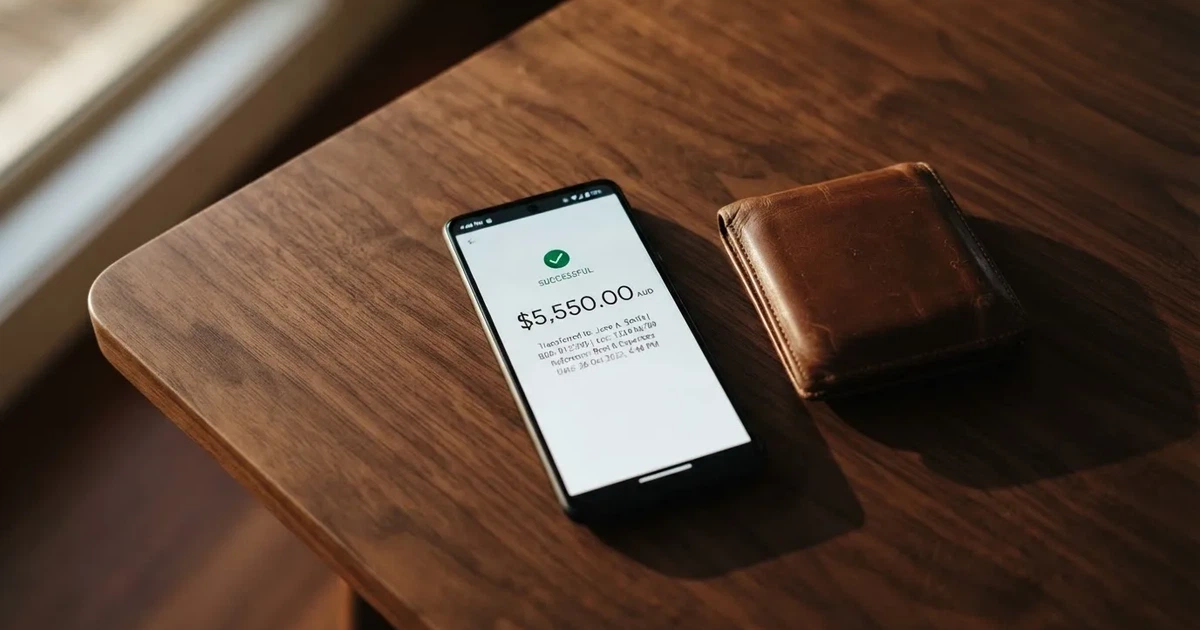
Data current as of 29 October 2026, checked against the Australian Communications and Media Authority’s published formal warnings and the Interactive Gambling Act 2001 as amended.
- Fundamentals of fast payout online casinos
- The prohibition in plain English and the ACMA’s enforcement record
- Player protection and the limits of Australian tools
- Crypto, speed and the offshore question
- Settlement times and how money moves into an Australian account
- The brands the ACMA has warned over Australian-facing casino offers
- Frequently asked questions
Fundamentals of fast payout online casinos
The phrase “fast payout online casino” has three working parts, and untangling them matters before anything else.

“Fast” is a marketing word. In the offshore market it usually means under 24 hours from a withdrawal request to funds showing up in the player’s account — sometimes much faster, sometimes only after the operator’s internal review queue clears. “Same day” is the next tier down, and “instant” is the claim at the top, almost always tied to a specific payment method rather than to the operator’s processing speed.
“Payout” is what the player receives after a withdrawal request. It is not the deposit, and it is not the balance. A payout can be held by the operator for a customer-checks stage — KYC document review, source-of-funds questions, bonus-playthrough verification — and by the payment rail once the operator releases it. The operator’s hold is invisible to the player before the request goes in.
“Online casino” in an Australian context means a website or app offering slots, table games, or live-dealer casino games to a player with an internet connection. It is the specific product the Interactive Gambling Act prohibits — not sports betting, not racing, not lottery, not keno, all of which are licensed for Australian customers through wagering operators. The distinction is the foundation everything else on this page sits on, and it is the one distinction marketing copy skips.
The mechanics of a payout, in the order they happen: the player requests a withdrawal from the casino’s cashier, where minimums, per-transaction maximums and a deposit-first requirement almost always apply. Then the operator’s internal review runs — KYC document checks, source-of-funds questions, bonus-abuse reviews and manual approval queues, none of which are visible to the player before the request is made. The operator then releases the funds to the chosen payment method, instantly for crypto or some e-wallets, over 24 to 72 hours for cards and bank transfers. The payment rail settles last: an Osko transfer to an Australian bank account arrives in under a minute, while a SWIFT transfer from a Curaçao-based operator can take three to five business days and pick up intermediary bank fees along the way.
Three points worth flagging before the legal detail. The first is that “instant withdrawal” and “instant payout” are not the same thing. The first describes how quickly the operator processes a request internally; the second describes how quickly money hits the player’s account. Both are commonly elided in marketing copy. The second is that the fastest payout method is rarely the cheapest or the safest. Cryptocurrency is fast and irreversible — the same properties make it the worst option when an operator refuses to pay out. Cards offer chargeback rights a player can fall back on, but take longer. The third is that the Australian banking system, through Osko by Australian Payments Plus, already moves money between Australian bank accounts in under a minute, twenty-four hours a day. For an Australian player sending or receiving funds from an Australian source, the rail is rarely the bottleneck. The bottleneck is the offshore operator’s own review queue.
The prohibition in plain English and the ACMA’s enforcement record
What the Interactive Gambling Act actually prohibits
The IGA was passed in 2001 and tightened in 2017 by the Interactive Gambling Amendment Act. Its operative provision makes it an offence to supply a “prohibited interactive gambling service” — online casino games, online pokies, or in-play betting — to a person who is physically in Australia. The offence targets the provider, not the player. The minimum age for any Australian-licensed gambling product is 18.
What this means for the search behind this page. No state or territory in Australia issues a licence for online casino games. What is licensed is wagering on racing and sporting events placed before the event, lotteries, and keno. The Northern Territory Racing and Wagering Commission regulates 52 of Australia’s online bookmakers — Sportsbet, Bet365 and Ladbrokes among them — for tax reasons, even though the commission has no full-time staff and meets once a month in Darwin. None of those licences covers a casino product. An offshore operator displaying a Curaçao or Anjouan licence is not contradicting Australian law by displaying it; the contradiction is in serving Australian customers from behind it. And the player is not the target of prosecution — the risk is consumer, not criminal: a withdrawal the operator refuses to honour, a complaint no Australian body will pick up, and the chance that a balance sits trapped on a site the ACMA has just asked every Australian ISP to block.
How the ACMA enforces it
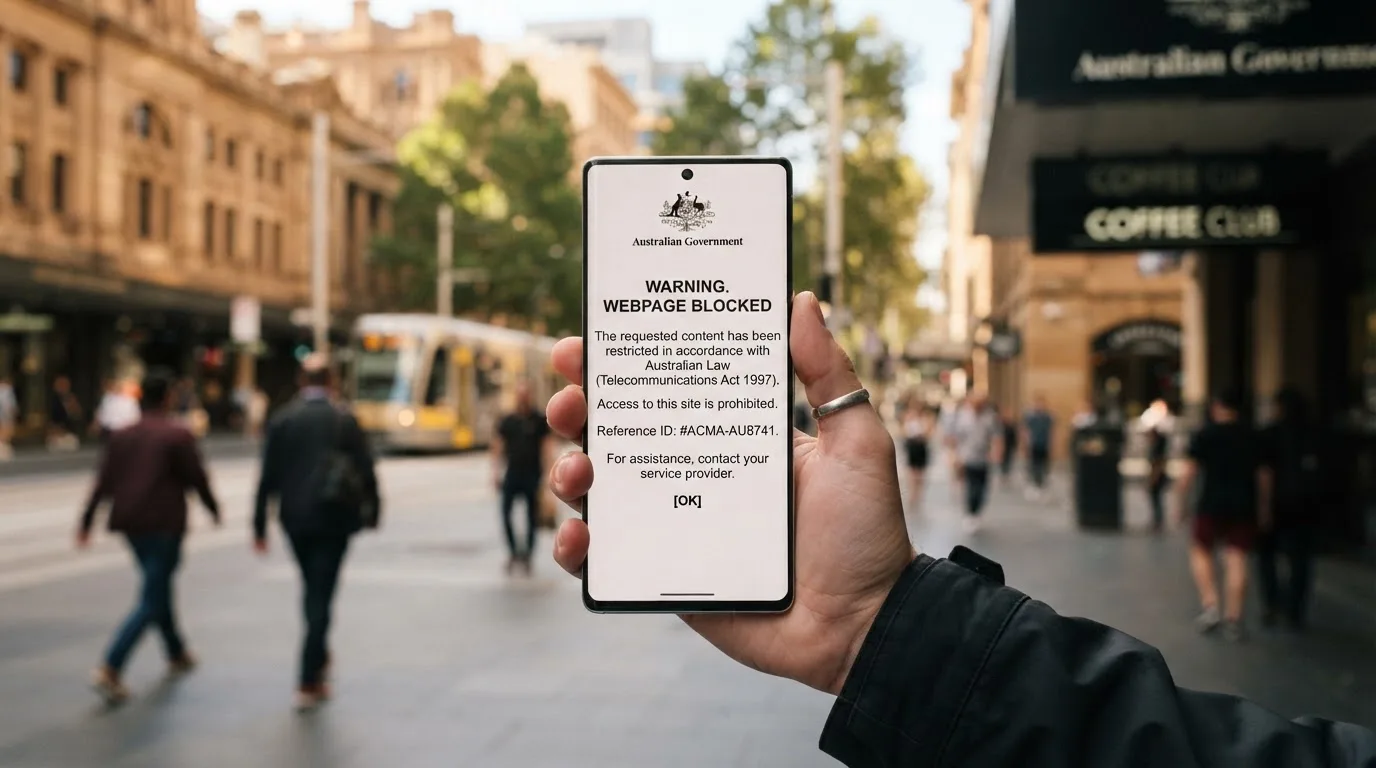
The Australian Communications and Media Authority has three working tools: investigating complaints, issuing formal warnings to operators (and their directors), and asking the Federal Court to let it direct Australian internet service providers to block illegal sites at the network level. A formal warning is a public document; the ACMA publishes it, naming the operator entity behind the brand and the date. The block list is enforced at the ISP level: an Australian reader trying to reach a blocked site typically sees a redirect or a regulator notice, not the casino page.
As of the count published in June 2026, 1,751 illegal gambling and affiliate marketing websites had been blocked since the first blocking request in November 2019, and more than 230 unlicensed gambling services had withdrawn from the Australian market since enforcement was strengthened in 2017. The June 2026 round alone added 12 more sites: 7Signs, ChromaBet, Donbet, Duospin, Freshbet, Slots Gem, Jacks Club, Lucky Start, Pointsbetz, Spinrise, Vinyl Casino and Wildsino.
The blocking rate, in plain terms
The arithmetic the ACMA’s enforcement record hands a reader is straightforward once it is set out. Across the seventy-nine months from the first blocking request in November 2019 to the most recently published count in June 2026, 1,751 sites have been blocked. That works out at roughly twenty-two new sites per month, or close to 266 a year.
State it as a band rather than a precise figure. In practice the pace has varied sharply, with quieter months followed by enforcement rounds that add a dozen or more in a single batch — the June 2026 round added twelve on its own. Across the seven-year window, the rate sits in a band of roughly twenty to twenty-five sites per month, and the annualised figure falls somewhere between 250 and 290 depending on which twelve-month slice is measured. What the rate shows is volume, not effectiveness. A site blocked today is sometimes replaced by a mirror domain the next week, and the operators behind the brands recycle brand names faster than the ACMA can publish warnings. The 230-plus services that have withdrawn from the Australian market voluntarily since 2017 is, alongside the block list, the more telling half of the enforcement picture.
H2 Gambling Capital’s cost estimate
A 2025 estimate from H2 Gambling Capital puts Australian losses to illegal gambling sites at around A$3.9 billion a year, and finds that the share of gambling going through legal Australian channels has fallen from 74% in 2021 to 64%. The figures are estimates — H2 is a consultancy, not a regulator — but the direction is consistent with the ACMA’s blocking record: more offshore supply, more Australian money flowing into it, fewer complaints the ACMA can resolve because the operators are not licensed to be heard from. The legal-channel share is, in effect, the share the IGA framework was designed to protect; that it has fallen by ten percentage points in four years is the single most useful number for sizing what the enforcement gap actually costs.
The 2026 reform package
The Interactive Gambling Amendment (Gambling Reform) Bill 2026 passed Federal Parliament on 19 August 2026. Its advertising and inducement measures — the parts aimed at the “fast payout”, “free spins”, and deposit-match offers that crowd the search results — commence on 1 January 2027. As of the publication of this page, the law is on the books but the new measures are not yet in force, and the ACMA is still enforcing the framework as it stood before the amendment. What changes in January is what the ACMA can do about marketing material directed at Australian readers, not the underlying prohibition on supplying the games themselves.
What an Australian reader actually has, by category
Australian readers who want to play casino games have, in practice, three options. The first is licensed wagering on sports and racing — Sportsbet, Bet365, Ladbrokes and the rest — which is regulated by the Northern Territory Racing and Wagering Commission and offers no casino product. The second is licensed land-based venues: pokies in clubs and pubs in every state and territory, and casino floors in Melbourne, Sydney, the Gold Coast, Perth, Adelaide, Hobart, Darwin and Canberra. The third is offshore online casinos, which carry no Australian licence and offer no Australian recourse.
There is no fourth category that fits the search. Any page claiming one is selling something the IGA forbids.
Player protection and the limits of Australian tools
The Australian reader has access to a layer of player protection the offshore marketing pages rarely mention, because none of it binds the operators they recommend.
BetStop, the National Self-Exclusion Register, has been live since August 2023. A punter who registers is excluded from all Australian-licensed online and phone wagering services for a period of their choice — three months, six months, or up to five years. Crucially, BetStop binds only the Australian-licensed operators it was built to cover. An offshore casino is not on the register, not bound by it, and can carry on accepting a self-excluded Australian customer’s deposits without consequence under Australian law. The National Gambling Helpline on 1800 858 858 is free, 24/7, with web chat available through Gambling Help Online. The service is run by state and territory counselling organisations and is the front door for anyone who feels their gambling is becoming a problem. It works the same way for an offshore punter as for a licensed one — the help is for the person, not the platform they happen to be using.
Australian banks add another layer, at the card level. Westpac’s gambling block refuses authorisation of transactions registered under the merchant category code ‘Betting/Casino Gambling’ on eligible personal credit and debit cards. ANZ’s block, activated in the ANZ app, extends to gambling transactions made through a digital wallet such as Apple Pay on an eligible card, not just the physical card. Commonwealth Bank offers a similar gambling lock through the CommBank app. The bank-level block is a hard cut at the merchant category: it does not depend on the player staying disciplined, which is the point. The bank’s own terms warn that not all gambling transactions will be blocked and that some non-gambling transactions might be blocked in error.
Removing ANZ’s gambling block once it is on takes a 48-hour cooling-off period — the same idea as the offshore casino’s “you can cancel your withdrawal”, but with the time on the side of the player, not the operator. For a punter who wants a hard limit and is uncertain whether they will override it later, the bank block is the more reliable tool because the override requires the bank to act, not the player to resist. BetStop and the bank blocks do different jobs. BetStop excludes the punter from a category of legal product entirely; the bank block prevents a specific transaction at the moment it is attempted. They are complementary, not interchangeable.
Crypto, speed and the offshore question
Cryptocurrency has two properties the offshore marketing pages lean on heavily. It settles inside minutes rather than days. And it bypasses the card networks whose gambling blocks the Australian banks are tightening. Both are real. Neither is enough to make the offer lawful, or safe.
For an Australian punter using Bitcoin, Ethereum, USDT or one of the smaller coins, the experience is the same one a punter anywhere else gets: a deposit address, a network fee, a confirmation count, and a balance on the casino side that can be played and (in theory) withdrawn to a wallet the punter controls. The casino’s marketing positions this as “instant” and “anonymous”. The first is roughly true. The second is overstated — every crypto transaction is publicly traceable on the blockchain, and the casino’s wallet is a known address once a punter has sent to it.
The speed claim collapses at the cashout stage if the operator refuses to release funds. Cryptocurrency transactions are irreversible: once the funds leave the operator’s wallet to the player’s wallet, no chargeback is possible. The same property that makes deposits fast makes disputes unwinnable. A card payment gives a punter chargeback rights that Visa, Mastercard and American Express all maintain through their respective dispute processes; those rights do not extend to gambling transactions at most licensed Australian operators — the credit-card ban enacted in 2024 closed most of that route anyway — but at an offshore operator they remain a fallback the punter would otherwise lose.
Under the Interactive Gambling Act as amended in 2023, digital currency is among the products banned as payment for Australian-licensed online wagering. The same restriction came into effect for credit cards and credit-related products on 11 June 2024, with penalties of up to A$247,500 for operators that accept them. The legal deposit routes for a licensed Australian wagering service are debit card, bank transfer, PayID/Osko, and BPAY. An offshore casino that accepts crypto from an Australian customer is not, on that fact alone, breaking Australian law — the law targets the supply of the gambling service, not the payment method. But the offer it is supplying is still prohibited, and the payment method is just one more reason the Australian customer has no local recourse if anything goes wrong.
The practical reality, for a punter who already uses crypto and wants casino games: the offshore route is fast on the way in and often slow on the way out, because offshore operators know the punter cannot charge back and can apply the same delays any other casino would. The licensed Australian route does not offer casino games at all. The land-based route takes the punter to a venue that does not take crypto. None of those paths is the path the marketing implies, and the gap between the implied path and the real one is where most of the risk to the punter lives.
Settlement times and how money moves into an Australian account
Osko and PayID: the Australian instant-transfer rails
Osko is the instant-transfer service operated by Australian Payments Plus (AP+). A bank transfer between participating Australian banks, addressed to a BSB and account number or to a PayID, arrives in under a minute, 24/7 including weekends and public holidays. There is no business-hours constraint, no cut-off, and no separate fee beyond the bank’s own transaction fee — most banks charge nothing for Osko transfers between eligible accounts.
PayID is the addressing layer that makes Osko usable without a BSB and account number. A PayID can be a mobile number, an email address, or an ABN, and is registered to a single account at a participating Australian financial institution. As of April 2025, more than 25 million PayIDs had been registered on Australia’s New Payments Platform, the underlying real-time payments infrastructure. Over 100 Australian financial institutions offer PayID-based instant transfers, and the platform’s monthly outages are contractually capped at two minutes.
The practical consequence for an Australian reader: a punter moving money to or from another Australian account is not waiting on the rail. A settlement delay of more than a minute between two Australian banks is a bank-side fault, not a network-side limit. The New Payments Platform itself went live on 13 February 2018, owned by New Payments Platform Australia Ltd, a non-profit whose 13 shareholders include the Reserve Bank of Australia and the country’s major banks. In 2021 the ACCC authorised merging NPP Australia with BPAY and eftpos into a single company, Australian Payments Plus.
The PayID scam warning
PayID’s own operator, AP+, warns that being asked to transfer money to a PayID on an illegal gambling site almost certainly means a scam site. The reasoning is straightforward: a legitimate Australian operator shows the registered account holder’s name on a PayID before the transfer is sent. If the name on the PayID does not match the operator a punter believes they are paying, the transaction should not be sent. The warning applies even if the website looks professional and the brand name is one an ACMA warning has already named — and several on this page are.
BPAY: the bill-payment layer
BPAY has been operating since 18 November 1997 and is owned equally, via Cardlink Services Limited, by Australia’s four major banks — ANZ, Commonwealth Bank, National Australia Bank and Westpac. Available through the online banking of more than 140 Australian banks and financial institutions, and offered by over 95,000 Australian businesses, BPAY is the bill-payment layer of the Australian retail payments system. A punter using BPAY to fund a wagering account enters the Biller Code and a Customer Reference Number, the same way they would pay a utility bill.
Settlement through BPAY is not instant — it is typically processed overnight, with the funds appearing on the biller’s side the next business day. But the route is auditable, the biller is identifiable, and the transaction shows up clearly on the punter’s bank statement as a BPAY payment rather than as an opaque card transaction. For an Australian punter, that traceability is part of the value. In September 2021 the ACCC authorised the merger that brought BPAY Group, eftpos and NPP Australia under the single holding entity of Australian Payments Plus.
Cards: Visa, Mastercard and the American Express exception
The four-party card networks — Visa and Mastercard — operate by agreement between the cardholder’s bank, the merchant’s bank, the network and the cardholder. American Express is the long-standing exception: it issues its own cards and processes its own transactions as a three-party scheme, which is why Amex-accepting merchants sometimes surcharge differently. American Express itself dates back to 1850 as a freight-forwarding company; its first charge card was launched on 1 October 1958.
What matters for an Australian punter is the Reserve Bank of Australia’s July 2025 review of merchant card payment costs. The review proposes removing surcharges on eftpos, Mastercard and Visa transactions, but explicitly leaves American Express outside the scope of the proposed ban — meaning Amex surcharges, where merchants apply them, remain allowable under the framework the RBA has put forward. The practical effect on an Australian punter using Amex at an offshore casino is that any surcharge the casino passes through stays on the punter’s bill, where it would not on a Visa or Mastercard transaction under the proposed rule.
Digital wallets: Apple Pay, Google Pay, Samsung Pay
By the end of 2025, transactions through Apple Pay, Google Pay and Samsung Pay accounted for around 45% of all card payments in Australia by number. For an Australian punter, the question is whether a digital wallet transaction at an offshore casino is treated as a card transaction for the purposes of the Australian banks’ gambling blocks. The answer depends on the bank.
ANZ’s gambling block, activated in the ANZ app, blocks gambling transactions made through a digital wallet such as Apple Pay on an eligible card, not just the physical card — meaning the block survives tokenisation. Apple itself does not charge fees to consumers for using Apple Pay, and Apple states that transaction limits and PIN requirements are set by the card issuer or merchant, not by Apple.
The 2024 ban on credit cards and credit-related products for Australian-licensed online wagering also constrains gambling use of linked digital wallets like Apple Pay. A debit-card-funded wallet remains a workable payment method at licensed Australian wagering operators; an offshore casino’s acceptance of the same wallet is one more layer of marketing the legal frame does not validate.
AUSTRAC and what does not trigger reporting
AUSTRAC’s threshold-transaction-report rule requires reporting of physical cash transfers of A$10,000 or more. Ordinary electronic bank transfers — Osko, BPAY, card transactions, crypto on-ramp transfers through an Australian exchange — are not subject to that per-transaction reporting requirement, regardless of the amount sent. A punter moving A$15,000 from a savings account to an offshore operator through BPAY does not, on that fact alone, trigger an AUSTRAC report. The rule is worth knowing because offshore marketing copy sometimes implies that large transfers are flagged, on the theory that punter reluctance helps the marketing. They are not.
The fastest legitimate path for an Australian punter
For someone funding an Australian-licensed wagering account (sports or racing, not casino games), the fastest path is a debit card or a PayID/Osko transfer from the punter’s bank account to the operator’s. Both settle inside minutes; both leave an audit trail; both sit inside the Australian consumer-protection framework. For someone funding an offshore casino account, none of those protections apply. The fastest path on the way in is crypto or an e-wallet the operator accepts. The fastest path on the way out depends on the operator’s internal review clearing without hold, and on the payment rail the punter chose. The settlement speed the marketing promises is the rail’s speed. The actual payout speed is whatever the operator’s queue adds to it.
The brands the ACMA has warned over Australian-facing casino offers
The brands below are not a ranking and not a recommendation. Each is included because the ACMA has issued a formal warning naming the operator entity behind the brand for offering prohibited online casino games to people in Australia — the only criterion on which a comparative table of brands a reader cannot legally use is honestly assembled. No bonus terms are listed, because no responsible source for those terms exists for an Australian reader. Every page that publishes them is an affiliate marketing page whose commercial interest runs in the opposite direction to the reader’s.
The table covers the operator entity behind the brand, the date of the most recent ACMA formal warning, and the listings the research was able to surface that name the brand outside the ACMA’s own publications. An em dash means no corroborating listing was found in the consulted sources. This notation applies to several brands below, confirming that their public footprint outside the regulator’s records is minimal or non-existent.
| Brand | ACMA action (most recent) | Operator entity named by the ACMA | Where the brand surfaces outside the ACMA |
|---|---|---|---|
| RocketPlay | March 2026 | Pulsup Ltd | Gambling Insider |
| Level Up Casino | May 2022 | Dama N.V. | Westpac block list |
| Woo Casino | March 2025 | Dama N.V. | — |
| Spirit Casino | May 2025 | Dama N.V. | — |
| National Casino | July 2025 | Consolutetish S.R.L. | ACMA register, AUSTRAC register, BetStop |
| Bizzo Casino | July 2025 (and 2022 to TechSolutions) | Consolutetish S.R.L. | Gambling Insider |
| Ignition Casino | July 2025 | Bamboo Media | — |
| Instant Casino | February 2025 | EOD Code SRL | ecoPayz, PayID |
| Jackbit | April 2026 | Ryker B.V. | — |
| Casino Intense | April 2025 | Sterplay Holding Ltd | AUSTRAC register, BetStop, Gambling Insider |
| Sky Crown | September 2022 | Hollycorn N.V. | — |
RocketPlay — fresh warning, familiar operator
The ACMA’s most recent formal warning on RocketPlay was issued in March 2026 to Pulsup Ltd, the operator entity behind Rocketplay. The warning is fresh. The operator behind it is not new to the ACMA’s record: an earlier warning, in May 2022, named Dama N.V. over a list of brands that included RocketPlay alongside Bambet, Dazard, Level Up, Wild Tornado and Cobra Casinos. Outside the ACMA’s own register, the brand surfaces in Gambling Insider listings — the kind of listings affiliate marketing pages draw on, not a confirmation of fast-payout service to Australian customers.
The pattern here is the one the ACMA’s record has documented repeatedly: an operator entity accumulates warnings, the brand rotates, the marketing re-emerges. A punter looking at a “fast payout” claim on RocketPlay is looking at a brand whose operator has been warned about the same prohibited supply at least twice. The speed of the latest warning does not change that picture. It confirms it.
Level Up Casino — one of the May 2022 Dama N.V. cluster
Level Up Casino was named in the ACMA’s May 2022 formal warning to Dama N.V., alongside Bambet, Dazard, RocketPlay, Wild Tornado and Cobra Casinos. That warning is older than most of the ACMA’s record on the brands in this table — only Sky Crown’s September 2022 warning predates it — and the ACMA has not, on the consulted sources, issued a more recent warning specifically on Level Up.
The brand surfaces on Westpac’s merchant block list, alongside the other gambling-category merchant codes the bank’s gambling block refuses to authorise. That is the limit of the corroborated information outside the ACMA’s publications: the brand is in the Australian banking block infrastructure, and the brand’s operator was warned about prohibited supply more than three years ago. Whether Level Up is still actively marketed to Australian readers in 2026 is not something the consulted sources confirm; the ACMA’s 2022 warning on it remains on the public record.
Woo Casino — the March 2025 Dama N.V. addition
The ACMA issued a formal warning to Dama N.V. over Woo Casino in March 2025. Like Level Up above, Woo is one of multiple brands the same operator entity runs. The Dama N.V. cluster on this table now covers at least seven brands — Bambet, Dazard, Level Up, Wild Tornado, Cobra Casinos and the earlier RocketPlay appearance from May 2022, plus Woo and Spirit from 2025.
Woo Casino was warned in March 2025. For a punter cross-checking an offer on Woo, the relevant fact is not the date but the operator behind it. Dama N.V. has accumulated ACMA warnings across at least four years and seven named brands. A fresh brand name from a familiar operator is the same offer, restyled.
Spirit Casino — the May 2025 Dama N.V. addition
The ACMA issued a formal warning to Dama N.V. over Spirit Casino in May 2025, two months after the Woo Casino warning above. Spirit is the most recent of the Dama N.V. brands on the ACMA’s record at the time of writing. The brand’s footprint outside the regulator’s pages is thin. The pattern, repeated for the third time in this section, is the same. The brand rotates. The operator stays. A reader evaluating Spirit on the basis of a “fast payout” claim is evaluating a brand that was, two months before the publication of this page, on the receiving end of a formal ACMA warning. The speed claim sits on top of that record.
National Casino — Consolutetish S.R.L.’s first named brand
The ACMA issued a formal warning to Consolutetish S.R.L. over National Casino in July 2025. National is the first of two Consolutetish brands named in the same enforcement round; Bizzo Casino, below, is the second.
National surfaces in three of the consulted regulatory registers: the ACMA’s own warning publication, the AUSTRAC register, and the BetStop National Self-Exclusion Register. The breadth of regulatory visibility is unusually wide for a brand on this list — most appear in only one or two. The AUSTRAC and BetStop appearances do not, on their own, imply any change in the legal status of the offer. Both registers touch brands that have been subject to other regulatory action. What they confirm is that the brand is recognised across Australian regulatory infrastructure, not just the ACMA’s blocking programme.
For a reader cross-checking National, the relevant fact is the operator. Consolutetish S.R.L. is the entity behind two brands on this table. The warning is recent. The regulatory footprint is broader than most of its neighbours.
Bizzo Casino — the brand with two prior warnings on its record
The ACMA issued a formal warning to Consolutetish S.R.L. over Bizzo Casino in July 2025. The warning is the same July 2025 round that produced the National Casino entry above — but Bizzo’s ACMA record is older. In 2022, the ACMA issued a formal warning to TechSolutions (CY) Group Limited and TechSolutions Group N.V. over Bizzo Casino. The 2025 warning is the second ACMA action on the same brand name, with a different operator entity behind it.
Outside the ACMA’s publications, Bizzo surfaces in Gambling Insider listings. The listings do not, on their own, speak to fast-payout service to Australian customers. They speak to the brand’s industry footprint. The pattern here is different from the Dama N.V. cluster above. With Dama N.V., the operator stays and the brand rotates. With Bizzo, the brand stays and the operator entity behind it has already changed once. The 2022 warning named TechSolutions; the 2025 warning names Consolutetish S.R.L. Whether that is a corporate restructuring or a successor arrangement is not something the consulted sources resolve. The brand name has now attracted two ACMA warnings, three years and two operator entities apart in their issuance.
Ignition Casino — Bamboo Media’s Australian-facing brand
The ACMA issued a formal warning to Bamboo Media over Ignition Casino in July 2025. Ignition is the only brand on this list attributed to Bamboo Media in the consulted sources, so the operator-rotation pattern that runs through the Dama N.V. and Consolutetish S.R.L. clusters does not apply here. The brand’s footprint outside the regulator’s pages is thin — consistent with a brand that is more recently in the ACMA’s enforcement frame than some of its neighbours.
For a reader cross-checking Ignition on the basis of a “fast payout” offer, the relevant fact is the operator. Bamboo Media is named once on the consulted record. That does not mean the operator runs only one brand — only that no other brand in the consulted record is currently attributed to it. A reader looking for a familiar pattern across operator entities will not find one in Bamboo Media. Whether that is reassuring or not is the reader’s call; what the record contains is one brand and one warning.
Instant Casino — a brand that surfaces inside the payment infrastructure
The ACMA issued a formal warning to EOD Code SRL over Instant Casino in February 2025. The brand name leans on the speed claim the search is built around, which is part of why it appears here rather than in any other slot.
The unusual feature is where the brand surfaces outside the ACMA’s register. Instant Casino is mentioned in the documentation of ecoPayz, an e-wallet provider, and in the documentation of PayID, the Australian instant-payment addressing layer. Both are payment-infrastructure listings; neither confirms fast-payout service to Australian customers, and the PayID entry sits on top of Australian Payments Plus’s own warning that a transfer to an illegal gambling site’s PayID is almost certainly a transfer to a scam.
For a punter who lands on Instant Casino chasing the speed the brand name implies, the relevant fact is the gap between the name and the operator behind it. The brand surfaces inside Australian payments infrastructure in ways the regulator’s record says should not be possible. Most likely misdirection in the listing; for the punter, the consequence is the same either way.
Jackbit — the second of two Ryker B.V. brands on the April 2026 list
The ACMA issued a formal warning to Ryker B.V. over Jackbit in April 2026. The same warning named CasinOK as the second brand; Jackbit is the entry on this list because it carries the name the reader is more likely to encounter on a fast-payout comparison page.
Jackbit was warned in April 2026. Its footprint outside the regulator’s pages is thin, which is consistent with the warning being only months old at the time of writing. For a reader cross-checking Jackbit on the basis of a “fast payout” or crypto-payout offer, the relevant fact is the recent date of the ACMA action and the operator behind it. Ryker B.V. is named across two brands in the same April 2026 enforcement round. The warning is fresh; the operator’s track record beyond it is not in the consulted sources.
Casino Intense — the brand with the broadest Australian regulatory footprint
The ACMA issued a formal warning to Sterplay Holding Ltd over Casino Intense in April 2025. Outside the ACMA’s publications, Casino Intense surfaces in the AUSTRAC register, the BetStop National Self-Exclusion Register, and Gambling Insider listings — the broadest corroborating footprint of any brand on this table.
The breadth is worth noting because it does not, on its own, change the legal status of the offer. AUSTRAC and BetStop touch brands that have been subject to other regulatory action, and Gambling Insider listings are industry-trade publications rather than consumer-protection bodies. What the breadth does confirm is that Casino Intense is recognised across Australian regulatory infrastructure in ways most of the other brands on this table are not. Casino Intense is one of the older brands on this list and the one with the deepest Australian regulatory footprint outside the ACMA’s own publications. The age is the relevant fact for a punter cross-checking the brand today.
Sky Crown — one of the older warnings on the ACMA’s record
The ACMA issued a formal warning to Hollycorn N.V. over Sky Crown in September 2022. The warning is older than most of the ACMA’s record on the brands in this table — only Level Up Casino’s May 2022 warning predates it. The ACMA’s formal warning publication is a PDF, naming Sky Crown and Blue Leo as the two Hollycorn N.V. services covered.
Sky Crown was warned in September 2022. Its footprint outside the regulator’s pages is thin — which is unusual for a brand that has been on the regulator’s record for the better part of four years. A September 2022 warning is, in enforcement terms, an old warning. The brand may be dormant, may have moved to a different name, or may still be actively marketed to Australian readers in 2026 — none of those possibilities is resolved by the consulted sources, and that is itself a finding.
Frequently asked questions
What does “fast payout” actually mean in the online casino industry?
Marketing copy usually sets the bar at under 24 hours from withdrawal request to funds arriving, with same-day and instant as the tiers above it. The actual time is the operator’s internal review plus the payment rail’s settlement — minutes for crypto and some e-wallets, 24 to 72 hours for cards, several business days for SWIFT transfers.
How quickly does an Osko transfer settle between Australian banks?
Osko transfers between participating Australian banks settle in under a minute, 24 hours a day, seven days a week. Settlement is to a BSB and account number or to a PayID. Australian Payments Plus, the operator of Osko, contracts monthly outages to no more than two minutes.
Is it lawful for an online casino to offer fast payouts to Australian players?
No. The Interactive Gambling Act 2001, as tightened in 2017, makes it an offence to supply online casino games to anyone in Australia. The offence targets the operator, not the player. An Australian punter is not prosecuted, but uses a product with no Australian consumer protection and no local complaints body.
Does a fast-payout promise make an offshore casino any safer?
No. Payout speed is a property of the operator’s internal queue and the payment rail, not of the operator’s regulatory standing. The 1,751 sites the ACMA has blocked since November 2019 include operators that marketed fast payouts to Australian readers. Speed and consumer protection are different questions, and only the second one the law addresses. See also Best instant payout online casino Australia 2026 .
Which payment method typically settles fastest into an Australian bank account?
For an Australian bank account, Osko via PayID settles in under a minute, twenty-four hours a day. For a payout from an offshore operator, the fastest route depends on the operator’s review clearing and the rail — typically crypto or e-wallet, with the operator’s internal review the actual bottleneck.