
Low deposit online casino Australia: small deposits, large consequences
Data current as of 29 October 2026 and cross-checked against the Australian Communications and Media Authority register. Low deposit online casino Australia — More on this topic at casino table games .
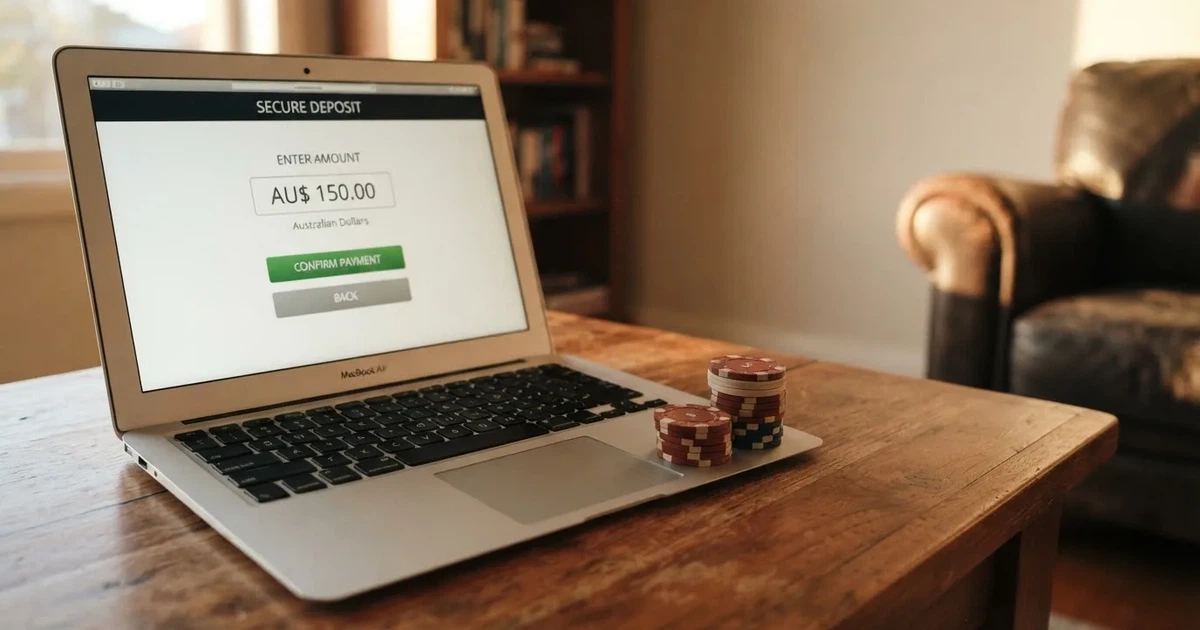
A low deposit online casino in Australia is, in the strict legal sense, a contradiction. The Interactive Gambling Act 2001 prohibits the supply of online casino games to anyone physically present in Australia, regardless of how small the first deposit is or how legitimate the licence displayed on the site footer looks. The minimum-deposit figure on the cashier page is a marketing number; the licence question sits underneath it, and on Australian soil the answer to that question is the same for every offshore casino in this guide. What follows is a frank look at what a low deposit casino genuinely offers, what it costs the punter using it, and why the dollar amount is the least interesting thing on the page.
- The shape of the low-deposit market
- Legality: what the IGA actually prohibits
- Responsible play: why small entry amounts need firmer guardrails
- Crypto deposits and what a small bitcoin buy-in actually costs
- Paying in, paying out: PayID, BPAY and the settlement review
- How fast the ACMA is moving: the blocking rate
- The brands the regulator has acted against
- What a small deposit is actually worth
- Frequently asked questions
The shape of the low-deposit market
Low deposit casinos exist because casino operators want the entry threshold low enough that a curious punter will fund an account before thinking too hard. A A$10 first deposit, or even A$5, removes the friction of a meaningful commitment and turns “should I?” into “why not?”. That commercial logic is real and worth naming plainly: the marketing word is “casino low deposit”, but the mechanism is a foot-in-the-door tactic familiar from every other subscription-style business. The brands on this page are not ranked by generosity or quality, because no body in Australia can vouch for either, and several of them have been the subject of formal warnings from the regulator for the act of offering these products at all.
The pool this guide draws from is therefore unusual. Every brand reviewed here has been named in an Australian Communications and Media Authority (ACMA) formal warning, and most of them continue to operate offshore, accepting Australian customers through alternative domains or mirror sites after the originals were blocked. Describing them is not the same as recommending them, and the read on each one closes with a verdict that takes the legal frame as a given.
What an Australian reader can take from this page is three things, in order of usefulness: a clear statement of what offshore casinos are and are not allowed to do under Australian law, a sense of which operators the regulator has acted against most recently and for what, and an honest reckoning with what a small first deposit actually buys in a market where the operator is, by definition, breaking the rules to take it.
Legality: what the IGA actually prohibits
The Interactive Gambling Act 2001, tightened by the Interactive Gambling Amendment Act 2017, makes it an offence to provide online casino games, online pokies or in-play betting to a person in Australia. No state or territory licences these products. What is licensable is wagering on races and sports before the event, lotteries and keno — in practice, licensed by the Northern Territory Racing and Wagering Commission, which regulates 52 of Australia’s online bookmakers, including Sportsbet, Bet365 and Ladbrokes, and operates with no full-time staff, meeting once a month in Darwin. The IGA targets the provider, not the individual player: the punter is not prosecuted for placing a bet, but the offshore casino accepting that bet is breaking Australian law by offering the product in the first place.
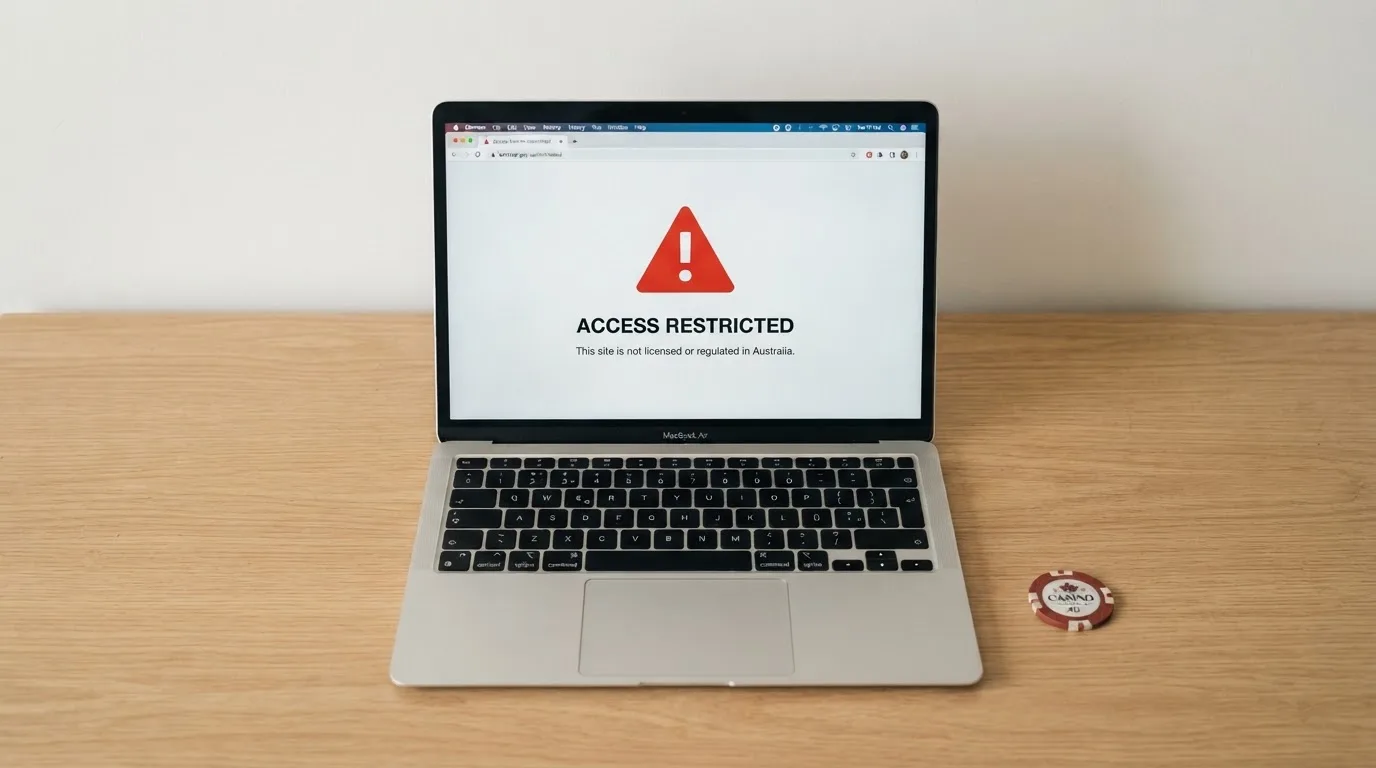
The ACMA enforces the regime. It investigates complaints, issues formal warnings to operators, and asks Australian internet service providers to block illegal sites. As of June 2026, the regulator had directed the blocking of 1,751 illegal gambling and affiliate marketing websites since the first blocking request in November 2019, and more than 230 unlicensed gambling services had left the Australian market since enforcement was strengthened in 2017. The pace has not slowed: in the round reported on 26 June 2026 alone, the ACMA asked ISPs to block a further twelve sites — 7Signs, ChromaBet, Donbet, Duospin, Freshbet, Slots Gem, Jacks Club, Lucky Start, Pointsbetz, Spinrise, Vinyl Casino and Wildsino.
The economic scale of the prohibition tells its own story. H2 Gambling Capital’s 2025 report estimates that Australians lose about A$3.9 billion a year to illegal gambling sites, and that the share of gambling going through legal channels fell from 74 per cent in 2021 to 64 per cent. The ban works in the sense that the offshore market is named, blocked and warned at; it does not work in the sense that the spending has stopped. A low minimum deposit is part of why: it makes the illegal product easy to try, and a small initial loss feels recoverable in a way a large one does not.
What enforcement looks like in practice
A formal ACMA warning is not a soft suggestion. It is a published notice identifying the operator behind the brand and the specific URLs in scope, issued under the IGA, and it carries the threat of further action up to and including civil penalties and ISP-level blocking. The warnings that appear later in this guide, in the operator section, were issued between 2022 and April 2026. Many of the operators were warned more than once, and several were warned under a previous corporate vehicle before being warned again under a new one — a pattern that suggests rebranding rather than compliance.
The ACMA has also acted against operators directly tied to brands in this guide:
- In March 2026, the ACMA issued a formal warning to Pulsup Ltd over Rocketplay.com.au, a fresh action against a brand already warned in May 2022 under its previous operator, Dama N.V.
- In May 2022, the ACMA warned Dama N.V. covering six casino brands at once: Bambet, Dazard, Level Up, Rocketplay, Wild Tornado and Cobra Casinos.
- The same operator, Dama N.V., received further formal warnings over Woo Casino in March 2025 and Spirit Casino in May 2025.
- In July 2025, the ACMA issued formal warnings to Bamboo Media over Ignition Casino and to Consolutetish S.R.L. over National Casino and Bizzo Casino. Bizzo Casino had already been the subject of a 2022 formal warning to TechSolutions (CY) Group Limited and TechSolutions Group N.V.
- In February 2025, the ACMA issued a formal warning to EOD Code SRL over Instant Casino.
- In April 2026, the ACMA issued a formal warning to Ryker B.V. over Jackbit and CasinOK.
- In April 2025, the ACMA issued a formal warning to Sterplay Holding Ltd over Casino Intense.
- The ACMA also issued a formal warning to Hollycorn N.V. over its Sky Crown and Blue Leo casino services.
The implication is plain. A brand that has been formally warned once and rebrands, or that changes the corporate vehicle behind the cashier page, can keep accepting Australian deposits with minimal interruption. The minimum deposit on the new site can be exactly as low as on the old one. The legal exposure on the player side does not change.
The 2026 reform bill
The Interactive Gambling Amendment (Gambling Reform) Bill 2026 passed Parliament on 19 August 2026. Its advertising and inducement measures commence on 1 January 2027, which is a year-end milestone rather than a current-state description. For the remainder of 2026, the legal frame is the IGA as it stands. For a punter reading this page in January 2027 or later, the inducement rules — the marketing push behind every low minimum deposit headline — will be under Australian statutory control for the first time. That is worth noting because the low-deposit pitch is itself an inducement under the spirit of the new rules, even if the precise wording of the 2027 provisions is not yet in force.
Responsible play: why small entry amounts need firmer guardrails
A low deposit casino can feel low-risk precisely because the entry amount is small. That is exactly when personal guardrails matter most. A A$5 or A$10 deposit looks like a flutter, not a session, and the casino’s interface is built to make topping up frictionless — the same payment method, the same one-click cashier, the same “deposit again” button next to the balance. The risk is not that one A$10 deposit is dangerous; it is that ten of them in a week look like ten small decisions rather than what they are, which is a hundred dollars of spending with no external audit trail.
The formal Australian player-protection infrastructure does not cover these sites. BetStop, the National Self-Exclusion Register, has been live since August 2023 and binds Australian-licensed online and phone wagering services. An offshore casino accepting a PayID transfer from an Australian account is not connected to BetStop. Self-excluding through BetStop does not stop an offshore deposit; it stops a domestic one. A punter who has registered with BetStop and then funds an offshore casino is operating outside the protections the register was designed to provide.
Help is available, and it is free. The National Gambling Helpline is 1800 858 858, available 24/7, with chat support at Gambling Help Online. The counselling service is independent of any operator and is set up precisely for the situation this page describes: a punter who has been playing offshore and wants to stop.
Australian banks now offer their own gambling blocks, and they apply more broadly than BetStop does. Westpac’s gambling block works at card level, refusing authorisation of transactions registered under the merchant category code for betting and casino gambling on eligible personal credit and debit cards. ANZ’s block, activated in the ANZ app, blocks gambling transactions made through a digital wallet such as Apple Pay on an eligible card, not just the physical card; once turned on, removing the block requires a 48-hour waiting period, and the bank warns explicitly that not all gambling transactions will be blocked and that some non-gambling transactions might be blocked in error. Commonwealth Bank lets customers apply a gambling lock to eligible cards through the CommBank app, which automatically blocks most gambling transactions, though the bank states it cannot guarantee all gambling-related purchases will be stopped. These tools are imperfect, and the banks say so. They are nonetheless the most reliable consumer-side guardrail an Australian punter has against an offshore casino, because they work at the payment-rail layer rather than the operator layer.
Crypto deposits and what a small bitcoin buy-in actually costs
A low minimum deposit bitcoin casino sells itself on two things: a small dollar entry and a payment rail that bypasses the Australian banking system. Both are true and neither is the whole picture. The minimum on the cashier page might be the bitcoin equivalent of A$10, and a player can fund that without touching a debit card or a PayID. What does not change is that the casino offering the product is still operating illegally in Australia, and the player is still sending funds to an entity with no Australian licence, no local dispute resolution and no obligation to honour a withdrawal request.
The mechanics of a small bitcoin deposit deserve scrutiny because the network fees can be material relative to the deposit size. A blockchain transaction carries a fee set by miners, denominated in satoshis per byte, and that fee is paid regardless of the value being sent. On a A$200 deposit, the fee is noise. On a A$10 deposit, it can be 10 per cent or more of the value sent, and on a congested day it can swallow the deposit outright. A punter who sees “min deposit: 0.0001 BTC” on the cashier page and assumes that the dollar cost is the dollar cost has not yet paid a network fee. The casino’s minimum is denominated in bitcoin; the punter’s cost is denominated in dollars.
The other thing a bitcoin deposit does not buy is anonymity in the sense most players imagine. Bitcoin transactions are pseudonymous, not anonymous, and a determined counterparty can trace the wallet. The Australian transaction reporting regime under AUSTRAC applies to physical cash transfers of A$10,000 or more, so a single small bitcoin deposit is not reportable on that side. But the receiving wallet is on a public ledger, and if the casino’s wallet is ever identified in an enforcement action, every deposit into it becomes a matter of record. Crypto is a useful rail for a low-deposit punter in the same sense a cash rail is: it works, until it does not, and the recourse path when it stops working is the same in both directions.
There is also a direct statutory issue. Under the Interactive Gambling Act 2001 as amended in 2023, Australian-licensed online wagering services cannot accept payment by credit card or other credit-related products. From 11 June 2024, digital currency is included in that ban for licensed operators, with penalties up to A$247,500. An offshore casino asking an Australian for a crypto deposit is therefore operating outside the Australian rules by definition; the crypto route is one of the markers, not a workaround.
Paying in, paying out: PayID, BPAY and the settlement review
A low deposit casino in Australia, where it accepts Australian payment rails at all, tends to do so through PayID, BPAY or direct bank transfer. The mechanics of each rail matter because they determine what a “small” deposit actually means at settlement.
PayID runs on Australia’s New Payments Platform, which became accessible to the public on 13 February 2018 and is owned by New Payments Platform Australia Ltd, a non-profit whose thirteen shareholders include the Reserve Bank of Australia and the country’s major banks. With Osko, a bank transfer between participating Australian banks arrives in under a minute, 24/7, including weekends, whether addressed to a BSB and account number or to a PayID. Paying to a PayID shows the name of the account holder before the transfer is sent; AP+ warns that being asked to transfer money to a PayID on an illegal gambling site almost certainly means a scam site. PayID-based instant transfers are available at over 100 Australian financial institutions, and more than 25 million PayID identifiers had been registered on the platform by April 2025. Participants must keep monthly platform outages to no more than two minutes. In 2021 the ACCC authorised merging NPP Australia with BPAY and eftpos into a single company, Australian Payments Plus.
The settlement speed looks attractive from a player perspective. The settlement review is what a low deposit does not exempt a punter from. Each deposit — A$10, A$50, A$200 — runs through the same fraud and anti-money-laundering checks as a high-roller account, because the casino’s compliance obligations are triggered by the transaction, not by its size. A first-time PayID deposit from a new account will often trigger source-of-funds questions, even at small amounts, because the casino cannot tell from the dollar value whether the deposit is one of ten or one of a thousand. The “low deposit” pitch is a marketing line; the compliance workflow behind it is undiscriminating by design.
BPAY is the older Australian bill-payment rail, launched on 18 November 1997 and available through the online banking of over 140 Australian financial institutions and offered by over 95,000 businesses. It is run by Australian Payments Plus, the same operator as PayID and Osko, and is owned equally, via parent company Cardlink Services Limited, by Australia’s four major banks: ANZ, Commonwealth Bank, National Australia Bank and Westpac. BPAY works by entering a Biller Code and a Customer Reference Number, so it is closer to a bill payment than a transfer. Some offshore casinos list a BPAY biller code on the cashier page; the practical effect is that the deposit is routed through Australian domestic payment infrastructure to an offshore recipient, and the receipt on the player’s bank statement will read as a BPAY payment, not as a gambling transaction — which has implications for the bank’s own monitoring and for any later dispute.
Direct bank transfer via BSB and account number is the slowest rail and the one most likely to be declined. Osko on a BSB-and-account transfer clears in under a minute between participating banks, but the receiving account’s bank may block a transfer to a known or suspected gambling merchant before it ever reaches the casino. A punter whose bank has applied a transaction block at the merchant category code level will see the transfer rejected at the issuing bank, not at the casino. The deposit never lands, the casino’s “low minimum” is moot, and the player is left to find another rail — usually one that bypasses the Australian banking system entirely, which is the point at which crypto enters the picture.
Apple Pay and Google Pay as the modern casino cashier
Apple Pay, Google Pay and Samsung Pay transactions collectively accounted for around 45 per cent of all card payments in Australia by number at the end of 2025. A low deposit casino that wants to minimise the friction at the cashier will often present Apple Pay or Google Pay as the default option, because the wallet handles the card data and the punter authenticates with a fingerprint or a face scan. The transaction still runs over a card rail underneath, and the same rules apply.
Apple does not charge fees to consumers for using Apple Pay in stores, online or in apps; any surcharge comes from the merchant’s card-processing fees, not from Apple. Apple states that transaction limits and PIN requirements for Apple Pay purchases are set by the card issuer or merchant, not by Apple. ANZ’s gambling transaction block, activated in the ANZ app, blocks gambling transactions made through a digital wallet such as Apple Pay on an eligible card, not just the physical card. The block operates on the card, not on the wallet, which means a punter who has turned on ANZ’s gambling block cannot route around it by adding the card to Apple Pay.
The same merchant-category-code logic that powers Westpac’s gambling block and ANZ’s block works at the wallet level too. A transaction routed through Apple Pay or Google Pay to an MCC-tagged gambling merchant is rejected at the card, not at the wallet, and the punter sees a decline on their banking app, not at the casino cashier. That is a guardrail working as designed; it is also, from the casino’s perspective, an obstacle to the small-deposit pitch.
Card surcharges and Amex
The Reserve Bank of Australia’s July 2025 review proposes removing surcharges on eftpos, Mastercard and Visa card transactions, but explicitly leaves American Express outside the scope of the proposed surcharge ban. Amex runs a three-party scheme rather than the four-party model Visa and Mastercard use, and it has traditionally set its merchant fees higher, which is the reason merchants surcharge Amex transactions more heavily than Visa or Mastercard. American Express was established in 1850 as a freight-forwarding company and launched its first charge card on 1 October 1958, a different business model from the debit-card networks that dominate low-deposit casino cashiers.
For a punter, the Amex point matters because the surcharge is a percentage of the deposit, not a flat fee, and a low deposit attracts a low surcharge in absolute terms but a high one in percentage terms. A 2 per cent surcharge on a A$10 deposit is twenty cents, which sounds negligible. It is also 2 per cent of the bankroll gone before the first spin, which on a A$10 starting balance is the same proportion as A$200 lost in fees on a A$10,000 high-roller deposit. The percentage does not care about the dollar amount.
How fast the ACMA is moving: the blocking rate
The blocking work has been running since November 2019. By June 2026 the ACMA had directed ISPs to block 1,751 illegal gambling and affiliate marketing websites over that period. Working from those two figures, the long-run blocking rate is roughly 26 sites per month over the 79 months between November 2019 and June 2026, with the pace varying sharply by round — some weeks see no new blocks, others see a dozen or more at once. The relevant comparison is not the average but the trend: the 26 June 2026 round alone added twelve sites in one batch, more than the average month produces. The blocking regime has not settled into a routine; it is accelerating in fits and starts, which is consistent with the ACMA acting on intelligence-led rounds rather than a continuous drip-feed of new complaints.
The implication for a low-deposit punter is structural. The site funded today may be on a block list within the year, and when the block lands, the punter’s account balance is on the wrong side of a connection that no longer resolves. Australian ISPs are required to comply with the ACMA’s blocking directions, and the punter’s recourse at that point is the offshore operator’s customer support team, which is the same team that just had its primary Australian route severed. Withdrawal queues lengthen, support response times stretch, and the small deposit that felt like a low-risk entry becomes the locked balance of an unreachable account.
The brands the regulator has acted against
The eleven brands below are not ranked. They are listed because the ACMA has issued a formal warning over each one, and the table that follows records the regulator’s action, the operator named, and what the available listings say about the payment methods and licences the brand displays. None of this is endorsement. The verdict under each entry is the page’s own read.
| Brand | ACMA action and date | Operator named by the ACMA | Subject support |
|---|---|---|---|
| RocketPlay | Formal warning, March 2026; earlier warning under previous operator, May 2022 | Pulsup Ltd (Rocketplay.com.au); Dama N.V. (2022) | Listings report a Curacao-registered operator and a low minimum deposit entry, per Gamblinginsider.com listings |
| Level Up Casino | Formal warning, May 2022 | Dama N.V. | Westpac’s merchant block lists the operator among blocked MCC merchants |
| Woo Casino | Formal warning, March 2025 | Dama N.V. | — |
| Spirit Casino | Formal warning, May 2025 | Dama N.V. | — |
| National Casino | Formal warning, July 2025 | Consolutetish S.R.L. | Listed by ACMA enforcement notices, by AUSTRAC compliance guidance and by BetStop as an offshore service not bound by the National Self-Exclusion Register |
| Bizzo Casino | Formal warning, July 2025; earlier warning, 2022 | Consolutetish S.R.L. (2025); TechSolutions (CY) Group Limited and TechSolutions Group N.V. (2022) | Gamblinginsider.com listings report a low minimum deposit entry |
| Ignition Casino | Formal warning, July 2025 | Bamboo Media | — |
| Instant Casino | Formal warning, February 2025 | EOD Code SRL | ecoPayz and PayID reported on listings as available cashier options |
| Jackbit | Formal warning, April 2026 | Ryker B.V. | — |
| Casino Intense | Formal warning, April 2025 | Sterplay Holding Ltd | Listed by AUSTRAC compliance guidance, by BetStop as outside the National Self-Exclusion Register, and by Gamblinginsider.com listings |
| Sky Crown | Formal warning, dated by ACMA publication | Hollycorn N.V. | — |
RocketPlay
The ACMA issued a formal warning to Pulsup Ltd over Rocketplay.com.au in March 2026. The same brand was the subject of an earlier formal warning in May 2022, when it was operated by Dama N.V. alongside five other casino brands — Bambet, Dazard, Level Up, Wild Tornado and Cobra Casinos. The two warnings, four years apart, are the regulator’s record of the same offshore product being offered to Australians by two successive corporate vehicles. Listings report a Curacao-registered operator and a low minimum deposit entry, but the IGA does not recognise either as a defence, and the licence displayed on the footer does not alter the prohibition on supply.
The read is straightforward. A brand that has been warned, rebranded, and warned again under a new operator is not a marginal target; it is a tested one, and the regulator’s continued attention is a signal of how seriously it treats the breach. A punter drawn in by the low minimum is buying access to a product the regulator has tried twice to take off the Australian market.
Level Up Casino
Dama N.V. received a formal warning over Level Up Casino in May 2022 as part of a six-brand batch that also included RocketPlay and Cobra Casinos. The brand has continued to operate offshore, and Westpac’s merchant block lists the operator among blocked MCC-tagged gambling merchants. The merchant-level block means that a Level Up deposit attempted with a Westpac card will decline at the issuing bank, not at the casino, which is the cleanest practical demonstration of what the regulator’s actions translate to for a punter.
The brand is one of several on this page that has settled into a long-running pattern of operating offshore after formal warning. The minimum deposit on the cashier page is the visible product; the merchant-level block on Australian bank rails is the invisible one.
Woo Casino
The ACMA issued a formal warning to Dama N.V. over Woo Casino in March 2025. The operator behind the brand was the same Dama N.V. that received warnings covering Level Up, RocketPlay and Cobra Casinos in 2022, and that received a further warning over Spirit Casino two months after the Woo action. The pattern across Dama N.V.’s portfolio is what makes the warning useful: a single operator with a long ACMA file across multiple brands.
Spirit Casino
A formal warning to Dama N.V. over Spirit Casino followed in May 2025, two months after the Woo Casino warning. Same operator, different brand, same underlying product. The repetition makes the point: the regulator does not need to warn every brand separately to establish that the operator is offering prohibited services, but it has chosen to, which produces the file of warnings an Australian punter is now reading.
National Casino
The ACMA warned Consolutetish S.R.L. over National Casino in July 2025. National Casino is named in ACMA enforcement notices, in AUSTRAC compliance guidance and in BetStop’s published list of offshore services not bound by the National Self-Exclusion Register — three separate public registers confirming the same thing: the brand is offshore, unlicensed in Australia and outside the domestic self-exclusion regime.
For a punter who has registered with BetStop and is still being shown National Casino in an advert or a search result, the practical implication is that BetStop does not stop the deposit. The brand is, by design, outside the register’s reach.
Bizzo Casino
Consolutetish S.R.L. was warned over Bizzo Casino in July 2025, four years after a 2022 formal warning to TechSolutions (CY) Group Limited and TechSolutions Group N.V. covered the same brand. Two operators, three entities, one product, four years. The Gamblinginsider.com listings report a low minimum deposit entry, which is the marketing line; the regulator’s record is what should weigh against it.
The verdict here is the same shape as RocketPlay’s, but the time horizon is longer. A brand warned in 2022, restructured, and warned again in 2025 has spent four years as a live target for the regulator, and the marketing pitch has not changed in that time.
Ignition Casino
The ACMA warned Bamboo Media over Ignition Casino in July 2025. Ignition has long been associated with the offshore-facing poker and casino market, and the warning puts the brand on the same legal footing as the rest of this list: prohibited in Australia under the IGA, regardless of the cashier’s minimum-deposit number.
Instant Casino
A formal warning to EOD Code SRL over Instant Casino was issued in February 2025. Listings report ecoPayz and PayID as available cashier options, which puts the brand on Australian payment rails directly. Paying an Australian-licensed PayID to an entity the ACMA has formally warned is the textbook case AP+ describes: being asked to transfer money to a PayID on an illegal gambling site almost certainly means a scam site. Instant Casino is not flagged as a scam in the listings, but it is the kind of entity the PayID warning was written about.
Jackbit
The ACMA issued a formal warning to Ryker B.V. over Jackbit and CasinOK in April 2026, the most recent warning on this list. A crypto-first operator, Jackbit’s pitch is the small-bitcoin-deposit angle described earlier in this page: low entry, wallet-funded, offshore by design. The regulator’s action against a brand this recent is the freshest evidence on this page that the enforcement regime is active, not retrospective.
Casino Intense
A formal warning to Sterplay Holding Ltd over Casino Intense was issued in April 2025. Casino Intense is listed in AUSTRAC compliance guidance, on BetStop’s list of offshore services not bound by the National Self-Exclusion Register, and on Gamblinginsider.com listings. Three registers, three independent sources, same conclusion.
Sky Crown
The ACMA issued a formal warning to Hollycorn N.V. over its Sky Crown and Blue Leo casino services. The brand operates under a Curacao-registered corporate vehicle, and the IGA makes the licence display beside the cashier irrelevant for Australian-resident players.
What a small deposit is actually worth
A low minimum deposit at an offshore casino is, in dollar terms, exactly what the cashier page says it is. In every other respect it is worth less than it looks, because the deposit buys entry to a product the Australian regulator has named, blocked and warned about, on terms set by an operator with no Australian licence, no Australian dispute resolution body, and no obligation to honour a withdrawal request once the balance is on the wrong side of a connection that has just been ISP-blocked.
The marketing word for a low minimum deposit is “accessible”. The honest gloss is “undemanding at entry, unstructured at exit”. A punter who funds a A$10 deposit at an offshore casino and tries to withdraw A$50 in winnings is running the same anti-money-laundering and source-of-funds review as a high-roller; the difference is that the A$50 punter has less financial cushion to absorb a frozen withdrawal or a closed account. The minimum deposit is not the worst part of the offer. The settlement review is undiscriminating by design, and small-balance accounts are the ones least able to wait it out.
For an Australian punter, the practical options are narrow. The legal ones are wagering on races and sport before the event, lotteries and keno, through an Australian-licensed operator that connects to BetStop and accepts PayID, BPAY or direct debit. The illegal ones are everything this page describes, and the ACMA’s enforcement record is what an Australian punter is up against when the offshore cashier accepts the deposit. The dollar figure on the cashier page is the smallest thing on it.
Frequently asked questions
Is it legal for an online casino to accept a low deposit from a player in Australia?
No. Under the Interactive Gambling Act 2001, it is an offence to provide online casino games, online pokies or in-play betting to a person physically present in Australia, regardless of the deposit size. The IGA targets the provider, not the player, but the casino accepting the deposit is breaking Australian law by offering the product in the first place.
What is typically the smallest deposit a low deposit casino site will accept?
Low-deposit marketing typically anchors at the equivalent of A$5 to A$20, with crypto cashier pages often denominating the minimum in bitcoin rather than dollars. The figure is the marketing line; what the deposit actually buys at an offshore site operating illegally in Australia is unchanged by the amount sent.
Do network fees make a low-value bitcoin deposit less worthwhile at a crypto casino?
Yes, materially. Bitcoin network fees are denominated in satoshis, not in dollars, and on a small deposit they can run to 10 per cent or more of the value sent. On a congested day they can swallow the deposit. The casino’s minimum is in bitcoin; the punter’s cost is in dollars, and the two do not move together.
Does a low deposit paysafecard casino apply the same terms as a higher-deposit site?
The deposit amount changes what the casino takes; it does not change what the casino does with it. Bonus terms, withdrawal checks and anti-money-laundering reviews apply to the transaction regardless of size. A small deposit can carry the same turnover multiple and the same source-of-funds review as a large one. See also No minimum deposit casinos in Australia in 2026 .
Is a low deposit casino subject to the same withdrawal checks as a high-roller account?
Yes. Each withdrawal runs through the same settlement review as any other, because the compliance trigger is the transaction, not the player’s balance. A small-balance punter has less financial cushion to absorb a frozen withdrawal than a high-roller, which is the practical difference the size makes.
Why might a casino advertise a low minimum deposit specifically to attract new players?
A small entry threshold removes the friction of a meaningful commitment and turns “should I?” into “why not?”. It is a foot-in-the-door tactic, and the rest of the casino’s product — bonus terms, wagering requirements, withdrawal conditions — is the same regardless of how small the first deposit was.