
No minimum deposit casinos in Australia in 2026: what the claim actually buys you, and what it costs
Data current as of 29 October 2026, cross-checked against the ACMA’s register of formal warnings and blocking actions. No minimum deposit casinos in Australia in 2026 — More on this topic at casino table games .

A banner that says “no minimum deposit” looks like a concession to the player. Read carefully, it is something else: a figure that lets a site skip a moment most players spend deciding whether to commit. The smaller the headline number, the less friction before the first wager — and the less friction, the further the offer tends to drift from anything the Australian regulator recognises. Every brand this page walks through is one the ACMA itself has written to, in writing, about offering prohibited services to Australians. They are here not to recommend but to explain. The framing matters because the words “no minimum” travel well in ads and poorly in law.
What follows is what those claims really carry: how the deposit floor is set, why it tends to be so low, who actually clears it, and where the protection the offer strips out used to sit.
- How “no minimum deposit” works as a marketing claim, and what it leaves out
- Why every site advertising “no minimum” sits outside Australian law
- The responsible-gambling frame, and where Australian help actually sits
- Paying for a “no minimum deposit” site in crypto does not legitimise it
- What “no minimum” looks like inside Australian payment rails
- What the ACMA’s published actions look like, side by side
- The brands the ACMA has written to, and what each one offers an Australian player
- The minimum, the protection, and the comparison that actually matters
- What to compare across several “no minimum” sites, if you are comparing them at all
- The Australian help that actually works, and where to find it
- What “no minimum deposit” means at the end of the page
- Frequently asked questions about no minimum deposit casinos in Australia
How “no minimum deposit” works as a marketing claim, and what it leaves out
“Casino no minimum deposit” reads as a single phrase. It is two things bolted together: a casino, and a floor on the amount a customer can send in. The casino part is straightforward. The minimum is a number the operator chooses inside its own payment system, and almost every site claiming “no minimum” sets one anyway — sometimes A$1, sometimes A$10, sometimes A$20, depending on the rail used. The phrase survives because the number stays small enough to look like nothing, and the look is what the ad is selling.

What the claim leaves out sits at the payment layer. Real settlement carries fees the casino either eats or passes on. Card rails, e-wallets and crypto networks all charge for moving money. A site that genuinely clears A$0.50 will either absorb the loss on every transaction or quietly steer the player toward a deposit method that is expensive to use in tiny amounts. The honest reading of “no minimum” is therefore: the floor the casino is willing to publish, given the fees it is willing to absorb on the deposit side. Withdrawals are a separate question — most of these sites do not pay the same way they receive, and most of them carry minimums on the way out that dwarf anything on the way in.
This is the only frame in which the rest of the page makes sense. The promise is real and small; the gap between promise and protection is what this guide is about.
Why every site advertising “no minimum” sits outside Australian law
The legal position in Australia is short and has been short for years. The Interactive Gambling Act 2001, tightened in 2017, makes it an offence to provide online casino games, online pokies or in-play betting to a person physically in Australia. No state or territory licenses an online casino — what is licensed is wagering on sport and racing before the event, lotteries and keno. The Northern Territory Racing and Wagering Commission oversees 52 of the country’s online bookmakers, including Sportsbet, Bet365 and Ladbrokes, and runs without full-time staff, meeting once a month in Darwin. Even that body regulates wagering, not casino product.
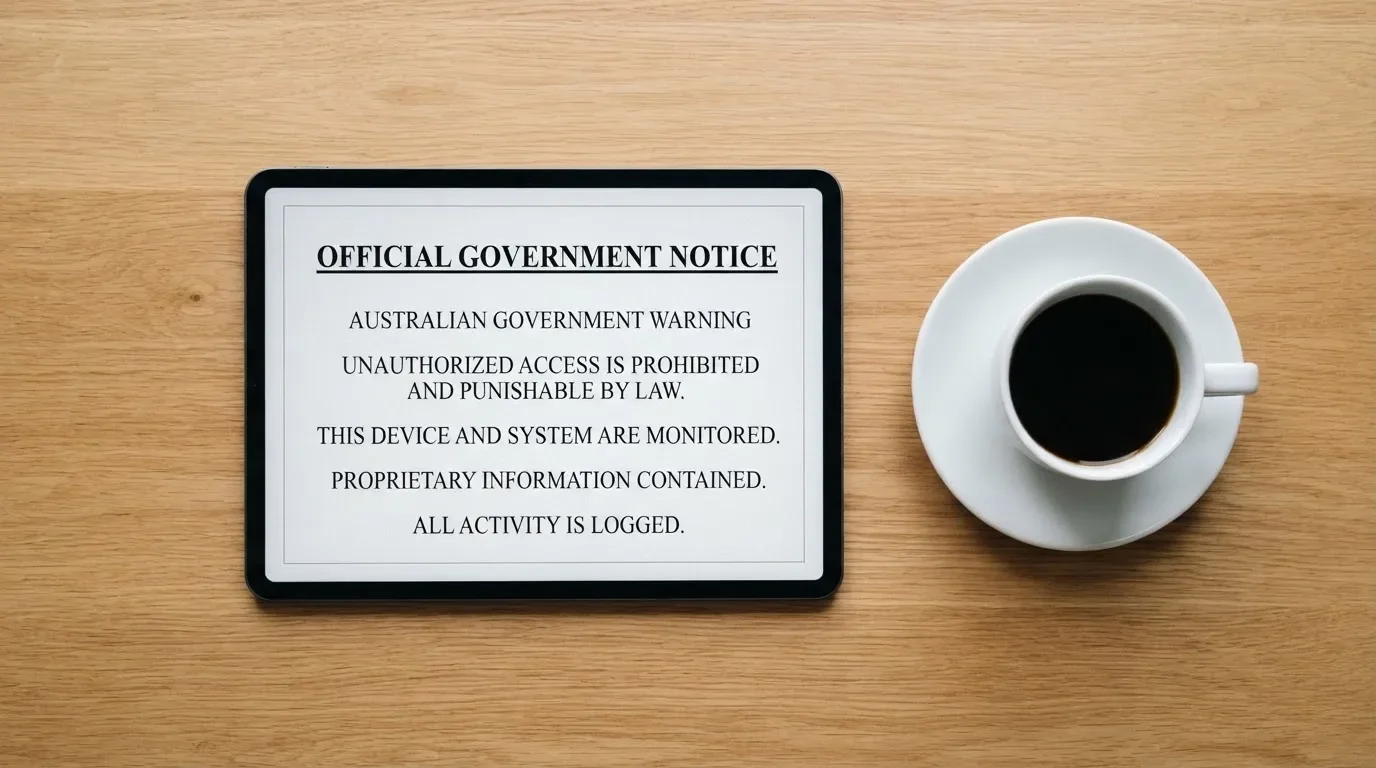
The Interactive Gambling Amendment Act 2017 gave the Australian Communications and Media Authority teeth. The ACMA investigates, issues formal warnings and asks Australian internet service providers to block illegal sites. By the end of the round reported on 26 June 2026, the ACMA had asked ISPs to block 1,751 illegal gambling and affiliate marketing websites since the first blocking request in November 2019, and more than 230 unlicensed services had left the Australian market since enforcement was strengthened in 2017. The most recent published round added twelve more: 7Signs, ChromaBet, Donbet, Duospin, Freshbet, Slots Gem, Jacks Club, Lucky Start, Pointsbetz.com, Spinrise, Vinyl Casino and Wildsino.
The point is not the count. It is the trajectory. A site that advertises “no minimum deposit” to an Australian, today, is by definition one the regulator does not recognise — and one whose shelf life the regulator has shown itself willing to shorten. There is no path by which a real no-minimum Australian online casino comes into existence under the current Act, and the 2026 reform package (the Interactive Gambling Amendment (Gambling Reform) Bill 2026, passed 19 August 2026) tightens the advertising rules without opening the door to casino product — its inducement measures commence 1 January 2027.
The blocking rate, year on year
The arithmetic on blocking is the page’s own. Take the running total published in June 2026 — 1,751 sites blocked since November 2019 — and divide by the months in between. That works out to roughly 22 sites blocked a month on average across the whole period, though the actual pace has not been even: enforcement was ratcheted up in 2017, the first blocking request only came in late 2019, and individual rounds have ranged from a handful of sites to lists well into the dozens. The June 2026 round alone added twelve. Read as a band rather than a point: somewhere between a handful and a few dozen new sites a month, with the regulator able to issue warnings that themselves move services to exit voluntarily without a block at all.
What the rate tells a reader is the cadence of the regulator’s reach. The number of sites on a “no minimum” list this month is not the number that will be on it next month. The list moves.
Why this still costs the Australian player
The IGA targets the provider, not the punter. No Australian has been prosecuted for placing a wager on an offshore site. What the offshore site takes with it when it leaves — or when it is blocked with a balance still attached — is the entire layer of consumer protection the Australian market is built on. There is no local complaints body. There is no recourse when a withdrawal is refused. There is no guarantee the site is the same entity next month. H2 Gambling Capital’s 2025 report estimates Australians lose about A$3.9 billion a year to illegal gambling sites, and the share of gambling going through legal channels fell from 74 per cent in 2021 to 64 per cent. The leakage is real, the protection is not.
The responsible-gambling frame, and where Australian help actually sits
The minimum-deposit marketing line, “no minimum” included, is built to remove friction. The Australian responsible-gambling frame is built to put friction back. These two aims are not reconcilable on the same site, because an offshore casino does not run on Australian rules.
What does run on Australian rules is the National Self-Exclusion Register, BetStop, which has been live since August 2023. BetStop binds Australian-licensed online and phone wagering services. An offshore casino is not connected to it. A punter who self-excludes and then opens an account at one of the brands on the ACMA’s warning list will find the exclusion does not carry over. The same applies to deposit limits set inside licensed apps: the limit belongs to the licensed product, not to the player.
The 24/7 support line is the National Gambling Helpline on 1800 858 858, free from anywhere in Australia, with chat available through Gambling Help Online. These are the channels that do work regardless of which site a player is on. The point of mentioning them in a piece about no-minimum casinos is not to moralise — it is that the entire layer of consumer protection these ads cut out is the layer a player most needs when spending goes wrong.
Bank-level gambling blocks sit in the same frame. Westpac’s gambling block works at the card level: it refuses authorisation of transactions registered under the merchant category code for betting and casino gambling on eligible personal credit and debit cards. ANZ runs the same kind of block through its app, with a 48-hour cooling-off period before it can be removed, and warns that not every gambling transaction will be blocked and that some non-gambling transactions might be caught in error. Commonwealth Bank’s gambling lock, set up inside the CommBank app, blocks most gambling transactions on eligible cards, with the same caveat that coverage is not total. The blocks are imperfect, and they cut off legal wagering at the same time as illegal casino play — but they do cut off illegal casino play.
Paying for a “no minimum deposit” site in crypto does not legitimise it
Crypto is the rail most often pitched at no-minimum sites, and the pitch has a particular shape: pay in bitcoin, no identity check, no minimum, no friction. The pitch conflates two distinct claims. The first is about the payment method. The second is about the casino.
The payment method has its own economics. A bitcoin transaction carries a network fee, set by whoever is mining the block the transaction lands in, and that fee is independent of the deposit amount. A transfer of A$5 worth of bitcoin and a transfer of A$5,000 worth of bitcoin can pay the same fee, which means the percentage cost of the deposit scales inversely with size. Crypto’s “no minimum” works in the opposite direction from a bank transfer: the floor is set by the fee, not by the operator, and that floor moves with the network. Bitcoin’s “no minimum” is, in practice, set by miners, not by the casino.
The casino question is harder. The IGA does not recognise crypto as a legitimising payment: licensed Australian wagering has not been allowed to accept digital currency since 11 June 2024, when credit cards and credit-related products were also banned as payment methods (penalties up to A$247,500 for operators). A site that asks an Australian for a credit card or for a crypto deposit is, by that act, advertising itself as one not running on Australian rules. Paying in bitcoin does not change which jurisdiction the operator is in, which entity holds the bankroll, or what recourse the player has when a withdrawal stalls. The crypto wrapper is the thinnest possible layer of distance between the player and the operator; it is not a layer of protection.
For an Australian punter, the practical reading is straightforward. Crypto makes the deposit frictionless and the deposit itself cheaper in absolute terms. It does nothing to the regulatory status of the site, to the safety of the bankroll, or to the enforcement reach of the ACMA.
What “no minimum” looks like inside Australian payment rails
The phrase sits oddly against the way Australian payments actually work. Card networks, instant bank transfers and bill payment all carry minimums set somewhere in the stack — sometimes by the network, sometimes by the bank, sometimes by the merchant.
Cards, surcharges, and the credit-card ban
Credit cards have been banned as a payment method for Australian-licensed online wagering since 11 June 2024. The ban covers credit-related products and digital wallets linked to credit, which is why Apple Pay and Google Pay on a credit card cannot be used to fund a licensed wagering account. The credit-card ban is one of the cleanest signals on the page: a site that accepts credit cards from an Australian is advertising itself as offshore.
American Express sits slightly outside the rest of the card networks. Amex was established in 1850 as a freight-forwarding company, launched its first charge card on 1 October 1958, and runs as a three-party scheme — issuer, network and acquirer in one — rather than the four-party model Visa and Mastercard use. The Reserve Bank’s July 2025 review proposes removing surcharges on eftpos, Mastercard and Visa transactions, explicitly leaving American Express outside the scope of the surcharge ban. Amex’s three-party structure is the reason: there is no separate acquirer to negotiate with. For gambling purposes the distinction is less important than the credit ban itself: a charge card is still a credit instrument, and the ban applies.
By the end of 2025, Apple Pay, Google Pay and Samsung Pay transactions collectively accounted for around 45 per cent of all card payments in Australia by number. That share is why the credit-card ban matters at the wallet level: a wallet transaction is still a card transaction underneath, and the underlying instrument is what the IGA looks at.
Osko, PayID and the New Payments Platform
Osko is the instant-transfer service on the New Payments Platform, and a transfer between participating Australian banks arrives in under a minute, 24/7 including weekends, whether the payment is addressed to a BSB and account number or to a PayID. PayID sits on top of the same rail: more than 25 million PayID identifiers were registered on the New Payments Platform by April 2025, with over 100 Australian financial institutions supporting PayID-based instant transfers. The platform itself went live to the public on 13 February 2018, is owned by the non-profit New Payments Platform Australia Ltd whose 13 shareholders include the Reserve Bank of Australia and the major banks, and participants are required to keep monthly outages to no more than two minutes. In 2021 the ACCC authorised the merger of NPP Australia with BPAY and eftpos into a single holding company, Australian Payments Plus.
For an Australian punter, the practical detail is that PayID shows the name of the account holder before the transfer is sent — and AP+ warns that being asked to transfer money to a PayID on an illegal gambling site almost certainly means a scam site. The PayID layer is, in that sense, a verification layer that the card networks do not offer.
BPAY, AUSTRAC, and the everyday rails
BPAY has operated in Australia since 1997, is available in the online banking of over 140 banks and financial institutions, and is offered by over 95,000 businesses. BPAY was launched on 18 November 1997 and is owned equally, via parent company Cardlink Services Limited, by Australia’s four major banks: ANZ, Commonwealth Bank, National Australia Bank and Westpac. It is a bill-payment service: the payer enters the Biller Code and the Customer Reference Number printed on the bill. The same owner, Australian Payments Plus, runs PayID and Osko. None of this changes the regulatory position on casino play, but it sets out what the legal alternatives look like: debit card, bank transfer, PayID/Osko and BPAY are the deposit rails Australian-licensed wagering actually runs on.
AUSTRAC’s threshold-transaction-report rule, which requires reporting of transfers of A$10,000 or more, applies only to physical cash. Ordinary electronic bank transfers are not subject to that per-transaction reporting requirement, regardless of the amount sent. That detail cuts both ways: it means small transfers are not flagged, and it means the protection that comes from transfer reporting is not the thing that stops illegal gambling.
Where the no-minimum promise actually sits
The promise of “no minimum” only makes sense inside a payment rail that has no floor of its own. None of the Australian rails described above are zero-floor. Osko and PayID carry whatever minimum the receiving bank sets; BPAY carries whatever minimum the biller publishes; cards carry whatever minimum the merchant sets inside its acquirer. A site that says “no minimum deposit” is therefore setting its own floor, often somewhere between A$1 and A$20, and absorbing the cost of small deposits itself or pushing the player toward a payment method that is expensive in tiny amounts. The number on the page is real. It is also, by construction, a marketing number rather than a regulatory one.
What the ACMA’s published actions look like, side by side
The table below sets out the brands this page walks through, each of which the ACMA has addressed in writing for offering prohibited interactive gambling services to Australians. The dates are the dates of the ACMA’s formal warnings as published by the regulator, and the operator named is the entity the regulator addressed — not the brand’s display licensee, which may sit in a different jurisdiction.
| Brand | ACMA action and date | Operator named by the ACMA | Subject support |
|---|---|---|---|
| RocketPlay | Formal warning, March 2026 (earlier Dama N.V., May 2022) | Pulsup Ltd | Listings-only |
| Level Up Casino | Formal warning, May 2022 | Dama N.V. | Listings-only |
| Woo Casino | Formal warning, March 2025 | Dama N.V. | — |
| Spirit Casino | Formal warning, May 2025 | Dama N.V. | — |
| National Casino | Formal warning, July 2025 | Consolutetish S.R.L. | Listings-only |
| Bizzo Casino | Formal warning, July 2025 (earlier TechSolutions, 2022) | Consolutetish S.R.L. | Listings-only |
| Ignition Casino | Formal warning, July 2025 | Bamboo Media | — |
| Instant Casino | Formal warning, February 2025 | EOD Code SRL | Listings-only |
| Jackbit | Formal warning, April 2026 | Ryker B.V. | — |
| Casino Intense | Formal warning, April 2025 | Sterplay Holding Ltd | Listings-only |
| Sky Crown | Formal warning, September 2022 | Hollycorn N.V. | — |
The columns above carry what research can verify: the regulator’s own action and the regulator’s own named operator. Subject support — what third-party listings say about a brand’s payment methods or features — is recorded only where research found a named listing, never inferred from the brand’s own marketing. Brands with no verified third-party listing remain in the table because the regulator’s action against them is itself the page’s subject. Online casino games cannot be licensed anywhere in Australia, whatever licence the site displays.
The repeated operator names are worth pausing on. Dama N.V. appears four times in the table — Level Up Casino, Woo Casino and Spirit Casino each on a separate occasion, and an earlier warning over RocketPlay in 2022. Hollycorn N.V. is named over Sky Crown. Consolutetish S.R.L. is named over both National Casino and Bizzo Casino, with Bizzo also having been the subject of a 2022 warning to TechSolutions. The pattern is the regulator addressing parent entities that own multiple brands, then the brands re-appearing under related entities. Reincarnation under a new corporate wrapper is the industry’s normal response to enforcement, and the regulator’s published actions reflect it.
The brands the ACMA has written to, and what each one offers an Australian player
What follows is each of the brands in the table above, in the order the regulator’s published actions put them. The format is the same for each: what the ACMA said, what the brand displays on its own site, and where the brand loses to one of the others on the same list. None of these is a recommendation. The point of laying them out is to show how thin the differentiation is once the regulatory frame is applied.
RocketPlay
The ACMA’s most recent formal warning over RocketPlay was issued in March 2026 to Pulsup Ltd, with an earlier 2022 warning to Dama N.V. over the same brand. The brand’s third-party listings describe it as a low-deposit casino in the same sense as every other brand on this list — a marketing claim that Australia does not recognise. For an Australian player, the relevant comparison is with the other Dama N.V. brands on the list: the same operator, different wrapper, same regulatory status. The fact that the ACMA has had to write to the brand twice, under two different parent entities, is itself a signal of how the operator responds to enforcement.
Level Up Casino
Level Up Casino sits under the May 2022 Dama N.V. warning. As with RocketPlay, the brand’s own marketing describes a low-floor deposit, and third-party listings place it in the same low-deposit category. The verdict is the same as for every brand on this page: no Australian-licensed casino exists to play these games, and the protection an Australian would expect does not extend to any of them. The brand does not distinguish itself on the regulatory question, because none of them can.
Woo Casino
Woo Casino was the subject of a Dama N.V. formal warning in March 2025. There is no third-party listing the page can lean on for any specific feature of the brand beyond the ACMA’s action. The site is offshore, the offer is offshore, and the floor on the deposit is a marketing figure rather than a regulatory one. Among the brands on the list, Woo Casino is one of the cluster where the regulator has acted recently and where no third-party feature claim is verifiable — which is itself worth knowing, because it rules out the comparison shoppers usually make.
Spirit Casino
Spirit Casino sits under the May 2025 Dama N.V. warning, alongside Woo Casino on the same parent entity. Information from third-party sources regarding specific features for this brand is unavailable. Spirit Casino is a useful reminder that “no minimum deposit” is a claim every brand on this page makes, and a claim none of them is differentiated on. The decision between Spirit Casino and Woo Casino, for any reader who has decided to look at this section of the market at all, comes down to whichever site is currently reachable from Australia — and that reach can change without notice.
National Casino
National Casino received a formal warning in July 2025, addressed to Consolutetish S.R.L., with the same parent entity also the subject of the same round’s warning over Bizzo Casino. Third-party listings do reference National Casino, but as with every other brand on this page, the ACMA’s action is the page’s primary fact. The brand loses to its sibling on this list, Bizzo Casino, only because Bizzo has been the subject of a second formal warning — to TechSolutions in 2022 — which is not a record any punter wants a brand to hold.
Bizzo Casino
Bizzo Casino has been warned twice: by the ACMA in July 2025 to Consolutetish S.R.L., and earlier in 2022 to TechSolutions (CY) Group Limited and TechSolutions Group N.V. The double warning is the most distinctive fact on the page about any brand — and it is distinctive in the wrong direction. Third-party listings place Bizzo in the low-deposit category, like the rest, and the operator’s response to the first warning was to re-appear under a different parent entity, which is the standard industry pattern and not a sign of compliance. The brand is a clear example of what the regulator’s enforcement reach looks like in practice: the warning is published, the site exits or is blocked, and a new entity opens a new front.
Ignition Casino
The ACMA’s July 2025 formal warning to Bamboo Media over Ignition Casino is one of three warnings issued in the same round. Independent verification of this brand’s specific features via third-party listings was not possible. The brand is offshore, the warning is published, and the operator named is one the ACMA has now formally addressed. For an Australian player the comparison is the same as for every other brand on this page; the difference between Ignition Casino and Bamboo Media’s other warning in the same round is the name on the front door, not the regulatory status.
Instant Casino
Instant Casino received a formal warning in February 2025 from the ACMA, addressed to EOD Code SRL. Third-party listings reference Instant Casino, including payment-method listings that overlap with the payment rails discussed earlier in this page. As with every other brand, the ACMA’s action is the page’s primary fact, and the listings are background only. The Instant Casino listing is the closest the page comes to a brand that is described on payment rails by name, and the description does not change the regulatory frame. Instant Casino, like every other brand on this page, cannot accept an Australian player under Australian law.
Jackbit
Jackbit received a formal warning in April 2026, addressed to Ryker B.V., with the same operator also the subject of an ACMA warning over CasinOK in the same period. No third-party listing details for this brand could be confirmed. The April 2026 warning is the most recent formal action on the list, and Jackbit is the brand the regulator has acted against latest in 2026. For a reader looking at the table, the recency is the standout fact — and the recency is a warning about shelf life rather than a recommendation.
Casino Intense
Casino Intense received a formal warning in April 2025, addressed to Sterplay Holding Ltd. Third-party listings place Casino Intense alongside National Casino and Instant Casino, in the same low-deposit cluster. The April 2025 warning sits in the middle of the regulator’s recent enforcement pattern, with formal warnings issued in the same month over other brands and in months on either side. For an Australian player, the brand is one more entry in the regulator’s published register, and the listing does not change what kind of site it is.
Sky Crown
The ACMA’s formal warning over Sky Crown was published in September 2022, addressed to Hollycorn N.V. in the same notice that covered Blue Leo. Sky Crown is the oldest warning on the list — more than three years old as of the data this page is current to — and independent feature data is not available. The age of the warning does not mean the brand has gone; the regulator’s enforcement is ongoing, and a 2022 warning is on the same register as a 2026 one. The page lists Sky Crown because the warning is on the register, not because the warning is recent.
The minimum, the protection, and the comparison that actually matters
The comparison this page keeps returning to is not between one offshore casino and another. The comparison is between an offshore casino advertising “no minimum deposit” and the licensed Australian alternatives that exist for the product the player actually wants — sport and racing wagering before the event, lotteries, keno — which is the only interactive gambling product the IGA permits. For casino games, the licensed alternative does not exist. The honest comparison is therefore between the unregulated offshore product and no product at all.
For players who have decided to look at offshore sites anyway — and the regulator’s estimate of A$3.9 billion a year in losses to illegal gambling suggests the number of such players is not small — the comparison that matters is between the friction the site offers and the friction the Australian system is built to provide. A no-minimum deposit removes the friction of choosing to play. A bank-level gambling block, a BetStop registration, and the National Gambling Helpline are the friction the system puts back. The two are not negotiable on the same site, because an offshore site does not run on Australian rules.
The minimum that matters is the minimum that sits underneath the offer: the minimum protection the player gives up by taking it. That minimum is, in practice, the entire Australian consumer protection layer — the complaints body, the recourse on a refused withdrawal, the connection to BetStop, the bank’s gambling block at the merchant category level. The “no minimum” the ad sells is the floor on the deposit. The minimum the player pays is the floor on the protection. The two numbers are not on the same page of the ad, and they are not the same number.
What to compare across several “no minimum” sites, if you are comparing them at all
For a reader who has decided to compare anyway, the comparison should run on the things research can verify, not on the things the ads sell. The list below is what research actually carries.
The first comparison is the ACMA’s register itself. Every brand on the page above is one the regulator has acted against in writing. A site that does not appear on the register is not, by that fact, licensed in Australia — the register only lists actions, not all unlicensed sites — but a site that does appear is one the regulator has spent time on. The date of the action is worth noting: a 2022 warning is on a different shelf-life clock than a 2026 warning.
The second comparison is the payment rail. Cards on an offshore site mean the IGA’s credit-card ban is being broken. Crypto deposits mean the licensed wagering ban on digital currency is being broken. PayID to a named account holder is at least a rail that lets the punter see who they are paying. The deposit method is, in this market, the strongest available signal of what the site thinks it can get away with.
The third comparison is the parent entity. The table above shows Dama N.V. over four brands, Consolutetish S.R.L. over two, Hollycorn N.V. over two, TechSolutions over one with a reincarnation. A parent that has been warned before is a parent that has been through enforcement before, and the standard response is to re-emerge under a new wrapper. The pattern is not a sign of compliance.
The fourth comparison is the withdrawal rail. Research does not verify withdrawal minimums for the brands above; that is itself the comparison. A site that publishes a tiny deposit minimum but is silent on the withdrawal minimum is publishing half the story.
The Australian help that actually works, and where to find it
For readers who have decided this page is a sign to step back from the offshore market entirely, the Australian help system is real and reachable. The National Gambling Helpline on 1800 858 858 is free, 24/7 and available from anywhere in Australia. Gambling Help Online carries chat-based support through the same network. BetStop, the National Self-Exclusion Register, has been live since August 2023 and binds Australian-licensed online and phone wagering services. The bank-level gambling blocks — Westpac’s card-level block, ANZ’s app-level block with its 48-hour cooling-off period, Commonwealth Bank’s in-app gambling lock — are imperfect, as the banks themselves say, but they do break the connection between the card and the merchant category code for casino gambling. None of this fixes the offshore market. All of it is the layer of protection the offshore market strips out.
The minimum age for any gambling product in Australia is 18. Gambling winnings of a recreational player are not assessable income and losses are not deductible, unless the person carries on a business of gambling — which is a separate question for the ATO. None of these facts are optional. They are the frame inside which the rest of the page sits.
What “no minimum deposit” means at the end of the page
The phrase, in 2026, in Australia, is a marketing line on a product the regulator does not license. Every brand advertising it on this page is one the ACMA has written to about offering prohibited services to Australians. The minimum the player pays is the consumer protection layer underneath: no complaints body, no recourse on a refused withdrawal, no connection to BetStop, no bank-level block that follows the punter across brands. The minimum the ad sells is real and small. The minimum the player gives up is the entire Australian frame.
The right reading of the page is not “which offshore casino is best.” It is “what does the offshore casino take from me that the licensed alternative keeps.” For casino product specifically, no licensed alternative exists — the licensed alternatives are sport and racing wagering before the event, lotteries and keno, regulated by bodies like the Northern Territory Racing and Wagering Commission. For everything else on this page, the licensed alternative is what the rest of the Australian system is built to support, and the offshore alternative is what the ACMA’s published actions exist to warn against.
Frequently asked questions about no minimum deposit casinos in Australia
What is the smallest deposit a casino can realistically accept before payment processing fees make it pointless?
The floor on a deposit is set by the payment rail, not by the casino. Card networks charge a percentage that makes sub-dollar deposits uneconomic for the merchant; crypto network fees are fixed per transaction and become a large percentage of a small deposit; bank transfers carry whatever minimum the receiving bank publishes. A casino advertising “no minimum” is therefore publishing its own tolerance for absorbing those costs, not removing them. The realistic floor on a card deposit tends to sit around A$10, on a bank transfer around A$1 to A$5 depending on the bank, and on crypto at whatever the network fee allows.
Does a crypto casino with no minimum deposit behave any differently from a fiat one with the same claim?
The deposit mechanism is different. The regulatory position is not. The Interactive Gambling Act 2001 does not recognise crypto as a legitimising payment, and licensed Australian wagering has not been allowed to accept digital currency since 11 June 2024. A site that asks an Australian for a crypto deposit is, by that act, advertising itself as offshore. Crypto makes the deposit cheaper and faster. It does not change which jurisdiction the operator is in, which entity holds the bankroll, or what recourse the player has when a withdrawal stalls.
Is any casino advertising no minimum deposit actually licensed to accept Australian players?
No. The Interactive Gambling Act 2001 makes it an offence to provide online casino games or online pokies to a person in Australia, and no state or territory licenses them. Every brand on this page has received a formal warning from the ACMA for offering prohibited services to Australians. A licence displayed on an offshore site is a licence issued by another jurisdiction — Curaçao, Anjouan, Kahnawake — none of which gives an Australian player Australian consumer protection.
How does a bitcoin casino’s “no minimum deposit” claim interact with blockchain network fees?
Bitcoin transactions carry a network fee set by miners, and that fee is independent of the amount sent. A transfer of A$5 worth of bitcoin and a transfer of A$5,000 worth of bitcoin can pay the same fee, which means the percentage cost of the deposit scales inversely with size. The “no minimum” on a bitcoin casino is, in practice, set by the network, not by the casino, and that floor moves with the fee market.
Why do so many low-deposit casino ads specifically mention “no minimum” rather than a dollar figure?
Because the look of the number is the product. A small published number — A$1, A$5, A$10 — is a decision point; “no minimum” removes the decision point. The ads are selling the absence of friction, not the absence of cost. The cost sits on the payment-processing side, and the absence of friction is what the offer is. See also Online Pokies Instant Withdrawal Australia .
What should someone compare before trusting a “no minimum deposit” claim across several sites?
The ACMA register of formal warnings is the first comparison. The payment rail is the second — a site that accepts credit cards or crypto from an Australian is one the IGA’s own bans apply to. The parent entity is the third, because a parent that has been warned before is a parent that has been through enforcement before, and the standard industry response is to re-emerge under a new wrapper. The withdrawal rail is the fourth, and the fact that the brands on this page do not publish their withdrawal minimums in research is itself the comparison. The licensed alternative — sport and racing wagering before the event, lotteries and keno — is the comparison the page keeps returning to, because for casino product specifically, no licensed alternative exists in Australia.