
Same day payout casinos for Australian players in 2026: what the promise actually delivers
A withdrawal advertised as “same day” sits at the centre of nearly every offshore casino pitch aimed at Australians. It is the headline that converts a hesitant browser into a depositor, and it is also the headline most likely to mislead one. The promise is rarely about the casino’s own cashier; it is about how fast money can move once a request clears, and how much of that day the casino controls. For Australians, the picture is sharper than for most markets: online casino games cannot be licensed here, the Australian Communications and Media Authority (ACMA) has been issuing formal warnings and asking ISPs to block sites for years, and what looks like a routine payout rests on rails the casino did not build.

This page works through what a same-day payout claim actually means, who is making it, what the ACMA has done about them, and where the realistic settlement times sit. The angle is choice: there are paths, and some suit particular readers better than others. Anyone looking for a casino to play at should know that the product itself is prohibited, and that offshore operators carry no Australian consumer protection if a withdrawal stalls.
Current as of 29 October 2026, cross-checked against the ACMA’s published formal-warning register and the Reserve Bank of Australia’s public statements on card surcharging and the New Payments Platform.
- How “same day payout” became a marketing line in Australian-facing casinos
- What the Interactive Gambling Act actually prohibits
- How the ACMA enforces against offshore same-day-payout brands
- Same-day payout summary
- Responsible gambling safeguards that still apply
- What the underlying settlement rails actually deliver
- AUSTRAC, the cash-reporting threshold and what it does not cover
- The eleven brands the ACMA has acted against
- A working measure of the ACMA’s enforcement pace
- The settlement-window reality behind “same day”
- Where a reader’s protection actually sits
- Practical paths for a reader comparing options
- What the regulator’s record shows, taken together
- The named-operator cycle, and what it costs a reader
- How the credit-card prohibition shapes what an offshore cashier can offer
- Why “same day cash out” reads differently from “instant withdrawal”
- What verification can do to a same-day claim
- What the record looks like five years from now
- Where the same-day claim is finally a useful word
- A reader’s checklist for any same-day-payout claim
- What this page is not
- Frequently asked questions
How “same day payout” became a marketing line in Australian-facing casinos
The phrase started as a bankerly description of settlement windows: a withdrawal approved in the morning, funds in the customer’s account the same calendar day. In an offshore casino context it now means something looser — anything from “under twenty-four hours” to “instant”, depending on which payment rail the casino bothers to support. The looseness is what makes the term useful as marketing and what makes it unreliable as a promise.

Three things drive the gap between the word and the day. First, the casino’s own internal approval window, which on most offshore sites is somewhere between zero and seventy-two hours once a withdrawal is requested. Second, the payment rail the customer chooses, which can be an instant Australian rails transfer, an international card scheme, or a cryptocurrency on-chain payment. Third, the verification cycle on the customer side — the first withdrawal, in particular, is rarely fast because know-your-customer checks are heaviest there.
For Australians, the rail question matters more than the others. The same offshore casino that promises “same day” might mean PayID/Osko to an Australian bank account, a Visa or Mastercard refund that takes a day or two to land, or a Bitcoin transfer that arrives once the network confirms. The promise is the same in each case; the settlement is not.
What the Interactive Gambling Act actually prohibits
Online casino games and online pokies cannot be licensed anywhere in Australia. The Interactive Gambling Act 2001 (IGA), strengthened by the Interactive Gambling Amendment Act 2017, makes it an offence to provide those products to a person physically in Australia. What is licensable is wagering on races and sport placed before the event, lotteries and keno — in practice licensed by the Northern Territory Racing and Wagering Commission (NTRWC), which regulates 52 of Australia’s online bookmakers including Sportsbet, Bet365 and Ladbrokes, and which, by the ABC’s reporting in April 2026, runs on a monthly meeting and no full-time staff.
The individual player is not prosecuted. The IGA targets the provider. What that means in practice is that the offshore casino accepting Australian customers is operating against the law, not the customer. The consequences are still real: the site can be blocked by ISPs at the ACMA’s direction, balances can be stranded behind the block, and there is no Australian complaints body to approach when a withdrawal is refused or delayed. The ACMA itself does not arbitrate disputes between customers and offshore operators.
The 2026 reform picture: the Interactive Gambling Amendment (Gambling Reform) Bill 2026 passed Parliament on 19 August 2026. Its advertising and inducement measures commence on 1 January 2027. As of 2026, this is a law with a start date, not yet in force — relevant for what offshore marketing will look like next year, not what it looks like today.
How the ACMA enforces against offshore same-day-payout brands
The ACMA’s enforcement works on three levels: formal warnings to operators, formal warnings to affiliates, and blocking requests to Australian internet service providers. None of these move quickly enough to undo a deposit a customer has already made, but over time they remove the address Australians would have used to reach the site in the first place.
As of June 2026, the ACMA reports that 1,751 illegal gambling and affiliate marketing websites have been blocked since the first blocking request in November 2019, and more than 230 unlicensed gambling services have left the Australian market since enforcement was strengthened in 2017. The most recent round, reported on 26 June 2026, asked ISPs to block another 12 sites: 7Signs, ChromaBet, Donbet, Duospin, Freshbet, Slots Gem, Jacks Club, Lucky Start, Pointsbetz, Spinrise, Vinyl Casino and Wildsino.
The H2 Gambling Capital 2025 estimate puts Australians’ annual losses to illegal gambling sites at roughly A$3.9 billion, and reports the share of gambling going through legal channels fell from 74 per cent in 2021 to 64 per cent. Offshore same-day-payout casinos are a meaningful slice of that drop.
The eleven brands reviewed later in this page all sit in this enforcement record. The table below sets out the operator name on the ACMA’s formal-warning publication, the operator behind the brand, and the date the warning was issued. None of these brands is licensed for Australian casino play, regardless of what licence they display in their footer.
Same-day payout summary
| Brand | ACMA action and date | Operator named by the ACMA | Subject support |
|---|---|---|---|
| RocketPlay | Formal warning, March 2026 | Pulsup Ltd | listings-only |
| Level Up Casino | Formal warning, May 2022 | Dama N.V. | listings-only |
| Woo Casino | Formal warning, March 2025 | Dama N.V. | — |
| Spirit Casino | Formal warning, May 2025 | Dama N.V. | — |
| National Casino | Formal warning, July 2025 | Consolutetish S.R.L. | listings-only |
| Bizzo Casino | Formal warning, July 2025 | Consolutetish S.R.L. | listings-only |
| Ignition Casino | Formal warning, July 2025 | Bamboo Media | — |
| Instant Casino | Formal warning, February 2025 | EOD Code SRL | listings-only |
| Jackbit | Formal warning, April 2026 | Ryker B.V. | — |
| Casino Intense | Formal warning, April 2025 | Sterplay Holding Ltd | listings-only |
| Sky Crown | Formal warning, September 2022 | Hollycorn N.V. | — |
The table is a record of enforcement, not a ranking. “Listings-only” means the brand shows up on third-party listings pages, not that those listings endorse it for Australian play. Where the column is empty, no data has been confirmed against the ACMA’s record beyond the formal warning itself.
A reader looking at this list should note what it does and does not show. It shows eleven of many: the ACMA’s formal-warning register runs longer than any one page can carry, and the fact that a brand is not on it does not make it licensable — it makes it unrecorded. It also shows that operators reappear under new names: Dama N.V. is the named entity behind four separate brands on this list, Consolutetish S.R.L. behind two, and a single brand can be warned more than once across different operators running it.
Responsible gambling safeguards that still apply
The offshore same-day-payout casino sits outside Australia’s responsible-gambling framework, and that is part of what makes a payout delay more than an inconvenience. There is no binding self-exclusion, no independent dispute resolution, and no requirement on the operator to act on Australian harm-minimisation law.
What does still apply is the player’s own bank. Westpac’s gambling block works at card level: it refuses authorisation of transactions registered under the merchant category code “Betting/Casino Gambling” on eligible personal credit and debit cards. ANZ runs an equivalent block through the ANZ app, which also blocks gambling transactions made through a digital wallet such as Apple Pay on an eligible card — not only the physical card. Commonwealth Bank offers a gambling lock for eligible cards via the CommBank app, with the same caveat the other banks carry: it blocks most gambling transactions but cannot guarantee every gambling-related purchase will be stopped.
Two further caveats matter. ANZ’s block, once turned on, requires a 48-hour waiting period before it can be removed — a deliberate friction that closes a common escape route. And the underlying prohibition on credit-funded wagering is statutory: under the Interactive Gambling Act 2001 as amended in 2023, Australian-licensed online wagering services cannot accept payment by credit card or other credit-related products, a restriction that also constrains gambling use of linked digital wallets.
The support line for anyone whose play has stopped being a choice is the National Gambling Helpline on 1800 858 858, free and 24/7, with chat available at Gambling Help Online. BetStop, the National Self-Exclusion Register, has been live since August 2023 and binds Australian-licensed online and phone wagering services — an offshore casino is not connected to it, which is one reason offshore sites pose a particular risk to anyone who has self-excluded and is trying to stay excluded.
What the underlying settlement rails actually deliver
A same-day payout claim rides on one of three rails in practice: an Australian instant-payment rail (PayID/Osko), an international card refund (Visa, Mastercard, sometimes American Express), or a cryptocurrency on-chain transfer. The realistic timing differs sharply between them, and the casino’s marketing rarely tells a reader which one applies to their withdrawal.
Osko and PayID — the genuinely fast Australian rail
Osko is the instant transfer service on Australia’s New Payments Platform, and with it a bank transfer between participating Australian banks arrives in under a minute, 24/7, including weekends — whether it is addressed to a BSB and account number or to a PayID. PayID is the addressing layer: more than 25 million PayID identifiers had been registered on the platform as of April 2025, and PayID-based instant transfers are available at over 100 Australian financial institutions.
The New Payments Platform itself became accessible to the public on 13 February 2018 and is owned by New Payments Platform Australia Ltd, a non-profit whose 13 shareholders include the Reserve Bank of Australia and the country’s major banks. In 2021 the ACCC authorised the merger of NPP Australia with BPAY and eftpos into a single company, Australian Payments Plus (AP+). Participants must keep the platform’s monthly outages to no more than two minutes — the operational discipline that makes “under a minute, 24/7” credible.
For a withdrawal context, Osko matters because it is the only rail on which “same day” can be literally true. If an offshore casino’s cashier pays out to an Australian bank account via Osko, the funds arrive in under a minute. If it pays via an older direct-entry transfer, the funds arrive the next business day — still same-day by the broader reading of the term, but not by the strict one. The distinction is rarely drawn on the casino’s own page.
A practical note from AP+ itself: paying to a PayID shows the name of the account holder before the transfer is sent, and the operator warns that being asked to transfer money to a PayID on an illegal gambling site almost certainly means a scam site. The warning is there because the same rail that makes legitimate payouts fast is also the rail that makes illegal ones fast.
BPAY — bill payment, not payout
BPAY is sometimes confused with a payout rail because it shares Australian Payments Plus’s umbrella. It is not one. BPAY is a bill-payment service in online banking: the payer enters the Biller Code and the Customer Reference Number printed on the bill. It has operated in Australia since 1997, is available in the online banking of over 140 banks and financial institutions, and is offered by over 95,000 businesses. It was launched on 18 November 1997 and is owned equally, via parent company Cardlink Services Limited, by Australia’s four major banks: ANZ, Commonwealth Bank, National Australia Bank and Westpac.
For a casino withdrawal, BPAY is irrelevant in one direction — it cannot be used to receive a payout. In the other direction, it is a deposit method for some licensed Australian wagering services. An offshore casino offering “BPAY withdrawals” is mislabelling something else.
International card networks — Visa, Mastercard, American Express
A withdrawal back to a Visa or Mastercard issued in Australia is processed through the card network as a refund or original credit transaction. The realistic settlement time is one to three business days depending on the issuing bank, and the Reserve Bank of Australia’s July 2025 review proposes removing surcharges on eftpos, Mastercard and Visa card transactions — a measure that, if implemented, will reshape what a card-funded deposit costs at the till, but does not change how fast a refund lands.
American Express is the outlier in two respects. It was established in 1850 as a freight-forwarding company and later became a card issuer, launching its first charge card on 1 October 1958. Unlike Visa or Mastercard’s four-party network, Amex traditionally issues cards and processes transactions itself as a three-party scheme. The RBA’s July 2025 surcharge review explicitly leaves American Express outside the proposed surcharge ban, meaning surcharging on Amex remains at the merchant’s discretion. For an Australian facing an Amex refund from an offshore casino, both the merchant fee structure and the settlement time differ from Visa or Mastercard — and the casino’s marketing is unlikely to mention that.
Digital wallets and the credit-card prohibition
Apple Pay, Google Pay and Samsung Pay collectively accounted for around 45 per cent of all card payments in Australia by number at the end of 2025. Apple itself does not charge fees to consumers for using Apple Pay in stores, online or in apps; any surcharge comes from the merchant’s own card-processing fees, not from Apple, and transaction limits and PIN requirements are set by the card issuer or merchant, not by Apple.
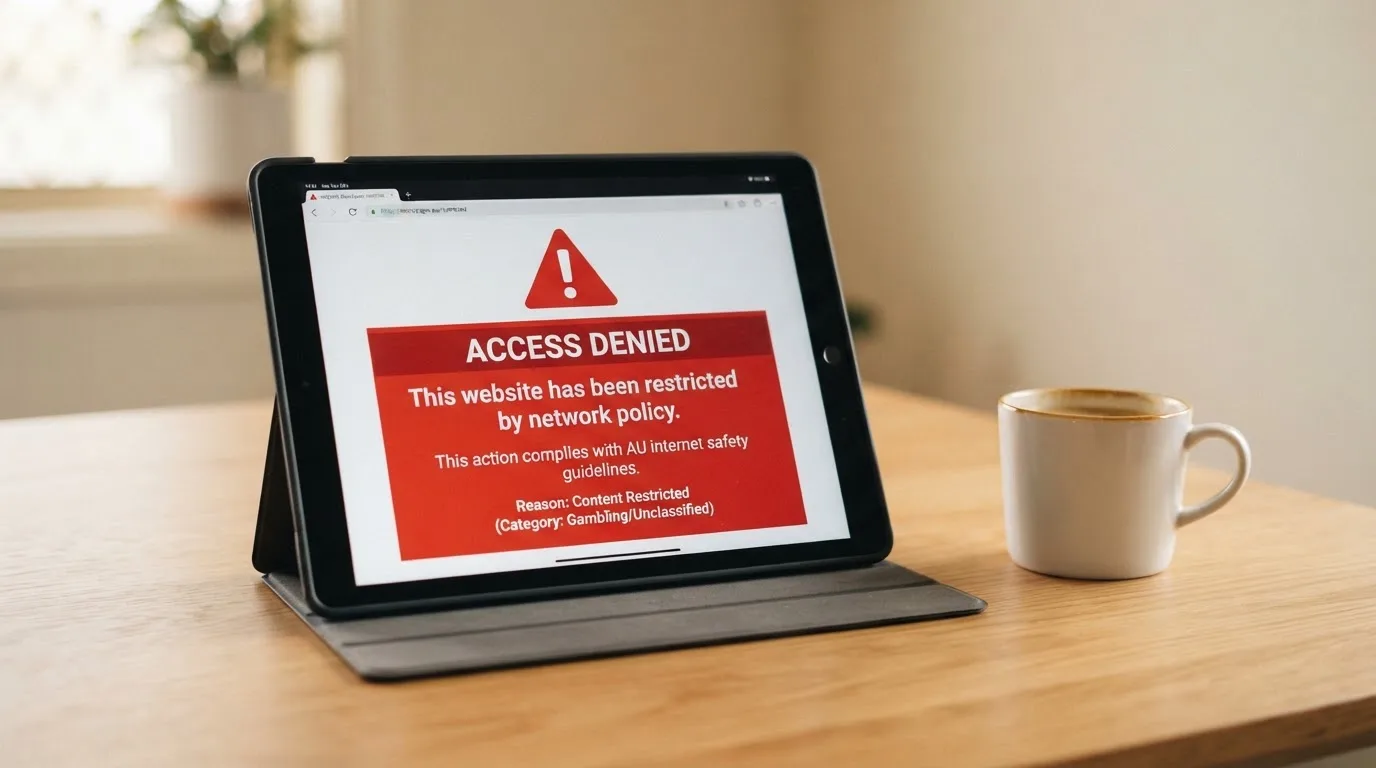
The point that matters for an Australian casino withdrawal is the credit-funded prohibition. Under the Interactive Gambling Act 2001 as amended in 2023, Australian-licensed online wagering services cannot accept payment by credit card or other credit-related products. Where an Apple Pay transaction is funded from a credit card, the prohibition bites; where it is funded from a debit card, it does not, but ANZ’s gambling block extends to Apple Pay on an eligible card, so the wallet layer does not bypass the block. A site asking an Australian for a credit card, or for a digital wallet funded from a credit card, is operating outside the Australian rules; penalties for licensed operators reach $247,500. An offshore operator faces no equivalent penalty.
Cryptocurrency
Cryptocurrency is not a “same-day” rail in the Australian-regulated sense — it is a peer-to-peer transfer whose settlement depends on the network, the fee paid and the congestion at the time. It is also explicitly banned as a payment method for licensed Australian online wagering since 11 June 2024. An offshore casino offering crypto deposits and withdrawals is doing so because the rail is unregulated here, not because it is faster in any honest sense.
AUSTRAC thresholds
A common misreading is that AUSTRAC’s threshold-transaction-report rule, which requires reporting of transfers of A$10,000 or more, applies to ordinary bank transfers. It does not. That rule applies only to physical cash; ordinary electronic bank transfers are not subject to the per-transaction reporting requirement, regardless of the amount sent. The absence of an AUSTRAC trigger is not a reason to feel comfortable moving ten thousand dollars to an offshore casino; it is simply a clarification about which transfers the reporting rule does and does not cover.
AUSTRAC, the cash-reporting threshold and what it does not cover
The threshold-transaction-report rule is one of the most-misread pieces of payments regulation in Australia. The AUSTRAC rule requires reporting of cash transfers of A$10,000 or more. It does not extend to electronic bank transfers, no matter how large the amount. A reader who assumes a ten-thousand-dollar PayID transfer to an offshore casino will trigger an AUSTRAC report is wrong on the mechanism, though still right to be cautious about the destination.
This matters because the same rails that make legitimate same-day payouts fast also make unregulated ones fast. The Osko settlement is under a minute regardless of whether the recipient is a licensed Australian wagering service or an offshore casino. The protection is not in the rail; it is in the player’s own decision about where the PayID resolves to, and in the casino’s own standing with Australian authorities.
The eleven brands the ACMA has acted against
What follows is the operator-by-operator record of the brands on the ACMA’s formal-warning register that anchor this page. Each entry carries the operator name as the ACMA published it, the date the warning was issued, and a brief read of what the record shows. None of these brands is presented as a place to play; each is presented so a reader who has heard the name can see what the regulator has said about it.
RocketPlay — warned March 2026 under Pulsup Ltd
The ACMA issued a formal warning to Pulsup Ltd over Rocketplay in March 2026. A prior warning was issued to Dama N.V. in May 2022 over the same brand and several others. The brand has cycled through operators without leaving the regulator’s register. Listings-only support means third-party gambling-industry listings reference the brand; those listings do not endorse it for Australian play.
The picture here is one of an operator moving the brand between corporate vehicles while continuing to accept Australian customers. The cycle of re-warning is itself a signal — a brand that has been warned, dissolved into a new entity, and warned again has not changed its behaviour, only its corporate address.
Level Up Casino — warned May 2022 under Dama N.V.
Dama N.V. was named on a May 2022 formal warning covering six casino brands, of which Level Up is one. The other five — Bambet, Dazard, Rocketplay, Wild Tornado and Cobra Casinos — are not in this page’s set. What Dama N.V. has done across those brands since the 2022 warning is also informative: it has been warned again, in March 2025 over Woo Casino and in May 2025 over Spirit Casino, both of which appear below.
The single warning tells a reader that Dama N.V. ran a portfolio of Australian-facing casino brands four years ago; the cumulative record tells a reader that the practice has continued. For someone choosing where to play, the relevant question is not whether one specific warning is on file — it is whether the operator behind the brand has a pattern of being warned.
Woo Casino — warned March 2025 under Dama N.V.
The ACMA issued a fresh formal warning over Woo Casino in March 2025. Dama N.V. remains the named operator. The brand sits inside the same pattern as Level Up: a Dama N.V. brand, warned before, warned again. No payment-method data has been confirmed against the ACMA’s record for this brand beyond the warning itself.
For a reader, the Woo Casino warning illustrates how the regulator’s attention moves. A 2022 warning did not stop the brand; a 2025 warning names the same operator under the same banner. The regulatory action has been consistent; the operator’s response has not.
Spirit Casino — warned May 2025 under Dama N.V.
Spirit Casino is the third Dama N.V. brand to be warned since the May 2022 round, with the formal warning issued in May 2025. The pattern is the one Dama N.V. has established across at least three of its brands: a warning, a continuation, another warning. Nothing in the regulator’s record suggests the cycle has been broken.
National Casino — warned July 2025 under Consolutetish S.R.L.
The ACMA issued a formal warning to Consolutetish S.R.L. over National Casino in July 2025. The same warning also named Bizzo Casino (covered next). National Casino sits on listings pages alongside Australian-facing consumer-protection references including the ACMA’s own register, AUSTRAC and BetStop — a useful marker that the brand is known to Australian regulators and self-exclusion services even if it is not licensed for Australian play.
The dual-warning structure of the July 2025 action is significant: the ACMA did not warn two separate operators on separate grounds, it warned one operator over two brands. That tells a reader that the operator has run a portfolio, not a single brand, and that the regulator treats the portfolio as a single enforcement target.
Bizzo Casino — warned July 2025 (and 2022) under two operators
Bizzo Casino carries two warnings. The first, in 2022, was issued to TechSolutions (CY) Group Limited and TechSolutions Group N.V. The second, in July 2025, was issued to Consolutetish S.R.L. — the same operator named over National Casino. The brand has thus survived two operator changes and two formal warnings without leaving the regulator’s record.
For a reader, the Bizzo record is the most pointed illustration on this page of the cycle: the brand is warned, the operator changes, the brand continues, the brand is warned again. A reader who has heard the name marketed as “fast payouts” or “instant withdrawals” should know that the regulator’s view has been registered twice.
Ignition Casino — warned July 2025 under Bamboo Media
Bamboo Media was named on the ACMA’s July 2025 formal warning over Ignition Casino. Ignition is one of three brands named in that month’s enforcement activity (alongside National Casino and Bizzo). No data on the brand’s payment-method support has been confirmed beyond the warning itself.
The brand carries a name that, to an Australian ear, suggests a different product category — “Ignition” is the kind of word a poker site uses. The product is online casino, and the product is prohibited for Australians regardless of how the brand’s name reads.
Instant Casino — warned February 2025 under EOD Code SRL
The ACMA issued a formal warning to EOD Code SRL over Instant Casino in February 2025. Listings for the brand appear on pages that also reference ecoPayz and PayID — a marker that the brand has been promoted on payment-method listings aimed at Australian-facing traffic. The same PayID warning from AP+ applies: a request to transfer to a PayID on an illegal gambling site is, in AP+’s own words, “almost certainly” a scam signal.
A reader looking at the Instant Casino entry should note the conjunction of two pieces of information. The brand has been formally warned by the regulator that licenses Australia’s communications and media environment, and it is being listed on pages where payment-method advice is given to Australians. The two facts do not cancel each other out.
Jackbit — warned April 2026 under Ryker B.V.
The ACMA issued a formal warning to Ryker B.V. over Jackbit and CasinOK in April 2026. Jackbit sits on this page; CasinOK does not. The April 2026 action is the most recent enforcement against a brand on this list. No data has been confirmed on the brand’s payment-method support beyond the warning.
The recency matters in a particular way. A formal warning issued last month is closer to current operational reality than a warning issued years ago; the regulator’s view of the brand is also the regulator’s most recent view.
Casino Intense — warned April 2025 under Sterplay Holding Ltd
Sterplay Holding Ltd was the named operator on the ACMA’s April 2025 formal warning over Casino Intense. The brand appears on third-party listings that also reference AUSTRAC, BetStop and gambling-industry directories — the same Australian-facing consumer-protection context as National Casino’s listings.
A reader looking at Casino Intense alongside National Casino should see what the listings tell them: the brand is known to the regulators, self-exclusion services and industry watchers that operate in Australia. That knowledge does not produce a licence; it produces a record.
Sky Crown — warned September 2022 under Hollycorn N.V.
The ACMA issued a formal warning to Hollycorn N.V. over its Sky Crown and Blue Leo casino services, in a formal warning dated September 2022. Sky Crown sits on this page; Blue Leo does not. The Hollycorn entry is the oldest formal warning on this list, and a reader should weight it accordingly: the regulator’s view was formed in 2022, before any of the other warnings on this page. The brand remains on the regulator’s record because formal warnings are not withdrawn when an offshore operator stops marketing to Australians — they stand as the regulator’s recorded view.
A working measure of the ACMA’s enforcement pace
The plan calls for a blocking-rate calculation: the running total of blocked sites against the date of the first blocking request. As of June 2026, the ACMA reports 1,751 illegal gambling and affiliate marketing websites blocked since the first blocking request in November 2019. That is roughly 80 months of enforcement. The pace therefore sits in a band of about 22 blocked sites per month across the lifetime of the regime, but the recent rounds are faster: the round reported on 26 June 2026 alone asked ISPs to block 12 more. The reader-relevant point is that blocking is not an occasional gesture but a steady administrative practice that has cleared hundreds of sites per year in the recent rounds. A reader who has heard of an offshore same-day-payout casino can reasonably ask whether it is one of the 1,751, or one of the 12 most recently added.
The pace is also a signal about how the regulator treats affiliate marketing sites, which are blocked alongside the casinos themselves. The same round that blocked 12 casino names also takes out the affiliate pages that drive traffic to them, which is why the headline figure covers both categories.
The settlement-window reality behind “same day”
A reader who has understood the rails can read a same-day-payout claim in the right key. If the casino’s cashier pays out to an Australian bank account via Osko to a PayID, the funds land in under a minute — that is genuinely same-day in the literal sense. If the cashier pays via an older direct-entry transfer, the funds land the next business day — same-day by the broader reading. If the cashier pays via Visa or Mastercard, the funds land in one to three business days. If the cashier pays via cryptocurrency, the funds land when the network confirms — sometimes minutes, sometimes hours, occasionally longer. If the cashier pays via BPAY, it is not a payout at all.
A same-day-payout claim that does not specify the rail is therefore saying only that the casino’s internal approval window is short. Whether the withdrawal actually arrives on the same day depends on which rail the casino supports for Australian customers, and whether the customer has passed the verification checks the casino applies to first withdrawals.
The verification check is where most same-day claims fail in practice. First withdrawals trigger know-your-customer review, source-of-funds review, and sometimes additional document requests. A reader who deposits on Monday and requests a withdrawal on Wednesday can reasonably expect the casino’s approval to come quickly; the verification cycle, if not already complete, can extend the practical timing from same day to several days.
Where a reader’s protection actually sits
For a withdrawal to an Australian bank account, the protection is in the bank. ANZ’s gambling block, Westpac’s gambling block and Commonwealth Bank’s gambling lock each apply at card level. Apple Pay transactions funded from an eligible ANZ card are blocked; the same applies to Google Pay and Samsung Pay on cards where the issuing bank has implemented the block at the merchant-category-code level. None of these blocks catches a bank transfer to a PayID, but the PayID naming layer does — AP+ warns that being asked to transfer to a PayID on an illegal gambling site almost certainly means a scam site.
For a withdrawal to a credit card, the protection is in the IGA itself: licensed Australian wagering services cannot accept credit cards. The protection does not extend to offshore operators, which is part of what makes an offshore withdrawal to a credit card more exposed than the same withdrawal to a debit card.
For a withdrawal in cryptocurrency, the protection is essentially none in Australian law. Crypto is banned as a deposit method for licensed Australian wagering since 11 June 2024; offshore operators face no equivalent constraint. A reader moving funds in or out via crypto is moving them outside the Australian regulatory perimeter entirely.
For self-exclusion, the protection is BetStop — but only for licensed Australian wagering services. An offshore casino is not connected to BetStop. A reader who has self-excluded and is trying to stay excluded cannot rely on BetStop to keep an offshore site closed.
Practical paths for a reader comparing options
The comparison this page supports is not between eleven casinos. It is between three reader situations, each with a different answer about where the rail should land and what protection surrounds it.
For a reader who has self-excluded and is trying to stay excluded, the path is not through an offshore casino at all. BetStop binds the licensed Australian wagering services the reader should not be using, and the offshore casino is outside BetStop’s reach — which makes an offshore site a worse choice, not a safer one. The right path is the National Gambling Helpline on 1800 858 858, free and 24/7, with chat at Gambling Help Online.
For a reader who is making a licensed Australian wagering deposit (racing, sport before the event, lotteries, keno) and wants the deposit to clear fast, Osko to a PayID is the right rail: under a minute, 24/7, including weekends. The licensed operator’s own cashier controls the approval window; the rail controls everything beyond it.
For a reader who is being asked to send money to an offshore casino, the path is to refuse the transfer. The PayID naming warning from AP+ is unambiguous; the ACMA’s record of formal warnings is unambiguous; the absence of an Australian complaints body is unambiguous. The fact that the casino’s marketing page says “instant withdrawal” does not change any of those three things.
What the regulator’s record shows, taken together
Eleven brands, eleven formal warnings, seven different named operators, two operators with multiple warnings, two operators warned across two different brands in a single round, one brand warned twice under two different operators. That is the shape of the record this page sits on top of. The shape is not a list of bad actors to be ranked; it is a record of what the regulator has said about offshore casinos that have marketed same-day payouts to Australians.
For a reader, the most useful sentence in the regulator’s record is one the regulator itself does not write: every one of these eleven brands is operating against the IGA in offering casino products to Australians, and the operator that runs any of them has no Australian consumer protection framework behind it when a withdrawal is refused or delayed. The same-day-payout claim is real in the sense that the rail can move money fast; it is hollow in the sense that the casino’s standing to make the promise is not.
The named-operator cycle, and what it costs a reader
A reader who has heard two or three of these brand names has likely been on the receiving end of affiliate marketing aimed at Australian customers. The cycle behind that marketing is visible in the regulator’s record: a brand is warned, the operator changes, the marketing continues under the same brand. Dama N.V. alone has been warned across Rocketplay, Level Up, Woo Casino and Spirit Casino. Consolutetish S.R.L. has been warned across National Casino and Bizzo Casino. TechSolutions Group N.V. and TechSolutions (CY) Group Limited were warned over Bizzo Casino before Consolutetish S.R.L. took over the brand.
What this means for a reader is that a brand name is a thin signal. The brand is what an affiliate page lists; the operator is what the regulator names; and the operator has, in several of these cases, changed while the brand has not. A reader who trusts the brand is trusting a wrapper. A reader who reads the ACMA’s record is reading the wrapper’s contents.
How the credit-card prohibition shapes what an offshore cashier can offer
The 2023 amendments to the Interactive Gambling Act 2001 made it an offence for Australian-licensed online wagering services to accept credit card or credit-related products, including digital wallets where the underlying funding is credit. The prohibition takes the credit-card rail off the table for licensed operators, and the equivalent constraint on offshore operators is the reason those operators tend to push PayID, Osko, direct debit and cryptocurrency at Australian customers — those are the rails the prohibition does not bite on.
For a reader, the rail an offshore cashier offers is therefore a tell about the operator’s positioning. A cashier offering credit cards or credit-funded wallets is offering something an Australian-licensed operator cannot legally offer; a cashier offering PayID and Osko is offering the same rails a licensed Australian wagering service would offer, but on a casino product those operators are not licensed to provide. Neither rail makes the casino itself legal; both rails move money in the same way. The legal exposure sits in the product, not the rail.
Why “same day cash out” reads differently from “instant withdrawal”
A reader comparing two casino pages may notice that one says “same day cash out” and the other says “instant withdrawal”. The two phrases are not the same. “Instant” describes a settlement time of seconds — what Osko to PayID delivers, what a crypto transfer can deliver when the network is quiet. “Same day” describes a settlement window that closes at midnight — what an older direct-entry transfer delivers the next business day, what a Visa or Mastercard refund delivers in one to three business days.
The difference matters because it tells a reader how the casino is positioning itself. A casino that says “instant” is committing to a rail that genuinely delivers seconds; a casino that says “same day” is leaving itself a window that runs to the end of the calendar day. Neither commitment is enforceable against an offshore operator with no Australian presence. What the commitment does is tell a reader how ambitious the marketing is — and the more ambitious the marketing, the more a reader should weight the ACMA’s record behind it.
What verification can do to a same-day claim
A same-day-payout claim is rarely about the rail alone; it is also about the casino’s internal process. The first withdrawal, in particular, is where verification bites hardest: know-your-customer document review, source-of-funds checks, address confirmation, sometimes a phone call. None of those steps is on the rail’s clock. They are on the casino’s clock, and the casino’s clock is what an offshore operator controls.
A reader who deposits on Monday and requests a withdrawal on Wednesday is not, on most offshore sites, asking for the same rail timing the casino advertises. The reader is asking for the rail timing plus a verification cycle the casino has not advertised. The cycle can run to several days. The “same day” promise, in practice, applies to the second withdrawal onward, not the first.
What the record looks like five years from now
The pace of ACMA enforcement has been rising across the years since the first blocking request in November 2019. The 2025 amendments to the IGA, the 2026 reform bill with its 1 January 2027 advertising commencement, and the steady stream of formal warnings all point in one direction: the regulator’s view of offshore same-day-payout marketing to Australians is hardening, not softening. A reader who has heard of any of the eleven brands on this page is hearing a name the regulator has already spoken about, and the regulator is more likely than not to keep speaking about it.
For a reader, the picture five years out is the picture today, sharpened. More blocking rounds, more formal warnings, more brands moving between operators while staying on the regulator’s register, more affiliate pages taken down alongside the casinos themselves. The settlement rails are not going to change — PayID/Osko will still deliver under a minute, Visa and Mastercard will still take one to three business days, AUSTRAC’s threshold rule will still apply only to physical cash. What will change is the address an Australian is asked to send money to.
Where the same-day claim is finally a useful word
There is one situation in which “same day payout” is a useful, honest description, and that is the licensed Australian wagering context. A reader placing a winning bet with a Sportsbet, Bet365 or Ladbrokes account — all licensed by the NTRWC — and withdrawing back to an Australian bank account via Osko and PayID is looking at a same-day payout in the literal sense: under a minute from the casino’s cashier approval to the customer’s bank. The licensed operator cannot offer online casino games, so the rail applies to wagering only. But the rail itself is the rail the offshore marketing is borrowing the name of.
For a reader comparing options, that is the right benchmark. If a withdrawal can land in under a minute via Osko and PayID at a licensed Australian wagering service, the marketing promise an offshore casino is making is the same promise the licensed operator can already keep — minus the licence, minus the consumer protection, and minus the legal standing.
A reader’s checklist for any same-day-payout claim
A reader who has decided to look at an offshore casino despite everything above still has four checks to make, because the rail timing is not the only thing that matters.
The first is the operator name. A brand without a verifiable operating company behind it is a brand that can be wound up without recourse; a brand with an operating company that has been warned by the ACMA is a brand the regulator has already spoken about.
The second is the rail. PayID/Osko is the only Australian rail that delivers under a minute; Visa and Mastercard take one to three business days; crypto delivers when the network confirms and brings its own legal exposure. The rail the cashier names is the rail the reader should plan around.
The third is the verification cycle. A first withdrawal is rarely fast because verification is heaviest there. A reader who plans to deposit and withdraw within a week should expect the first withdrawal to take longer than the marketing claims.
The fourth is the protection layer. ANZ’s gambling block, Westpac’s gambling block, Commonwealth Bank’s gambling lock, the IGA’s credit-card prohibition, and BetStop all apply to licensed Australian wagering; none of them fully extends to an offshore casino. The reader’s own bank is the strongest protection available, and the reader’s own decision not to send money to an illegal site is the strongest protection of all.
What this page is not
This page is not a recommendation of any offshore casino. It is not a list of where to play. It is not a way around the Interactive Gambling Act 2001. It is not a substitute for the National Gambling Helpline on 1800 858 858 for anyone whose play has stopped being a choice.
What it is, is a record of what the regulator has done, an explanation of the settlement rails the marketing borrows the name of, and a comparison that ends in the same place it began: online casino games cannot be licensed for Australians, the brands that market them are on the ACMA’s formal-warning register, and the rail that delivers a same-day payout for a licensed wagering service is the same rail that delivers an illegal casino’s payout — minus the licence, minus the protection, and minus the standing.
Frequently asked questions
What does a casino actually mean by “same day payout” — same calendar day, or within 24 hours?
The phrase is loose and the casino chooses which meaning serves its marketing. Strictly, same calendar day means the funds have landed in the customer’s account before midnight on the day the withdrawal was approved. Loosely, within 24 hours means the funds have landed by the same time the next day. Most offshore casinos do not specify which reading applies, and an Australian reader should assume the looser one until the casino’s cashier names a rail.
How does a same-day cash-out claim compare with the real Osko transfer times Australian banks describe?
Osko is faster. With Osko, a bank transfer between participating Australian banks arrives in under a minute, 24/7, including weekends, addressed to a BSB and account number or a PayID. A same-day claim that is actually Osko-to-PayID is delivering under a minute; a same-day claim that is older direct-entry delivers next business day; a same-day claim on Visa or Mastercard delivers in one to three business days. The marketing word hides the rail underneath.
Is a same-day payout promise from an offshore casino something Australians can hold the operator to?
No. Online casino games cannot be licensed in Australia under the Interactive Gambling Act 2001 as amended in 2017. An offshore casino accepting Australian customers is operating against the IGA, and there is no Australian complaints body to approach when a withdrawal is refused or delayed. The ACMA can issue formal warnings and direct ISPs to block the site, but the ACMA does not arbitrate individual customer disputes. A promise from an unlicensed operator is a promise with no Australian enforcement behind it.
What is the largest withdrawal amount that a “same day” payout claim usually still applies to?
The research carries no data on per-transaction maximums at the eleven brands on this page. AUSTRAC’s threshold-transaction-report rule applies to physical cash transfers of A$10,000 or more; it does not apply to electronic bank transfers regardless of amount. A reader who has been told a same-day claim applies to a particular ceiling should treat that ceiling as a marketing figure, not a regulatory one, and ask the casino’s cashier to confirm the figure in writing before sending funds.
Why do some sites specifically say “same day cash out” rather than “instant withdrawal”?
“Same day cash out” leaves the casino a window that closes at midnight; “instant withdrawal” commits to seconds. The looser word is what most offshore casinos prefer, because the rail behind it (Visa, Mastercard, older direct-entry) does not deliver seconds. A reader comparing two casino pages should weight the word the casino chooses: a casino committing to “instant” is committing to a rail that genuinely delivers fast; a casino committing to “same day” is leaving itself a full day.
What verification steps might still delay a same-day-payout claim in practice?
A first withdrawal triggers the heaviest verification: know-your-customer document review, source-of-funds checks, address confirmation, sometimes a phone confirmation call. None of those steps rides on the rail’s clock — they ride on the casino’s. A reader planning to deposit and withdraw within a week should expect the first withdrawal to take longer than the marketing suggests, regardless of which rail the cashier names, because the verification cycle runs on the casino’s own timeline rather than the Australian payments platform’s.