
Best Live Casino Online Australia 2026: Why the Shortlist Is a Shortlist of Warnings, Not Wins
 Available in US
The phrase “best live casino online Australia” promises a comparison, and the comparison this page makes is not the one a reader typing it is hoping for. Every brand that surfaces for that search in 2026 is one the Australian Communications and Media Authority has named in a formal warning, asked an internet service provider to block, or both. The Australian market for live dealer tables is not “many operators, choose well”; it is a list of brands the regulator has acted against and a set of land-based venues where the games are actually licensed. The page that follows is built around that fact, not around it.
Currency and conditions current as of 23 September 2026; verified against the ACMA’s published formal warnings and blocking notices.
- The landscape: who is on it and why
- The fundamentals: what a live dealer game is and how it runs
- Legality: the Interactive Gambling Act 2001, and what enforcement actually looks like
- Responsible play: what actually protects an Australian reader
- Bonuses and free spins: the offer and what it actually costs
- Mobile and the app question
- Games, providers and live tables: what is actually streamed
- The 2026 reform and what it changes
- Tax: what a recreational punter owes
- What an Australian reader should take from the page
- Frequently asked questions
The landscape: who is on it and why
The brand-level table below reads less like a ranking and more like a register of correspondence. Eleven names, eleven ACMA formal warnings, eleven operators the regulator considers to be offering a prohibited interactive gambling service to Australians. The subject column is sparse because most of these brands do not publish verifiable Australian-facing terms, and the ones that do publish them on pages whose standing in Australia is itself the issue.
| Brand | ACMA action and date | Operator named by the ACMA | Subject support |
|---|---|---|---|
| RocketPlay | Formal warning, March 2026 (Pulsup Ltd); earlier Dama N.V., May 2022 | Pulsup Ltd / Dama N.V. | — |
| Level Up Casino | Formal warning, May 2022 | Dama N.V. | Listed on BGaming |
| Woo Casino | Formal warning, March 2025 | Dama N.V. | — |
| Spirit Casino | Formal warning, May 2025 | Dama N.V. | — |
| National Casino | Formal warning, July 2025 | Consolutetish S.R.L. | Wikipedia entry exists |
| Bizzo Casino | Formal warning, July 2025; earlier 2022 | Consolutetish S.R.L. / TechSolutions | — |
| Ignition Casino | Formal warning, July 2025 | Bamboo Media | — |
| Instant Casino | Formal warning, February 2025 | EOD Code SRL | — |
| Jackbit | Formal warning, April 2026 | Ryker B.V. | — |
| Casino Intense | Formal warning, April 2025 | Sterplay Holding Ltd | Listed on ABC, ACMA, Crown Melbourne |
| Sky Crown | Formal warning, September 2022 | Hollycorn N.V. | — |
The empty cells are not an oversight. They are the shape the data takes. A brand that has been the subject of a formal ACMA warning does not typically publish an Australian-facing terms page that holds up to verification, and the subject entries that exist (Level Up on Bgaming’s site, Casino Intense named in the ABC and the ACMA’s own pages) are present because those sources named the brand, not because the brand itself confirmed anything to a reviewer.
The fundamentals: what a live dealer game is and how it runs
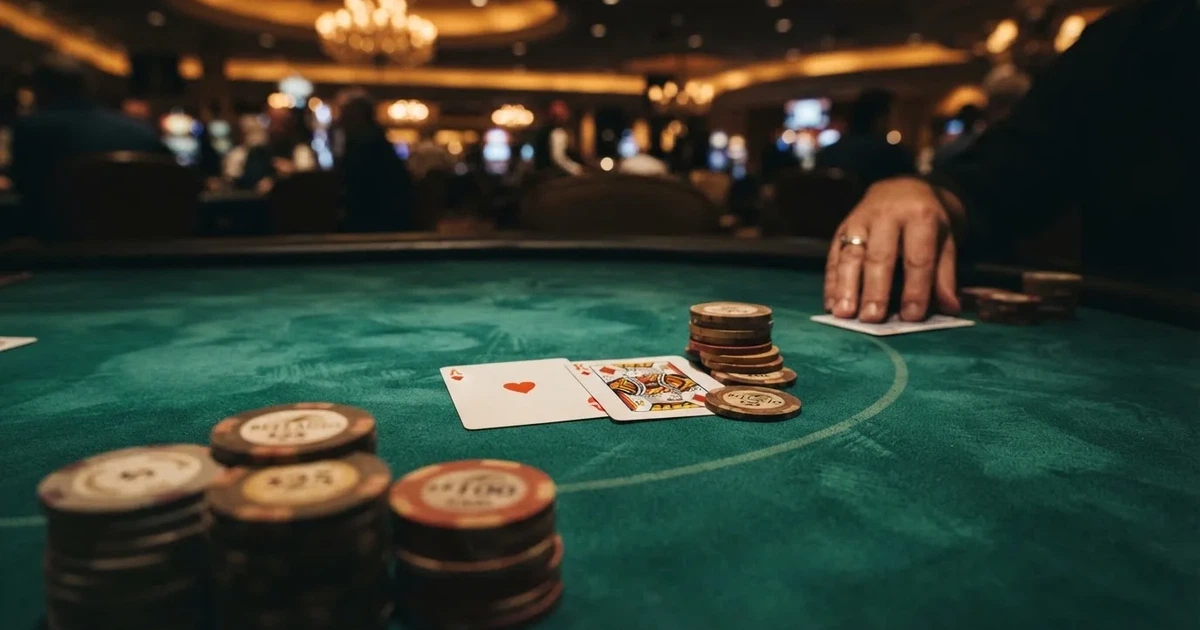
A live dealer game is not an online slot with a video feed on top. The dealer is a person sitting at a real table in a studio or in a land-based casino. Cards are dealt, the roulette wheel is spun, the dice are thrown in front of cameras. Optical camera recognition converts the physical action — a card flipped, a number landed on — into the data that drives the player’s screen. The player decides from wherever they are, and the result on the table is what their balance is updated against. There is no random number generator in the middle.

Three games sit at the centre of nearly every live dealer lobby: baccarat, blackjack and roulette.
| Game | Bet Type | House Edge |
|---|---|---|
| Baccarat | Banker | 1.06% |
| Baccarat | Player | 1.24% |
| Baccarat | Tie | 14.36% |
| Blackjack | Optimal Strategy | 0.28%–0.43% |
| Roulette | Single Zero | 2.70% |
| Roulette | Double Zero | 5.26% |
| Craps | Pass / Don’t Pass | 1.41% / 1.36% |
The point of these numbers is not to teach the games. It is that the house always has one. A live dealer feed makes the action feel transparent; the mathematics underneath has not changed.
Baccarat, in detail
Baccarat is a counting game. Cards 2 through 9 count at face value, tens and face cards count as zero, aces count as one, and hand totals are taken modulo 10 — a seven and a six is three, not thirteen. The variant most live lobbies run is punto banco, dealt from a six- or eight-deck shoe, with both the player and the banker hands played out by fixed drawing rules the casino banks against. Chemin de fer, the two-player variant the game’s name is sometimes traced to (“railway,” for the speed of play), survives in a few high-roller rooms and on a small number of tables in larger live lobbies.
Crown Melbourne runs three approved baccarat variants under the Victorian Gambling and Casino Control Commission: Traditional Baccarat, Crown Baccarat and 2 to 1 Baccarat. NSW has its own mirror provision: under section 66 of the Casino Control Act 1992, no baccarat game may be offered at the Star Sydney unless its rules have been approved by the regulator, with a copy available to patrons on request. The pattern repeats across every Australian jurisdiction that runs a casino floor: every variant, every side bet, every rule change, approved in writing before it can be played.
Blackjack, in detail
Blackjack’s house edge is the smallest in the casino, but only at the table of a player who plays the basic strategy chart and only against rules that don’t punish deviations from it. The dealer must keep drawing to a total of 17 or higher, with a “soft 17” rule (whether the dealer hits or stands on an ace-seven) that moves the edge by a measurable amount. Variants introduced over the last two decades — Spanish 21 without the tens, Double Exposure with both dealer cards up, Blackjack Switch that lets a player swap cards between two hands, Super Fun 21 that allows up to four splits — all sit on different rule sheets, and a player who treats them as the same game is paying for the assumption.
The VGCCC’s published log of approved changes at Crown Melbourne shows the regulator’s attention to detail at work: a “Perfect Pairs” side bet renamed to “Crown Pairs” on 23 December 2024, a “Free Bet” option with a new “Pot of Gold” side bet introduced on 25 March 2024. None of these are decisions a player notices at the table; all of them are decisions a regulator approved before any chip was placed.
Legality: the Interactive Gambling Act 2001, and what enforcement actually looks like
The Interactive Gambling Act 2001, strengthened by the Interactive Gambling Amendment Act 2017, makes it an offence to provide an interactive casino-style gambling service — online blackjack, online roulette, online baccarat, online craps, online “pokies” — to a person in Australia. The provision extends to live dealer games, because the test is not the medium but the activity: dealing an online casino-style game to an Australian end-user is the prohibited act, whether the cards are flipped by a person on camera or by a random number generator no one sees.
What is licensed in Australia is a smaller list than most readers expect. Wagering on sports and races placed before the event, lotteries and keno are licensable, and in practice most licensed online bookmakers are licensed by the Northern Territory Racing and Wagering Commission — Sportsbet, Bet365 and Ladbrokes among them. The NTRWC has no full-time staff and meets once a month in Darwin; it is a regulator in the formal sense rather than a busy one. Land-based casinos in New South Wales, Victoria, Queensland, Western Australia, South Australia, Tasmania and the ACT are licensed separately by their state or territory regulator and run approved table games under the relevant Casino Control Act.
Online casino is not on the licensable list in any Australian jurisdiction. A licence displayed on a casino’s footer — Curaçao, Anjouan, the Isle of Man — is a licence for the operator, not a permission to deal to Australians. The ACMA’s position is consistent on this point: the licence held is irrelevant to whether the service is prohibited here.
Enforcement in numbers
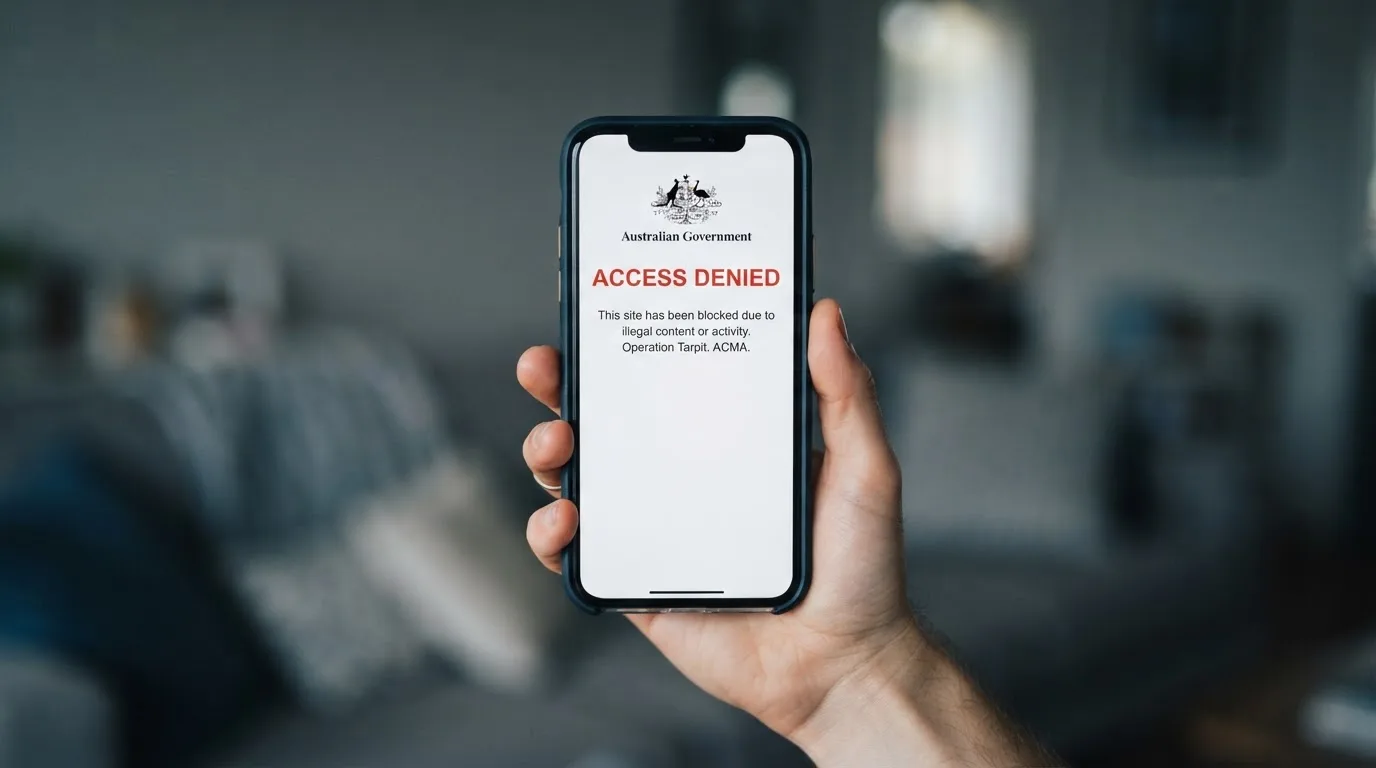
The ACMA’s blocking power sits under section 313 of the Telecommunications Act 1997, exercised at the regulator’s request. As reported in June 2026, a total of 1,751 illegal gambling and affiliate marketing websites had been blocked since the first blocking request in November 2019, and more than 230 unlicensed gambling services had left the Australian market since enforcement was strengthened in 2017. The most recent blocking round alone, also reported on 26 June 2026, asked Australian ISPs to block 12 further sites: 7Signs, ChromaBet, Donbet, Duospin, Freshbet, Slots Gem, Jacks Club, Lucky Start, Pointsbetz, Spinrise, Vinyl Casino and Wildsino.
The arithmetic of that record is the prescribed calculation this page runs. Between November 2019 and June 2026, the ACMA moved against 1,751 sites over roughly 79 months — a blocking rate of about 22 sites per month on average across the full window, and a more intense rate in the most recent round (12 in one reporting cycle). The number a reader should hold onto is the lower band: at the long-run pace, the regulator is taking a prohibited site off Australian ISPs at a rate of roughly one every day and a half. The upper band, set by the kind of round that delivered a dozen sites in a single notice, is closer to one a day when the ACMA chooses to push.
That calculation has a condition behind it: the 1,751 figure counts both gambling and affiliate marketing sites, and not every formal warning translates into a blocking request, and not every block is permanent. Read the 22-per-month figure as a rate of formal action against illegal services, not as a count of services still accepting Australian customers on a given morning. H2 Gambling Capital’s 2025 estimate puts the leakage at around A$3.9 billion a year to illegal sites, with the legal share of Australian gambling falling from 74% in 2021 to 64%. The regulator is moving; the market is bigger than the regulator’s reach.
Formal warnings: a partial chronology
The eleven brands on the table above are the formal-warning list, not the complete enforcement record. The ACMA has issued warnings to operators whose branding shifts more often than the regulator’s records catch up. Dama N.V. alone has been warned over Bambet, Dazard, Level Up, Rocketplay, Wild Tornado and Cobra Casinos (May 2022), then again over Woo Casino (March 2025) and Spirit Casino (May 2025). TechSolutions was warned over Bizzo Casino in 2022; Consolutetish S.R.L. was warned over National Casino and Bizzo Casino in July 2025 — the same brand, the same underlying offer, a different operator entity. Bamboo Media drew a warning over Ignition Casino in July 2025. EOD Code SRL drew one over Instant Casino in February 2025. Ryker B.V. drew one over Jackbit and CasinOK in April 2026. Sterplay Holding Ltd drew one over Casino Intense in April 2025. Hollycorn N.V. was warned over Sky Crown and Blue Leo in September 2022.
The pattern is the story. Operator names change, brand names persist, and the ACMA’s record catches up.
Responsible play: what actually protects an Australian reader
The first thing to be clear about is that BetStop, the National Self-Exclusion Register, binds Australian-licensed online and phone wagering services. It does not bind an offshore live casino. Registering with BetStop closes an Australian punter out of the licensed bookmakers; it does not close them out of a Curaçao-licensed live dealer site that the ACMA has just asked an ISP to block. For someone in Australia trying to take a break from gambling, that distinction is the whole question.
Where BetStop does help is in shutting down the legal channels an Australian has access to — sports betting, racing, lotteries — and that is real help. It is also the help that an offshore casino is positioned to step around, which is the structural reason the regulator and the help services both keep saying “do not play at unlicensed sites” and not just “set a deposit limit.”
The National Gambling Helpline is 1800 858 858, free and 24/7, with web chat at Gambling Help Online. The line is staffed by counsellors, not by the regulator, and is the right first call whether the gambling in question is legal wagering, an offshore casino, or a poker machine at the local pub. A punter sitting on a balance at a site the ACMA is about to block has nowhere in Australia to complain about a refused withdrawal; a punter who has decided to stop has somewhere in Australia to start.
The player who wants the strongest available protection should treat the offshore casino as a category to be avoided rather than managed. The licensed alternatives — sports and racing bookmakers, lotteries, land-based casinos — sit under Australian consumer law and Australian regulators. The offshore sites sit under neither.
Minimum age and what it means in practice
The minimum age for any gambling activity in Australia is 18. The offshore sites all claim to enforce this in their terms; none of them are in a position an Australian regulator can audit. A parent looking at a teenager’s phone cannot rely on the offshore site’s own age gate to keep the minor off the platform. The licensed Australian bookmakers, the land-based casinos and the pokies venues are the ones the regulator can inspect and the ones a reader can trust on this point.
Payments and what they signal
Since 11 June 2024, credit cards, credit-related products and digital currency have been banned as payment for licensed online wagering in Australia, with penalties up to $247,500 for operators that accept them. The legal deposit routes for a licensed bookmaker are debit card, bank transfer, PayID/Osko and BPAY. A site asking an Australian customer for a credit card or a crypto deposit is, by definition, not operating under an Australian licence. The payment screen is the cheapest verification available; a player who can pay by credit card at a “live casino” is paying a site that is not subject to the rule that just shut credit cards out of Australian-licensed gambling.
Bonuses and free spins: the offer and what it actually costs
The offer that does the most work in live casino marketing is the welcome package: a matched amount on first deposit, sometimes with free chips added, almost always with a turnover requirement attached. The marketing names the matched amount in headline figures. The arithmetic tells the reader what those figures cost.
A typical live casino welcome bonus might advertise a 100% match up to a stated amount with a wagering requirement of, say, 40 times the bonus. If a reader deposits and claims the full match, the bonus sum they must wager through is 40 times the bonus amount. On a live dealer table, where a stake of A$10 per hand is common and the round takes roughly a minute, clearing that turnover is a long session rather than a short one. The bonus is the hook; the turnover is the price.
What the marketing tends to underplay is the second condition almost every live casino bonus carries: game weighting. Slots typically contribute 100% of the stake to the wagering requirement; live dealer games frequently contribute between 5% and 20%, sometimes nothing at all. A bonus advertised as “use it on live roulette” may contribute only one-twentieth of each stake to the requirement, multiplying the time it takes to clear by the same factor. The phrase to look for in the bonus terms is “game weighting” or “contribution percentage”; the phrase to look for in the marketing is “available on live casino.”
The other condition that costs the reader is the max-cashout cap. A bonus that pays out freely is the exception; most live casino bonuses cap the winnings that can be withdrawn from the bonus balance at a multiple of the bonus, sometimes the deposit, sometimes a flat figure. A reader who clears the turnover with a lucky streak is still likely to find themselves unable to withdraw the full balance.
Reading a live casino bonus: a working example
A bonus of A$200 with a 40x wagering requirement and 10% live game weighting puts the required turnover at 40 × A$200 = A$8,000 of stake contribution. At a 10% weighting, the player needs to put A$80,000 of live dealer stakes through the bonus to clear it. At A$10 per hand and roughly one hand per minute, that is 8,000 hands, or about 133 hours of play. The house edge on most live games is between 1% and 5%; on a 2% average across the session, the expected loss over that play is A$1,600.
Those figures are not the player’s actual outcome. They are the offer’s expected cost, calculated from the offer’s own published numbers and the mathematics of the games it points the player toward. A reader who skips that calculation is reading the marketing; a reader who runs it is reading the offer.
Mobile and the app question
A live dealer stream is bandwidth-hungry. The video feed, the betting interface and the chat window run simultaneously, and a weak connection shows up as lag, dropped bets and a dealer who appears to be ignoring the player. A modern phone on a modern connection handles it; an older phone on a patchy hotel Wi-Fi connection does not.
Most live casino operators offer three paths: a desktop browser, a mobile browser, and a downloadable app. The third option is the one that introduces the most friction and the most risk. A downloadable app distributed through an offshore operator’s own site rather than through the App Store or Google Play is outside the review process both stores apply. The mobile browser path, by contrast, leaves the player on a standard web page that an Australian regulator can ask an ISP to block if the site is on the ACMA’s list, and that the player’s own phone security software can flag without further action.
The practical answer for an Australian reader is that the mobile browser is the right place to be, that the app is the wrong place to be, and that neither is the right place to be if the site itself is one the ACMA has warned. The bandwidth and the device are smaller questions than the licence.
Games, providers and live tables: what is actually streamed
The dominant live casino supplier, by a margin that shows up in every lobby, is Evolution. The company was founded in 2006, reached 100 live tables at its Riga studios in 2013 (then the largest single-site casino operation in Europe), opened a Malta studio in 2014, and completed its acquisition of NetEnt on 1 December 2020. Evolution states that more than 700 gambling platforms run its live games, streamed 24/7 from its studios, and the Evolution Group’s wider portfolio includes NetEnt, Red Tiger, Big Time Gaming, Nolimit City and Ezugi. Pragmatic Play Live is the second most common supplier on the live side; several studios (Playtech, BetGames, Lucky Streak) operate in niches.
The names matter less to a player than the catalogue. Live blackjack comes in standard, VIP and infinite-seating variants, with side bets (Perfect Pairs, 21+3, Bet Behind) layered on by the platform. Live roulette comes in European (single zero), American (double zero) and lightning variants with multipliers on straight-up numbers. Live baccarat sits in standard punto banco, in squeeze variants that take time over the reveal, and in No Commission variants that change how the Banker bet pays out. Game shows — Crazy Time, Monopoly Live, Dream Catcher — are a separate category that does not fit any of the three traditional table games underneath the format.
Land-based live tables in Australia
The land-based alternative is real and licensed. Crown Melbourne runs a full live table floor under the Victorian Gambling and Casino Control Commission, with three baccarat variants, multiple blackjack tables and approved rule changes logged publicly. The Star Sydney runs a similar floor under the NSW Casino Control Act 1992. The Brisbane casino (Treasury Brisbane and the Queen’s Wharf complex), the Adelaide casino, the Perth casino (Crown Perth), the Hobart casino (Wrest Point, Country Club) and the Darwin casino (Mindil Beach, Lasseter’s) round out the licensed live table footprint. A player who wants a live dealer game in a licensed venue can find one in every state and territory except the ACT, which does not host a casino.
A licensed Australian live table game is a different product from the offshore stream. The rules are approved in writing by a state regulator before any chip is placed. The dealer is in the same building as the player. The edge is the edge, but the consumer protection around the edge is Australian.
The 2026 reform and what it changes
The Interactive Gambling Amendment (Gambling Reform) Bill 2026 passed Parliament on 19 August 2026. Its advertising and inducement measures commence on 1 January 2027 — a law with a start date, not yet in force on a page dated 2026. What the bill introduces is tighter restrictions on the way licensed Australian wagering services can advertise and offer inducements to punters; what it does not introduce is a path for online casino games to be licensed in Australia. The product remains prohibited. The marketing of the legal product gets tighter.
A reader looking at a 2026 page should hold both dates in mind. The prohibitions in force today are the IGA 2001 as amended in 2017. The advertising restrictions in force from 1 January 2027 sit on top of those prohibitions. An offshore live casino site is in breach of the existing law from the moment it accepts an Australian customer; that does not change when the reform bill commences.
Tax: what a recreational punter owes
Gambling winnings of a recreational player are not assessable income in Australia (section 6-5 ITAA 1997), and losses are not deductible. The rule assumes a player who is not in the business of gambling. A person who gambles as a trade — a professional poker player, a card counter earning a living — sits outside the rule and should check with the ATO or a tax adviser on how the income and the expenses are treated.
The tax question rarely arises for an offshore casino customer because the casino itself rarely pays out cleanly. A withdrawal refused on a bonus-cashout cap, a balance left on a site the ACMA has just blocked, a dispute over a term the player never read — these are the financial outcomes an Australian reader is more likely to encounter than a tax bill.
What an Australian reader should take from the page
The best live casino online Australia 2026 is, by the structure of Australian law, a list of names the ACMA has acted against. The list is complete enough to be useful; it is not a recommendation of any of the brands on it. A reader who has decided to play live dealer games has three legal paths: a land-based casino in their state or territory, the licensed online wagering services that offer racing and sports but not live casino tables, and the unlicensed offshore sites whose position in Australia is the subject of the rest of this page.
The cost of the third path is not in the matched deposit or the bonus headline. It is in the absence of an Australian complaints body if a withdrawal is refused, the absence of an Australian regulator to appeal to if a term is misapplied, and the real possibility that the site itself disappears behind an ISP block with a balance still on the account. Those costs do not appear on the bonus page; they appear on the day a punter tries to take their money out.
A punter who has decided to keep playing can do so legally at any of the licensed land-based casinos, or at the licensed online bookmakers for sports and racing products only. A punter who has decided to stop can register with BetStop and call 1800 858 858 — both of those are real, both of them are Australian, and both of them work without depending on the offshore site.
Frequently asked questions
How is a live dealer game different from a standard online slot?
A live dealer game is streamed from a real table with a real dealer. Cards are dealt, the wheel is spun, the dice thrown, and cameras plus optical recognition turn the physical result into the data that drives the player’s screen. A standard online slot uses a random number generator; no one in a studio is producing the outcome. The two formats have different edges — blackjack played well sits around 0.28% to 0.43%, most slots sit between 4% and 8% — and different session lengths, with a live hand typically taking longer than a slot spin.
Who is Evolution and why does the name come up around live casino play?
Evolution is the dominant supplier of live dealer games. Founded in 2006, it runs more than 100 live tables from Riga, opened a Malta studio in 2014, completed its acquisition of NetEnt on 1 December 2020, and now states that over 700 gambling platforms worldwide run its games. Its wider group owns NetEnt, Red Tiger, Big Time Gaming, Nolimit City and Ezugi. Most live lobbies a player opens, on licensed sites and unlicensed ones, are Evolution tables — with Pragmatic Play Live the second most common supplier.
Is it legal for an online casino to stream live dealer games to players in Australia?
No. Under the Interactive Gambling Act 2001, providing an interactive casino-style gambling service — including online blackjack, online roulette, online baccarat and live dealer variants of those games — to a person in Australia is a prohibited interactive gambling service. No Australian jurisdiction licences online casino games. A licence held by the operator in Curaçao, Anjouan or elsewhere is a licence for the operator, not a permission to deal to Australians. The ACMA has issued formal warnings over the operators offering this service and has asked Australian ISPs to block more than 1,750 illegal gambling and affiliate marketing sites since November 2019.
Can a live casino app be used through a mobile browser instead of installing it?
Most live casino operators offer three paths: desktop browser, mobile browser and a downloadable app. The mobile browser path is the safer of the three for a reader in Australia because the app distributed directly by an offshore operator sits outside the App Store and Google Play review processes. The deeper point is that the path is not the issue — the site is. A live casino site that is the subject of an ACMA formal warning is in breach of Australian law whether the player reaches it through a browser tab or an installed app, and an Australian reader using either is playing on a prohibited service.
Are there licensed live table games at Australian land-based casinos?
Yes, in every state and territory except the ACT. Crown Melbourne runs multiple baccarat variants and a full live table floor under the Victorian Gambling and Casino Control Commission, with rule changes logged publicly. The Star Sydney runs a similar floor under the NSW Casino Control Act 1992. Treasury Brisbane and the Queen’s Wharf complex in Queensland, the Adelaide casino, Crown Perth, the Hobart casinos (Wrest Point and Country Club) and the Darwin casinos (Mindil Beach and Lasseter’s) round out the licensed footprint. Every variant and every side bet at these venues has been approved in writing by the state regulator before being offered to patrons.
Prepared by the Casino Table Games Info editorial staff.