
Live Roulette With English-Speaking Dealers in Australia — What the Table Costs the Person Sitting at It
Current as of 29 October 2026 · Verified against the ACMA’s published list of formal warnings and blocking actions
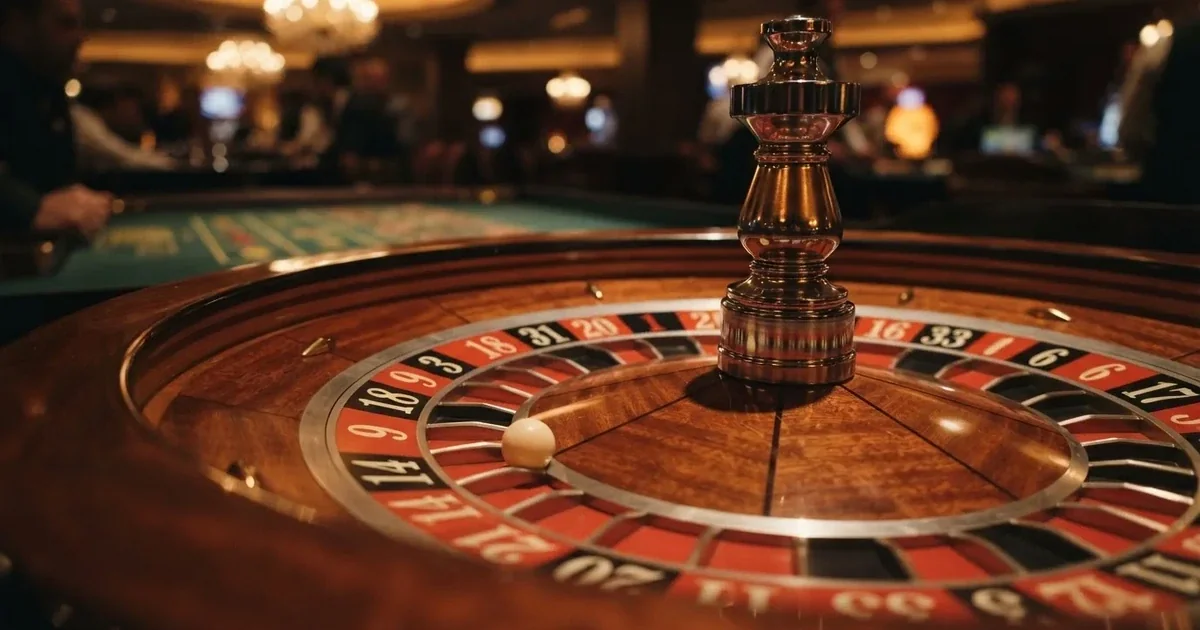
An Australian resident who wants to play live roulette online with English-speaking dealers is, before the first spin, staring at a prohibition. The Interactive Gambling Act 2001, as tightened by the Interactive Gambling Amendment Act 2017, makes it an offence to provide online casino games — a streamed roulette wheel included — to a person physically in Australia. No state or territory licenses the activity. The dealer on the camera may speak fluent English, the table may look like Crown Melbourne at two in the morning, and the software underneath may be perfectly honest; none of that changes what the law says about who is allowed to offer it. The page that follows is a description of what is on offer, what regulators have done about it, and what the wheel itself charges — measured against the rules, not the marketing.
- The Eleven Brands the ACMA Has Warned Over This Category
- What a Live Roulette Table Is, and What It Costs
- The Legal Position, Plainly
- Crypto, PayID, and the Speed of Getting Money Out
- Game Providers and What the Live Table Actually Looks Like
- How Fast the ACMA Closes Down a Brand
- The Brands, One by One
- A Closer Read of What the Wheel Costs
- What’s Coming Down the Regulatory Track
- Brief Notes on Other Games Found at the Same Brands
- What an Australian Resident Should Actually Do
- Frequently Asked Questions
The Eleven Brands the ACMA Has Warned Over This Category
The brands below are not a ranking. Each one appears because the Australian Communications and Media Authority, the body that administers the Interactive Gambling Act, issued a formal warning naming the operator and the website. The reason a brand sits near the top of the table rather than near the bottom is the date of that warning, not the quality of the product. Reading this as a leaderboard misses what it actually is: a register of named enforcement actions.
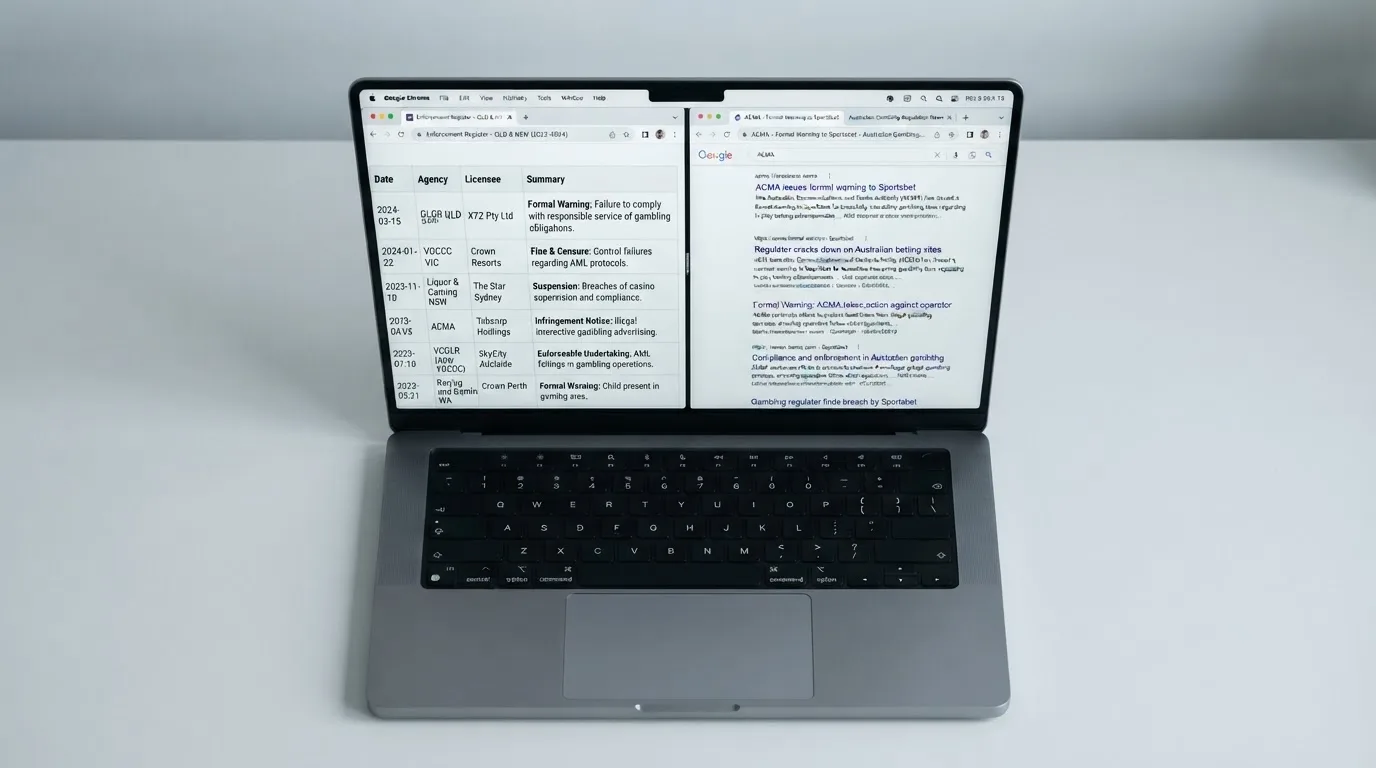
| Brand | ACMA action and date | Operator named by the ACMA | Subject support |
|---|---|---|---|
| RocketPlay | Formal warning, March 2026 | Pulsup Ltd (the RocketPlay website); earlier Dama N.V., May 2022 | — |
| Level Up Casino | Formal warning, May 2022 | Dama N.V. | Live dealer listings reference the brand |
| Woo Casino | Formal warning, March 2025 | Dama N.V. | — |
| Spirit Casino | Formal warning, May 2025 | Dama N.V. | — |
| National Casino | Formal warning, July 2025 | Consolutetish S.R.L. | Brand appears in live-dealer provider listings |
| Bizzo Casino | Formal warning, July 2025; earlier 2022 | Consolutetish S.R.L.; earlier TechSolutions (CY) Group N.V. and TechSolutions Group N.V. | — |
| Ignition Casino | Formal warning, July 2025 | Bamboo Media | — |
| Instant Casino | Formal warning, February 2025 | EOD Code SRL | — |
| Jackbit | Formal warning, April 2026 | Ryker B.V. (Jackbit and CasinOK) | — |
| Casino Intense | Formal warning, April 2025 | Sterplay Holding Ltd | — |
| Sky Crown | Formal warning, September 2022 | Hollycorn N.V. (Sky Crown and Blue Leo) | — |
The “Operator named by the ACMA” column matters more than it looks. Several brands on this list are run by the same parent company. Dama N.V. alone accounts for four of the eleven warnings — RocketPlay, Level Up Casino, Woo Casino and Spirit Casino — at different points over four years. That tells the reader something a per-brand review cannot: enforcement lands on a company more often than it lands on a website, because the operator simply re-brands and re-launches under a new front once the formal warning arrives. The cost of that cycle is paid by anyone who deposits on the next brand before the next warning catches up.
The “Subject support” column carries what live-dealer provider listings report about each brand and no more. Where the entry is an em dash, no provider listing was located that places the brand in this category; the absence is the information, and an honest reader treats it that way. Where the entry names a listing source, the brand was found on that listing page; that is not a recommendation, an endorsement, or a check by the provider that the brand’s licence is valid — it is the listings saying the brand exists on their roster.
What a Live Roulette Table Is, and What It Costs
A live roulette table streamed to an Australian viewer is, mechanically, the same game as one in a physical casino: a wheel, a ball, a dealer who takes bets and pays out wins. The difference is plumbing. A camera, a game-control unit attached to the wheel, an optical scanner that reads where the ball settles, and a piece of software that overlays the betting grid on the player’s screen. The dealer speaks because a human is dealing, not because the software needs a voice — remove the dealer and the wheel still spins, the ball still drops, the bet still resolves.
That single-zero (European) wheel runs 37 pockets, 1 through 36 plus a single zero, and charges the house 2.70% on every bet except the five-number combinations a casino sometimes offers. The double-zero (American) wheel adds a second zero, gives the wheel 38 pockets, and lifts the house edge to 5.26% — almost exactly double. A rarer variant, the triple-zero wheel the Las Vegas Strip has been pushing into off-Strip properties since the late 2010s, runs 39 pockets (0, 00, 000, 1-36) and charges 7.69%. Every dollar of that edge is taken off the player over time; a player cannot out-bet it, cannot out-think it, and cannot spot a pattern it leaves behind.
Some European tables run an “en prison” or “la partage” rule on the even-money outside bets. When the ball lands on zero, an en prison stake is held over for one more spin; la partage returns half the stake immediately. Both rules cut the effective house edge on those particular bets, leaving the 2.70% number on everything else. A reader who sees “French roulette” advertised needs to check whether either rule is actually in play — many tables claim the name without enforcing it.
Betting patterns built on previous spins do not work. A roulette wheel has no memory: each spin is independent of the one before it, and the gambler’s fallacy — the belief that a black streak makes red “due” — has no mechanical analogue on a balanced wheel. What a live stream adds is the appearance of evidence: the dealer announces the last few results, the on-screen display lists the last ten or twenty, and the human brain, hard-wired to find patterns, builds a story out of noise. The fixed loss limit matters more than reading the trend. A punter who decides in advance how much they will lose and stops there is doing what no betting system can do for them.
The Legal Position, Plainly
The Interactive Gambling Act 2001 is the central piece. The 2017 amendment closed the loopholes the original Act left open and brought the prohibitions into their current shape. The result, for the purposes of this page: it is an offence to provide an online casino game to a person in Australia. The list of prohibited games covers slots, table games, and live-dealer table games with equal clarity. Wagering on sports and racing placed before the event is permitted; lotteries and keno are permitted; everything else is not.
No state or territory issues an Australian licence for online casino play. The Northern Territory Racing and Wagering Commission licences 52 online bookmakers, including Sportsbet, Bet365 and Ladbrokes — these are wagering operators, not casino operators, and the distinction is structural, not bureaucratic. The Commission has no full-time staff and meets monthly in Darwin; its role is to license the form of gambling the IGA permits, not the form it prohibits. A casino licence issued in Malta, Curaçao or any other offshore jurisdiction is a foreign document with no effect on whether the site can lawfully target Australians.
The individual player is not the target of the Act. Enforcement runs at the provider: the ACMA investigates, issues formal warnings, and can direct Australian internet service providers to block infringing websites at the network level. As of June 2026, the ACMA had asked for 1,751 websites to be blocked since the first blocking request in November 2019, and more than 230 unlicensed services had withdrawn from the Australian market since enforcement was strengthened in 2017. In a single round reported that month, the ACMA asked ISPs to block another twelve sites — 7Signs, ChromaBet, Donbet, Duospin, Freshbet, Slots Gem, Jacks Club, Lucky Start, Pointsbetz, Spinrise, Vinyl Casino and Wildsino. The pace has not slowed.
What an Australian player loses by using an offshore site is not the bet itself; it is the safety net that comes with a licensed wagering account. A complaint to the ACMA carries no weight with a Curaçao-licensed operator. A withdrawal refused, a bonus term altered after deposit, a game found to be running a different RTP than advertised — these have no Australian forum of resolution. The site can also be blocked with a balance still on it, in which case the operator holds the money and the player holds the loss. That is the structural cost of the live-dealer product for an Australian resident, before any wheel has spun.
H2 Gambling Capital’s 2025 estimate is that Australians lose about A$3.9 billion a year to illegal gambling sites, and that the share of gambling going through legal channels fell from 74% in 2021 to 64%. The dollar figure is a reminder that the prohibition is being breached at industrial scale, not by a few outliers; the share figure is the trend, and the trend is the wrong direction for anyone who believes a regulatory floor protects consumers.
Responsible Gambling and the Limits of What Offshore Sites Offer
BetStop — the National Self-Exclusion Register — has been live since August 2023 and binds every Australian-licensed online and phone wagering service. An offshore casino is not connected to it. Self-excluding on BetStop stops a player from opening new accounts with licensed Australian bookmakers and from logging into existing ones; it does not stop a deposit on a Curaçao-licensed live roulette site, because that site has no integration with the register and no obligation to honour it.
The National Gambling Helpline — 1800 858 858 — is free, available 24/7 and offers chat through Gambling Help Online. Both are funded for Australian residents regardless of where they have been playing. A punter who has been gambling offshore and wants to stop has the same access to counselling and to self-exclusion as one who has been gambling with a licensed bookmaker; what changes is that the offshore site will not enforce any of it.
Watching a wheel spin in real time, with a real dealer, has a psychological pull that an RNG-driven slot does not. The dealer becomes a familiar face. The chat sidebar — where players type messages the dealer reads aloud — creates the feeling of a community. A punter who notices themselves chasing losses across two or three sessions in a row, or who finds themselves depositing more than they planned, has crossed a line that no bonus term draws for them. The fixed loss limit and the session time limit are the two tools that work; the betting system is not one of them.
Crypto, PayID, and the Speed of Getting Money Out
A bitcoin-funded live roulette table is, mechanically, the same wheel as a card-funded one. The change is at the cashier: the player buys bitcoin (or another cryptocurrency), sends it to the casino’s wallet address, and the balance appears in the account. The wheel does not know or care which rail the money travelled on. A player who chooses bitcoin for privacy reasons should understand that the blockchain is a public ledger — every transaction visible, permanently, to anyone with the address — and that the privacy gain over a card payment is smaller than the marketing suggests.
PayID works in the other direction. It is Australia’s real-time payment overlay, sitting on top of the New Payments Platform, and it moves money between bank accounts in seconds using a phone number, email address or ABN as the identifier rather than a BSB and account number. It is not, by itself, a casino deposit method — most offshore casinos do not offer PayID as a deposit option because doing so would tie the transaction back to an Australian bank account in a way that complicates the operator’s posture. The deposit routes an offshore live roulette site is most likely to offer are cards (where the card-issuer’s policies permit), e-wallets, and cryptocurrency. The withdrawal routes are slower than the deposit routes, always.
The licensed wagering market in Australia took a different route after 11 June 2024: credit cards, credit-related products and digital currency were banned as payment methods for licensed online wagering, with penalties up to A$247,500 for operators. The legal deposit routes for a licensed account are debit card, bank transfer, PayID/Osko and BPAY. An offshore site accepting credit cards or cryptocurrency is operating outside the Australian rules by virtue of accepting the payment, and a player using those methods at an offshore site is using a method an Australian licensee would refuse.
A live roulette payout, once requested, goes through the same review process as any other casino withdrawal. The review checks identity, checks for bonus abuse, checks the payment method, and only then releases the funds. Where the read of the research differs from the marketing claim is on time. A site promising “instant withdrawals” is describing the period after the review finishes, not the review itself; the review can take hours, sometimes longer, and the marketing copy skips it. A player who values a fast payout should look at the withdrawal time AFTER a successful review, and at the conditions that can put the review back to the start (a bonus with a wagering requirement not yet cleared, a change of payment method mid-session, a verification document the site then asks for again).
Game Providers and What the Live Table Actually Looks Like
A live roulette table offered by any of the brands in the ACMA’s register is, almost always, a third-party product. Evolution Gaming, Pragmatic Play Live, Playtech Live, Vivo Gaming, Ezugi and a handful of smaller studios license their tables to operators under a revenue-share arrangement. The dealer works for the studio, not for the casino; the casino brands the lobby and takes a margin on the bets placed. That arrangement is why the same dealer — the same face, the same accent — shows up across multiple brands: the dealer is the studio’s employee, scheduled into a stream that multiple operators buy.
English-speaking dealers are a marketing point rather than a structural one. The studios run multilingual teams. Evolution’s studios in Latvia, Malta and Romania hire English-speaking presenters; Pragmatic Play’s Bucharest and Belgrade studios do the same. A player who selects “English-speaking dealer” is filtering the studio’s rota for a shift where the presenter on that table happens to be an English speaker. The wheel, the odds, the house edge, and the licensing regime are unchanged by the filter.
The table a player ends up at is one of three variants, plus a long tail of novelty games. The three are single-zero (European), double-zero (American) and triple-zero (the Strip variant the US regional casinos adopted). House edges, in order: 2.70%, 5.26%, 7.69%. Side bets — usually branded, sometimes themed to the operator — sit on top of these and almost always carry a worse edge than the main game; some are over 10%. A player who skips the side bets and plays a single-zero wheel with even-money bets under en prison or la partage rules has made the best mechanical choice the game offers.
The novelty games — Lightning Roulette, Immersive Roulette, Double Ball Roulette, slingshot roulette without a dealer at all — are re-skinned versions of the same wheel with side bets layered on. Lightning Roulette adds multipliers to straight-up wins but charges the same base game underneath; the multiplier comes from a separate RNG draw. Double Ball Roulette uses two balls on one wheel and pays both if they land on numbers in the bet, but the house edge on most bets is higher than single-ball. The marketing hook is visual, and the house edge tells the mechanical story.
How Fast the ACMA Closes Down a Brand
The arithmetic the page can do is on enforcement pace. Between November 2019 and June 2026 — roughly 79 months — the ACMA asked ISPs to block a cumulative 1,751 illegal gambling and affiliate websites. That works out to about 22 sites per month, or one every 33 hours, every month, for six and a half years. The rate is not slowing; the most recent published round blocked twelve in a single announcement.
What the pace means for a punter is that any brand an Australian resident is considering today is, statistically, on a timer. The site is unlikely to be the brand that survives to the end of the year. Some are renamed rather than blocked; the operator simply re-launches under a new front and a fresh URL, the parent company unchanged. Some withdraw voluntarily when a formal warning arrives, because withdrawal is cheaper than continued operation in a market where ISPs are about to be told to refuse service. Either way, the player who has a balance on the day the block lands has, in practical terms, lost access to the cashier until the operator chooses to pay out — and an offshore operator with no Australian licence has no obligation, and no incentive beyond reputation, to do so.
The blocking figure is also a number that has to be read carefully. The 1,751 includes affiliate marketing sites as well as the casino and sportsbook front-ends themselves. Affiliate sites do not take bets; they advertise them. They are on the list because they are part of the same supply chain, and blocking them reduces the funnel of new players reaching the front-end brands. A reader who treats the number as “1,751 casinos shut down” overstates the case; a reader who treats it as “the ACMA has a working, multi-year enforcement programme” reads it correctly.
The Brands, One by One
What follows is not a ranking and not a recommendation. Each brand is described because the ACMA named it, and the description covers what the regulator’s warning covers, what the brand’s own marketing claims, and what a player should weigh before opening an account with any of them.
RocketPlay
The ACMA warned Pulsup Ltd over the RocketPlay website in March 2026, on top of an earlier 2022 warning to Dama N.V. for the same brand under earlier ownership. Two warnings across four years for a brand that changed hands in between tells a reader how the cycle works: the operator passes the brand to a new corporate vehicle, the new vehicle takes it live, the ACMA warns the new vehicle, and the cycle restarts. The cost to a player is that “first deposit bonus” terms from a brand with a warning history are likely to be rewritten before the player reaches the withdrawal screen.
Level Up Casino
The May 2022 formal warning to Dama N.V. is the ACMA’s own record for this brand. No second warning has been published against Level Up Casino under a different operator, which can mean either that Dama N.V. has taken the brand off the Australian market or that the warning has simply not yet been re-issued under whatever front currently hosts it. Live-dealer provider listings reference Level Up Casino, which places it on the studios’ rosters as a real-money brand. That is not a check on the licensing — it is the listing saying the brand is on the books.
Woo Casino
The ACMA’s March 2025 warning to Dama N.V. named Woo Casino specifically, three years after the same operator was warned over a different set of brands. Dama N.V. is the most-named parent on this list — RocketPlay, Level Up Casino, Woo Casino and Spirit Casino are all theirs — and the Woo Casino warning is a reminder that a single corporate vehicle accumulates formal warnings faster than a casual reader would expect. The product on the page is the same live-dealer roulette as every other Dama brand; what differs is the date of the next regulatory action.
Spirit Casino
The May 2025 warning is Dama N.V.’s second in three months (Woo Casino came first). Two warnings in a quarter, both over casino brands, both naming the same operator, is a rate that gets an operator on the ACMA’s closer-watch list and shortens the time before a blocking request follows. A player depositing on Spirit Casino in the second half of 2026 is, on the ACMA’s own pattern, depositing on a brand whose Australian availability is closer to its end than to its beginning.
National Casino
The July 2025 warning named Consolutetish S.R.L., which is a different operator vehicle from Dama N.V. Live-dealer provider listings reference National Casino as a real-money brand on their books, which means the live-dealer lobby is real even if the licence to offer it to Australians is not. A player who lands on the brand from a provider’s listing page is being routed from a verified listing to an unlicensed operator — the gap between those two facts is the gap a regulator fills with a warning.
Bizzo Casino
Two warnings and one operator. The 2022 warning went to TechSolutions (CY) Group Limited and TechSolutions Group N.V.; the July 2025 warning went to Consolutetish S.R.L. The change of named operator between warnings suggests the brand has moved through two corporate vehicles in three years — a rate of operator turnover that should give any punter pause before a deposit. The ACMA’s patience with brand reshuffling has limits; when those limits are reached, the next step is a blocking request, not a third warning.
Ignition Casino
The July 2025 warning named Bamboo Media, an operator vehicle that has not previously appeared on this list. Ignition Casino is a brand Australian players will have heard of — it has long been one of the more heavily advertised offshore brands targeting Australian traffic — and the formal warning closes a chapter the brand’s marketing worked hard to keep open. The product is the standard live-dealer lobby; the licence is not.
Instant Casino
The February 2025 warning named EOD Code SRL, again a fresh operator vehicle on the ACMA’s list. The brand sits in the same pattern as several others on this list: a real-money operator with a real live-dealer lobby, no Australian licence, and a regulatory action that puts the cost of choosing it on the player.
Jackbit
The April 2026 warning named Ryker B.V., and the same warning covered a sister brand, CasinOK, that does not appear on this list. Naming two brands in one warning is the ACMA’s way of getting two regulatory outputs from one investigation; it also tells the reader that the brands are run by the same operator and share infrastructure. A player who finds Jackbit blocked and CasinOK still reachable has not found a workaround; they have found the same operator under a different URL.
Casino Intense
The April 2025 warning named Sterplay Holding Ltd. Casino Intense has historically been one of the more aggressive advertisers to Australian traffic, and the warning is the ACMA’s published record of that activity. Live-dealer provider listings reference the brand, meaning the live-dealer product is real; the licence to offer it to Australians is not.
Sky Crown
The September 2022 warning to Hollycorn N.V. covered two of the operator’s brands — Sky Crown and Blue Leo — in one notice. Hollycorn N.V. has been one of the more frequently named operators in the ACMA’s register over the years. A Sky Crown account today is, by the regulator’s own count, on an operator that has been on notice for nearly four years.
A Closer Read of What the Wheel Costs
The arithmetic the page can offer is on the wheel, not on the offer. A single-zero roulette wheel at 2.70% house edge means that, on average, A$100 wagered returns A$97.30 over the long run. The long run, for a punter, is shorter than the marketing implies; for a player who bets A$10 a spin on a European wheel, the expected loss is A$0.27 per spin, A$16.20 per hour at the table’s natural pace (60 spins an hour for an online stream is the upper bound; live-dealer tables average closer to 50). An American wheel at 5.26% doubles those numbers.
The arithmetic does not tell a player whether they will win or lose on a given session. It tells them what the table costs over many sessions, which is what the house edge is — the price of admission to the game, repeated on every spin. A player who treats the house edge as a tax on time, rather than as a fee on a bet, has read the number correctly.
What’s Coming Down the Regulatory Track
The Interactive Gambling Amendment (Gambling Reform) Bill 2026 passed Parliament on 19 August 2026. Its advertising and inducement measures commence on 1 January 2027 — a future date that is not yet law on a 2026 page. The effect on live roulette with English-speaking dealers, when those measures commence, will be felt in the marketing: inducements to open an account, in any form, will be regulated more tightly. The mechanism for offering the games themselves is unchanged by this Bill; the prohibition pre-dates it and continues alongside it.
Brief Notes on Other Games Found at the Same Brands
A player who lands on one of these brands for the live roulette product will also find baccarat, blackjack and craps in the lobby. The house edges on those games are different and worth knowing.
Baccarat runs at 1.06% on the Banker bet and 1.24% on the Player bet, both better than roulette’s single-zero edge; the Tie bet runs 14.36%, the worst of the common table-game bets by a margin. Punto banco, the variant most played today, was developed in Havana during the 1940s and runs from a six- or eight-deck shoe with the casino banking both hands under fixed drawing rules. Chemin de fer, the older French variant, lets players take turns banking; it is rarer in live-dealer lobbies than punto banco.
Blackjack, played under optimal strategy, runs about 0.28% under liberal Las Vegas Strip rules and about 0.43% under Atlantic City rules — the lowest house edge on the table, conditional on the player actually playing the basic strategy correctly. The temptation at a live-dealer blackjack table is to vary strategy based on the dealer’s face card; doing so is what raises the house edge above the 0.28% figure. The “basic strategy” chart is freely available and worth memorising for anyone playing the game seriously.
Craps is less common in live-dealer lobbies than in physical casinos; the Pass/Come bet runs 1.41%, Don’t Pass/Don’t Come runs 1.36%, and Any Craps runs 11.11%. The game looks intimidating because of the layout, not because the bets are difficult — there are essentially two bets a casual player needs (Pass Line with full odds, or Don’t Pass with full odds), and the rest of the table is for high-volume shooters.
These edges are mechanical facts about the games, not about the operators offering them. They apply equally to a Crown Melbourne table and to a Curaçao-licensed live stream. The player choosing which game to play is making a different decision from the player choosing which operator to play with, and the two decisions should be made separately.
What an Australian Resident Should Actually Do
A player who wants the live-dealer experience in a regulated environment has, in 2026, no Australian-licensed option. Crown Melbourne runs live baccarat, blackjack and roulette in physical premises under the Victorian Gambling and Casino Control Commission; it does not stream those tables online to Australians. The Northern Territory Racing and Wagering Commission licenses wagering on sports and racing, not casino games. The Australian-licensed market for the product this page describes does not exist.
A player who decides to use an offshore site anyway accepts the costs the ACMA’s enforcement record makes plain: the site may be blocked with a balance on it; the operator has no Australian regulatory obligation to pay out; the operator’s identity may have changed since the last ACMA warning, with no public record of the change; and BetStop does not cover the account. The legal position targets the operator, not the player, but the practical losses are borne by the player. None of this is a counsel of despair; it is what the ACMA’s published enforcement record over the last six and a half years shows happening, repeatedly, to the brands on the list above.
A player who has been gambling on offshore live roulette and wants to stop has the same access to help as one who has been gambling with a licensed bookmaker. The National Gambling Helpline — 1800 858 858 — is free, 24/7 and routes to Gambling Help Online for chat. BetStop binds every Australian-licensed wagering service, which means a self-excluded player cannot reach licensed bookmaker sites either. The combination is the strongest self-exclusion regime available in the Australian market; it is incomplete because offshore sites are outside it, and that incompleteness is a known limitation, not a marketing gap to be filled.
Frequently Asked Questions
Is it legal to play live roulette for real money at an online casino in Australia?
No. The Interactive Gambling Act 2001, as amended in 2017, makes it an offence to provide online casino games — including live-dealer roulette — to a person in Australia. No Australian state or territory licenses the activity. The individual player is not the target of enforcement; the operator is. The ACMA can direct Australian ISPs to block the site, which has happened to 1,751 gambling and affiliate websites since November 2019.
What is the practical difference between a single-zero and a double-zero roulette wheel?
The single-zero (European) wheel has 37 pockets and a house edge of 2.70%; the double-zero (American) wheel has 38 pockets and a house edge of 5.26%. The extra zero does not change any payout — a straight-up number still pays 35 to 1 — but it adds a pocket the ball can land in that is not a player win, which is the entire mechanism by which the house edge builds. The mechanical difference is one pocket; the financial difference, over many spins, is roughly double.
Why might a live roulette table specifically advertise English-speaking dealers?
The studios that supply live-dealer tables to casino brands run multilingual teams across their studios in Europe and Latin America. Filtering for English-speaking dealers is selecting a shift where the presenter on that table happens to be an English speaker. The wheel, the odds, the house edge and the licensing regime are unchanged. It is a presentation preference, not a structural one.
Does a bitcoin-funded live roulette table use a different wheel to a card-funded one?
No. The wheel is the same physical object in the same studio, run by the same dealer. The change is at the cashier: the player buys bitcoin, sends it to the casino’s wallet address, and the balance appears in the account. The blockchain records the transaction publicly; the privacy gain over a card payment is smaller than the marketing suggests. The game itself does not know or care which rail the money travelled on.
Can betting patterns based on previous spins improve the odds on a live roulette table?
No. A roulette wheel has no memory; each spin is independent of the one before it. Reading the last ten results on the on-screen display and betting against the trend is the gambler’s fallacy applied to a game that does not remember. The fixed loss limit — decided before the session starts — is the only tool that works. The betting system sold alongside a roulette table does not change the house edge and does not change the long-run outcome.
How is a live roulette payout processed compared with a slot machine payout?
The internal processing is identical — both go through the casino cashier’s review, which checks identity, bonus status, payment method and any verification documents. A live roulette payout does not move faster than a slot payout; the marketing claim of “instant withdrawals” describes the period after the review finishes, not the review itself. Offshore sites accepting Australian players may also add a currency-conversion step, which neither the roulette table nor the slot machine affects but which the cashier will.