
PayID casinos in Australia 2026: which offshore sites take it, and what the Interactive Gambling Act does next
Data current as of 29 October 2026, checked against the Australian Communications and Media Authority’s register of formal warnings and blocking actions.
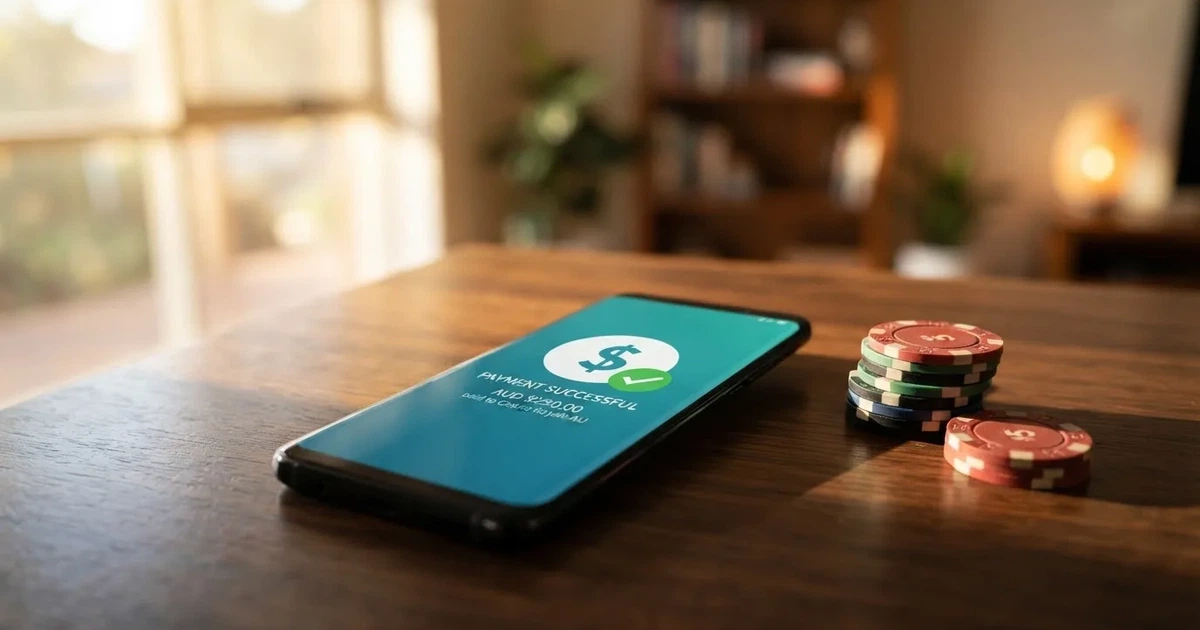
A punter tapping PayID into a casino cashier in 2026 is doing something that looks ordinary and is not. The bank transfer clears in seconds, the funds land in the casino account, and the wagering starts — but the site accepting it is, almost without exception, an offshore operator the Australian Communications and Media Authority has already told to stop. The Interactive Gambling Act 2001 does not bend for a deposit method, and ACMA’s enforcement record in 2026 shows what that looks like in practice. This page is about the choice behind that transfer: which offshore sites take PayID, what the IGA does to them, and what changes for a player the moment a bank transfer crosses the line.
- What the Interactive Gambling Act 2001 does to a PayID casino
- ACMA enforcement: the blocking record and what it adds up to
- Responsible play: what an offshore site does not connect a punter to
- PayID at the cashier: how a transfer actually clears
- Fees, minimums and the small-print cluster
- The offshore shelf at a glance: which brands accept PayID, and on what authority
- How to read the table against the law
- The bank-side filter that does and does not catch a PayID transfer
- What a punter should do before sending a transfer
- What to do if a PayID deposit does not appear
- Frequently asked questions
What the Interactive Gambling Act 2001 does to a PayID casino
The starting point is blunt. Under the Interactive Gambling Act 2001, as tightened by the Interactive Gambling Amendment Act 2017, it is an offence to provide online casino games, online pokies or in-play betting to a person physically in Australia. No state or territory issues a licence for them. The Act names prohibited interactive gambling service and the provider carries the criminal exposure — the individual punter is not prosecuted, but is also not protected by anything Australian the moment an offshore site is involved.
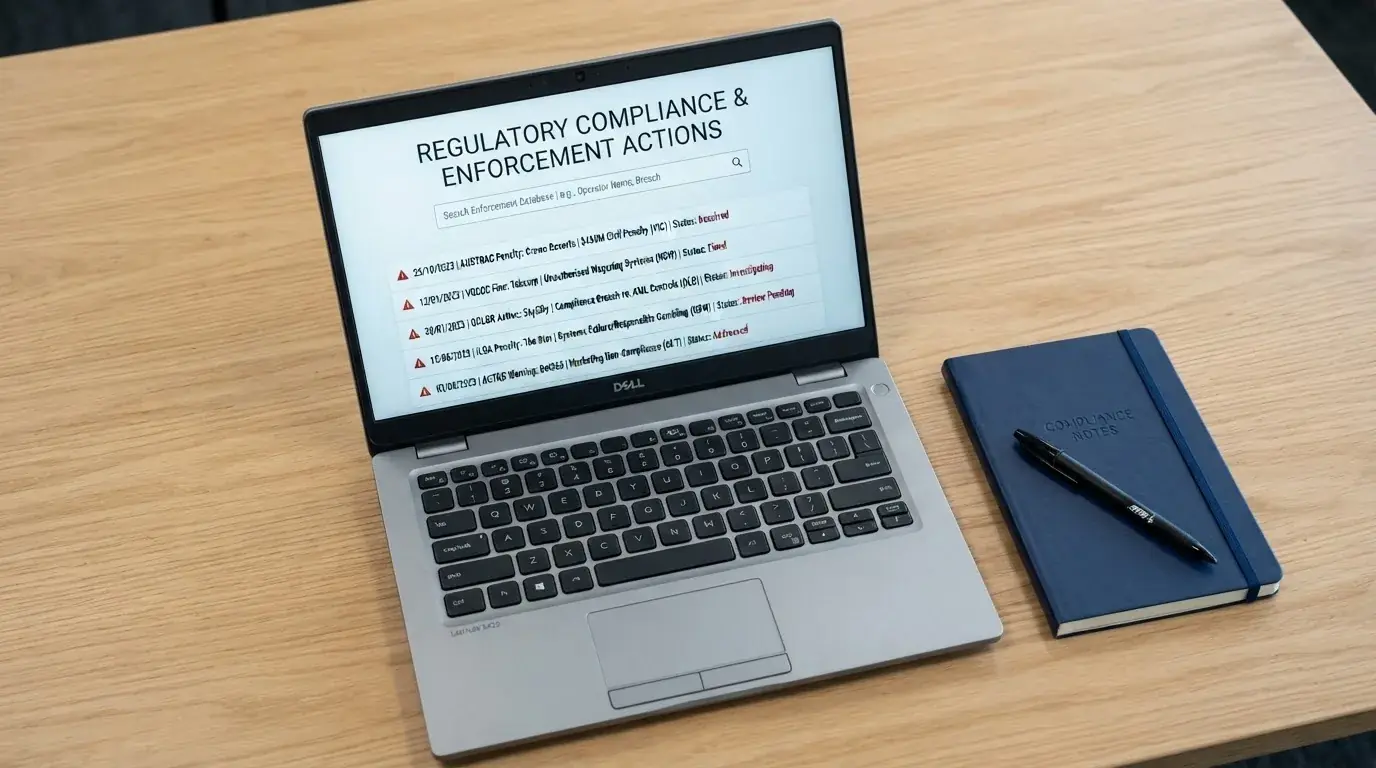
What is licensable is wagering on races and sporting events placed before the event, lotteries and keno — in practice licensed by the Northern Territory Racing and Wagering Commission, which regulates 52 of Australia’s online bookmakers including Sportsbet, Bet365 and Ladbrokes from a single monthly meeting in Darwin and no full-time staff. A punter looking for a licensed Australian product is looking at sports and racing, not casino.
The deposit rules on those licensed wagering services were sharpened from 11 June 2024. Credit cards, credit-related products and digital currency are banned as payment, with penalties for operators reaching A$247,500. The legal deposit routes are debit card, bank transfer, PayID and Osko, and BPAY. PayID is not the problem; the credit ban is the shape of the legal lane. A site asking for a credit card or a crypto deposit on a licensed Australian wagering service is operating outside its own rules; an offshore casino is operating outside the IGA.
The 2026 reform sits in this frame. The Interactive Gambling Amendment (Gambling Reform) Bill 2026 passed Parliament on 19 August 2026, with its advertising and inducement measures commencing on 1 January 2027. It is law with a start date, not yet in force on a page read in 2026. The relevant fact for a 2026 reader is the IGA as it stands, the credit ban in place, and the ACMA’s enforcement record over the offshore shelf.
ACMA enforcement: the blocking record and what it adds up to
The Australian Communications and Media Authority does not need a conviction to stop a site. It investigates, issues formal warnings, and directs Australian internet service providers to block illegal services at the network level. A blocked site still has a balance on it for any punter who put one there.

According to the ACMA, as reported in June 2026, a total of 1,751 illegal gambling and affiliate marketing websites had been blocked since the first blocking request in issued in November 2019. More than 230 unlicensed gambling services had left the Australian market since enforcement was strengthened in 2017. A single round, reported on 26 June 2026, asked Australian ISPs to block 12 more sites in one go: 7Signs, ChromaBet, Donbet, Duospin, Freshbet, Slots Gem, Jacks Club, Lucky Start, Pointsbetz.com, Spinrise, Vinyl Casino and Wildsino.
The blocking rate over the lifetime of the regime is a clear indicator of the ACMA’s recent intensity. From the first blocking request in November 2019 to the June 2026 round, the ACMA has moved from zero to 1,751 blocked sites — roughly 265 sites per year on average across the seven-and-a-bit years the regime has been running, with the rate visibly higher in the last two reporting cycles as the ACMA has scaled its enforcement. That is a band, not a single figure: the early years ran more slowly, the recent rounds faster, and a punter reading this in 2026 should treat the rate as the lower bound of what the ACMA is now doing rather than the long-run average. The blocking request itself is what tips a site offline — once an ISP receives it, the site stops resolving for Australian customers within hours.
Blocking is only one of three tools. The ACMA also issues formal warnings naming the operator behind a brand, and it accepts enforceable undertakings. The formal warnings are the public record a punter can read before sending a bank transfer. The table below covers every brand in the ACMA’s most recent formal-warning set over casino-style services; a row is one brand, the operator behind it, and the date the warning was issued.
| Brand | ACMA action and date | Operator named by the ACMA | PayID support reported |
|---|---|---|---|
| Rocketplay.com.au | Formal warning, March 2026 | Pulsup Ltd | — |
| Level Up Casino | Formal warning, May 2022 | Dama N.V. | Westpac listings only |
| Woo Casino | Formal warning, March 2025 | Dama N.V. | — |
| Spirit Casino | Formal warning, May 2025 | Dama N.V. | — |
| National Casino | Formal warning, July 2025 | Consolutetish S.R.L. | AUSTRAC and other listings only |
| Bizzo Casino | Formal warning, July 2025; prior warning 2022 | Consolutetish S.R.L. (2025); TechSolutions Group (2022) | — |
| Ignition Casino | Formal warning, July 2025 | Bamboo Media | — |
| Instant Casino | Formal warning, February 2025 | EOD Code SRL | Ecopayz and PayID listings only |
| Jackbit | Formal warning, April 2026 | Ryker B.V. | — |
| Casino Intense | Formal warning, April 2025 | Sterplay Holding Ltd | AUSTRAC and other listings only |
| Sky Crown | Formal warning, September 2022 | Hollycorn N.V. | — |
The pattern is not subtle. Eleven brands in the table, every one of them named for offering prohibited interactive gambling services to Australians, ten of them operated by companies with no Australian footprint. The May 2022 warning to Dama N.V. covered six brands in one go; the company’s reappearance over Woo Casino in March 2025 and Spirit Casino in May 2025 is the ACMA telling the same operator twice that the same conduct is still happening. Bizzo Casino carries a second formal warning to a different corporate entity — the 2022 warning named TechSolutions, the 2025 warning named Consolutetish — which means the brand has changed hands and the conduct has not.
What the ACMA column reads as a row at a time is a pattern of repeat offending by corporate groups. A punter looking at the table and seeing Dama N.V. in three rows is seeing the same operator being told three times across four years.
Responsible play: what an offshore site does not connect a punter to
An Australian punter who excludes themselves from licensed wagering does so through BetStop, the National Self-Exclusion Register, live since August 2023. BetStop binds every Australian-licensed online and phone wagering service. An offshore casino is not a member of BetStop. A self-exclusion entered there does not propagate to a PayID-accepting offshore site, because that site has no obligation to honour it and no technical connection to the register.
Limits and blocks that work at licensed operators also do not necessarily carry across. Westpac’s gambling block works at the card level: it refuses authorisation of transactions registered under the merchant category code Betting/Casino Gambling on eligible personal credit and debit cards. ANZ’s gambling transaction block, activated in the ANZ app, also blocks gambling transactions made through a digital wallet such as Apple Pay on an eligible card — not just the physical card. Once turned on, removing ANZ’s block requires a 48-hour waiting period, and the bank itself warns that not all gambling transactions will be blocked and some non-gambling transactions might be blocked in error. These are tools designed for licensed wagering. PayID transfers are not card transactions. A direct bank transfer addressed to a PayID sits on the New Payments Platform and does not carry the merchant category code that a card transaction does; the bank-side filters that work for cards are not the filters that work for PayID.
The help lines that exist are for Australian residents dealing with gambling harm, and they are not selective about which platform created the harm. The National Gambling Helpline is 1800 858 858, free, 24/7, with chat at Gambling Help Online. A punter reading this page and recognising their own behaviour in it can call from anywhere in Australia, on any product, on any device.
The consumer protection the IGA does not extend to offshore operators is real. An Australian punter at an offshore site has no Australian complaints body, no Australian recourse if a withdrawal is refused, and no guarantee that a balance will be retrievable once the ACMA asks an ISP to block the site. The block lands within hours; the balance, if any, sits where the operator decides to leave it.
PayID at the cashier: how a transfer actually clears
PayID is an easy-to-remember identifier — a mobile number, an email address, an ABN or an Organisation Identifier — linked to a bank account. It is operated by Australian Payments Plus, the domestic payments provider, and is offered by more than 100 Australian financial institutions, already built into their online banking. As of April 2025, more than 25 million PayIDs were registered in Australia.
PayID runs on Australia’s New Payments Platform, which launched in February 2018 and is regulated and overseen by the Reserve Bank of Australia. The RBA separately owns and operates the Fast Settlement Service that settles NPP transactions individually in close to real time, 24 hours a day. With Osko, a bank transfer between participating Australian banks arrives in under a minute, 24/7 including weekends, whether it is addressed to a BSB and account number or to a PayID. PayID is, technically, the fastest way a punter can move money into an Australian bank account — and that is why offshore casinos expose it.
When paying to a PayID, the payer is shown the name linked to the identifier before sending the transfer. That name check is the safety feature PayID was built around: a punter sees the account holder’s name before authorising the transfer, the moment a typo or a wrong number would otherwise have moved the money. PayID itself will never contact a customer directly; emails or text messages claiming to be from PayID are a scam, and PayID never asks anyone to send money in order to receive money or to “upgrade” an account.
The name check is what makes PayID useful to a scam site as well. AP+ warns directly: if a punter is asked to transfer funds to a PayID on an illegal gambling site, it is almost certainly a scambling website — AP+’s own term for an illegal online gambling platform advertised on social media and messaging apps that tricks people into gambling on a scam site. AP+ advises anyone who thinks they have been scambled to contact their financial institution.
A withdrawal at a PayID-accepting offshore site does not move as fast as a deposit. The deposit is the easy direction: an Australian account sends to the casino’s PayID, the casino credits the account once its own internal checks complete, and the punter is wagering. The withdrawal requires the casino to release funds to a PayID provided by the punter, and that release still needs the casino’s own manual checks to finish. The settlement is near-instant once the casino pushes it — that is the Osko leg — but the casino holds the timeline. A punter looking for the difference between PayID and a card withdrawal is comparing two queues, not two rails: both move at card-scheme or NPP speed once the operator releases them, and the operator controls when the release happens.
Fees, minimums and the small-print cluster
A direct PayID transfer between Australian bank accounts does not carry a fee on either side — that is part of the design of the New Payments Platform. The question is what the casino does at its end. Some offshore sites publish a minimum deposit figure and a fee structure in their cashier terms; others publish neither, and the punter learns the figure from a declined deposit. The research base for this page does not carry minimums or fees from the operator’s own terms page for any brand in the table, so the honest reading is that the minimum is whatever the cashier accepts when a punter tries it, and that a punter who needs a hard number should test the cashier with the smallest transfer their bank allows before committing a bankroll.
What sits beside the minimum is the question of whether the punter can keep the deposit small. Most of these sites accept very small deposits at the cashier — $10 is the figure that recurs across this market — because the operator’s incentive is to convert a successful transfer into a wagering session, not to gatekeep at the entrance. The minimum is set low enough that a punter’s first exposure to the platform is essentially free at the deposit step; the cost arrives later, in the wagering turnover and the bonus terms attached to any promotion the cashier offers on the way in.
The bonus side is where the small print earns its keep. The research base does not give a wagering multiple, a max-cashout cap, or a game-restriction list for any brand in the table. That absence is the answer: a punter who wants to compare bonus terms needs to read them on the operator’s own page, in the cashier’s own language, on the day they intend to claim. The marketing term is one thing; the term in the cashier is another; the term after a customer-support chat is a third.
The offshore shelf at a glance: which brands accept PayID, and on what authority
Eleven brands are listed here because the ACMA has issued formal warnings against each of them for offering prohibited interactive gambling services to Australian residents. Every brand is an offshore operator. None may lawfully serve an Australian resident under the Interactive Gambling Act 2001, regardless of any licence displayed on its footer. The PayID column reads what independent listings — AUSTRAC filings, payment-processor reference pages, encyclopaedic entries — have on record; where the listings do not name PayID, the entry is a dash.
Rocketplay
The ACMA issued a formal warning to Pulsup Ltd in March 2026 regarding its operation of Rocketplay.com.au for Australian residents. Dama N.V. had previously been warned over the same brand in May 2022, part of a six-brand batch. The brand carries two warnings across four years against two corporate entities. Public payment records offer no confirmation of PayID support for the brand.
The shelf position here is unchanged: a brand that has been told twice by the ACMA in the same regulatory cycle is a brand the regulator expects to keep doing what it has been told to stop. A punter who values the Australian consumer-protection floor Rocketplay cannot offer has no reason to pick it over a brand the ACMA has not named twice.
Level Up Casino
In May 2022, the ACMA issued a formal warning to Dama N.V. as part of a six-brand batch that included Level Up. Westpac’s gambling-block documentation refers to Level Up in merchant-blocking reference materials, which is the closest the public record comes to confirming the brand’s payment footprint.
A brand that has been on the ACMA’s warning list for four years is a brand that has either changed conduct or has not, and the regulator’s silence is not the same as a clearance. Level Up sits in the middle of the pack: named once, not renamed, no fresh warning in the most recent round.
Woo Casino
Dama N.V. was issued a further formal warning by the ACMA in March 2025 over Woo Casino, after the same operator had already been warned over the brand in May 2022 as part of the six-brand batch. The repeat warning is the regulator’s own statement that the earlier warning did not stick. Independent listings do not confirm PayID support for Woo Casino.
The shelf position is the same as Rocketplay: a brand named twice, four years apart, against the same operator, has been told to stop doing what it continued to do. A punter choosing between the two warnings in this row and the next should read the second warning as the regulator’s stronger statement, not its weaker one.
Spirit Casino
In May 2025, the regulator warned Dama N.V. over Spirit Casino, the third of the operator’s brands in this table to be named after the May 2022 batch. Payment documentation does not confirm PayID support for the brand.
A brand with one warning, two months after the Woo Casino warning, against the same operator, is part of a pattern. The regulator’s enforcement tools are sequential on purpose: a warning, then a second, then a block. Spirit Casino is one step further along that ladder than Woo Casino was in March 2025.
National Casino
The ACMA issued a formal warning to Consolutetish S.R.L. in July 2025 regarding National Casino. AUSTRAC filings and encyclopaedic listings reference the brand in payment-context materials; PayID is not specifically mentioned in the available public records.
A single warning, against an operator not previously named in this table, is the cleanest row on it. The brand is on the ACMA’s list because it offered prohibited services, not because it is the worst offender in the pack.
Bizzo Casino
In July 2025, the ACMA warned Consolutetish S.R.L. over Bizzo Casino. The same brand was the subject of a 2022 formal warning to TechSolutions (CY) Group Limited and TechSolutions Group N.V., two related entities. Two warnings, three years apart, against different corporate vehicles, for the same conduct. No public records confirm PayID support for the brand.
A brand with two warnings across a corporate hand-off is a brand whose conduct the ACMA has tracked across reorganisations. A punter reading this row should read the second warning as the regulator’s response to a brand that re-emerged under a new owner and continued in the same direction.
Ignition Casino
Bamboo Media received a formal warning from the ACMA in July 2025 regarding Ignition Casino. Public listings do not confirm PayID support for the brand.
A brand with one warning, against an operator not previously named in this table, sits in the same position as National Casino. The shelf weight is the date of the warning and the operator behind it, nothing more.
Instant Casino
EOD Code SRL was warned by the ACMA in February 2025 over Instant Casino. Ecopayz and PayID reference materials identify the brand in payment-processor listings, providing the confirmation this page utilizes.
Instant Casino is the row that carries an explicit PayID mention in the listings column, and the only one of its kind in this table. That confirmation does not change the legal position — Instant Casino is named in a formal warning, and the IGA does not have a deposit-method exemption — but it does confirm that PayID is what the cashier offers, which is the page’s subject.
Jackbit
In April 2026, the ACMA warned Ryker B.V. over Jackbit, alongside a separate warning over CasinOK. There is no independent confirmation of PayID support for either brand.
A brand with one warning, against an operator the ACMA has also named over a sister brand, is part of an enforcement cluster. The regulator names operators, not just brands, and Ryker B.V. appears twice in the same round.
Casino Intense
Sterplay Holding Ltd was issued a formal warning by the ACMA in April 2025 over Casino Intense. AUSTRAC filings, IT news reporting and NAB reference materials name the brand in payment-context listings; PayID specifically is not named in the public record this page draws on.
A brand with one warning, against an operator not previously named in this table, sits in the same position as National Casino and Ignition Casino. The listings column gives the brand a payment-context footprint, which is more than most rows in the table have.
Sky Crown
Hollycorn N.V. was issued a formal warning by the ACMA, as published in a formal-warning PDF dated September 2022, over its Sky Crown and Blue Leo casino services. Independent listings do not confirm PayID support for Sky Crown.
The brand with the oldest single warning in this table is also the brand whose operator has not reappeared in subsequent ACMA rounds. That is not a clearance — the IGA has not changed — but it is the row with the longest gap between regulator action and the present.
How to read the table against the law
Three observations sit on top of the table and the rows above it. First, every brand in the table is on the ACMA’s formal-warning list for the same reason: offering prohibited interactive gambling services to Australian residents. The IGA does not have a deposit-method carve-out, and PayID does not change the legal frame around an offshore casino.
Second, the operators repeat. Dama N.V. appears in three rows, Consolutetish S.R.L. in two, TechSolutions in one of those same rows under a previous corporate vehicle. The ACMA’s enforcement is against operators, and the regulator’s name-check on a PayID cashier is the same check a punter can do before sending a transfer: see who is behind the brand, and check that name against the ACMA’s register.
Third, the PayID column is honest about what the public record carries. Two rows reference PayID through payment-processor listings; the rest are dashes. A punter who needs to confirm PayID at a particular brand should test the cashier themselves before committing a bankroll, and treat the listings column as a starting point rather than a guarantee.
The bank-side filter that does and does not catch a PayID transfer
The bank-side gambling blocks at Westpac and ANZ are designed for licensed wagering. They work at the card level, against the merchant category code Betting/Casino Gambling. A PayID transfer is not a card transaction. It is a near-real-time credit push on the New Payments Platform, addressed to a PayID, and it does not carry the merchant category code that the card-side filters read. A punter who has turned on a card-level gambling block at their bank has not, by that act alone, blocked a PayID transfer to an offshore casino.
This is not a loophole. The licensed wagering services a bank-side filter is built for do not run on PayID the way offshore casinos do; the bank-side block on the licensed side is on the merchant category, and the merchant category is a card-acquirer concept, not an NPP concept. A punter who wants the closest thing to a bank-side block on a PayID transfer needs to ask their bank directly — most Australian banks now offer a gambling block of some kind, and the block’s scope varies by bank and by product.
The other bank-side lever is the PayID name check itself. The punter sees the account holder’s name on the receiving side before authorising the transfer. A name that does not match the operator’s brand — a personal name where a casino brand was expected, a name in a different country, a name flagged by AP+’s scam guidance — is the punter’s last chance to stop the transfer before it lands.
What a punter should do before sending a transfer
The decision is not whether a brand takes PayID. Every brand in this table either takes PayID or is offered alongside brands that do; the deposit rail is the easy side of the choice. The decision is whether to send a bank transfer to an offshore casino the ACMA has told to stop taking Australian residents, on terms that the ACMA itself does not police, with no Australian recourse if a withdrawal stalls or a block lands.
The first step is the ACMA’s register of formal warnings. A punter can check the operator named on a casino’s footer against the register, and can check the brand separately, because a brand and an operator are not always the same entity. The second step is the cashier: minimum deposit, fee structure, bonus terms, withdrawal queue, the lot, in the operator’s own language on the day of the deposit. The third step is the bank: the punter’s own gambling-block setting, the punter’s own PayID name-check discipline, and the punter’s own decision about whether the transfer is one they are willing to lose if the ACMA blocks the site in the same week.
The IGA does not prosecute the punter, and offshore sites are not the only product available to a player in Australia. The licensed alternatives are wagering on races and sport before the event, lotteries and keno, and the physical pokies at clubs and pubs in the punter’s state or territory. None of those take a PayID deposit from an offshore cashier. The choice between them is a choice about what kind of gambling the punter wants to do, not which deposit rail is faster.
What to do if a PayID deposit does not appear
The deposit may not appear for one of three reasons. The first is the bank’s own block — Westpac’s gambling block refuses authorisation on the merchant category code, ANZ’s block refuses transactions on the eligible card or its linked digital wallet, and a punter who has a block on may see the transfer declined before it reaches the casino’s PayID. The second is the PayID name check — if the punter stopped the transfer at the name-check screen, the deposit has not been sent and the casino cannot see it. The third is the casino’s own queue — the transfer landed in the casino’s account, and the casino has not credited the punter’s balance yet.
The first two are the punter’s own decisions. The third is the operator’s, and the punter’s recourse is the operator’s own customer-support channel. There is no Australian complaints body for an offshore casino. A punter who cannot resolve a PayID deposit through the operator’s own support should contact their bank, ask whether a chargeback is available given that the transfer was authorised under the name check, and treat the answer as the operative one. AP+ advises anyone who thinks they have been scambled to contact their financial institution, and that advice applies whether the casino is a scam or just unresponsive.
Frequently asked questions
Is it legal for an online casino to accept PayID from a player in Australia?
No. Under the Interactive Gambling Act 2001, no online casino game or online pokies service may lawfully be provided to a person in Australia, and no state or territory issues a licence for them. The deposit method does not change the legal position. The IGA targets the provider, not the individual punter, and an Australian-facing offshore casino is offering a prohibited interactive gambling service whether it takes PayID, a card or a crypto deposit.
What is the smallest deposit a PayID casino site usually asks for?
The minimum varies by operator, and the research base for this page does not give a single figure across the eleven brands in the ACMA’s formal-warning set. $10 is the figure that recurs across the offshore market as a working minimum, but a punter who needs a hard number for a specific brand should test the cashier with the smallest transfer their bank allows before committing a bankroll. The minimum is set at the cashier, not at the bank’s end of the transfer.
Does a PayID withdrawal clear any faster than a card withdrawal at these sites?
The settlement rail is faster on PayID — Osko transfers settle in under a minute, 24/7, on the New Payments Platform. The casino’s own queue sits in front of that rail, and the queue is the same on PayID as on a card. A PayID withdrawal clears faster than a card withdrawal once the operator releases the funds, and a punter who has been waiting on the operator for a manual check will still be waiting on the operator. PayID does not shorten the queue.
Can PayID be used at every offshore pokies-style site, or only some of them?
Some, not all. PayID is offered by more than 100 Australian financial institutions and is already built into their online banking, but each offshore operator decides which deposit methods to expose at its cashier. The public record for the brands in the ACMA’s formal-warning set confirms PayID at one brand through payment-processor listings and is silent on the rest. A punter who needs PayID at a specific brand should test the cashier before committing a bankroll.
Does depositing with PayID add an extra fee at these casino sites?
A direct PayID transfer between Australian bank accounts does not carry a fee on either side — that is the design of the New Payments Platform. What the casino adds at its end is what its own cashier terms say. The research base for this page does not carry per-operator fees from the operator’s own terms, and the honest reading is that a punter who needs to know reads the cashier’s own fee disclosure before depositing. The merchant surcharge question that the Reserve Bank of Australia’s July 2025 review proposes addressing is on eftpos, Mastercard and Visa — PayID is not in scope.