
Bank Transfer Casinos in Australia: What 2026 Leaves a Reader to Choose Between
The choice a reader typing “instant bank transfer casino Australia 2026” is actually making is between sending a transfer that arrives in under a minute on the AU rail and sending it to a destination the Interactive Gambling Act 2001 does not recognise as a place to play. Eleven sites the ACMA has issued formal warnings over are the surface of that choice. This page works through the mechanics of how the money moves, the prohibitions on the destination, and the names on the regulator’s list — and through what a reader’s actual decision looks like once both halves of the sentence are on the page.
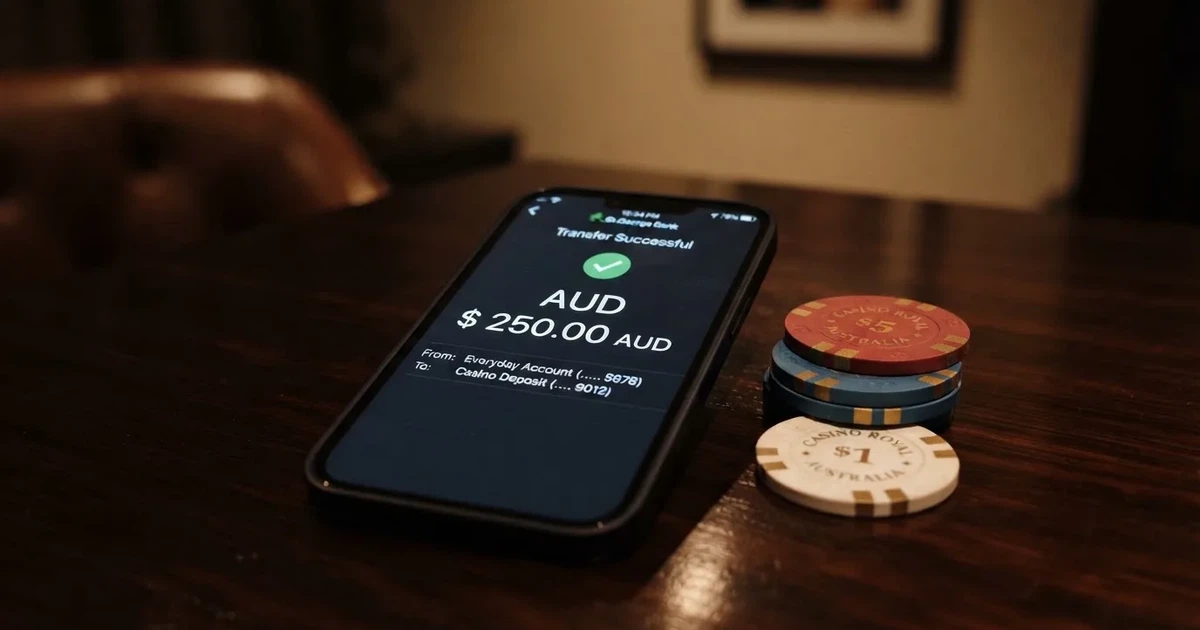
Current as of 29 October 2026 · cross-checked against the ACMA’s register of formal warnings, blocking actions and consumer guidance.
- The Prohibition a Bank Transfer Casino in Australia Runs Into in 2026
- Responsible Gaming: The Tools That Stay in a Bank Transfer User’s Hands
- Settlement at an Instant Bank Transfer Casino: How the Money Actually Moves
- The Mechanism: Eleven Sites and the ACMA Warnings Behind Them
- Payment Rail Characteristics
- The Eleven Sites
- The Fundamentals of a Bank Transfer at an Offshore Casino
- Frequently Asked Questions
The Prohibition a Bank Transfer Casino in Australia Runs Into in 2026
A direct bank transfer to an online casino is not, by itself, the illegal act — it is the destination that turns it into one. The Interactive Gambling Act 2001, strengthened by the Interactive Gambling Amendment Act 2017, makes it an offence for any operator to supply online casino games, online pokies or in-play betting to a person physically in Australia. None of the eight states and territories issue a licence that would cover those products. What is licensable is wagering on races and sport placed before the event, lotteries and keno — in practice licensed by the Northern Territory Racing and Wagering Commission, which regulates 52 of Australia’s online bookmakers, including Sportsbet, Bet365 and Ladbrokes, for tax reasons. The commission has no full-time staff and meets once a month in Darwin. That licensing route is for wagering, not casino games. It does not cover anything on this page.
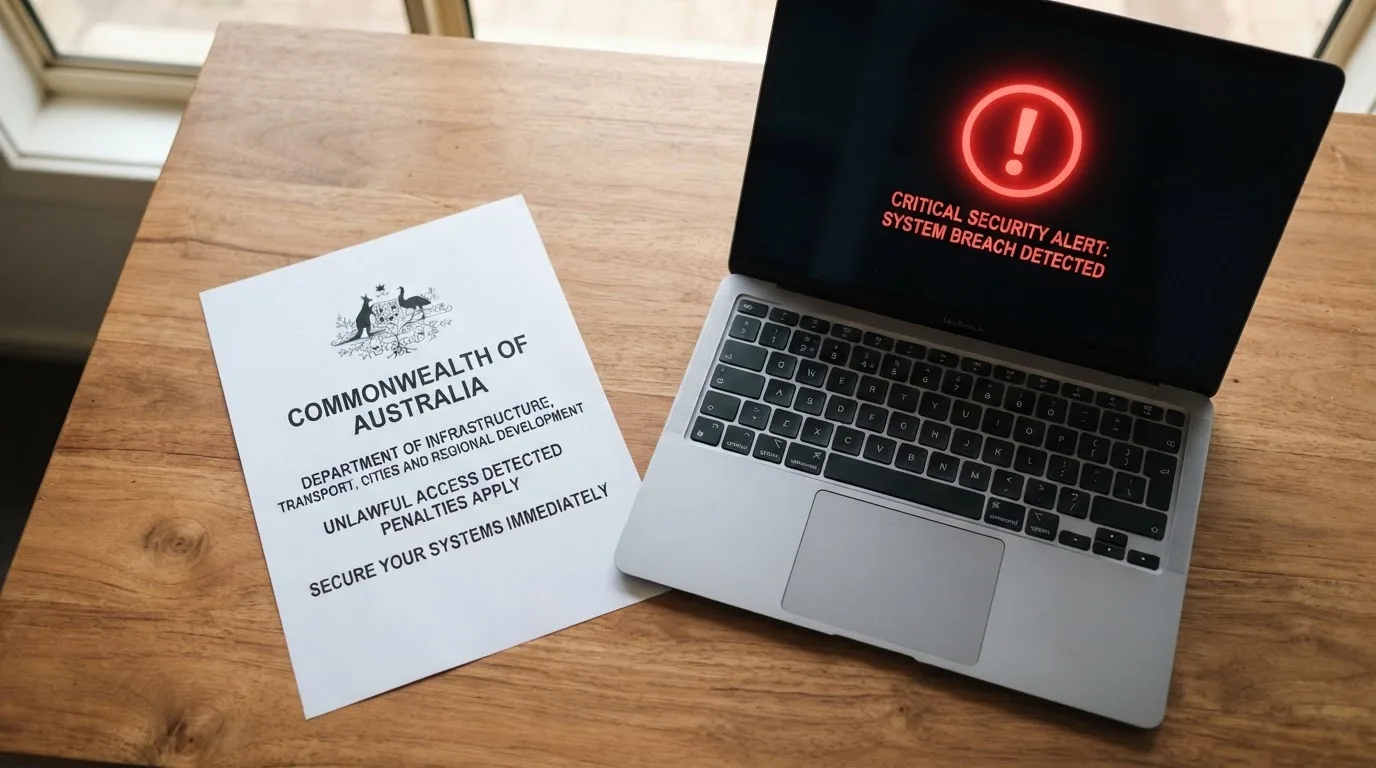
The law targets the operator, not the player. That distinction is small comfort if a transfer settles at an offshore casino that is then added to the ACMA’s blocking list — and any balance on the account at the moment of the block is, in practice, gone. There is no Australian complaints body for an unlicensed site, no route of recourse when a withdrawal stalls, and no place for a stranded balance to go when the ISP-level block lands. The “instant” in the marketing is the speed of the rail, not the speed of the resolution.
The ACMA — the Australian Communications and Media Authority — is the body that investigates, issues formal warnings and directs Australian internet service providers to block illegal sites. A blocking round reported on 26 June 2026 added 12 more names: 7Signs, ChromaBet, Donbet, Duospin, Freshbet, Slots Gem, Jacks Club, Lucky Start, Pointsbetz.com, Spinrise, Vinyl Casino and Wildsino. The cumulative count of illegal gambling and affiliate marketing websites the ACMA has asked ISPs to block stood at 1,751 at that point — a figure accumulated since the first blocking request was made in November 2019.
What does that rate actually look like in practice? Between November 2019 and June 2026 — roughly 79 months — the ACMA’s blocking list grew from zero to 1,751 entries. That is an average of around 22 sites added per month, or just under 270 a year, spread across a process that does not run continuously: blocks arrive in waves tied to investigations, not as a steady drip. The pace is best read as a band — somewhere between twenty and twenty-five additions per month across the period, with the spikes on the days a new round is announced and quieter stretches between them. Read it that way and the picture is not a regulator catching up; it is a regulator adding to a list that already runs into four figures, with the rate itself a moving target.
A separate estimate, from H2 Gambling Capital’s 2025 report, puts annual losses to illegal gambling sites at about A$3.9 billion a year, with the share of gambling going through legal channels falling from 74% in 2021 to 64%. The figure is an estimate of an opaque market rather than a count, and a reader using it for anything other than a sense of scale should hold it lightly.
The 2026 reform timeline matters for what comes next. The Interactive Gambling Amendment (Gambling Reform) Bill 2026 passed Parliament on 19 August 2026; its advertising and inducement measures commence 1 January 2027. The bill is law with a start date, not yet in force on a page written in 2026. What changes in 2026 is the existing regime plus its new enforcement rounds — not a fresh statute waiting to bite. The minimum age for gambling in Australia is 18.
Under the Interactive Gambling Act 2001 as amended in 2023, Australian-licensed online wagering services cannot accept payment by credit card or other credit-related products, a restriction that also constrains gambling use of linked digital wallets like Apple Pay. Penalties for breaching the ban are up to A$247,500 for operators. Legal deposit routes for licensed wagering are debit card, bank transfer, PayID/Osko and BPAY. A site asking an Australian for a credit card or a crypto deposit is operating outside the Australian rules — a marker, not a defence, but a marker worth noticing on a cashier page that does not match what an AU-licensed operator would offer.
Responsible Gaming: The Tools That Stay in a Bank Transfer User’s Hands
The irony of a bank transfer at an offshore casino is that the rail itself is one of the better paper trails a player can produce. A transfer leaves a named entry on a bank statement — a BSB, an account number, a timestamp, a counterparty. That record outlives the casino’s own transaction history, which is what gives it its value when a player is trying to understand their own spend three months later. A card or e-wallet deposit compresses that detail into a merchant descriptor and a reference. A transfer lays it out in full.
That record can also be a tether. A bank statement that shows a regular outflow to a casino is exactly what the major banks’ gambling blocks key off when they refuse authorisation. Westpac’s gambling block refuses authorisation of transactions registered under the merchant category code ‘Betting/Casino Gambling’ on eligible personal credit and debit cards. ANZ’s gambling transaction block, activated in the ANZ app, also blocks gambling transactions made through a digital wallet such as Apple Pay on an eligible card. Commonwealth Bank lets customers apply a gambling lock to eligible cards via the CommBank app, which automatically blocks most gambling transactions, though the bank states it cannot guarantee all gambling-related purchases will be stopped. Apple Pay, Google Pay and Samsung Pay transactions collectively accounted for around 45% of all card payments in Australia by number by the end of 2025 — which means the wallet-on-card blocks reach a substantial share of the actual card-spend rails.
None of those blocks sits over a direct transfer to a PayID or a BSB-and-account-number on the Osko rail. They key on the merchant category code that a card-acquiring relationship surfaces; a transfer to a personal-looking identifier at an unfamiliar name does not get the same treatment from a bank’s payment filter. The protection a transfer gives the player on the spend-tracking side, it does not give on the friction side. A reader who has set up a gambling block on a card has blocked the card rail but not the transfer rail, and that is the line to remember when the cashier page says “deposit by direct transfer” as the unblocked path.
Once a customer turns on ANZ’s gambling block, removing it again requires a 48-hour waiting period, and the bank warns that not all gambling transactions will be blocked and some non-gambling transactions might be blocked in error. That cooling-off is the design: a player who wants back in is made to wait long enough to think. Westpac’s and Commonwealth Bank’s blocks are similar in spirit — they are a friction surface designed to be inconvenient on purpose, which is why none of them claims to be exhaustive.
BetStop, the National Self-Exclusion Register, has been live since August 2023 and binds Australian-licensed online and phone wagering services. An offshore casino is not connected to it — registering with BetStop does not stop a transfer to an unlicensed site, only the legal-wagering category that the registered person’s exclusion covers. For anyone whose spend has slipped past where they want it to be, the National Gambling Helpline at 1800 858 858 is free, 24/7, with chat at Gambling Help Online. The number is one to keep on the fridge regardless of which rail a deposit travels on.
Tax is the last housekeeping point a reader should clear before treating any winnings at an offshore site as untaxed. Gambling winnings of a recreational player are not assessable income under section 6-5 of the ITAA 1997, and losses are not deductible, unless the person carries on a business of gambling. The model here is “check with the ATO” — and that is the line any reader should land on, not a quiet assumption that an offshore win is automatically tax-free.
Settlement at an Instant Bank Transfer Casino: How the Money Actually Moves
“Instant” in the marketing name for these sites refers to the AU payments rail, not to anything the casino does. Australia’s New Payments Platform became accessible to the public on 13 February 2018 and is owned by New Payments Platform Australia Ltd, a non-profit company whose 13 shareholders include the Reserve Bank of Australia and the country’s major banks. On top of that platform sit two pieces that matter here: Osko, which delivers a transfer between participating Australian banks in under a minute, 24/7 including weekends, and PayID, which lets the payer send to an identifier — typically a phone number, an email or an ABN — instead of a BSB and account number. As of April 2025 more than 25 million PayID identifiers had been registered on the platform, and PayID-based instant transfers are available at over 100 Australian financial institutions. Participants in Australia’s New Payments Platform must keep the platform’s monthly outages to no more than two minutes, which is the operational target that puts “instant” in the rail’s description.
The rail, then, is fast. What the rail delivers to is the casino’s own account, where the transaction enters whatever review the operator runs before the balance appears in the player’s account. That review — source-of-funds checks, anti-money-laundering screening, occasionally a request for documentation — is the bottleneck on a deposit the marketing page describes as “instant”. For an account already verified, with a transfer under the casino’s own internal limit, the rail’s sub-minute speed is what the player actually sees. For a new account, or a transfer that trips one of the operator’s thresholds, the same rail speed is offset by hours or days of review. The player sees the rail’s clock; the casino sees its own.
PayID adds one check the player sees at the moment of sending. Paying to a PayID shows the name of the account holder before the transfer is sent, and Australian Payments Plus — the operator of PayID and Osko — warns that being asked to transfer money to a PayID on an illegal gambling site almost certainly means a scam site. That warning is independent of the ACMA’s: it is the payments operator itself pointing out that an offshore casino asking an Australian to PayID it is the wrong shape of transaction. For a reader who wants to verify before they authorise, the name-on-PayID check is the cheapest signal available.
BPAY is the third AU rail an offshore cashier occasionally accepts. BPAY is a bill-payment service in online banking, where the payer enters the Biller Code and the Customer Reference Number (CRN) printed on the bill. It has operated in Australia since 1997, is available in the online banking of over 140 banks and financial institutions and is offered by over 95,000 businesses. BPAY is run by Australian Payments Plus, the same body that runs PayID and Osko, and is owned equally, via parent company Cardlink Services Limited, by Australia’s four major banks: ANZ, Commonwealth Bank, National Australia Bank and Westpac. The model — a Biller Code plus a CRN — was built for recurring bill payments, not for the one-off deposit to a casino account, which is why BPAY appears in fewer offshore cashier lists than PayID or direct transfer. In September 2021 the ACCC authorised the merger of BPAY Group, eftpos and NPP Australia under the Australian Payments Plus holding entity, which is why PayID, Osko and BPAY increasingly sit under one AP+ roof at the back of a bank’s payments screen.
AUSTRAC’s threshold-transaction-report rule, which requires reporting of transfers of A$10,000 or more, applies only to physical cash; ordinary electronic bank transfers are not subject to that per-transaction reporting requirement, regardless of the amount sent. A bank transfer to an offshore casino is not, in itself, a reportable transaction under that rule, though the operator receiving it is bound by its own AUSTRAC obligations as a remittance recipient. The rail’s threshold reporting does not reach the player; the operator’s does reach the operator.
The rail is also the seam at which the operator’s behaviour breaks first when it stops honouring withdrawals. A deposit that arrives in under a minute can sit at the operator for days while a withdrawal of the same funds moves through approvals, source-of-funds reverification and the operator’s own “internal review”. That asymmetry — fast in, slow out — is not unique to bank transfer, but the paper trail a transfer leaves makes it easier for the player to demonstrate that the funds went in and to argue for them back. That is the one structural advantage the rail carries over a card chargeback route that an offshore operator’s jurisdiction will not honour.
The Reserve Bank of Australia’s July 2025 review proposes removing surcharges only on eftpos, Mastercard and Visa card transactions, explicitly leaving American Express outside the scope of the proposed surcharge ban. American Express was established in 1850 as a freight-forwarding company and later became a card issuer, launching its first charge card on 1 October 1958; unlike Visa or Mastercard’s four-party network, Amex traditionally issues cards and processes transactions itself as a three-party scheme. None of that changes what a bank transfer costs the player on the rail — Amex’s surcharge regime is the card rail’s problem, not the transfer rail’s — but it is the background against which a player choosing between funding a casino account through a card or through a transfer should weigh the cost of each. Apple does not charge fees to consumers for using Apple Pay in stores, online or in apps; any surcharge comes from the merchant’s own card-processing fees, not from Apple. Apple states that transaction limits and PIN requirements for Apple Pay purchases are set by the card issuer or merchant, not by Apple itself.
The Mechanism: Eleven Sites and the ACMA Warnings Behind Them
The table below summarises the eleven sites the rest of this page works through. Each is here because the ACMA has issued a formal warning to the legal entity behind it for offering prohibited services to Australians, and because the operator names recur in the warning history that the ACMA publishes. The “subject support” column reflects what the operator’s own payment pages and the AU financial-sector pages report about that operator’s deposit and withdrawal options — it does not constitute an endorsement of any kind, and where research carries no figure for that operator on the rail being asked about, the cell stays blank.
| Brand | ACMA action and date | Operator named by the ACMA | Operator-group pattern | Subject support |
|---|---|---|---|---|
| RocketPlay | Formal warning, March 2026 | Pulsup Ltd | Repeat — earlier Dama N.V., May 2022 | — |
| Level Up Casino | Formal warning, May 2022 | Dama N.V. | Dama group, 3 brands on this list | listings-only |
| Woo Casino | Formal warning, March 2025 | Dama N.V. | Dama group, 3 brands on this list | — |
| Spirit Casino | Formal warning, May 2025 | Dama N.V. | Dama group, 3 brands on this list | — |
| National Casino | Formal warning, July 2025 | Consolutetish S.R.L. | Consolutetish, 2 brands on this list | listings-only |
| Bizzo Casino | Formal warning, July 2025; earlier 2022 | Consolutetish S.R.L. (2025); TechSolutions (2022) | Repeat — earlier TechSolutions, 2022 | — |
| Ignition Casino | Formal warning, July 2025 | Bamboo Media | First on this list | — |
| Instant Casino | Formal warning, February 2025 | EOD Code SRL | First on this list | listings-only |
| Jackbit | Formal warning, April 2026 | Ryker B.V. | First on this list (CasinOK named together) | — |
| Casino Intense | Formal warning, April 2025 | Sterplay Holding Ltd | First on this list | listings-only |
| Sky Crown | Formal warning, September 2022 | Hollycorn N.V. | First on this list (Blue Leo named together) | — |
The pattern in that table is what the reader should actually see. Ten of the eleven operators are repeat names at the ACMA, and the eleventh is a 2026 addition to a list that has been growing for years. Dama N.V. alone is named in three separate rows — for Level Up Casino in May 2022, then Woo Casino in March 2025 and Spirit Casino in May 2025. Consolutetish S.R.L. is named twice in the same month of 2025, for National Casino and Bizzo Casino, and Bizzo had already been the subject of a 2022 warning to TechSolutions (CY) Group Limited and TechSolutions Group N.V. An operator group accumulating warnings across multiple brands is the clearest signal in the warning register that the legal entity behind the brand has not been deterred by the regulator’s earlier action. Three of the eleven are operator groups that have drawn multiple warnings — Dama N.V. (3 brands), Consolutetish (2 brands) and the Hollycorn / Ryker B.V. pairs that the regulator warned together in a single action. The single-warning operators — Bamboo Media, EOD Code SRL, Sterplay Holding Ltd — appear once and stop there.
The “subject support” column is the thinnest in the table, and that is the point. Where research carries a listing — for Level Up Casino, National Casino, Instant Casino and Casino Intense — the column says “listings-only”, meaning what those listings report and not what the operator’s own terms say. Where research carries nothing for the operator, the cell stays empty, which is the marker for “no data”. The pattern across the table — four of eleven with listing-only data and the rest blank — is the picture research actually paints, not the picture affiliate pages would. The mechanism here is not a comparison of how the eleven sites perform on the rail; it is a comparison of how visible they are to research at all.
Payment Rail Characteristics
| Rail | Speed | Protection |
|---|---|---|
| Osko | Under a minute | Named transaction record |
| PayID | Under a minute | Verification name check |
| BPAY | 1-2 business days | Recurring payment standard |
The Eleven Sites
RocketPlay: Two Owners, One Brand, Four Years Apart
The ACMA’s most recent action against RocketPlay was a formal warning in March 2026, issued to Pulsup Ltd over Rocketplay.com.au. The brand had been on the regulator’s list before: Dama N.V., an earlier operator of the same site, was the recipient of a May 2022 warning covering six casino brands including Rocketplay. Two warnings across different legal owners, four years apart, are the shape the ACMA’s file shows for an offshore casino that has not changed its offer but has rotated its operating company.
The site presents itself as an instant-bank-transfer-friendly cashier — the usual PayID-adjacent account, the usual “settles in minutes” marketing line — but its acceptance of an Australian transfer has no legal grounding under the Interactive Gambling Act 2001. The fact that an Australian player could still authorise a transfer to the brand, given its ACMA history, is not a sign that the rails work but a sign that the rails do not check the destination.
For a reader who treats the ACMA list as a starting point, RocketPlay’s pattern — multiple owners, multiple warnings, one product line — is what a continued-relationship looks like in this market. The verdict is the pattern itself.
Level Up Casino: The Older Dama N.V. Entry
Level Up Casino was the subject of a formal warning to Dama N.V. in May 2022, the round that also pulled in Bambet, Dazard, Rocketplay, Wild Tornado and Cobra Casinos. That puts Level Up at the older end of the warnings on this list: the ACMA’s 2022 round predates the 2025 wave by three years, and the brand is still operating under the same operator name.
The warning is what the regulator has on file; it is not, by itself, a closure. Level Up’s cashier in 2026 takes deposits through the usual channels — direct bank transfer to an account, PayID where the brand supports it, and the standard range of cards and crypto — and the rail-side mechanics on those channels look much like the rail-side mechanics at the other sites on this list. What makes Level Up worth distinguishing from the other Dama N.V. brands is the duration of the warning history: a May 2022 warning still active is a different kind of data point from a 2025 warning that is six months old.
For a reader scanning the list, Level Up’s verdict is simple: this is the older Dama N.V. brand, and the operator group’s later warnings are over its newer names.
Woo Casino: The Test That Fails
In March 2025 the ACMA issued a formal warning to Dama N.V. over Woo Casino. That makes Woo the second Dama N.V. brand on this list to draw a formal warning in the space of three years, after Level Up in May 2022. The operator group’s pattern of running multiple casino brands and rotating the regulatory attention across them is exactly the pattern the warnings, taken together, describe.
Woo’s deposit experience for an Australian reader looks like every other offshore casino’s: a cashier page that offers bank transfer, the rail is PayID or Osko when the operator accepts either, and the marketing copy emphasises the speed of the rail. None of that survives the actual question — is the operator licensed to take this deposit from an Australian — which the answer is no.
For a reader who treats the ACMA’s list as a record, Woo Casino is the most recent Dama N.V. warning before Spirit Casino, and the operator group’s name now appears three times in this set of eleven. That is the test for whether the brand is worth distinguishing from its siblings — and the answer here is that the test fails: Woo is, regulatorily, indistinguishable from Level Up or Spirit Casino.
Spirit Casino: The Latest Word on Dama N.V.
Spirit Casino drew a formal warning to Dama N.V. in May 2025, two months after the Woo Casino warning to the same operator. That is the third Dama N.V. entry in this set, after Level Up (May 2022) and Woo (March 2025), and it falls into the cluster of warnings that the operator group accumulated across 2025.
Spirit runs the same kind of cashier as its Dama N.V. siblings — bank transfer, cards, e-wallets, the usual crypto option — and the rail mechanics for an Australian reader look the same: instant on PayID/Osko when accepted, otherwise the operator’s review queue. The “instant” in the marketing is the rail’s speed; the legal status of the destination is unchanged.
For a reader looking at the Dama N.V. cluster as a single phenomenon, Spirit Casino’s place in it is what distinguishes it from Woo and Level Up: it is the latest Dama N.V. warning at the time of writing, and that is the whole story.
National Casino: One of Two Consolutetish Warnings in July 2025
In July 2025 the ACMA issued a formal warning to Consolutetish S.R.L. over National Casino. That warning was issued in the same month as a separate warning to the same operator over Bizzo Casino, and together they make Consolutetish the second operator group on this list with multiple warnings in this set. National is the earlier-named of the two in that round.
The brand’s deposit options for an Australian reader are what research reports the AU payment ecosystem as carrying for similar sites: a direct transfer to a BSB and account, sometimes a PayID option, and the standard card / e-wallet / crypto alternatives. Nothing on the cashier page of an offshore casino changes the IGA’s position, and the rail-side mechanics look the same regardless of the destination’s legal status.
For a reader scanning the table, National Casino is one of two July 2025 Consolutetish warnings, and the operator group’s name now appears twice in this set — a sign that the ACMA is treating Consolutetish’s brand portfolio the same way it has treated Dama N.V.’s.
Bizzo Casino: The Brand That Did Not Stop
Bizzo Casino was the subject of a formal warning in July 2025 to Consolutetish S.R.L., and earlier of a 2022 formal warning to TechSolutions (CY) Group Limited and TechSolutions Group N.V. Two operators, two warnings, three years apart, one product line. That is the clearest pattern in this set of an operator-group rotation that has not deterred continued offers to Australian customers.
The deposit experience for an Australian reader on these sites follows the standard offshore cashier pattern: bank transfer accepted at the rail’s speed, cards / e-wallets / crypto as alternatives, the marketing page emphasising instant settlement. None of that has changed with the operator’s identity, which is the point: from the player’s perspective, Bizzo today looks like Bizzo in 2022, and that is the experience the operator has chosen to preserve across two regulatory actions.
For a reader reading the table in order, Bizzo is the clearest case of a brand that the regulator has acted on, with an operator-group successor, and the verdict is that the action did not stop the offer.
Ignition Casino: The Thin Thread
In July 2025 the ACMA issued a formal warning to Bamboo Media over Ignition Casino, in the same month as the Consolutetish warnings over National Casino and Bizzo Casino. Bamboo Media is a fresh name on this list — Ignition is the only brand in the set against which the ACMA has warned this operator — which makes the brand harder to read as part of a pattern, but no easier to read as legal to serve Australians.
The brand’s cashier offers bank transfer, the usual cards and e-wallets, and a crypto option. The rail mechanics for an Australian reader are the same as on every other site in this set. The legal status of the destination is the same as on every other site in this set.
For a reader, Ignition Casino is the entry where the operator-group pattern is least developed, and where the ACMA’s first action against the group is the only data point. That is a thin thread to lean on, and the reader’s own judgment of how much weight to put on a single warning is what matters here.
Instant Casino: The Brand and the Regulator’s File at Odds
In February 2025 the ACMA issued a formal warning to EOD Code SRL over Instant Casino. The brand’s name is the closest the site gets to the term “instant bank transfer” — and the irony of a brand called Instant Casino being the subject of a 2025 ACMA warning for serving Australians is the kind of detail that summarises the section.
The payment options for an Australian reader on these sites follow the standard cashier pattern: bank transfer, PayID where the operator accepts it, cards, e-wallets, crypto. The rail’s speed is the rail’s speed; the operator’s status under the IGA is unchanged by what the brand calls itself.
For a reader, Instant Casino is the entry where the name promises a fast transfer experience and the regulator’s file delivers the opposite of that promise. The closest thing to a verdict here is the gap between the two.
Jackbit: The Freshest First Action
In April 2026 the ACMA issued a formal warning to Ryker B.V. over Jackbit and CasinOK. Two brands in one warning, the ACMA’s April 2026 round, and Ryker B.V. as a fresh operator name on this list — same shape as Bamboo Media’s single warning over Ignition. Jackbit is the more established name in the pair, the casino brand; CasinOK is the other.
The payment profile for an Australian reader across this pair of sites includes bank transfer, the standard alternatives, and the same rail mechanics as on every other site on this list. The legal status of accepting a transfer from an Australian is unchanged.
For a reader, Jackbit is the entry where the regulator’s action is so recent that the operator group has no other ACMA history to weigh against it. That is the shape of a ‘first action’ in the file, and it is the only thing that distinguishes it from Ignition Casino and Casino Intense, which are also single-warning entries.
Casino Intense: The Single Signal
In April 2025 the ACMA issued a formal warning to Sterplay Holding Ltd over Casino Intense. Sterplay is another single-warning operator on this list — Casino Intense is the only brand in the set against which the ACMA has warned this operator. April 2025 puts it one month ahead of the Woo Casino Dama N.V. warning and one month behind the Spirit Casino Dama N.V. warning, both of which are in this set.
The deposit experience for an Australian reader is the standard cashier: bank transfer, the standard alternatives, the same rail mechanics as on every other site on this list. The legal status of accepting a transfer from an Australian is unchanged.
For a reader, Casino Intense’s place in the table is the slot for an operator that the ACMA has warned exactly once and that has not appeared in any subsequent round. A single warning is the thinnest thread the table has to offer, and Casino Intense is one of three such threads — the reader’s judgment of how much weight to put on it is the load-bearing question.
Sky Crown: The Oldest Warning, the Longest Run
The ACMA issued a formal warning to Hollycorn N.V. over its Sky Crown and Blue Leo casino services, published in September 2022. Hollycorn is the oldest operator on this list by warning date — the September 2022 publication on the Sky Crown / Blue Leo pair predates every Dama N.V., Consolutetish, Bamboo Media, EOD Code, Ryker, Sterplay and Pulsup warning in this set by between six months and four years.
The payment options for an Australian reader across this operator’s brand pair include bank transfer, the standard alternatives, and the same rail mechanics as on every other site on this list. The legal status of accepting a transfer from an Australian is unchanged.
For a reader, Sky Crown is the entry where the warning is oldest and the brand has had the longest uninterrupted period of offering its product. That is the closest to a ‘still here’ verdict the regulator’s file can deliver.
The Fundamentals of a Bank Transfer at an Offshore Casino
The mechanics of a bank transfer at an offshore casino are not complicated; what is complicated is the chain of actors between the player and the balance that appears on the casino account. The player authorises the transfer in their bank app — PayID or BSB-and-account-number, Osko on the New Payments Platform, settled in under a minute when the rail is functioning. The funds land in the operator’s nominated account at an Australian financial institution, or in the operator’s account at an international bank that has a correspondent relationship with the player’s bank. The operator’s own system credits the player’s casino account on receipt — that credit is the “instant” the marketing promises. Anything that requires an account-level verification, an unusually large transfer, or a transfer to a new bank account can sit in the operator’s review queue for hours or days before the credit appears.
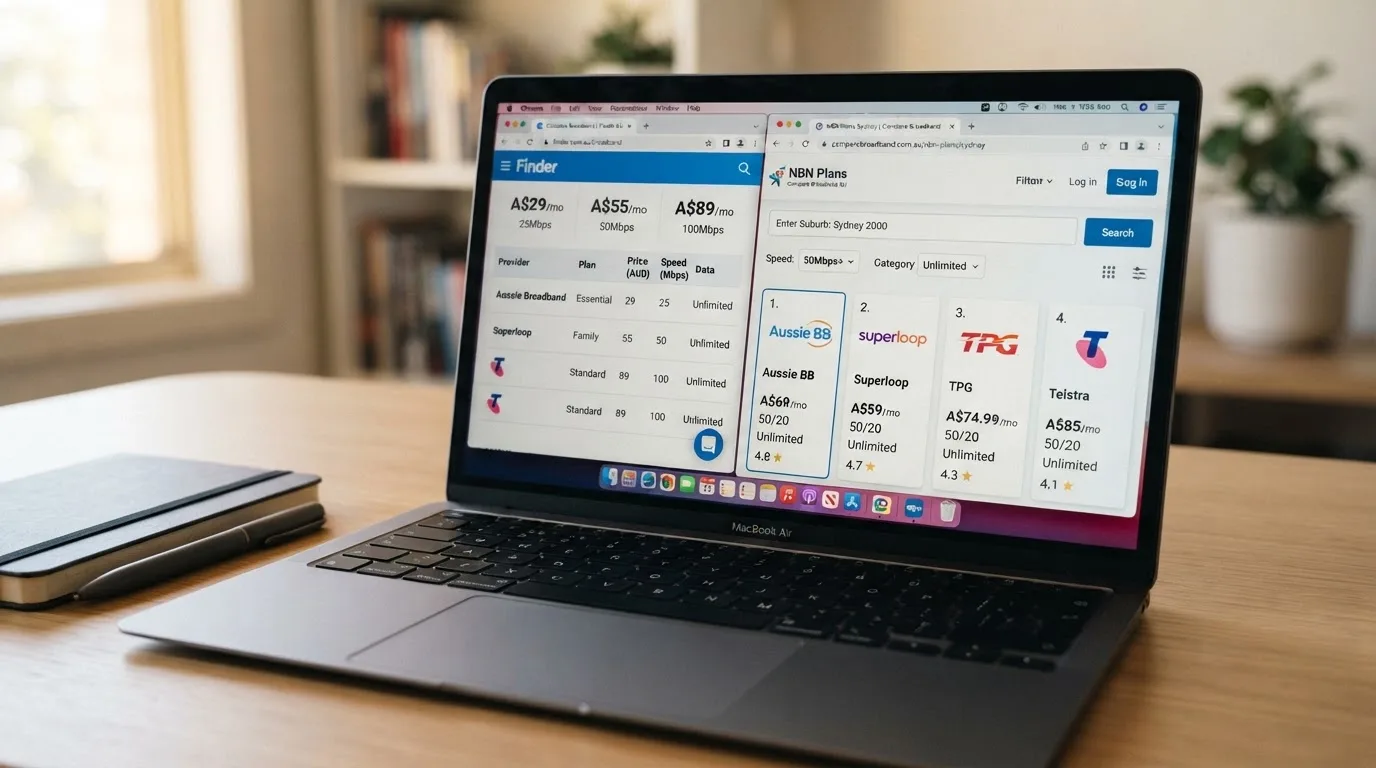
The verification queue is the friction. For a first-time deposit the operator will typically request a photo ID, proof of address, and occasionally a source-of-funds document. None of that is on the rail’s clock; it is on the operator’s. Once verified, subsequent deposits up to the operator’s per-transaction limit typically credit at the rail’s speed. Withdrawals, when the operator honours them, run in the opposite direction and at the operator’s review speed, not the rail’s speed. That asymmetry — fast in, slow out — is the operational shape of every offshore casino on this list, and the player who treats “instant” as a property of the whole transaction is the player who has confused the rail with the casino.
The rail’s protections, however, are not turned off by the destination being offshore. AUSTRAC’s threshold-transaction-report rule applies only to physical cash; ordinary electronic bank transfers are not subject to that per-transaction reporting requirement, regardless of the amount sent. The bank’s own filter may be tuned to flag gambling-related counterparties; the operator’s own AUSTRAC obligations run independently of the rail. The player’s protections — a named record on the bank statement, a BSB and account number that the regulator and the bank can both audit — are still there, and they are what gives a transfer its edge over a card or e-wallet deposit for spend-tracking purposes. That edge is real, but it is the edge of a record-keeping tool, not the edge of a legal shield.
The RBA’s July 2025 review of merchant card payment costs and surcharging proposes removing surcharges only on eftpos, Mastercard and Visa card transactions, explicitly leaving American Express outside the scope of the proposed surcharge ban. American Express was established in 1850 as a freight-forwarding company and later became a card issuer, launching its first charge card on 1 October 1958; unlike Visa or Mastercard’s four-party network, Amex traditionally issues cards and processes transactions itself as a three-party scheme. None of that is directly relevant to a bank transfer at an offshore casino — Amex’s surcharge status is the rail’s side, not the operator’s — but it does mean that where a player chooses to fund an account through a card rather than a transfer, the surcharge regime varies by network. The cost of a transfer is the bank’s own processing fee, often zero for Osko/PayID within the participant banks, and the operator’s own fee if any — not the card surcharge.
The broader frame is what 2026 actually runs in. The Interactive Gambling Amendment (Gambling Reform) Bill 2026 passed Parliament on 19 August 2026; its advertising and inducement measures commence 1 January 2027. The bill is law with a start date, not yet in force on a page written in 2026. What changes in 2026 is the existing regime plus its new enforcement rounds — not a fresh statute waiting to bite. The minimum age for gambling in Australia is 18. Tax: gambling winnings of a recreational player are not assessable income under section 6-5 of the ITAA 1997, and losses are not deductible, unless the person carries on a business of gambling — “check with the ATO” is the model, and that is the line any reader should land on before treating any offshore win as untaxed.
Frequently Asked Questions
Is it legal for an Australian to use an instant bank transfer casino site?
No. The Interactive Gambling Act 2001 makes it an offence for an operator to provide online casino games to a person in Australia; no state or territory licenses them. The law targets the operator, not the player — small comfort if a transfer settles at a site the ACMA later blocks. The blocking list stood at 1,751 sites in June 2026.
What does a bank transfer actually do differently from a card deposit at an offshore casino?
A bank transfer moves through the New Payments Platform — Osko for under-a-minute delivery, PayID to send to an identifier — and lands at the operator’s account before the player’s casino balance is credited. A card deposit rides the card rails and the merchant category code the banks’ gambling blocks key off. A transfer bypasses that filter.
Does paying by bank transfer give a better spend record than a card or e-wallet deposit?
Yes — for the player. A transfer carries a named counterparty, a BSB and account number, a timestamp and an amount; a card descriptor compresses that to a merchant name and a reference. The transfer is the better record for the player’s own spend tracking, which is one of the few arguments that survives the legal frame.
How long does an instant bank transfer actually take to clear at an offshore casino?
The rail settles the transfer to the operator’s account in under a minute via Osko, 24/7. What credits the player’s casino balance is the operator’s own crediting process — that runs at the operator’s speed and can sit in a review queue for hours or days on a first deposit. The “instant” applies to the first step, not the second.
Can an Australian bank refuse a transfer going to an offshore casino site?
The major banks’ published gambling blocks — Westpac, ANZ, Commonwealth Bank — apply at card level via the merchant category code, not to direct transfers on the Osko or PayID rails. A direct transfer to a BSB-and-account-number does not get the same friction from the bank’s payment filter. The paper trail is still there for the player to use in dispute.