
E-Wallets at Offshore Pokies Sites: The Australian Picture in 2026
Deposits through Skrill, Neteller, MiFinity or ecoPayz get advertised as the fast lane into online pokies. They are also the fastest way for an Australian player to fund a service that the ACMA has already warned, blocked, or both. This page lays out the e-wallet side of that equation — how the money moves, what it costs, and where the law sits — so a reader can see what an “e-wallet pokies” claim actually delivers in 2026.

Data current as of 29 October 2026 and verified against the ACMA’s published register of formal warnings and blocking requests.
- The Landscape: What “E-Wallet Pokies” Actually Means in Australia
- The Legal Frame: What the Interactive Gambling Act 2001 Actually Says
- Responsible Gambling: Where Australian Players Get Help
- How E-Wallet Payments Work at Offshore Pokies Sites
- The June 2026 ACMA Blocking Wave
- Formal Warnings: What the ACMA Has Named
- What a Reader Comparing These Brands Should Notice
- What an E-Wallet Deposit Does Not Solve
- E-Wallets and AUD: The Currency Question
- Fees a Reader Should Expect on Top
- A Note on What “Real Money E-Wallet Pokies” Means in Practice
- Summary: The Choices an Australian Reader Actually Has
- Help and Support Outside This Page
- Frequently Asked Questions
The Landscape: What “E-Wallet Pokies” Actually Means in Australia
A search for “e-wallet pokies Australia” returns a wall of offshore casino brands. Every one of them runs outside Australian licensing. No state or territory issues a licence for an online casino, online pokies, or in-play betting service. What is licensed in Australia is wagering on races and sport placed before the event, lotteries and keno. The distinction matters because the licensing frame, the deposit rules, the player-protection machinery and the complaint pathways all attach to the licensed side — and stop cleanly at the border.
An offshore pokies site that lists Skrill, Neteller, MiFinity or ecoPayz is therefore not subject to any Australian consumer-protection regime. If a withdrawal stalls, if a bonus term is rewritten mid-promotion, or if a brand simply closes the account, the player’s only practical recourse is the brand’s own complaints process — and often a Curaçao or Anjouan licence office that has no compulsion to act. Every brand reviewed on this page has been the subject of an ACMA formal warning under the Interactive Gambling Act 2001 for offering exactly this kind of service to Australians.

The e-wallet itself does not change that. It changes the speed of the deposit and the cost of moving money, and it changes nothing about the legal position of the account on the other end.
Where the money actually goes
A typical e-wallet path looks like this: an Australian bank account or debit card tops up the e-wallet, the e-wallet pushes the balance to the offshore casino, the casino credits the account, and any winnings are pulled back along a reversed version of the same chain. Each hop carries its own fee, its own verification step and its own delay. None of those hops makes the underlying service licensed for Australian play.
The numbers behind the wall
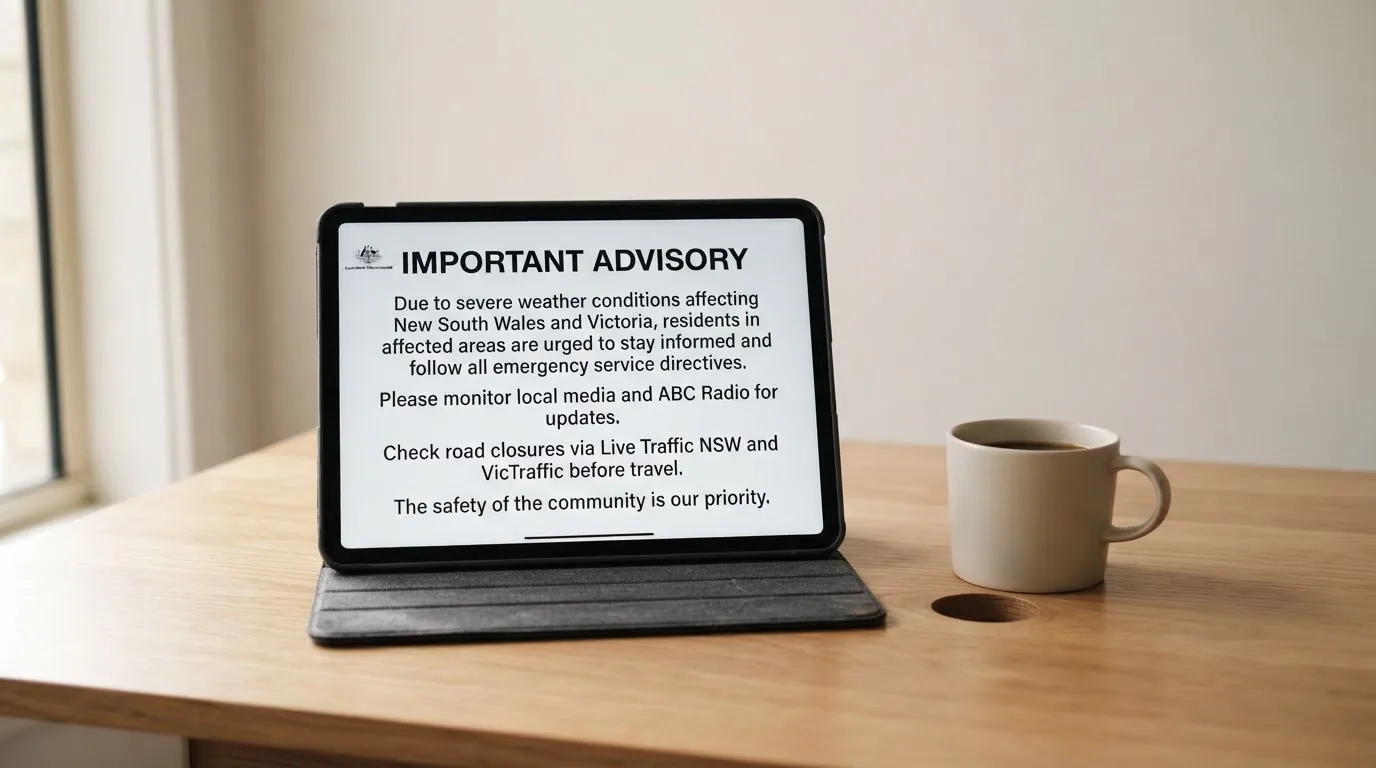
The ACMA’s June 2026 blocking round took the running total to 1,751 illegal gambling and affiliate websites blocked since the first blocking request in November 2019, with more than 230 unlicensed gambling services having left the Australian market since enforcement was strengthened in 2017. H2 Gambling Capital’s 2025 estimate puts Australian losses to illegal gambling sites at around A$3.9 billion a year, with the share of gambling going through legal channels falling from 74% in 2021 to 64%. These are not niche figures. They describe the size of the market the e-wallet pokies search results are pitching to.
The Legal Frame: What the Interactive Gambling Act 2001 Actually Says
The Interactive Gambling Act 2001, strengthened by the Interactive Gambling Amendment Act 2017, makes it an offence to provide online casino games, online pokies or in-play betting to a person physically in Australia. The offence sits with the provider — not with the individual player. The ACMA investigates, issues formal warnings, and directs Australian internet service providers to block illegal sites.
What that means for an Australian considering an e-wallet deposit:
- The site is operating in breach of the IGA, whether or not it carries a Curaçao or Anjouan licence badge. Those licences do not authorise Australian play.
- The site can be added to the ACMA’s blocking list with little notice. A balance held on the site at that moment can become inaccessible.
- The site is not connected to BetStop, the National Self-Exclusion Register. Self-excluding from Australian wagering does not stop an offshore account.
- A bank-imposed gambling block on an Australian debit or credit card does not necessarily stop an e-wallet top-up funded from a non-blocked source, but it does stop the card leg of that path.
The 2026 reform bill
The Interactive Gambling Amendment (Gambling Reform) Bill 2026 passed Parliament on 19 August 2026. Its advertising and inducement measures commence on 1 January 2027. For anyone reading this page in 2026, the new rules are law with a start date — not yet in force. The position described above is the position that applies now.
Minimum age and what counts as “licensed”
The minimum age for any gambling activity in Australia is 18. The only licences relevant to an Australian player are those issued by an Australian state or territory regulator — and no such licence covers online casino games or online pokies. A brand displaying a Curaçao licence is regulated for Curaçao purposes, not for Australian ones. The Northern Territory Racing and Wagering Commission regulates 52 of Australia’s online bookmakers — Sportsbet, Bet365, Ladbrokes among them — but those licences cover wagering on sport and racing, not casino games or pokies. The NTRWC itself runs on a part-time model: no full-time staff, meetings once a month in Darwin.
Responsible Gambling: Where Australian Players Get Help
The licensed Australian side has a support architecture built around it. The offshore side does not connect to it.
- Gambling Help Online (gamblinghelponline.org.au) offers 24/7 chat and email support, free of charge.
- The National Gambling Helpline is 1800 858 858, free and available around the clock.
- BetStop, the National Self-Exclusion Register, has been live since August 2023. Registration excludes a person from Australian-licensed online and phone wagering services. It does not exclude a person from an offshore casino — those operators have no obligation to honour an Australian self-exclusion.
For anyone funding an e-wallet from an Australian bank account, the bank-side gambling blocks are a separate layer of protection. Westpac, ANZ, NAB and Commonwealth Bank each let customers self-apply a gambling block through the bank’s app or online banking. Westpac’s block operates at card level: it refuses authorisation of transactions registered under the merchant category code for betting and casino gambling on eligible personal credit and debit cards. ANZ’s block, activated in the ANZ app, also blocks gambling transactions made through a digital wallet such as Apple Pay on an eligible card — and removing the block again requires a 48-hour waiting period. ANZ warns that not all gambling transactions will be blocked and some non-gambling transactions might be blocked in error, which is worth knowing before relying on the block as a hard cut-off.
A bank block covers the card leg of a path, not necessarily every leg. An e-wallet funded from a blocked card stops at that funding step. An e-wallet already holding a balance is a different case — the block sits on the source, not on the wallet.
How E-Wallet Payments Work at Offshore Pokies Sites
The settlement speed an offshore site advertises is the speed of its own processing on the receiving end. The speed of an e-wallet deposit from an Australian bank, and the speed of a withdrawal back, depend on a different chain entirely.
Skrill
Skrill is the most commonly listed e-wallet on offshore pokies sites targeting Australian players. The Skrill Australian fee schedule, as published on the provider’s own site, charges 2.00%–3.00% (minimum EUR 3.50) to withdraw to a local method, and 4.49% on currency conversion. Those fees sit on top of anything the casino itself charges. A A$200 withdrawal to an Australian bank account costs the player A$4–A$6 in Skrill’s withdrawal fee alone, plus 4.49% if the casino settles in euros rather than AUD.
Neteller
Neteller operates a similar fee structure in the same Skrill-owned group. The withdrawal-to-local-method fee and the currency-conversion fee both apply on the Australian leg of the journey. For any player who has used Neteller in the past for forex trading or for non-gambling transfers, the gambling-deposit leg does not change the fee schedule — the casino’s terms do.
MiFinity
MiFinity asks for verification documents before raising a user’s spending limits. That single line tells most of the story: an e-wallet does not remove identity checks, and the verification MiFinity runs is its own, separate from any verification the casino might or might not run on the player’s account.
PayPal
PayPal’s acceptable-use policy permits gambling payments only where operator and customers are located exclusively in jurisdictions where the activity is legal. An Australian player funding an offshore pokies account through PayPal sits outside that scope. PayPal’s own policy, in other words, treats such a transaction as outside its permitted-use rules — which is a different kind of risk from anything the ACMA poses on its own.
ecoPayz
ecoPayz (now called Payz) operates in a similar space to Skrill and Neteller. Account verification, currency conversion and withdrawal fees apply on the same model.
Apple Pay and Google Pay
Apple does not charge fees to consumers for using Apple Pay in stores, online or in apps; any surcharge comes from the merchant’s own card-processing fees, not from Apple. Apple states that transaction limits and PIN requirements for Apple Pay purchases are set by the card issuer or merchant, not by Apple. The card underneath the wallet is what determines the gambling-block behaviour. By the end of 2025, Apple Pay, Google Pay and Samsung Pay transactions collectively accounted for around 45% of all card payments in Australia by number — a large share of how Australians move money day-to-day, and a reminder that “digital wallet” and “e-wallet” are not the same thing in this context.
PayID, Osko and BPAY
PayID-based instant transfers are available at over 100 Australian financial institutions. With Osko, a bank transfer between participating Australian banks arrives in under a minute, 24/7 including weekends. Paying to a PayID shows the name of the account holder before the transfer is sent, and Australian Payments Plus warns that being asked to transfer money to a PayID on an illegal gambling site almost certainly means a scam site. The New Payments Platform became accessible to the public on 13 February 2018 and is owned by New Payments Platform Australia Ltd, a non-profit whose 13 shareholders include the Reserve Bank of Australia and the country’s major banks. By April 2025, more than 25 million PayID identifiers had been registered. BPAY, separately, is a bill-payment service in online banking: the payer enters the Biller Code and the Customer Reference Number printed on the bill — a system designed for paying invoices, not for funding casino accounts.
What a “fast payout” actually delivers
An offshore casino that advertises “instant withdrawals to Skrill” is describing the casino’s own processing time. Once Skrill holds the funds, getting them back to an Australian bank account is a separate step, with its own fees and its own delay. A reader comparing payout speeds should compare two numbers: how long the casino holds the withdrawal, and how long the e-wallet takes to land the money on a local account. Skrill’s published fee schedule is the cleanest source for the second half.
AUSTRAC and the regulatory frame around e-wallets
AUSTRAC requires businesses that transfer money or provide remittance-style services — a category that can include e-wallet money-transfer functions — to register as a remittance service provider before operating in Australia. Providing the service unregistered is against the law. AUSTRAC’s threshold-transaction-report rule, which requires reporting of transfers of A$10,000 or more, applies only to physical cash; ordinary electronic bank transfers are not subject to that per-transaction reporting requirement, regardless of the amount sent. The upshot for an Australian player is that the e-wallet layer adds its own regulatory perimeter — and using one does not exempt the player from it.
The June 2026 ACMA Blocking Wave
The ACMA’s blocking request dated June 2026 added 12 more illegal gambling websites to the list of those Australian ISPs are required to block: 7Signs, ChromaBet, Donbet, Duospin, Freshbet, Slots Gem, Jacks Club, Lucky Start, Pointsbetz.com, Spinrise, Vinyl Casino and Wildsino. The running total now stands at 1,751 illegal gambling and affiliate marketing websites blocked since November 2019, the date of the first blocking request. More than 230 unlicensed gambling services have left the Australian market since 2017.
How the blocking arithmetic reads
The ACMA’s enforcement figures track a multi-year effort to curb unlicensed activity. Stating the rate as one figure hides the shape of that enforcement. The relevant inputs are:
- 1,751 websites blocked since the first blocking request in November 2019.
- The first blocking request was issued in November 2019.
Blocking Statistics
| Metric | Detail |
|---|---|
| Total illegal sites blocked | 1,751 |
| First blocking request | November 2019 |
| Unlicensed services exited | 230+ |
| Enforcement strengthened | 2017 |
Working from those two figures, the blocking rate sits at roughly 260 sites per year over the full enforcement period — a band that reflects the heavy early months of the regime and the lower-volume recent rounds. What the band does not show: which of those sites were active casinos versus affiliate marketing pages, which carried e-wallet payment options, and how many of the 230-plus services that have left the Australian market did so because of a blocking request versus a formal warning. The ACMA publishes the totals; the breakdown between categories is not in the public figures.
What a blocking request means for a player with a balance
A blocking request directs Australian ISPs to make the site unreachable. Existing balances on the site do not transfer back automatically. The site may still be reachable from non-Australian IPs in the period immediately after a block. The player has no Australian complaints body to approach if a withdrawal stalls after a block — and the offshore operator has no obligation to expedite a withdrawal because an Australian regulator has moved against the site.
Formal Warnings: What the ACMA Has Named
The ACMA’s formal-warning register lists the operators it has called out for offering prohibited interactive gambling services to Australians. Each warning names the operating company, the brand or brands covered, and the date. The brands reviewed below are taken from that register; each one has been the subject of at least one formal warning.
RocketPlay
The ACMA issued a formal warning to Pulsup Ltd over Rocketplay.com.au in March 2026. The same brand had previously been the subject of a May 2022 formal warning to Dama N.V. The site accepts e-wallet deposits. There is no Australian licence covering it.
Level Up Casino
The ACMA issued a formal warning to Dama N.V. over Level Up Casino in May 2022. The site is part of the Dama N.V. group, which has attracted multiple ACMA warnings across its brands. Australian players have no recourse through Australian consumer law if a withdrawal is refused.
Woo Casino
The ACMA issued a formal warning to Dama N.V. over Woo Casino in March 2025. Woo Casino is one of three Dama N.V. brands the ACMA has warned on; the other two, Spirit Casino and a Rocketplay entry, appear elsewhere on this list. The pattern tells the reader where the ACMA’s enforcement has concentrated.
Spirit Casino
The ACMA issued a formal warning to Dama N.V. over Spirit Casino in May 2025. Spirit Casino is the third Dama N.V. brand on the register. The cluster of warnings against the same operator tells a reader that the ACMA’s attention has not been limited to a single brand at a time.
National Casino
The ACMA issued a formal warning to Consolutetish S.R.L. over National Casino in July 2025. National Casino appears in AUSTRAC-facing listings of remittance-relevant operators, and the broader corporate structure shows up in publicly available corporate registries. None of that connects the site to an Australian licence.
Bizzo Casino
The ACMA issued a formal warning to Consolutetish S.R.L. over Bizzo Casino in July 2025. Bizzo Casino had already been the subject of a 2022 formal warning to TechSolutions (CY) Group Limited and TechSolutions Group N.V. — the same brand, two operators, two warnings. The repetition is itself a signal: the ACMA does not treat a change of operating company as a clean restart.
Ignition Casino
The ACMA issued a formal warning to Bamboo Media over Ignition Casino in July 2025. Ignition Casino is positioned toward poker and casino games rather than pokies specifically, but the formal-warning register does not distinguish by game type — a brand offering prohibited interactive gambling services to Australians is on the register regardless of which game the marketing page leads with.
Instant Casino
The ACMA issued a formal warning to EOD Code SRL over Instant Casino in February 2025. The brand surfaces in payment-provider listings that include ecoPayz and PayID as available methods — which is worth noting because PayID transfers to illegal gambling sites carry their own scam warning from Australian Payments Plus.
Jackbit
The ACMA issued a formal warning to Ryker B.V. over Jackbit and CasinOK in April 2026. Two brands, one operator, one warning. The Jackbit brand is positioned around cryptocurrency deposits; the absence of an AUD-native payment option is itself part of how the brand differentiates.
Casino Intense
The ACMA issued a formal warning to Sterplay Holding Ltd over Casino Intense in April 2025. Casino Intense surfaces in AUSTRAC-facing materials and in bank-block coverage as an example of the kind of brand that triggers card-leg blocks. The bank-block behaviour is the visible side of what the ACMA warning describes.
Sky Crown
The ACMA issued a formal warning to Hollycorn N.V. over Sky Crown and Blue Leo. The warning is published as a September 2022 PDF. Sky Crown is the older of the two warnings on this list and sits at the front of the enforcement timeline that runs through to the April 2026 Ryker B.V. action.
What a Reader Comparing These Brands Should Notice
Each brand on this list is presented as an entry in the ACMA’s formal-warning register, not as a service to sign up to. The comparison that follows is therefore a comparison of what the ACMA has published, not a ranking of which brand is best to use.
| Brand | ACMA action and date | Operator named by the ACMA | Subject support |
|---|---|---|---|
| RocketPlay | Formal warning, March 2026; earlier May 2022 | Pulsup Ltd; Dama N.V. | — |
| Level Up Casino | Formal warning, May 2022 | Dama N.V. | Westpac listings |
| Woo Casino | Formal warning, March 2025 | Dama N.V. | — |
| Spirit Casino | Formal warning, May 2025 | Dama N.V. | — |
| National Casino | Formal warning, July 2025 | Consolutetish S.R.L. | AUSTRAC, corporate registry |
| Bizzo Casino | Formal warning, July 2025; earlier 2022 | Consolutetish S.R.L.; TechSolutions | — |
| Ignition Casino | Formal warning, July 2025 | Bamboo Media | — |
| Instant Casino | Formal warning, February 2025 | EOD Code SRL | ecoPayz, PayID listings |
| Jackbit | Formal warning, April 2026 | Ryker B.V. | — |
| Casino Intense | Formal warning, April 2025 | Sterplay Holding Ltd | AUSTRAC, ITnews, NAB |
| Sky Crown | Formal warning, September 2022 | Hollycorn N.V. | — |
The column structure above carries the information the page is built to show: what the ACMA did, when it did it, which operating company it named, and whether the brand surfaces in payment-side listings that an Australian player would meet in the deposit flow. Em-dashes mark the brands for which the deposit-side listings do not surface a relevant entry in the published source set.
The pattern the table shows: the ACMA has not stopped at one warning per group. Dama N.V. has three. The same brand has surfaced under more than one operator in one case. The warning dates run from September 2022 through April 2026 — a four-year enforcement arc, not a one-off campaign. None of the brands on this list has an Australian licence covering online casino games or pokies, because none exists.
What “subject support” actually means here
Some brands surface in payment-provider listings — Westpac’s coverage of gambling-block scenarios, AUSTRAC’s remittance-provider materials, ITnews and NAB coverage of card-leg blocks, ecoPayz and PayID in payment-method lists. Those listings are not endorsements. They are appearances: places where the brand’s name comes up in a context an Australian reader might meet it. Brands without a listing entry in the published source set carry an em-dash, which is the page’s way of saying the brand did not surface in those listings — not that it does not accept e-wallet deposits, which is a separate claim the research does not back.
The shape of the choice
A reader who has decided to use an e-wallet to fund an offshore pokies account is choosing between brands that the ACMA has named, with the fees that Skrill, Neteller or MiFinity publishes on its own schedule, and with the bank-block behaviour that Westpac, ANZ, NAB and CBA describe on their own pages. The comparison is honest only if it carries the ACMA warning alongside the deposit option. The fees are honest only if they come from the e-wallet provider, not from the casino. The block behaviour is honest only if it comes from the bank, not from the casino’s marketing.
What an E-Wallet Deposit Does Not Solve
A reader working through this material will notice that several problems persist across the entire set of brands, regardless of which e-wallet sits in the deposit flow:
- The legal position does not change. The IGA targets the provider, but the player has no Australian complaints body, no BetStop binding on the offshore brand, and no guarantee the balance survives a blocking request.
- The fee structure does not change. Skrill’s published 2.00%–3.00% withdrawal fee and 4.49% currency-conversion fee apply regardless of which offshore casino the money came from.
- The verification does not disappear. MiFinity’s published policy is verification-before-limit-increase. The casino’s own KYC runs on its own schedule.
- The bank block is uneven. ANZ’s block covers Apple Pay transactions on the blocked card; Westpac’s block operates at card level; the specifics vary by bank, by card type, and by how the e-wallet is funded.
- The credit-card ban does not cover everything. Under the Interactive Gambling Act 2001 as amended in 2023, Australian-licensed online wagering services cannot accept payment by credit card or other credit-related products — but that restriction sits on the licensed side. An offshore site is not constrained by it.
What the e-wallet is actually for
The e-wallet is a payment-rail choice. It changes the deposit speed and the withdrawal fee. It does not change the legal status of the site, the consumer-protection regime around it, or the chance that a blocking request strands a balance. For a reader who has already decided to fund an offshore pokies account, the e-wallet is the least-bad rail among the bad options. For a reader who has not yet decided, the same rail changes nothing about the underlying choice.
E-Wallets and AUD: The Currency Question
A pokies site that lists “AUD” alongside Skrill or Neteller is settling in Australian dollars. A site that settles only in EUR or USD forces a currency conversion on the e-wallet leg of the withdrawal. The conversion fee is 4.49% on Skrill’s published Australian schedule. On a A$1,000 withdrawal, that is A$44.90 lost to the conversion alone, on top of the withdrawal fee and anything the casino charges on its own side.
A reader comparing “AUD e-wallet pokies” claims should look for two things: whether the casino settles in AUD, and whether the e-wallet charges a conversion fee on the return leg. Skrill’s published schedule answers the second question; the casino’s own payments page answers the first. Where the casino does not publish an AUD settlement option, the conversion fee is unavoidable.
Fees a Reader Should Expect on Top
The published source set gives concrete numbers for Skrill’s Australian schedule:
- 2.00%–3.00% to withdraw to a local method, minimum EUR 3.50.
- 4.49% on currency conversion.
For a A$200 withdrawal in AUD on Skrill, the cost sits between A$4.00 and A$6.00 in withdrawal fee, plus nothing on conversion if the casino settled in AUD. For a A$200 withdrawal in EUR, add A$8.98 in conversion fee on top. For a A$1,000 withdrawal in EUR, the conversion fee alone is A$44.90.
The casino’s own fees — if any — sit on top of these. Most offshore pokies sites claim “no fees” on withdrawals, but “no fees” describes the casino’s own leg. The e-wallet leg has its own schedule, published on the e-wallet provider’s site, not the casino’s.
The bank block as a separate cost
A bank gambling block does not charge a fee, but it has a behavioural cost: once applied, removing ANZ’s block requires a 48-hour waiting period. A reader who turns on a block impulsively during a session and turns it off again immediately cannot. The 48-hour buffer is the bank’s design choice, not a feature the player opted into.
A Note on What “Real Money E-Wallet Pokies” Means in Practice
“Real money” in this context means an account funded with cash the player can lose. It does not mean the cash is recoverable if the site is blocked, if the operator is renamed, if the bonus terms are rewritten, or if the brand exits the Australian market. H2 Gambling Capital’s 2025 estimate puts the losses to illegal gambling at A$3.9 billion a year. That number is the size of the real-money side of the equation — the side an e-wallet deposit feeds into.
Summary: The Choices an Australian Reader Actually Has
A reader comparing e-wallet pokies options in Australia faces two layers of choice:
- The payment rail. Skrill, Neteller, MiFinity, ecoPayz, Apple Pay, PayID, bank transfer — each has its own fee schedule, its own verification process, its own settlement speed. The published numbers (Skrill’s 2.00%–3.00% withdrawal fee, 4.49% conversion fee; MiFinity’s verification-before-limit-increase; PayID’s under-a-minute Osko settlement) come from the providers’ own pages.
- The brand. Eleven brands on this page have been the subject of an ACMA formal warning under the Interactive Gambling Act 2001. None has an Australian licence covering online casino games or pokies. The warnings run from September 2022 to April 2026. Several operators have multiple warnings; at least one brand has been warned under more than one operating company.
The payment rail does not change the brand layer. Skrill’s published fees apply whether the offshore casino is named in the ACMA’s register or not. The brand layer does not change with the rail either. The ACMA’s formal warning applies to the brand, regardless of which e-wallet sits in the deposit flow.
For a reader who has decided to fund an offshore pokies account, the comparison above is what the published sources support. For a reader who has not yet decided, the comparison above is the case for not deciding — because the legal frame, the fee structure, the bank-block behaviour and the enforcement arc all point in the same direction.
Help and Support Outside This Page
If any of the material above describes a situation that is already happening rather than one being considered, the following free Australian services are available:
- National Gambling Helpline: 1800 858 858, free, 24/7.
- Gambling Help Online: gamblinghelponline.org.au, free 24/7 chat and email.
- BetStop, the National Self-Exclusion Register: betstop.gov.au. Live since August 2023. Binds Australian-licensed online and phone wagering services — does not bind offshore casinos.
- Bank gambling blocks: Westpac, ANZ, NAB and Commonwealth Bank each let customers self-apply a block through the bank’s app or online banking. The block covers card transactions on the blocked card, including Apple Pay transactions on eligible cards for ANZ. Removal of ANZ’s block requires a 48-hour waiting period.
The bank block is one of the most effective single actions an Australian player can take, because it stops the card leg of the path before any e-wallet is involved. It does not stop every leg — an e-wallet already holding a balance funded from a non-blocked source remains spendable — but it removes the most common route.
Frequently Asked Questions
Which e-wallets do offshore pokies sites most commonly claim to accept?
Skrill, Neteller, MiFinity and ecoPayz appear most often in the payments lists of offshore pokies sites that target Australian players. PayPal also appears on some sites, though PayPal’s own acceptable-use policy permits gambling transactions only where both operator and customer are in jurisdictions where the activity is legal — an Australian player funding an offshore site through PayPal sits outside that scope.
Does an e-wallet deposit change how quickly a pokies withdrawal actually settles compared with a bank transfer?
The speed depends on two legs: how long the casino holds the withdrawal before releasing it, and how long the e-wallet takes to land the funds on a local bank account. The casino’s “instant withdrawal” claim covers only the first leg. On the second leg, Skrill’s published Australian fee schedule charges 2.00%–3.00% to withdraw to a local method, with a EUR 3.50 minimum. PayID-based transfers via Osko arrive in under a minute at over 100 Australian financial institutions.
Is using an e-wallet to fund an offshore pokies account something an Australian resident is permitted to do?
The Interactive Gambling Act 2001 targets the provider of prohibited interactive gambling services, not the individual player. The provider sits outside any Australian licensing regime, because no Australian state or territory licenses online casino games or online pokies. An Australian player using an e-wallet to fund such an account is funding a service the IGA defines as prohibited — the legal risk sits with the operator, but the player has no Australian consumer-protection framework to fall back on if something goes wrong.
What fees does an e-wallet typically charge on top of whatever the pokies site itself charges?
Skrill’s Australian schedule, as published on the provider’s site, charges 2.00%–3.00% (minimum EUR 3.50) to withdraw to a local method and 4.49% on currency conversion. On a A$200 AUD withdrawal, the e-wallet leg costs A$4–A$6. On a A$200 EUR withdrawal, it costs A$4–A$6 plus A$8.98 in conversion. The casino’s own “no fees” claim describes the casino’s leg, not the e-wallet’s.
How does an AUD e-wallet pokies claim differ from one that only settles in a foreign currency?
A pokies site that settles in AUD removes the currency-conversion fee on the e-wallet’s return leg. A site that settles only in EUR or USD forces a 4.49% conversion fee on Skrill, applied to the AUD value at the e-wallet’s exchange rate. For a A$1,000 withdrawal, that is A$44.90 lost to conversion alone. The published number comes from Skrill’s Australian fee page.
Why would a pokies site list several e-wallet options instead of just one?
A pokies site that lists several e-wallet options is widening the deposit surface area to cover more payment preferences. Each e-wallet has its own fee schedule, its own verification process and its own settlement speed. A reader comparing “AUD e-wallet pokies” claims should look at which wallet settles in AUD, which charges a conversion fee, and which the reader’s own bank will allow a top-up from. The published fee schedules are the cleanest source for the cost side of that comparison.