
Best online casinos with big jackpot slots: what Australian law says
Current as of 29 October 2026 · verified against the ACMA’s published register and the Interactive Gambling Act 2001.
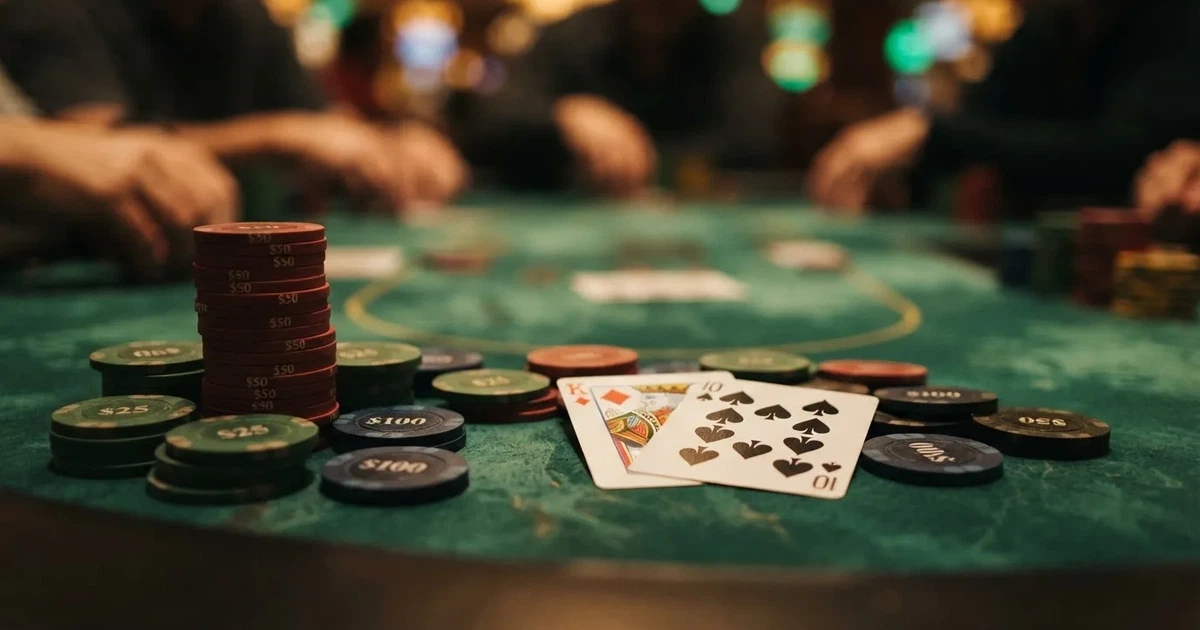
A reader lands on this page looking for a shortlist of casinos where the progressive meter climbs into seven figures. The honest answer for an Australian reader sits one step above any list of brands: the Interactive Gambling Act 2001 makes it an offence to provide online casino games — including online pokies and progressive jackpot slots — to a person physically in Australia, and no state or territory licences that activity. Every brand a casual comparison names operates outside that frame, which is why the Australian Communications and Media Authority has spent the past several years issuing formal warnings and directing local ISPs to block them.
That does not leave the reader with nothing to do. It leaves them with a different decision: between offshore jackpot sites that the ACMA has acted against, and the lawful Australian channels — licensed pokies venues, the land-based casinos in each state, and the regulated online and phone wagering market that BetStop covers. The rest of this page walks through both sides of that decision: how the prohibition works, the ACMA’s enforcement record against the brands most often marketed to Australians, the gameplay mechanics behind progressive jackpots, and the player-protection tools that bind a licensed Australian service and do not bind an offshore one.
- The legal frame in Australia
- How the ACMA enforces the prohibition
- What a progressive jackpot slot actually is
- The record, and where the category has gone since
- Table games on a casino floor: what jackpot-style play looks like in person
- Player protection: BetStop and the limits an offshore site will not enforce
- The brands the ACMA has acted against
- What a reader in Australia can actually do
- How the ACMA’s blocking rate has moved
- What the next year looks like
- FAQ
The legal frame in Australia
The Interactive Gambling Act 2001 (IGA), tightened by the Interactive Gambling Amendment Act 2017, makes it an offence for a provider to offer online casino games, online pokies or in-play betting to anyone in Australia. The law targets the provider, not the individual player — placing a bet from Australia on an offshore site is not itself a criminal offence for the punter. What it means in practice is that no Australian jurisdiction issues a licence for an online casino, and a licence displayed by an offshore brand (Curaçao, Anjouan, Kahnawake, the Isle of Man) has no force inside Australia.

What is licensed is wagering on racing and sport placed before the event, lotteries and keno. In practice most of those operators — Sportsbet, Bet365, Ladbrokes and others — hold their licence from the Northern Territory Racing and Wagering Commission (NTRWC), a small body with no full-time staff that meets once a month in Darwin and supervises 52 of the country’s online bookmakers. The arrangement exists for tax reasons and is the subject of an active reform push, but it is the legal channel that exists today.
Payment rules narrow the lawful side further. Since 11 June 2024, credit cards, credit-related products and digital currencies have been banned as a way to fund any licensed Australian online wagering service, with penalties of up to A$247,500 for the operator that takes them. The deposit routes that remain legal for licensed wagering are debit card, bank transfer, PayID/Osko and BPAY. A site asking an Australian customer for a credit card or a crypto deposit is, by that single fact, operating outside the Australian rules — useful as a quick check before doing anything else.
What a brand displaying a Curaçao or Anjouan licence means
Nothing inside Australia. Those regulators license the operator to run an international business; they do not authorise the operator to take Australian customers, and they offer no Australian consumer protection if a withdrawal is refused. A site can be blocked mid-session with a balance still on it, and the player has no complaints body to approach. That asymmetry — the offshore brand can disappear, the player cannot — is the practical shape of the prohibition.
The 2026 reform pipeline is worth flagging because it will move the line. The Interactive Gambling Amendment (Gambling Reform) Bill 2026 passed Parliament on 19 August 2026; its advertising and inducement measures commence on 1 January 2027. For a reader in 2026 this is law with a start date, not yet in force, and the present rules described above are what bind the market now.
How the ACMA enforces the prohibition
The Australian Communications and Media Authority does three things that shape what an Australian reader sees on the wire: it investigates complaints, it issues formal warnings to operators it has reason to believe are serving Australian customers, and it directs Australian internet service providers to block illegal sites. The blocking mechanism is the one that visibly changes what a reader can reach from a home connection.

By the ACMA’s own running totals, as reported in June 2026, 1,751 illegal gambling and affiliate marketing websites had been blocked since the first blocking request in November 2019, and more than 230 unlicensed gambling services had left the Australian market since enforcement was strengthened in 2017. A single round reported on 26 June 2026 added 12 names to the block list: 7Signs, ChromaBet, Donbet, Duospin, Freshbet, Slots Gem, Jacks Club, Lucky Start, Pointsbetz, Spinrise, Vinyl Casino and Wildsino. The list is long because the supply side is long; the ACMA’s pipeline is continuous, and the names change faster than any single page can keep up with.
H2 Gambling Capital’s 2025 report estimates that Australians lose roughly A$3.9 billion a year to illegal gambling sites, and that the share of gambling going through legal channels fell from 74% in 2021 to 64%. The lawful market is shrinking in share, not because licensed wagering is falling but because the illegal side is growing faster — a useful framing for any reader weighing which side of the line they want to be on.
Why a formal warning is not a fine
The ACMA’s formal warnings are public. They name the operator behind the brand and the date, and they sit on the regulator’s website as a record. They do not, by themselves, force a site offline. What they do is give the regulator a paper trail for the next step — a blocking request to ISPs, or referral for civil penalty proceedings under the IGA. For a reader, a brand on the ACMA warning list is a brand the regulator has already decided is serving Australian customers; that is information, even when it is not the end of the story.
What a progressive jackpot slot actually is
Progressive jackpots work on a simple engine. A small slice of every losing wager — usually well under one percent of the stake — feeds a pooled prize that grows until a player wins it. When the jackpot pays out, the meter resets to a preset minimum and starts climbing again. The growth is funded from the operator’s margin, not from any separate pool of player money; the prize is paid by the house. That distinction matters when reading marketing copy that frames the jackpot as “the players’ pool”: it is not.
Two structural choices shape the size of the prize. A standalone progressive is fed by a single machine in a single venue; a wide-area progressive links machines across many venues, often across several countries, and the meter climbs into seven and eight figures because every linked wager contributes. The first Megabucks machine, made by International Game Technology and installed in large casinos in 1986, paid out its inaugural jackpot of US$4,988,842.17 on 1 February 1987. The category has grown since, but the underlying mechanics have not changed: a slice of stake, a shared meter, a reset on win.
A second variant — the “must-hit-by” progressive — picks the payout amount the moment the previous jackpot is won. The amount is set within a preset range (often something like A$1,000–A$3,000) by a random number generator, and the prize can be triggered without landing a specific symbol combination. These jackpots stay small by design and are a different product from the wide-area Mega Moolah-style prize.
Why the meter climbs so high between wins
A wide-area progressive resets to a seed value — a few hundred thousand dollars is common — and grows by a fraction of every wager on every linked machine. At Mega Moolah’s typical contribution rate, a meter starting near A$1 million reaches A$15 million after enough cumulative play to justify the payout. That time horizon is measured in months, not hours, and during it the game’s expected return on the base game stays close to other video slots. The base game is paying out its normal rate; the jackpot is the long-tail overlay.
There is a textbook edge case. In some progressive games — video poker variants and Caribbean Stud Poker are the worked examples — the jackpot can grow large enough that the game’s theoretical return to player passes 100%, creating a positive-expectation bet. The break-even point is hard to calculate for slot machines because the reel layouts are not published, and the practical lesson is that the maths only favours the player when the meter is unusually large. Chasing it is what the marketing wants the player to do; the house edge on every other wager stays the same.
The record, and where the category has gone since
The largest online slot jackpot on the public record is €19,430,723.60, won on 27 April 2021 by a player in Belgium playing Microgaming’s Absolootly Mad: Mega Moolah at Napoleon Sports & Casino. Games Global, the business that now carries Microgaming’s catalogue, has reported later Mega Moolah wins of £11.5 million and £13.5 million, so the record has not been broken but the category keeps producing eight-figure payouts. These are wide-area progressives linked across many operators; the meter accumulates across the network, and the single spin that triggers the payout can land at any of them.
For a reader, the practical takeaway is that the headline figure on a jackpot slot page is the meter at the moment of reading, not the seed value or the average payout. Different sessions will show different numbers; the game’s expected return is stable across them, and the difference between a “must-hit” prize at a few thousand dollars and a wide-area prize at A$15 million is the difference between a marketing line and a category.
How often big wins hit
The marketing copy of any wide-area progressive will tell the reader how often the prize has historically been won — a Mega Moolah tier typically pays every eight to twelve weeks at network level. The figure is honest: with enough linked machines, the cumulative wager volume is large enough that the meter hits its average trigger point on a predictable cadence. Between those wins, base-game play continues at the slot’s normal return rate, and the contribution slice is the slice the player is paying for the chance at the headline.
A second-order effect is that the slot’s volatility rises as the meter climbs. The base game is unchanged; the chance of the rare combination that triggers the progressive is unchanged; but the size of the rare outcome grows, and the variance of a session at high meter is materially larger than at seed. That is what the marketing means by “the jackpot is due” — variance, not expectation.
Table games on a casino floor: what jackpot-style play looks like in person
A reader weighing land-based play against offshore sites often asks how jackpot-style mechanics translate to the table games available at Crown Melbourne, The Star Sydney and the smaller state casinos. The honest framing is that table games and jackpot slots are different products: a progressive slot is a single machine with a shared meter, while a table game is a house-banked game with a fixed house edge that does not vary with the size of the bet. The two can sit on the same casino floor, and they target different appetites.
Baccarat at Crown Melbourne, for instance, is offered in three approved variants — Traditional Baccarat, Crown Baccarat and 2 to 1 Baccarat — under rules approved by the Victorian Gambling and Casino Control Commission (VGCCC), which replaced the VCGLR as Victoria’s casino regulator on 1 July 2022. The house edge is structural: 1.06% on the Banker bet, 1.24% on the Player bet, and 14.36% on the Tie, with no jackpot overlay. Punto banco, the variant played at Crown, is dealt from a shoe of six or eight decks under fixed drawing rules, and the casino banks both hands at all times. It is the opposite of a progressive slot in shape: a flat house edge that does not grow with the size of the bet, and no rare outcome worth more than the wager.
Blackjack operates similarly. With optimal strategy under liberal Las Vegas Strip rules — dealer stands on soft 17, double on any two cards, double after split, resplit aces, late surrender — the house edge is about 0.28%; under Atlantic City rules it is about 0.43%. Side bets at Crown Melbourne include the renamed “Crown Pairs” (introduced 23 December 2024, replacing “Perfect Pairs”) and a “Free Bet” option with a new “Pot of Gold” side bet (introduced 25 March 2024). Both are tracked in the VGCCC’s public log of approved rule changes. None of these is a progressive jackpot. They are approved rule variations on a flat-edge game.
Craps offers the same shape. The Pass/Come bet carries a house edge of 1.41%, Don’t Pass/Don’t Come 1.36%, and Any Craps 11.11%. The come-out roll wins on 7 or 11, loses on 2, 3 or 12, and any other number becomes “the point” the shooter must roll again before a 7. None of this carries a jackpot overlay; the variance comes from the structure of the dice, not from a growing meter.
What “approved rules” means under state law
Under section 66 of the NSW Casino Control Act 1992, a casino operator must not permit a game to be played unless the game and its rules are approved by the regulator, and the operator must make a copy of the approved rules available on request. In Victoria, the Casino Control Act 1991 places the same gate-keeping role with the VGCCC. The point for a reader is that the rules printed on a felt are not the operator’s free invention; they are a regulator’s decision. Offshore sites display no equivalent gate-keeping, and the version of baccarat or blackjack the reader finds on an offshore site is whatever the operator has chosen to ship. That asymmetry is part of what the prohibition is protecting against.
Player protection: BetStop and the limits an offshore site will not enforce
The lawful side of the Australian market has a self-exclusion and consumer-protection layer the offshore side does not. BetStop, the National Self-Exclusion Register, has been live since August 2023 and binds every Australian-licensed online and phone wagering service. A punter who registers with BetStop is excluded from licensed wagering for a minimum period and cannot be re-accepted by any licensed operator during that time. The exclusion is binding on the operator, not the player; the operator must refuse the customer’s business.
An offshore casino is not connected to BetStop. A punter who has self-excluded through BetStop and then opens an account with an offshore brand has not been excluded from that brand, because BetStop’s reach ends at the licensed Australian market. The same punter can also set deposit limits, time-outs and reality checks on a licensed wagering account; none of those settings follow them to an offshore site. The asymmetry is structural: the tools exist on the licensed side and stop at the border.
The National Gambling Helpline is 1800 858 858 — free, 24/7, with chat at Gambling Help Online. It is reachable from any reader in Australia regardless of which side of the line they currently sit on, and it is the practical first step for anyone who feels their play has moved beyond what they intended.
Why the credit-card and crypto bans matter for player protection
The 11 June 2024 ban on credit cards and crypto as a funding route for licensed wagering is a player-protection measure, not a revenue measure. A punter cannot fund a licensed wagering account with money they do not yet have, and cannot fund it with a volatile asset whose value can move against them between deposit and withdrawal. An offshore site that accepts both is offering the punters the funding routes the law has decided are too risky to allow in the licensed market — useful context for any reader who has been told an offshore brand is “more flexible” on payments.
The brands the ACMA has acted against
The eleven brands below are not a ranking. They are listed because the Australian Communications and Media Authority has, in the period covered by the public register, issued a formal warning in respect of each for offering prohibited services to Australians. The order matches the order in the research file and is not an editorial preference. Where research marked a brand as having a listing-only subject support (a slot catalogue on the developer’s site, for example), the article reflects that fact without claiming it on the brand’s behalf.
A reader who recognises one of these brands from an affiliate review should know that “ACMA formal warning” is a public record on the regulator’s site, naming the operator behind the brand and the date. The brand may continue to operate outside Australia. It cannot lawfully target Australian customers, and any deposit the reader makes from Australia carries the asymmetries described above: no local complaints body, no BetStop coverage, and the site can be blocked mid-session.
RocketPlay
The ACMA issued a formal warning to Pulsup Ltd over RocketPlay in March 2026, with an earlier warning against Dama N.V. covering the same brand in May 2022. The warning is a public record; the brand is not listed by research as carrying any subject support beyond the warning itself. For a reader in Australia, the brand is on the wrong side of the line and offers no path that the regulator recognises.
Level Up Casino
Dama N.V. received a formal warning in May 2022 that covered six casino brands, including Level Up Casino. The brand’s slot catalogue appears on third-party listings such as Bgaming; research did not carry first-party confirmation of the catalogue’s content. A reader landing on the brand from those listings should know the warning sits on top of the marketing and has not been withdrawn.
Woo Casino
The ACMA issued a further formal warning to Dama N.V. over Woo Casino in March 2025. Research carried no additional subject support for the brand, so the article does not attach any other claim to it. The warning is the documented fact.
Spirit Casino
Dama N.V. received a further formal warning in May 2025 covering Spirit Casino. Research carries no additional subject support. Like Woo Casino, the documented fact is the warning.
National Casino
The ACMA issued a formal warning to Consolutetish S.R.L. over National Casino in July 2025. The brand’s slot catalogue appears on en.wikipedia.org listings as carried by research; that is a third-party listing and not a first-party confirmation of the catalogue’s contents. The warning is the documented fact on top of those listings.
Bizzo Casino
Consolutetish S.R.L. received the same July 2025 warning for Bizzo Casino; the brand had already been the subject of a 2022 formal warning to TechSolutions (CY) Group Limited and TechSolutions Group N.V. Two warnings, both standing. Research carried no additional subject support for the brand.
Ignition Casino
The ACMA issued a formal warning to Bamboo Media over Ignition Casino in July 2025. No additional subject support was carried by research. The brand operates offshore and offers no Australian-licensed path for punters.
Instant Casino
The ACMA issued a formal warning to EOD Code SRL over Instant Casino in February 2025. Research carries no additional subject support. The brand sits on the warning list and operates outside the Australian frame.
Jackbit
The ACMA issued a formal warning to Ryker B.V. over Jackbit and CasinOK in April 2026. No additional subject support was carried. The brand is on the warning list and offers no BetStop-covered path.
Casino Intense
The ACMA issued a formal warning to Sterplay Holding Ltd over Casino Intense in April 2025. Research marks this brand as the only one with a listings-only subject support, drawing on ABC, acma.gov.au and Crown Melbourne — a curious combination, since the latter two are regulator and venue rather than brand pages. The article records that listings trail without claiming the brand’s catalogue on its behalf.
Sky Crown
The ACMA issued a formal warning to Hollycorn N.V. over its Sky Crown and Blue Leo casino services, with the warning publication dated September 2022. Research carries no additional subject support for Sky Crown. The warning stands and is the documented fact.
| Brand | ACMA action and date | Operator named by the ACMA | Subject support |
|---|---|---|---|
| RocketPlay | Formal warning, March 2026 | Pulsup Ltd | — |
| Level Up Casino | Formal warning, May 2022 | Dama N.V. | listings-only (Bgaming.com) |
| Woo Casino | Formal warning, March 2025 | Dama N.V. | — |
| Spirit Casino | Formal warning, May 2025 | Dama N.V. | — |
| National Casino | Formal warning, July 2025 | Consolutetish S.R.L. | listings-only (en.wikipedia.org) |
| Bizzo Casino | Formal warning, July 2025; earlier 2022 | Consolutetish S.R.L.; earlier TechSolutions | — |
| Ignition Casino | Formal warning, July 2025 | Bamboo Media | — |
| Instant Casino | Formal warning, February 2025 | EOD Code SRL | — |
| Jackbit | Formal warning, April 2026 | Ryker B.V. | — |
| Casino Intense | Formal warning, April 2025 | Sterplay Holding Ltd | listings-only (Abc.net.au, acma.gov.au, Crownmelbourne.com.au) |
| Sky Crown | Formal warning, September 2022 | Hollycorn N.V. | — |
The table is a snapshot of the public warning record, not an assessment. A reader who arrived here from an affiliate review of any of these brands should treat the warning column as the first fact and the rest of the marketing as unverified.
What a reader in Australia can actually do
The lawful channels are narrower than a jackpot-slot reader might wish, but they are not empty. Land-based casinos in Melbourne, Sydney, Perth, Adelaide, Brisbane, the Gold Coast, Hobart, Darwin and Canberra operate under state legislation and offer approved table games and approved slot machines — including progressive jackpot slots linked across the venue or, in some cases, across a network. The Star Sydney and Crown Melbourne run wide-area progressives on machines that have been approved by the VGCCC or its NSW equivalent. The slots are not Mega Moolah, but they are regulated, the rules are public, and the winnings can be paid.
Licensed wagering on racing and sport is the second lawful channel. The 52 operators licensed by the NTRWC include Sportsbet, Bet365 and Ladbrokes, and the channel is the one covered by BetStop, the credit-card and crypto bans, and the rest of the player-protection framework. It is not the same product as a jackpot slot, but it is the product the law has decided Australians can buy from an online operator.
Lotteries and keno are the third lawful channel. The publishers vary by state — the Lott in much of the country, the Golden Casket in Queensland, Tatts in Victoria — and the games are not progressive jackpots but are licensed, audited and payable. A reader who wants the experience of a multi-million-dollar prize in a licensed Australian channel is closest to it through Oz Lotto, where the division-one pool is published in advance and the draw is on a fixed schedule.
The fourth path is a self-directed choice not to play. The National Gambling Helpline (1800 858 858) is free and 24/7, and BetStop is the formal route to exclusion from the licensed market. A reader who has decided the offshore side is the wrong place for them has both tools reachable from within Australia.
How the ACMA’s blocking rate has moved
The blocking mechanism is the visible enforcement arm of the prohibition, and the rate at which sites have been added is the most legible measure of the regulator’s pace. By the ACMA’s running totals in June 2026, 1,751 illegal gambling and affiliate marketing websites had been blocked since the first blocking request in November 2019. Spread over the roughly six-and-a-half years of operation, that is an average of about 270 sites blocked per year — and the rate is not constant. The single round reported on 26 June 2026 added 12 sites in one batch, and earlier batches have been larger. The rate the ACMA reports is the average of a fast-and-slow pipeline, and any reader looking at the figure as a “per year” prediction should know it is a smoothed-out average, not a forecast.
The trend behind the smoothed average is that the supply side has kept pace with enforcement. New offshore brands enter the market as fast as older ones are blocked, and the affiliate marketing sites that point at them appear in roughly the same volume. The 230-odd unlicensed services that have left the Australian market since 2017 are a separate counter from the blocks: those are operators that chose to withdraw rather than be blocked, and the count sits alongside the blocks rather than inside them. H2 Gambling Capital’s A$3.9 billion loss estimate for 2026 is what the ACMA’s enforcement has not been able to redirect.
What the rate does not tell the reader
The rate tells the reader the regulator is busy. It does not tell the reader which of the eleven brands above will be next on the block list, and it does not tell the reader that a brand not yet on the list is safe. A formal warning is the regulator’s intermediate step, and a brand can sit on the warning list for some time before a blocking request is issued. The reader’s safer assumption is that any brand actively marketing to Australians is at some stage of the regulator’s pipeline.
What the next year looks like
The 2026 reform bill’s advertising and inducement measures commence on 1 January 2027. Until then, the rules described above remain the binding frame. The ACMA’s enforcement pipeline continues; the block list grows; the formal-warning register grows; the A$3.9 billion H2 Gambling Capital estimate is the figure that sits behind the activity. None of the eleven brands above have been delisted, and the 230 services that have left the market since 2017 are a record of withdrawals, not of licences issued.
The Interactive Gambling Amendment (Gambling Reform) Bill 2026 will reshape what licensed wagering can advertise and what inducements licensed operators can offer, but it does not open the door to online casino games. The prohibition on online casino games remains in force, and the ACMA’s enforcement role remains active. A reader who has been waiting for the law to change so the offshore jackpot sites become legal will be waiting past 2027.
FAQ
Which single online slot holds the record for the largest jackpot win?
The largest online slot jackpot on the public record is €19,430,723.60, won on 27 April 2021 by a player in Belgium playing Microgaming’s Absolootly Mad: Mega Moolah at Napoleon Sports & Casino. Games Global, the business now carrying Microgaming’s catalogue, has reported later wins on the Mega Moolah series of £11.5 million and £13.5 million, but the Belgium win remains the headline figure.
Can a jackpot slot be funded with a cryptocurrency deposit?
Not through any Australian-licensed channel. Since 11 June 2024, credit cards, credit-related products and digital currencies have been banned as a funding route for licensed online wagering in Australia, with penalties of up to A$247,500 for any operator that takes them. A site that accepts crypto from an Australian customer is operating outside the Australian rules and outside BetStop’s reach.
Is it legal for an online casino to offer jackpot slots to Australians?
No. The Interactive Gambling Act 2001, as tightened by the Interactive Gambling Amendment Act 2017, makes it an offence to provide online casino games — including online pokies and progressive jackpot slots — to a person in Australia. No state or territory licences that activity. The ACMA enforces the prohibition by issuing formal warnings and directing ISPs to block sites, with 1,751 sites blocked since November 2019.
Why do jackpot slots typically pay out less often between big wins?
A wide-area progressive jackpot is fed by a slice of every wager on every linked machine, and the meter grows until the rare combination triggers the payout. Between big wins, the meter accumulates steadily, and the base game pays out at the slot’s normal rate. The contribution slice is what the player is paying for the chance at the headline prize; the base game’s return does not change as the meter climbs. Volatility rises with the meter, but the expected return on every other wager does not.
What happened to the record jackpot won on Mega Moolah in 2021?
The €19.43 million win on Absolootly Mad: Mega Moolah at Napoleon Sports & Casino on 27 April 2021 was paid out and reset the meter to its seed value. Games Global, which now distributes the Mega Moolah series, has reported later wins of £11.5 million and £13.5 million on the network, and the meter keeps accumulating between payouts. The Belgium win remains the headline figure on the public record.
Is there a way to play jackpot-style slots for real money through a licensed Australian venue?
Yes, at a land-based casino. Crown Melbourne, The Star Sydney and the smaller state casinos operate approved slot machines under state legislation, and the wide-area progressives on those floors are linked within the venue or across a state network. The slots are not the Mega Moolah network, but they are regulated, the rules are public, and winnings are paid. BetStop, the National Self-Exclusion Register, does not cover land-based play, but venue-level self-exclusion is available on request.