
What “best video slots Australia 2026” actually means once the marketing clears
Current as of 29 October 2026 · data checked against the Australian Communications and Media Authority’s published formal warnings and blocking notices.
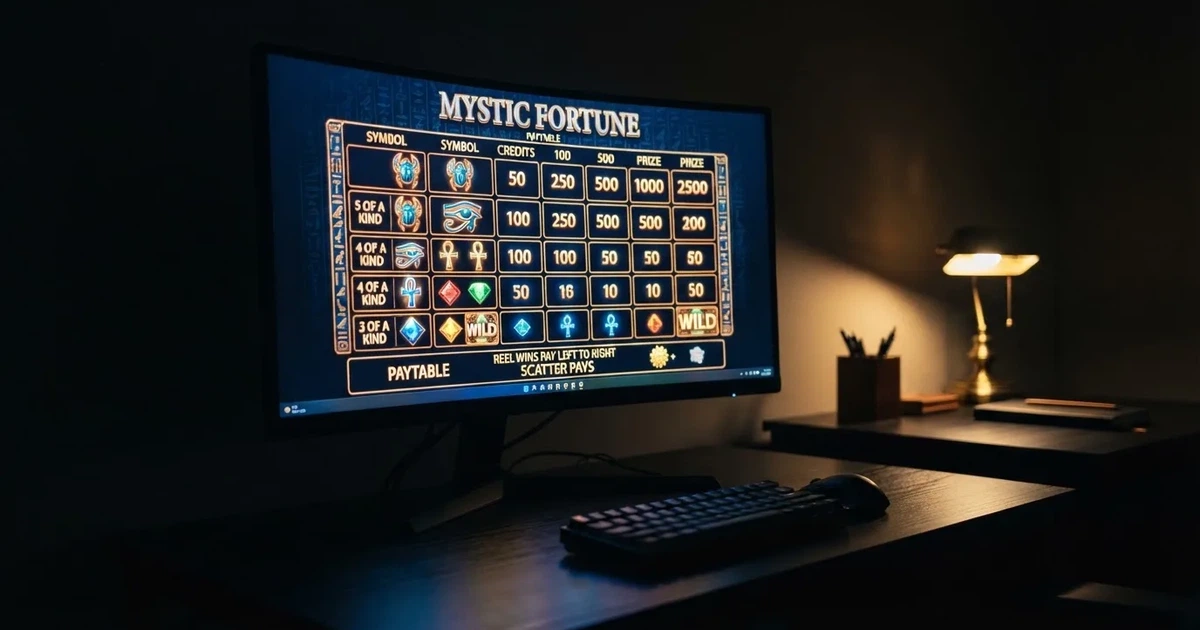
The phrase “best video slots Australia 2026” sits on top of a market that does not offer what the phrase suggests. Online casino games, including the modern multi-feature video slots that offshore sites advertise, cannot be licensed for an Australian customer under the Interactive Gambling Act 2001. The sites that sell them are not competing on a level field; they are operating in a space the regulator has spent nine years tightening. So the honest read of this page is not a ranking of online casinos, which the Australian frame does not allow. It is a read of the category itself — what a video slot is, why it sits on offshore sites rather than in licensed clubs, and what the regulator’s record actually shows about the brands that take Australian money anyway.
- How this comparison is put together
- The blocking record as the market’s own scoreboard
- What a video slot is, and why the format matters
- Responsible play inside a prohibited market
- Bonus offers and the cost of being induced
- Mobile play and what changes on a smaller screen
- The ACMA’s record, in plain language
- What the onshore alternative actually delivers
- Reading the ACMA’s actions against the market
- Frequently asked questions
How this comparison is put together
A ranking of “the best” needs its own criteria, otherwise it is ten affiliate pages in a trench coat. The shelves below use three. The first is regulatory: the ACMA’s published actions tell us which brands have been warned or blocked for offering prohibited services to Australians, and the ACMA itself does the filtering a comparison would otherwise have to invent. The second is the on-the-ground game: a modern video slot is not a classic three-reel machine, and the differences matter once a player decides what they want to spend time on. The third is cost: every offer, bonus, free-spin bundle or “VIP” tier on an offshore site comes wrapped in turnover rules, and the real price of an offer is rarely the headline number.

A note on what’s absent. Bonus terms — wagering multipliers, max cashout, eligible games — were not sourced for any of the brands below. The only material carrying those terms was affiliate marketing, and the affiliate pages disagree with each other on the same brand within the same week. So the operator pages here describe what the ACMA has done and what the brand is, not what a welcome package pays out. The cost shelf later in this piece picks up the question of what a bonus actually costs a player in turnover, without attaching that question to a brand’s offer.
The blocking record as the market’s own scoreboard
The ACMA’s blocking program is the cleanest public record of the offshore market that targets Australian customers. Australian ISPs received the first blocking request in November 2019, and as of June 2026 a cumulative 1,751 illegal gambling and affiliate marketing websites had been directed for blocking since that first request. In the same reporting window, more than 230 unlicensed gambling services had left the Australian market since enforcement was strengthened in 2017. Those are not the regulator’s promises. They are the regulator’s count.

The June 2026 round alone added twelve more sites to the blocking list: 7Signs, ChromaBet, Donbet, Duospin, Freshbet, Slots Gem, Jacks Club, Lucky Start, Pointsbetz.com, Spinrise, Vinyl Casino and Wildsino. That is the pace the comparison has to be read against — a market that is being pruned continuously, not a market that is being warned once.
The arithmetic that belongs on this page is the blocking rate itself. The first blocking request was issued in November 2019, and by June 2026 the ACMA’s cumulative count stood at 1,751 blocked sites. That works out to roughly 27 years per blocked site if the count were linear, but the record is not linear. Most of the cumulative total arrived in the years after the 2017 amendments, and the most recent rounds added sites in batches of a dozen. The honest framing is a band: somewhere in the order of 200 to 300 sites blocked per active year over the post-2017 enforcement window, with the annual rate sitting higher in the most recent reporting periods. A reader who wants a single number has to accept that the ACMA does not publish one.
A second figure belongs beside it. H2 Gambling Capital’s 2025 report put Australian losses to illegal gambling sites at about A$3.9 billion a year, and the share of gambling going through legal channels fell from 74% in 2021 to 64%. The illegal share is roughly a third of the market by spend, and that is the spend the blocking record is trying to compress.
What a video slot is, and why the format matters
The slot machine in its original form was a mechanical device: Charles Fey’s late-19th-century three-reel machine carried five symbols (horseshoes, diamonds, spades, hearts and the Liberty Bell), and three bells in a row paid the top prize of ten nickels. The three-reel format produced roughly a thousand possible combinations across about ten symbols per reel. Bally’s “Money Honey” in 1963 added a bottomless hopper and automatic payout of up to 500 coins without an attendant, and the mechanical machine became a self-service machine. The first true video slot was developed in 1976 by Fortune Coin Co. in Kearny Mesa, California, replacing the reels with a screen and the lever with a button.
Modern video slots sit a long way from that lineage. Five or more reels, fifty or more symbols per reel, odds against a top combination that can reach 300 million to one. A classic three-reel machine at a thousand combinations looks like a different product, because it is. The high-odds top combinations are paid for by a longer tail of empty spins, and that is the design choice the modern format makes: rarer hits, larger prizes when they land. Volatility, in industry shorthand, names that spread. A low-volatility title pays smaller wins more often; a high-volatility title pays rarely, and pays more when it does.
The volatility question matters here because it is the one design parameter that varies inside a single provider’s catalogue. Two titles from the same studio can carry different volatility ratings, and the same studio’s “high” can sit at a different return-to-player percentage than a competitor’s “high”. That is why a comparison that ranks titles by provider, or by brand, is doing less work than it looks. The variation sits inside the catalogue.
Where video slots are actually played in Australia
Australia does not license online casino games, but it does operate a large installed base of gaming machines outside casinos. As of the dates reported in 2023, New South Wales had 87,298 pokies-style machines outside casinos (June 2023), Victoria 26,380 (2021–22), Queensland 21,122 (October 2023), South Australia 11,672 (September 2023) and the ACT 3,587 (November 2023). The total across those five jurisdictions alone comes to roughly 150,000 machines. These are licensed electronic gaming machines (EGMs) in pubs, clubs and casino floors — not the offshore sites the search query is reaching for. The per-capita rate of machines outside casinos is reported as roughly five times that of the United States, on a 2010 base that has not been revised down.
The distinction matters because the offshore “video slot” market is not a parallel version of the onshore EGM market. The EGMs in an Australian pub are subject to state-level regulation, time-and-spend limits, and the consumer-protection framework that comes with a licence. The offshore product is subject to none of that. The same word — slot, pokie, video slot — covers a licensed machine in a NSW club and an unlicensed game on a Curaçao-registered site, and the two are not interchangeable for a player weighing what to do with their money.
Why the legal frame runs this comparison
The Interactive Gambling Act 2001, as tightened by the Interactive Gambling Amendment Act 2017, makes it an offence to provide online casino games, online pokies or in-play betting to a person physically in Australia. No state or territory licenses online casino products. The individual player is not the target of the law — the IGA is aimed at the provider — but an offshore site gives an Australian customer none of the consumer protections a licensed venue does. There is no local complaints body, no local recourse on a refused withdrawal, no guarantee the site will still be reachable tomorrow, and the ACMA can direct ISPs to block it with a balance still in the account.
A licensed online wagering service in Australia, by contrast, is bound by a different set of rules. Credit cards and credit-related products have been banned as a deposit method for licensed online wagering since 11 June 2024, with operator penalties running up to A$247,500. The legal deposit routes for a licensed Australian wagering account are debit card, bank transfer, PayID/Osko and BPAY. A site that asks for a credit card or a crypto deposit is operating outside the Australian rules for licensed wagering — and licensed wagering does not include online casino games in the first place. The credit card and crypto bans are not available as a marker of legitimacy for an online casino site, because online casinos are not in the licensed set at all.
The 2026 reform layer sits on top of this. The Interactive Gambling Amendment (Gambling Reform) Bill 2026 passed Parliament on 19 August 2026; its advertising and inducement measures commence on 1 January 2027. That is a law with a start date, not a rule in force on a 2026 page. A reader who sees inducement advertising change shape in the second half of 2026 is watching the lead-up, not the switch.
Responsible play inside a prohibited market
Responsible-gaming tools in Australia are calibrated to the licensed market, not the offshore one. BetStop, the National Self-Exclusion Register, has been live since August 2023 and binds Australian-licensed online and phone wagering services. An offshore casino is not connected to BetStop. A player who excludes themselves through BetStop has done so for the licensed wagering set, and the offshore sites in this comparison are not bound by that exclusion. That is a feature of the offshore market that the marketing does not usually volunteer.
For a person who feels their play is becoming a problem, the National Gambling Helpline on 1800 858 858 is free, available 24/7, with a chat option through Gambling Help Online. The helpline is a service of the licensed Australian frame and operates independently of any operator. The same applies to state-based support services funded through the licensed framework.
The offshore operator’s own responsible-gaming tools, where they exist, are voluntary and enforceable only at the operator’s discretion. A self-imposed deposit limit on an offshore site is a request the site is not obliged to honour. A player who has set a limit and wants it enforced has, in practice, no Australian body to appeal to if the site changes its mind. The state-based EGM framework, with its mandatory pre-commitment and time-out features, sits in a different regulatory world from the offshore deposit limit toggled on a website.
Where the spend actually goes
The A$3.9 billion figure for losses to illegal sites is the headline, but the structure around it tells a reader what the comparison is for. The legal-channel share of Australian gambling spend fell from 74% to 64% between 2021 and 2025, which means roughly a third of Australian gambling spend by 2025 was being directed to operators the ACMA considers prohibited. The blocking program is the regulator’s response to that share, and the cumulative 1,751 blocked sites is its working measure of how much of the illegal market has been made unreachable.
The same data tells a player something more practical. The spend being routed to offshore sites is being routed away from the licensed venues that carry the consumer-protection framework. The EGM in a NSW pub, with its mandatory time-and-spend limits and its state-level complaints body, is a different product from the offshore site with the same name on its lobby. They are not competing on the same field, and a player comparing them on price alone is missing the field.
Bonus offers and the cost of being induced
The marketing language around offshore video slots leans heavily on welcome packages, free-spin bundles, deposit matches and reload bonuses. Each of these is an inducement, and each is gated by turnover rules. The wagering multiplier — how many times the bonus (or the bonus plus deposit) must be played through before any winnings can be withdrawn — is the parameter that decides what the offer actually costs. A 35x multiplier on a bonus of A$200 is A$7,000 of required turnover before withdrawal. A 50x multiplier on the same bonus is A$10,000. The headline number on the offer does not change between those two cases.
The compounding effect is what makes the inducement worth resisting on its own terms. A player who takes a deposit match has, in most rule sets, both the deposit and the bonus amount subject to turnover, and the contribution rate of slot play to that turnover is usually 100% (table games are often lower). At 100% contribution, the A$200 bonus with a 35x playthrough is 7,000 bets of A$1 — about 35,000 seconds of play at a five-second spin interval, which is close to ten hours of continuous spinning. The house edge on a typical video slot sits somewhere between 4% and 10% of turnover, depending on the title, so the expected loss over those ten hours is in the order of A$280 to A$700 against the A$200 bonus being cleared. The expected value of the bonus, before considering the time cost, is negative.
That arithmetic is why bonus offers on video slots are an inducement rather than a gift. The marketing word is “free”; the mechanic is a requirement to gamble A$7,000 to extract A$200. A player who treats the offer as entertainment has paid A$280 to A$700 in expected loss for the privilege of taking ten hours to clear a bonus. A player who treats it as a way to make money is playing a negative-expected-value game under a time commitment that makes the negative expectation larger. The free spins that come bundled with welcome packages sit under the same rule: winnings from free spins are usually subject to their own turnover requirement, often higher than the cash bonus multiplier.
The Australian frame sharpens this. A welcome package offered by an offshore site to an Australian customer is, by the ACMA’s reasoning, an inducement to use a prohibited service. The 2026 reform bill makes inducement advertising a regulated category from 1 January 2027, and offshore operators targeting Australians will fall inside that frame. For the period a 2026 reader is in, the inducement is unregulated offshore and the offer itself is to a prohibited service. The arithmetic of the offer does not change; the legal status of the offer does.
Mobile play and what changes on a smaller screen
Modern video slots are designed for mobile. A five-reel layout with bonus rounds, free-spin features and pick-em mini-games scales down to a phone screen more cleanly than a desktop-style table game, and the touch interface maps to the spin button and the bet adjustment without a redesign. Most offshore providers ship a mobile-web build alongside their desktop client, and a meaningful share of play on those sites now happens on a phone.
The question for a reader is whether the mobile product is the same game as the desktop one. The honest answer is “usually, with caveats”. The maths layer — the random number generator, the symbol distribution, the bonus frequency — is identical between the two builds, because that is what the regulator in the licensed jurisdiction requires. The presentation layer can vary: a small-screen layout may collapse the paytable into a tap-through menu, may move the bet controls into a side drawer, and may reduce the visible reel window to a portrait crop. None of that changes the odds, but it changes how the game reads. A player who knows a title from desktop and meets it on mobile for the first time is meeting a re-arranged version of the same game.
The native app question is a separate one. Some offshore operators offer a downloadable app; most steer players to a mobile browser build. An app that takes deposits and stores a session token is, from a data-handling perspective, a different product from a browser session that closes when the tab closes. The Australian frame has nothing to say about this, because the offshore operator is outside the frame. A licensed Australian wagering service runs under local data-handling rules, and the offshore operator does not.
For an Australian player, the more practical mobile question is reachability. The ACMA’s blocking program targets website domains, and mobile access to those domains is blocked at the ISP level. A blocked site is a site that does not load on a phone on an Australian network any more than it loads on a laptop. That is the part of the mobile story that the offshore marketing does not lead with.
The ACMA’s record, in plain language
The brands below are not ranked by quality. They are listed because the ACMA itself issued a formal warning for offering prohibited interactive gambling services to Australians, and the warning is on the public record. The table covers the eleven brands the research carries, in the order research places them. Where research names a brand as a listing-only reference — that is, a brand whose catalogue appears in third-party listings but which the research did not connect to the brand itself — the entry says so and names the listing. Where research has no figure for the brand’s “subject support” — the question of whether the brand actually offers a specific game — the entry does not attach the subject to the brand at all.
Table: ACMA formal warnings over brands offering video slots to Australians
| Brand | ACMA action and date | Operator named by the ACMA | Subject support |
|---|---|---|---|
| RocketPlay | Formal warning, March 2026 (Pulsup Ltd); earlier Dama N.V., May 2022 | Pulsup Ltd | — |
| Level Up Casino | Formal warning, May 2022 | Dama N.V. | Listings (Bgaming) |
| Woo Casino | Formal warning, March 2025 | Dama N.V. | — |
| Spirit Casino | Formal warning, May 2025 | Dama N.V. | — |
| National Casino | Formal warning, July 2025 | Consolutetish S.R.L. | Listings (Wikipedia) |
| Bizzo Casino | Formal warning, July 2025; earlier TechSolutions, 2022 | Consolutetish S.R.L. | — |
| Ignition Casino | Formal warning, July 2025 | Bamboo Media | — |
| Instant Casino | Formal warning, February 2025 | EOD Code SRL | — |
| Jackbit | Formal warning, April 2026 | Ryker B.V. | — |
| Casino Intense | Formal warning, April 2025 | Sterplay Holding Ltd | Listings (ABC, ACMA, Crown Melbourne) |
| Sky Crown | Formal warning, September 2022 | Hollycorn N.V. | — |
The table is the regulator’s own column, not a ranking. A reader who wants a “best” list of video slots for Australia will not find one here, because the regulator’s own record says there is no lawful online casino market to rank. What the table shows is the cumulative shape of the offshore targeting of Australian customers — eleven brands, multiple operators, repeated warnings to the same operator over different brands, and a 2022–2026 spread that has not slowed.
The pattern inside the table is worth a paragraph. Dama N.V. appears four times — over RocketPlay in 2022, Level Up in 2022, Woo Casino in 2025 and Spirit Casino in 2025. The operator changed the brand on the storefront but did not change the operator on the warning. TechSolutions appears in 2022 over Bizzo Casino, and Consolutetish S.R.L. — a related or successor entity — appears in 2025 over National Casino and Bizzo Casino again. A reader who treats the brand as the unit of trust is treating the wrong unit. The operator behind the brand is the entity the ACMA warns, and the ACMA warns it because the operator continues to take Australian customers.
Reading each brand on its own terms
The block below carries one brand per entry, in research’s order, with the ACMA action and the date it was published. The verdict at the end of each block is the page’s own read of the brand against the rest of the table — what the brand does, where it sits in the warning pattern, and what the right read is for a player comparing the offshore options against the Australian frame.
RocketPlay
RocketPlay sits at the top of the regulator’s recent record: a formal warning issued in March 2026 to Pulsup Ltd over Rocketplay.com.au. The brand has been on the ACMA’s list before — a 2022 warning to Dama N.V. covered RocketPlay among six brands. The operator name on the storefront has changed; the underlying offer to Australian customers has not. A player who lands on the brand today is meeting the same category of service that was warned against twice, and the second warning is recent enough that the operator has not had time to demonstrate a change in behaviour. The right read is straightforward: this is the freshest ACMA action in the table, and the brand carries it.
Level Up Casino
Level Up Casino’s formal warning was issued in May 2022 to Dama N.V., as one of six brands warned in the same round. The brand’s catalogue appears in Bgaming’s third-party listings, which is the connection the research carries — the listing is a Bgaming catalogue entry, not a brand endorsement, and it does not say anything about the brand’s standing with the ACMA. The 2022 warning is four years old by 2026, which is a long stretch in the offshore market. It is also not a clearance. The ACMA does not publish “warnings expired”; it publishes new warnings, and a brand that has not been re-warned is a brand that may have stopped accepting Australian customers or may simply have moved on to a new domain. The honest read of Level Up is “warned in 2022, no published follow-up, no current ACMA action on the brand”.
Woo Casino
Woo Casino’s formal warning was issued in March 2025 to Dama N.V., one of two Dama N.V. warnings in 2025 (Spirit Casino is the other). The brand’s connection to video slots is not detailed in the research available for this page — the entry stays out of that field. A 2025 warning is recent enough to be the regulator’s current view, and the brand sits in the same Dama N.V. group as three other entries in the table. For a player, the read is the same as RocketPlay’s: a recent ACMA action over a brand whose operator has been warned repeatedly.
Spirit Casino
Spirit Casino was the second Dama N.V. brand to be warned in 2025, in May 2025. Same operator, different storefront. The pattern across Dama N.V. — RocketPlay in 2022, Level Up in 2022, Woo Casino in 2025, Spirit Casino in 2025 — is the central story of the table. A reader comparing the Dama N.V. brands is not comparing four casinos. They are comparing four fronts for one operator, and the operator has been told to stop. The right read is that the brand layer is marketing, not a separator.
National Casino
National Casino’s formal warning was issued in July 2025 to Consolutetish S.R.L., in the same round as Bizzo Casino and the same operator group. The brand’s catalogue appears in Wikipedia’s gambling listings, which is the only “subject support” the research carries, and it carries no weight on the ACMA’s view of the brand. A 2025 warning is recent. The Consolutetish S.R.L. / TechSolutions lineage (Bizzo was warned under TechSolutions in 2022, and Consolutetish S.R.L. warned over both brands in 2025) is the same multi-front pattern as the Dama N.V. group, on a smaller scale.
Bizzo Casino
Bizzo Casino carries the most layered record in the table: a 2022 warning to TechSolutions (CY) Group Limited and TechSolutions Group N.V., followed by a 2025 warning to Consolutetish S.R.L. in the same round as National Casino. The brand has been on the regulator’s list twice, across two related operators, and the second warning is two years after the first. That is not a brand that has adjusted its Australian-facing offering; it is a brand whose operator has changed names. For a reader, the read is identical to the rest of the Consolutetish S.R.L. group: the brand is a wrapper, the operator is the subject of the warning.
Ignition Casino
Ignition Casino’s formal warning was issued in July 2025 to Bamboo Media, in the same round as the Consolutetish S.R.L. warnings. The research carries no figure on Ignition’s catalogue or “subject support” — the brand sits in the table with the ACMA action as its only sourced line. A 2025 warning against a brand that is new to the table (no prior 2022 entry) is the ACMA picking up a brand it had not previously named. The read is that the regulator’s surface area is widening, not contracting, in 2025.
Instant Casino
Instant Casino’s formal warning was issued in February 2025 to EOD Code SRL. The brand has no prior ACMA entry in the research, and the operator name (EOD Code SRL) does not appear elsewhere in the table. That makes Instant Casino one of the standalone entries — a brand whose operator has been warned once, with no 2022 history to weight against the 2025 action. The fresh action is itself the read: a recent warning against a single brand, no prior record on the table, no current reason to treat the brand as cleared.
Jackbit
Jackbit’s formal warning was issued in April 2026 to Ryker B.V., in the same round as CasinOK. April 2026 is recent, and the entry sits in the same shape as RocketPlay: a current-year warning, no prior table history for the brand. The topic “video slots” is what the page is about, and the ACMA’s reason for warning Jackbit is the same category of offer the topic names. A player comparing Jackbit against the rest of the table is comparing a brand that the regulator flagged for the same behaviour in the same year.
Casino Intense
Casino Intense’s formal warning was issued in April 2025 to Sterplay Holding Ltd. The brand’s name appears in third-party listings (ABC News, the ACMA’s own register, Crown Melbourne’s site), but those listings do not amount to a clearance from the regulator. A 2025 warning is recent. The brand has no prior 2022 entry in the table, so the read is the standalone pattern: a single ACMA action in 2025, no earlier record to weight against.
Sky Crown
Sky Crown’s formal warning was issued in September 2022 to Hollycorn N.V., in the same notice as Blue Leo Casino. The 2022 date makes it the oldest entry in the table after the May 2022 warnings to Dama N.V. (RocketPlay, Level Up). The Hollycorn N.V. group has not been re-warned in the research window, which puts Sky Crown in the same shape as Level Up Casino: warned in 2022, no published follow-up. The read is that the brand may have moved on, or may have changed its storefront. The ACMA does not say which.
What the table does not show
The table covers the eleven brands the research carries. It does not cover the 1,751 blocked sites, because the blocking list and the formal warning list are different instruments — the formal warning is a published notice, the blocking request is an instruction to ISPs that does not name every site publicly. The two overlap, but they are not the same list, and a reader who wants a complete count of every offshore site the ACMA has acted against is asking for a number the ACMA does not publish in that form.
The table also does not carry bonus terms. The only sources for bonus terms on these brands were affiliate marketing pages, and the affiliate pages disagree with each other on the same brand within the same week. The page describes what the ACMA has done and what the brand is, not what a welcome package pays out. A reader who wants to compare offers should treat the absence of bonus terms as the data point — the offshore market does not publish terms in a form that survives basic cross-checking.
What the onshore alternative actually delivers
The licensed Australian market for what gets called “video slots” runs through EGMs in pubs, clubs and casinos. These machines are state-regulated, carry mandatory harm-minimisation features, and are subject to the consumer-protection framework of the state regulator. NSW legalised slot machines in 1956 and operates the largest installed base (87,298 machines outside casinos as of June 2023). Victoria (26,380 machines in 2021–22), Queensland (21,122 in October 2023), South Australia (11,672 in September 2023) and the ACT (3,587 in November 2023) follow.
The game on a licensed EGM is not the offshore “video slot”. It is a state-approved machine with a fixed return-to-player percentage, mandatory time-and-spend displays, and a regulator that can audit the cabinet. The experience of playing one is closer to a thirty-year-old arcade machine than to a modern offshore video slot with cascading reels and a bonus round. That is the on-the-ground answer to the question of what these games are, and the gap between it and the offshore product is the shape of the prohibited market.
For a player who wants the offshore product — the multi-feature video slot with cascading reels, free-spin rounds, pick-em bonus features and high-volatility top combinations — there is no Australian-licensed venue that delivers it. The choice on the table is between an onshore product that is licensed and regulated but limited in format, and an offshore product that matches the search for video slots but is prohibited, unregulated, and on the ACMA’s record.
Reading the ACMA’s actions against the market
A reader who came to this page looking for a ranked list of video slots is asking a question the Australian frame does not allow to be answered. The offshore brands that match the market have been warned, blocked or both, and the cumulative record is the regulator’s working measure of how the offshore market has been handled. The right read is not “which of these is best” — the regulator has already decided that none of them are lawful — but “what is the shape of the market I am being offered, and what does it cost me to be in it”.
The shape is one operator per several brands, with new domains appearing faster than the ACMA can warn them and the underlying operator name reappearing on the next round. The cost is the gap between the licensed onshore product and the offshore one, measured in consumer protections that the offshore site does not have to provide and the player cannot enforce. The arithmetic of the bonus offer sits on top of that, and it is the inducement the 2026 reform bill is moving to regulate from January 2027.
Frequently asked questions
How does a video slot differ from a classic three-reel pokie?
The classic three-reel pokie carries about ten symbols per reel across roughly a thousand possible combinations. A modern video slot uses five or more reels with fifty-plus symbols per reel, producing odds as high as 300 million to one against the top combination. The classic pays small wins often; the modern pays rarely and pays more when it does. The volatility difference is the design choice, not an accident.
Do video slots include bonus rounds that classic machines don’t?
Yes, and this is the main reason the format exists. Modern video slots layer free-spin rounds, pick-em mini-games, cascading reels and progressive multipliers on top of the base reel game. The base reel game is rarely where the title’s appeal sits. The classic three-reel format does not have those layers; the bonus round is what the player is paying for, in time and in turnover.
Are the mobile and desktop versions of a video slot the same game?
The maths layer is identical. The random number generator, the symbol distribution and the bonus frequency do not change between a desktop client and a mobile browser build. The presentation does: a small-screen layout often collapses the paytable into a menu, moves the bet controls into a drawer, and crops the reel window to portrait. The odds stay the same; the read of the game changes.
How many paylines does a typical modern video slot use?
There is no single answer, because paylines are a design choice rather than a fixed parameter. A modern video slot can run a fixed number of paylines (often 20 to 40), can use a “ways to win” structure that counts every adjacent-symbol combination across the reels (243 ways on a five-reel, three-row layout, for example), or can use a cluster-pays structure that pays whenever a group of matching symbols touches. The catalogue is wider than any single number.
Why does volatility vary across the same provider’s catalogue?
Volatility is set by the symbol distribution and the bonus frequency, both of which the provider can adjust per title. Two titles from the same studio can sit at different points on the volatility scale, and the same studio’s “high” can carry a different return-to-player percentage than a competitor’s “high”. The catalogue is the unit of variation, not the provider.
Which Australian state has the most licensed gaming machines outside casinos?
New South Wales, by a wide margin. The 2023 figures are 87,298 machines outside casinos in NSW (June 2023), 26,380 in Victoria (2021–22), 21,122 in Queensland (October 2023), 11,672 in South Australia (September 2023) and 3,587 in the ACT (November 2023). NSW carries more than the next three jurisdictions combined, and the per-capita rate of machines outside casinos across Australia is reported at roughly five times that of the United States on a 2010 base.