
Big Red Pokies Online Australia 2026: What’s Real, What’s Prohibited, and What a Punter Can Still Walk Into
Anyone typing a phrase like “big red pokies online australia” into a search box is usually chasing the same animal: an Aristocrat-style Australian-outback theme, kangaroos and crocodiles on the reels, the kind of machine that has sat in pubs and clubs for the best part of two decades. The honest answer is shorter than the question looks, and it has two halves. Online casino games — including every online pokies product, including any “Big Red” clone or knock-off — cannot be legally offered to a person physically in Australia, full stop. What remains available is the licensed, land-based machine on a pub or club floor, regulated state by state, with cash gambling that stays inside the country. Everything else is an offshore casino pitching Australians from outside the regime.
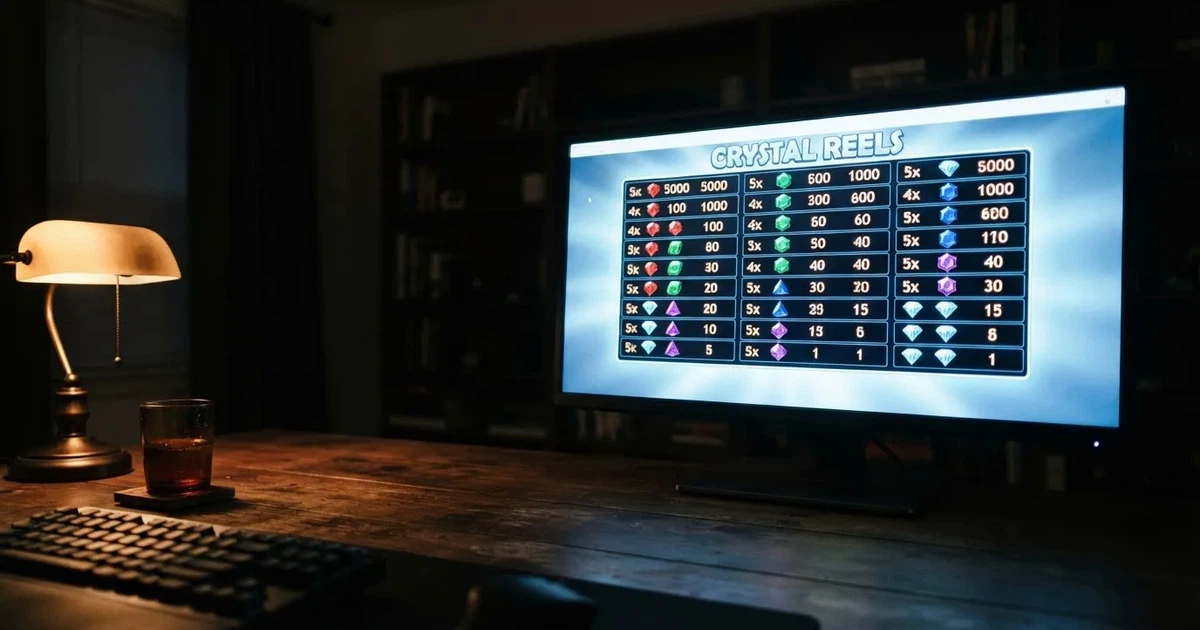
The currency-stamp line below is the only part of this page a reader should treat as a moving target; the rest of the figures are pinned to the dates in their sentences.
Data current as of 29 October 2026, checked against the Australian Communications and Media Authority (ACMA) register, the Interactive Gambling Act 2001, and state gaming commissions.
- The Prohibition Itself: Why “Online” Stops Being an Option
- The History of the Land-Based Machine That Big Red Sits Inside
- What the ACMA Has Actually Done
- The H2 Gambling Capital Picture
- The State of the Floor: Where the Machines Actually Sit
- A Reader Who Wants an Online Version: What the Sites Actually Offer
- Player Protection Routes That Actually Work in Australia
- The Offshore Casino Trade-Off: Why They Keep Pitching
- The Brands the ACMA Has Named: What the Warnings Cover
- How the Block Rate Translates: A Calculated Reading
- The Selection Between Routes: Who Each Path Suits
- The Page’s Own Verdict
- The Theme’s Neighbours: Two Other Casino Classics a Floor Player Will Know
- Frequently Asked Questions
The Prohibition Itself: Why “Online” Stops Being an Option
The Interactive Gambling Act 2001, tightened by the Interactive Gambling Amendment Act 2017, makes it a criminal offence for a company to provide an online casino game — slots, table games, live-dealer roulette, anything with a wager and a digital spin — to a person who is in Australia. The Act targets the provider, not the punter; the player is not the one the regulator comes for. But what it does mean is that no state or territory body can license an online pokie product, so any site offering “Big Red” online to an Australian IP is doing so without Australian permission. A licence badge from Curaçao, from the Malta Gaming Authority, or from any other offshore jurisdiction does not change that, because those regulators do not authorise service into Australia — they authorise service from somewhere else, into whoever the operator chooses to take.

The legal minimum age is 18. Credit cards, credit-related products, and digital currencies were banned as payment for any licensed Australian online wagering service from 11 June 2024, with operator penalties up to A$247,500. The legal deposit routes that remain are debit card, bank transfer, PayID and Osko, and BPAY. A site that takes a credit card or a Bitcoin deposit from an Australian account is, on that transaction alone, operating outside the Australian regime.
A recreational player’s gambling winnings are not assessable income under section 6-5 of the Income Tax Assessment Act 1997, and losses are not deductible. The only exception is the rare case where a person carries on a business of betting, and that is a model only — readers should check with the ATO if it ever applies to them. There is no tax wedge in the casual play.
The Interactive Gambling Amendment (Gambling Reform) Bill 2026 passed Parliament on 19 August 2026. Its advertising and inducement measures commence on 1 January 2027 — law with a future start date, not a rule in force on a 2026 page. It will tighten what offshore operators can do to lure Australian sign-ups, but on a page read before 1 January 2027, the rule it lays down is the one coming into force that day, not the one binding today.
The History of the Land-Based Machine That Big Red Sits Inside
The land-based pokies market is what the online market claims to copy, and its history is the part an Australian reader already knows without being told. Registered clubs operated Australia’s first legal poker machines in 1956, in New South Wales. The Federal Group held a monopoly licence over all of Tasmania’s poker machines from 1968; legislation passed in November 2021 ended that monopoly and moved oversight of the machines to the Tasmanian Liquor and Gaming Commission. Western Australia banned poker machines in pubs and clubs when Crown Perth opened in 1985; Crown Perth’s own machine count has since grown from about 200 in 1985 to roughly 2,500, all approved by the state’s Gaming and Wagering Commission.

The legal minimum return-to-player for a poker machine depends on which state the machine is in: 85% in New South Wales, the Northern Territory, Queensland, and (generally) Victoria — 87% at Crown Melbourne — 87% in the Australian Capital Territory and Tasmania, 87.5% in South Australia, and 90% in Western Australia. Those are floors, not averages; the house edges above them are not the regulator’s concern. Tasmania planned nation-leading mandatory pre-commitment cards for its poker machines, but implementation of the reform was delayed until late 2025.
What the ACMA Has Actually Done
The ACMA is the body that does the enforcing. It can investigate, issue formal warnings under the Interactive Gambling Act, and direct Australian internet service providers to block offending sites at the network layer. As reported in June 2026, a cumulative total of 1,751 illegal gambling and affiliate marketing websites had been blocked since the first blocking request in November 2019, and more than 230 unlicensed gambling services had left the Australian market since enforcement was strengthened in 2017. In a round reported on 26 June 2026 alone, the ACMA asked ISPs to block 12 more sites: 7Signs, ChromaBet, Donbet, Duospin, Freshbet, Slots Gem, Jacks Club, Lucky Start, Pointsbetz.com, Spinrise, Vinyl Casino, and Wildsino.
The same year the ACMA has been writing to operators directly. In February 2025 it issued a formal warning to EOD Code SRL over Instant Casino. In March 2025 and again in May 2025 it issued further formal warnings to Dama N.V., the operator behind Woo Casino and Spirit Casino. In April 2025 the ACMA wrote to Sterplay Holding Ltd over Casino Intense. In July 2025 it wrote to Bamboo Media over Ignition Casino, and to Consolutetish S.R.L. over National Casino and Bizzo Casino — Bizzo having already been the subject of a 2022 formal warning to TechSolutions. In March 2026 the ACMA wrote to Pulsup Ltd over Rocketplay.com.au. In April 2026 the ACMA wrote to Ryker B.V. over Jackbit and CasinOK. The same Dama N.V. had been warned back in May 2022 over six brands: Bambet, Dazard, Level Up, Rocketplay, Wild Tornado, and Cobra Casinos.
A formal warning is not a prosecution, but it sits in the ACMA’s record and it is a documented signal that the named operator is providing prohibited interactive gambling services to Australians. Two warnings to the same operator group is not “the regulator changed its mind”; it is the regulator noting that the first one was ignored.
The H2 Gambling Capital Picture
H2 Gambling Capital’s 2025 report estimates that Australians lose about A$3.9 billion a year to illegal gambling sites, and that the share of gambling going through legal channels fell from 74% in 2021 to 64%. The legal-channel share is the number that matters here, because it captures the gap between what Australians actually want to do with a wager and what the Australian regime lets them do online. Legal channel covers licensed wagering on races and sport placed before the event, lotteries, and keno — products the ACMA has no problem with. The illegal share covers online pokies, online table games, and in-play betting — products the Interactive Gambling Act prohibits. A reader can think of the 64% as the floor of what Australians have chosen to keep inside the regime, and the missing 36% as the share that has drifted into offshore operators advertising Big Red-style themes.
The Northern Territory Racing and Wagering Commission regulates 52 of Australia’s online bookmakers, including Sportsbet, Bet365, and Ladbrokes, which are licensed in the Territory for tax reasons. The commission has no full-time staff and meets once a month in Darwin — a structure that matters because it explains why Australian online wagering is real, licensable, and bookmaker-shaped, while Australian online casino games are not licensable at all.
The State of the Floor: Where the Machines Actually Sit
In 2020–21 Australians bet almost A$150 billion through gaming machines and lost A$12.18 billion on them, with Australia holding about 3% of the world’s pub and club poker machines on 0.3% of the global population. New South Wales had 87,298 gaming machines outside casinos across 2,195 venues in June 2023, with player losses of A$8.18 billion in 2022–23. Queensland had 21,122 gaming machines operating in 351 venues in October 2023. Victoria had 26,380 outside Crown Casino in 488 venues in 2021–22, under a 30,000 statewide cap. Those numbers are what the Big Red-style machine sits inside — a market measured in tens of thousands of units, regulated jurisdiction by jurisdiction.
A player who wants the actual experience — the cabinet, the buttons, the paytable on the screen, the design with the Australian animals — has to go to one of those venues. A player who wants it from a laptop in Sydney or Perth has, on a page read in 2026, no legal route. The difference is not a question of preference. It is a question of which regulator has authority over the device.
A Reader Who Wants an Online Version: What the Sites Actually Offer
What an offshore site sells under a “Big Red” label is, almost invariably, a knock-off: a five-reel video slot that copies the outback motif without licensing Aristocrat’s intellectual property, paired with a wagering mechanic that has nothing to do with the land-based machine’s paytable. Aristocrat Leisure Limited is an Australian-listed manufacturer of gaming machines, but it does not offer online casino versions of its Australian-floor products for the Australian market, because no Australian regulator would let it. The versions that do appear online are produced by other studios — none of them licensed for the Australian market — and they sit on offshore sites whose own marketing promises an “Aristocrat experience” that the original manufacturer never authorised.
The volatility question is sharper than a casual reader expects. A traditional land-based Aristocrat cabinet of this style sits in the medium-to-high volatility band, with bonus features triggered by scatters and free-spin rounds. Newer online video slot themes from major studios are typically lower-volatility, designed to keep a player clicking through more spins per session. A player moving from a pub cabinet to an offshore site that claims a “Big Red” theme will notice the difference inside twenty minutes: the wins come more often, and they are smaller. The math behind that — more outcomes per session, smaller expected return per spin — is what offshore marketing calls “more fun”. The arithmetic is honest in both directions; the marketing word is doing what marketing words do.
Player Protection Routes That Actually Work in Australia
BetStop, the National Self-Exclusion Register, has been live since August 2023, and it binds Australian-licensed online and phone wagering services — the bookmakers, the lotteries, the keno operators. An offshore casino is not connected to BetStop. A self-excluded Australian can still reach an offshore site, still deposit, still play, still lose. The register is a real protection for the licensed wagering market, and it is a non-protection for the prohibited product. State-based self-exclusion registers work the same way: they bind licensed venues, not offshore URLs.
The National Gambling Helpline on 1800 858 858 is free, runs 24/7, and supports chat through Gambling Help Online. The helpline is a place a punter can ring regardless of which kind of gambling they were doing when the problem started — online, offshore, on a pub floor, or anywhere in between. It is the one route that does not depend on which product the player happened to choose.
The Offshore Casino Trade-Off: Why They Keep Pitching
An offshore casino has a single economic reason to advertise a “Big Red” theme to Australians: the 36% of Australian gambling spend that the H2 Gambling Capital estimate says has moved out of the legal channel. That is a real market, measured in billions of dollars per year. The marketing spend goes into search results, into affiliate networks that buy traffic for phrases used by players looking for the machine, and into the design of a slot theme that looks close enough to the Aristocrat original to convert a casual searcher into a sign-up.
The trade-off a player takes on by signing up is sharper than the marketing lets on. The site gives no Australian consumer protection, no Australian complaints body, and no Australian recourse if a withdrawal is refused. The site can be blocked by an ISP with a balance still sitting on it, and the blocking is at the network layer — there is no “unblock” button for the punter. The site does not connect to BetStop, so any self-exclusion a player has registered for licensed Australian wagering does not transfer. The site accepts payment methods that are banned for the licensed Australian wagering market, which is why credit cards and crypto still appear on the offshore deposit page. None of those are features. Each of them is a flag the player has to weigh against the offer that brought them to the site in the first place.
The Brands the ACMA Has Named: What the Warnings Cover
The brand-by-brand table that follows is the ACMA’s own record of formal warnings issued under the Interactive Gambling Act 2001. It is not a comparison of products, because no product comparison is meaningful when every product listed is prohibited under Australian law. It is a record of who has been told, by name, that what they are offering Australians is illegal. The “subject support” column is what each operator’s own marketing or third-party listings claim they offer on the prohibited product; the column is included because the ACMA warning is what is being recorded, and it is useful for the reader to see where a brand’s own pitch sits relative to the regulator’s action.
| Brand | ACMA action and date | Operator named by the ACMA | Subject support |
|---|---|---|---|
| RocketPlay | Formal warning under the IGA, March 2026; earlier Dama N.V. warning, May 2022 | Pulsup Ltd (Rocketplay.com.au); Dama N.V. (earlier) | — |
| Level Up Casino | Formal warning under the IGA, May 2022 | Dama N.V. | Listings report a Big Red-style theme among pokies offered to non-AU markets |
| Woo Casino | Formal warning under the IGA, March 2025 | Dama N.V. | — |
| Spirit Casino | Formal warning under the IGA, May 2025 | Dama N.V. | — |
| National Casino | Formal warning under the IGA, July 2025 | Consolutetish S.R.L. | Listings report a Big Red-style theme among pokies offered to non-AU markets |
| Bizzo Casino | Formal warning under the IGA, July 2025; earlier TechSolutions warning, 2022 | Consolutetish S.R.L.; TechSolutions (CY) Group Limited and TechSolutions Group N.V. (earlier) | — |
| Ignition Casino | Formal warning under the IGA, July 2025 | Bamboo Media | — |
| Instant Casino | Formal warning under the IGA, February 2025 | EOD Code SRL | — |
| Jackbit | Formal warning under the IGA, April 2026 | Ryker B.V. | — |
| Casino Intense | Formal warning under the IGA, April 2025 | Sterplay Holding Ltd | Listings report a Big Red-style theme among pokies offered to non-AU markets |
| Sky Crown | Formal warning under the IGA, September 2022 | Hollycorn N.V. | — |
Every brand in that table is offering Australians a prohibited interactive gambling service, regardless of which offshore licence the brand displays on its footer. The ACMA has named each one publicly, with the operator company and the date. The reader’s takeaway is not which brand is “better” — none of them is licensable for the Australian market — but which brands the regulator has specifically written to, and how recently.
How the Block Rate Translates: A Calculated Reading
The blocking data gives the page one piece of arithmetic that the prose can lean on. Between November 2019 and June 2026, 1,751 illegal gambling and affiliate marketing websites were blocked in cumulative ACMA actions. That is roughly 1,751 blocked sites across about 79 months, which works out at around 22 sites blocked per month on a straight-line average. The right way to read that figure is not as a flat rate. The early years were slow — the regulator was finding its footing with the new powers from 2017 onwards — and the recent years have been faster, with the June 2026 round alone adding 12 to the running total. The honest band is something like fifteen to thirty blocked sites per month across the post-2019 period, with the higher figure sitting where the regulator’s enforcement tempo currently runs and the lower figure sitting on the slow months of 2020 and 2021.
The condition matters as much as the band. A blocked site is one the ACMA has named to Australian ISPs as hosting prohibited interactive gambling services; an ISP-blocked site is invisible to most Australian customers on most Australian networks, but it remains reachable through VPNs and through mirror domains the regulator has not yet named. The blocking rate is a measure of regulator output, not a measure of how many Australians actually stop gambling offshore. Those are different numbers, and the ACMA does not publish the second one.
The Selection Between Routes: Who Each Path Suits
A punter who wants the Aristocrat-style Australian-outback theme, played for cash, on a real cabinet, with state-level consumer protection on the venue and the machine: the licensed pub or club floor is the route. The machine is in a club in NSW, Queensland, Victoria, Tasmania, South Australia, the ACT, or the Northern Territory. Crown Melbourne and Crown Perth are the casino-floor versions. Western Australia is the only state where the pub-and-club floor is closed and the casino floor is the only legal one. The minimum return-to-player the player gets is whatever the state mandates — 85% in NSW, the NT, Queensland, and most of Victoria, 87% in the ACT and Tasmania, 87.5% in South Australia, 90% in Western Australia.
A punter who wants to play online from an Australian IP, on a Big Red-style theme, with the slot mechanics and bonus rounds an online video slot offers: there is no licensed route. Every offshore site offering the theme is offering a prohibited interactive gambling service to Australians, regardless of which licence badge sits in its footer. The ACMA’s enforcement record above shows how regularly that prohibition is tested, and the H2 Gambling Capital estimate shows how much money is moving in spite of it.
A punter who wants wagering on races or sport, placed before the event, with Australian consumer protection and a connection to BetStop: the licensed bookmaker market is the route. The Northern Territory Racing and Wagering Commission regulates 52 of them, including Sportsbet, Bet365, and Ladbrokes. A deposit by debit card, bank transfer, PayID and Osko, or BPAY is what the regime accepts; a credit card or a crypto deposit is outside it.
A punter who wants to keep a self-exclusion commitment live across every form of gambling they might be tempted by: BetStop covers licensed Australian online and phone wagering. State-based self-exclusion registers cover licensed venues. An offshore site covers none of it. The National Gambling Helpline on 1800 858 858 is the route that works in every case.
The Page’s Own Verdict
The phrase “big red pokies online australia” is a search for a product that is prohibited at the supply end by Australian law. The page’s job is not to soften that. It is to name it, to put the ACMA’s enforcement record beside it, to show what the legal onshore market actually contains, and to lay out the player-protection routes that work in Australia. The licensed pub and club floor is the route for the theme itself; the licensed bookmaker market is the route for online wagering Australians can lawfully use; the offshore market is the route the ACMA has been writing formal warnings about every month for the past several years. The H2 Gambling Capital estimate of A$3.9 billion a year going to illegal offshore sites is what the gap between the regime and the demand looks like, in dollar terms.
A reader who arrives on this page looking for an online casino link to click is going to leave disappointed, and that is the right outcome. A reader who arrives looking for an honest map of what is and is not legally available in Australia for the Aristocrat-style outback theme is going to leave with one.
The Theme’s Neighbours: Two Other Casino Classics a Floor Player Will Know
A punter walking into a Crown Melbourne or a Crown Perth casino, or onto a major licensed club floor, will meet other table games alongside the pokies. Two of them, baccarat and blackjack, are worth knowing because they are the games that frame what “house edge” means in practice, and the Big Red-style pokies theme sits in the same market as both of them.
Baccarat’s house edge is 1.06% on the Banker bet, 1.24% on the Player bet, and 14.36% on the Tie. The Tie bet is the marketing line that every baccarat table writes on its felt; it is also the bet the math says a player should never make. Punto banco — the variant most casinos deal today — was developed in Havana during the 1940s, and the casino banks the game at all times and plays out both hands by fixed drawing rules, unlike variants where players choose. Chemin de fer, French for “railway,” is a two-player variant that emerged from baccarat banque in the late 19th century and is named for being quicker to play than the original game. Crown Melbourne offers three baccarat variants — Traditional Baccarat, Crown Baccarat, and 2 to 1 Baccarat — as approved table games regulated by the Victorian Gambling and Casino Control Commission, which replaced the VCGLR as Victoria’s casino regulator on 1 July 2022. Under section 66 of the NSW Casino Control Act 1992, a casino operator must not permit a game such as baccarat to be played unless the game and its rules are approved by the regulator, and the operator must make a copy of the approved rules available to patrons on request. In baccarat, cards 2–9 count at face value, 10/J/Q/K count as zero, and aces count as one, with hand totals taken modulo 10; punto banco is dealt from a shoe of six or eight decks.
Blackjack’s house edge, with optimal strategy, is about 0.28% under liberal Las Vegas Strip rules — dealer stands on soft 17, double on any two cards, double after split, resplit aces, late surrender — and about 0.43% under Atlantic City rules. Blackjack’s immediate predecessor was the English game vingt-un; a related game called veintiuno was described in Miguel de Cervantes’ Rinconete y Cortadillo, written around 1601–1602, and formal rules for the game were published in Britain in 1800. The card historian Thierry Depaulis places the rename to “blackjack” around 1899, with prospectors during the Klondike Gold Rush of 1896–99 credited with giving it its modern name. In blackjack, number cards count as their number, jack/queen/king count as 10, and an ace counts as 1 or 11; a starting two-card total of 21 is called a “blackjack” or “natural” and is the strongest hand; the dealer must keep drawing cards until reaching a total of 17 or higher, with some rule sets requiring the dealer to also hit on a “soft 17”. Established casino variants include Spanish 21 (played without 10s but with liberal player-favourable rules), Double Exposure Blackjack (both of the dealer’s cards dealt face-up), Blackjack Switch (players can swap cards between two hands), and Super Fun 21 (allows up to four splits).
Those two games sit beside the pokies on the licensed floor, and the comparison the punter makes between them is the same comparison the regulator makes between minimum-return-to-player floors. Blackjack and baccarat are close to even. A pokies machine is 10% to 15% the other way. The math is the math, and the punter who sees both on the same floor can decide which side of the gap they want to be on.
Frequently Asked Questions
What style of pokies does “Big Red” usually mean?
“Big Red” is the name of an Aristocrat Leisure Limited land-based machine theme built around the Australian outback — kangaroos, crocodiles, dogs, and the kind of bush imagery the licensed pub-and-club market has carried for the best part of two decades. The theme has never been released as a licensed online casino product for the Australian market, because the Interactive Gambling Act 2001 prohibits online casino games to Australians.
Can an Australian legally play an online version of a Big Red-style pokies game?
No. Online casino games — including every online pokies product and every “Big Red” knock-off or clone — are prohibited interactive gambling services under the Interactive Gambling Act 2001. No state or territory licences them. Any site offering the theme to a person physically in Australia is operating outside the Australian regime, and the ACMA has issued formal warnings to multiple operators doing exactly that.
Are Aristocrat-style Australian-themed pokies machines still on licensed floors?
Yes. Electronic gaming machines operate in every Australian state and territory, and each jurisdiction separately regulates their design and operation. New South Wales alone had 87,298 gaming machines outside casinos across 2,195 venues in June 2023. Western Australia is the exception: poker machines are banned in pubs and clubs, and Crown Perth holds the only legal floor in the state.
Why do offshore sites keep advertising Big Red-style games to Australians?
Because H2 Gambling Capital’s 2025 report estimates Australians lose about A$3.9 billion a year to illegal gambling sites, with the legal-channel share of gambling falling from 74% in 2021 to 64%. The marketing spend goes into affiliate networks buying traffic for searches exactly like this one. The product on offer is almost invariably a knock-off — not the Aristocrat original — paired with a wagering mechanic that has nothing to do with the licensed land-based machine.
How can a punter confirm whether a specific theme is on a licensed venue’s floor?
State gaming commissions publish venue-level data: the NSW Liquor & Gaming NSW register, the Queensland Office of Liquor and Gaming Regulation register, the Victorian Gambling and Casino Control Commission register, and the equivalent body in each other state and territory. The minimum return-to-player floor for the state — 85% in NSW, the NT, Queensland, and most of Victoria, 87% in the ACT and Tasmania, 87.5% in South Australia, 90% in Western Australia — applies to every licensed machine on the floor, regardless of theme.
Does the volatility of a Big Red-style machine differ from newer online slot themes?
A traditional Aristocrat-style Australian-outback cabinet sits in the medium-to-high volatility band, with bonus features triggered by scatters and free-spin rounds. Newer online video slot themes from major studios are typically lower-volatility — more outcomes per session, smaller expected return per spin — because they are designed for sustained click-through rather than the longer waits of a land-based cabinet. The player moving from a pub cabinet to an offshore clone will notice the difference inside twenty minutes.