
Pokies tips and tricks in 2026: what is real, what is marketing, and what the law allows
Tips and tricks pages usually sell two stories at once. The first says a player can tilt a pokie with bet sizing, timing, or machine-picking. The second says offshore online pokies are a routine option for Australians. Both stories run against the same wall: every spin is determined by a random number generator, and offering online casino games to people in Australia is prohibited under the Interactive Gambling Act 2001. This page starts from those two facts and reads the rest of the material through them — paytables, Dragon Link, the ACMA warning list, the support services a player can actually use — so the reader finishes the page knowing which “tips” have any basis and which are words on a page.
Current as of 29 October 2026 · verified against the ACMA register and the Interactive Gambling Act 2001 as published.
- Legality in Australia: why offshore pokies are not a tip, they are a prohibition
- Responsible gaming: what the support system actually does
- Paytables, RNG and the reality behind “tips to win pokies”
- Reading the ACMA’s warning list: brands Australians actually encounter
- How fast the ACMA has actually moved: a blocking-rate band
- The mechanics a “tips and tricks” page usually gets wrong
- How a reader should use this page
- Frequently asked questions
Legality in Australia: why offshore pokies are not a tip, they are a prohibition
The Interactive Gambling Act 2001, strengthened by the 2017 amendments, makes it an offence to provide online casino games or online pokies to a person physically in Australia. No state or territory issues a licence for online casino products. What Australia does license is pre-event wagering on racing and sport, lotteries and keno — in practice administered through the Northern Territory Racing and Wagering Commission, which regulates 52 of Australia’s online bookmakers from a meeting cadence of once a month in Darwin.
The enforcement goes after the provider, not the player. Australians who sign up are not prosecuted; the ACMA investigates, issues formal warnings and can direct Australian internet service providers to block offending sites. As reported in June 2026, the ACMA’s running total since the first blocking request in November 2019 reached 1,751 illegal gambling and affiliate websites blocked, with more than 230 unlicensed services having left the Australian market since the 2017 strengthening took hold. A single round reported the same month asked ISPs to block twelve further sites: 7Signs, ChromaBet, Donbet, Duospin, Freshbet, Slots Gem, Jacks Club, Lucky Start, Pointsbetz, Spinrise, Vinyl Casino and Wildsino.
The practical shape of the prohibition lands on the player in three ways. An offshore site carries no Australian consumer protection: there is no local complaints body, no local recourse if a withdrawal stalls, and the balance can be locked behind a block the ACMA imposes. The credit-card and crypto ban that took effect on 11 June 2024 applies only to Australian-licensed wagering — but a site that still asks an Australian customer for a credit card or a crypto deposit is, by that single signal, operating outside the Australian framework. And BetStop, the National Self-Exclusion Register live since August 2023, binds Australian-licensed online and phone wagering services only; an offshore casino is not connected to it, so a self-exclusion decision made on a regulated bookmaker does not transfer across.
H2 Gambling Capital’s 2025 estimate puts Australians’ annual losses to illegal gambling sites at roughly A$3.9 billion, and the share of gambling going through legal channels fell from 74% in 2021 to 64% in the same window. The numbers say the offshore pull is real; the legal frame says it is still prohibited. The two belong together on every page about pokies tips, because the bulk of “tips and tricks” content in 2026 is published by sites that are themselves on the ACMA warning list.
Responsible gaming: what the support system actually does
The first responsible-gaming point is small and worth saying plainly: the National Gambling Helpline is 1800 858 858, free and 24/7, with chat at Gambling Help Online. A reader who has come this far because spend is creeping up is the reader that helpline is built for.

BetStop deserves its own mention because the scope of what it binds is narrower than its name suggests. It registers a person against every Australian-licensed online and phone wagering service — the licensed bookmakers and the racing and sports operators the NTRWC oversees. It does not bind the offshore casino or affiliate site advertising to Australians from Curaçao or another jurisdiction. That gap is the practical reason a self-exclusion made in good faith on a regulated product does not carry over: the offshore site is not on the same rails.
Player-loss context puts the small individual number against a very large national one. In 2020–21, Australians bet almost A$150 billion through gaming machines and lost A$12.18 billion on them. New South Wales alone had 87,298 machines outside casinos across 2,195 venues in June 2023, with player losses of A$8.18 billion in 2022–23. Queensland had 21,122 machines in 351 venues as of October 2023; Victoria ran 26,380 outside Crown Casino in 488 venues under a 30,000-machine statewide limit. The shape of the market is dense in pubs and clubs, regulated by the state, and accessible to anyone over 18.
That density is also why jurisdictional minimum returns to player vary so widely, and a tip page that promises a “loose machine” has nothing to point at: the legal minimum return is set per jurisdiction — 85% in NSW, the NT and Queensland; 87% in the ACT and Tasmania, generally also in Victoria (87% at Crown Melbourne); 87.5% in South Australia; 90% in Western Australia. A venue cannot legally go below the floor of its jurisdiction. A player looking for a higher RTP machine is choosing a venue in a higher-RTP jurisdiction, not a machine inside one.
Two further responsible-gaming notes belong on this page. Tasmania’s mandatory pre-commitment cards, once planned as the nation-leading reform, were delayed until late 2025 in their implementation — a policy that exists in law but has not yet reached every machine. Western Australia has banned poker machines in pubs and clubs since Crown Perth opened in 1985; Crown Perth’s own machine count has since grown from about 200 in 1985 to roughly 2,500, all approved by the state’s Gaming and Wagering Commission. The contrast is instructive: the prohibition and the casino exemption both sit inside one regulator’s remit.
Paytables, RNG and the reality behind “tips to win pokies”
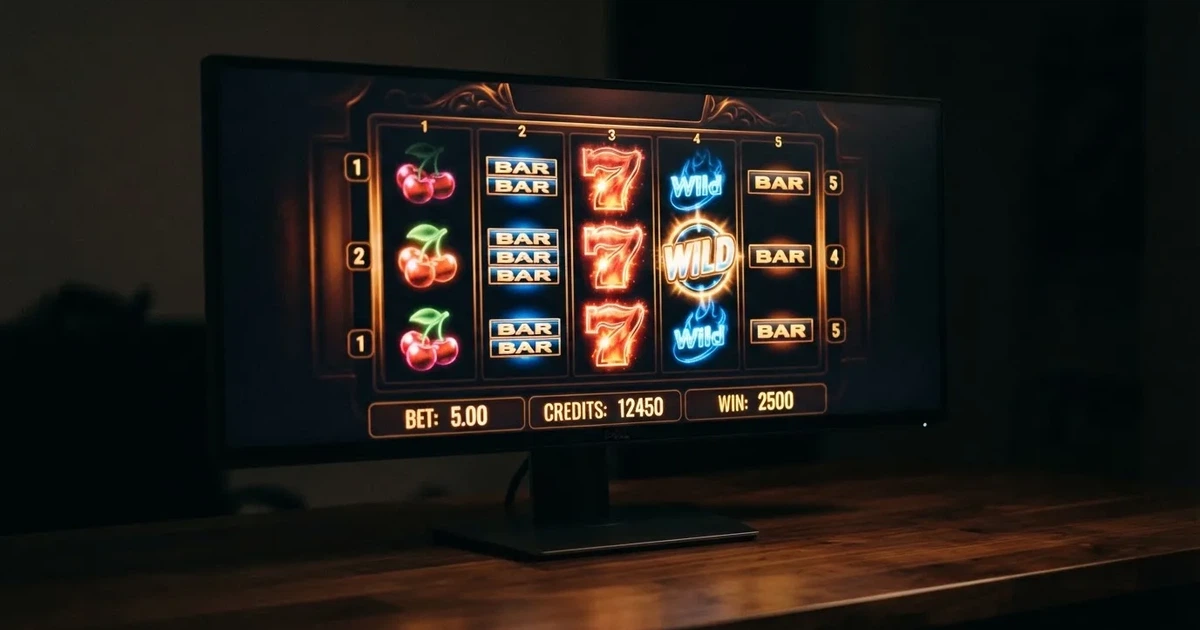
A paytable is not a tip. It is the contract between the machine and the player: the symbol list, the line combinations that pay, the wild and scatter behaviour, the bonus feature triggers, and the theoretical return to player built into the math. It is published for transparency. It is not a roadmap to a win.
The mechanism under every modern pokie is a random number generator (RNG) producing outcomes on every spin. A “tip” that asks the player to wait for a “hot” machine, raise the bet after a losing run, or stop after a “cold” streak describes a pattern the RNG does not produce. Outcomes on a regulated machine are independent from spin to spin; past results do not alter the probability of the next one. A paytable that lists a 95% return means, over a long enough sample of spins, the machine returns 95 cents per dollar wagered — not that any session will see that figure. The legal minimum return in the relevant jurisdiction is the floor a venue operator cannot drop below; it is not a guarantee for the player at the bar.
Baccarat and blackjack sit beside pokies in the Australian casino conversation because they share the same house-edge frame. Baccarat’s house edge is 1.06% on the Banker bet, 1.24% on the Player bet and 14.36% on the Tie — a reminder that one named variant of the same game carries very different numbers. Punto banco, the variant most played today, was developed in Havana during the 1940s; chemin de fer, French for “railway,” emerged from baccarat banque in the late 19th century and is named for being quicker to play than the original game. Cards 2-9 count at face value, 10/J/Q/K count as zero and aces count as one, with hand totals taken modulo 10. The casino banks punto banco at all times and plays both hands by fixed drawing rules. Blackjack, by contrast, has a house edge of about 0.28% under liberal Las Vegas Strip rules with optimal strategy and about 0.43% under Atlantic City rules — the lowest house edge in the standard casino suite and the only one where the player’s decisions compress it. The same edge-comparison framing applies to every pokies “tip” claiming an edge: a one-line system cannot compress a 10%+ house edge into anything close to baccarat’s 1.06% on Banker, let alone blackjack’s sub-half-percent under optimal play. The arithmetic does not move because the page says it does.
Bet sizing is the other frequent claim. On a regulated pokie, the per-spin probability of each outcome is fixed; a larger bet multiplies the dollar outcome of any given result by the bet factor, without changing the probability of hitting it. A “tip” that asks the player to bet more to “activate” a feature is describing a marketing display, not a math edge. On a regulated machine, the paytable is the paytable from minimum bet to maximum bet; no denomination change unlocks a higher RTP line.
Dragon Link is the title most often named in Australian tips pages, for reasons that have more to do with marketing reach than with any mechanical edge. The game’s appeal is its denomination spread and its hold-and-spin feature; nothing about its RNG deviates from the regulated framework any Australian venue operates under. The game is licensed by individual Australian venues the same way every other pokie is — through the relevant state or territory regulator — and a “Dragon Link tip” that promises more frequent bonuses is, again, describing a marketing display, not a math edge. “Why Dragon Link?” is a question the marketing answers for the page; the RNG answers it the same way it answers every other pokie.
Reading the ACMA’s warning list: brands Australians actually encounter
The eleven brands below are not a ranking and not a shortlist of places to play. They appear because the ACMA itself has issued a formal warning over each of them for offering prohibited interactive gambling services to people in Australia. The dates and operators are the ACMA’s own, as published; nothing on this list is a recommendation.
RocketPlay — recent warning, prior warning on the same product
The ACMA issued a formal warning to Pulsup Ltd over Rocketplay in March 2026, on the basis that the service was offering prohibited online casino games to Australian customers. Dama N.V., the operator of Rocketplay in an earlier incarnation, was the subject of a wider ACMA formal warning in May 2022 covering six casino brands. The brand’s listings do not connect it to any Australian-licensed framework.
Level Up Casino — 2022 warning, single product line
Dama N.V. received an ACMA formal warning in May 2022 covering Level Up Casino alongside five sister brands. The brand’s own pages list a content partner without any Australian licensing tie.
Woo Casino — 2025 warning
Dama N.V. was the subject of a further ACMA formal warning in March 2025 over Woo Casino, citing the same IGA prohibitions.
Spirit Casino — 2025 warning
Dama N.V. saw the ACMA issue a formal warning in May 2025 regarding Spirit Casino, highlighting the authority’s continued focus on this operator group.
National Casino — 2025 warning
The ACMA issued a formal warning to Consolutetish S.R.L. in July 2025 over National Casino, a decision that reinforces the prohibition on offering these games to Australians.
Bizzo Casino — 2025 warning, prior 2022 warning
Consolutetish S.R.L. received an ACMA formal warning in July 2025 over Bizzo Casino; TechSolutions (CY) Group Limited and TechSolutions Group N.V. had already been the subject of a 2022 ACMA formal warning over Bizzo Casino.
Ignition Casino — 2025 warning
An ACMA formal warning was issued to Bamboo Media in July 2025 over Ignition Casino, as the regulator continues its intervention in the offshore market.
Instant Casino — 2025 warning
The ACMA published a formal warning for EOD Code SRL in February 2025 concerning Instant Casino, citing grounds consistent with broader enforcement efforts.
Jackbit — 2026 warning
Ryker B.V. received an ACMA formal warning in April 2026 over Jackbit and CasinOK, as the authority maintains its oversight of illegal providers.
Casino Intense — 2025 warning
Sterplay Holding Ltd received an ACMA formal warning in April 2025 over Casino Intense, reflecting the commission’s broader enforcement strategy.
Sky Crown — 2022 warning
Hollycorn N.V. received an ACMA formal warning in September 2022 over Sky Crown and Blue Leo.
Every brand in this list carries the same legal posture: offering online casino games to Australians is prohibited under the Interactive Gambling Act 2001, whatever licence the site displays in another jurisdiction. A reader’s decision on any of these is binary — and the ACMA has made it for the brand already.
How fast the ACMA has actually moved: a blocking-rate band
The arithmetic here is a band, not a single figure. The ACMA’s running total reached 1,751 blocked sites in the report dated June 2026, and the first blocking request was made in November 2019. That gives a running average of roughly 262 blocks per year over the full enforcement window, or about 22 per month if averaged straight through. In practice, the pace has not been even: the early years were sparse as the regulator built the machinery, and the 2025–26 rounds have been denser as the 2017 amendments matured. A defensible band is therefore A$ per year on the running average, with a higher monthly run-rate visible in the recent rounds. The block the ACMA reported in a single week in June 2026 (12 sites at once) is consistent with the recent pace rather than the long-run average — the rolling average is the right denominator for a band, not the trigger for a headline number.
The band matters because it tells the reader what kind of regulator the ACMA is. A static total would suggest a slow-moving agency; the recent rounds show a regulator that has institutionalised the request-to-ISP pipeline and now moves on the order of a site per business day in busy weeks. The block the ACMA reported in a single week in June 2026 — twelve sites — is consistent with that pace rather than the long-run average; treating it as a typical week would overstate the run-rate, and treating the full-window average as the current pace would understate it.
The block the ACMA reported in a single week in June 2026 (12 sites at once) is consistent with the recent pace rather than the long-run average — the rolling average is the right denominator for a band, not the trigger for a headline number.
The same arithmetic frames the offshore warning list in §5 above. The eleven brands on the table represent the ACMA’s formal-warning layer, not its blocking layer; a brand can sit on the warning list for years before a block request is filed. The blocking pace is therefore the upper bound on what an Australian player can expect a regulator to clean up over a given month, and the warning list is the layer below it.
The mechanics a “tips and tricks” page usually gets wrong
Five claims recur on tips and tricks pages, and each one collapses against the math.
The first claim is that a machine “heats up” after a losing streak and “cools down” after a winning streak. The RNG produces independent outcomes on every spin; the machine has no memory of the previous spin’s result. The gambler’s fallacy has a name because casinos have studied it for decades; the math has not changed.
The second claim is that bet size moves the odds. On a regulated machine, the per-spin probability of each outcome is fixed; the bet factor multiplies the dollar result, not the probability of hitting it. There is no denomination that “activates” a higher-RTP line on a regulated pokie.
The third claim is that Dragon Link specifically is “looser” than other pokies. The title’s RNG operates under the same regulatory framework as every other licensed pokie in the relevant Australian jurisdiction; its appeal is denomination spread and feature frequency, not an edge over the house minimum.
The fourth claim is that there is a “best time of day” to play. The RNG does not consult a clock. The density of players around a machine has no effect on its outcome distribution.
The fifth claim is that an offshore site gives the same protection as an Australian venue. The Interactive Gambling Act 2001 prohibits the offer, the ACMA can block the site while a balance sits on it, BetStop does not bind the site, and the site’s own licence is in a jurisdiction that does not enforce Australian consumer law. The claims are not equivalent.
A useful test for any “tip” on any page: does it describe a feature the paytable would show on request, or does it describe a mechanism the RNG does not produce? The first kind is a description of the game; the second kind is a description of nothing.
How a reader should use this page
Three practical takeaways. First, on a regulated Australian pokie — pub, club or casino — every “tip” that promises an edge collapses against the RNG and the jurisdiction’s minimum return. The only thing a player controls is denomination, bet size per spin, and the decision to stop. Bet sizing is a bankroll decision, not a probability decision. Second, on the offshore sites this page lists, every name sits inside the prohibition the IGA sets and the ACMA enforces. Signing up to a site on the warning list is a deliberate step outside the Australian framework, with the consumer and self-exclusion consequences that follow. Third, for anyone whose spend is creeping past what they planned, the National Gambling Helpline at 1800 858 858 and the chat service at Gambling Help Online are free, 24/7, and the entry point to BetStop if the licensed wagering services are the ones to be cut off.
The 2026 reform — the Interactive Gambling Amendment (Gambling Reform) Bill 2026, passed by Parliament on 19 August 2026 — adds advertising and inducement measures that commence on 1 January 2027. That is a law with a start date, not yet in force on a page dated 2026, and its first effects will be on the marketing of wagering inducements rather than on the underlying prohibition. The legal posture a reader reading this page in 2026 needs to carry is the one above.
Frequently asked questions
Do any genuine tips or tricks change the odds on a pokies machine?
No. Every outcome on a modern pokie is produced by a random number generator working independently on each spin; past results do not alter the probability of the next. Bet sizing changes the dollar outcome of any given result, not its probability. The only legitimate “tips” are bankroll decisions — how much to wager per spin, when to stop, and which jurisdiction’s minimum RTP a venue sits inside.
What’s different about tips for a specific title like Dragon Link compared with pokies generally?
Dragon Link’s RNG operates under the same regulatory framework as every other licensed Australian pokie. The game’s marketing reach comes from its denomination spread and its hold-and-spin feature, not from an edge. “Title-specific tips” describe paytable features (which the player can read on the machine itself) rather than an edge.
Is there a legal way for an Australian to try out pokies strategies using licensed land-based venues?
Yes, at any licensed Australian pub, club or casino. Each state and territory regulates its machines separately, and minimum returns vary from 85% in NSW, the NT and Queensland to 90% in Western Australia. The legal venue gives access to the actual machine; an offshore site does not.
How does bet size actually affect the odds on a typical pokies machine, if at all?
Bet size multiplies the dollar outcome of any given result by the bet factor, without changing the probability of hitting it. A larger bet means larger wins on the same combinations and larger losses on the same misses. On a regulated machine, the paytable is the paytable from minimum bet to maximum bet.
What do ‘tips to win pokies’ articles usually get wrong about how random number generators work?
Most repeat the gambler’s fallacy — that a machine “heats up” or “cools down” — and claim bet sizing changes the probability of hitting a feature. Both claims describe patterns the RNG does not produce. The math has been settled for decades; the marketing has not caught up.
Why do so many pokies tips pages specifically mention Dragon Link rather than other titles?
Because Dragon Link’s denomination spread and hold-and-spin feature make it a frequent subject of marketing material, and the title’s reach in Australian venues is wider than most. The reach is a marketing fact, not a math fact.