Best Betsoft Online Casinos in Australia in 2026: What’s Really on Offer
 Available in US
Data current as of 23 September 2026 and cross-checked against the Australian Communications and Media Authority register of formal warnings and blocking orders.
Every Betsoft title a punter in Australia can spin for real money lives on an offshore site operating outside Australian law. The Interactive Gambling Act 2001 makes it an offence to provide online casino games, online pokies or in-play betting to anyone in this country, and no state or territory issues a licence for any of it. The page below works through what that means for the player who has heard Betsoft marketed as a quality stamp and wants to know what sits behind it — what the studio actually makes, what its slots look like on a paytable, what the marketing copy tends to leave out, and what happens when an Australian deposits at one of the offshore brands that carry Betsoft games in their lobby.
- What Betsoft Actually Is: A Studio, Not a Casino
- Game Comparison: Betsoft Titles
- The Landscape: How Many Sites, How Often the ACMA Acts
- The Legal Frame: What the IGA Actually Prohibits
- Responsible Play: Where the Local Help Actually Lives
- Money In, Money Out: What the Offshore Payment Side Looks Like
- Bonuses and Free Spins: What the Marketing Word Actually Buys
- Mobile: What a Betsoft Mobile Casino Generally Looks Like
- A Note on the Wider Studio Picture
- Frequently Asked Questions
What Betsoft Actually Is: A Studio, Not a Casino
Betsoft is a game studio, founded in 2006, with a catalogue that the company itself describes as running to more than 200 RNG titles — video slots, table games, video poker and a small set of specialty games. It does not run a casino, and it does not hold money from players. The Betsoft name attached to an online gambling site means the site has licensed Betsoft’s software and pays the studio a share of the revenue those games generate, in the same way a pub pays Aristocrat when it puts a pokies machine on the floor. Treating Betsoft as the brand a player is “playing at” mistakes the supplier for the operator.

The studio states that it works under licences and certifications from Italy’s Customs and Monopolies Agency, with RNG certification from Quinel and Gaming Labs International, and that its games are integrated by more than 500 operators across regulated markets in Europe, Scandinavia, Latin America and Africa. Those regulated markets are the key. None of them is Australia, because Australia is not a regulated market for the kind of games Betsoft makes. Australian licensing only covers wagering on sport and racing, lotteries and keno; online casino games and online pokies are prohibited. A Betsoft slot on a server somewhere is therefore reachable from Australia only through a brand whose offer to Australians is itself the prohibited service.
A side effect of that arrangement is that the studio’s quality signals travel with it. The fact that Betsoft holds ADM certification and submits its RNGs to GLI says something real about the maths and the randomness of its games, and an Australian player has no way to put that signal to legitimate use. The licensing is granted to the studio; the player is not a licensee of anything. What an Australian can actually access is a casino that has licensed the games from Betsoft — and that casino, by definition, is operating offshore, outside the Australian regime, against the operator of which the ACMA may at any point issue a formal warning or a blocking order.
The pipeline that produces those games is straightforward. Betsoft designs and codes the slot, files the maths with a testing lab for certification, holds a B2B supply licence from a regulator in one or more jurisdictions, and then licenses the finished game to operators who integrate it into their casino lobbies. The studio collects a revenue share; the operator collects the bets. The player’s relationship runs only with the operator, which is the party that takes deposits, pays out withdrawals, enforces limits and handles disputes. When something goes wrong — a refused withdrawal, an account closure with money in it, a confiscated bonus balance — the question is which operator the player dealt with, not which studio made the game.
That distinction is worth carrying into the rest of the page, because most of the marketing language around “Betsoft casinos” treats the studio as if it were a casino brand. It is not. It is a content supplier whose name an offshore operator borrows to dress up a product that, in Australia, the law treats as prohibited.
Game Comparison: Betsoft Titles
| Game | RTP | Volatility | Hit Rate |
|---|---|---|---|
| Good Girl Bad Girl 2 | 96.22% | Very High | 15.59% |
| The Slotfather | 95.69% | Medium | 8.17% |
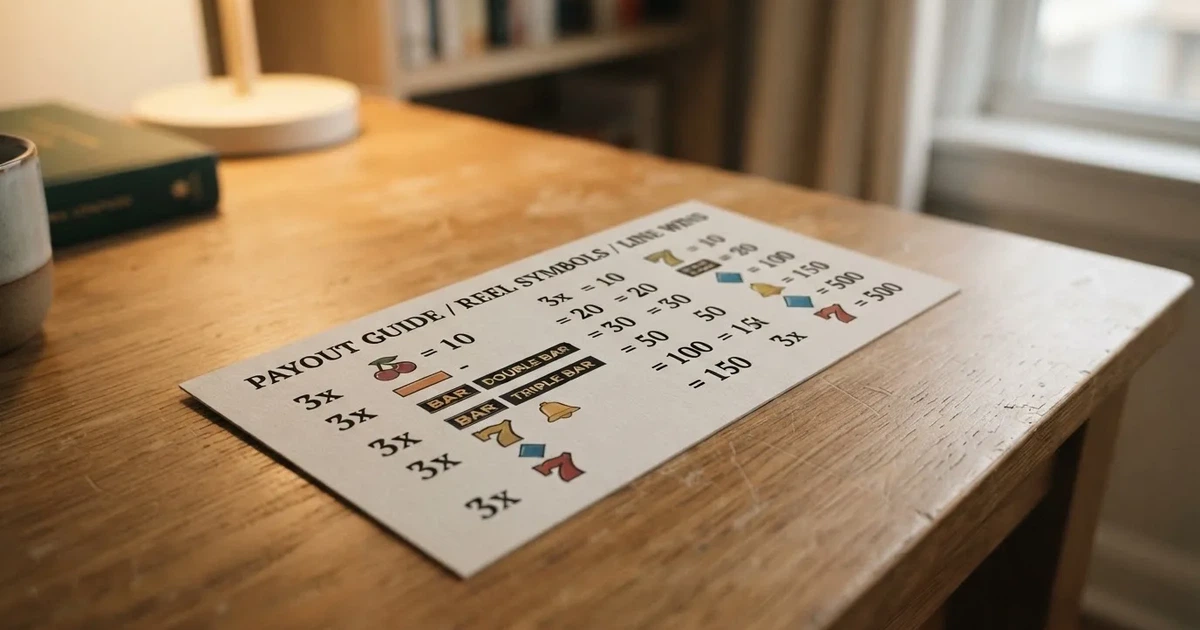
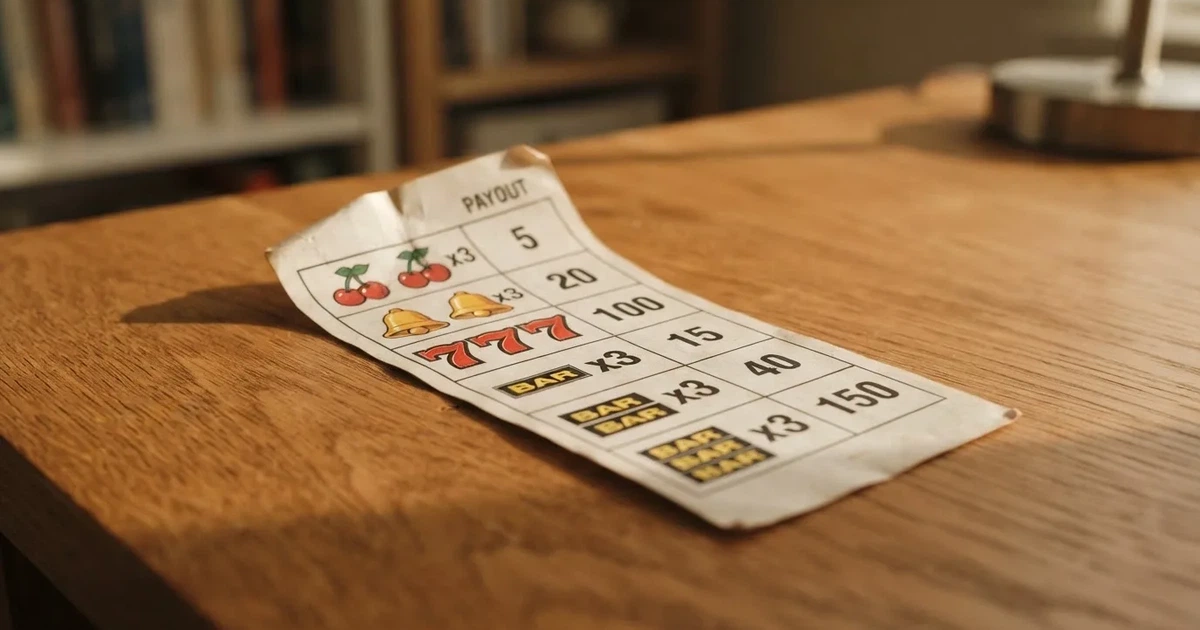
A paytable is the printed sheet inside a slot that lists every symbol, the payout for landing each one across a winning line, and the special rules for the bonus features. On Betsoft slots the sheet tends to run long, because the studio favours slots with several bonus rounds layered on top of the base game, and the paytable has to cover each one. The substance is always the same: an RTP, a volatility class, a hit rate, the reel layout and the number of paylines, plus a table of how many coins each symbol pays at one coin, two coins and three coins bet.

Take Good Girl Bad Girl 2. The studio’s published figures for that slot are an RTP of 96.22%, “Very High” volatility, a 15.59% hit rate, played on five reels with 20 paylines. Compare that to The Slotfather, an older Betsoft title live since 13 December 2012, which the studio publishes at 95.69% RTP, “Medium” volatility, an 8.17% hit rate, on five reels with 30 paylines. The two figures illustrate exactly the trade-off the paytable is hiding.
RTP is the percentage of money a slot returns to players across a very large number of spins. A 96.22% RTP means that, averaged over the long run, the slot pays back A$96.22 for every A$100 wagered — and the long run is, by industry convention, somewhere in the tens of millions of spins. For a player sitting at the slot, that number does not exist as a personal experience. Over a thousand spins, the realised return can swing from positive to deeply negative; over the ten thousand spins a serious session might add up to, the realised return still tends to be a long way from the long-run average. The RTP describes the game, not the player’s afternoon.
Volatility is the spread of outcomes around that average. “Very High” volatility, like Good Girl Bad Girl 2, means long stretches of small or no wins, punctuated by occasional payouts that are large relative to the bet. “Medium” volatility, like The Slotfather, means more frequent wins of more modest size. The advertised RTP is the same number for the same number of spins in both cases; what changes is how those returns arrive. A punter with a small bankroll and an hour to kill feels “Medium” volatility very differently from “Very High”. The slot that pays less often has to pay more per hit to hit the same long-run number, and the player with limited funds is the one most likely to run out of bankroll before the larger hits arrive.
Hit rate is the share of spins that produce any win at all. The 15.59% published for Good Girl Bad Girl 2 means roughly one in six and a half spins returns something, however small. The 8.17% for The Slotfather means closer to one in twelve. Those are not the same thing as the payout per hit; a higher hit rate can sit on top of a lower average payout per winning spin and still deliver the same long-run RTP. The paytable is the only place all three numbers sit together, and the place where the difference between the two slots shows up most cleanly is in how the studio has balanced frequency against magnitude.
The reel layout and the number of paylines round out the description. Five reels with 20 paylines, like Good Girl Bad Girl 2, is a fairly standard modern slot format. Five reels with 30 paylines, like The Slotfather, gives more ways to hit a win on any given spin and is part of why the hit rate sits higher. Both numbers matter because they describe the geometry of the machine, and the player who adjusts the coin size is, in effect, choosing how much each spin costs, not how often it pays.
Betsoft titles tend to be presented as “3D slots” in the marketing copy — a visual style the studio was early to push, where the symbols are rendered with depth and shadow rather than as flat icons. The visual treatment has no effect on the maths; the published RTP, volatility and hit rate are the same regardless of how the symbols are drawn. The 3D label is a presentation choice, and a paytable that pays 96% on a flat-icon slot pays 96% on a 3D version of the same game. The point is worth making because the marketing language around “3D Betsoft slots” leans on the visual as a quality claim, and the paytable is where the maths of the game lives.
The Landscape: How Many Sites, How Often the ACMA Acts
The pool of offshore brands marketing Betsoft games to Australian players is larger than the eleven covered here and shifts constantly. New domains appear, old ones rotate their URLs after a blocking order lands, and operators rebrand. The most useful single number is the running total the ACMA publishes: as reported in June 2026, 1,751 illegal gambling and affiliate marketing websites had been blocked since the first blocking request in November 2019, and more than 230 unlicensed gambling services had left the Australian market since enforcement was strengthened in 2017. The current rate sits somewhere inside that band, and the band itself is the point — the pressure on the offshore end is constant rather than occasional.
The arithmetic the page is built around is the blocking rate itself. From a single blocking request in November 2019 to 1,751 blocked sites by June 2026 is a span of roughly 79 months. Spread over that period, the ACMA has asked Australian ISPs to block an illegal gambling or affiliate marketing site at an average pace of roughly 22 sites per month — between 20 and 25 over the full run, and closer to the upper end of that band on the most recent rounds. The figure is a band rather than a single number because the blocking requests come in rounds of varying size, and a round of twelve in late June 2026 is not the same shape as a round of three in a quieter month. The condition that produces the band is straightforward: the ACMA moves against a brand, the brand changes domain or operator name, and a new entry has to be processed. The machinery is built for that churn rather than for a single sweep.
A single round reported on 26 June 2026 illustrates the texture of the work. The ACMA asked Australian internet service providers to block 12 more illegal gambling websites in that one action: 7Signs, ChromaBet, Donbet, Duospin, Freshbet, Slots Gem, Jacks Club, Lucky Start, Pointsbetz, Spinrise, Vinyl Casino and Wildsino. Some of those names are new and some have been warned before; the blocking order is what makes the domain unreachable from a standard Australian ISP connection. A punter who had a balance with one of them at the moment the order landed does not lose the balance to the ACMA — the ACMA has no power over the operator’s books — but the punter loses the ability to reach the site to argue about it.
Below is the set of brands that have come up in ACMA enforcement and that operate in the same offshore Betsoft space the page covers. The table records the action the ACMA has taken against each, the operator name published in the formal warning, and whether research found a Betsoft-specific signal in publicly available listings — and where it did not, the page says nothing about Betsoft either way.
| Brand | ACMA action and date | Operator named by the ACMA | Subject support |
|---|---|---|---|
| RocketPlay | Formal warning, March 2026 (Pulsup Ltd); earlier Dama N.V., May 2022 | Pulsup Ltd | — |
| Level Up Casino | Formal warning, May 2022 | Dama N.V. | Listings (Wazdan) |
| Woo Casino | Formal warning, March 2025 | Dama N.V. | — |
| Spirit Casino | Formal warning, May 2025 | Dama N.V. | — |
| National Casino | Formal warning, July 2025 | Consolutetish S.R.L. | Listings (Betsoft, Pragmatic Play) |
| Bizzo Casino | Formal warning, July 2025; earlier TechSolutions, 2022 | Consolutetish S.R.L. | — |
| Ignition Casino | Formal warning, July 2025 | Bamboo Media | — |
| Instant Casino | Formal warning, February 2025 | EOD Code SRL | — |
| Jackbit | Formal warning, April 2026 | Ryker B.V. | — |
| Casino Intense | Formal warning, April 2025 | Sterplay Holding Ltd | Listings (1spin4win, Wikipedia, UKGC) |
| Sky Crown | Formal warning, September 2022 | Hollycorn N.V. | — |
Two things stand out from the table beyond the count. First, the operators named in the formal warnings are not the consumer-facing brand — they are the parent companies that run the platform underneath. Dama N.V. is named three times in the set, with three different consumer brands (Woo Casino, Spirit Casino, Level Up Casino, and RocketPlay in its earlier warning). The same parent can rotate brands faster than the ACMA can warn them, and the ACMA’s published list of operator names is necessarily out of step with the front of house a player actually sees.
Second, the third column is mostly empty. Where research could point to a Betsoft-specific signal in publicly available listings — Betsoft’s own site, a third-party game directory, a regulator’s register — the cell records it as “Listings”, naming only the listing source, not the operator. Where research could not, the cell is blank. A blank cell is not a statement that the operator does not carry Betsoft titles; it is a statement that the research could not establish the link from the public listings alone. Treating a blank as confirmation either way would be guessing, and the page does not.
The eleven brands in the table are not a ranking and not a recommendation. The ACMA has taken formal action against each of them for offering prohibited services to Australians, and that is the only fact a single column needs to carry. Beyond that, what differs between them is the operator name, the date of the warning and whether a Betsoft signal could be established from a public listing. Everything else is marketing copy and outside the page’s brief.
The Legal Frame: What the IGA Actually Prohibits
The Interactive Gambling Act 2001, strengthened by the Interactive Gambling Amendment Act 2017, makes it an offence for a provider to supply online casino games, online pokies or in-play betting to a person physically in Australia. No state or territory issues a licence for any of those services, because the Commonwealth law does not permit one to be issued. What can be licensed under Australian law is wagering on races and sport placed before the event, lotteries and keno — in practice licensed through the Northern Territory Racing and Wagering Commission, which regulates 52 of Australia’s online bookmakers including Sportsbet, Bet365 and Ladbrokes. The commission has no full-time staff, meets once a month in Darwin, and operates as a tax-resident domicile rather than a substantive regulator. That is the whole of the licensed Australian online gambling market.
The individual player is not the target of the IGA. The offence is on the provider, and the ACMA’s enforcement is directed at the offshore operator, the affiliate marketer and the internet service provider — not at the punter who placed the bet. That detail is worth getting right because it is often misstated in the marketing copy, which plays on the idea that an Australian player can be prosecuted for opening an account offshore. The player cannot. The player can, however, lose the money in the account without recourse: an offshore site that refuses a withdrawal, closes an account mid-session or disappears with a balance gives the Australian player none of the consumer protection a local regulator would provide.
The ACMA’s powers are threefold. It can issue a formal warning to the operator naming the prohibited service and giving a date by which the Australian offering must stop. It can direct an Australian internet service provider to block the domain, which is what produces the running total of 1,751 blocked sites. And it can refer serious matters for civil penalty proceedings, with penalties that reach into the hundreds of thousands of dollars. The bulk of the enforcement is at the warning and blocking stages, and the blocking orders are the visible half of the work — a punter who tries to reach one of the blocked domains on a standard Australian connection gets a page rather than a casino.
The 2026 reform sits on top of that frame. The Interactive Gambling Amendment (Gambling Reform) Bill 2026 passed Parliament on 19 August 2026, and its advertising and inducement measures commence on 1 January 2027. That is law with a start date, not law in force on a page read in 2026, and the page does not treat it as currently applicable. The reform tightens what licensed operators may advertise in Australia and what inducements may be offered; it does not change the underlying prohibition on online casino games, which has been in force since 2001 and reinforced since 2017.
The minimum age for any form of Australian gambling is 18. The IGA does not carve out a separate age for online play; the prohibition runs against the provider regardless of the player’s age, and the licensed alternatives — wagering, lotteries, keno — apply the 18-year floor uniformly. An Australian under 18 using an offshore site to play Betsoft slots is not in any sense legally protected by doing so; the offshore site simply has no obligation to check.
Responsible Play: Where the Local Help Actually Lives
Gambling Help Online runs the National Gambling Helpline on 1800 858 858, free and available 24 hours a day, with a chat function on the website for those who would rather type than speak. The service is staffed by counsellors, the conversation is confidential, and the line is the same one to call whether the problem is offshore casino play, sports betting, pokies or any other form. The help is for the person making the call, not for the operator of the site they have been using.
BetStop, the National Self-Exclusion Register, has been live since August 2023. It binds every Australian-licensed online and phone wagering service — meaning sports and racing bookmakers licensed under the Northern Territory regime, and the licensed lottery and keno operators. Registering with BetStop tells every one of those operators, in a single step, to refuse the registered person’s business for the chosen exclusion period, which can run from a minimum of three months up to a permanent exclusion. That mechanism does not reach an offshore casino. An Australian who registers with BetStop is excluded from licensed Australian wagering and from licensed Australian lotteries, and remains perfectly able to deposit at a Curaçao-licensed site running Betsoft slots. The exclusion tool is built for the licensed end of the market, and the offshore end is not part of its scope.
For someone playing offshore, the practical self-exclusion is per-site: every reputable offshore operator runs its own self-exclusion and deposit-limit tools in the player account, and a player who has decided to stop can ask each operator, individually, to close the account and stop taking deposits. None of those per-site tools are connected to BetStop, none of them are visible to the ACMA, and none of them survive the operator disappearing. A punter who has registered with three offshore sites today and self-excluded from each can still find a fourth tomorrow, which is why the help line is the place the page points to rather than the per-site tools.
The signs that offshore play has become a problem are not the obvious ones. Spending more than was intended, returning after a self-imposed break, hiding the activity from family or friends, borrowing to top up a balance, and using offshore play as a response to stress rather than as entertainment are the catalogue any gambling counsellor will run through. The helpline is the right place to walk through the catalogue; the page does not pretend to be.
Money In, Money Out: What the Offshore Payment Side Looks Like
A Betsoft slot at an offshore site is banked in the same way as any other game at the same site, and the payment side is where the Australian-specific friction shows up. Since 11 June 2024, credit cards, credit-related products and digital currency have been banned as payment methods for licensed Australian online wagering, with penalties of up to A$247,500 for operators who accept them. The deposit routes that remain legal for the licensed Australian market are debit card, bank transfer, PayID/Osko and BPAY. An offshore site that accepts a credit card or a Bitcoin deposit from an Australian customer is not bound by that prohibition, because the offshore site is not an Australian licensed wagering service — but the fact that it accepts those routes is itself a signal that the site is operating outside the Australian regime.
The page does not name a deposit route for an Australian punter at an offshore casino, because there is no clean recommendation to make. The available routes tend to include credit cards, e-wallets such as Skrill and Neteller, prepaid vouchers, bank transfers in the currencies the operator supports, and an expanding set of cryptocurrencies. Each of those routes carries its own cost — a credit card fee from the issuing bank, an e-wallet fee on deposit or withdrawal, a crypto network fee on the way out, a conversion spread when the deposit currency is not Australian dollars. None of them come with the consumer protection an Australian bank provides on a debit card transaction, because the transaction is going offshore and the bank’s chargeback rights shrink at the border.
Payout speed is the figure the offshore marketing material usually leads with — “instant withdrawals”, “same-day payouts” — and the figure that matters is more often the gap between the published promise and the realised outcome. The mechanics inside that gap tend to be: a withdrawal request that triggers a manual review, an account-verification step the operator did not run at deposit and is now running at withdrawal, a maximum withdrawal amount per day or per week that leaves a large balance stuck on the platform, and a bonus with a wagering requirement still attached that has to be cleared before any of the balance becomes withdrawable. None of those mechanics are visible in the marketing line, and each of them costs the punter time or money the line did not mention.
The single rule that covers most of the offshore withdrawal pain is that the operator decides when to release the funds. A site that markets “instant withdrawals” can still hold a withdrawal for review for 24, 48 or 72 hours, and a site that markets “24-hour payouts” can still queue a withdrawal behind a weekend, a public holiday in the operator’s jurisdiction, or a manual flag triggered by the size of the request. The marketing copy is a goal the operator sets for itself; the realised time is whatever the operator’s risk team decides is acceptable that day. A punter with money on an offshore site is in a queue the operator owns.
The credit card and crypto prohibition is worth keeping in view for the licensed Australian side, where it bites. For an Australian depositing at an offshore site, the prohibition does not bite in the same way, because the offshore site is not subject to it. It bites in the chargeback direction: an Australian who paid a credit card bill for an offshore deposit is, in practice, more exposed than an Australian who paid a debit card bill, because the credit card route carries a higher personal debt load if the withdrawal never arrives and the bank’s recourse against an offshore operator is limited. A punter weighing the route should treat the credit card option as the most expensive in tail risk, even when it is the cheapest in headline fee.
Bonuses and Free Spins: What the Marketing Word Actually Buys
The marketing language around a Betsoft casino bonus tends to lead with the headline number — “A$1,000 welcome package”, “200 free spins on Take the Bank” — and to bury the terms that determine what the bonus actually costs the player. Three terms carry most of the cost: the wagering multiplier, the game weighting, and the maximum cashout from a bonus win. Read together, they describe a different product from the headline.
The wagering multiplier is the number of times the bonus amount has to be wagered before any of the bonus balance becomes withdrawable. A “35x” multiplier on a A$100 bonus means A$3,500 of bets have to be placed before the A$100 turns into withdrawable cash. The maths is mechanical; the effect on the player is that the bonus is in play for the duration of those A$3,500 of bets, and the bonus balance is, in effect, a separate pool from the cash balance during that time. The marketing copy calls the bonus “free”; the wagering requirement is what the bonus costs.
Game weighting is the share of each bet that counts toward clearing the wagering requirement. Slots typically weight at 100%, meaning every A$1 wagered on a slot reduces the requirement by A$1. Table games often weight at 10% or 20%, meaning A$1 wagered on a blackjack hand reduces the requirement by A$0.10. Some games — and this varies by operator — are excluded entirely, meaning the wagering requirement does not tick down at all on those titles. The weighting is the mechanism that pushes the player onto the games the operator wants them to play, and the headline bonus is a route onto those games.
Maximum cashout from a bonus win is the ceiling on what a winning player can withdraw from a bonus-funded balance. A “5x bonus” maximum cashout means a player who turned a A$100 bonus into a A$500 balance can withdraw A$500, not the A$5,000 the bonus win would otherwise suggest. Anything above the ceiling is, in the operator’s terms, removed when the wagering requirement is cleared. The cap is invisible until the player has a winning run, and it is the term that converts a lucky streak into a much smaller payout than the player expected.
Free spins on Betsoft titles are typically attached to a specific slot in the operator’s lobby and credited as a fixed number of spins at a fixed stake. The wins from those spins usually land as bonus balance rather than cash, with the same wagering multiplier, the same game weighting and the same maximum cashout applied to whatever the spins produced. A “200 free spins” headline that pays out A$40 in bonus balance with a 35x wagering requirement means the player has to wager A$1,400 before the A$40 becomes withdrawable. The marketing line describes the spin; the terms describe the cost.
For an Australian player specifically, the bonus economics are also where the offshore nature of the product shows up. The wagering requirement is enforced by the operator, the maximum cashout is enforced by the operator, the dispute if a bonus is wrongly removed is with the operator, and the operator is offshore with no obligation to engage with an Australian complaint. A player who has cleared a bonus and been refused a withdrawal has, in practice, very limited recourse — the operator’s terms are the contract, and the contract is written in the operator’s favour. The bonus is not a gift; it is a binding agreement whose terms favour the house by design.
Mobile: What a Betsoft Mobile Casino Generally Looks Like
Betsoft slots are built in HTML5, which is the format a browser-based mobile casino runs in the same way a desktop browser does. A punter on a phone or a tablet reaches an offshore casino through the device’s browser rather than through an app store download, and the casino site detects the screen size and serves a touch-friendly version of the lobby. The studio’s slot catalogue renders at mobile screen sizes without a separate app, because the games are coded to scale. The same is broadly true of most modern slot providers, and the HTML5 standard is what makes the lack of an app store listing less of a drawback than it would otherwise be.
The player experience of a Betsoft slot on mobile is, by design, the same game as on desktop — same RTP, same volatility, same hit rate, same paytable. The visual layout adapts: the spin button moves to where a thumb can reach it, the paytable collapses into a scrollable list rather than a side panel, the bet size selector is redesigned for touch rather than for a mouse click. The maths does not move. A player who switches from a desktop session to a mobile session on the same game at the same bet size is playing the same game with the same odds; the only thing that changes is the screen and the input device.
The practical differences are at the operator level rather than at the studio level. An offshore casino that markets a “mobile app” is, in most cases, marketing a web app — a wrapper around the mobile browser site that adds a home screen icon and a splash screen, distributed through the operator’s own download page rather than through the Apple App Store or Google Play. The reason is that Apple and Google both prohibit real-money gambling apps in their stores for the Australian market, and an offshore operator cannot get a real-money casino app into the Australian app store without misrepresenting itself. The “app” is, in those cases, a website packaged as an icon.
The download itself, when an operator offers one, comes with a small set of considerations. A web app downloaded from the operator’s site has not been reviewed by Apple or Google, and the only review it has had is by the operator. Sideloading a real-money gambling app onto an Australian device does not change the legal status of the activity — the prohibition runs against the provider, not the device — but it does change the security posture of the device, because the app has had a less thorough review than an app from the official stores. A punter who would not sideload a banking app from an unknown source has, in effect, the same calculation to make about a sideloaded casino app.
For Australian players, the simpler path is the browser. A modern phone browser runs HTML5 Betsoft slots without any download, the site adjusts to the screen, and the punter does not have to grant an unknown app the permissions a sideloaded casino wrapper would request. The experience is, on a well-built site, close enough to a native app that the difference does not show up in the playing of the game. The marketing pitch for the app is largely a presentation pitch.
A Note on the Wider Studio Picture
Betsoft is not the only game studio whose name appears in offshore marketing aimed at Australians. 1spin4win, founded in 2021 and headquartered in Curaçao, holds a Curaçao gaming licence and describes a portfolio of more than 190 online slots, all built in HTML5 for low-bandwidth connections. The studio reports more than 1,000 partnerships with online casinos and aggregators and says its total bet sum grew 46% in the first half of 2025 against the first half of 2024. BGaming, with the BGaming brand debuting in 2018 and a team that has worked on games since 2012, holds a Malta Gaming Authority Critical Gaming Supply Licence and describes 250+ certified games used by 3,000+ operators. Booming Games, headquartered in Malta, holds an MGA B2B licence, a UK Gambling Commission account, and licences in Sweden, Ontario, Romania, Denmark, Greece, Belgium, Germany and Brazil.
On the Australian domestic side, Aristocrat Leisure Limited is the largest gambling-machine manufacturer in Australia and the second-largest slot-machine manufacturer worldwide behind International Game Technology. Founded in 1953, listed on the ASX in 1996 under the ticker ALL, headquartered in North Ryde, with offices in South Africa, Russia and the United States, the company reported 2025 revenue of A$6.30 billion, normalised net profit after tax and amortisation of A$1.55 billion, and 7,400 employees. Aristocrat Interactive, the company’s regulated online real-money gambling arm, was formed in April 2024 by combining the Anaxi unit with the newly acquired NeoGames group, which includes Aspire Global, BtoBet and Pariplay. That is the Australian-licensed end of the online gambling industry; it is the wagering, lottery and keno market, and it does not include online casino games or online pokies for money.
The point of naming those studios is not to redirect them as alternatives — the Australian player cannot legally reach a Betsoft slot at a domestic site and cannot legally play an Aristocrat online casino game either. The point is that the offshore end of the market is built from a long list of studios licensing into a long list of operators, and a brand name in a casino lobby is one node in a much larger network. The studio’s reputation, the operator’s reputation and the player’s experience are three separate things, and the page is interested in each of them for different reasons.
Frequently Asked Questions
Is Betsoft itself an operator, or just a game studio that supplies content to sites?
Betsoft is a game studio, founded in 2006. It designs, codes and certifies slots and a smaller catalogue of table, video poker and specialty games, and licenses the finished games to operators under B2B supply arrangements. It does not hold player balances and does not run a casino. An Australian encountering the Betsoft name at an online casino is seeing a content licence, not a brand relationship.
Can Betsoft titles be played for real money at any licensed Australian casino?
No. The Interactive Gambling Act 2001 prohibits the provision of online casino games and online pokies to a person in Australia, and no state or territory issues a licence for them. The licensed Australian market covers wagering on races and sport placed before the event, lotteries and keno, none of which involves Betsoft slots. A Betsoft slot played for real money by a person in Australia is, by definition, on an offshore site.
How does a Betsoft slot typically differ from other studios’ games in its paytable?
The published elements — RTP, volatility class, hit rate, reel count, paylines, and the symbol payout table — are the standard paytable contents for a video slot and are not unique to Betsoft. The studio is known for a 3D visual presentation and for layering several bonus rounds on top of the base game, which lengthens the paytable. The maths components are formatted in the same way as at any other modern studio.
Does Betsoft operate its own casino, or license its games to other operators?
Betsoft licenses its games to other operators. The company states it works under licences and certifications including Italy’s ADM and RNG certification from Quinel and GLI, and reports more than 500 operator partners across regulated markets in Europe, Scandinavia, Latin America and Africa. None of those markets is the Australian online casino market, because that market is not a licensed category.
Why do offshore casinos highlight Betsoft as a selling point to Australian visitors?
Betsoft carries an external RNG certification and operates in regulated markets, and the studio’s name functions as a quality signal in the marketing copy. The signal is about the game’s maths and randomness, not about the casino’s legal standing. An Australian punter seeing the Betsoft name on an offshore site is being shown a content licence, and the prohibition under the IGA runs against the operator, not the studio.
Is it legal for a site to offer Betsoft games for real money to people in Australia?
No. Under the Interactive Gambling Act 2001, as strengthened in 2017, it is an offence to provide online casino games or online pokies to a person in Australia. The ACMA enforces this by issuing formal warnings, directing ISPs to block domains, and pursuing civil penalty proceedings. The individual player is not the target of the prohibition, but the player has no Australian consumer protection if a withdrawal is refused or an account is closed with a balance on it.
Written by the editors at Casino Table Games Info.