
What Booming Games really offers the Australian punter, and what it costs
Anyone who typed this query was hunting for a way to play Booming Games slots for real money, somewhere safe and ideally Australian. That destination does not exist. The studio behind titles like Tasty Rush Sweet Spots and Regal Coins Hold and Win is a licensed B2B supplier based in Malta, with regulator accounts in the UK, Sweden, Ontario and several European jurisdictions. None of those licences covers an Australian-facing online casino, because no such licence can be issued: online casino games and online pokies are prohibited under the Interactive Gambling Act 2001, in every state and territory. What the search returns is a long list of offshore sites carrying Booming Games content, most of them already on the Australian Communications and Media Authority’s warning list, several blocked at the internet-service-provider level, all of them beyond the reach of Australian consumer protection.
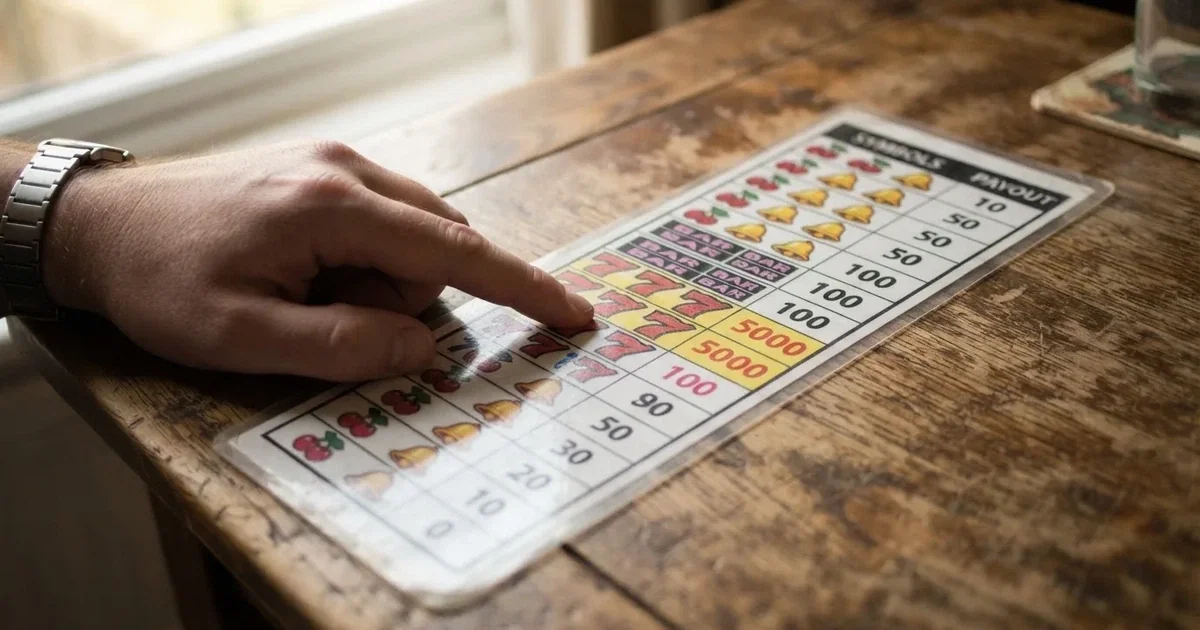
Current as of 29 October 2026 against the ACMA’s published formal-warning register.
The rest of this page walks through what that actually means. It starts with the studio itself — what Booming Games ships, how its paytables are put together, where it sits in the wider supplier field. It then lays out the legal frame, the payment rules that have applied since 11 June 2024, and the responsible-gambling channels that do and do not reach an offshore account. From there it moves to what comparison sites normally highlight — bonuses, payout speed, mobile play — and shows why those levers do not work the way they look once an Australian punter is on the wrong side of the prohibition. The middle of the page is an eleven-brand walk through the ACMA’s own list, ordered by the date the warning was issued, and the closing section is a worked arithmetic on what the regulator’s blocking rate actually represents.
The angle here is cost. Every offer, every “fast payout” line and every welcome package is reframed around what it takes out of the punter’s pocket, and what protections that punter loses by being on an offshore site. Booming Games itself is a well-regulated supplier; the casino wrappers that carry its games in this country are not.
- Booming Games as a studio, and where Australian pokies fit beside it
- The legal frame around online casino in Australia
- Responsible gambling, and where the help actually reaches
- What bonuses and “free spins” cost the punter on an offshore Booming Games site
- Payments and payout speed, and why the picture is thinner than it looks
- Mobile play and apps: the wrapper around an offshore site
- The eleven brands on the ACMA’s warning list
- The blocking rate, worked as an arithmetic
- What a comparison between two Booming Games sites would actually weigh
- A worked reading of one offer, end to end
- The ACMA’s record, and what the next round is likely to look like
- Practical takeaways for the Australian punter
- Frequently Asked Questions
Booming Games as a studio, and where Australian pokies fit beside it
Booming Games describes itself as founded nearly a decade ago by a group of friends who wanted to build one of the finer slot catalogues in the iGaming industry. It is headquartered in Malta and operates as Booming Games (Malta) Limited, holding a Malta Gaming Authority B2B licence numbered MGA/B2B/459/2018 and an active UK Gambling Commission account under number 57254. Beyond those two, the studio holds regulatory recognition from Sweden’s Spelinspektionen, Ontario’s AGCO in Canada, and regulators in Romania, Denmark, Greece, Belgium, Germany and Brazil. The licence list is the right shape for a B2B supplier that wants its games distributed into legitimately regulated markets — it is not, on its own, a route by which the games reach Australian players for real money, because the regulatory regimes above do not authorise Australian-facing online casino operations.

The studio’s release pace is brisk. According to its own About page, Booming Games releases four new titles a month. That cadence is typical of an independent slot supplier that has found traction with aggregators and platform operators: enough output to fill a “new games” carousel, without the development budget of the very largest studios. On the studio’s own marketing pages, two titles carry a stated maximum win of 5,000x stake — Tasty Rush Sweet Spots and Regal Coins Hold and Win — and Henhouse Hustle: Hold and Win goes one better, advertised at 6,000x stake. Those ceilings matter when comparing one studio against another, because they set the upper end of what a single spin can return, but they are not the same thing as an expected return across a session of play.
What a Booming Games paytable generally shows is the usual trio of slot data: reel count, payline count and the symbol-value ladder. A 5×3 layout with 20 paylines is common across the catalogue, and so is a stated return-to-player percentage in the mid-90s. Adjacent to Booming Games sit a number of similarly-sized B2B suppliers with their own catalogues and their own design signatures. Aristocrat Leisure, headquartered in North Ryde, is the largest gambling-machine manufacturer in Australia and the second-largest slot-machine manufacturer worldwide behind International Game Technology. Aristocrat is not a Booming Games competitor in the offshore online space — its online arm, Aristocrat Interactive, was formed in April 2024 from the Anaxi unit and the newly acquired NeoGames group, which includes Aspire Global, BtoBet and Pariplay, and its Australian-listed parent reported 2025 revenue of A$6.30 billion. The point of placing Aristocrat beside Booming Games is that one is the studio whose machines fill the floors of Australian pubs and clubs, and the other is the studio whose online slots fill the offshore sites Australians are steered toward — and that gap, between a regulated local machine industry and an unregulated online casino market, is what the rest of this page is about.
Betsoft, founded in 2006, sits in the same mid-tier B2B band as Booming Games but with a longer catalogue: more than 200 RNG titles spanning slots, table games, video poker and specialty games, and stated partnerships with more than 500 operators in regulated markets across Europe, Scandinavia, Latin America and Africa. Two Betsoft titles illustrate the kind of granular paytable data a Booming Games shopper would also look for if it were available. The Slotfather, live since 13 December 2012, carries a published RTP of 95.69%, “Medium” volatility, an 8.17% hit rate, and runs on 5 reels and 30 paylines. Good Girl Bad Girl 2 sits at the higher end of Betsoft’s published numbers: 96.22% RTP, “Very High” volatility, a 15.59% hit rate, again on a 5-reel, 20-payline layout. Booming Games does not publish an equivalent lookup table on its consumer-facing pages, which is one reason affiliate sites that aggregate paytable data exist in the first place — and one reason a punter comparing titles is usually comparing on the marketing copy rather than on the certified numbers.
A third supplier to know about is 1spin4win, founded in 2021 and headquartered at Scharlooweg 39 in Willemstad, Curaçao. Its portfolio spans more than 190 online slots built in HTML5 for low-bandwidth connections, and the studio reports more than 1,000 partnerships with online casinos and aggregators. Its total bet sum grew 46% in the first half of 2025 against the first half of 2024. 1spin4win is the kind of newer, faster-iterating supplier whose games turn up across the same offshore sites that carry Booming Games — and one of the listings cited in the ACMA warning record, Casino Intense, names 1spin4win alongside other providers in its game library.
Paytables, symbol values and the part a punter actually sees
A slot paytable is the small panel inside the game that lists what each symbol pays, how many of a kind are needed, and how the bonus features trigger. Three numbers on that panel do most of the work. The first is the RTP, expressed as a percentage: the long-run average of what a slot returns to players as winnings, against what it takes in as bets. A 96% RTP is a 4% house edge, sustained across millions of spins. The second is volatility, usually labelled Low, Medium, High or Very High: a description of how the returns are distributed. A high-volatility slot pays out rarely but in larger lumps; a low-volatility slot pays often but in smaller amounts. The third is the hit rate, sometimes given as a percentage of spins that produce any return at all.
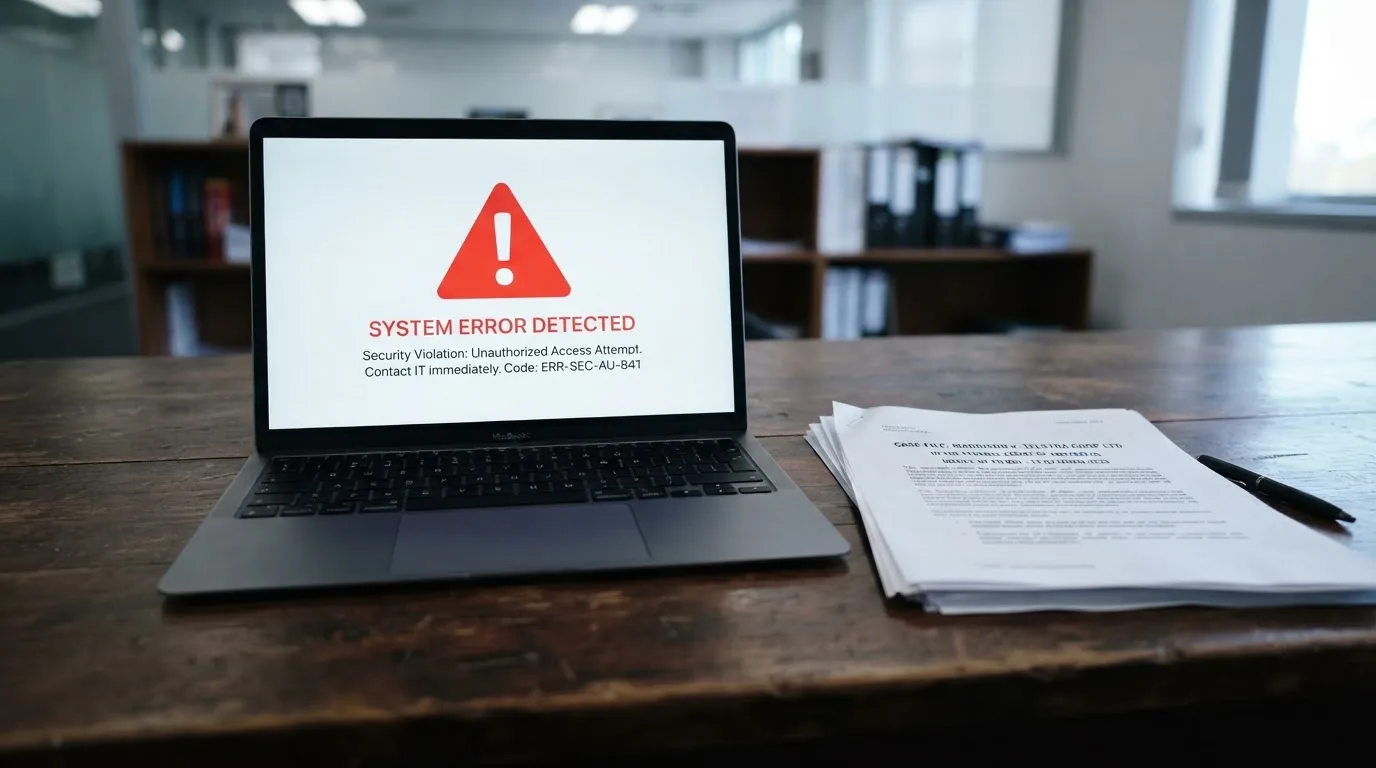
What the paytable does not show is the session cost. A 96% RTP slot played for an hour at a $1 stake per spin, with most spins producing nothing and a small share producing the headline 5,000x, costs the punter on average 4% of what they put through the machine. That is the floor under every comparison on this page, and it is the same floor whether the slot is made by Booming Games in Malta or by Aristocrat in North Ryde. The marketing layer above it — “Free Spins Friday”, “Win up to 6,000x”, “Tasty Rush Sweet Spots” — sits on top of that floor without altering it.
The legal frame around online casino in Australia
The Interactive Gambling Act 2001, strengthened by the Interactive Gambling Amendment Act 2017, makes it an offence to provide online casino games, online pokies or in-play betting to a person physically in Australia. No state or territory issues a licence for any of those products. What is licensable is wagering on races and sport placed before the event, lotteries and keno — in practice licensed by the Northern Territory, where the Northern Territory Racing and Wagering Commission oversees 52 of Australia’s online bookmakers, including Sportsbet, Bet365 and Ladbrokes. That commission, which the ABC reported on in April 2026, has no full-time staff and meets once a month in Darwin. The point of that detail is that the regulator Australians interact with most often is small, under-resourced, and built around a category of gambling that does not include what this page is about.
Enforcement runs through the ACMA. The authority investigates, issues formal warnings, and directs Australian internet service providers to block illegal sites. As reported in June 2026, a total of 1,751 illegal gambling and affiliate marketing websites had been blocked since the first blocking request in November 2019, and more than 230 unlicensed gambling services had left the Australian market since enforcement was strengthened in 2017. A single round reported on the same day asked ISPs to block 12 further sites: 7Signs, ChromaBet, Donbet, Duospin, Freshbet, Slots Gem, Jacks Club, Lucky Start, Pointsbetz, Spinrise, Vinyl Casino and Wildsino.
The individual player is not the target of the IGA. The Act names the provider of the prohibited service, and the ACMA’s tools — formal warnings, blocking requests, referrals — are pointed at the operator, the platform and the affiliate network pushing traffic to it. That asymmetry matters because it means a punter is not at legal risk by being on one of these sites, but is also not protected by any Australian consumer law. An offshore casino that refuses a withdrawal has no Australian complaints body behind it. An offshore casino that disappears overnight leaves a balance behind. A site blocked at the ISP level with funds still on the account has no recourse mechanism an Australian can use.
H2 Gambling Capital’s 2025 estimate put Australian losses to illegal gambling sites at about A$3.9 billion a year, with the share of gambling going through legal channels falling from 74% in 2021 to 64%. The ACMA’s blocking programme, in other words, has not closed the offshore market — it has thinned it, and the volume that remains is concentrated in fewer, larger sites.
Payment methods in Australia
| Method | Status for licensed wagering |
|---|---|
| Debit card | Allowed |
| Bank transfer | Allowed |
| PayID/Osko | Allowed |
| BPAY | Allowed |
| Credit card | Banned |
| Cryptocurrency | Banned |
The 2026 reform is worth noting in passing. The Interactive Gambling Amendment (Gambling Reform) Bill 2026 passed Parliament on 19 August 2026, with its advertising and inducement measures commencing on 1 January 2027. That is law with a start date, not yet in force on a 2026 page — relevant because the inducement regime is exactly the mechanism that funnels Australian traffic toward the offshore sites this page covers, and the shape of that regime will change once 1 January 2027 arrives.
Responsible gambling, and where the help actually reaches
Free confidential help is available around the clock through Gambling Help Online and the National Gambling Helpline on 1800 858 858. The counselling and referral service is independent of any operator, onshore or offshore. Its scope covers any Australian whose gambling has become compulsive or stressful, regardless of whether the gambling is taking place through a licensed wagering account, a poker machine in a pub, or an offshore casino.
The structural limit on what that help can do sits at the self-exclusion layer. BetStop, the National Self-Exclusion Register, has been live since August 2023 and binds Australian-licensed online and phone wagering services. A punter who registers with BetStop is closed out of every Australian-licensed account simultaneously. An offshore casino is not connected to BetStop. A self-exclusion registered today does not stop an offshore site accepting a deposit tomorrow, because the offshore site is not under the Australian licence that makes BetStop enforceable. That gap is part of what makes the offshore market structurally more harmful than the onshore one for anyone whose gambling has started to slip, and it is the single largest reason the responsible-gambling section of this page exists.
What bonuses and “free spins” cost the punter on an offshore Booming Games site
A welcome bonus is the single most heavily marketed feature of an offshore casino, and the single most expensive. Three mechanics do most of the work. The first is the match percentage — a 100% match up to A$500, say, means a deposit of A$500 is doubled on paper. The second is the wagering requirement — the multiplier the bonus amount must be “turned over” before any of it can be withdrawn, often 35x to 50x the bonus. The third is the game-weighting table — slots typically count 100% toward wagering, table games often 10% or 0%, and certain high-RTP slots are sometimes excluded altogether.
The arithmetic is straightforward once the rules are known. A A$500 bonus with a 40x wagering requirement requires A$20,000 of turnover before withdrawal. At a $1 stake per spin on a 96% RTP slot, that is 20,000 spins, and at five seconds per spin that is just over 27 hours of continuous play. The expected loss across those 20,000 spins, at the same $1 stake and 96% RTP, is A$800 — 4% of A$20,000. The punter started with a A$500 bonus and is statistically A$800 lighter before clearing it, on a game the casino was happy to call “free money”.
A “free spins” promotion sits on the same floor. The spins are not free in the economic sense — they are spins paid for by the operator out of the marketing budget, but the wagering requirement attached to whatever they win is the same. A win of A$100 from free spins with a 40x wagering requirement is A$4,000 of further turnover, at the same expected loss rate, before the A$100 becomes withdrawable.
No-deposit bonuses — the small cash or spin credit offered for opening an account without depositing — look like the friendliest offer on the surface and are usually the worst in practice. They tend to carry the highest wagering multiples (50x and up are common), the lowest maximum cashout caps (often A$50 to A$100), and the longest list of restricted games. A punter who treats them as a way to test a site without risk finds out, on withdrawal, that the test was the point: most no-deposit bonuses are designed so that the wagering requirement is mathematically very hard to clear on the games the bonus can be played.
The verbs matter here. “Free”, “bonus”, “extra”, “rewarded” are marketing terms. The numbers that should drive the decision — the wagering multiple, the maximum cashout, the game weighting, the expiry window — are the same numbers that the marketing copy is built to obscure. A punter who reads the terms before depositing will make a different decision from one who reads the bonus page and stops there.
Payments and payout speed, and why the picture is thinner than it looks
An offshore casino’s published payout speed is one of the most quoted numbers on its homepage. The numbers themselves vary: e-wallet withdrawals in 24 hours, bank transfers in 3 to 5 business days, crypto in under an hour. What those numbers leave out is the rest of the picture. The first cut is the pending period — the time between requesting a withdrawal and the casino processing it, which on offshore sites is commonly 24 to 72 hours and which is where most withdrawal problems originate. The second cut is the verification cycle — the request for ID, address and source-of-funds documents that triggers on the first withdrawal and that an offshore site can extend indefinitely. The third cut is the bonus-related hold — if there is an unplayed bonus or unfulfilled wagering requirement, the withdrawal sits until that is resolved, and a casino’s terms usually allow it to be forfeited in the process.
For an Australian punter, the onshore versus offshore comparison is starker than for most other markets. Onshore wagering has PayID/Osko, which settles in seconds, and BPAY, which settles on the next banking day. Offshore, the same punter is paying through a debit card routed to a Curaçao or Maltese operator, or through a crypto deposit the Australian rules have ruled out for the onshore market. The convenience gap runs in one direction: the offshore side is slower to pay in, slower to pay out, and less reversible when something goes wrong.
The same logic explains why the offshore market uses crypto so heavily. It is not because punters prefer it — it is because the credit-card ban and the AML rules in the regulated Australian market have made the routes that are easiest for the customer the hardest for an offshore operator to accept. Crypto sits outside both. From the operator’s point of view that is a feature; from the punter’s it is a warning sign.
Mobile play and apps: the wrapper around an offshore site
A modern offshore casino runs as a mobile-responsive website, a progressive web app or — increasingly rarely — a downloadable app sideloaded from the operator’s own server rather than from the Apple App Store or Google Play. The reason sideloading matters is that the App Store and Google Play both prohibit real-money gambling apps from unlicensed operators in the Australian market. A downloadable file offered directly by an offshore site is, by the act of being downloadable that way, outside the store-distribution rules.
What the mobile wrapper does for the punter is largely cosmetic. The games render in the browser, the cashier works through the browser, and the terms and conditions are the same regardless of how the site is reached. A mobile app does not change the RTP, the wagering requirement or the offshore status. It changes the loading time and the home-screen icon, both of which are easier to optimise for the operator than for the regulator.
For the responsible-gambling layer, the mobile wrapper introduces a specific risk. A punter who has registered with BetStop can still reach an offshore site from a phone, because BetStop does not extend offshore. An app that sits on the home screen, with notifications enabled, makes that reach friction-free in a way the onshore betting apps do not.
The eleven brands on the ACMA’s warning list
What follows is not a ranking and not a recommendation. Each brand is listed because the ACMA itself issued a formal warning over it for offering prohibited services to Australians, and each write-up is built around the warning, the operator behind it, and what that record means for a punter considering the site. The order is the order the ACMA’s warnings were issued. Where research carries no figure on a brand’s relationship with Booming Games specifically, that gap is left as a gap — naming a brand here does not mean a verified Booming Games integration, and where a brand’s only mention of a supplier comes from an affiliate listing rather than from the supplier’s own site, that is named in the article language rather than as the operator’s own fact.
Landscape of brands the ACMA has acted against
| Brand | ACMA action and date | Operator named by the ACMA | Subject support (Booming Games) |
|---|---|---|---|
| Casino Intense | Formal warning, April 2025 | Sterplay Holding Ltd | Listings cite 1spin4win, others; no Booming Games integration confirmed |
| Instant Casino | Formal warning, February 2025 | EOD Code SRL | No data |
| Woo Casino | Formal warning, March 2025 | Dama N.V. | No data |
| Spirit Casino | Formal warning, May 2025 | Dama N.V. | No data |
| Ignition Casino | Formal warning, July 2025 | Bamboo Media | No data |
| National Casino | Formal warning, July 2025 | Consolutetish S.R.L. | Listings cite Betsoft, Aristocrat, Pragmatic Play |
| Bizzo Casino | Formal warning, July 2025 (and 2022 to TechSolutions) | Consolutetish S.R.L. | No data |
| Sky Crown | Formal warning, September 2022 | Hollycorn N.V. | No data |
| RocketPlay | Formal warning, March 2026 (and May 2022 to Dama N.V.) | Pulsup Ltd | No data |
| Jackbit | Formal warning, April 2026 | Ryker B.V. | No data |
| Level Up Casino | Formal warning, May 2022 | Dama N.V. | Listings cite Wazdan; no Booming Games integration confirmed |
Two structural points sit underneath the table. The first is that almost every brand above has been warned at least once, and several have been warned twice under different operating companies — RocketPlay in May 2022 and again in March 2026, Bizzo Casino in 2022 and again in July 2025. A formal warning is the ACMA’s lowest formal escalation before a blocking request, so a second warning is a record of a brand that continued to take Australian customers after the first intervention. The second is that none of the brands above carries a confirmed Booming Games integration. Where the table reads “Listings cite”, the source is an affiliate or aggregator page that lists the brand’s suppliers, and that listing has not been corroborated by the supplier’s own site. Where it reads “No data”, research turned up nothing verifiable either way, and the right way to handle that is to say so plainly.
Casino Intense — April 2025 warning, Sterplay Holding Ltd
The ACMA’s April 2025 formal warning named Sterplay Holding Ltd as the operator behind Casino Intense, on the basis that the site offered prohibited interactive gambling services to people in Australia. On the supplier side, the listings that name Casino Intense cite 1spin4win among the providers whose games appear on the site, alongside other suppliers such as those mentioned on en.wikipedia.org and the UK Gambling Commission’s public register. No Booming Games integration is confirmed on Casino Intense — the brand’s supplier footprint as research can verify it does not name Booming Games specifically. A punter who arrives at Casino Intense through a Booming Games search query is most likely there because an affiliate network has routed that traffic, not because the studio itself has placed its games on the site.
Instant Casino — February 2025 warning, EOD Code SRL
The February 2025 warning named EOD Code SRL as the operator behind Instant Casino. Research carried no data on which suppliers ship games into Instant Casino’s lobby, so the Booming Games connection here is the same as it is for the rest of the offshore market — likely, but not verifiable from the supplier’s own materials. The structural warning is the more important one. A formal warning issued in February 2025 means the site was actively targeting Australian customers at that point, and the IGA prohibits that regardless of what licence the operator holds elsewhere.
Woo Casino — March 2025 warning, Dama N.V.
The March 2025 warning extended an existing ACMA file on Dama N.V., the operator behind Woo Casino. Dama N.V. is one of the more frequently named operators in the ACMA’s recent record — May 2022’s warning covered six of its brands, including Bambet, Dazard, Level Up, Rocketplay, Wild Tornado and Cobra Casinos, and the March 2025 and May 2025 warnings added Woo Casino and Spirit Casino respectively. A punter who has read the ACMA’s record on Dama N.V. once and is surprised to see the same operator behind a second brand has not read it carefully. On the Booming Games side, research carries no verifiable data — Woo Casino does not appear on the supplier’s own distributor list, and affiliate listings of its game library do not name Booming Games specifically.
Spirit Casino — May 2025 warning, Dama N.V.
The May 2025 warning closed out the same Dama N.V. set as the March 2025 warning on Woo Casino. Spirit Casino carries the same structural profile as the rest of Dama N.V.’s Australian-facing brands — same operator, same offshore corporate structure, same IGA exposure. There is no verifiable Booming Games integration; there is also no reason, on the evidence available, to treat Spirit Casino as more or less likely than any other Dama N.V. property to be running Booming Games content under the same aggregator.
Ignition Casino — July 2025 warning, Bamboo Media
The July 2025 warning named Bamboo Media as the operator behind Ignition Casino, the offshore brand most associated with the US-facing poker and casino market. For Australian customers the IGA exposure is identical to that of any other brand on this list. Research carries no data on the Booming Games integration, and the US-facing position of Ignition Casino is not, on its own, evidence one way or the other — Booming Games supplies into multiple regulated markets, and a US-facing brand is no more or less likely to carry its titles than a European-facing one.
National Casino — July 2025 warning, Consolutetish S.R.L.
The July 2025 warning named Consolutetish S.R.L. as the operator behind National Casino, alongside Bizzo Casino. Listings of National Casino’s supplier footprint name Betsoft, Aristocrat and Pragmatic Play among others — these are affiliate-page assertions, not statements from the suppliers themselves. No Booming Games integration is named, which is consistent with the broader pattern in this table: where a brand’s supplier list is verifiable through a supplier’s own materials, Booming Games is not on it. The implication is that the Booming Games connection most Australian punters arrive through is the affiliate network’s marketing layer, not the studio’s own distribution.
Bizzo Casino — July 2025 warning (and 2022 warning to TechSolutions)
Bizzo Casino is the most warned brand on the list. The July 2025 warning to Consolutetish S.R.L. is the second formal warning the brand has received — the first, in 2022, was issued to TechSolutions (CY) Group Limited and TechSolutions Group N.V. Two warnings under two different operating companies point at one of two patterns: either the brand changed hands and the new operator continued the same Australian-facing practices, or the same underlying group has cycled through entities to keep operating. Either reading ends at the same place for a punter. On the supplier side, research carries no data on a Booming Games integration.
Sky Crown — September 2022 warning, Hollycorn N.V.
The ACMA’s warning to Hollycorn N.V. covered Sky Crown and the related Blue Leo brand. Sky Crown is the oldest warning on the list, and the ACMA’s continued willingness to direct blocking requests at Hollycorn N.V. properties since 2022 is the structural signal here. Research carries no Booming Games data for Sky Crown. As with the other no-data brands on this list, the honest position is that there is no verifiable evidence either way.
RocketPlay — March 2026 warning (and May 2022 warning to Dama N.V.)
RocketPlay is the most recently warned brand on the list. The March 2026 warning to Pulsup Ltd sits on top of the May 2022 warning to Dama N.V. — the same dual-warning pattern as Bizzo Casino. Rocketplay is the specific URL the ACMA named in the March 2026 action, which is a more direct piece of targeting than a generic-brand warning: it places the .com.au domain at the centre of the case. No Booming Games integration is confirmed for RocketPlay.
Jackbit — April 2026 warning, Ryker B.V.
The April 2026 warning named Ryker B.V. as the operator behind both Jackbit and CasinOK, treating the two brands as one operator-facing action. Jackbit is a crypto-heavy sportsbook and casino, which fits the broader pattern of offshore operators routing deposits through the methods the Australian rules have closed off for the onshore market. No Booming Games integration is confirmed.
Level Up Casino — May 2022 warning, Dama N.V.
Level Up Casino is the third Dama N.V. brand on this list, after Woo Casino and Spirit Casino, and the second oldest warning — May 2022 was the same month as the broader Dama N.V. action that named Bambet, Dazard, Rocketplay, Wild Tornado and Cobra Casinos. Listings of Level Up Casino’s supplier footprint cite Wazdan among others, again on affiliate-page evidence rather than on the supplier’s own site. No Booming Games integration is confirmed for Level Up.
The blocking rate, worked as an arithmetic
The ACMA’s June 2026 update put the total of blocked illegal gambling and affiliate marketing websites at 1,751 since the first blocking request in November 2019. The figure that does the work is the rate, not the count: how many sites have been blocked per year, on average, over a run of enforcement.
The arithmetic is simple. From November 2019 to the June 2026 update is roughly six and a half years — 78 months in total, or 6.5 years if rounded to the half-year. Dividing 1,751 sites by 6.5 years gives a working rate of about 269 blocked sites per year, or roughly 22 per month. That figure sits inside a band rather than at a single point, because the rate is not constant: the early years of the programme ran at a lower tempo, and the rounds reported since 2024 — twelve sites in a single round on 26 June 2026, and comparable runs in earlier reporting periods — show a much faster pace. The conditional version of the result is therefore: at the rate implied by the running total, the ACMA has been blocking sites at roughly 22 per month over the most recent period, with the longer-run average sitting below that figure because the early years of the programme ran more slowly.
The condition matters. A punter reading 1,751 and assuming it represents the size of the offshore market available to Australians will overstate that market by an order of magnitude, because each blocking round is followed by the appearance of new domains under different operators. The 1,751 figure is the count of sites taken down, not the count of sites that have ever existed, and the rate of appearance has, if anything, accelerated over the same period. The honest summary is that the ACMA’s enforcement programme has kept pace with a market that is itself growing, and that the blocked count is best read as the regulator’s workload rather than as the size of the remaining problem.
What a comparison between two Booming Games sites would actually weigh
A fair comparison between two offshore sites carrying Booming Games content would weight the same five things a comparison of any two online casinos weights — and would find, in most cases, that the differences between the sites are smaller than the differences between either of them and an Australian-licensed alternative. The five weights are the bonus terms, the payment terms, the withdrawal cycle, the responsible-gambling layer, and the regulatory reach of the licence the site displays.
On bonus terms, two sites differ in wagering multiple, game weighting, maximum cashout and expiry. A 35x wagering requirement is materially better than a 50x one. A site that excludes high-RTP slots from wagering is materially worse than one that does not. These differences are real, but they are all variations on the same theme: a bonus is a marketing expense the operator is willing to fund only because the expected loss on the playthrough exceeds it.
On payment terms, the relevant variables are deposit methods, fees, currency conversion and the offshore status of the operator. A site accepting crypto deposits sits outside the Australian payment ban by definition. A site that pays out in a currency different from the punter’s bank account currency takes a conversion fee on every transaction, and that fee is rarely itemised.
On the withdrawal cycle, the relevant variables are the pending period, the verification cycle and the bonus-related hold. A pending period of 24 hours is the industry norm on offshore sites; a pending period of 72 hours is at the outer edge. The verification cycle is where most withdrawals stall — the request for source-of-funds documentation that the operator is entitled to demand under its own AML policy and that the punter has no Australian complaints body to escalate to if the demand becomes unreasonable.
On the responsible-gambling layer, the offshore site’s reach is structurally narrower than BetStop’s. A punter who has self-excluded onshore cannot rely on that exclusion extending offshore. The site may have its own self-exclusion button, but its enforcement is at the operator’s discretion.
On the licence, the regulator’s name on the site’s footer is information, not protection. A Curaçao licence means the site is regulated in Curaçao. A Malta Gaming Authority B2B licence means the studio is regulated in Malta. Neither means the site is regulated in Australia, because no Australian regulator covers this category of product.
The summary, applied across the eleven brands on the ACMA’s list, is that the comparison is mostly a comparison between one unverified offshore operation and another. The five weights above are real, and they will produce real differences between two sites, but they will not produce a comparison whose conclusion is “this one is safe to use from Australia”. That conclusion does not have a settings panel. It is set by the IGA, and the IGA is set by Parliament.
A worked reading of one offer, end to end
To make the cost mechanics above concrete, take a single offer from a generic offshore site: a 100% deposit match up to A$500, with a 40x wagering requirement on the bonus, on slots at 100% weighting, with no game exclusions. A punter depositing A$500 receives A$500 in bonus funds on top, taking the playable balance to A$1,000. The bonus portion — A$500 — must be turned over 40 times: A$20,000 of slot wagering. At a $1 stake per spin on a 96% RTP slot, that is 20,000 spins. At five seconds per spin, that is 100,000 seconds, or roughly 27.8 hours, of continuous play to clear the bonus.
The expected loss across those 20,000 spins, assuming only the bonus portion is wagered and the deposit is held aside, is 20,000 × $1 × (1 − 0.96) = $800. The punter started with a A$500 bonus and is statistically A$800 lighter by the time the bonus clears. The deposit portion is unaffected on average — it returns to A$480 of expected balance after the same 20,000 spins. The net position is a bonus of A$500 against an expected loss of A$800 across the bonus turnover: a A$300 deficit on the bonus side before any of it becomes withdrawable.
That is what the marketing line “100% match up to A$500” actually costs the punter who plays through it. The bonus clears, on average, at a cost of roughly 60% of its face value. The deposit clears, on average, at a cost of 4% of its face value. The two together describe the cost of taking the offer and playing it to completion, and the headline number on the homepage describes neither.
A “free spins” version of the same offer behaves identically. Fifty free spins at A$1 per spin on the same 96% RTP slot returns, on average, A$48 of winning balance. With a 40x wagering requirement on the winnings, that A$48 requires A$1,920 of further turnover — 1,920 spins, about 2.7 hours of play — and the expected loss across those 1,920 spins is A$76.80. The punter’s net position on the free spins, before any of the winnings becomes withdrawable, is a A$48 paper gain against a A$77 expected cost. The “free” is in the marketing copy, not in the arithmetic.
The ACMA’s record, and what the next round is likely to look like
The June 2026 round blocked 12 sites in a single action: 7Signs, ChromaBet, Donbet, Duospin, Freshbet, Slots Gem, Jacks Club, Lucky Start, Pointsbetz, Spinrise, Vinyl Casino and Wildsino. None of these are on the list above, because they were blocked without first receiving a formal warning — the ACMA’s blocking tool covers a wider set of behaviours than the formal-warning register does. The 12 sites in the June 2026 round are the most recent data point on what the programme’s pace actually looks like in a single month, and they suggest the 22-per-month rate worked out from the running total is close to the right figure for the current period.
The structural reading of that pace is that the offshore market is not shrinking — it is being thinned, with new sites appearing as fast as the ACMA can block them. The 1,751 figure is the regulator’s cumulative workload. The 230-plus figure — unlicensed services that have left the Australian market since 2017 — is the more meaningful one for a punter, because a service that has left is a service that can no longer accept an Australian deposit. The fact that the leaving figure is roughly an eighth of the blocking figure is itself diagnostic: most blocked sites do not leave the market, they change domain and reappear.
Practical takeaways for the Australian punter
The decisions an Australian punter can actually make are narrower than the marketing suggests. The first is whether to play on any offshore site at all, given that the IGA prohibits the supply and the ACMA’s enforcement programme has acted against more than 1,750 such sites since 2019. The second, conditional on choosing to play offshore, is which offshore site to play on, knowing that the comparison is between two unverified operations and that none of the differences between them brings an Australian punter inside Australian consumer protection.
The third is whether to play Booming Games titles specifically, or to play on a site where Booming Games content is one supplier among many. The supplier-side picture is that Booming Games is a well-regulated B2B studio with a real licence footprint, and that the casino wrappers carrying its games in this market are not. That gap is what this page is built around. A punter who has decided to play Booming Games slots can find them on several offshore sites; none of those sites is an Australian-licensed casino, because that category does not exist.
The fourth is how to handle a balance on a site that gets blocked. There is no recovery mechanism an Australian can use. The ACMA’s blocking request is unilateral; it does not freeze balances, transfer funds or trigger a payout obligation. A punter with funds on a blocked site has, in practice, lost them.
The fifth is the responsible-gambling backstop. Gambling Help Online and the National Gambling Helpline on 1800 858 858 are free, confidential, and 24/7. BetStop is the binding onshore self-exclusion layer. None of these reach an offshore account, and the punter who finds themselves on one is the punter who needs the onshore help most.
Frequently Asked Questions
Is Booming Games itself an operator, or just a game studio that supplies content to sites?
Booming Games is a B2B game studio, not an operator. It is headquartered in Malta as Booming Games (Malta) Limited and holds a Malta Gaming Authority B2B licence (MGA/B2B/459/2018) and a UK Gambling Commission account (#57254), alongside regulatory recognition in Sweden, Ontario, Romania, Denmark, Greece, Belgium, Germany and Brazil. The studio does not run a casino — it builds slots that licensed operators integrate into their own sites. An Australian punter searching for “Booming Games casino” is searching for a casino carrying Booming Games content, not for a casino run by Booming Games.
Can Booming Games titles be played for real money at any licensed Australian casino?
No. Online casino games and online pokies are prohibited under the Interactive Gambling Act 2001, and no state or territory issues a licence for them. The licensed Australian wagering market covers racing, sport, lotteries and keno, none of which uses Booming Games slot content. Any site offering Booming Games slots for real money to a person in Australia is, by definition, operating outside Australian law, regardless of which other licence the site displays in its footer.
How does a Booming Games slot typically differ from other studios’ games in its paytable?
A Booming Games paytable follows the same template as most modern video slots: a 5×3 reel layout, a payline count in the teens to low 30s, a symbol-value ladder with the top symbol paying the highest line amount, and a free-spins or hold-and-win bonus feature triggered by scatter or bonus symbols. Two of the studio’s titles — Tasty Rush Sweet Spots and Regal Coins Hold and Win — advertise a maximum win of 5,000x stake, and Henhouse Hustle: Hold and Win extends that to 6,000x. These maximum-win figures set the ceiling on what any single spin can return, not the average return — that is set by the slot’s RTP, which on the studio’s catalogue typically sits in the mid-90s.
Does Booming Games operate its own casino, or license its games to other operators?
Booming Games licenses its games to other operators. The studio’s distribution model is B2B: it builds slots, certifies them with regulators, and makes them available through aggregators to operators holding the relevant licence. The studio’s own About page does not list a consumer-facing casino, and no Booming Games casino brand appears in any of the major affiliate listings. Any site claiming to be a “Booming Games casino” is a third-party operator that has integrated Booming Games content through an aggregator, not a Booming Games property.
Why do offshore casinos highlight Booming Games as a selling point to Australian visitors?
Because the studio’s name carries a regulatory footprint that an unregulated casino cannot produce on its own. A punter who reads the Booming Games licence list — Malta, UK, Sweden, Ontario, and several European regulators — sees a B2B supplier that is in good standing with serious regulators, and the affiliate network routes that perception back to the offshore casino. The transfer is misleading: Booming Games’ regulatory standing covers the studio, not the operators that carry its games, and the IGA’s prohibition of online casino games in Australia applies to those operators regardless of which suppliers they list.
Is it legal for a site to offer Booming Games games for real money to people in Australia?
No. The Interactive Gambling Act 2001 prohibits the supply of online casino games and online pokies to people in Australia, and the prohibition covers any Booming Games title offered for real-money play. The IGA targets the provider, not the player, so an individual punter is not at legal risk, but the site itself is operating outside Australian law, can be formally warned by the ACMA, can be blocked at the ISP level, and gives the punter no Australian consumer protection if a withdrawal is refused or a balance is stranded.