
Why No Booongo Casino Is Licensed in Australia, and What the ACMA Has Done About It
29 October 2026 — licence and ACMA enforcement status verified against the Australian Communications and Media Authority’s published register.
A punter typing “best Booongo online casinos Australia” wants a shortlist of trustworthy Australian sites running this studio’s slots. The honest answer is that there is no such shortlist, because Booongo-powered online casino play does not exist inside the Australian licensing framework. What does exist is a string of offshore sites that carry Booongo (or its successor brand, 3 Oaks Gaming) on their lobby page, have been the subject of formal warnings from the ACMA, and continue to take deposits from Australians outside any consumer-protection regime this country runs. This page sets out what that means in practice: what Booongo and 3 Oaks actually are, what the law says, what the regulator has done in 2025 and 2026, and what a player who lands on one of these sites is actually signing up for.
- Booongo, 3 Oaks and the shape of the studio behind the slots
- What a paytable actually shows, and why the studio’s name is only part of the picture
- The Interactive Gambling Act 2001 and why no Australian licence exists
- What the ACMA has actually done since enforcement tightened
- The eleven brands the ACMA has named in formal warnings
- Where the money goes, and what is and is not enforced
- Bonuses, free spins and what the marketing words are worth
- Mobile play, apps and what “best mobile Booongo casino” actually means
- Help, self-exclusion and what an Australian punter actually has access to
- What a comparison of these eleven brands actually weighs
- The closest licensed alternative and why it remains an unlicensed choice
- What the next round of enforcement looks like
- Closing on what an Australian punter is actually choosing
- Frequently asked questions
Booongo, 3 Oaks and the shape of the studio behind the slots
Booongo was a slot-development studio; 3 Oaks Gaming is the regulated-market brand that grew out of its 2021 restructuring. The distinction matters for any reader who keeps seeing both names on offshore casino lobbies and wonders whether they are the same thing.

3 Oaks Gaming was granted a remote operating licence by the UK Gambling Commission on 9 February 2024, under licence number 063055-R-338209-005, and the company operates through Green Rock Ltd from Douglas on the Isle of Man. That licence is what lets 3 Oaks supply titles into the UK regulated market, and more than 50 of its slots — including 3 Pots of Egypt, Storm of Olympus, 777 Fruity Classic and Hawaii Riches — have since been certified by the Commission. On 4 August 2025 the Malta Gaming Authority issued a recognition notice, opening the door for titles such as Sun of Egypt 4, Coin UP: Lightning and 3 Hot Chillies to be supplied to MGA-licensed operators; earlier approvals had already been secured in Portugal and Romania.
The shape of the supplier is not the shape of the casino. 3 Oaks is a B2B content provider; it does not take bets. That separation is the reason a slot made by 3 Oaks can appear in a fully licensed UK or Maltese casino lobby without that casino being a “3 Oaks casino” in any meaningful sense — the name on the door belongs to the operator, and the licence on the wall belongs to the regulator, and neither comes from the studio that built the game. A reader searching for a “Booongo casino” is searching for a venue, not a content brand; what they will find is a venue that displays the studio’s titles because it pays for the right to, and that is the only thing the name on the lobby page proves.
What a paytable actually shows, and why the studio’s name is only part of the picture
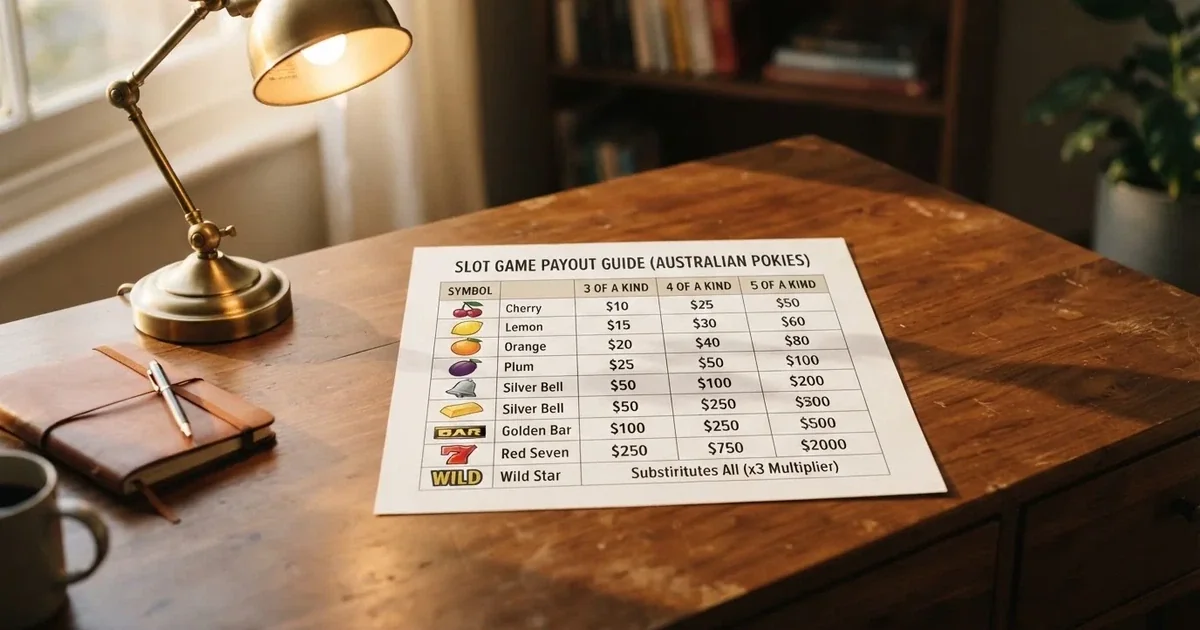
A Booongo or 3 Oaks slot, like any other video slot, is run by a random number generator; the paytable is the only fixed contract between the game and the player. It sets out symbol values, the number of paylines or ways to win, the rules for any bonus features, and the published return-to-player percentage that the game is certified to deliver over a very long run of spins. None of these numbers changes during a session, and none of them can be tuned by the casino that hosts the game. A casino selects a title from a supplier’s catalogue, hosts it under its own skin, and collects from losing spins; it does not rewire what a full house of bonus symbols pays.
What does change from casino to casino is the contract around the game: the wagering requirement attached to any bonus, the maximum cashout limit, the deposit methods that count, and the dispute mechanism if a withdrawal stalls. A Booongo or 3 Oaks slot on one offshore site is mechanically the same game as on another; the terms wrapped around it are not. The studio’s name on the lobby page tells the reader what they are about to spin; it tells them nothing about what happens to their money afterwards.
A reader weighing two sites that both carry the same 3 Oaks title is therefore not comparing games. They are comparing the contract on top of the game, and that contract lives in the site’s terms page, not on the paytable.
The Interactive Gambling Act 2001 and why no Australian licence exists
Online casino games and online pokies are prohibited interactive gambling services under the Interactive Gambling Act 2001, as tightened by the Interactive Gambling Amendment Act 2017. The Act makes it an offence for a provider to offer these services to a person physically in Australia; no state or territory issues a licence for them, and no Booongo- or 3 Oaks-powered casino has one. What is licensable in Australia is wagering on racing and sport placed before the event, lotteries and keno, with the practical licensing handled at territory level.
The Northern Territory Racing and Wagering Commission regulates 52 of Australia’s online bookmakers — Sportsbet, Bet365 and Ladbrokes among them — but these are wagering operators, not casino operators, and the commission has no full-time staff and meets once a month in Darwin. The distinction is the one offshore marketing pages blur: a site licensed in the Northern Territory to take a pre-event sports bet is not licensed to take a spin on Sun of Egypt 4, and any site offering both is licensed for one of the two and not the other.
The Interactive Gambling Amendment (Gambling Reform) Bill 2026 passed Parliament on 19 August 2026. Its advertising and inducement measures commence on 1 January 2027; the law exists but its advertising provisions are not yet in force, and that gap is the one the marketing pages of offshore casinos have been writing into since the Bill was tabled. Minimum age for any Australian-licensed gambling product is 18.
What the ACMA has actually done since enforcement tightened
The Australian Communications and Media Authority does not ban offshore casinos by name; it directs Australian internet service providers to block them at the network level, issues formal warnings to the operators behind them, and refers repeat offenders for further action. As of June 2026, a total of 1,751 illegal gambling and affiliate-marketing websites had been blocked since the first blocking request in November 2019, and more than 230 unlicensed gambling services had left the Australian market since enforcement was strengthened in 2017.
In the round reported on 26 June 2026, the ACMA asked ISPs to block 12 more sites: 7Signs, ChromaBet, Donbet, Duospin, Freshbet, Slots Gem, Jacks Club, Lucky Start, Pointsbetz.com, Spinrise, Vinyl Casino and Wildsino. The blocking requests are the cumulative shape of enforcement; the individual warnings are the visible record of which operators the regulator has named.
Formal warnings issued in 2025 and 2026
- March 2025: Dama N.V. over Woo Casino.
- May 2025: Dama N.V. over Spirit Casino.
- February 2025: EOD Code SRL over Instant Casino.
- April 2025: Sterplay Holding Ltd over Casino Intense.
- July 2025: Bamboo Media over Ignition Casino; Consolutetish S.R.L. over National Casino and Bizzo Casino. Bizzo Casino had already been the subject of a 2022 formal warning to TechSolutions (CY) Group Limited and TechSolutions Group N.V.
- March 2026: Pulsup Ltd over Rocketplay.com.au.
- April 2026: Ryker B.V. over Jackbit and CasinOK.
The earlier Dama N.V. warning of May 2022 covered six casino brands at once: Bambet, Dazard, Level Up, Rocketplay, Wild Tornado and Cobra Casinos. A site that received one warning and rebranded, or changed the company name on its terms page, is the pattern this list keeps catching.
How many sites the ACMA has blocked, and at what pace
The arithmetic on enforcement helps put the scale of the regulator’s work into perspective, because the running total is the only number that gives the reader a sense of scale. The first ACMA blocking request went out in November 2019; by June 2026 the cumulative total had reached 1,751 blocked websites. Over roughly 79 months, that works out to an average of around 22 blocked sites per month — though the monthly rate is not flat. Some rounds block a dozen sites at once, others sit quiet for weeks, and the headline number is the cumulative result of a long, uneven campaign rather than a steady drip.
Read as a band rather than a single rate: between 2019 and mid-2026, the ACMA’s blocking requests have averaged in the low-twenties per month across the full period, with material clustering around the larger monthly rounds. A reader trying to gauge whether enforcement is speeding up or slowing down needs to look at the year-on-year totals rather than any single month, and the published register is what those totals come from.
The site’s role here is to put the headline figure in proportion. 1,751 blocked sites is not a closed list; it is a snapshot of what has been acted on, and the ACMA’s next monthly round will add to it. Any operator named in a formal warning that does not change its practices is a candidate for the next blocking request.
The eleven brands the ACMA has named in formal warnings
This is not a ranking and it is not a recommendation. Each brand is named because the ACMA itself issued a formal warning over it for offering prohibited services to Australians, and any reader who lands on one of these sites needs to know that before signing up. The order follows the chronological shape of the regulator’s published record.
| Brand | ACMA action and date | Operator named by the ACMA | Subject support |
|---|---|---|---|
| RocketPlay | Formal warning, March 2026; earlier warning May 2022 | Pulsup Ltd (Rocketplay.com.au); earlier Dama N.V. | — |
| Level Up Casino | Formal warning, May 2022 | Dama N.V. | listed on Wazdan.com as a partner venue |
| Woo Casino | Formal warning, March 2025 | Dama N.V. | — |
| Spirit Casino | Formal warning, May 2025 | Dama N.V. | — |
| National Casino | Formal warning, July 2025 | Consolutetish S.R.L. | listed on Betsoft.com, en.wikipedia.org and Pragmaticplay.com as a partner venue |
| Bizzo Casino | Formal warning, July 2025; earlier warning 2022 | Consolutetish S.R.L.; earlier TechSolutions (CY) Group and TechSolutions Group N.V. | — |
| Ignition Casino | Formal warning, July 2025 | Bamboo Media | — |
| Instant Casino | Formal warning, February 2025 | EOD Code SRL | — |
| Jackbit | Formal warning, April 2026 | Ryker B.V. | — |
| Casino Intense | Formal warning, April 2025 | Sterplay Holding Ltd | listed on 1spin4win, en.wikipedia.org and gamblingcommission.gov.uk as a partner venue |
| Sky Crown | Formal warning, September 2022 | Hollycorn N.V. | — |
Two columns carry asterisks worth noting. The “Subject support” column says where the brand appears in third-party supplier listings — it is not an endorsement, and it says nothing about whether the brand actually runs Booongo or 3 Oaks content. A brand showing up on a supplier’s partner page means that supplier lists them as a venue; it does not mean the venue has been audited, certified, or held to any standard this country enforces. The cells where the column is an em dash are brands for which no third-party listing was found in the consulted set, and that absence is recorded here rather than smoothed over.
RocketPlay
The most recent warning over this brand is from March 2026, naming Pulsup Ltd over Rocketplay.com.au. The same brand was caught in the broader May 2022 Dama N.V. warning that covered six casino names at once, so the operator has cycled through at least one corporate wrapper since the first action. No third-party supplier listing was found in the consulted set. The verdict here is short: a brand with two warnings across four years and a current operator name that did not exist on the regulator’s first action is not a venue a reader can rely on for any form of continuity.
Level Up Casino
Caught in the May 2022 Dama N.V. warning, which bundled six brands in a single notice. Level Up appears on Wazdan.com as a partner venue. The single warning, the age of it, and the absence of any 2025 or 2026 action over the brand do not make it safer; they make it older news that the ACMA has not come back to. A reader weighing this brand against a more recently warned operator is comparing two unlicensable products, and the only difference is the date on the regulator’s record.
Woo Casino
Warned in March 2025 under Dama N.V. — the same operator named in the May 2022 warning, four years and ten months later. The repeated operator name is the clearest signal that Woo Casino and several of its sibling brands are the same corporate group cycling through the regulator’s published actions. No third-party supplier listing was found.
Spirit Casino
Same operator as Woo Casino — Dama N.V. — but a separate brand, warned in May 2025. The fact that the ACMA has had to name the same operator twice in two months for two different brand names is the pattern a reader needs to see: the brand on the lobby page is not the entity the regulator is acting against, and the rebranding is the move the regulator is responding to.
National Casino
Warned in July 2025 under Consolutetish S.R.L. Listed on Betsoft.com, en.wikipedia.org and Pragmaticplay.com as a partner venue — the broadest third-party footprint on the table, and not a recommendation. The presence on three supplier pages tells a reader where the brand shows up in industry listings; it does not tell them anything about the operator’s conduct in Australia, where the ACMA has acted.
Bizzo Casino
Warned twice. First in 2022 over TechSolutions (CY) Group Limited and TechSolutions Group N.V., then again in July 2025 over Consolutetish S.R.L. — a different corporate name on the second warning, which is the move the regulator is responding to. No third-party supplier listing was found for this brand in the consulted set. The double warning is the clearest case on the table of a brand that the regulator has had to name under more than one operator, and a reader who treats the second warning as a continuation of the first is reading the regulator’s record correctly.
Ignition Casino
Warned in July 2025 under Bamboo Media. No third-party supplier listing was found. A single, recent warning on a brand with no other footprint in the consulted set is not an absence of risk; it is an absence of evidence in either direction.
Instant Casino
Warned in February 2025 under EOD Code SRL. The earliest 2025 warning on the table, and one of the first in the cycle that produced the larger July 2025 and 2026 rounds. No third-party supplier listing was found.
Jackbit
Warned in April 2026 under Ryker B.V., alongside CasinOK in the same notice. The pairing is the same pattern seen with Dama N.V. and Consolutetish S.R.L.: one operator, multiple brands, one warning covers them all.
Casino Intense
Warned in April 2025 under Sterplay Holding Ltd. Listed on 1spin4win, en.wikipedia.org and gamblingcommission.gov.uk as a partner venue — note that the UK Gambling Commission listing is a regulator’s register of licensed entities, not a recommendation of Casino Intense as an Australian venue, and the two should not be conflated.
Sky Crown
Warned in September 2022 under Hollycorn N.V., with a separate warning issued for Blue Leo under the same operator. The oldest warning on the table that does not overlap a 2025 or 2026 re-warning. A brand the regulator named four years ago and has not returned to is not a brand the regulator has cleared; the ACMA does not clear, it acts.
Where the money goes, and what is and is not enforced
For a punter landing on one of these offshore sites, the payments picture is shaped by two layers that sit on top of each other: what the Australian rules forbid, and what the offshore site actually requests.
Since 11 June 2024, credit cards, credit-related products and digital currency have been banned as payment for licensed Australian online wagering, with penalties up to $247,500 for operators. Legal deposit routes for licensed wagering are debit card, bank transfer, PayID/Osko and BPAY. None of these rules bind an offshore casino: a site asking an Australian for a credit card or a crypto deposit is not operating inside the Australian rules, because it is not operating inside Australia at all. What the deposit method signals, then, is not how the punter is paying but where the punter is paying to.
Payout speed is the figure an offshore site advertises most loudly, and the figure it controls least once a withdrawal is requested. A casino licensed by a regime with a real complaints body has a defined path: complaint, escalation, alternative dispute resolution, and on to a regulator that can compel a payout. An offshore casino gives an Australian punter none of these. If a withdrawal is refused or stalled, the practical remedies are a chargeback through the punter’s bank — which works in some cases and not others — and the ACMA’s enforcement record, which protects future players rather than refunding the one whose balance is stuck. H2 Gambling Capital’s 2025 report estimates that Australians lose about A$3.9 billion a year to illegal gambling sites, and the share of gambling going through legal channels fell from 74% in 2021 to 64%.
That figure is the cost of the gap between licensed and unlicensed product. It is not money lost at the tables; it is the estimated annual flow to sites the ACMA is acting against, and it is the only number on the page that gives a reader a sense of scale on what enforcement is up against.
Bonuses, free spins and what the marketing words are worth
A “Booongo casino bonus” or a “Booongo casino welcome bonus” package, as marketed by offshore sites, is built from the same parts any other casino bonus is built from: a deposit match, sometimes a number of free spins attached, and a wagering requirement that determines how much of the bonus balance has to be turned over before a withdrawal is allowed. The studio’s name on the bonus page tells the reader which slot the free spins are valid on; it tells them nothing about the terms wrapped around the offer.
The shape of the cost is the part the marketing does not put on the homepage. A deposit-gated bonus carries a wagering multiple that the punter must clear before any of the bonus balance becomes withdrawable, and a maximum cashout cap that limits what can come out even after clearing. A “no deposit” bonus appears cheaper because no money goes in, but typically carries a higher wagering multiple and a tighter cap; the casino is paying for the chance to demonstrate the product to a player who has not yet committed. A “free spins” offer attaches the same structure to a fixed number of spins at a fixed stake on a named title; the value is the spins, the cost is the multiplier on whatever those spins produce.
The arithmetic on what a bonus costs the player who claims it is the same for every studio’s slots, including Booongo and 3 Oaks. A required turnover is the bonus amount multiplied by the wagering factor; the number of spins needed to clear it depends on the stake per spin; the time depends on the spin interval. An expected loss on the clearing is the turnover multiplied by one minus the game’s RTP. These are the calculations any casino bonus lives or dies by, and they apply in exactly the same way to a bonus advertised against Sun of Egypt 4 as to one advertised against any other slot on the lobby page.
A reader who is reading this page as background rather than as a buying guide is reading it for the right reason. There is no licensed Australian venue to bank a Booongo or 3 Oaks bonus into, and any site offering one to an Australian is operating outside the Australian rules. The bonus terms are background reading on how the offshore market is structured; they are not a shopping list.
Mobile play, apps and what “best mobile Booongo casino” actually means
A “best mobile Booongo casino” search, in the Australian context, is a search for a venue that does not exist in a licensed form. What does exist is a set of offshore sites that present their lobby through a mobile browser or through an app the punter is invited to download.
A browser-based mobile casino is functionally the same product as the desktop version: the same games, the same account, the same terms. The constraints are the ones the punter brings with them — a smaller screen, a mobile network, a battery that does not last forever — and the slot itself does not change. A “Booongo casino app” advertised by an offshore site is the same product wrapped in an installable shell, sometimes distributed outside the App Store or Play Store so the install has to be side-loaded; the regulatory position of the operator behind the app is unchanged.
The shape of what an Australian punter actually has on a phone is, then, a browser pointed at an offshore site whose licence is not Australian, whose payment terms are not Australian, and whose dispute mechanism is not Australian. None of this is fixed by downloading an app, and none of it is fixed by the fact that the slots on the lobby page were built by a studio with a UKGC licence. The studio’s licence covers the studio; the venue’s licence covers the venue.
Help, self-exclusion and what an Australian punter actually has access to
If thinking about Booongo-powered online casino play ever starts to feel compulsive or stressful, free confidential help is available around the clock. The National Gambling Helpline is 1800 858 858, free and 24/7, with chat available through Gambling Help Online. These services are not affiliated with any offshore casino and do not require the punter to have played through an Australian-licensed venue to use them.
BetStop, the National Self-Exclusion Register, has been live since August 2023. It binds Australian-licensed online and phone wagering services — an offshore casino is not connected to it, and a self-exclusion registration through BetStop does not stop an offshore site from accepting deposits or marketing to the punter who registered. The register’s protection is real, and it is also bounded by the licensing regime that runs it.
Gambling winnings of a recreational player are not assessable income (section 6-5 ITAA 1997) and losses are not deductible, unless the person carries on a business of gambling. That is the model only; the ATO is the body a punter should check with if the question becomes a tax question rather than a gambling one.
What a comparison of these eleven brands actually weighs
A fair comparison of these eleven brands is not a comparison of products, because no licensed Australian product exists on the list. What it weighs is the regulator’s record against each one: when the ACMA acted, which operator was named, whether a single operator has been caught cycling brands, and whether the brand has any third-party footprint that gives a reader anything to cross-check against.
The clearest signal on the table is the repeated operator. Dama N.V. is named in the May 2022 warning (covering six brands including Level Up, Rocketplay and Cobra) and again in the March 2025 and May 2025 warnings (Woo Casino and Spirit Casino). Consolutetish S.R.L. is named in the July 2025 warning (National Casino and Bizzo Casino), where Bizzo was already warned in 2022 under TechSolutions. Ryker B.V. is named in the April 2026 warning covering Jackbit and CasinOK together. Hollycorn N.V. is named in the September 2022 warning covering Sky Crown and Blue Leo. The repeated operator is the pattern: an offshore group caught once and rebranding under a new wrapper is the move the ACMA is responding to, and the warning record is how the regulator names the move.
The next signal is the date. A brand warned in 2022 and not re-warned in 2025 or 2026 has either left the Australian market, changed its operator name to something the ACMA has not yet caught, or simply been quiet. The Sky Crown warning from September 2022 sits in this group, alongside the May 2022 Level Up warning. Neither is older news in a way that makes the brand safer; the regulator’s record does not clear.
The third signal is the third-party footprint. National Casino, Casino Intense and Level Up Casino each appear on at least one supplier’s partner page; the rest do not, in the consulted set. A supplier listing is not an endorsement, but it does mean the brand has a public presence beyond its own marketing. A brand with no third-party footprint at all has nothing to cross-check against except its own terms page.
A reader who is weighing one of these brands against another is, in practice, weighing the regulator’s record and the supplier’s record and arriving at the same conclusion from both directions: there is no licensed Australian venue, and every venue on the list is one the ACMA has named.
The closest licensed alternative and why it remains an unlicensed choice
The closest licensed alternative to a “Booongo online casino” in Australia is an Australian-licensed wagering operator offering sports and racing betting, not a casino. These operators are licensed by the Northern Territory Racing and Wagering Commission, are connected to BetStop, and take deposits only through the methods the Australian rules permit. They do not run Booongo or 3 Oaks slots, because the IGA does not let them.
Aristocrat Leisure, the largest gambling-machine manufacturer in Australia, has its online real-money-gambling arm in Aristocrat Interactive, formed in April 2024 from the Anaxi unit combined with the acquired NeoGames group (Aspire Global, BtoBet, Pariplay). Aristocrat Interactive supplies platform technology to licensed operators in regulated markets; it does not supply to Australian online casinos, because the Australian market for online casinos does not exist. A reader who sees “Aristocrat” on a slot machine in a pub or club is seeing the studio that built the hardware, not a venue to log into online.
A punter who is determined to play Booongo or 3 Oaks titles for real money is, in practice, choosing between an offshore site on the ACMA’s warning list, an offshore site not yet on the list, and not playing. The first two carry the same consumer-protection gap; the third is the only option that sits inside Australian law.
What the next round of enforcement looks like
The 2026 figures are the most recent snapshot, and the next monthly round of blocking requests will add to the cumulative total. A brand that received a formal warning in 2025 and has not changed its practices is a candidate for the next round; a brand that has rebranded under a new operator name is the pattern the regulator is responding to, and a future round will name the new wrapper rather than the old brand.
The Interactive Gambling Amendment (Gambling Reform) Bill 2026, passed on 19 August 2026, adds advertising and inducement measures that commence on 1 January 2027. The gap between the law passing and the advertising provisions commencing is the gap the offshore marketing pages have been writing into, and a reader looking at any of these sites during 2026 is looking at a marketing landscape that is about to narrow in a specific way.
The 1,751 figure is not a final number. It is a running total, and it grows with every monthly round. A reader trying to gauge where enforcement is heading should read the next round’s blocking list alongside the warning list, because the warnings name the operators and the blocks cut the access.
Closing on what an Australian punter is actually choosing
A shortlist of trustworthy Australian casinos running Booongo’s slots does not exist, because the product does not have a license in this country. The honest answer is that no such shortlist exists, because the product described is not licensable in Australia. What exists is a string of offshore sites that carry these slots, take deposits from Australians, and have been the subject of formal warnings from the regulator whose job it is to keep them out.
A punter who lands on one of these sites is choosing a venue with no Australian licence, no Australian consumer protection, no complaints body, and no recourse if a withdrawal stalls. The slots on the lobby page are the same games they would be on a fully licensed site, and the terms wrapped around them are the ones the venue chooses. The studio’s name is on the game; the regulator’s name is not on the venue.
The fact bank for this page is the ACMA’s published register, the 3 Oaks Gaming licence record, the H2 Gambling Capital 2025 estimates, and the offshore sites’ own marketing pages where they appear. The arithmetic on enforcement is what the page has to add; the rest is the regulator’s record, set out plainly.
Frequently asked questions
Is Booongo itself an operator, or just a game studio that supplies content to sites?
Booongo is a game studio, not an operator. It does not take bets; it supplies slot titles to operators that do. The regulated-market brand that grew out of its 2021 restructuring, 3 Oaks Gaming, holds a UK Gambling Commission remote operating licence (063055-R-338209-005) granted on 9 February 2024 and a Malta Gaming Authority recognition notice dated 4 August 2025, both of which are supplier-side licences. A casino is a “Booongo casino” only in the sense that it displays the studio’s titles on its lobby page.
Can Booongo titles be played for real money at any licensed Australian casino?
No. Online casino games and online pokies are prohibited interactive gambling services under the Interactive Gambling Act 2001; no state or territory issues a licence for them. The Australian-licensed product is wagering on racing and sport before the event, lotteries and keno. Booongo and 3 Oaks slots can be played for real money only on offshore sites operating outside Australian law.
How does a Booongo slot typically differ from other studios’ games in its paytable?
The paytable of a Booongo or 3 Oaks slot sets out the same fixed contract any other video slot does: symbol values, paylines or ways to win, the rules for bonus features, and a published return-to-player percentage. The studio’s catalogue tends to emphasise “Hold and Win” style bonus mechanics and Egyptian- or fruit-themed art direction, but the paytable structure is conventional. What changes between venues is the wagering requirement, the maximum cashout, and the dispute path, all of which live in the site’s terms.
Does Booongo operate its own casino, or license its games to other operators?
Booongo and 3 Oaks license their games to operators; they do not operate a casino. A site that displays the studio’s titles has paid for the right to host them under its own brand, and the licence on the wall belongs to the operator and the regulator, not to the studio. The separation is the reason the same slot can appear in a fully licensed UK or Maltese casino and on an offshore site the ACMA has warned: the game is the same; the venue is not.
Why do offshore casinos highlight Booongo as a selling point to Australian visitors?
Because the studio’s name carries recognition, and because the regulated-market licences 3 Oaks holds — UKGC, MGA, Portugal, Romania — give the brand a credibility the offshore venue itself cannot claim. The studio’s licence covers the studio, not the venue. A punter who treats the studio’s regulated-market footprint as a signal about the offshore venue’s reliability is reading across a line that does not run.
Is it legal for a site to offer Booongo games for real money to people in Australia?
No. Offering online casino games — including Booongo or 3 Oaks slots — to a person in Australia is an offence under the Interactive Gambling Act 2001, as amended in 2017. The IGA targets the provider, not the individual player, but the practical consequence for a punter is that there is no Australian consumer protection, no complaints body and no recourse if a withdrawal is refused. BetStop binds Australian-licensed operators only and does not extend to offshore sites.