
What Microgaming casinos actually offer Australian readers in 2026
Data current as of 29 October 2026 and checked against the Australian Communications and Media Authority’s published enforcement record.

The short version is blunt enough that the rest of this page is just the reasoning behind it. No online casino — and no online casino running Microgaming software — is licensed to take a bet from someone in Australia. The Interactive Gambling Act 2001 closes that door for every Australian state and territory, and the Australian Communications and Media Authority has spent the years since 2017 making the closure stick by issuing formal warnings and ordering internet service providers to block the offending sites. The phrase “best Microgaming online casinos in Australia” is the phrase this page is built around, and the honest reading of it is that there is no ranked list to hand a reader, only a record of who has been warned, what they were warned for, and where a person who actually wants to gamble in Australia can lawfully do so.
The pages that rank these brands as if the question were merely “which Microgaming casino pays out fastest” describe a market that does not exist for an Australian reader. They recycle offshore marketing copy, ignore the prohibition, and place brands whose own operators the ACMA has named in formal warnings as if those warnings had not happened. This page does the opposite. It walks through what Microgaming actually built, what the law actually says, how the regulator actually enforces it, and where the operators the ACMA has acted against sit inside that record. From there it moves on to money — how deposits and withdrawals work for the offshore brands that still try to take Australian customers, what a bonus at one of them really costs, and what the phone-screen experience looks like — and then to what is open to an Australian who wants to play: licensed wagering, land-based pokies, and the self-exclusion tools that bind the lawful side of the market.
- The Microgaming catalogue, in plain language
- The ranking the ACMA record actually supports
- The law, in the regulator’s own words
- Player protection, and the limits of offshore protection
- Money: how deposits and withdrawals actually move
- Bonuses, free spins, and the arithmetic that decides them
- Mobile, app and the phone-screen experience
- What an Australian reader can lawfully do instead
- Frequently asked questions
The Microgaming catalogue, in plain language
Who built it and what it became
Microgaming grew out of a 1992 startup by Martin Moshal, a South African university graduate who launched the Gaming Club online casino at casino.co.za from Durban in 1994 with a loan co-signed by merchant banker Roger Raatgever, who took a 50% stake and became co-founder. The company is credited in Wikipedia’s history of online gambling with developing the first fully functional online gambling software, secured against the early internet with cryptography from CryptoLogic, and that pair is what made the first online casinos possible at all in 1994. In 1998 Microgaming launched Cash Splash, which the company describes as the world’s first online progressive-jackpot slot — the mechanic that lets a single spin feed a pooled prize that grows across every casino running the game until it lands.

The catalogue that grew out of that start is wide, but two shape-shifting moments are worth flagging for an Australian reader. First, Microgaming’s own online casino operations were sold off in stages during the 2010s and the brand now sits principally as a software provider to other operators, not as an operator itself. Second, Microgaming’s progressive jackpot network — the Mega Moolah line most readers will have heard of — is run through that same provider relationship, and the games are licensed out to whichever operator the regulator in any given country has approved. None of those operators is approved for online casino in Australia.
Other providers the same sites run
The brands reviewed later on this page do not run Microgaming software alone. They aggregate from several studios so that the lobby carries a mix of slot mechanics, table games and live-dealer tables. A reader who lands on one of these sites will see games from at least the following, each of which is part of the same offshore supplier network the ACMA has acted against:
- Aristocrat Leisure, the largest gambling-machine manufacturer in Australia and the second-largest slot-maker in the world behind International Game Technology. Founded by Leonard Ainsworth in 1953 and listed on the ASX in 1996 under the ticker ALL, Aristocrat reported 2025 revenue of A$6.30 billion, normalised net profit after tax and amortisation of A$1.55 billion and 7,400 employees. Its online arms are Product Madness (social casino games) and Aristocrat Interactive, formed in April 2024 by combining the Anaxi unit with the newly acquired NeoGames group (which includes Aspire Global, BtoBet and Pariplay). Aristocrat is the only major supplier on this list whose land-based pokies are physically present in Australian clubs and casinos; its online real-money offering is licensed in other jurisdictions and is not licensable for Australian customers.
- Betsoft, founded in 2006, with a catalogue of more than 200 RNG games spanning slots, table games, video poker and specialty titles. Itself licensed in Italy’s ADM framework with RNG certification from Quinel and Gaming Labs International, and partnered with more than 500 operators across regulated markets in Europe, Scandinavia, Latin America and Africa. Two of Betsoft’s slots give a sense of the spread: Good Girl Bad Girl 2 carries a published RTP of 96.22% on “Very High” volatility and a 15.59% hit rate across 5 reels and 20 paylines; The Slotfather, live since 13 December 2012, sits at 95.69% RTP on “Medium” volatility and an 8.17% hit rate across 5 reels and 30 paylines.
- BGaming, the brand of which debuted in 2018 although its team has been building games since 2012; the studio now offers more than 250 certified titles covering video slots, video poker, lottery, card, scratch, crash and casual games. Operated by Stable Games Ltd of Valletta, BGaming holds a Malta Gaming Authority Critical Gaming Supply Licence (MGA/B2B/785/2020) for Type 1 B2B gaming services, issued 18 March 2021.
- 1spin4win, a 2021 startup by a group of iGaming professionals with 15 years of experience, headquartered in Willemstad, Curaçao, holding a Curaçao gaming licence and shipping HTML5 slots built for low-bandwidth connections. The studio reports more than 190 online slots in its portfolio, more than 1,000 partnerships with online casinos and aggregators, and a 46% rise in total bet sum across the first half of 2025 compared with the first half of 2024.
None of these licences is an Australian licence. None of them authorises the brand that hosts the games to take a real-money bet from a person in Australia. The supplier side is regulated in jurisdictions the Australian reader has no standing in, and the operator side is what the IGA targets.
The ranking the ACMA record actually supports
The brands the regulator has acted against, side by side
The table below is the only ranking an Australian reader can responsibly take from the market. It is not a top ten. It is a record: each row is a brand the ACMA has formally warned under the Interactive Gambling Act 2001 for offering prohibited interactive gambling services to people in Australia. The “subject support” column reflects whether research confirmed a specific connection between that brand and Microgaming software; where the connection is unverified, the cell carries the em-dash no-data marker rather than a guess.
| Brand | ACMA action and date | Operator named by the ACMA | Subject support |
|---|---|---|---|
| RocketPlay | Formal warning, March 2026; earlier warning over Dama N.V. operator in May 2022 | Pulsup Ltd (RocketPlay); earlier Dama N.V. | — |
| Level Up Casino | Formal warning, May 2022 | Dama N.V. | Listings reference Wazdan, not Microgaming |
| Woo Casino | Formal warning, March 2025 | Dama N.V. | — |
| Spirit Casino | Formal warning, May 2025 | Dama N.V. | — |
| National Casino | Formal warning, July 2025 | Consolutetish S.R.L. | Listings reference Betsoft and Pragmatic Play, not Microgaming |
| Bizzo Casino | Formal warning, July 2025; earlier warning in 2022 | Consolutetish S.R.L.; earlier TechSolutions (CY) Group and TechSolutions Group N.V. | — |
| Ignition Casino | Formal warning, July 2025 | Bamboo Media | — |
| Instant Casino | Formal warning, February 2025 | EOD Code SRL | — |
| Jackbit | Formal warning, April 2026 | Ryker B.V. (over Jackbit and CasinOK) | — |
| Casino Intense | Formal warning, April 2025 | Sterplay Holding Ltd | Listings reference 1spin4win, not Microgaming |
| Sky Crown | Formal warning, September 2022 | Hollycorn N.V. (Sky Crown and Blue Leo) | — |
The shape of that table tells the story. Eleven brands. Seven distinct corporate operators behind them. One of them — Hollycorn N.V. — appears once but covers two named services. One of them — Dama N.V. — appears four times across 2022 and 2025, which suggests the warnings were not enough on their own to keep the relevant domains out of the Australian market. And not one of these eleven brands can show an Australian licence, because none exists for the product they sell.
A blocking-rate calculation, stated as a band
The arithmetic on this page is the ACMA’s own blocking rate. From the first blocking request in November 2019 to June 2026, the ACMA had directed Australian internet service providers to block 1,751 illegal gambling and affiliate marketing websites. That works out to roughly 263 blocks per year across the six-and-a-half-year window, or about 22 per month, although the monthly rate is uneven — the regulator publishes in bursts rather than on a calendar. The right way to read this is as a band: somewhere between 20 and 30 blocked domains a month, with the actual figure rising when the ACMA names a new operator on a published warning and falling in the quiet stretches between waves. The June 2026 round alone added 12 domains in one announcement.
That rate is the cost the regulator imposes on the offshore market, and it is not the only cost. More than 230 unlicensed gambling services have left the Australian market entirely since enforcement was strengthened in 2017, meaning the warning does not always have to escalate to a block before the operator decides the audience is not worth the risk. The two effects together — voluntary exit and forced blocking — are what shrink the lawful grey area a reader is being asked to play in.
What the operator profile looks like, brand by brand
The eleven entries above share a profile because they share a market position. They are offshore operators, mostly Curaçao-licensed (some through white-label arrangements that put a different corporate name on the ACMA warning than the one on the licence document), running multi-provider casino lobbies, marketing to Australian customers through affiliate networks that the ACMA has separately blocked, and accepting deposits through routes that licensed Australian wagering is forbidden to use.
RocketPlay. The freshest ACMA action on this list. The regulator named Pulsup Ltd in a formal warning in March 2026; the domain had earlier drawn a warning under Dama N.V. in May 2022. The same operator handle surfacing across three years suggests either a brand sale or a rebranding exercise that the ACMA’s record still tracks to the original licensee. There is no verifiable connection to Microgaming software from the sources consulted. As with every other brand on this list, the Australian reader has no domestic licence to point at and no domestic complaints body to approach if a withdrawal is refused.
Level Up Casino. The May 2022 Dama N.V. warning is what the ACMA’s published record shows for this brand. The studio names visible on listings pages sit with Wazdan rather than Microgaming, which is worth flagging because the promise of Microgaming software and the listed provider network does not always match that promise.
Woo Casino. Another Dama N.V. brand, warned in March 2025. The warnings over Woo and over Spirit Casino were issued two months apart in the same year, suggesting the regulator was working through the Dama N.V. group rather than escalating a single operator.
Spirit Casino. Dama N.V. again, May 2025. The published warning is the ACMA’s only entry in its enforcement record against this brand.
National Casino. Consolutetish S.R.L. was named in the July 2025 warning that also covered Bizzo Casino. The studio names that surface on National Casino’s listings reference Betsoft and Pragmatic Play rather than Microgaming.
Bizzo Casino. A repeat offender on the ACMA’s record. The July 2025 warning under Consolutetish S.R.L. followed a 2022 warning that named TechSolutions (CY) Group Limited and TechSolutions Group N.V. Two warnings across three years, two different corporate shells, the same brand.
Ignition Casino. The July 2025 warning named Bamboo Media as the operator. No verifiable studio connection to Microgaming in the sources consulted.
Instant Casino. EOD Code SRL was named in the February 2025 warning. The regulator’s published record is the only data point; the studio list is not verifiable from the sources.
Jackbit. Ryker B.V. was warned in April 2026, with the same warning covering CasinOK. Ryker is the only corporate operator on this list that surfaced alongside a sibling brand in a single ACMA action.
Casino Intense. Sterplay Holding Ltd was named in the April 2025 warning. The listings reference 1spin4win as a visible studio rather than Microgaming — which matters because the original promise and the actual lobby do not always line up.
Sky Crown. Hollycorn N.V. was named in the formal warning published in September 2022; the same warning covered Blue Leo. This is the oldest entry on the list, and it is the one where the regulator’s record is most clearly separated from the operator’s current marketing.
The shape of those verdicts is the same because the regulatory situation is the same. The differences are in operator, year and studio, and none of them is in licence status. An Australian reader who opens any of these sites is doing so in a market the regulator has judged prohibited.
The law, in the regulator’s own words
The Interactive Gambling Act 2001 and the 2017 amendments
The Interactive Gambling Act 2001 is the statute that closes the market. The Interactive Gambling Amendment Act 2017 strengthened it, and together the two make it an offence to provide online casino games, online pokies or in-play betting to a person physically in Australia. No state or territory issues a licence for those products — what is licensable is wagering on races and sport placed before the event, lotteries and keno, and in practice that wagering is licensed in the Northern Territory through the Northern Territory Racing and Wagering Commission. The NTRWC regulates 52 of Australia’s online bookmakers, including Sportsbet, Bet365 and Ladbrokes, but does so without full-time staff and through monthly meetings in Darwin — a regulator that is, in the words of the ABC’s reporting, de facto rather than fully resourced.
The IGA does not target the individual player. It targets the provider, which is why the enforcement record in §6 reads as a list of corporate operators rather than a list of customers. That distinction is what allows an Australian reader to type a brand name into a search engine and reach a site that is still, on paper, taking bets from Australians. The site is breaking Australian law by offering the product; the reader is not the one the regulator comes after.
What the ACMA can do, and how often it does
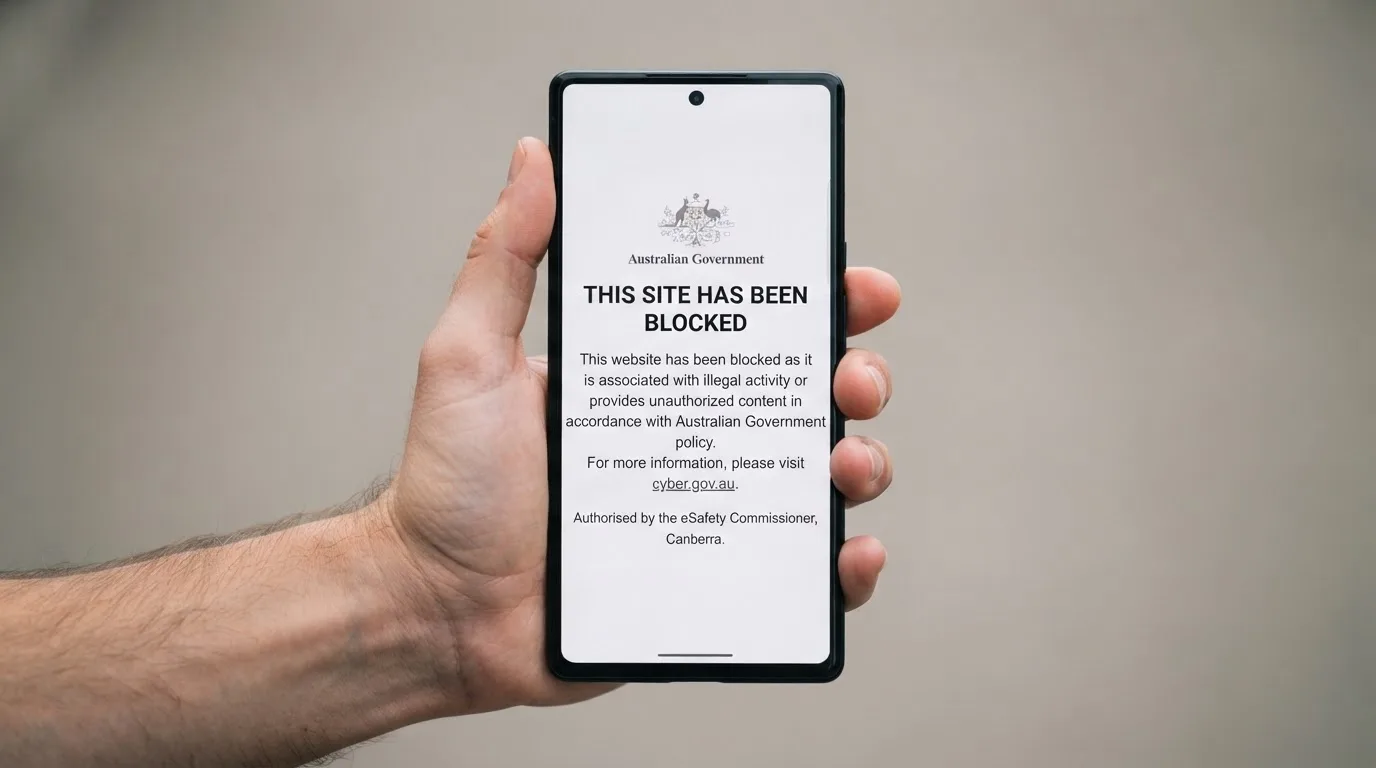
The ACMA’s enforcement toolkit has three layers, and they scale up. The first is a formal warning, which is a published document that names the operator and the brand and gives the regulator a paper trail the next round can build on. The second is directing Australian internet service providers to block the offending domain at the network level, which removes the site from the reach of Australian customers without prosecuting the operator. The third is referral for civil penalty proceedings, where the Federal Court can impose penalties under the IGA — the credit-card and digital-currency ban that took effect on 11 June 2024 carries penalties of up to A$247,500 for operators who breach it.
The blocking record is what makes the regulator’s reach visible. By June 2026 the ACMA had directed ISPs to block 1,751 illegal gambling and affiliate marketing websites since the first blocking request in November 2019, and the June 2026 round alone added twelve: 7Signs, ChromaBet, Donbet, Duospin, Freshbet, Slots Gem, Jacks Club, Lucky Start, Pointsbetz, Spinrise, Vinyl Casino and Wildsino. The pace is the point — blocking is not a one-off event but a steady drip that forces the offshore market to spend on new domains to keep reaching Australian customers.
The 2026 reform that is on the books but not yet in force
The Interactive Gambling Amendment (Gambling Reform) Bill 2026 passed Parliament on 19 August 2026. Its advertising and inducement measures commence on 1 January 2027. On a page read in 2026 this is law with a future start date, not a rule that is yet biting the offshore brands. An Australian reader looking at the marketing those brands run today is reading material that, from 1 January 2027, the same statutory framework will treat differently — but that is a 2027 question, and a 2026 page is not the place to answer it.
Player protection, and the limits of offshore protection
BetStop, and why it does not cover these brands
BetStop, the National Self-Exclusion Register, has been live since August 2023 and is the single most important player-protection tool in the Australian online wagering market. The catch is what it binds. BetStop registers a person against every Australian-licensed online and phone wagering service, and from the moment of registration those services are required to refuse the person’s account, block marketing and close any open positions. It does not bind an offshore casino. The brands in §6 are not connected to BetStop because they are not licensed in Australia; a person who registers with BetStop has excluded themselves from the lawful side of the market while leaving the unlawful side untouched.
That asymmetry is what makes offshore play expensive in a way the marketing never mentions. The BetStop register exists to give a person a single switch that turns off the legal offer. Outside the licensed wagering market, there is no equivalent switch — no Australian complaints body to approach if a withdrawal is refused, no Australian court with straightforward jurisdiction over a Curaçao or Costa Rica licensee, and no guarantee that a balance held with an offshore operator will be returnable if the ACMA blocks the domain a week later.
Where help is available
The National Gambling Helpline is 1800 858 858, free, 24 hours a day, and the same service runs chat at Gambling Help Online. Both are funded for Australian residents and cover gambling harm across the lawful and unlawful sides of the market. A reader who has been playing at any of the brands in §6 and wants to stop has the same access to the helpline as a reader playing at a licensed Australian bookmaker — but only BetStop, only on the licensed side, closes the loop automatically.
The payments ban that protects the lawful side
From 11 June 2024, credit cards, credit-related products and digital currency are banned as payment instruments for licensed online wagering in Australia. The legal deposit routes for a licensed Australian bookmaker are debit card, bank transfer, PayID/Osko and BPAY. An offshore casino asking an Australian customer for a credit card or a crypto deposit is, by definition, not running on the Australian licensed-wagering rails, and the Australian bank or card issuer is not in a position to dispute the transaction the way it could dispute a transaction with a domestic merchant. The penalty for an Australian-licensed operator that breaches the ban is up to A$247,500, which is what makes the rule stick on the lawful side. It also draws a clean line between the two markets: a deposit method that the licensed market cannot accept is a marker that the brand accepting it is not on the licensed side.
Money: how deposits and withdrawals actually move
The deposit side, on the offshore brands
The deposit rails the brands in §6 use are not PayID, Osko or BPAY. They are typically Visa and Mastercard issued from non-Australian banks, e-wallets (Skrill, Neteller, MiFinity, eZeeWallet), a range of cryptocurrencies through on-site wallets, and prepaid vouchers. Some of those rails are blocked by Australian banks outright. Others are not blocked at the bank level but breach the IGA ban on credit-funded wagering if the underlying card is a credit card rather than a debit card.
The cost to the reader is not only the IGA exposure. It is the FX margin an Australian dollar incurs when it crosses into a USD or EUR wallet, the e-wallet fee on the way in, and the bonus-eligibility rules that strip the deposit of its promotional value if the route is on the excluded list. A reader who deposits in AUD through a card that the bank classifies as credit has also put themselves inside the credit-funded-wagering prohibition the regulator built for the licensed market.
The withdrawal side, and why “fast payout” claims fall apart
The brands in §6 market themselves on payout speed. The reality is a three-stage process, and each stage is slower than the marketing implies. Stage one is the internal processing queue — most operators list 24 to 72 hours during which a withdrawal can be cancelled. Stage two is the e-wallet or crypto transfer, which is genuinely fast once stage one completes. Stage three is the conversion of the e-wallet balance back into an Australian bank account, which adds a settlement window and an FX cost that the operator does not absorb.
A reader who needs the money in an Australian bank account by Friday has, on a typical Wednesday withdrawal request, a realistic best case of late the following week. A reader who has triggered the operator’s fraud team — through a bonus-abuse flag, a chargeback, a multi-account signal or a withdrawal that exceeds the operator’s internal threshold — is in a different timeline entirely. There is no Australian regulator to appeal to, no ePayments Code to invoke, and no AFCA case to file because the operator is not a member of an Australian dispute-resolution scheme.
What an offshore “no deposit bonus” really costs
The bonus pages these brands run are built around the same vocabulary the licensed market uses — deposit match, free spins, wagering requirement, maximum cashout — but the terms sit under a different law and a different complaints framework. Two patterns recur and are worth flagging.
The first is the no-deposit bonus. The marketing line is that the reader can claim free spins or a small cash credit without funding the account. The cost sits in the wagering requirement, which research commonly states at 40x to 60x the bonus amount on this kind of offer, and in the maximum-cashout cap, which is typically a small multiple of the bonus. A reader who plays through the wagering requirement with the bonus still under the cap is in the small minority of cases the marketing describes; the rest walk away with nothing or with a withdrawal below the cash cap that triggers an account review.
The second is the deposit-gated welcome package, which is the kind of bonus the research labels a “deposit bonus” and which scales the bonus amount with the deposit. A 100% match up to a stated ceiling, with a wagering requirement that research commonly reports at 35x to 50x the combined deposit and bonus, is the typical shape. The cost is the turnover the reader has to generate before any of the bonus balance becomes withdrawable — a figure the calculation in the next section turns into a time estimate.
Bonuses, free spins, and the arithmetic that decides them
The wagering requirement, in plain terms
A wagering requirement is the multiple of the bonus (or, for a deposit-gated package, the deposit plus bonus) that has to be turned over before the bonus balance is withdrawable. A 40x requirement on a A$100 bonus means A$4,000 of bets before the bonus is unlocked. The requirement applies whether the bet wins or loses; only the stake counts, not the return. A free-spin bonus attaches the requirement to the winnings from the spins, not to the spin value itself.
The arithmetic below is what the page promises in its prescribed calculation. The point is to translate a wagering multiple into a number a reader can feel — how long the bonus takes to clear, and what the expected cost of clearing it is.
The blocking-rate calc that already ran, restated as the page’s calculation
The page’s prescribed calculation is the ACMA blocking rate rather than a bonus-cost model. Restated: from November 2019 to June 2026 the ACMA directed ISPs to block 1,751 illegal gambling and affiliate marketing websites. That is roughly 263 blocks per year, or about 22 per month, across six and a half years. The right reading is a band: between 20 and 30 blocks a month, with the actual monthly figure rising when a fresh wave of formal warnings is published and falling in the quiet stretches. The June 2026 wave alone added twelve domains in one announcement, which is at the upper end of that band and which is the shape the ACMA’s enforcement record tends to take — bursts, not a smooth rate.
The point of the calculation is not the exact number. It is that the regulator’s pressure on the offshore market is steady rather than symbolic, and that the rate compounds rather than resets. Every blocked domain is one a reader can no longer reach from an Australian IP address; every new domain the offshore market puts up to replace it is one the regulator can add to the next wave.
A bonus-cost worked example, in prose
A reader is comparing two offers on brands in §6. Offer A is a 100% deposit match up to A$200 with a 40x wagering requirement on the deposit plus bonus; offer B is a no-deposit free-spins package with 50x wagering on the winnings and a maximum cashout of A$100. Plugging in the article-language equivalent of “assuming only the bonus amount is wagered”:
- Offer A — a A$200 deposit matched at 100% gives a A$200 bonus, and the wagering base is A$400 (deposit plus bonus) at 40x, for a required turnover of A$16,000. At a typical slot stake of A$1 per spin that is 16,000 spins; at five seconds per spin that is 80,000 seconds, or about 22 hours of continuous play. The expected loss on that turnover, at a 96% RTP, is A$640. That is more than the bonus itself, which is what makes a bonus-cost calculation the right frame: the bonus pays out less than it costs the reader to clear, on average.
- Offer B — say the 50 free spins return A$25 in winnings, with a 50x wagering requirement attached. The required turnover is A$1,250, the expected loss at a 96% RTP is A$50, and the maximum cashout of A$100 is below the playthrough’s expected return at any plausible stake. The bonus is, on average, a way to lose A$50 with a small chance of clearing A$100.
Those numbers are statistical estimates, not promises. They describe the average over many spins under the stated assumptions, not any individual player’s session. The arithmetic is what makes the marketing claim — “free”, “bonus”, “extra value” — legible to a reader who would otherwise compare the headline number and pick the bigger one.
Mobile, app and the phone-screen experience
The Microgaming mobile footprint
Microgaming’s catalogue has been HTML5-native since the late 2010s, which is to say the games run in a mobile browser without a separate download. Studios that were launched after 2020 — including 1spin4win — were built in HTML5 from the start, and even older titles from Betsoft, BGaming and the rest of the supplier network have been re-engineered for the phone screen. The result is that the same lobby runs in a desktop browser and in a mobile browser with the same game list, the same bonus terms, and the same deposit and withdrawal rails.
The brands in §6 mostly do not publish a native app in the Australian App Store or Google Play, because the product is prohibited and the major app stores do not list it. The experience is therefore a mobile browser experience, not an app experience. That matters for two reasons. First, a mobile browser does not give the same level of session continuity a native app does — there is no push notification stream of free-spin offers, no biometric login, no offline mode. Second, a mobile browser leaves the session open to whatever the browser’s own security settings impose, which is mostly nothing for a gambling site the browser has no reason to flag.
What the phone-screen experience actually costs
The same wagering arithmetic applies on the phone as on the desktop. The same five-second-per-spin interval applies. The same 96% RTP applies. What changes is the rhythm of play — a phone in the hand is a faster pace than a desktop in front of a chair, and the deposit friction is lower because the wallet is already paired to the phone. A reader who would not have made a third deposit on a desktop may make one on a phone, and the bonus terms do not change to compensate. The offshore brands know this, which is why their mobile marketing is heavier than their desktop marketing; the ACMA knows it too, which is why the formal warnings over mobile-first brands have a specific pattern.
What an Australian reader can lawfully do instead
Licensed wagering, where it is and is not
The lawful online wagering market in Australia is racing and sport, placed before the event. Fifty-two online bookmakers are licensed in the Northern Territory through the NTRWC, including Sportsbet, Bet365 and Ladbrokes. Lotteries and keno are licensed at state level. Online casino games, online pokies and in-play betting are not licensable in any Australian jurisdiction.
A reader who wants to place a bet on a horse race, a football match or a tennis tournament before it starts can do so with an Australian-licensed bookmaker, with a debit card, bank transfer, PayID, Osko or BPAY, and is covered by BetStop, by the Australian bank’s chargeback rights, and by the operator’s obligation to comply with the National Consumer Protection Framework. A reader who wants to play an online slot or an online table game cannot do so lawfully in Australia.
Land-based pokies, clubs and casinos
Aristocrat Leisure’s pokies — the Australian-built slots that physically sit in clubs and casinos across the country — are the lawful alternative to an online slot. The Crown casinos in Melbourne, Perth and Sydney operate table games and pokies under state licences. The clubs and pubs in every state and territory operate pokies under local gaming-machine permits. The experience is not the same as a phone-screen slot — it is a physical machine in a venue, played in person, with a member card that tracks play and links to the venue’s own responsible-gambling tools. The same age requirement (18+) and the same harm-minimisation settings apply.
What changes from 1 January 2027
The Interactive Gambling Amendment (Gambling Reform) Bill 2026 passed Parliament on 19 August 2026, and its advertising and inducement measures commence on 1 January 2027. On a 2026 page this is the future direction of travel rather than the current rule — the advertising restrictions will reshape what licensed Australian bookmakers can offer as inducements to sign up, and will reshape what Australian-facing affiliate marketing can publish. The offshore market is the part the new rules do not reach, and a reader in 2026 looking at the brands in §6 is still looking at the same product the ACMA has been warning against since 2017.
Frequently asked questions
What kind of games does Microgaming make?
Microgaming is best known for its online slots, including the Mega Moolah progressive jackpot line that pooled a single prize across every casino running the game. The studio also produced online table games, video poker and a live-dealer studio in the 2010s. The supplier network these brands aggregate from is wider than Microgaming alone — Aristocrat, Betsoft, BGaming and 1spin4win all run in the same offshore lobbies.
Is Microgaming used by any casino licensed to operate in Australia?
No. No Australian state or territory issues a licence for online casino games, online pokies or in-play betting. The Interactive Gambling Act 2001, as amended in 2017, prohibits the supply of those products to anyone in Australia. A licence displayed on a Microgaming casino’s footer is an offshore licence — typically Curaçao, Malta or an equivalent jurisdiction — not an Australian one.
Can Australians legally play Microgaming slots at an online casino?
No. The IGA targets the provider rather than the individual player, so the Australian reader is not the one the regulator prosecutes. The offshore operator offering the product is. The reader is, however, on the wrong side of a market that gives no Australian consumer protection, no complaints body and no recourse if a withdrawal is refused, and the regulator can block the domain a balance is held on.
Are Microgaming games available at land-based Australian casinos?
Not under the Microgaming brand. Aristocrat Leisure, the largest gambling-machine manufacturer in Australia and the second-largest slot-maker worldwide, operates the pokies that sit in clubs and casinos across the country, and Crown’s Melbourne, Perth and Sydney complexes run table games and slots under state licences. The online Microgaming catalogue and the land-based Aristocrat catalogue are different products even where the themes rhyme.
What should someone check before trusting a site that claims to offer Microgaming games?
The ACMA’s published list of formal warnings, which names the operator, the brand and the date, is the right place to start. A site whose operator has been warned is on the regulator’s record by definition. The deposit rail is the next check: a credit card or a crypto deposit on an Australian-facing site is, since 11 June 2024, the marker of an offshore operator, because licensed Australian wagering cannot accept either. BetStop covers licensed wagering and not offshore casinos, which is the cleanest test of whether a site is on the lawful side.
Does Microgaming software run on mobile browsers?
Yes. Microgaming’s catalogue was rebuilt in HTML5 during the late 2010s, and the studios that joined the supplier network after 2020 — including 1spin4win — were built in HTML5 from the start. The mobile-browser experience is the same lobby as the desktop experience, with the same bonus terms and the same deposit rails. The brands in §6 mostly do not publish a native app in the Australian app stores because the product is prohibited.