
Best RTG casinos Australia 2026: the picture the search result doesn’t draw
The phrase “best RTG casinos Australia 2026” sits on a fault line. Real Time Gaming built a name in offshore online casino lobbies for two decades, and the marketing aimed at Australian players has not stopped. The Australian frame has changed a lot in that time, and the frame is what decides whether any of those offshore brands can lawfully serve a person sitting in Sydney, Perth or Townsville. The answer in plain language is no. The Interactive Gambling Act 2001 prohibits the supply of online casino games and online pokies to anyone in Australia. RTG titles are online casino games. Every brand on the curated shelf below carries that prohibition, and the Australian Communications and Media Authority has issued formal warnings over them one by one.
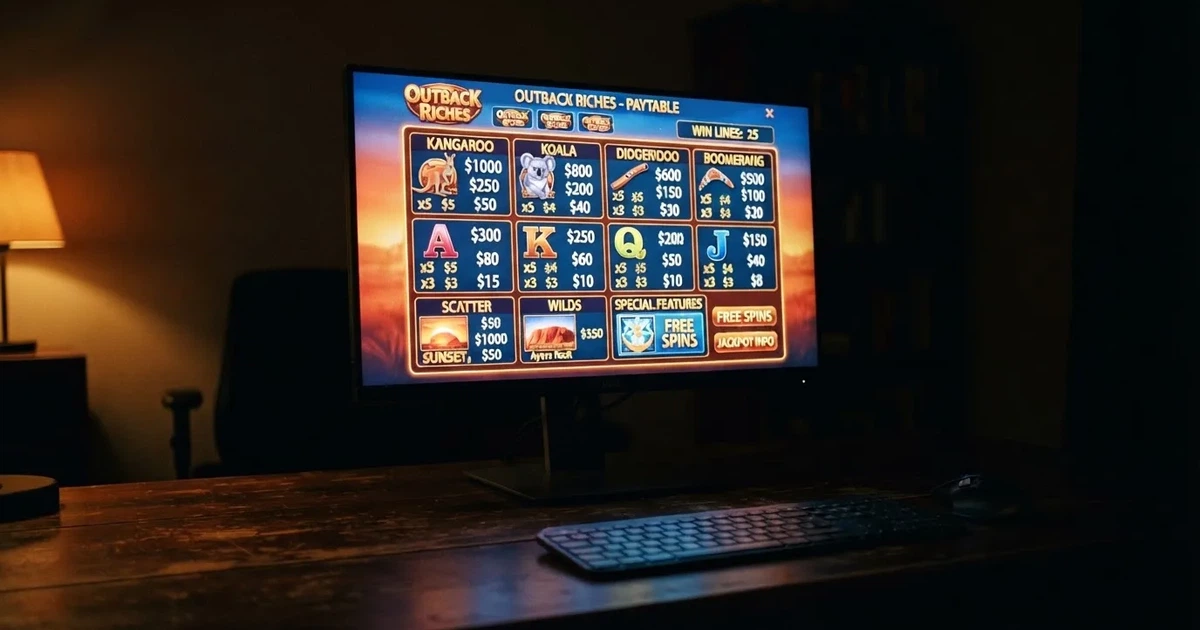
This page treats the search the way the regulator treats it: as a request for a product that the regulator has already weighed. It lays out what RTG is, what the offshore sites actually look like to an Australian visitor, the formal-warning log the ACMA has built up since 2017, and how the legal and consumer-protection frame differs from anything an Australian punter might be used to at a licensed bookmaker. It then runs through eleven brands the ACMA has named in formal warnings, lists the operator the warning names, the date the warning was published, and what the regulator’s record says about each.
Data is current as of 29 October 2026 and was checked against the Australian Communications and Media Authority’s formal-warning register and its blocking-order publications.
- The legal frame an Australian punter walks into
- What RTG actually is, and why the brand keeps surfacing in Australian search
- Why the shelf keeps refilling: the ACMA blocking record
- The picture offshore RTG casinos present to an Australian visitor
- Responsible gambling, for the part the IGA does not cover
- How an Australian reader can check whether a site is licensed to serve them
- What happens if an Australian punter plays at an offshore RTG casino anyway
- Eleven offshore RTG-facing brands the ACMA has named
- The ACMA’s warning log as a snapshot
- The blocking rate, as a derived figure
- What the search actually points to
- The 2026 reform bill, briefly
- What to do if an RTG game keeps appearing in Australian search
- Where the help is, regardless of which shelf the gambling sits on
- Frequently asked questions
The legal frame an Australian punter walks into
The Interactive Gambling Act 2001, tightened by the Interactive Gambling Amendment Act 2017, makes it an offence to provide online casino games, online pokies or in-play betting to a person physically in Australia. No state or territory licenses an online casino product, so any offshore site displaying an Australian-sounding licence is doing what the regulator has been pursuing since 2017. The individual player is not the target of prosecution; the IGA aims at the provider. That is reassuring in one sense and costly in another: the offshore operator is outside the Australian consumer-protection regime, so a refused withdrawal has no complaints body to escalate to, and the site can be blocked by an Australian ISP while a balance is still sitting in the account.

What is licensable onshore is a narrower set: wagering on races and sport placed before the event, lotteries and keno. In practice, online and phone wagering is licensed by the Northern Territory Racing and Wagering Commission, which holds 52 Australian-licensed online bookmakers on its books — Sportsbet, Bet365, Ladbrokes among them — and operates with no full-time staff and a monthly meeting in Darwin. That’s a thin regulator for a national market, and the Northern Territory government opened a reform bill in April 2026 to address the gap.
Minimum age is 18. Credit cards, credit-related products and digital currency have been banned as a payment for licensed online wagering since 11 June 2024, with penalties up to A$247,500 for operators. The legal deposit routes for licensed wagering are debit card, bank transfer, PayID/Osko and BPAY. An offshore casino asking for a credit card or a crypto deposit is one signal that it is operating outside Australian rules.
What RTG actually is, and why the brand keeps surfacing in Australian search
Real Time Gaming was established in Atlanta, Georgia in 1998, moved all of its development to Heredia, Costa Rica in 2007–2008, and has been under Curaçao ownership since Hastings International bought the company in January 2007. The studio built its reputation on a downloadable casino client that ran on Windows machines in the era before HTML5, and the catalogue today leans on a long list of slot titles, video poker variants and table games distributed through third-party operators. None of those operators can lawfully serve Australians, and the brand has surfaced repeatedly in ACMA action as a result.
Two mechanics separate RTG from a typical European studio. First, Real Time Gaming does not let casino operators alter payout settings on its slot and video poker games — the RTP is fixed at the studio level and the operator cannot dial it up or down. Second, RTG caps its own liability through maximum-bet restrictions intended to keep any single progressive jackpot game’s payout at or below A$75,000-equivalent. The cap exists because a 2004 incident at the Hampton Casino, where a player turned a A$1,500 deposit into a A$2 million win on Caribbean 21, forced the studio to set a A$7.50 maximum bet on the title before pulling it from the portfolio entirely.
The studio’s largest operator in 2005 was Crystal Palace Group, owned by Warren Cloud, which reported £20.4 million in pre-tax profit that year; Cloud died in July 2008, aged 34. RTG’s Australian footprint since has been almost entirely via offshore brands advertising to Australian visitors — the kind that the ACMA’s blocking programme now keeps a running register of.
Why the shelf keeps refilling: the ACMA blocking record
The Australian Communications and Media Authority started asking Australian ISPs to block illegal gambling sites in November 2019 and the running total reached 1,751 blocked websites and affiliate marketing pages by June 2026, with more than 230 unlicensed services having left the Australian market since enforcement was strengthened in 2017. A blocking round reported on 26 June 2026 added another twelve: 7Signs, ChromaBet, Donbet, Duospin, Freshbet, Slots Gem, Jacks Club, Lucky Start, Pointsbetz, Spinrise, Vinyl Casino and Wildsino. The pace of additions is the point — the ACMA’s blocklist is not a one-off raid on a fixed list, it is a maintenance log.
The economic case sits behind the figures. H2 Gambling Capital’s 2025 report estimates that Australians lose about A$3.9 billion a year to illegal gambling sites, and that the share of gambling going through legal channels fell from 74% in 2021 to 64%. Those are the conditions under which the offshore brands keep advertising: the audience is large, the legal recourse is thin, and the marketing keeps paying for itself.
The picture offshore RTG casinos present to an Australian visitor
Australian-facing RTG lobbies tend to lead with a small number of promotional pillars: a deposit match, free spins on a marquee slot, a “weekly cashback” line, and a VIP tier that promises a personal account manager. The mechanics underneath each pillar are the parts an Australian reader has to read closely. A deposit match typically comes with a wagering multiple that asks the player to bet the bonus amount (and sometimes the deposit too) thirty to forty times before any withdrawal is allowed. A free-spin bundle usually carries a maximum cashout cap, which means a win that looks like a few hundred dollars in the bonus wallet can be paid out only up to that cap, with the rest removed. Cashback as advertised is often paid as bonus funds rather than as withdrawable cash, which means the cashback amount is itself subject to wagering. VIP tiers are points-based, and the conversion rate from points to cash tends to get worse the further up the tier a player climbs.
The other machinery the offshore sites use is geo-targeting. An Australian visitor who clicks through to an RTG-branded casino from a search result will often be greeted with an Australian-flag banner, AUD in the cashier, and a customer-support chat agent who claims to be Sydney-based. The banner is irrelevant to whether the IGA applies. What matters is the physical location of the person playing, and the casino’s own licence is not an Australian one — the ACMA has been naming offshore licences (Curaçao, Anjouan, Costa Rica) in its formal warnings because those are the jurisdictions the operators behind the warnings actually hold.
Responsible gambling, for the part the IGA does not cover
RTG-branded slots are offshore products, but gambling harm in Australia is not. The relevant supports treat any gambling activity — onshore or offshore — as something a person can ask for help with. Gambling Help Online is the federal 24/7 service, with phone at 1800 858 858 (free) and live chat. BetStop, the National Self-Exclusion Register, has been live since August 2023 and binds every Australian-licensed online and phone wagering service. An offshore casino is not connected to it — the operator is not licensed in Australia, so a BetStop registration does not propagate to it. A punter who has registered on BetStop and then visits an offshore RTG casino reaches it through the marketing pages the ACMA blocks, and the offshore site has no mechanism to honour the exclusion. State and territory self-exclusion registers (Victoria, New South Wales, Western Australia, South Australia) cover land-based venues; their scope does not extend offshore either.
How an Australian reader can check whether a site is licensed to serve them
The check takes a minute. Open the ACMA’s register of blocked illegal gambling websites, search the brand name, and check whether it appears. A match means the ACMA has already asked Australian ISPs to block the site, and the blocklist is updated regularly. If the brand is not on the blocklist, the next step is to check the licence the site displays. A Curaçao licence, an Anjouan licence or a Costa Rica licence is not an Australian licence, and the IGA applies. A licence displayed in an Australian-looking style with state-and-territory branding should be checked against the relevant register — state and territory gaming authorities publish their own licensee lists. If the site claims a Northern Territory wagering licence, the NTRWC’s licensee list is the place to verify. For wagering only, the NTRWC’s set is the relevant one; for casino games, no Australian register exists, because no Australian licence for that product is issued.
What happens if an Australian punter plays at an offshore RTG casino anyway
The legal exposure sits with the operator, not the player. The real cost is consumer-side. An offshore casino does not route a complaint through an Australian dispute-resolution body. Withdrawal refusals, identity re-checks that never complete, and bonus-term disputes have no local escalation path. The most common failure mode is the “source-of-funds” check the offshore site runs late in a withdrawal cycle: a request for six months of bank statements, a payslip, a utility bill and a photo of the card used for the deposit. The punter provides them, the withdrawal sits in pending for weeks, and the site closes the account citing bonus abuse or terms violation. The balance stays on the operator’s side, and the player has no Australian consumer-law avenue to recover it.
The IGA does not prohibit an Australian from accessing offshore gambling content, but it does prohibit the supply. When the ACMA directs ISPs to block a site, the site goes dark for most Australian residential connections, and any balance in the account at that point becomes inaccessible. That is the practical shape of the prohibition: not a fine on the punter, but a loss of access to the punter’s own funds when enforcement catches up with the operator.
Eleven offshore RTG-facing brands the ACMA has named
Each brand below carries a formal warning under the Interactive Gambling Act 2001. The ACMA’s register names the operator behind the brand and the date the warning was published. The brand-by-brand pattern is the useful thing here: one operator can hold multiple brands, and the warning log is the cleanest cross-reference for who actually runs what.
RocketPlay
The ACMA issued a formal warning to Pulsup Ltd over Rocketplay in March 2026. The brand had already been the subject of a May 2022 warning to Dama N.V., and the change of operator-entity in the formal-warning log is itself a flag: the marketing page changes, the people behind it do not necessarily.
Level Up Casino
The ACMA issued a formal warning to Dama N.V. over Level Up Casino in May 2022 as part of a six-brand sweep that also named Bambet, Dazard, Rocketplay, Wild Tornado and Cobra Casinos. Wazdan’s game catalogue lists Level Up among its distribution partners; that is a B2B relationship, not an Australian-licensable activity, and it carries no implication for the IGA question.
Woo Casino
The ACMA issued a formal warning to Dama N.V. over Woo Casino in March 2025. The warning sits in the same operator-entity file as the May 2022 sweep.
Spirit Casino
The ACMA issued a formal warning to Dama N.V. over Spirit Casino in May 2025. Same operator, different brand.
National Casino
The ACMA issued a formal warning to Consolutetish S.R.L. over National Casino in July 2025. The brand’s game-lobby pages name Betsoft and Pragmatic Play among their distribution partners. Those studios distribute to many operators worldwide; the listings relationship is not a defence against the IGA.
Bizzo Casino
The ACMA issued a formal warning to Consolutetish S.R.L. over Bizzo Casino in July 2025. Bizzo had already been the subject of a 2022 formal warning to TechSolutions (CY) Group Limited and TechSolutions Group N.V., so the operator history behind the brand has cycled through three named entities.
Ignition Casino
The ACMA issued a formal warning to Bamboo Media over Ignition Casino in July 2025. Ignition had a long RTG-only history as a US-facing brand before that; the ACMA warning names it for the Australian-facing instance.
Instant Casino
The ACMA issued a formal warning to EOD Code SRL over Instant Casino in February 2025.
Jackbit
The ACMA issued a formal warning to Ryker B.V. over Jackbit and CasinOK in April 2026.
Casino Intense
The ACMA issued a formal warning to Sterplay Holding Ltd over Casino Intense in April 2025. Casino Intense’s listed distribution partners include 1spin4win, the Curaçao-licensed studio that has built a portfolio of more than 190 HTML5 slots since 2021.
Sky Crown
The ACMA issued a formal warning to Hollycorn N.V. over its Sky Crown and Blue Leo casino services.
The ACMA’s warning log as a snapshot
| Brand | ACMA action and date | Operator named by the ACMA | Subject support |
|---|---|---|---|
| RocketPlay | Formal warning, March 2026 | Pulsup Ltd (Rocketplay); earlier Dama N.V., May 2022 | — |
| Level Up Casino | Formal warning, May 2022 | Dama N.V. | — |
| Woo Casino | Formal warning, March 2025 | Dama N.V. | — |
| Spirit Casino | Formal warning, May 2025 | Dama N.V. | — |
| National Casino | Formal warning, July 2025 | Consolutetish S.R.L. | — |
| Bizzo Casino | Formal warning, July 2025 | Consolutetish S.R.L.; earlier TechSolutions, 2022 | — |
| Ignition Casino | Formal warning, July 2025 | Bamboo Media | — |
| Instant Casino | Formal warning, February 2025 | EOD Code SRL | — |
| Jackbit | Formal warning, April 2026 | Ryker B.V. (with CasinOK) | — |
| Casino Intense | Formal warning, April 2025 | Sterplay Holding Ltd | — |
| Sky Crown | Formal warning, September 2022 | Hollycorn N.V. (with Blue Leo) | — |
The table reads as a single enforcement picture: the ACMA is naming operators, and the operators are running multiple brands. Three warnings list Dama N.V., two list Consolutetish S.R.L., and several brands sit on the same operator entity after a rebrand. The Subject support column is empty across the board — the ACMA’s register does not record any of these brands as RTG-exclusive or RTG-primary, and the underlying RTG relationship sits at the studio-to-aggregator level rather than the operator level.
The blocking rate, as a derived figure
The ACMA’s first blocking request went to Australian ISPs in November 2019, and the cumulative total reached 1,751 blocked sites and affiliate pages by 26 June 2026 — 80 months of enforcement. That works out to a rate of between 21 and 22 sites blocked per month across the full window, with the recent monthly pace higher than the early years. The June 2026 round alone added 12 sites in a single action, more than half a typical early-year month’s total. The figure is an average over an irregular enforcement schedule, and it depends on how many new sites the offshore operators stand up to replace the ones the ACMA blocks — a figure neither party publishes. The useful shape of the number is the trend: the ACMA’s blocklist is being maintained, not run down, and the rate has not yet bent low enough to suggest the supply of new offshore brands is drying up.
What the search actually points to
The search “best RTG casinos Australia 2026” returns a shelf of offshore brands that, taken on their own terms, can be ranked by bonus size, slot catalogue breadth and payout time. Taken under the IGA, the page does not exist: no offshore RTG casino is licensed to serve an Australian, and the ACMA has formally warned the operators behind the brands the search surfaces most often. The substantive answer for an Australian reader is not a ranking but a list of what is and is not available locally. RTG titles are not licensed onshore. Equivalent slot machines exist at clubs, hotels and casinos under state and territory gaming regulation, and the major Australian-listed manufacturer in that space is Aristocrat Leisure, headquartered in North Ryde, Sydney, with a 2025 revenue of A$6.30 billion and a normalised net profit after tax and amortisation of A$1.55 billion. Aristocrat’s online real-money arm, Aristocrat Interactive, was formed in April 2024 from the Anaxi unit and the NeoGames group acquired that month, and its regulated scope is outside Australia.
For a punter who wants to wager at all, the licensed Australian path is wagering — sports and racing — through a Northern Territory-licensed bookmaker, with debit card, bank transfer, PayID/Osko or BPAY. Casino games are not on that shelf. The credits-on-the-page size at an offshore RTG casino is not a feature an Australian can lawfully collect, and the ACMA’s enforcement record shows what happens to balances when the site is blocked.
The 2026 reform bill, briefly
The Interactive Gambling Amendment (Gambling Reform) Bill 2026 passed Parliament on 19 August 2026, with the advertising and inducement measures to commence on 1 January 2026. The bill does not legalise online casino games; it tightens the advertising and inducement rules around the wagering products that are already legal. For an Australian punter comparing an offshore RTG casino’s bonus terms, the bill is a signal about how onshore wagering will be marketed, not about whether the offshore casino becomes legal.
What to do if an RTG game keeps appearing in Australian search
Treat the appearance as the marketing it is. The casino is paying for placement on Australian-visible search terms and ad networks, and the ACMA’s blocking programme is the regulatory counter-move. A punter who sees an RTG game promoted by an unlicensed site can report it to the ACMA through the regulator’s website; the ACMA uses those reports as one input into the blocking-priority list. For a punter who has already deposited and wants to recover a balance, the practical options narrow fast: a chargeback through the issuing bank (with limited success against offshore operators), a complaint to the licensing jurisdiction named on the site (a slow process with no Australian enforcement), or a report to the ACMA that may eventually lead to a block that does not return the balance.
Where the help is, regardless of which shelf the gambling sits on
Gambling harm does not depend on whether the product is licensed. The National Gambling Helpline at 1800 858 858 is free and operates 24/7. Gambling Help Online offers live chat and email support and maintains a directory of state-specific counselling services. BetStop, the National Self-Exclusion Register, excludes a person from every Australian-licensed online and phone wagering service for a chosen period; it does not extend to offshore sites, but it does close the legal-side door. State and territory self-exclusion registers cover land-based venues. Financial Counselling Australia (1800 007 007) helps with the financial aftermath of gambling harm.
Frequently asked questions
Is RTG legally available to players in Australia?
No. The Interactive Gambling Act 2001 prohibits the supply of online casino games, including RTG slots, to a person in Australia. No Australian state or territory issues a licence for that product. The ACMA enforces the prohibition by issuing formal warnings to operators and by directing Australian ISPs to block offending sites.
What kinds of games does RTG make?
RTG’s catalogue is built around online slots, video poker variants and table games, distributed through third-party operators under Curaçao ownership. The studio does not let operators alter payout settings on its slot and video poker games, and it caps its own liability through maximum-bet restrictions designed to keep any single progressive jackpot payout at or below A$75,000-equivalent.
Are RTG games offered at land-based venues in Australia?
Not under the RTG label. Land-based gaming machines in Australian clubs, hotels and casinos are manufactured and regulated under state and territory regimes, and the major Australian-listed manufacturer in the space is Aristocrat Leisure. RTG is an offshore online-only studio.
How can Australians check whether an offshore site is fair before considering play?
The check that matters first is the IGA question, not the fairness question. An Australian visitor can search the ACMA’s register of blocked illegal gambling websites for the brand name, and can verify any displayed licence against the relevant register — Curaçao and Anjouan are the common offshore jurisdictions. For RNG certification, the studios that publish test certificates (Quinel, Gaming Labs International) name the certificates on their own pages; an operator’s fairness claim is one input, not a substitute for the licence check.
Why do offshore sites keep advertising RTG games to Australian visitors?
The Australian market is large, the legal exposure for the operator is the IGA penalty rather than per-player liability, and the marketing keeps paying for itself. H2 Gambling Capital’s 2025 report estimates about A$3.9 billion a year in losses to illegal gambling sites in Australia, with the legal-channel share falling from 74% in 2021 to 64%.
What should an Australian do if they see an RTG game promoted by an unlicensed site?
Report it to the ACMA through the regulator’s website; the ACMA uses reports as one input into the blocking-priority list. If a balance is already held at the site, the practical recovery options are a chargeback through the issuing bank, a complaint to the licensing jurisdiction, or an ACMA report — and none of those returns the balance with certainty. For gambling harm, the National Gambling Helpline is 1800 858 858, free and 24/7.