
The ‘most trusted’ casino label, when no online casino can lawfully serve an Australian in 2026
Australians searching for the most trusted online casino in their country usually want a short list of brands that pay on time, do not vanish with a balance and treat support as more than a queue position. The honest answer an Australian player should reach, before they reach the list, is that no online casino can lawfully serve them under the Interactive Gambling Act 2001. Every brand on every most-trusted list for Australia is, by definition, an offshore operator the ACMA could block tomorrow morning. Player reviews may describe fast payouts and responsive support; what they cannot describe is whether the site can lawfully accept an Australian in the first place. This page is the longer version of that answer — the eleven brands the regulator has already named, what a foreign licence actually signals, and what an Australian player is actually choosing between in 2026.

Data current as of 29 October 2026; checked against the ACMA’s published register of blocked sites and formal warnings.
Player wellbeing and what trust can no longer cover
The honest frame for a most-trusted casino ranking in Australia is not which brand pays out fastest. It is what an Australian player is actually choosing between, and which side of the choice has any of the protections the word “trusted” implies. The protections an Australian player might expect — self-exclusion, dispute resolution, credit controls, complaint pathways — apply to operators the Australian regime has licensed. An offshore brand sits outside every one of them, regardless of the licence it displays at the bottom of the page. The choice between staying on the legal side and going offshore is not symmetric, and the rest of this section is the asymmetry spelled out.
BetStop and the limit of self-exclusion across the ocean
BetStop, the National Self-Exclusion Register, has been live since August 2023 and binds every Australian-licensed online and phone wagering service. A player who registers is matched against those operators and excluded at once, across the licensed industry in a single step. The register sits inside the licensing regime, which is precisely why an offshore casino is not connected to it. Registering with BetStop does not exclude a player from a RocketPlay account or a Woo Casino account, even where those brands are marketed as “trusted” to Australian players.
The exclusion that matters for an offshore brand is the one the operator itself imposes, and offshore operators have no obligation to honour an Australian self-exclusion. Some publish a self-exclusion button in the account settings; the button does what the brand’s compliance team writes it to do, and the brand’s compliance team is not bound by the National Self-Exclusion Register. A player who has registered with BetStop and is using an offshore site has chosen to use the harder lever on the operators that are not the harder lever to reach. That is the shape of the choice BetStop actually leaves on the table.
Bank blocks and the loophole that keeps the offshore cashier busy
Three of the four major Australian banks now offer a card-level gambling block. Westpac’s block refuses authorisation on transactions carrying the merchant category code for betting and casino gambling, on eligible personal credit and debit cards. ANZ’s block, activated through the ANZ app, blocks gambling transactions made through a digital wallet such as Apple Pay on the eligible card, not just the physical card, and removing the block requires a 48-hour cooling-off period, with the bank warning that not every gambling transaction will be blocked and some non-gambling transactions might be caught in error. Commonwealth Bank’s gambling lock works through the CommBank app, automatically blocking most gambling transactions on eligible cards, with the same caveat that it cannot guarantee every gambling-related purchase will be stopped.
These three blocks were built for licensed wagering, where the bank can recognise the merchant category reliably. For an offshore casino routing through a payment processor in a third country, or running on a different merchant descriptor, the block catches what it catches and lets through what it does not. A bank block is not a substitute for legal status; it is a friction layer between the player and the cashier, and the operator has every incentive to make the merchant description hard for the bank to recognise. A player who has the block on and still finds a way to fund the offshore account has not beaten the block. They have routed around it, and the gap they have routed through is the offshore cashier’s product, not a flaw in the bank’s design.
What the legal-side protections actually protect
The protections a player can use no matter where they choose to play are the ones that do not depend on the operator. Gambling Help Online runs a 24-hour chat service. The National Gambling Helpline on 1800 858 858 is free and 24/7. AUSTRAC’s threshold-transaction-report rule, which requires reporting of transfers of A$10,000 or more, applies only to physical cash — ordinary electronic bank transfers are not subject to that per-transaction reporting requirement, regardless of the amount sent, so a PayID or Osko transfer is not flagged by that rule. What is flagged is a pattern, by the receiving institution or by AUSTRAC’s monitoring, and that pattern is the backstop that does not need the operator’s cooperation to fire.
A player who chooses the legal side gets BetStop’s reach, the bank blocks’ reach, the credit-card ban’s reach and the helpline’s reach. A player who chooses the offshore side gets the brand’s own terms page. The two are not the same thing, and the word “trusted” applied to an offshore brand describes what the brand’s own terms promise. It does not describe what the Australian framework is willing to enforce.
The eleven brands Australians ask about, ranked only by what the ACMA has done
This is not a ranking of casinos that take Australian players well. ## Landscape of blocked operators
The eleven brands below appear because the Australian Communications and Media Authority has issued a formal warning in relation to each one, naming the operator behind the site. The licence the site displays — usually Curaçao or Anjouan — is real and is not in dispute; what the ACMA’s warning makes plain is that no foreign licence authorises the site to provide online casino games to a person in Australia. The brands are listed in the order research carries them, not in any preferred order. Where the right-hand column reads “listings only”, the brand appears in at least one industry directory or payment-method guide the regulator’s file does not dispute. Where the cell is an em dash, no third-party listing carries the brand, and the ACMA warning is the only verifiable record on the public side.
| Brand | ACMA action and date | Operator named by the ACMA | Subject support |
|---|---|---|---|
| RocketPlay | March 2026 (earlier May 2022) | Pulsup Ltd (earlier Dama N.V.) | listings only |
| Level Up Casino | May 2022 | Dama N.V. | listings only |
| Woo Casino | March 2025 | Dama N.V. | — |
| Spirit Casino | May 2025 | Dama N.V. | — |
| National Casino | July 2025 | Consolutetish S.R.L. | listings only |
| Bizzo Casino | July 2025 (earlier 2022) | Consolutetish S.R.L. (earlier TechSolutions) | listings only |
| Ignition Casino | July 2025 | Bamboo Media | — |
| Instant Casino | February 2025 | EOD Code SRL | listings only |
| Jackbit | April 2026 | Ryker B.V. | — |
| Casino Intense | April 2025 | Sterplay Holding Ltd | listings only |
| Sky Crown | September 2022 | Hollycorn N.V. | — |
RocketPlay — two operators, two ACMA warnings
RocketPlay’s most recent appearance on the ACMA’s published list came in March 2026, with the regulator naming Pulsup Ltd as the operator of RocketPlay. The same brand had appeared earlier, in May 2022, when Dama N.V. was the operator on the regulator’s record. The brand has therefore been on the ACMA’s published list twice, in two different corporate incarnations. Industry listings describe RocketPlay as carrying a Curaçao-issued permit, with payment coverage commonly reported to include Visa, Mastercard and a range of cryptocurrencies — and that is what the listings say, not the brand’s own claim.
What changed between the 2022 and 2026 warnings is the corporate wrapper, not the regulator’s stance. The brand kept trading; the entity behind it changed; the ACMA’s two formal warnings separated by four years are the only public-side record that catches both halves of that span. A player looking at RocketPlay in 2026 sees a brand the regulator has had on its list longer than most of the brand’s marketing materials have existed. What survives the silence between the two warnings is the regulator’s published record, not the brand’s reputation.
Level Up Casino — a four-year-old warning still on the file
Level Up Casino’s name has been on the ACMA’s published list since May 2022, when the regulator named Dama N.V. as the operator. There is no record of the warning being withdrawn; the brand has continued to operate, and Australians have continued to be able to find it. The Westpac gambling block, where the merchant category is recognised, applies to Level Up Casino the same way it applies to any other site registered under the betting and casino gambling merchant category code. The Westpac block is not the regulator’s record; the regulator’s record is the May 2022 warning, and that warning has not been retracted.
What a four-year gap tells the reader is that the ACMA’s warning was the regulator’s opening move on the brand, not its closing one. A formal warning is published to put the operator on notice; what follows depends on the operator’s response. Level Up Casino kept its offer to Australians open through the four years that followed, and the regulator’s only further public record of action against it is the absence of further action. Level Up Casino’s four-year-old warning is still on the regulator’s published list. Neither the brand’s marketing nor any third-party listing has shifted it.
Woo Casino — the third Dama N.V. brand across two rounds
Woo Casino appeared on the ACMA’s published list in March 2025, with the regulator naming Dama N.V. as the operator. Two months later, in May 2025, the ACMA issued another formal warning to Dama N.V., this time over Spirit Casino. The May 2022 warning to Dama N.V. that also covered Level Up Casino, Bambet, Dazard, Cobra Casinos and Wild Tornado is the same regulator’s earlier action on the same parent. Woo Casino is the third Dama N.V. brand on the ACMA’s published list across those two rounds. The “trusted online casino” label Woo Casino might use has nothing to attach itself to in the regulator’s record — no third-party listings or industry directory entries that match the regulator’s records.
What the regulator’s pattern, rather than the brand’s marketing, leaves the reader with is this: when one parent company picks up three formal warnings across two rounds, the label that survives is the one the regulator has already published.
Spirit Casino — Dama N.V.’s second warning in three months
Spirit Casino drew a second Dama N.V. formal warning inside three months, with the regulator naming Dama N.V. as the operator in May 2025. The earlier March 2025 warning covered Woo Casino; the May 2025 warning covers Spirit Casino. The pattern is the same parent, different brand, regulator acting twice within a single quarter. The brand does not appear in any third-party listings, payment-method guides, or industry directories tracked in the regulator’s data. The brand’s standing outside the regulator’s record is therefore the standing of an unknown; the ACMA’s warning is the only record with weight.
Trusting Spirit Casino means trusting a brand the public side has nothing to say about, beyond the regulator’s May 2025 warning.
National Casino — a fresh July 2025 warning under a new operator
National Casino’s name survived a change of operator behind it. The brand drew a formal warning from the ACMA in July 2025, with the regulator naming Consolutetish S.R.L. as the operator. The brand also appears in the ACMA’s own published material, in AUSTRAC’s published material and on BetStop’s published register of brand identifiers the licensed industry tracks. That is what the listings say, not the brand’s own claim.
The Consolutetish S.R.L. wrapper is the regulator’s way of recording a change of operator behind the brand. National Casino kept its name; the corporate entity behind it changed; the regulator’s record captured the change. A player who saw National Casino in 2024 may be looking at a different operator today, and the “trusted” reputation the brand carries is the reputation the new operator inherited. The name survived; the entity did not; the regulator’s file records the gap between those two facts.
Bizzo Casino — two warnings on the same brand, two operators behind it
Bizzo Casino’s name has now spanned two operators on the regulator’s record. The brand drew an ACMA formal warning in July 2025, with Consolutetish S.R.L. named as the operator. The same brand drew an earlier ACMA formal warning in 2022, when TechSolutions (CY) Group Limited and TechSolutions Group N.V. were the operators. The brand has therefore been on the ACMA’s published list twice, in two different corporate incarnations, the same shape as RocketPlay but in reverse chronological order. The “listings only” cell in Bizzo Casino’s row tells the reader the brand appears in at least one industry directory the regulator’s file does not dispute.
Two operators, two warnings, one brand name. Bizzo Casino is on the regulator’s list across both halves of that gap. The regulator has caught the brand twice; the brand has carried on under a different name each time; the file is the only thing the reader has that catches both.
Ignition Casino — a July 2025 warning, no public-side support
Ignition Casino joined the regulator’s list in July 2025, with the ACMA naming Bamboo Media as the operator. There is no third-party listing, no payment-method guide, no industry directory entry the regulator’s file cross-references. The brand’s standing outside the regulator’s record is therefore the standing of an unknown; the July 2025 warning is the only record with public weight. The brand was caught in the same ACMA round that also caught Consolutetish S.R.L. for National Casino and Bizzo Casino — two operators, three brands, one month of regulator action.
The only public-side record that speaks to Ignition Casino is the regulator’s. The brand’s marketing does not appear in any third-party listing the ACMA’s file cross-references.
Instant Casino — a February 2025 warning, with payment-method listings on file
Instant Casino appeared on the ACMA’s published list in February 2025, with the regulator naming EOD Code SRL as the operator. The brand appears in payment-method listings that name ecoPayz and PayID among the deposit routes commonly reported for the brand, and the page carries that as what the listings say rather than as the brand’s own claim.
The PayID intersection is the entry the reader should weigh against AP+’s own published warning: PayID shows the name of the account holder before the transfer is sent, and AP+ warns that being asked to transfer money to a PayID on an illegal gambling site almost certainly means a scam site. Instant Casino’s listing naming a payment method the operator of that method has publicly warned against leaves the regulator’s file as the only place the two records sit beside each other.
Jackbit — the regulator’s most recent published entry on this set
Jackbit is the regulator’s most recent published entry on this set, with the ACMA issuing a formal warning in April 2026 and naming Ryker B.V. as the operator. The same parent drew a second formal warning in the same April 2026 round, this time over CasinOK. There is no third-party listing, no payment-method guide, no industry directory entry the regulator’s file cross-references.
The reader who reaches Jackbit through the ACMA’s file has no other record to weigh against it. The brand’s marketing describes trust; the regulator’s file describes a brand the reader has no other way to check.
Casino Intense — the brand with three regulator-side listings on file
Casino Intense appeared on the regulator’s published list in April 2025, with the ACMA naming Sterplay Holding Ltd as the operator. The brand appears in regulator-side listings that include AUSTRAC’s published material and BetStop’s register of brand identifiers, alongside at least one industry directory the regulator’s file does not dispute.
What Casino Intense’s regulator-side listings overlap on is the brand itself: AUSTRAC, BetStop, an industry directory the ACMA’s file does not dispute. That is what the listings say, and it is more than most of the brands in this set can claim from the public side.
Sky Crown — the oldest warning in this set
Sky Crown’s September 2022 warning is the oldest in this set, with the ACMA naming Hollycorn N.V. as the operator. The same parent company drew a separate formal warning over a sister brand, Blue Leo, in the same regulatory action. There is no third-party listing, no payment-method guide, no industry directory entry the regulator’s file cross-references. The brand has carried on across the gap; the regulator’s file has carried on across the gap; nothing else on the public side bridges the two.
An older warning is still an open file. Sky Crown has been on the regulator’s published list since September 2022; nothing in the brand’s current profile retracts that. The brand’s marketing describes a current product; the regulator’s file describes a brand the regulator has had on its list for nearly four years; the two records do not speak to each other, and the reader has only one of them to weigh against the other.
The fundamentals of what a casino licence actually covers
The reason “most trusted” lists keep existing is that the foreign licences the offshore sites display look like real authorisations. A Curaçao eGaming permit, an Anjouan licence, a Kahnawake registration — each is a real document issued by a real regulator, with a real operator name on it. What none of them do is extend to a player in Australia. The licence covers the operator’s right to offer gambling services within the licensing jurisdiction, under that jurisdiction’s rules, to players the operator chooses to serve. It is not, and has never been, a pass that travels with the player.
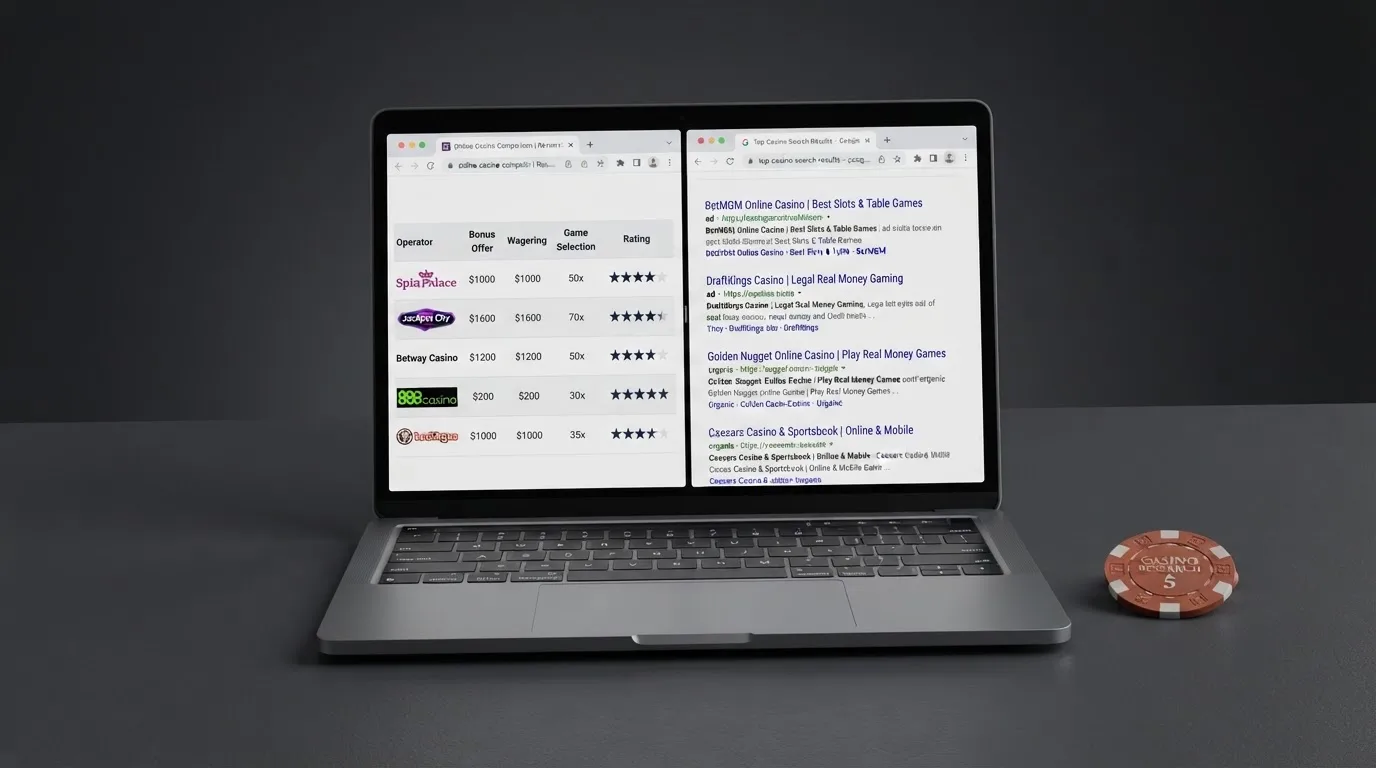
The framing a player should hold is this: a foreign licence is a description of the operator’s home jurisdiction, not of the player’s location. A Curaçao licence authorises the operator in Curaçao. An Anjouan licence authorises the operator in Anjouan. For an Australian player, both are descriptions of where the regulator sits, and neither changes what the Interactive Gambling Act 2001 says about offering online casino games to a person in Australia.
What a foreign licence does signal
It signals that the operator is registered with that jurisdiction, has paid a fee, has filed some corporate disclosure and is subject to whatever complaint and dispute mechanism that jurisdiction runs. Some of those jurisdictions take the responsibility seriously — Malta, the UK, certain states in the US — and the licences they issue carry weight in the markets they regulate. Some take it less seriously, with disclosure rules that amount to a name and an address and a licence number to print at the bottom of a homepage.
The distinction matters because most-trusted lists rarely make it explicit. A Curaçao licence and a Malta Gaming Authority licence are not the same kind of document, and a list that puts them in the same column has not done its reading. The published Curaçao regime was overhauled in 2023 and the new licences are issued by the Curaçao Gaming Authority; older Curaçao licences sit on the books of an older regime. A player who reads the licence footer on a most-trusted brand is reading a snapshot of where the brand was, not where the brand is going.
What the licence does not signal
It does not signal that the operator can lawfully take Australian players. It does not signal that the operator is connected to BetStop, that Australian consumer protection applies, or that an Australian court has any practical jurisdiction over a dispute. It does not signal that the operator’s published RTP figures are independently audited for the Australian player, as opposed to for the licensing jurisdiction’s regulator.
The licence is a starting point for trust, not a substitute for the protection an Australian framework would normally provide. A licence that authorises the operator somewhere else does not describe what the operator owes the Australian player; it describes what the operator owes the licensing jurisdiction, and the licensing jurisdiction’s idea of what is owed is what the player gets. The licence travels nowhere the Australian player sits.
What rankings usually substitute for the protection
Player-review aggregators, payout-speed benchmarks and complaint-resolution histories are the materials most-trusted lists are built from. They tell a reader something real about whether the operator pays out within its stated window and whether support responds. They do not tell the reader anything about whether the operator can lawfully serve them. A list that confuses the two has built its column on the wrong side of the question.
H2 Gambling Capital’s 2025 estimate puts annual losses to illegal gambling sites in Australia at around A$3.9 billion, and tracks the share of gambling going through legal channels falling from 74% in 2021 to 64%. The legal-channel share is shrinking, not because the legal market is losing ground on its own merits but because offshore sites have become more accessible, more heavily marketed and easier to fund through payment routes the legal regime does not reach. The volume of brand-side trust signals has grown with that shrinkage, which is the more telling of the two facts.
The Interactive Gambling Act, the ACMA, and how the prohibition is enforced
The Interactive Gambling Act 2001 is the central statute. As amended by the Interactive Gambling Amendment Act 2017, it makes it an offence to provide online casino games, online pokies or in-play betting to a person in Australia. What is licensable is wagering on races and sport placed before the event, lotteries and keno — in practice licensed by the Northern Territory Racing and Wagering Commission, the regulator that oversees 52 of Australia’s online bookmakers, including Sportsbet, Bet365 and Ladbrokes, and which operates with a small commissioner footprint, no full-time staff and monthly meetings in Darwin.
The 2023 amendment to the IGA added the credit-card ban that took effect on 11 June 2024, prohibiting Australian-licensed online wagering services from accepting payment by credit card or any credit-related product, with the restriction extending to credit-linked digital wallets such as Apple Pay. The penalty for a licensed operator that accepts a credit deposit is up to $247,500 per offence.
The 2026 reform — the Interactive Gambling Amendment (Gambling Reform) Bill 2026 — passed Parliament on 19 August 2026. Its advertising and inducement measures commence on 1 January 2027, so they are law with a start date, not yet in force on a page written for the 2026 audience. The reform tightens the inducement rules around bonus offers, sign-up deals and the way licensed operators market to Australians, and is the most significant tightening of the framework since the 2017 amendments.
The credit-card and digital-wallet ban the prohibition created
The ban applies to Australian-licensed online wagering services and extends to digital wallets when they are linked to a credit facility. By the end of 2025, Apple Pay, Google Pay and Samsung Pay collectively accounted for around 45% of all card payments in Australia by number. The licensed-wagering ban takes that 45% off the table for legal play; for an offshore casino, the cashier sits right where it always did.
The Reserve Bank of Australia’s July 2025 review proposes removing surcharges only on eftpos, Mastercard and Visa card transactions, leaving American Express explicitly outside the scope of the proposed ban — a reminder that the surcharge and acceptance rules are not symmetric across networks, and that an offshore cashier can take advantage of that asymmetry in ways a licensed Australian cashier cannot. The legal deposit routes that the prohibition does not affect are debit card, bank transfer, PayID and Osko, and BPAY, with over 100 Australian financial institutions offering PayID-based instant transfers and Osko settling between participating banks in under a minute, 24/7 including weekends, whether addressed to a BSB and account number or to a PayID.
The ACMA’s enforcement tools, in the order they bite
The ACMA investigates complaints, issues formal warnings to operators and their parent companies, requests that Australian internet service providers block illegal sites and refers matters to the Australian Federal Police for criminal prosecution where the conduct warrants it. The formal warning is the lever most often used against offshore casino brands, and the regulator publishes each warning online. The blocking request is the lever that actually removes the site from Australian reach.
By the ACMA’s own published figures, a total of 1,751 illegal gambling and affiliate marketing websites had been blocked since the first blocking request in November 2019, and more than 230 unlicensed gambling services had left the Australian market since enforcement was strengthened in 2017. In the most recent reported round, on 26 June 2026, the ACMA asked Australian ISPs to block 12 more sites: 7Signs, ChromaBet, Donbet, Duospin, Freshbet, Slots Gem, Jacks Club, Lucky Start, Pointsbetz, Spinrise, Vinyl Casino and Wildsino. Each name on the list is a real brand a real Australian searched for, found and tried to use.
The blocking-rate the published figures produce
From the first blocking request in November 2019 to the ACMA’s published running total in June 2026, the regulator has directed that 1,751 illegal sites be blocked across roughly 79 months. The average works out to somewhere around 22 sites blocked every month over the period — closer to 270 a year — though the work happens in batches, with single rounds commonly taking out a dozen sites in a week. The June 2026 round alone added 12 sites, and the regulator’s published running total is the figure that catches every batch rolled into one number. The rate is not uniform; the regulator’s enforcement is lumpy by design.
What the rate tells the reader is not the regulator’s victory but the regulator’s answer to a volume problem. The same period saw an estimated A$3.9 billion a year in losses to illegal sites, with the legal-channel share of gambling falling from 74% in 2021 to 64%. The blocking-rate scales with the regulator’s enforcement budget and the ISP cooperation the ACMA can secure; the volume of new illegal sites scales with the offshore marketing that pays affiliate commissions on Australian signups. The two are not in balance, and the published running total is the regulator’s reading of the gap, not a closing of it.
The consequences for the player who goes offshore
An offshore casino gives an Australian player no Australian consumer protection, no complaints body and no recourse if a withdrawal is refused. The site can be blocked with a balance still on it, and the operator has no obligation to return what was left in the account. The individual player is not prosecuted under the IGA, which targets the provider rather than the customer, but the practical protections are not there. The BetStop register does not apply. The credit-card ban does not apply. The bank’s gambling block, where the merchant category is recognised, is a friction layer rather than a firewall.
This is the frame the rest of this page sits inside: trust signals describe the operator; the law describes what the operator can offer; and the two do not line up for an Australian player choosing between staying on the legal side and going offshore. The word “trusted” applied to an offshore brand is the brand’s promise. The Interactive Gambling Act is the law’s. The reader is the one left to weigh one against the other.
Frequently Asked Questions
Is a ‘most trusted online casino’ label the same as a legal one for an Australian player?
No. The Interactive Gambling Act 2001 prohibits providing online casino games to a person in Australia, and no state or territory licences them. A foreign licence — Curaçao, Anjouan, Kahnawake — does not override the prohibition. The label describes the brand; the law describes what the operator can offer; the two do not line up for Australians.
What does a casino’s overseas authorisation actually cover?
It covers the operator’s right to offer gambling services within the licensing jurisdiction, under that jurisdiction’s rules. It does not extend to Australian players, does not connect the brand to BetStop, and does not bring Australian consumer protection with it. The licence describes where the regulator sits, not where the player does.
How are most-trusted casino rankings for Australia usually built?
They are built from player reviews, payout-speed benchmarks and complaint-resolution histories. Those materials describe the operator; they do not describe whether the brand can lawfully serve an Australian. A ranking that uses them as a substitute for the legal frame has built the column on the wrong side of the question.
Can a casino’s reputation for trustworthiness change without a player noticing?
Yes — through a change of operating company, a change of brand owner, or a quiet reshuffle of the corporate wrapper behind the same brand name. The reputation the brand carries may be inherited from an operator the brand no longer has. The ACMA’s published warnings record the changes the brand itself does not announce.
Why do most-trusted casino rankings for Australia still include unregulated offshore sites?
Because the rankings are built from operator-side signals — payouts, reviews, support response — and none of those signals test whether the operator is licensed to serve Australians. Including an unregulated offshore brand is the natural result of building a ranking from signals that do not address the law.