
The question behind “best casino in Victoria” in 2026
There is one licensed casino in Victoria. It is on the south bank of the Yarra, in Southbank, and it has been the state’s only legal gambling hall for decades. Crown Melbourne sits on roughly 510,000 square metres of gaming floor, restaurant and hotel space, and it is the largest casino complex in the Southern Hemisphere. For a Victorian asking about “the best casino in Victoria,” the answer to the literal question is Crown — there is no second option inside the state’s borders, and there is no licensed online alternative anywhere in the country.

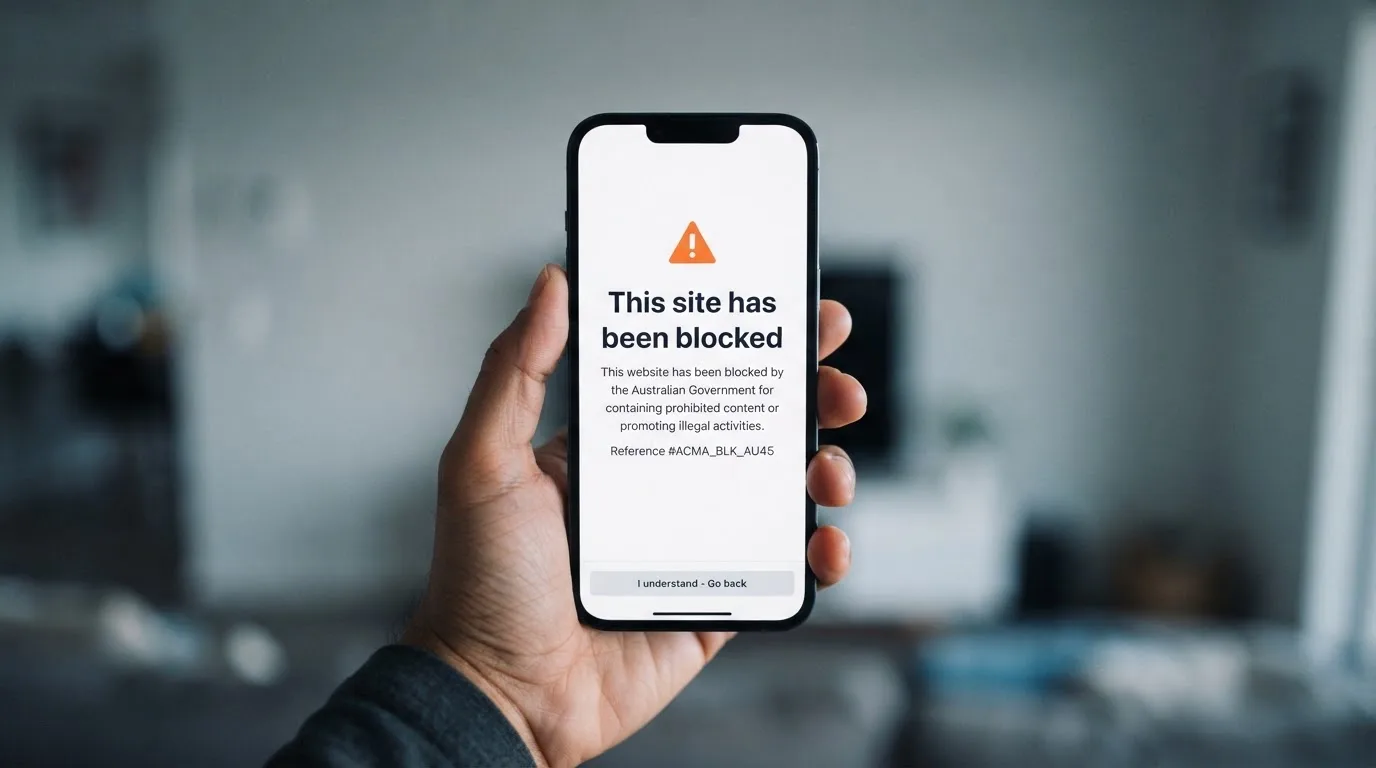
That second point is what makes this search interesting. The Interactive Gambling Act 2001 makes it an offence to provide the prohibited services described below to anyone in Australia. No state or territory issues the kind of licence an offshore casino site advertises. The Australian Communications and Media Authority has been issuing formal warnings and asking internet service providers to block offshore casinos for years, and the running total of blocked sites now sits at 1,751 since the first blocking request in November 2019. Roughly A$3.9 billion a year still leaks out of Australia through illegal gambling sites, according to H2 Gambling Capital’s 2025 estimate, and the share of gambling going through legal channels has fallen from 74% in 2021 to 64%.
So “the best casino in Victoria” can be read two ways. It can mean the physical venue, with its address, what is on the floor and which hotels sit around it. Or it can mean an offshore online casino, which is what most global ranking pages are written about — and which is what the ACMA has spent the last several years blocking. This page covers both readings, because both are what a person searching this phrase could be asking. The first half is about Crown Melbourne, the venue, and the visit. The second half is about the offshore sites that claim to be casinos, and why they are not legal in Australia however big their bonuses look.
Data current as of 29 October 2026, checked against the ACMA’s formal-warning register and the Victorian Gambling and Casino Control Commission’s public statements.
- Crown Melbourne: the only licensed casino in Victoria
- Restaurants, bars and the rooftop
- What the casino licence actually covers
- The legal frame: online casino is prohibited in Australia
- Player wellbeing: safeguards and self-exclusion
- Pokies and other gaming machines in Victoria
- The offshore sites that claim to be the answer
- The blocking pipeline: arithmetic over six years
- Reading the brand roster
- The brands in detail
- What the alternative actually looks like
- Tax and accounting for recreational play
- Frequently asked questions
Crown Melbourne: the only licensed casino in Victoria
Crown Melbourne sits in the Southbank precinct, on the south bank of the Yarra River opposite Flinders Street Station. The complex covers roughly 510,000 square metres, making it the largest casino complex in the Southern Hemisphere, and combines gaming floors with hotels, restaurants, theatres and bars. The address is 8 Whiteman Street, Southbank, and the venue is open around the clock for gaming, with restaurants and bars running later in the evening. Getting there from central Melbourne is a short walk across the Yarra, a tram down Flinders Street, or a stop at Flinders Street Station and a walk over the bridge.
What the venue actually contains
Crown Melbourne’s gaming floors are split across three levels. The main gaming floor carries the bulk of the table games: baccarat, blackjack, roulette, craps and sic bo, plus an extensive electronic games section. Premium gaming rooms — the Mahogany, the Crystal Club and the River rooms — sit on upper levels for higher-limit play, and a private VIP gaming floor operates on the top level. The complex also includes two hotels — Crown Towers and Crown Promenade — plus the Crown Metropol, which sits just across the street, and a separate convention and events centre.
For a visitor, the practical structure is simple. You arrive at the main entrance on Whiteman Street, present identification at the door, and pass through to the gaming floors. The restaurants — Rockpool, The Atlantic, VUE de monde, Breezes — operate on the gaming levels and are open to the public. The rooftop bars and lounges are accessible without entering the gaming floor, which matters for visitors who want to see the venue without gambling.
Minimum age and entry rules
The minimum age to enter the gaming floor at Crown Melbourne is 18. Identification is required at the door, and the venue enforces this strictly — a driver’s licence, passport or Victorian Proof of Age card is acceptable. Entry to the gaming floor is recorded in a database that links to Crown’s responsible gambling register, and anyone who has self-excluded through Crown’s own scheme, or through BetStop at a national level, is barred from entry. The hotels, restaurants and bars operate without the gaming-floor restrictions, although alcohol service rules apply inside the venue.
What is on the floor: tables and games
Crown Melbourne carries the standard table-games offering of any major Australian casino: baccarat, blackjack, roulette, craps, sic bo, poker and a full tournament schedule. Pokies — known in Australia as gaming machines or “pokies” — run into the thousands across the gaming floors. The general Victorian cap of 30,000 gaming machines statewide does not apply to Crown, which sits under its own licence; Crown’s gaming machines have no published maximum bet, while pubs and clubs are capped at A$5.00 per spin, and Crown’s gaming machines run at a minimum return-to-player of 87% versus the 85% floor that applies to general-licence venues elsewhere in the state.
For a visitor from interstate or overseas, the table-game rules follow the international standard: blackjack pays 3 to 2, roulette offers both single-zero and double-zero wheels, baccarat is dealt from an eight-deck shoe, and craps is offered with the standard proposition bets. Crown’s poker room runs daily cash games and a regular tournament schedule; the World Series of Poker has run events at Crown in past years.
Restaurants, bars and the rooftop
The casino’s hospitality offering is part of what makes it the answer to the question, because Crown is also where a number of Melbourne’s better restaurants are physically located. The complex sits inside a wider dining precinct that draws visitors who never enter the gaming floor.
Where to eat inside the venue
Rockpool Bar & Grill, run by Neil Perry, sits inside the complex and operates as a standalone steakhouse. The Atlantic offers a seafood-focused menu and a wine list that ranks among the more extensive in the country. VUE de monde operates at the top of the Rialto tower across the river rather than inside Crown itself, but Crown carries other signature venues: Breezes, the buffet-style restaurant on the lower gaming level, and a number of smaller bars and cafés throughout the complex. The complex’s restaurants are open to the public without an entry fee, and bookings are handled through Crown’s website.
The rooftop bar and what it overlooks
Crown’s rooftop bars operate on the upper floors of the complex and overlook the Yarra and the Melbourne CBD skyline. The 28th-floor Club 28 was, for years, the headline rooftop venue; the bar has gone through several configurations since, but the rooftop concept remains. The view runs from the Bolte Bridge downriver past the Yarra’s bend into the city, and on a clear evening the skyline is the visual that most Melbourne visitors associate with the precinct. The rooftop bars operate outside the gaming floor, so a visitor can visit them without entering the gaming area.
Hotels within walking distance
Crown carries two of its own hotels on site. Crown Towers is the five-star offering, with around 482 rooms and a separate wellness floor. Crown Promenade sits next door with around 465 rooms at a slightly lower tier. The Crown Metropol sits across the street and operates as a third option within the same group. Beyond Crown’s own hotels, the Southbank precinct carries Hilton Melbourne South Wharf, the Pan Pacific, and a cluster of serviced apartments and mid-range hotels within a few minutes’ walk. Flinders Street Station, the central transport hub, is a short walk across the bridge, and from there trams run along the CBD’s main streets.
What the casino licence actually covers
Crown Melbourne operates under a Victorian casino licence issued by the state government, and the licence has been through a turbulent recent history. The Finkelstein Royal Commission into Crown Resorts, which reported in 2021, found that Crown was not suitable to hold its Victorian licence at the time, citing ethical failures in the company’s dealings with Chinese high-roller junkets and weaknesses in its anti-money-laundering controls. The findings led to a series of licence-condition changes and a change in Crown’s board and senior management.
The current regulator
On 1 July 2022 the Victorian Commission for Gambling and Liquor Regulation (VCGLR) was replaced by the Victorian Gambling and Casino Control Commission (VGCCC) as Victoria’s independent gambling regulator, with the change made specifically in response to the Finkelstein Royal Commission’s findings about the VCGLR’s oversight of Crown. The VGCCC now regulates Crown Melbourne directly and runs the state’s responsible-gambling functions, having absorbed the responsibilities of the Victorian Responsible Gambling Foundation, which ceased operating on 1 July 2024. The regulator publishes compliance reports, monitors gaming-floor activity and operates the state’s self-exclusion functions.
What the licence does not cover
The Victorian casino licence covers the physical venue. It does not authorise those prohibited activities, as no Australian state or territory licenses them. The Interactive Gambling Act 2001 makes it an offence to provide those services to a person physically in Australia, and the ACMA has been enforcing that provision through formal warnings and ISP blocking requests for the past several years. Crown’s online betting product, CrownBet, was sold to Betfair in 2017 and is no longer connected to the casino operator, so Crown Melbourne today operates a single product: the physical venue.
The legal frame: online casino is prohibited in Australia
The reason this page spends as much space on what is illegal as it does on what is licensed is that the offshore casino industry targets Australian players with bonuses, free spins and “no verification” claims that are designed to look like ordinary online gambling offers. They are not, and the difference matters.
The Interactive Gambling Act 2001
The Interactive Gambling Act 2001, as amended by the Interactive Gambling Amendment Act 2017, prohibits the provision of those gambling services to any person physically in Australia. The offence sits with the provider, not the player. The Act does not make it illegal for an Australian to access an offshore casino site, but it makes it illegal for the offshore site to offer its products to Australians, and the Australian Communications and Media Authority enforces that by issuing formal warnings, referring repeat offenders to the Australian Federal Police, and directing Australian internet service providers to block the offending sites at the network level.
The Act does permit wagering on races and sporting events placed before the event, lotteries and keno, in practice licensed by the Northern Territory Racing and Wagering Commission, which regulates 52 of Australia’s online bookmakers — Sportsbet, Bet365 and Ladbrokes among them — under Territory licences. The NTRWC has no full-time staff and meets once a month in Darwin, a fact that became politically sensitive in 2026 when a bill was introduced to reform the de facto regulator. The model is light-touch and tax-driven, and it is not the model for casino games.
What the ACMA has actually done
The ACMA’s enforcement record gives a clearer picture of how the prohibition works in practice. The first blocking request under the amended Act went to ISPs in November 2019, and by the most recent published count the running total of blocked illegal gambling and affiliate marketing sites stood at 1,751. In the most recent blocking round, reported on 26 June 2026, the ACMA asked ISPs to block another 12 sites in one action: 7Signs, ChromaBet, Donbet, Duospin, Freshbet, Slots Gem, Jacks Club, Lucky Start, Pointsbetz.com, Spinrise, Vinyl Casino and Wildsino. That single round is a reminder that the blocking pipeline is steady rather than occasional.
The ACMA’s formal-warning register shows where the regulator has stopped short of a blocking request and issued a written warning instead, often the first step before blocking. In the past four years the warnings have gone to operators including Pulsup Ltd over Rocketplay.com.au (March 2026), Dama N.V. over six brands in May 2022 (Bambet, Dazard, Level Up, Rocketplay, Wild Tornado and Cobra Casinos), Dama N.V. over Woo Casino (March 2025) and Spirit Casino (May 2025), Bamboo Media over Ignition Casino (July 2025), Consolutetish S.R.L. over National Casino and Bizzo Casino (July 2025, the latter previously warned in 2022), EOD Code SRL over Instant Casino (February 2025), Ryker B.V. over Jackbit and CasinOK (April 2026), Sterplay Holding Ltd over Casino Intense (April 2025), and Hollycorn N.V. over Sky Crown and Blue Leo. Each warning is a published document on the ACMA’s website, naming the operator and the brand. They are the public face of the enforcement pipeline.
How the prohibitions affect payment
Since 11 June 2024, credit cards, credit-related products and digital currency have been banned as payment for licensed online wagering in Australia, with penalties of up to A$247,500 for operators that accept them. Legal deposit routes for licensed wagering are debit card, bank transfer, PayID/Osko and BPAY. An offshore casino site that asks an Australian for a credit card or a crypto deposit is operating outside the Australian rules — there is no Australian consumer protection behind it, no complaints body and no recourse if a withdrawal is refused, and the site itself can be blocked with a balance still on it. That is the practical effect of the prohibition.
Reform that has passed but is not yet in force
The Interactive Gambling Amendment (Gambling Reform) Bill 2026 passed Parliament on 19 August 2026. Its advertising and inducement measures commence on 1 January 2027, which means the law is in place as of 2026 but the parts that tighten the rules around bonus advertising and inducements do not take effect until next year. The reform is the next tightening of a regime that has been tightening since 2017, and the timing matters because the bonus marketing that targets Australians today is, in the most direct sense, the inducement the reform is aimed at.
Player wellbeing: safeguards and self-exclusion
The casino licensing regime in Victoria is built around a player protection framework that includes the gaming floor itself — age verification, on-floor intervention, mandatory breaks for staff — and a set of national and state-level tools that reach beyond the venue.

BetStop and the National Self-Exclusion Register
BetStop, the National Self-Exclusion Register, has been live since August 2023. It binds Australian-licensed online and phone wagering services, which means an Australian who has self-excluded through BetStop is blocked from licensed wagering platforms. The register does not bind offshore casinos, because offshore casinos are not connected to it. Self-exclusion from Crown Melbourne is handled separately, through Crown’s own self-exclusion scheme and through the Victorian regulator, and it applies across the gaming floor and the licensed venue.
The National Gambling Helpline
The National Gambling Helpline runs on 1800 858 858, free, 24 hours a day, with web chat available through Gambling Help Online. The service is funded federally and is the front-line contact for problem gambling support across the country. In Victoria, the Victorian Gambling and Casino Control Commission took over the responsibilities of the Victorian Responsible Gambling Foundation, which ceased operating on 1 July 2024, so enquiries that previously went to the Foundation now route to the VGCCC.
What the venue does on the floor
Crown Melbourne’s gaming-floor staff are trained to intervene when play shows signs of distress or harm, and the venue operates mandatory break reminders and consumption-of-alcohol rules that apply across the gaming floors. Self-exclusion at the venue is recorded in a database that operates across Crown’s Australian properties, and the venue operates the Crown PlaySafe program, which provides confidential support and financial counselling. The level of on-floor intervention is one of the more visible differences between a licensed venue and an offshore site, where no such intervention exists.
Pokies and other gaming machines in Victoria
Outside Crown, Victoria operates a capped pokies market. The state has a statewide cap of 30,000 gaming machines, with 26,380 operating outside Crown in 488 venues in 2021–22. The numbers have moved slightly since, but the structure has held: Crown is uncapped under its licence, while general-licence venues sit under the state cap with per-machine rules that are tighter than Crown’s.
What the general venue rules look like
General-licence gaming machines in Victoria — that is, the pokies in pubs, clubs and the state’s casino — operate under a minimum return-to-player of 85%, with a maximum bet of A$5.00 per spin and a spin rate capped at 2.14 seconds. Crown Melbourne operates under its own licence: minimum RTP of 87% and no maximum bet. The differences are not large in theory, but they accumulate across hours of play, and they are part of what the Finkelstein Royal Commission looked at when it examined Crown’s product.
What Victorians actually lose on pokies
Victorians lost a record A$3.318 billion on pokies in 2025–26, the highest annual figure on record. The 2022–23 figure, the most recent comparison point in the published data, was A$3.02 billion, roughly A$446 per capita. The 2025–26 record is the headline number for any discussion of gambling harm in Victoria, and it puts the state’s losses in context: Crown is the largest single venue, but the bulk of the state’s pokies losses come from the 488 general-licence venues outside it.
The offshore sites that claim to be the answer
The other half of the question — what an Australian might be searching for when they type “best casino in Victoria” into a search engine — is the offshore online casino market. These are not Australian casinos, and they are not licensed in any Australian jurisdiction. They are offshore operators that accept Australian players through the international internet, and the ACMA has been formally warning and blocking them for years.
How offshore sites reach Australian players
Most offshore casino sites that target Australia operate from Curaçao, Cyprus or other jurisdictions that issue a gaming licence but do not enforce Australian consumer protection. They market through affiliate sites, search-engine advertising and bonus offers that look, on the surface, like ordinary online gambling promotions. The bonus offers are the hook, and they are the part of the offer that the new Interactive Gambling Amendment (Gambling Reform) Bill 2026 is aimed at, with inducement provisions commencing on 1 January 2027.
What an offshore licence actually means
An offshore licence is not a substitute for an Australian one. A Curaçao licence, for instance, gives the operator a basis to offer online gambling services under Curaçao law, and it gives the Curaçao regulator a basis to oversee the operator. It does not give the operator a basis to offer services to people in Australia, because the Interactive Gambling Act 2001 prohibits that. The two regimes coexist, and the offshore operator’s licence does not cure the prohibition that applies in Australia. The licence a player sees on the homepage of an offshore site is real; it is just not an Australian licence, and it does not authorise the offer that is being made to the player.
What player protection an offshore site does not provide
An Australian playing at an offshore casino gives up the protections that exist for licensed wagering. There is no Australian complaints body, no recourse through the VGCCC or the ACMA, no BetStop self-exclusion binding the site, and no obligation on the operator to verify the player’s identity or to intervene if play shows signs of harm. If a withdrawal is refused, the dispute is between the player and an offshore operator under the law of whichever jurisdiction issued the licence — typically Curaçao, Cyprus or Anjouan. The credit-card and crypto bans that apply to licensed wagering do not apply to an offshore casino, and the site will often accept payment methods that are illegal for licensed Australian operators to accept. That is the practical environment an offshore site offers to an Australian player.
What the ACMA has done about specific brands
The ACMA’s enforcement pipeline has produced a published register of formal warnings, and the brands in this page’s review set are the ones the ACMA itself has acted against. They are not the best online casinos in Victoria; they are the brands the regulator has found to be offering prohibited services to Australians. The brand roster that follows is a roster of formal warnings, not a ranking of operator quality.
| Brand | ACMA action and date | Operator named by the ACMA | Subject support |
|---|---|---|---|
| RocketPlay | Formal warning — March 2026 | Pulsup Ltd | — |
| Level Up Casino | Formal warning — May 2022 | Dama N.V. | listings only (en.wikipedia.org, vgccc.vic.gov.au) |
| Woo Casino | Formal warning — March 2025 | Dama N.V. | listings only (en.wikipedia.org) |
| Spirit Casino | Formal warning — May 2025 | Dama N.V. | — |
| National Casino | Formal warning — July 2025 | Consolutetish S.R.L. | listings only (Abc.net.au, infrastructure.gov.au) |
| Bizzo Casino | Formal warning — July 2025; earlier 2022 | Consolutetish S.R.L. | — |
| Ignition Casino | Formal warning — July 2025 | Bamboo Media | — |
| Instant Casino | Formal warning — February 2025 | EOD Code SRL | — |
| Jackbit | Formal warning — April 2026 | Ryker B.V. | — |
| Casino Intense | Formal warning — April 2025 | Sterplay Holding Ltd | listings only (Abc.net.au, Asgam.com, cbs.sa.gov.au) |
| Sky Crown | Formal warning — September 2022 | Hollycorn N.V. | listings only (en.wikipedia.org) |
The pattern across the roster is a handful of operators with multi-brand footprints. Dama N.V. accounts for six brands across two warning rounds; Consolutetish S.R.L. accounts for two; the remaining operators each carry a single brand. The list is a snapshot of the brands the ACMA has published actions against, and it is not a closed set — the ACMA’s enforcement register continues to add entries, and the brands named here are the ones the register carried at the date this page was written.
The blocking pipeline: arithmetic over six years
The ACMA’s blocking pipeline is the most visible part of the prohibition. The first blocking request went to Australian ISPs in November 2019, and by the most recent published count, in June 2026, the running total of blocked illegal gambling and affiliate marketing sites stood at 1,751. The arithmetic on that running total tells the reader how fast the pipeline has been moving.
Reading the blocking rate
Taking 1,751 blocked sites across roughly six and a half years — November 2019 to June 2026 — gives a blocking rate in the band of 250 to 275 sites per year. The actual figure sits in that band because the pace has not been uniform: enforcement was lighter in the early years after the 2017 amendments and has accelerated as the ACMA has built up its enforcement apparatus. The single round reported on 26 June 2026 alone added 12 sites, and earlier rounds in 2024 and 2025 added similar batches. The current pace is best read as a steady rather than occasional pipeline, and the rate figure above is an average across the full period, not the rate in any single year.
What the rate means
A blocking rate of roughly 250 to 275 sites per year over six and a half years is what a prohibition looks like in practice. The regulator cannot shut the offshore industry down — the operators set up new sites faster than the regulator can block the old ones, and the names on the blocking list are not the same as the names on the warning list, which are not the same as the names on the affiliate-marketing list. What the pipeline does is raise the friction for Australian players, which is part of what the H2 Gambling Capital estimate of A$3.9 billion a year in illegal gambling losses reflects: the prohibition has not stopped the leakage, but the share of gambling going through legal channels has fallen from 74% in 2021 to 64%, and the gap is what offshore operators continue to capture.
Reading the brand roster
The eleven brands in the review set sit on a spectrum from single-offence to repeated-offender. The pattern matters because it tells the reader where the ACMA’s enforcement attention has been concentrated.
The repeated offenders
Dama N.V. accounts for the largest footprint on the warning list. The May 2022 warning covered six brands — Bambet, Dazard, Level Up, Rocketplay, Wild Tornado and Cobra Casinos — and the March 2025 and May 2025 warnings added Woo Casino and Spirit Casino. Eight Dama N.V. brands in four years is a pattern of an operator that did not respond to the first warning. The July 2025 warning to Consolutetish S.R.L. over National Casino and Bizzo Casino repeats the same pattern: the operator’s first appearance was a 2022 warning to TechSolutions over Bizzo Casino, and the 2025 warning names the same brand under a different corporate entity. A site that reappears on the warning list under a related company name is one that has continued to target Australians despite the published action.
The single-offence operators
The other operators on the list — Bamboo Media, EOD Code SRL, Ryker B.V., Sterplay Holding Ltd and Hollycorn N.V. — each carry a single brand on the warning list, and each has been subject to one formal warning round. The list does not record whether the warnings were followed up by blocking requests, and the ACMA’s enforcement pipeline can run for months between a formal warning and a published blocking request. The single-offence status is a snapshot at the date of writing, not a permanent classification.
What “subject support” means in this context
Several of the brands on the roster appear in listings sources — en.wikipedia.org, Abc.net.au, infrastructure.gov.au, Asgam.com, cbs.sa.gov.au and vgccc.vic.gov.au — that cover them as part of the broader offshore casino market. That is what the listings-only designation means in the table above: the brand has coverage in third-party listings that discuss the offshore casino market, without those listings providing a substantive endorsement of the brand’s offer. A reader who follows the listings-only designation into the listings will find ordinary third-party coverage, not an Australian regulator’s view.
The brands in detail
The following eleven blocks describe each brand the ACMA has acted against. None is a recommendation. Each block lays out what the regulator has found, what the brand offers, and where it sits in the offshore market that the ACMA has been blocking for the past six and a half years. The verdicts are the page’s own assessment of what the ACMA’s published action means for an Australian reader.
RocketPlay
RocketPlay is the brand behind Rocketplay.com.au, which the ACMA noted in a March 2026 formal warning to Pulsup Ltd. The same brand name had appeared on a Dama N.V. warning in May 2022, which means RocketPlay has been on the ACMA’s published warning list twice across roughly four years under two different operating entities. The repeat appearance across two operating entities is the pattern that drives the most expensive enforcement cases the ACMA runs: the same product, retargeted at Australians through a fresh corporate wrapper, after the first wrapper was warned. For an Australian reader, the relevant question is not whether the brand’s product is good but whether the warning the regulator has published twice translates into an offer that the regulator will block again. The published record points toward yes.
Level Up Casino
Level Up Casino sits on the May 2022 warning to Dama N.V., which covered six brands in a single warning round. Level Up is the brand name on a Dama N.V. wrapper; the same corporate entity carries Wild Tornado and Cobra Casino on the same warning list. Dama N.V. is the operator with the largest footprint in the ACMA’s published record, and Level Up sits inside that footprint. A player looking at Level Up’s offer against an Australian player’s situation is looking at a brand whose operator has been the subject of eight formal warnings across two rounds, which is the kind of record that reads as more than a single warning slipped through. The brand itself is listed in third-party sources that discuss the offshore casino market, including coverage on en.wikipedia.org and on the Victorian regulator’s own site, but the listings describe the brand rather than endorse its offer.
Woo Casino
Woo Casino was the subject of a March 2025 formal warning to Dama N.V., the second of the operator’s two rounds and the third appearance of the Dama N.V. corporate entity on the warning list. Woo Casino’s homepage advertises a Curaçao licence and a standard set of slots and live-dealer tables; the licence is real, the offer is standard for the offshore market, and the warning is published. Woo Casino sits in the listings of the broader offshore casino market, and a reader who wants to know what the brand offers can find that in the listings. The question the warning answers is whether the offer is one the ACMA considers a prohibited interactive gambling service, and the answer is yes.
Spirit Casino
Spirit Casino was the subject of a May 2025 formal warning to Dama N.V., the operator’s fourth published action across three years. The brand name does not appear in third-party listings, so the ACMA’s published warning is the sole authoritative source on the brand’s offer to Australians. A reader looking at Spirit Casino’s offer against an Australian player’s situation is looking at a brand whose operator has been warned four times, which is the kind of record that reads as repeated disregard of the prohibition. The site’s offer will look like any other offshore casino offer, and the warning will look like a regulatory record; the two are not in tension.
National Casino
National Casino sits on a July 2025 formal warning to Consolutetish S.R.L., a Curaçao-registered operator that also carries Bizzo Casino on the same warning. National Casino appears in third-party listings including Abc.net.au and infrastructure.gov.au, which cover the brand as part of broader reporting on offshore casino marketing. The brand’s offer is a standard offshore casino product: slots, live-dealer tables, a Curaçao licence and a bonus structure. The warning is published. A reader weighing National Casino’s offer is weighing a brand whose operator has been warned twice in a single round, and the listings coverage will describe the brand without endorsing it.
Bizzo Casino
Bizzo Casino is the brand that has been on the ACMA’s published warning list twice. The first warning, in 2022, was to TechSolutions (CY) Group Limited and TechSolutions Group N.V. The second, in July 2025, was to Consolutetish S.R.L. The brand’s appearance under two different operating entities across three years is the same pattern that runs across RocketPlay and Dama N.V. — same product, new corporate wrapper. Bizzo Casino carries no listings coverage in the materials this page draws on, and the ACMA’s published record is the only authoritative source on the brand’s offer to Australians. The two-warning pattern is what the ACMA’s enforcement record is built to catch, and Bizzo is one of the brands the record has caught.
Ignition Casino
Ignition Casino was the subject of a July 2025 formal warning to Bamboo Media, which carries the brand alongside other products. The brand’s name suggests a poker-and-casino offering aimed at an English-speaking audience, and the brand has been a long-running presence in the offshore market. The brand carries no listings coverage in the materials this page draws on, and the ACMA’s published warning is the relevant Australian regulatory record. For an Australian reader, the published warning is the relevant regulatory record confirming the brand offers prohibited services.
Instant Casino
Instant Casino was the subject of a February 2025 formal warning to EOD Code SRL, an operator that runs the brand alongside other products. The brand name carries an explicit “instant” claim that suggests frictionless sign-up and fast withdrawals, which are the features the offshore market tends to market heavily to Australian players. The published warning is the relevant Australian regulatory record, and the offer’s promise sits against the warning’s finding. A reader weighing Instant Casino’s offer is weighing the frictionless claim against the regulator’s published view that the offer is a prohibited interactive gambling service.
Jackbit
Jackbit was the subject of an April 2026 formal warning to Ryker B.V., which also carries CasinOK on the same warning list. The brand name suggests a crypto-friendly casino, which fits the pattern of offshore operators that accept cryptocurrency deposits — a deposit method that has been banned for licensed Australian wagering since 11 June 2024. The warning is published, the offer accepts the payment method that licensed Australian operators cannot, and the two together describe what the offshore market looks like for an Australian player. Jackbit carries no listings coverage in the materials this page draws on, and the ACMA’s record is the relevant source.
Casino Intense
Casino Intense was the subject of an April 2025 formal warning to Sterplay Holding Ltd, an operator that runs the brand alongside other products. The brand appears in third-party listings including Abc.net.au, Asgam.com and cbs.sa.gov.au, which cover the brand as part of broader reporting on the offshore casino market. The brand’s offer is a standard offshore casino product. The warning is published, and a reader weighing Casino Intense’s offer is weighing a brand whose regulator has formally found the offer to be a prohibited interactive gambling service. The listings describe the brand without endorsing it.
Sky Crown
Sky Crown was the subject of a September 2022 formal warning to Hollycorn N.V., which also carries Blue Leo on the same warning list. The warning predates the bulk of the ACMA’s blocking pipeline activity, which accelerated through 2024 and 2025, and the brand’s appearance on the 2022 warning list is part of the early enforcement record under the amended Act. Sky Crown appears in third-party listings including en.wikipedia.org, which covers the brand as part of the offshore casino market. A reader weighing Sky Crown’s offer against an Australian player’s situation is weighing a brand whose operator was warned in 2022 and which has not appeared on the warning list again since — which is a different position from the brands whose operators have appeared repeatedly.
What the alternative actually looks like
For an Australian reader searching “best casino in Victoria,” the practical decision is between Crown Melbourne and the offshore alternatives. The comparison is not close, and the reasons are not about product quality but about legality, consumer protection and the regulatory environment.
On the Crown side
Crown Melbourne is licensed, regulated and physically present in Victoria. A player at Crown has Australian consumer protection, the VGCCC as a complaints body, mandatory age verification, self-exclusion through BetStop and Crown’s own scheme, the National Gambling Helpline at 1800 858 858, and on-floor intervention from trained staff. The venue’s gaming product sits under the state’s licence regime, with the per-machine rules that apply across the venue. The losses that the venue generates are real and substantial — Victorians lost A$3.318 billion on pokies in 2025–26 — but they are losses inside a regulated framework that includes harm-minimisation measures, and the operator is held accountable by an Australian regulator.
On the offshore side
An offshore casino site is unlicensed in Australia and operates under the prohibition in the Interactive Gambling Act 2001. The ACMA has either formally warned or blocked every brand in this page’s review set. The offshore operator accepts payment methods that Australian law bans for licensed wagering. The site has no Australian complaints body, no BetStop binding, no obligation to verify identity or to intervene on signs of harm, and no recourse if a withdrawal is refused. The losses that offshore sites generate sit outside any Australian consumer-protection framework, and the regulator’s published estimate of those losses — A$3.9 billion a year — sits beside the falling share of gambling going through legal channels, which has dropped from 74% in 2021 to 64%.
The reform in progress
The Interactive Gambling Amendment (Gambling Reform) Bill 2026 passed Parliament on 19 August 2026, and its advertising and inducement measures commence on 1 January 2027. The reform tightens the rules around bonus marketing and inducements that target Australians, which is the part of the offshore offer that most directly reaches Australian players. The law is in place as of 2026 but the inducement provisions do not take effect until next year, which means the bonus marketing that targets Australians today is still operating under the pre-reform rules. A reader who watches the offshore market in 2026 will see the inducement provisions come into force at the start of 2026+1, and that is the next tightening of the regime that has been tightening since 2017.
Tax and accounting for recreational play
A question that comes up in any gambling search is what a recreational player owes the tax office on winnings. The short Australian answer is: nothing, in most cases.
The general rule
Gambling winnings of a recreational player are not assessable income in Australia, under section 6-5 of the Income Tax Assessment Act 1997, and gambling losses are not deductible. The rule covers recreational play at Crown Melbourne, at any Australian licensed venue and at any offshore site the player happens to access. The distinction is between recreational play and carrying on a business of gambling, which is a much narrower category and which the Australian Taxation Office assesses case by case.
Where the rule stops applying
The general rule stops applying when the player is carrying on a business of gambling — for instance, a professional poker player who plays for a living. In that case the winnings are assessable income and the losses are deductible, and the player lodges a return under the normal income-tax rules. The boundary between recreational and business play is a fact-specific test, and the ATO’s published guidance is the starting point for any reader who thinks they may sit on the business side of the line.
Frequently asked questions
What is the name of the main casino in Victoria?
Crown Melbourne, on the south bank of the Yarra in Southbank. It is Victoria’s only licensed casino and the largest casino complex in the Southern Hemisphere, covering roughly 510,000 square metres of gaming, hotel, restaurant and entertainment space.
Where is the casino in Victoria located?
8 Whiteman Street, Southbank, on the south bank of the Yarra River opposite Flinders Street Station. The complex is a short walk across the bridge from the CBD, accessible by tram down Flinders Street and by train to Flinders Street Station.
What is the minimum age to enter the casino in Victoria?
Eighteen. Identification is required at the door — a driver’s licence, passport or Victorian Proof of Age card is accepted — and entry to the gaming floor is recorded in the venue’s responsible-gambling database.
Does the casino in Victoria offer table games such as blackjack and baccarat?
Yes. Crown Melbourne’s gaming floors carry baccarat, blackjack, roulette, craps, sic bo and poker, with premium gaming rooms for higher-limit play. The venue also runs an extensive electronic gaming section.
Are there hotels within walking distance of the casino in Victoria?
Yes. Crown operates two hotels on site — Crown Towers and Crown Promenade — plus the Crown Metropol across the street. The wider Southbank precinct carries Hilton Melbourne South Wharf, the Pan Pacific and a range of mid-range hotels within a few minutes’ walk.
Can Australians legally play at an online casino instead of visiting the casino in Victoria?
No. The Interactive Gambling Act 2001 prohibits offering online casino games, online pokies or in-play betting to anyone in Australia, and no state or territory licenses those products. The ACMA enforces the prohibition through formal warnings and by directing ISPs to block offshore sites, and the running total of blocked sites reached 1,751 in mid-2026.