
Best pokies in South Australia in 2026: licensed venues, payout rules, and the offshore sites the regulator has warned
Data current as of 29 October 2026, checked against the Australian Communications and Media Authority’s published formal-warning register and Consumer and Business Services South Australia.
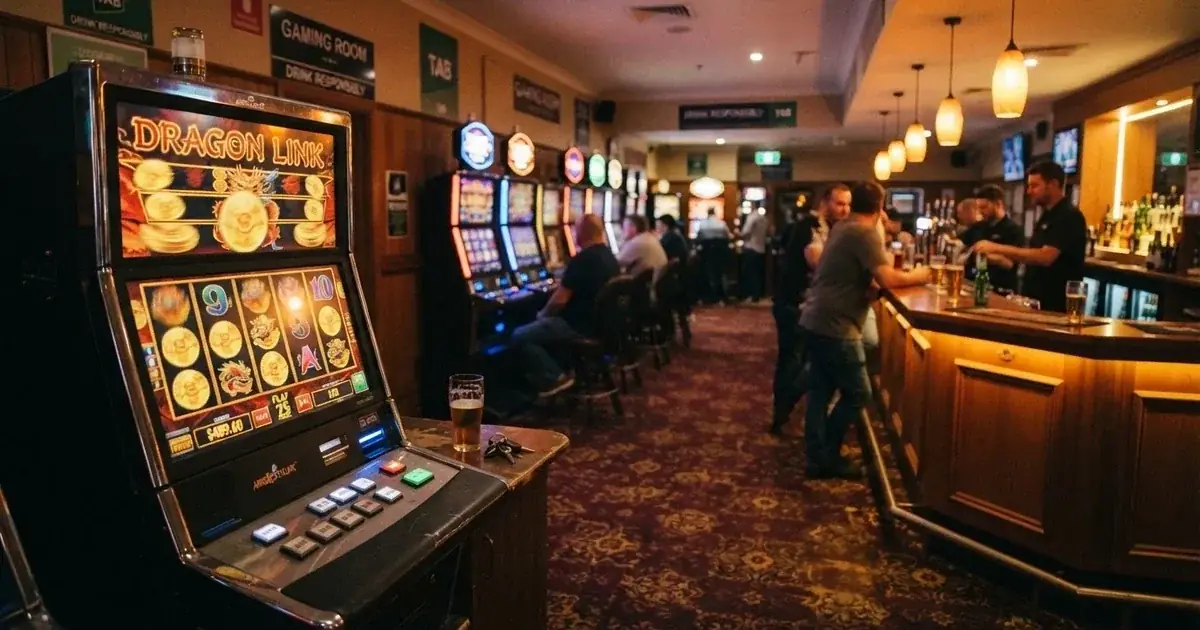
The shortest version of this page is also the most useful one. A punter in South Australia who wants to play a poker machine has exactly one lawful way to do it: walk into one of the state’s licensed pubs, clubs or the Adelaide casino floor. Everything that calls itself a “pokies site” online, and every brand reviewed below, sits on the other side of the Interactive Gambling Act. The ranking below names those brands because the ACMA has issued formal warnings against them, not because they are places to play.
- How this ranking was built
- What “pokies” means in South Australia, and what it does not
- Why every online “pokies” site is unlawful here
- The ACMA’s blocking rate, in numbers
- Responsible gambling in South Australia
- Where you can actually play in South Australia
- How pokies payouts work in South Australia
- How the offshore brands compare against the same yardstick
- The pattern behind the warnings
- Where this leaves a South Australian punter
- Frequently Asked Questions
How this ranking was built
Eleven brands appear below because the Australian Communications and Media Authority has, on the public record, written to each of their operators about offering prohibited interactive gambling services to Australians. That is the entire criterion. The dates and the parent companies are taken from the ACMA’s own register; the names underneath those companies were already public.
Two consequences follow. The first is that ordering on this page is not a recommendation. A brand further down is not a “safer offshore option”; it is simply the next operator the regulator has acted against, in roughly the order those actions accumulated. The second is that no offer, bonus or payout speed is discussed as if a reader might claim it. The product itself is prohibited in Australia. The market behind each brand sits outside Australian consumer law, outside BetStop, and outside any complaints body a punter could reach if a withdrawal was refused with a balance still on the account.
What the table captures, then, is who the ACMA named, when, and over which brand — the three fields a reader can verify against the regulator’s own page. Every other cell either shows the brand’s Australian exposure as the regulator records it, or stays empty.
| Brand | Operator named by the ACMA | ACMA action and date | Subject support |
|---|---|---|---|
| RocketPlay | Pulsup Ltd (RocketPlay) | Formal warning, March 2026 (earlier action against Dama N.V., May 2022) | — |
| Level Up Casino | Dama N.V. | Formal warning, May 2022 | listings-only |
| Woo Casino | Dama N.V. | Formal warning, March 2025 | listings-only |
| Spirit Casino | Dama N.V. | Formal warning, May 2025 | — |
| National Casino | Consolutetish S.R.L. | Formal warning, July 2025 | listings-only |
| Bizzo Casino | Consolutetish S.R.L. (earlier TechSolutions, 2022) | Formal warning, July 2025 | — |
| Ignition Casino | Bamboo Media | Formal warning, July 2025 | — |
| Instant Casino | EOD Code SRL | Formal warning, February 2025 | — |
| Jackbit | Ryker B.V. | Formal warning, April 2026 | — |
| Casino Intense | Sterplay Holding Ltd | Formal warning, April 2025 | listings-only |
| Sky Crown | Hollycorn N.V. | Formal warning, September 2022 | listings-only |
The “listings-only” tag means third-party directories repeat the brand without carrying any Australian-facing detail — the ACMA’s own register is the source of record. The dashes in the last column are not refusals to fill the table; they are the honest answer. Nothing in the research base covers these brands in a way that would let an Australian reader check a licence number, a payout time, or a complaint channel and reach a real address.
What “pokies” means in South Australia, and what it does not
The word pokies in Australia is shorthand for an electronic gaming machine — a cabinet with reels, a bill acceptor, a printed ticket, and a return-to-player percentage set by the operator within a state-defined band. In South Australia the machines in pubs and clubs are licensed and supervised by Consumer and Business Services, the regulator inside the Attorney-General’s Department; the regulator took its current shape in December 2018, when South Australia abolished the Independent Gambling Authority and made the Liquor and Gambling Commissioner the state’s sole gambling authority.
The state sets two statutory numbers every punter on a pub floor is betting under. The minimum return-to-player rate is 87.5 per cent. The general maximum bet is A$5.00 per spin outside the casino. Adelaide Casino itself runs under different terms: it is licensed under the Casino Act 1997, has no maximum-bet cap of that kind, and is the only venue in the state where the bet limit does not apply.
The shape of the licensed market is large and concentrated in the suburbs. As of September 2023 South Australia had 11,672 gaming machines outside Adelaide Casino, spread across 471 venues. Players lost about A$0.92 billion on them in the 2022–23 financial year — roughly A$497 per adult. Adelaide Casino adds another 950 machines and 90 gaming tables inside a single building on North Terrace.
What the word does not mean is any site with a “pokies” tab, a “slots” lobby, or a hold-and-win feature sold as an Australian product. Those are offshore casino sites. They are prohibited interactive gambling services under the Interactive Gambling Act 2001. The brand does not change that; the licence they display on the footer does not change that; the language on the homepage that addresses “Australian players” does not change that. The remainder of this page sets out what the legal position actually is, and what the ACMA has done about it.
Why every online “pokies” site is unlawful here
The Interactive Gambling Act 2001, strengthened by the Interactive Gambling Amendment Act 2017, makes it an offence to provide online casino games, online pokies or in-play betting to a person physically in Australia. No state or territory issues a licence for online casino games. What is licensable, and only in narrow categories, is wagering on races and sporting events placed before the event, lotteries, and keno — services which in practice are licensed by the Northern Territory Racing and Wagering Commission and bookended by a regulator that, as of April 2026, still has no full-time staff and meets once a month in Darwin.
Enforcement runs through the Australian Communications and Media Authority. The ACMA investigates complaints, issues formal warnings to operators, and asks Australian internet service providers to block sites that keep offering prohibited services to Australians after being warned. A formal warning is a public regulatory document, not a private letter; the ACMA publishes each one and names the parent company it was sent to.
The individual player is not the target. The Act reaches the provider, not the punter. What the punter loses by playing on an offshore site is more consequential than any fine: there is no Australian consumer protection, no local complaints body, and no recourse if a withdrawal is refused. H2 Gambling Capital’s 2025 estimate is that Australians lose about A$3.9 billion a year to illegal offshore sites, and that the share of total gambling flowing through legal Australian channels fell from 74 per cent in 2021 to 64 per cent by 2025. That gap is the offshore market, in dollars.
A second 2026 reform is worth flagging without acting on. The Interactive Gambling Amendment (Gambling Reform) Bill 2026 passed Parliament on 19 August 2026. Its advertising and inducement measures commence on 1 January 2027. For a page read in 2026 the bill is law with a future start date, not a rule currently in force.
The ACMA’s blocking rate, in numbers
The arithmetic the regulator publishes gives the cleanest picture of how the offshore market has been pushed back. As at June 2026 the ACMA had asked Australian ISPs to block 1,751 illegal gambling and affiliate marketing websites since the first blocking request in November 2019. The blocking wave is not slowing down: in the same June 2026 round the ACMA asked providers to block another 12 sites in a single decision (7Signs, ChromaBet, Donbet, Duospin, Freshbet, Slots Gem, Jacks Club, Lucky Start, Pointsbetz, Spinrise, Vinyl Casino and Wildsino). More than 230 unlicensed services have left the Australian market entirely since 2017.
The arithmetic matters because it puts a date on each blocking wave. The first request went out in November 2019. By June 2026 the ACMA had reached 1,751 sites blocked. That gives a steady blocking pace of roughly 267 sites a year, or about 22 a month, against a moving target that keeps relaunching under new domains. A punter weighing whether the offshore market is being “tolerated” has the answer in that rate: the regulator’s blocking request list is updated roughly every few weeks, and the brand sitting at the top of this page’s ranking is from a 2026 warning round.
The same arithmetic puts the legal economy in proportion. H2 Gambling Capital’s 2025 figure of A$3.9 billion in annual losses to illegal sites is close to half of what South Australians alone lost on their legal pub-and-club machines in 2022–23. The legal market is bigger than the illegal one; the regulator’s posture is that the illegal one should not exist at all.
Responsible gambling in South Australia
The responsible-gambling supports that apply to a South Australian punter exist for the licensed venues the regulator oversees. They are not connected to the offshore sites reviewed below.
The federal register is BetStop, the National Self-Exclusion Register, live since August 2023. A self-exclusion through BetStop binds every Australian-licensed online and phone wagering service at once. It does not bind an offshore casino, because no offshore casino is connected to BetStop. A punter who excludes through BetStop and then plays at a brand like those listed below is playing on a site that has no obligation to honour the exclusion.
The state register and the federal hotline are the practical supports. The National Gambling Helpline is 1800 858 858, free, 24/7, with chat available through Gambling Help Online. South Australia’s own Consumer and Business Services provides information on self-exclusion from pubs and clubs and on the barring order process that applies to the Adelaide casino floor.
The legal minimum age across every Australian state and territory is 18. There is no lawful way for a person under 18 to play a poker machine, at a pub or online.
Where you can actually play in South Australia
The licensed landscape breaks into three layers: pubs and clubs, which carry the bulk of the machines and the bulk of the spend; Adelaide Casino, which carries the highest-stakes play under separate rules; and the smaller venues outside the capital, which fall under the same 87.5 per cent minimum RTP and A$5.00 maximum bet as their suburban counterparts.
Pubs and clubs across South Australia. As of September 2023 there were 11,672 gaming machines outside the Adelaide casino, spread across 471 venues. These are the suburban and regional pubs, the RSL and Leagues clubs, and the community hotels that take a gambling floor in exchange for the revenue it produces. The venues are licensed by Consumer and Business Services and operate under the A$5.00 maximum bet and 87.5 per cent minimum return-to-player rate. Player losses across these machines totalled A$0.92 billion in 2022–23 — about A$497 per adult in the state.
Adelaide Casino (SkyCity Adelaide). South Australia’s only licensed casino sits in the heritage-listed Adelaide railway station building on North Terrace. It opened on 12 December 1985 under the state-owned Lotteries Commission, was sold to SkyCity Entertainment Group in June 2000, was renamed SkyCity Adelaide in April 2001, and reverted to the Adelaide Casino name in 2009. The A$330 million Riverbank precinct redevelopment of 2015–2021 added the EOS by SkyCity tower, which opened in 2021 with 120 hotel rooms and expanded gaming space. The current floor has 90 gaming tables and 950 gaming machines, and the casino’s table-game monopoly in South Australia was extended to 30 June 2035 under a licence formalised on 11 October 2013 — a deal that allows the venue to expand to up to 200 tables and 1,500 machines, subject to redevelopment. The maximum bet on the casino floor is not capped at A$5.00; the casino is regulated under the Casino Act 1997, with Consumer and Business Services keeping a daily compliance presence on site focused on host-responsibility interactions with patrons.
Regional venues and “24-hour” trading. South Australia’s trading hours and the question of whether any pub or club is open around the clock depend on the venue’s individual licence conditions, set by Consumer and Business Services, rather than a state-wide rule. Some Adelaide and suburban pubs hold extended-hours gaming approvals and run gaming floors through the early morning; others close gaming at midnight. The state regulator’s compliance presence at the casino is the only formal 24-hour coverage; pub and club gaming floors trade inside the hours their liquor and gaming licence specifies. There is no general right to play pokies at any hour of any day in any suburb, and the trading hours printed on a venue door are the trading hours the venue is licensed to keep.
How pokies payouts work in South Australia
South Australia runs a state-set return-to-player floor of 87.5 per cent on pub and club machines; Adelaide Casino sets its own theoretical RTP inside the casino’s licence. The minimum RTP is published in state regulations; the actual machine-level RTP varies by title and venue, and Consumer and Business Services audits venue performance against the licence.
The statutory payout ceiling matters more for cash handling than for returns. Pub and club machines in South Australia cap a single cash payout at A$10,000 under state gaming-machine rules, with anything above that paid by cheque or electronic transfer. That ceiling sits underneath the headline figure on a “max win” paytable; a title whose advertised maximum is A$50,000 pays the headline sum only through a non-cash settlement, and the venue’s banking process — not the cabinet — determines when the money lands. That sequence is the only cashless-gaming element the law actually prescribes; the broader shift to card-based play at venues elsewhere in Australia has not been rolled into South Australian venues in the same form.
“Best paying” in this state is therefore a comparison at the band level, not the title level. The state sets a floor; the venues sit on or above it; the title-level RTP is a per-cabinet setting the venue files with the regulator. A punter who wants to compare machines has access to the state-level figures and to the venue’s gaming-floor signage, not to a public database of every cabinet’s theoretical return.
For a national benchmark the relevant comparator is Queensland, which had 21,122 gaming machines in 351 venues as of October 2023, and the Star Brisbane at Queen’s Wharf — a A$3.6 billion precinct that began a staged opening on 29 August 2024 after the August 2024 closure of Treasury Casino. South Australia is smaller, more concentrated in pubs and clubs, and runs a tighter regulatory cap on individual bets.
How the offshore brands compare against the same yardstick
The eleven brands the ACMA has acted against sit on a different side of the law from any of the venues named above. The way to compare them is not by bonus size or payout time, which would imply a reader could claim one. It is by what the regulator named, when, and what the brand has done about it.
RocketPlay
The ACMA wrote to Pulsup Ltd in March 2026 over RocketPlay. The same brand sits inside a 2022 warning to Dama N.V., which already covered six Dama brands including Rocketplay. The pattern across Dama is the pattern across the industry: a formal warning over a brand, a rebrand or a transfer to a related company, and a fresh warning a few years later. A punter who arrived at RocketPlay from an Australian-facing ad in 2026 has, on the regulator’s own record, been the audience for a service the ACMA has now warned twice about.
Level Up Casino
Level Up was named in the May 2022 warning to Dama N.V., one of six brands in that letter. It is one of the older entries in the ACMA’s register. The brand still appears in third-party directories, which list it without any Australian-facing detail; the operator’s Australian exposure is the warning itself.
Woo Casino
Dama N.V. received a fresh warning in March 2025 over Woo Casino, three years after the original 2022 letter. The repeat warning is the more important figure here: the ACMA does not write twice to the same parent over a brand it considers closed. Woo Casino’s Australian-facing trade in 2025 is the trade that earned the second letter.
Spirit Casino
Spirit Casino took the second 2025 Dama warning, issued in May 2025. It is the most recent in the Dama sequence of actions. Nothing else sits behind the name in the research base; the ACMA’s letter is the principal record of its Australian-facing activity.
National Casino
National Casino was named in the ACMA’s July 2025 warning to Consolutetish S.R.L., alongside Bizzo Casino. Both brands were on the same letter, which is unusual — the ACMA more often warns one operator over one brand. Consolutetish S.R.L. is the parent named on the 2025 letter; the brand has no earlier warning on the ACMA’s register.
Bizzo Casino
Bizzo Casino sits inside two warnings. The first was issued to TechSolutions (CY) Group Limited and TechSolutions Group N.V. in 2022; the second came with the July 2025 letter to Consolutetish S.R.L. The shift in the named parent company between the two warnings is itself the point of the action: a brand moved between operators, and the regulator followed.
Ignition Casino
Bamboo Media received a formal warning in July 2025 over Ignition Casino. The name sits awkwardly on the Australian register — “Ignition” is also a poker and casino brand in the US-facing market — and the ACMA’s letter is the authoritative Australian record.
Instant Casino
EOD Code SRL was warned in February 2025 over Instant Casino. The brand’s homepage markets itself as instant-play; the ACMA’s letter marks the year it entered the Australian regulator’s record as a prohibited service.
Jackbit
The most recent entry on this page. Ryker B.V. received a formal warning in April 2026 over Jackbit and over CasinOK, in the same letter. The April 2026 warning sits inside the most recent wave of ACMA action and is the regulator’s clearest current statement that the brand is offering prohibited services to Australians.
Casino Intense
Sterplay Holding Ltd was warned in April 2025 over Casino Intense. The brand surfaces in third-party directories without any Australian-facing detail; the ACMA letter is the record.
Sky Crown
Hollycorn N.V. was warned over its Sky Crown and Blue Leo casino services in a formal warning published in September 2022. It is the oldest entry on this page, and the parent company has been the subject of further correspondence since. Sky Crown’s continued appearance in third-party directories without an Australian-facing footprint is consistent with the brand having been pulled out of the Australian market and then drifting back into it.
The pattern behind the warnings
Eleven brands, three common shapes. The first is the repeat-warning cluster: Dama N.V., warned over six brands in 2022 and then again over two more in 2025; TechSolutions / Consolutetish S.R.L., warned over Bizzo in 2022 and again in 2025. The second is the operator-of-record shift: a brand moves from one parent to another, often through a licence-transfer paperwork exercise in Curaçao or Costa Rica, and the ACMA writes the warning to the new parent. The third is the single-warning brand: RocketPlay, Woo, Spirit, Ignition, Instant Casino, Jackbit, Casino Intense, Sky Crown — names that surface in Australia through affiliates and disappear from Australia once the ISP blocks the site, only to reappear on a fresh domain.
What none of the patterns produces is a brand the ACMA has cleared. There is no public record of a formal warning being withdrawn because the operator left the Australian market. The market simply rotates, and the register grows.
Where this leaves a South Australian punter
For a reader in Adelaide, on the Fleurieu, in the Barossa, or anywhere else in the state, the practical decision the page is built around has two clean answers. To play pokies lawfully, the choices are the licensed pubs and clubs that share the 11,672-machine estate under the state’s 87.5 per cent RTP floor, or the Adelaide casino floor under its own licence. The trading hours of any given venue are set by that venue’s licence conditions; “24-hour pokies” is a question answered per venue, not per state.
To make a complaint, change a self-exclusion, or check a problem gambling register, the right address is BetStop for federal wagering self-exclusion, Gambling Help Online at 1800 858 858 for 24/7 counselling, and Consumer and Business Services South Australia for state-level matters including barring orders against individual venues. None of those channels reach the offshore brands listed above. None of them were designed to.
The offshore market is, on the regulator’s own accounting, about A$3.9 billion a year and falling as a share of total gambling spend. South Australians spent A$0.92 billion on legal pub and club machines in 2022–23. The legal market dwarfs the illegal one, and the legal market is where the consumer protections live.
Frequently Asked Questions
Which venues in South Australia are licensed to operate pokies?
Pubs, clubs and hotels licensed by Consumer and Business Services carry 11,672 gaming machines across 471 venues as of September 2023. Adelaide Casino, on North Terrace, is the state’s only licensed casino, with 90 tables and 950 machines under the Casino Act 1997. The trading hours and the specific machine floor at any one venue are set by that venue’s individual licence, not by a state-wide rule.
Are pokies in South Australia available around the clock?
Not as a rule. Pub and club gaming floors trade inside the hours their liquor and gaming licence specifies, which are set by Consumer and Business Services. Some Adelaide and suburban venues hold extended-hours gaming approvals and run gaming floors into the early morning; the rest close gaming earlier. Adelaide Casino is open longer hours than any pub floor, with a Consumer and Business Services compliance presence on site around the clock.
What identification do venues in South Australia require before letting someone play pokies?
Pub and club entry is gated by the venue’s own entry policy, which can include ID checks at the door, sign-in requirements, and a check against the state barring order register. Adelaide Casino operates under tighter host-responsibility rules and checks identification on entry; problem gambling interactions are part of the regulator’s daily compliance focus at the venue. No venue is required to admit a self-excluded or barred patron.
Can visitors to South Australia use self-exclusion schemes at local pokies venues?
A visitor from interstate cannot self-exclude through the state register at a venue they have never entered; barring orders in South Australia are venue-specific and require an application to the Liquor and Gambling Commissioner. The federal BetStop register covers Australian-licensed online and phone wagering services and is not connected to pub or club gaming floors. A self-exclusion in another state does not transfer automatically to South Australian venues.
How does the payout percentage on South Australia pokies compare with other Australian cities?
South Australia sets a statutory minimum return-to-player rate of 87.5 per cent and a general maximum bet of A$5.00 outside the casino. Adelaide Casino runs under separate rules with no A$5.00 cap. Other state jurisdictions set their own minimum RTP and bet caps; the relevant national benchmark for machine volume is Queensland’s 21,122 machines in 351 venues as of October 2023. The headline comparison is at the band level, not the title level.
Is it legal for an online casino to advertise ‘pokies’ in South Australia the same way a pub or club does?
No. Online casino games and online pokies are prohibited interactive gambling services under the Interactive Gambling Act 2001. No state or territory licences them. The Interactive Gambling Amendment (Gambling Reform) Bill 2026, which passed Parliament on 19 August 2026, tightens the rules on advertising and inducements around prohibited services, with those measures commencing on 1 January 2027.