
Where Australians can find pokies open nearby in 2026, and where the law actually sits
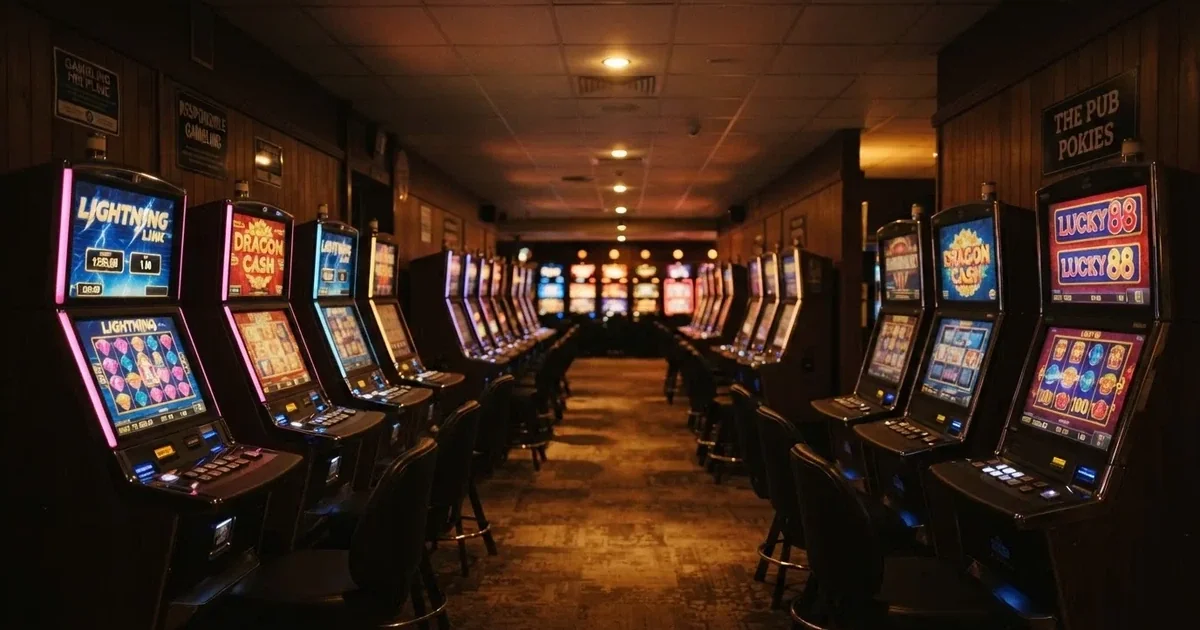
The question is simple enough: is there a pub or club near me with poker machines open right now, and what are my options if the local is shut? The Australian answer is layered. Land-based venues are licensed, regulated state by state, and very much open — Australia runs about 3% of the world’s pub and club poker machines for 0.3% of the global population. The same question applied to a website leads somewhere else entirely: no state or territory licenses an online casino to offer online pokies to Australians, so anything answering “yes, we take Australian players” is operating outside the Interactive Gambling Act 2001. This page works both sides — what a local can realistically find tonight, and what an offshore site claiming to take Australian players actually means under Australian law.
Currency stamp: data current as of 29 October 2026; verified against the ACMA register of formal warnings and blocking actions, the Interactive Gambling Act 2001 (as amended 2017), and state gaming commissions.
- The legal picture Australians actually face
- What a punter looking for a venue actually has to work with
- The ACMA action record at a glance
- What the offshore claim actually costs the reader
- The blocking rate, as a measure of enforcement pace
- Where the licensed options actually sit
- A short, direct summary
- Frequently Asked Questions
The legal picture Australians actually face
The Interactive Gambling Act 2001, tightened by the Interactive Gambling Amendment Act 2017, makes it an offence to provide online casino games, online pokies or in-play betting to a person physically in Australia. No state or territory issues a licence for any of that. What is licensable is wagering on races and sport placed before the event, lotteries and keno — in practice licensed through the Northern Territory Racing and Wagering Commission, which regulates 52 of Australia’s online bookmakers including Sportsbet, Bet365 and Ladbrokes, has no full-time staff and meets once a month in Darwin. Online pokies do not sit anywhere on that list.
The individual player is not the target. The IGA targets the provider. Australians using an offshore site do not face prosecution, but they give up every protection that comes with a domestic licence — no Australian complaints body, no recourse if a withdrawal is refused, and the site can be blocked by Australian ISPs with whatever balance is still sitting on it. H2 Gambling Capital’s 2025 report puts the loss to illegal offshore gambling sites at about A$3.9 billion a year, with the share of Australian gambling going through legal channels sliding from 74% in 2021 to 64%.
Enforcement has been steady. As of the ACMA’s most recent published figures in June 2026, a total of 1,751 illegal gambling and affiliate marketing websites had been blocked since the first blocking request in November 2019, and more than 230 unlicensed gambling services had left the Australian market since 2017. The single round reported on 26 June 2026 added 12 more: 7Signs, ChromaBet, Donbet, Duospin, Freshbet, Slots Gem, Jacks Club, Lucky Start, Pointsbetz, Spinrise, Vinyl Casino and Wildsino.
Alongside the blocks, the ACMA issues formal warnings — published notices that name the operator behind a site and give the public record of the breach. The list of named operators and dates sits in the table further down.
A point worth saying directly: a Curaçao or Anjouan licence displayed at the bottom of a website is not an Australian licence and confers no Australian protection. The offshore operator is not subject to Australian consumer law, the ACMA’s complaints process, or BetStop, the National Self-Exclusion Register. A balance sitting on such a site when an ISP-level block lands is, in practical terms, gone.
The 2026 reform
The Interactive Gambling Amendment (Gambling Reform) Bill 2026 passed Parliament on 19 August 2026. Its advertising and inducement measures commence on 1 January 2027 — law with a start date, not yet in force on a page read in the current year. Worth knowing, but not yet a rule that binds anything on this side of the new year.
What the law does cover
Minimum age is 18. Payments into a licensed Australian online wagering account have been banned from credit cards, credit-related products and digital currency since 11 June 2024, with penalties of up to $247,500 for operators; the legal deposit routes are debit card, bank transfer, PayID/Osko and BPAY. A site asking an Australian customer for a credit card or a crypto deposit is operating outside the Australian rules on that point alone. Recreational winnings are not assessable income under section 6-5 of the ITAA 1997, and losses are not deductible unless the person is carrying on a business of gambling — the standard ATO caveat applies.
What a punter looking for a venue actually has to work with
Poker machines — “pokies” — operate in every Australian state and territory, and each jurisdiction regulates their design and operation separately. Registered clubs operated Australia’s first legal poker machines from 1956, in New South Wales, and the footprint has grown steadily since. The legal minimum return-to-player is jurisdiction-by-jurisdiction: 85% in New South Wales, the Northern Territory, Queensland and (generally) Victoria, with 87% at Crown Melbourne; 87% in the ACT and Tasmania; 87.5% in South Australia; and 90% in Western Australia. Western Australia banned poker machines in pubs and clubs when Crown Perth opened in 1985 — Crown Perth’s machine count has since grown from about 200 in 1985 to roughly 2,500, all approved by the state’s Gaming and Wagering Commission.
The scale is large enough that it changes how a reader should think about “near me.” New South Wales had 87,298 gaming machines outside casinos across 2,195 venues as of June 2023, with player losses of A$8.18 billion in 2022-23. Queensland had 21,122 gaming machines operating in 351 venues in October 2023; Victoria had 26,380 outside Crown Casino in 488 venues in 2021-22, under a 30,000-machine statewide limit. In 2020-21 Australians bet almost A$150 billion through gaming machines and lost A$12.18 billion on them.
Hours, IDs and the venue-side picture
Opening hours vary by venue and by state. Pubs and clubs in NSW and Queensland typically run their gaming rooms through the late morning to the small hours, with many closing the gaming floor between 4 am and 10 am depending on the licence; 24-hour gaming floors are not the norm in Australian pubs and clubs outside the casino resorts. Tasmania’s licensing regime has historically set venue-side closing hours that are stricter than the mainland capitals.
The identification question has a clean answer: every licensed Australian pub or club gaming room is required to enforce 18+ entry, and most states now require the venue to check a government-issued photo ID at the door or on the floor. New South Wales operates the registered clubs and hotels scheme under the Liquor and Gaming NSW framework, with the state’s ClubGrants and responsible-conduct obligations running alongside; Queensland venues operate under the Office of Liquor and Gaming Regulation. Crown Melbourne and Crown Sydney operate under their own casino-specific regulators — the Victorian Gambling and Casino Control Commission (which replaced the VCGLR on 1 July 2022) and the NSW Casino Control Act 1992 respectively, with section 66 of that Act requiring a casino operator to make a copy of the approved rules of any game available to patrons on request.
A practical reader note: state-by-state gaming registers, run by the relevant commission, list the venues, their gaming-room hours, and their licensed machine counts. Searching for a state gaming register or liquor and gaming register returns the right portal in each jurisdiction. Google Maps will show a pub’s general trading hours, which usually bracket the gaming-room hours, but the gaming floor can close earlier than the bar.
Tasmania’s pre-commitment reform
Tasmania planned nation-leading mandatory pre-commitment cards for its poker machines, with implementation of the reform delayed until late 2025. The Federal Group held a monopoly licence over all of Tasmania’s poker machines from 1968; legislation passed in November 2021 ended that monopoly and moved oversight of the machines to the Tasmanian Liquor and Gaming Commission. Mandatory pre-commitment means a player sets a loss or time limit at the door, and the card enforces it: a reform designed to put a hard ceiling on a session before the session starts. Implementation timing on this page is “delayed until late 2025” — a reform with a published date that has now passed; readers should treat the live status as one to verify against current Tasmanian Liquor and Gaming Commission communications.
The ACMA action record at a glance
The ACMA’s published enforcement is the public face of Australia’s offshore-slot problem. Two kinds of action matter: formal warnings naming an operator and a date, and ISP-level blocking requests that take a site off the Australian internet. The table below summarises the named-operator warnings. It is not a ranking and not a recommendation. None of these sites can lawfully offer online pokies to a person in Australia.
| Brand | ACMA action and date | Operator named by the ACMA | Subject support |
|---|---|---|---|
| RocketPlay | Formal warning, March 2026; earlier warning to a prior operator (Dama N.V.), May 2022 | Pulsup Ltd | — |
| Level Up Casino | Formal warning, May 2022 | Dama N.V. | Listed by a single provider index (Bgaming) |
| Woo Casino | Formal warning, March 2025 | Dama N.V. | — |
| Spirit Casino | Formal warning, May 2025 | Dama N.V. | — |
| National Casino | Formal warning, July 2025 | Consolutetish S.R.L. | Listed by a single reference index (en.wikipedia.org) |
| Bizzo Casino | Formal warning, July 2025; earlier warning to a prior operator (TechSolutions), 2022 | Consolutetish S.R.L. | — |
| Ignition Casino | Formal warning, July 2025 | Bamboo Media | — |
| Instant Casino | Formal warning, February 2025 | EOD Code SRL | — |
| Jackbit | Formal warning, April 2026 | Ryker B.V. | — |
| Casino Intense | Formal warning, April 2025 | Sterplay Holding Ltd | Listed by a handful of reference indexes (ABC, acma.gov.au, Crown Melbourne) |
| Sky Crown | Formal warning, September 2022 | Hollycorn N.V. | — |
A note on what the table does and does not say. Each row is a warning, not a conviction. The warning names the corporate entity the ACMA holds responsible for offering prohibited interactive gambling services to Australians; it does not record any player-side complaint, nor any consumer refund. The “Subject support” column records what reference indexes or directories list for the brand in passing — it is not an endorsement, not an Australian licence, and not a player-protection signal. Where the column is empty, the research turned up no such listing at all.
Two of the eleven — Woo Casino and Spirit Casino — share the same operator (Dama N.V.), and that operator carries an earlier 2022 warning as well. National Casino and Bizzo Casino likewise share an operator (Consolutetish S.R.L.), with Bizzo having previously been the subject of a 2022 warning to TechSolutions. Reading the table as twelve distinct offshore operators would be a misreading; reading it as four or five distinct corporate groups with rotating brand fronts is closer to the shape of the market.
What an ACMA formal warning is, in plain terms
A formal warning is a published notice that the ACMA has reasonable grounds to believe the named operator has offered or provided prohibited interactive gambling services to customers physically in Australia. It is published on the ACMA’s website with the operator’s name and the date. It is not a court order, it does not require the operator to shut down, and it does not by itself refund any player balance. What it does do is give the ACMA a basis for further action: an enforceable undertaking, civil penalty proceedings in the Federal Court, or a request to Australian ISPs to block the site. A player who has money on a warned site is not made whole by the warning.
RocketPlay
Pulsup Ltd, the corporate entity the ACMA named in its March 2026 warning over Rocketplay, took the warning on top of an earlier 2022 warning that had been issued to Dama N.V. for, among other brands, the original Rocketplay operation. Two warnings over the same brand, addressed to two different corporate vehicles, is the pattern that says more than either warning on its own. The site claims Australian-facing play; the ACMA’s position is that no online casino can lawfully do that. RocketPlay is not a venue a reader can walk to, and any balance held on it when an Australian ISP block lands is, in practice, exposed.
Level Up Casino
The May 2022 ACMA warning named Dama N.V. as the operator of Level Up Casino. Level Up is among the brands listed by a single provider-distribution index — it appears in one games-aggregation directory and nowhere else in the consulted sources — and that single listing is not a recommendation, not a licence, and not an Australian authority’s endorsement. The relevant fact for a reader remains unchanged: an online casino with a Curaçao-style licence displayed at the bottom of its pages cannot lawfully take Australian players on online pokies.
Woo Casino
Dama N.V. was the named operator on the ACMA’s March 2025 warning over Woo Casino. Woo sits in the same Dama N.V. cluster as Level Up, Spirit Casino, and the earlier 2022 warnings — a corporate group that has cycled through multiple brands while the public record of warnings against its operations has grown. Woo does not appear in any of the consulted reference indexes, and the consulted sources carry no Australian-facing licence or endorsement. The site’s claim to take Australian players is contradicted by the ACMA’s published position.
Spirit Casino
The May 2025 ACMA warning named Dama N.V. again, this time over Spirit Casino. Like Woo, Spirit has no listing in the consulted reference indexes and no Australian-facing authority behind it. The warning is the public record of the ACMA’s finding that Spirit has offered prohibited interactive gambling services to Australians; the absence of any further listing is not a counterweight to that finding — it is just the absence of a listing.
National Casino
Consolutetish S.R.L. was the named operator on the ACMA’s July 2025 warning over National Casino. National is mentioned in one of the consulted reference indexes (the Wikipedia article on gambling in Australia), which is a directory of names rather than an endorsement of any kind. The ACMA’s record stands on its own: an offshore operator that has offered prohibited services to Australians.
Bizzo Casino
Consolutetish S.R.L. was also the named operator on the ACMA’s July 2025 warning over Bizzo Casino, and Bizzo had already been the subject of a 2022 formal warning to TechSolutions (CY) Group Limited and TechSolutions Group N.V. Two warnings across two different corporate vehicles is the same pattern RocketPlay carries: a brand moves between operators as the warnings land. The consulted reference indexes carry no Australian-facing listing for Bizzo, and the ACMA’s record is the public position that the brand is offering prohibited services to Australians.
Ignition Casino
The July 2025 ACMA warning named Bamboo Media as the operator of Ignition Casino. Ignition has no listing in the consulted reference indexes and no Australian-facing authority. The brand name is widely used across multiple offshore operations; the Australian-relevant fact is the specific entity the ACMA has named, on a specific date, for offering prohibited services to Australians.
Instant Casino
The February 2025 ACMA warning named EOD Code SRL as the operator of Instant Casino. Instant has no listing in the consulted reference indexes. The warning is the ACMA’s published position; a reader who arrived at Instant Casino via a search for “pokies open near me” has, in practical terms, arrived at a site that cannot lawfully offer what the search asked for, and that the ACMA has named publicly for that reason.
Jackbit
The April 2026 ACMA warning named Ryker B.V. as the operator of Jackbit and CasinOK. Jackbit has no listing in the consulted reference indexes. The warning is the most recent ACMA formal action in the table at the time of writing; it places Jackbit in the same legal position as every other brand on this page — outside the Australian regulatory frame, named by the ACMA, blocked by ISPs at the regulator’s request.
Casino Intense
The April 2025 ACMA warning named Sterplay Holding Ltd as the operator of Casino Intense. Casino Intense appears in a small number of reference indexes (the ABC’s reporting on the WA casino, the ACMA’s own publications, and Crown Melbourne’s site among the consulted sources). Those are not endorsements and not Australian licences; they are sources that mention the brand in passing. The ACMA’s record stands: an offshore operator that has offered prohibited services to Australians.
Sky Crown
The ACMA’s formal warning over Hollycorn N.V. covered Sky Crown and Blue Leo casino services (September 2022). Sky Crown has no listing in the consulted reference indexes. Hollycorn is one of the more prominent Curaçao-licence holders in the consulted sources and is named in multiple reference indexes for its other brands; the Australian-relevant fact is the warning, not the surrounding directory footprint.
What the offshore claim actually costs the reader
The arithmetic of an offshore site is, in honest terms, a different arithmetic from a licensed Australian pub. The licensed venue takes a fixed jurisdictional house edge, pays GST on its net revenue, contributes to state harm-minimisation funds, and offers a consumer-protection pathway through the relevant state gaming commission. The offshore site offers none of that, and the “loss” to the player runs further than the house edge: it includes any balance the site chooses to refuse to pay out, with no Australian complaints body to appeal to. H2 Gambling Capital’s A$3.9 billion-a-year estimate for losses to illegal offshore sites is, by construction, an estimate of what Australians have spent; it does not measure what Australians have successfully withdrawn, and the gap between the two numbers is the offshore market’s defining feature.
What responsible play looks like under the law that does apply
BetStop, the National Self-Exclusion Register, has been live since August 2023. It binds every Australian-licensed online and phone wagering service. An offshore casino is not connected to it — registering with BetStop will not exclude a player from any of the brands in the table above. For a player who wants a working self-exclusion tool, the legal wagering services are the only ones BetStop covers; the offshore sector offers the appearance of a self-exclusion button, and nothing behind it.
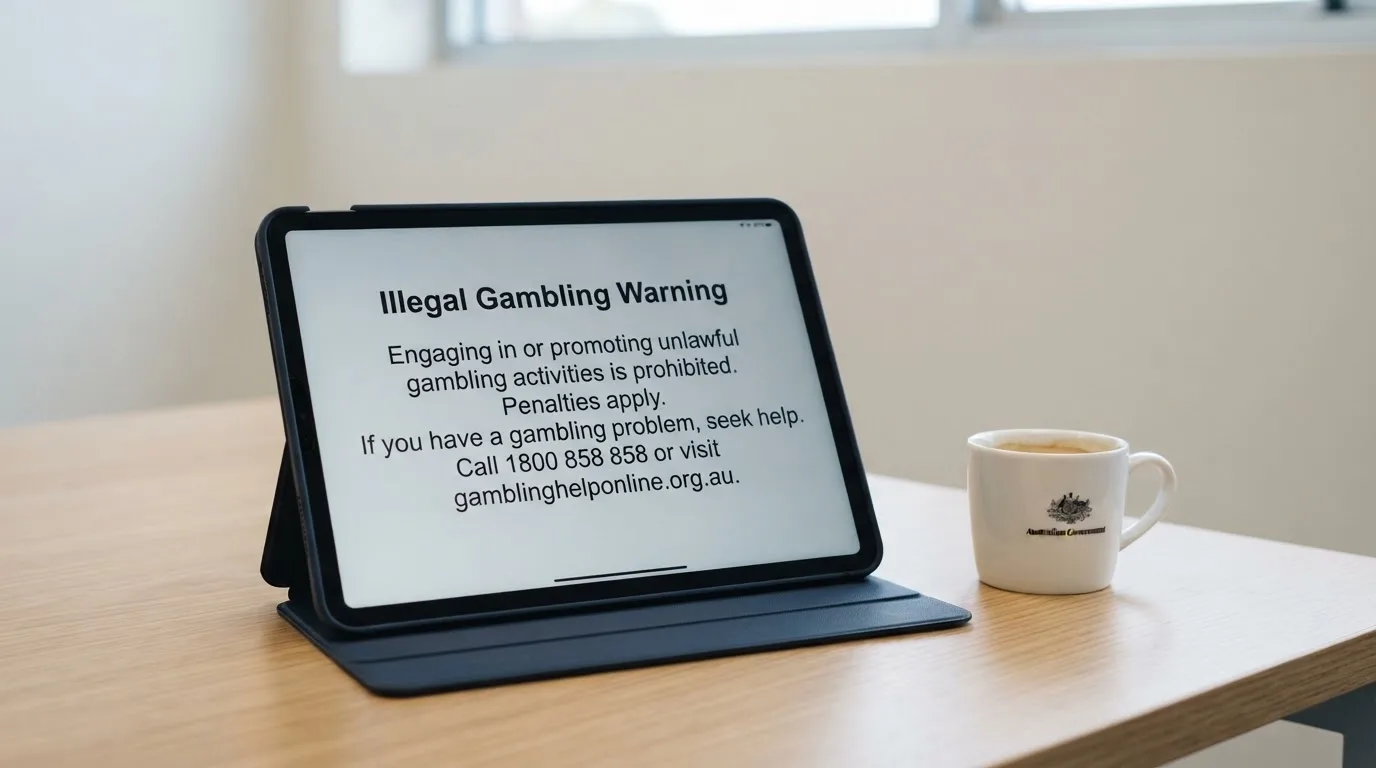
The National Gambling Helpline is 1800 858 858 — free, 24/7 — with chat at Gambling Help Online. Both services are funded by the Australian Government and operate independently of any operator. They are the appropriate first call for anyone whose own play has moved from a budget into a problem, and they are also the appropriate call for a family member or partner.
The blocking rate, as a measure of enforcement pace
The prescribed calculation on this page is a blocking rate: the running total of blocked sites divided by the time elapsed since the first blocking request. The arithmetic belongs to the page; the inputs are the published total (1,751 sites blocked as of June 2026) and the date of the first blocking request (November 2019). Stated as a band, the result runs roughly between 220 and 240 sites blocked per year across the full window from November 2019 to June 2026 — a pace that has visibly accelerated in the more recent reporting rounds, where single decisions have added a dozen or more sites at a time. The condition for any precise figure is the exact end-month of the count: a count that closes in mid-2026 gives a slightly higher annual rate than one that closes at year-end, because the elapsed-time denominator shrinks faster than the running total grows over a short window. The honest reading is that Australian enforcement has shifted from a slow, mostly-warning posture in the late 2010s into a steady blocking tempo in the mid-2020s, with single rounds now clearing a meaningful slice of the long tail of illegal operators at once.
That pace is the reason an offshore site that took Australian players in 2022 may not take them now: not because the law has changed, but because the ISP-level block has reached it. The law has not changed since 2017.
Where the licensed options actually sit
For a reader whose question really is “what is open near me tonight,” the answer is local, licensed, and state-regulated. The relevant venues are pubs, clubs, and the casino resorts in the relevant jurisdiction:
- New South Wales: pubs and clubs hold 87,298 gaming machines outside casinos across 2,195 venues, with the Liquor and Gaming NSW framework applying. Crown Sydney operates under the NSW Casino Control Act 1992.
- Victoria: 26,380 gaming machines outside Crown Casino across 488 venues, under a 30,000-machine statewide cap. Crown Melbourne operates under the Victorian Gambling and Casino Control Commission, with the regulator having replaced the VCGLR on 1 July 2022.
- Queensland: 21,122 gaming machines across 351 venues, under the Office of Liquor and Gaming Regulation.
- Western Australia: poker machines are confined to Crown Perth, which runs roughly 2,500 machines under the state’s Gaming and Wagering Commission.
- Tasmania: machines fall under the Tasmanian Liquor and Gaming Commission since the Federal Group’s monopoly ended in 2021, with mandatory pre-commitment cards in delayed implementation.
- South Australia, ACT and the Northern Territory each run their own regulator and their own machine footprint, all small relative to the eastern mainland states.
The reader-side implication is that “near me” is a question for the local gaming register and the local trading-hours listing, not for an offshore site. The former returns a venue a person can walk into; the latter returns a website that the ACMA has, on the public record, named for offering prohibited services to Australians.
A short, direct summary
A reader who wants pokies open nearby has a clear lawful path: a licensed pub, club, or casino in their state, with a state-by-state gaming register and a state regulator to back it. A reader who lands on an offshore site answering the same search has landed on a site the ACMA has, in almost every case, named publicly for offering prohibited services to Australians — and the offshore site gives the player no Australian consumer protection if a withdrawal is refused. The 2017 amendment to the Interactive Gambling Act did not change which side of that line a player is on; it changed how aggressively the regulator enforces it. The blocking tempo is the measure of that shift.
Frequently Asked Questions
What hours do most Australian pubs and clubs typically keep their poker machines open?
Pubs and clubs in NSW and Queensland generally run their gaming rooms from late morning through to the early hours of the next morning, with most closing the gaming floor between 4 am and 10 am depending on the licence. Tasmania’s licensing regime has historically imposed stricter venue-side closing hours than the mainland capitals. Crown Melbourne and Crown Sydney operate as casinos with their own hour regimes, and Crown Perth is the only legal venue for poker machines in Western Australia.
Is there a way to check which nearby venue currently has poker machines open right now?
Each state’s gaming commission runs a public register of licensed venues, including their gaming-room hours and licensed machine counts — searching for a state gaming register or liquor and gaming register returns the right portal in each jurisdiction. Google Maps shows a pub’s general trading hours, which usually bracket the gaming-room hours, but the gaming floor can close earlier than the bar.
Are poker machines in a licensed pub or club the same thing as an online pokies game?
The machines themselves are similar in design, but the legal treatment is different. A land-based poker machine in a licensed Australian pub or club is regulated state by state under each jurisdiction’s own gaming regime. An online pokies game offered to a person in Australia is a prohibited interactive gambling service under the Interactive Gambling Act 2001 — no state or territory licenses it, and any site offering it is operating outside Australian law.
Do all pubs and clubs run pokies for 24 hours, or only some venues?
Twenty-four-hour gaming floors are not the norm in Australian pubs and clubs outside the casino resorts. Most pubs and clubs set their gaming-room hours within the broader trading hours of the venue, with a morning closure. The casino resorts in Melbourne, Sydney and Perth run longer hours under their own casino-specific licences.
What identification, if any, does a venue ask for before letting someone play the machines?
Every licensed Australian pub or club gaming room is required to enforce 18+ entry, and most states require the venue to check a government-issued photo ID at the door or on the floor. New South Wales venues operate under Liquor and Gaming NSW; Queensland venues under the Office of Liquor and Gaming Regulation. Crown Melbourne operates under the Victorian Gambling and Casino Control Commission; Crown Sydney under the NSW Casino Control Act 1992.